
Resetting the tire pressure sensor on your Hyundai Elantra is simple and can be done in minutes using the dashboard controls or a TPMS tool. This guide walks you through every step, from checking tire pressure to completing the reset, ensuring your safety and optimal vehicle performance.
In This Article
- 1 Key Takeaways
- 2 📑 Table of Contents
- 3 Understanding the Tire Pressure Monitoring System (TPMS) in Your Hyundai Elantra
- 4 When Should You Reset the Tire Pressure Sensor?
- 5 Step-by-Step Guide: How to Reset Tire Pressure Sensor on Hyundai Elantra
- 6 Using a TPMS Tool for Advanced Reset
- 7 Troubleshooting Common TPMS Issues
- 8 Maintaining Your TPMS for Long-Term Reliability
- 9 Frequently Asked Questions
Key Takeaways
- Check tire pressure first: Always ensure all tires are inflated to the recommended PSI before resetting the sensor.
- Use the dashboard menu: Most Elantra models allow you to reset the TPMS via the instrument cluster or infotainment system.
- Drive after resetting: A short drive (5–10 minutes) helps the system recalibrate and confirm the reset was successful.
- Know your model year: Reset procedures vary slightly between older (pre-2017) and newer (2017+) Elantra models.
- Use a TPMS tool if needed: Some models require a professional scanner or TPMS reset tool for full functionality.
- Don’t ignore warning lights: A persistent TPMS light may indicate a faulty sensor or deeper issue requiring professional diagnosis.
- Maintain proper tire care: Regular checks prevent false alerts and extend tire life.
📑 Table of Contents
- Understanding the Tire Pressure Monitoring System (TPMS) in Your Hyundai Elantra
- When Should You Reset the Tire Pressure Sensor?
- Step-by-Step Guide: How to Reset Tire Pressure Sensor on Hyundai Elantra
- Using a TPMS Tool for Advanced Reset
- Troubleshooting Common TPMS Issues
- Maintaining Your TPMS for Long-Term Reliability
Understanding the Tire Pressure Monitoring System (TPMS) in Your Hyundai Elantra
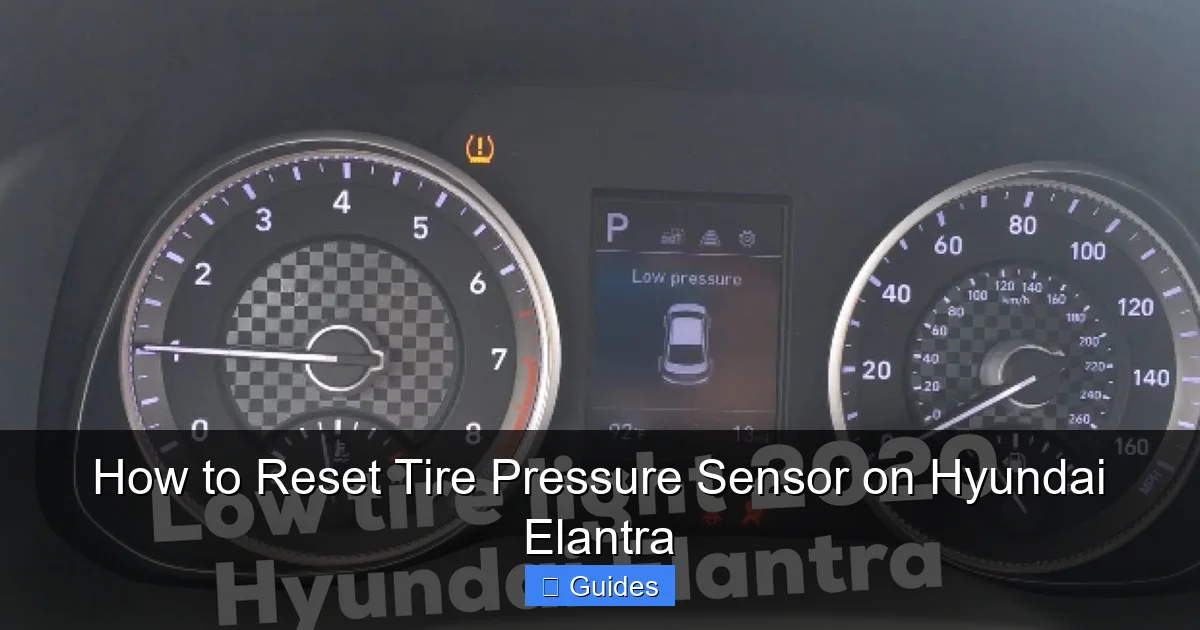
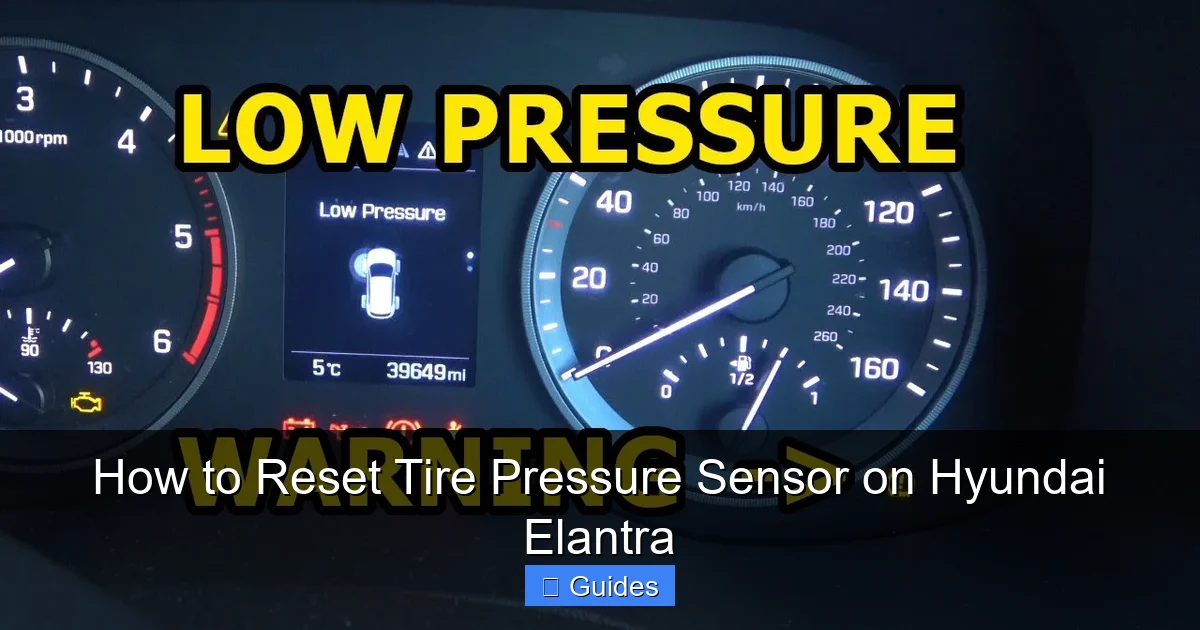
Your Hyundai Elantra is equipped with a Tire Pressure Monitoring System (TPMS), a safety feature designed to alert you when one or more of your tires are significantly underinflated. This system plays a crucial role in maintaining vehicle safety, fuel efficiency, and tire longevity. When tire pressure drops below the recommended level—typically by 25% or more—the TPMS warning light, often shaped like a horseshoe with an exclamation point, will illuminate on your dashboard.
The TPMS works by using sensors mounted inside each tire (either on the valve stem or wheel well) that continuously monitor air pressure. These sensors transmit real-time data to your car’s onboard computer. If a sensor detects low pressure, it sends a signal that triggers the warning light. While this system is highly effective, it can sometimes give false alerts—especially after tire rotations, seasonal temperature changes, or routine maintenance like inflating tires. That’s why knowing how to reset tire pressure sensor on Hyundai Elantra is an essential skill for every owner.
Why the TPMS Light Might Come On
There are several common reasons why your TPMS light might activate, even if your tires appear fine. One of the most frequent causes is a drop in tire pressure due to cold weather. As temperatures fall, air inside the tires contracts, reducing pressure. This is especially common during winter months and can trigger the warning light even when no leak is present.
Another reason could be a recent tire service. If you’ve had your tires rotated, replaced, or simply topped off with air, the system may need to be reset to recognize the new pressure levels. Additionally, a damaged or dead TPMS sensor battery can cause the light to stay on. These sensors typically have a lifespan of 5 to 10 years, so older vehicles may experience sensor failure over time.
Lastly, a slow leak—caused by a nail, puncture, or worn valve stem—can gradually reduce pressure and trigger the warning. It’s important to inspect your tires regularly and address any physical damage promptly. Ignoring the TPMS light can lead to reduced fuel economy, uneven tire wear, and even blowouts at high speeds.
Benefits of a Properly Functioning TPMS
A well-maintained TPMS does more than just keep the warning light off—it contributes to your overall driving safety and vehicle performance. Properly inflated tires improve handling, braking, and stability, especially in wet or slippery conditions. They also help your car achieve optimal fuel efficiency. Underinflated tires create more rolling resistance, forcing the engine to work harder and burn more fuel.
Additionally, maintaining correct tire pressure extends the life of your tires. When tires are underinflated, the sidewalls flex more than they should, generating excess heat and accelerating wear. Over time, this can lead to premature tread wear, especially on the outer edges. By keeping your tires at the recommended PSI and resetting the TPMS when needed, you’re investing in long-term savings and safer driving.
When Should You Reset the Tire Pressure Sensor?
Knowing when to reset the tire pressure sensor on your Hyundai Elantra is just as important as knowing how to do it. The reset process is typically needed after specific events that affect tire pressure or sensor calibration. If you ignore these triggers, the TPMS light may remain on unnecessarily, causing confusion or masking a real issue.
Visual guide about How to Reset Tire Pressure Sensor on Hyundai Elantra
Image source: i.ytimg.com
After Inflating or Deflating Tires
The most common reason to reset the TPMS is after adding air to your tires. Whether you’ve filled them at a gas station, used a portable compressor, or visited a mechanic, any change in pressure can disrupt the system’s baseline reading. Even a small adjustment—like topping off a tire that was slightly low—can require a reset to clear the warning light.
For example, imagine you notice one tire looks a bit flat and inflate it from 28 PSI to the recommended 32 PSI. The sensor now detects a significant pressure increase, but the system doesn’t automatically recognize this as “normal.” Without a reset, the light may stay on, even though the tire is properly inflated. Resetting tells the system to accept the new pressure as the correct baseline.
After Tire Rotation or Replacement
Tire rotation is a standard part of vehicle maintenance, typically recommended every 5,000 to 7,500 miles. During a rotation, tires are moved from one position to another (e.g., front to back or side to side) to ensure even wear. However, because each TPMS sensor is linked to a specific wheel position, moving the tires can confuse the system.
Some Hyundai Elantra models automatically relearn sensor positions after a few miles of driving, but others require a manual reset. If you’ve recently had your tires rotated and the TPMS light comes on, a reset is likely needed. The same applies if you’ve replaced one or more tires—especially if the new tires have different sensors or if the old sensors were damaged during removal.
After Seasonal Temperature Changes
Temperature fluctuations can significantly affect tire pressure. For every 10°F drop in temperature, tire pressure decreases by about 1 PSI. This means that a tire properly inflated in summer could be underinflated by several PSI in winter, triggering the TPMS light.
If you live in a region with distinct seasons, you may find yourself resetting the TPMS multiple times a year. For instance, after a cold snap in December, you might need to add air and reset the system. Conversely, in summer, heat can cause pressure to rise, though this rarely triggers the warning light unless overinflation occurs.
After Replacing a TPMS Sensor
TPMS sensors are electronic devices with internal batteries that eventually die. When a sensor fails, it can no longer transmit pressure data, causing the warning light to stay on—even if all tires are properly inflated. Replacing a faulty sensor requires a reset to sync the new sensor with the vehicle’s system.
This process often involves using a TPMS programming tool or visiting a service center. Some newer Elantra models support automatic sensor relearn, but older models may require manual intervention. If you’ve recently had a sensor replaced and the light persists, a reset is almost certainly needed.
Step-by-Step Guide: How to Reset Tire Pressure Sensor on Hyundai Elantra
Resetting the tire pressure sensor on your Hyundai Elantra is a straightforward process that most drivers can complete in under 10 minutes. The exact steps depend on your model year and trim level, but the general procedure is consistent across most Elantras. Below is a detailed, step-by-step guide to help you reset the TPMS safely and effectively.

Visual guide about How to Reset Tire Pressure Sensor on Hyundai Elantra
Image source: i.ytimg.com
Step 1: Check and Adjust Tire Pressure
Before attempting any reset, always verify that all four tires are inflated to the correct pressure. The recommended PSI for your Elantra can be found on a sticker inside the driver’s side door jamb or in your owner’s manual. Common values range from 32 to 35 PSI, but this varies by model and tire size.
Use a reliable tire pressure gauge to check each tire, including the spare if your vehicle has one. If any tire is underinflated, add air using a compressor. If overinflated, release air by pressing the valve stem gently. Ensure all tires are at the exact recommended pressure—this is critical for an accurate reset.
Pro tip: Check tire pressure when the tires are cold (i.e., the car hasn’t been driven for at least 3 hours). Driving heats up the tires, increasing pressure and giving a false reading.
Step 2: Turn the Ignition to the “ON” Position
With the tires properly inflated, sit in the driver’s seat and turn the ignition key to the “ON” position. Do not start the engine—just turn it so that the dashboard lights up and the instrument cluster is active. This powers up the TPMS system and prepares it for the reset sequence.
On push-button start models, press the “Start” button once (without pressing the brake pedal) to enter the “Accessory” or “ON” mode. You’ll see all dashboard indicators illuminate, including the TPMS light if it was previously on.
The method to access the reset function varies slightly by model year. For most 2017 and newer Hyundai Elantras, follow these steps:
- Press the “Setup” or “Menu” button on the steering wheel or center console.
- Use the arrow keys to scroll to “Vehicle Settings” or “Service.”
- Select “Tire Pressure” or “TPMS Reset.”
- Choose “Reset” or “Initialize.”
On older models (pre-2017), the process may involve holding down a specific button combination. For example, some Elantras require you to press and hold the “Trip” button on the instrument cluster until the TPMS light blinks or a confirmation message appears.
If you’re unsure, consult your owner’s manual—it will have the exact procedure for your specific model. Hyundai’s official website also offers downloadable manuals for free.
Step 4: Confirm the Reset
Once you’ve selected the reset option, the system will prompt you to confirm. Press “Yes” or “OK” to proceed. You may hear a beep or see the TPMS light flash, indicating the reset has begun.
The reset process usually takes 10 to 30 seconds. During this time, the system recalibrates the sensors and establishes a new baseline pressure. Do not turn off the ignition or open the doors during this process, as it could interrupt the reset.
Step 5: Drive the Vehicle
After the reset is complete, start the engine and take your Elantra for a short drive—about 5 to 10 minutes at moderate speeds (30–50 mph). This allows the system to relearn the sensor positions and confirm that all tires are properly inflated.
During the drive, the TPMS light should turn off. If it remains on, double-check your tire pressures and repeat the reset process. In some cases, the system may require multiple drive cycles to fully calibrate.
Alternative Method: Using the TPMS Reset Button
Some Hyundai Elantra models, particularly older ones, have a dedicated TPMS reset button located under the dashboard or near the steering column. This button is often labeled “TPMS” or “Reset.”
To use it:
- Turn the ignition to “ON.”
- Press and hold the TPMS reset button for 3 to 5 seconds.
- Release when the TPMS light blinks or turns off.
- Start the engine and drive as described above.
This method is quick and effective but not available on all models. Check your owner’s manual to confirm if your Elantra has this feature.
Using a TPMS Tool for Advanced Reset
While most Hyundai Elantras allow a manual reset via the dashboard, some situations require a professional TPMS tool. These handheld devices communicate directly with the sensors and can program, activate, or troubleshoot them. They’re especially useful when dealing with sensor replacement or complex relearn procedures.
Visual guide about How to Reset Tire Pressure Sensor on Hyundai Elantra
Image source: i.ytimg.com
When a TPMS Tool Is Needed
A TPMS tool becomes necessary in several scenarios. If you’ve replaced one or more TPMS sensors, the new sensors often need to be programmed to match your vehicle’s ID. This ensures the car recognizes them and receives accurate pressure data.
Additionally, some Elantra models—especially those with direct TPMS systems—require a tool to initiate the relearn process after tire rotation. The tool sends a signal to each sensor, telling the system which wheel position it belongs to. Without this step, the system may misidentify sensors, leading to incorrect warnings.
Another case is when the TPMS light won’t turn off despite proper inflation and multiple resets. This could indicate a faulty sensor, weak battery, or communication error. A TPMS tool can diagnose the issue by reading sensor data and identifying which one is malfunctioning.
How to Use a TPMS Tool
Using a TPMS tool is simple, even for beginners. Most tools come with clear instructions and intuitive interfaces. Here’s a general overview:
- Turn the ignition to “ON.”
- Power on the TPMS tool and select your vehicle make and model.
- Follow the on-screen prompts to initiate the relearn or programming mode.
- Use the tool’s antenna to activate each sensor, starting with the front left tire and moving clockwise.
- The tool will confirm when each sensor is successfully recognized.
- Complete the process and turn off the tool.
Popular TPMS tools include the Autel MaxiTPMS TS401, ATEQ VT56, and Foxwell NT510. These devices range from $100 to $500, depending on features. While they’re an investment, they’re invaluable for DIY mechanics or those who frequently service their own vehicles.
Professional Assistance
If you’re uncomfortable using a TPMS tool or don’t own one, visit a Hyundai dealership or trusted tire shop. Technicians have access to advanced diagnostic equipment and can reset or reprogram your TPMS in minutes. The cost is typically $20 to $50, depending on the service.
Many shops also offer free TPMS checks during routine maintenance, so it’s worth asking if you’re already getting your tires rotated or aligned.
Troubleshooting Common TPMS Issues
Even with proper reset procedures, you may encounter persistent TPMS problems. Understanding these issues and how to address them can save you time and frustration.
TPMS Light Won’t Turn Off
If the warning light remains on after a reset, start by rechecking tire pressures. Even a slight deviation can trigger the system. Use a high-quality gauge and compare readings to the door jamb sticker.
If pressures are correct, the issue may be a dead or damaged sensor. Sensors have non-replaceable batteries that last 5 to 10 years. If your Elantra is older than 7 years, sensor failure is likely. A mechanic can test each sensor to identify the faulty one.
Intermittent or Flashing TPMS Light
A flashing TPMS light usually indicates a system malfunction, such as a communication error between the sensor and receiver. This could be due to interference, a weak signal, or a damaged antenna.
Try driving the vehicle for 15–20 minutes at highway speeds. Sometimes, the system just needs time to reestablish connection. If the light continues to flash, have the system scanned for error codes.
Incorrect Sensor Readings
If the TPMS displays inaccurate pressure values, the sensors may need recalibration. This can happen after a software update or battery replacement. A TPMS tool can often resolve this by forcing a relearn cycle.
Aftermarket Tires or Wheels
Installing aftermarket wheels without TPMS sensors can disable the system. Some wheels are not compatible with factory sensors, or the sensors may not fit properly. In such cases, you’ll need to install new sensors or use a TPMS bypass module.
Maintaining Your TPMS for Long-Term Reliability
To keep your TPMS functioning properly, adopt a few simple maintenance habits. Regular checks and proactive care can prevent most issues before they start.
Check Tire Pressure Monthly
Make it a habit to check tire pressure at least once a month. Use a digital gauge for accuracy and record the readings. This helps you spot trends, such as slow leaks or seasonal changes.
Inspect Valve Stems
Damaged or corroded valve stems can cause air leaks and sensor malfunctions. During tire checks, look for cracks, dirt, or moisture around the valve. Clean or replace as needed.
Replace Sensors When Needed
If a sensor fails, replace it promptly. Delaying replacement can lead to inaccurate readings and safety risks. Most sensors cost $50 to $100 each, including installation.
Keep Software Updated
Some Hyundai models receive over-the-air updates that improve TPMS performance. Visit your dealership periodically to ensure your vehicle’s software is current.
Conclusion
Resetting the tire pressure sensor on your Hyundai Elantra is a simple yet vital task that enhances safety, efficiency, and driving comfort. By following the steps in this guide, you can confidently manage your TPMS and keep your vehicle in top condition. Whether you use the dashboard menu, a reset button, or a professional tool, the key is consistency and attention to detail. Remember: a properly functioning TPMS isn’t just about turning off a light—it’s about protecting yourself, your passengers, and your investment on the road.
Frequently Asked Questions
How often should I reset the TPMS on my Hyundai Elantra?
You only need to reset the TPMS after inflating tires, rotating them, replacing sensors, or experiencing significant temperature changes. There’s no need for routine resets if the system is functioning normally.
Can I drive with the TPMS light on?
You can drive short distances, but it’s not safe for long trips. Low tire pressure reduces handling, increases stopping distance, and raises the risk of a blowout. Address the issue as soon as possible.
Why does my TPMS light come on in cold weather?
Cold temperatures cause air inside tires to contract, lowering pressure. This is normal and often resolved by adding air and resetting the system.
Do I need a special tool to reset the TPMS?
Most Elantras allow a manual reset via the dashboard. However, some models require a TPMS tool for sensor programming or advanced diagnostics.
How much does it cost to replace a TPMS sensor?
Replacement sensors cost $50 to $100 each, including parts and labor. Prices vary by location and service provider.
Will disconnecting the battery reset the TPMS?
No, disconnecting the battery does not reset the TPMS. The system requires a specific reset procedure to recalibrate the sensors.

At CarLegit, we believe information should be clear, factual, and genuinely helpful. That’s why every guide, review, and update on our website is created with care, research, and a strong focus on user experience.