
The value of a 2010 Hyundai Elantra typically ranges from $3,500 to $6,500, depending on mileage, condition, and location. This reliable compact sedan offers strong fuel economy and low maintenance costs, making it a smart choice for budget-conscious buyers.
If you’re thinking about buying or selling a 2010 Hyundai Elantra, you’re probably wondering: *What is the value of a 2010 Hyundai Elantra?* It’s a fair question—and an important one. Whether you’re upgrading from an older car, downsizing, or just looking for a reliable daily driver on a budget, understanding the current market value helps you make a smart decision.
The 2010 Hyundai Elantra was part of the fourth generation of this popular compact sedan. Launched during a time when fuel efficiency and affordability were top priorities for many drivers, the Elantra stood out with its spacious interior, smooth ride, and impressive gas mileage. Over a decade later, it still holds up as a solid used car option. But like any vehicle, its worth depends on several factors—mileage, condition, trim level, and even where you live.
In this guide, we’ll break down everything you need to know about the value of a 2010 Hyundai Elantra. We’ll look at average pricing, what affects resale value, how to assess a specific vehicle, and tips for buyers and sellers. By the end, you’ll have a clear picture of what to expect—and how to get the best deal.
In This Article
- 1 Key Takeaways
- 2 📑 Table of Contents
- 3 Understanding the 2010 Hyundai Elantra’s Market Position
- 4 Average Market Value of a 2010 Hyundai Elantra
- 5 Factors That Influence the Value of a 2010 Hyundai Elantra
- 6 How to Determine the Value of a Specific 2010 Hyundai Elantra
- 7 Tips for Selling Your 2010 Hyundai Elantra
- 8 Tips for Buying a 2010 Hyundai Elantra
- 9 Is a 2010 Hyundai Elantra Worth Buying in 2024?
- 10 Conclusion
- 11 Frequently Asked Questions
Key Takeaways
- Market Value Range: Most 2010 Hyundai Elantras sell between $3,500 and $6,500, with lower-mileage models commanding higher prices.
- Mileage Matters: Vehicles with under 80,000 miles often retain more value, while those over 120,000 may drop below $4,000.
- Trim Level Impact: Higher trims like the GLS or Limited add features and can increase resale value by $500–$1,000.
- Condition Is Key: Clean titles, service records, and minimal wear significantly boost value compared to neglected models.
- Location Influences Price: Prices vary by region—urban areas and states with harsh winters may see lower values due to rust or higher supply.
- Fuel Efficiency Advantage: With 26–34 MPG, the Elantra remains appealing to eco-conscious and cost-sensitive drivers.
- Strong Reliability Reputation: Known for durability, many 2010 models still run well with proper maintenance, supporting steady demand.
📑 Table of Contents
- Understanding the 2010 Hyundai Elantra’s Market Position
- Average Market Value of a 2010 Hyundai Elantra
- Factors That Influence the Value of a 2010 Hyundai Elantra
- How to Determine the Value of a Specific 2010 Hyundai Elantra
- Tips for Selling Your 2010 Hyundai Elantra
- Tips for Buying a 2010 Hyundai Elantra
- Is a 2010 Hyundai Elantra Worth Buying in 2024?
- Conclusion
Understanding the 2010 Hyundai Elantra’s Market Position
The 2010 Hyundai Elantra arrived at a pivotal moment in the automotive world. Gas prices were fluctuating, and consumers were shifting toward more fuel-efficient vehicles. Hyundai responded with a compact sedan that offered more space, better fuel economy, and a longer warranty than many competitors. This helped the Elantra gain a strong foothold in the U.S. market.
Back then, the Elantra competed directly with the Toyota Corolla, Honda Civic, and Ford Focus. While it didn’t have the same brand cachet as Toyota or Honda, it made up for it with value. Hyundai’s 10-year/100,000-mile powertrain warranty was a major selling point—and it still gives today’s used car buyers peace of mind.
Today, the 2010 Elantra is considered a “budget-friendly” used car. It’s not flashy, but it’s practical. It’s the kind of car you buy when you need reliable transportation without breaking the bank. And because so many were sold—over 130,000 units in the U.S. in 2010 alone—there’s a healthy supply on the used market.
This abundance helps keep prices stable. You won’t find many 2010 Elantras selling for more than $7,000, even in excellent condition. But you also won’t find many below $3,000 unless they’re in rough shape or have extremely high mileage. The sweet spot? Between $4,000 and $5,500 for a well-maintained model with average mileage.
Average Market Value of a 2010 Hyundai Elantra
Visual guide about What Is the Value of a 2010 Hyundai Elantra
Image source: momentcar.com
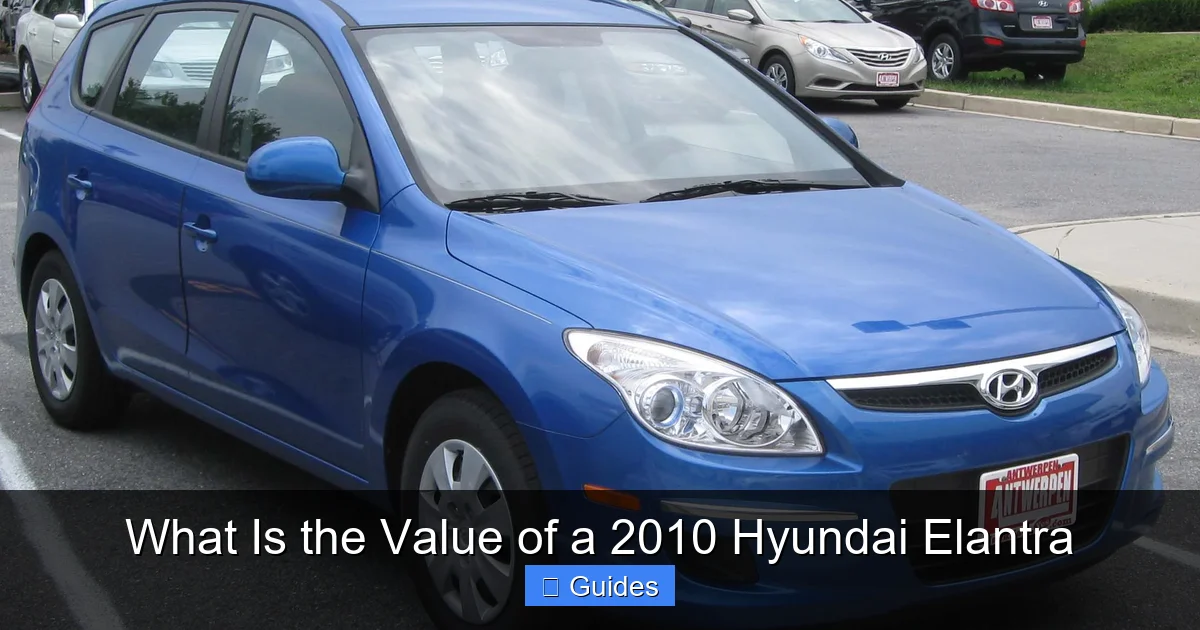
So, what is the value of a 2010 Hyundai Elantra in 2024? Based on data from Kelley Blue Book (KBB), Edmunds, and recent listings on platforms like Autotrader and Cars.com, the average retail price ranges from **$3,500 to $6,500**.
Let’s break that down:
– **Low-end ($3,500–$4,500):** These are typically high-mileage models (120,000+ miles), possibly with minor cosmetic issues or a history of limited maintenance. They may still run well but could need upcoming repairs.
– **Mid-range ($4,500–$5,500):** This is where most clean, well-cared-for Elantras fall. Expect mileage between 80,000 and 110,000, a clean title, and regular service records.
– **High-end ($5,500–$6,500):** These are low-mileage examples (under 70,000 miles), often with higher trims, excellent maintenance history, and minimal wear. Some may even have original owners.
For example, a 2010 Elantra GLS with 65,000 miles, a clean Carfax report, and new tires might list for $6,200 at a dealership. Meanwhile, a base model with 130,000 miles, some door dings, and no service records could be priced at $3,800 by a private seller.
It’s also worth noting that private party sales usually offer better value than dealerships. You might save $500–$1,000 buying directly from an owner, though you’ll need to do more due diligence.
How Trim Levels Affect Value
The 2010 Elantra came in three main trims: **GL**, **GLS**, and **Limited**. Each added features that can influence resale value.
– **GL:** The base model. It came with air conditioning, power windows, and a CD player. No frills, but functional. These tend to be the least expensive on the used market.
– **GLS:** The mid-tier option. Added features like cruise control, a better audio system, and sometimes alloy wheels. This is the most common trim and holds value well.
– **Limited:** The top trim. Included leather seats, a sunroof, upgraded stereo, and more. These are rarer and can command $500–$1,000 more than a comparable GLS.
If you’re buying, the GLS offers the best balance of features and affordability. If you’re selling, a Limited trim with low mileage can help you maximize your return.
Private Sale vs. Trade-In Value
It’s important to distinguish between what you can *sell* a 2010 Elantra for and what a dealer will *offer* as a trade-in.
– **Private Sale:** You’ll typically get the highest price—often 10–20% more than trade-in value. For example, a $5,000 Elantra might fetch $5,500–$6,000 privately.
– **Trade-In:** Dealers need to resell the car for a profit, so they’ll offer less. Expect $3,500–$5,000 for the same vehicle, depending on condition and demand.
If you’re upgrading to a newer car, trading in might be convenient. But if you want top dollar, selling privately is the way to go—just be prepared to handle paperwork, showings, and negotiations.
Factors That Influence the Value of a 2010 Hyundai Elantra
Visual guide about What Is the Value of a 2010 Hyundai Elantra
Image source: car.incars.ir
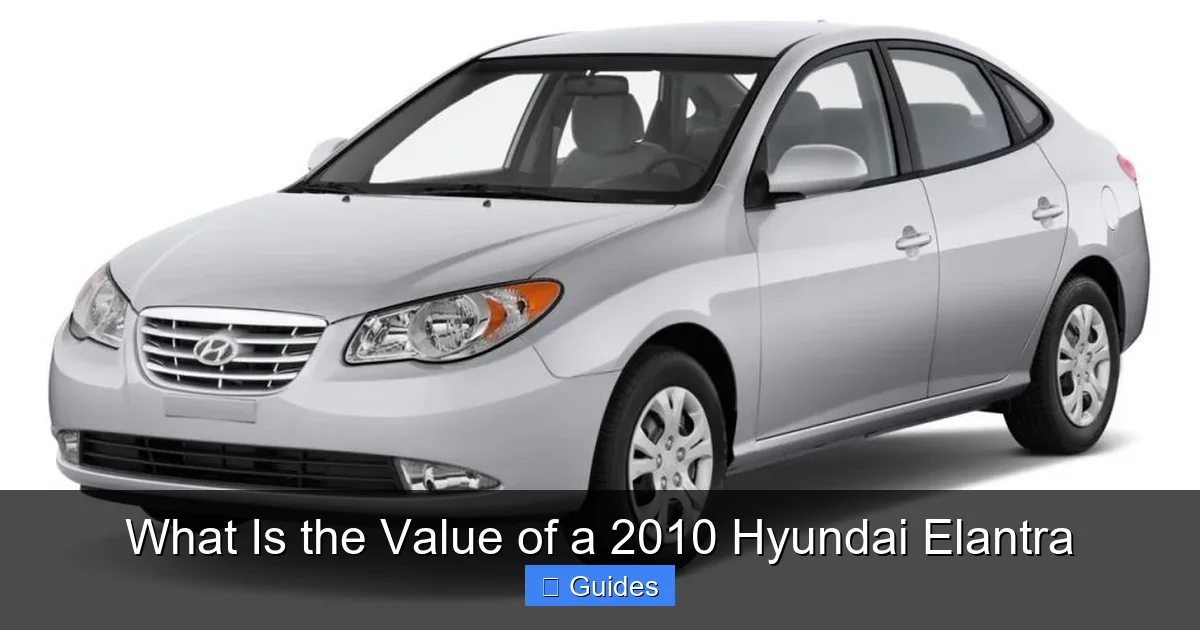
Now that we’ve covered the average price range, let’s dig into what actually determines how much a 2010 Elantra is worth. Not all Elantras are created equal—even if they’re the same year and model.
Mileage: The #1 Factor
Mileage is the biggest predictor of value. The average driver puts about 12,000 to 15,000 miles per year. So a 2010 Elantra with 100,000 miles is right on track. But here’s how mileage impacts price:
– **Under 70,000 miles:** Considered low mileage for a 14-year-old car. These models often sell at the top of the price range.
– **70,000–100,000 miles:** Average. Most well-maintained Elantras fall here.
– **100,000–130,000 miles:** Higher end of normal. Price drops, but the car may still be reliable.
– **Over 130,000 miles:** Value declines sharply. Buyers worry about upcoming repairs, even if the car runs well.
For example, two identical 2010 Elantra GLS models—one with 60,000 miles and one with 140,000—could differ in price by $1,500 or more.
Vehicle Condition and Maintenance History
A clean, well-maintained Elantra will always be worth more than a neglected one—even with similar mileage.
Look for:
– **Service records:** Regular oil changes, brake inspections, and timing belt replacements (if applicable) show the owner cared for the car.
– **Clean interior and exterior:** No smoke smell, stains, or excessive wear.
– **No major accidents:** A clean Carfax or AutoCheck report is essential. Even minor accidents can scare off buyers if not disclosed.
– **Tires and brakes:** Worn tires or squeaky brakes suggest deferred maintenance.
A car with 110,000 miles but full service records and new brakes might outsell a 90,000-mile car with no history and a check engine light.
Title Status and Accident History
The title status can make or break a sale. A **clean title** means the car hasn’t been declared a total loss by an insurance company. A **salvage title** means it has—usually due to severe damage.
Salvage-title Elantras can still be safe and functional, but they’re much harder to sell and finance. Their value drops by 20–40%. For example, a $5,000 clean-title Elantra might only be worth $3,000 with a salvage title.
Always run a vehicle history report before buying. Sites like Carfax, AutoCheck, or the National Insurance Crime Bureau (NICB) offer affordable reports.
Geographic Location and Market Demand
Where you live affects how much a 2010 Elantra is worth. Here’s why:
– **Urban vs. Rural:** In cities, compact cars are in higher demand. In rural areas, trucks and SUVs dominate.
– **Climate:** Harsh winters can lead to rust, especially on undercarriages. Elantras from snowy states like Michigan or New York may be worth less than those from Arizona or Florida.
– **Supply and Demand:** If there are dozens of 2010 Elantras for sale in your area, prices drop. If they’re rare, you might pay a premium.
For instance, a 2010 Elantra in Phoenix with 85,000 miles might sell for $5,200. The same car in Buffalo, NY, with rust on the wheel wells, might only get $4,000.
Optional Features and Upgrades
While the 2010 Elantra wasn’t known for luxury, certain features can boost value:
– **Automatic transmission:** Most buyers prefer automatics. Manuals are rarer and may sell for less unless you’re targeting enthusiasts.
– **Alloy wheels:** More attractive than steel wheels and suggest a higher trim.
– **Sunroof:** A popular option that adds appeal.
– **Upgraded audio:** A premium sound system can be a selling point.
Aftermarket upgrades (like new speakers or a backup camera) can help, but don’t expect a full return on investment. Buyers prefer factory-installed features.
How to Determine the Value of a Specific 2010 Hyundai Elantra
Visual guide about What Is the Value of a 2010 Hyundai Elantra
Image source: carsinvasion.com
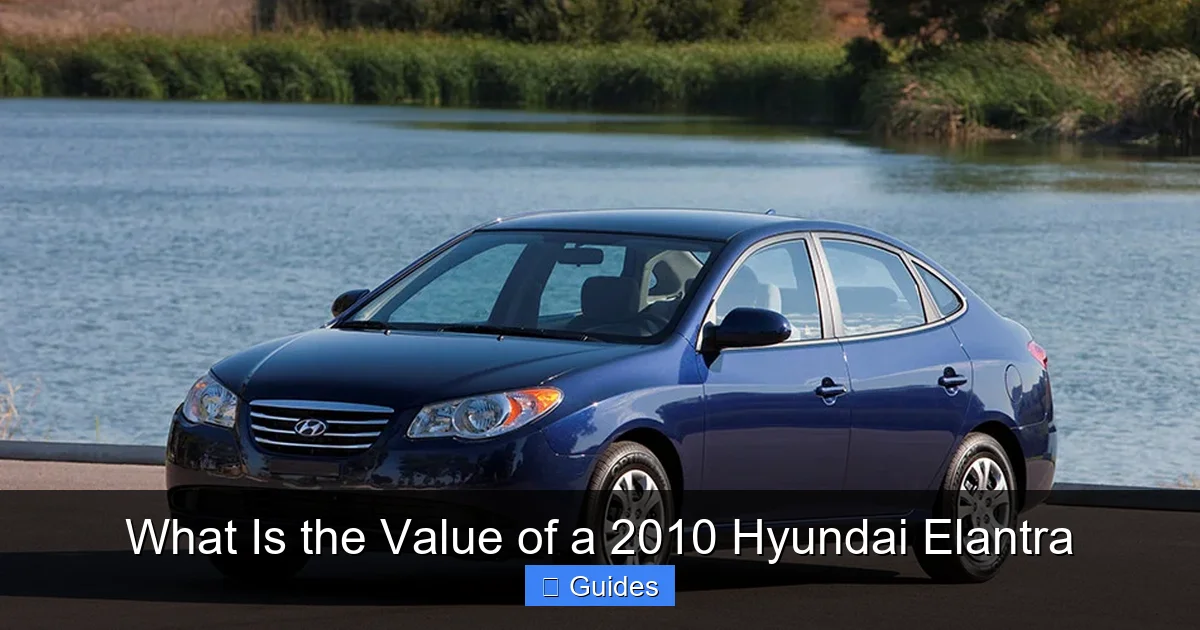
So, how do you figure out what *your* 2010 Elantra is worth—or what you should pay for one?
Use Online Valuation Tools
Start with trusted resources:
– **Kelley Blue Book (KBB):** Enter the VIN, mileage, trim, and condition. KBB gives you a range for private sale, trade-in, and dealer retail.
– **Edmunds True Market Value (TMV):** Similar to KBB, but often more accurate for used cars.
– **NADA Guides:** Popular with dealers and lenders. Slightly higher than KBB in some cases.
These tools use real sales data to estimate value. But remember—they’re just estimates. The final price depends on negotiation and market conditions.
Check Local Listings
Search sites like:
– Autotrader
– Cars.com
– Craigslist
– Facebook Marketplace
Look for similar 2010 Elantras in your area. Compare mileage, trim, condition, and price. This gives you a real-world benchmark.
For example, if three GLS models with 90,000 miles are listed at $4,800, $5,000, and $5,200, you know the market rate is around $5,000.
Get a Pre-Purchase Inspection (For Buyers)
If you’re buying, never skip a pre-purchase inspection (PPI). A trusted mechanic can spot hidden issues—like transmission problems, suspension wear, or engine leaks—that aren’t obvious during a test drive.
A PPI costs $100–$150 but can save you thousands. If the inspection reveals major issues, you can walk away or negotiate a lower price.
Negotiate Based on Findings
Use your research to negotiate. If the car needs new tires ($400) or has a check engine light, point that out. Say:
*“I see the tires are worn, and the check engine light is on. Based on the inspection, I’d like to offer $4,500 instead of the listed $5,200.”*
Most sellers expect some haggling. Be polite but firm.
Tips for Selling Your 2010 Hyundai Elantra
If you’re selling, you want to maximize value. Here’s how:
Clean and Detail the Car
First impressions matter. Wash the exterior, vacuum the interior, and clean the windows. Consider a professional detail ($100–$200). A clean car looks well-maintained and can increase offers by $200–$500.
Gather Documentation
Have these ready:
– Service records
– Owner’s manual
– Title (signed and ready to transfer)
– Recent inspection or emissions test (if required)
Buyers trust sellers who are organized and transparent.
Price It Right
Don’t overprice. If similar cars are selling for $5,000, listing at $6,000 will get you fewer views and longer wait times. Price competitively—maybe $200 below market to attract quick offers.
Take Great Photos
Use natural light. Shoot from multiple angles: front, back, sides, interior, trunk, engine bay. Show any flaws honestly—this builds trust.
Write a Clear, Honest Ad
Include:
– Year, make, model, trim
– Mileage
– Condition (mention any issues)
– Features (sunroof, alloys, etc.)
– Reason for selling
– Contact info
Example:
*“2010 Hyundai Elantra GLS, 88,000 miles, automatic, clean title, no accidents. Well-maintained with full service records. New brakes and tires. Asking $5,200 OBO. Serious buyers only.”*
Tips for Buying a 2010 Hyundai Elantra
If you’re in the market, here’s how to get the best deal:
Set a Budget
Include not just the purchase price, but also:
– Taxes and registration
– Insurance
– Immediate repairs (tires, brakes, etc.)
A $5,000 car might cost $6,000+ out the door.
Prioritize Low Mileage and Clean History
Aim for under 100,000 miles and a clean title. Avoid salvage or rebuilt titles unless you’re experienced with repairs.
Test Drive Thoroughly
Listen for strange noises. Check:
– Acceleration and braking
– Steering and suspension
– Air conditioning and heat
– All lights and electronics
Take it on a highway if possible. The Elantra should feel smooth and stable.
Check for Common Issues
The 2010 Elantra is generally reliable, but watch for:
– **Engine oil consumption:** Some models burn oil. Check the dipstick.
– **Transmission issues:** Automatic transmissions can develop shifting problems around 100,000 miles.
– **Suspension wear:** Struts and shocks may need replacement.
– **Rust:** Especially in snowy climates.
A mechanic can spot these during a PPI.
Consider Certified Pre-Owned (CPO)
Some Hyundai dealers offer CPO 2010 Elantras. These come with inspections, warranties, and peace of mind—but cost more. Only worth it if the price difference is small.
Is a 2010 Hyundai Elantra Worth Buying in 2024?
Absolutely—if you’re realistic about what you’re getting.
The 2010 Elantra won’t win any awards for style or performance. But it’s safe, efficient, and affordable. It’s perfect for:
– First-time car buyers
– Students
– Commuters
– Anyone on a tight budget
With proper care, many 2010 Elantras are still running strong at 150,000+ miles. And at $4,000–$6,000, they offer incredible value.
Just remember: the value of a 2010 Hyundai Elantra isn’t just about the price tag. It’s about reliability, cost of ownership, and peace of mind. And in today’s used car market, that’s worth a lot.
Conclusion
So, what is the value of a 2010 Hyundai Elantra? In short, it’s a dependable, fuel-efficient compact sedan that typically sells for **$3,500 to $6,500**, depending on mileage, condition, trim, and location. While it may not turn heads, it delivers solid performance and low operating costs—making it a smart choice for budget-minded buyers.
Whether you’re buying or selling, do your homework. Use valuation tools, check local listings, and always inspect the vehicle. A little research goes a long way in getting a fair deal.
The 2010 Elantra may be over a decade old, but it still has plenty of life left. And for the right buyer, it’s more than just a car—it’s a reliable partner for the road ahead.
Frequently Asked Questions
What is the average price of a 2010 Hyundai Elantra?
The average price ranges from $3,500 to $6,500, depending on mileage, condition, and trim level. Lower-mileage, well-maintained models typically fall in the $4,500–$5,500 range.
Is a 2010 Hyundai Elantra reliable?
Yes, the 2010 Elantra is known for its reliability. With regular maintenance, many models exceed 150,000 miles without major issues. It’s a solid choice for long-term ownership.
How many miles is too many for a 2010 Elantra?
Over 130,000 miles is considered high for this model. While some Elantras run well past that, buyers should expect potential repairs and a lower resale value.
What trim should I buy for the best value?
The GLS trim offers the best balance of features and affordability. It includes cruise control, a better audio system, and often alloy wheels—without the premium price of the Limited.
Can I finance a 2010 Hyundai Elantra?
Yes, but options may be limited. Some banks and credit unions offer loans for cars up to 10–12 years old. Expect higher interest rates and shorter loan terms compared to newer vehicles.
Should I buy a 2010 Elantra with a salvage title?
Only if you’re prepared for potential issues and difficulty reselling. Salvage titles reduce value by 20–40% and may affect insurance and financing. Always get a thorough inspection.

At CarLegit, we believe information should be clear, factual, and genuinely helpful. That’s why every guide, review, and update on our website is created with care, research, and a strong focus on user experience.