
A 2012 Hyundai Sonata typically requires 18 to 24 ounces (1.125 to 1.5 pounds) of R-134a refrigerant to properly charge its air conditioning system. This amount ensures efficient cooling and protects the compressor from damage due to under- or overcharging.
If you’ve ever climbed into your 2012 Hyundai Sonata on a sweltering summer day only to be greeted by lukewarm air blowing from the vents, you’re not alone. A weak or non-functional air conditioning system is one of the most frustrating car problems—especially when you’re stuck in traffic with the sun beating down. One of the most common causes? Low refrigerant levels, often referred to as “Freon,” even though modern cars like the 2012 Sonata use a specific type called R-134a.
But how much Freon does a 2012 Hyundai Sonata actually take? The answer isn’t just a number—it’s part of a broader understanding of your car’s AC system, how it works, and why proper maintenance matters. In this guide, we’ll walk you through everything you need to know: from the exact refrigerant capacity and type used, to signs of low Freon, safe refill procedures, and when to call a professional. Whether you’re a DIY enthusiast or just want to be informed before visiting the mechanic, this article will equip you with practical knowledge to keep your Sonata cool and comfortable all year long.
Air conditioning isn’t just a luxury—it’s a safety and comfort feature that becomes essential in hot climates. And while the 2012 Hyundai Sonata is known for its reliability and smooth ride, its AC system, like any mechanical component, requires attention. Over time, refrigerant can slowly leak out due to worn seals, damaged hoses, or faulty connections. When levels drop below the optimal range, your AC struggles to cool the cabin, and the compressor—the heart of the system—can overheat and fail prematurely.
In This Article
- 1 Key Takeaways
- 2 📑 Table of Contents
- 3 Understanding Your 2012 Hyundai Sonata’s AC System
- 4 How Much Freon Does a 2012 Hyundai Sonata Take?
- 5 Signs Your 2012 Hyundai Sonata Needs More Freon
- 6 How to Safely Add Freon to Your 2012 Hyundai Sonata
- 7 Common Causes of Refrigerant Loss in the 2012 Sonata
- 8 When to See a Professional
- 9 Maintaining Your Sonata’s AC System
- 10 Conclusion
- 11 Frequently Asked Questions
Key Takeaways
- Refrigerant Type: The 2012 Hyundai Sonata uses R-134a refrigerant, not the older R-12 or newer R-1234yf.
- System Capacity: The AC system holds approximately 18–24 ounces (1.125–1.5 lbs) of refrigerant when fully charged.
- Professional Charging Recommended: Due to environmental regulations and system complexity, it’s best to have a certified technician handle refrigerant refills.
- Signs of Low Freon: Weak airflow, warm air from vents, or hissing noises may indicate a refrigerant leak or low charge.
- Leak Detection is Crucial: Simply adding Freon without fixing leaks leads to repeated loss and potential compressor failure.
- DIY Kits Have Limitations: Over-the-counter recharge kits can help in emergencies but don’t replace professional diagnostics.
- Regular Maintenance Matters: Annual AC inspections can prevent major issues and extend the life of your vehicle’s cooling system.
📑 Table of Contents
- Understanding Your 2012 Hyundai Sonata’s AC System
- How Much Freon Does a 2012 Hyundai Sonata Take?
- Signs Your 2012 Hyundai Sonata Needs More Freon
- How to Safely Add Freon to Your 2012 Hyundai Sonata
- Common Causes of Refrigerant Loss in the 2012 Sonata
- When to See a Professional
- Maintaining Your Sonata’s AC System
- Conclusion
Understanding Your 2012 Hyundai Sonata’s AC System
To grasp how much Freon your Sonata needs, it helps to first understand how the air conditioning system works. The AC system in your 2012 Hyundai Sonata is a closed-loop circuit that relies on refrigerant to absorb heat from inside the cabin and release it outside. This process involves several key components: the compressor, condenser, expansion valve, evaporator, and refrigerant lines.
The compressor, driven by a belt connected to the engine, pressurizes the refrigerant gas. This high-pressure gas then flows to the condenser (located in front of the radiator), where it cools down and turns into a liquid. From there, the liquid refrigerant moves to the expansion valve, which regulates its flow into the evaporator. Inside the evaporator, the refrigerant expands and evaporates, absorbing heat from the air passing over it—this cooled air is then blown into the cabin by the blower fan. Finally, the low-pressure gas returns to the compressor to restart the cycle.
All of this depends on having the right amount of refrigerant in the system. Too little, and the AC won’t cool effectively. Too much, and you risk damaging the compressor due to excessive pressure. That’s why knowing the correct charge level is so important.
Refrigerant Type: Why R-134a Matters
One of the first things to clarify is the type of refrigerant your 2012 Hyundai Sonata uses. Despite the common term “Freon,” which is actually a brand name for certain refrigerants, your Sonata doesn’t use the old R-12 Freon that was phased out in the 1990s due to environmental concerns. Instead, it uses R-134a, a more environmentally friendly hydrofluorocarbon (HFC) refrigerant that doesn’t deplete the ozone layer.
R-134a has been the standard in most vehicles since the mid-1990s and remains widely used today. It’s important to use only R-134a in your Sonata—mixing refrigerants or using incompatible types can cause system damage, reduce efficiency, and even void your warranty. Always check the label on the refrigerant can or consult your owner’s manual to confirm compatibility.
System Design and Capacity
The 2012 Hyundai Sonata’s AC system is designed to hold a specific amount of refrigerant to operate efficiently. According to Hyundai’s technical specifications and service manuals, the total refrigerant capacity for the 2012 Sonata (both 2.4L and 3.3L engine models) is between 18 and 24 ounces, or 1.125 to 1.5 pounds. This range accounts for minor variations in manufacturing and system configuration.
This amount includes refrigerant in the compressor, condenser, evaporator, receiver-drier (or accumulator), and all connecting lines. It’s not just about how much you add—it’s about ensuring the entire system is properly charged and balanced. Undercharging leads to poor cooling and potential compressor damage due to inadequate lubrication (since refrigerant carries oil through the system). Overcharging, on the other hand, increases pressure, reduces efficiency, and can cause the compressor to fail.
How Much Freon Does a 2012 Hyundai Sonata Take?

Visual guide about How Much Freon Does a 2012 Hyundai Sonata Take
Image source: thecarhow.com
Now, let’s get to the core question: How much Freon does a 2012 Hyundai Sonata take? The answer, as mentioned, is **18 to 24 ounces (1.125 to 1.5 pounds) of R-134a refrigerant**.
This is the factory-specified charge amount for a fully operational AC system. However, it’s important to note that you should never simply “top off” your system with this full amount unless you’re certain the system is completely empty—such as after a major repair or replacement. In most cases, a slow leak means only a partial recharge is needed.
For example, if your AC has been gradually losing cooling power over several months, you might only need to add 6 to 12 ounces to restore performance. Adding the full 24 ounces in this scenario could result in overcharging, which is just as harmful as undercharging.
Why Precision Matters
Charging an AC system isn’t like filling up a gas tank—you can’t just pour in refrigerant until it “feels right.” The system operates under precise pressure levels, and even small deviations can impact performance. Modern AC systems, including the one in your Sonata, are designed to work within a specific pressure range:
– Low-side pressure: Typically 25–45 psi (depending on ambient temperature)
– High-side pressure: Usually 150–300 psi
These pressures are monitored by sensors and switches that protect the compressor. If the system is undercharged, the low-side pressure drops, and the compressor may overheat. If overcharged, high-side pressure spikes, potentially triggering the high-pressure cut-off switch or damaging seals.
That’s why professional technicians use manifold gauge sets to measure pressure and determine the correct charge level. They also consider ambient temperature, engine speed, and cabin temperature to make accurate adjustments.
DIY vs. Professional Charging
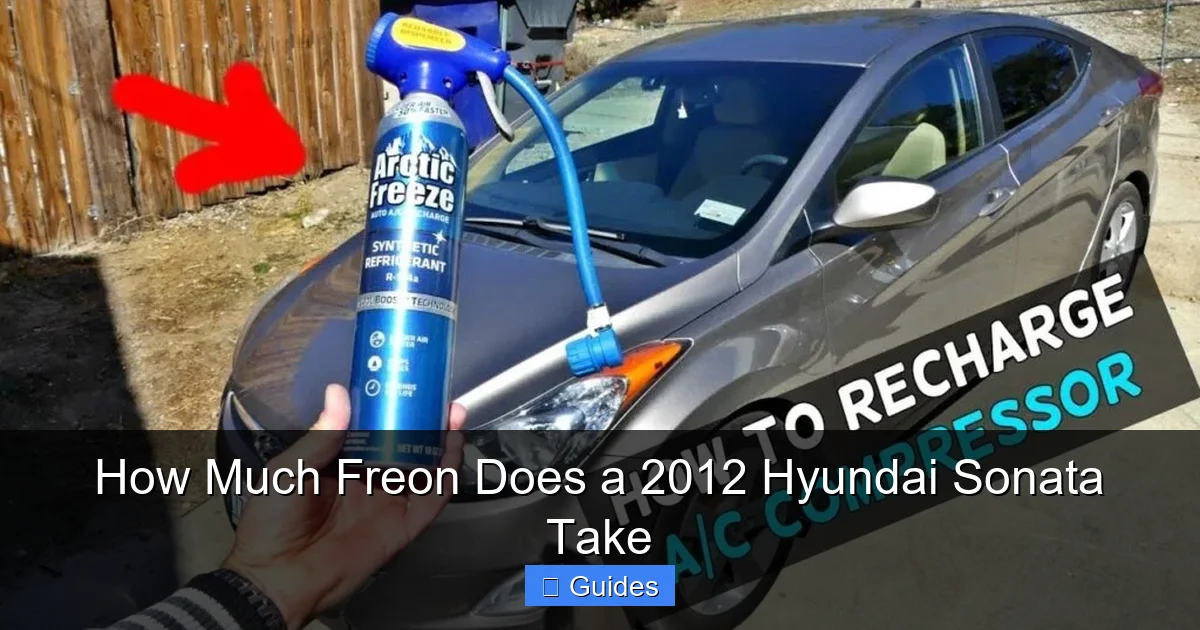
Many car owners consider using over-the-counter AC recharge kits available at auto parts stores. These kits typically include a can of R-134a, a hose with a pressure gauge, and a trigger dispenser. While they can be useful for emergency top-offs, they come with significant limitations.
First, most DIY kits don’t allow you to measure the exact amount of refrigerant added—you’re essentially guessing based on pressure readings, which can be misleading. Second, they don’t evacuate the system, meaning air and moisture can remain trapped inside. Air reduces cooling efficiency and can cause corrosion, while moisture leads to acid formation and component damage.
Professional AC service includes:
– Evacuating the system with a vacuum pump to remove air and moisture
– Weighing the refrigerant to ensure accurate charge
– Checking for leaks using UV dye or electronic detectors
– Inspecting components like the compressor clutch, condenser, and hoses
For these reasons, while a DIY recharge might provide temporary relief, it’s not a substitute for a full professional service—especially if you suspect a leak or recurring issues.
Signs Your 2012 Hyundai Sonata Needs More Freon

Visual guide about How Much Freon Does a 2012 Hyundai Sonata Take
Image source: thecarhow.com
Knowing how much Freon your Sonata takes is only half the battle. The other half is recognizing when it’s time to check or recharge the system. Here are the most common signs that your AC may be low on refrigerant:
Weak or Warm Air from Vents
The most obvious symptom is reduced cooling performance. If your AC used to blow ice-cold air but now only produces lukewarm or slightly cool air—even on the coldest setting—it’s a strong indicator of low refrigerant. This happens because insufficient refrigerant can’t absorb enough heat from the cabin air.
Keep in mind that other issues, like a clogged cabin air filter or a malfunctioning blower motor, can also reduce airflow. But if the air is warm rather than just weak, refrigerant is the likely culprit.
Longer Cool-Down Times
Does it take noticeably longer for your car to cool down after sitting in the sun? A properly charged AC system should bring the cabin temperature down within a few minutes of starting the engine. If it takes 10–15 minutes or more, low refrigerant could be slowing the process.
Hissing or Bubbling Noises
A hissing sound near the AC components, especially when the system is running, may indicate a refrigerant leak. Bubbling noises from under the dashboard or near the firewall can also suggest air in the system—often a result of low refrigerant and moisture ingress.
AC Compressor Cycling Frequently
The compressor clutch engages and disengages to regulate refrigerant flow. If you notice it clicking on and off more often than usual (especially in short bursts), it could mean the system is low on refrigerant and struggling to maintain pressure.
Visible Oil Stains or Frost
Refrigerant leaks often leave behind oily residue around hoses, fittings, or the compressor. Check under the hood for dark, greasy spots near AC components. In some cases, you might also see frost or ice buildup on the evaporator or suction lines—this happens when low refrigerant causes the evaporator to get too cold and freeze moisture from the air.
How to Safely Add Freon to Your 2012 Hyundai Sonata
Visual guide about How Much Freon Does a 2012 Hyundai Sonata Take
Image source: thecarhow.com
If you’ve confirmed that your Sonata’s AC is low on refrigerant and you’re considering a DIY recharge, here’s a step-by-step guide to do it safely—while understanding the risks.
Step 1: Gather the Right Tools
You’ll need:
– A can of R-134a refrigerant (with a built-in gauge or a separate manifold gauge set)
– Safety goggles and gloves
– A thermometer to measure cabin air temperature (optional but helpful)
Make sure the refrigerant is labeled for automotive use and contains no additives unless specified by Hyundai.
Step 2: Locate the Low-Pressure Service Port
The low-pressure port is where you’ll connect the recharge hose. On the 2012 Sonata, it’s typically located on the passenger side of the engine bay, near the firewall. It’s a blue or black cap labeled “L” or “LOW.” The high-pressure port (red cap, “H”) should never be used for recharging unless you’re a trained technician.
Step 3: Start the Engine and Turn on the AC
Start your car and set the AC to the coldest setting with the fan on high. Make sure the recirculation mode is on to maximize cooling efficiency. Let the system run for a few minutes to stabilize.
Step 4: Connect the Recharge Hose
Shake the refrigerant can well, then attach the hose to the can and the low-pressure port. Open the valve on the can slowly to begin charging. Watch the pressure gauge—most systems should read between 25 and 45 psi on the low side when properly charged.
Step 5: Add Refrigerant Gradually
Add refrigerant in short bursts, pausing to check pressure and cabin temperature. Avoid tilting the can upside down—this can introduce liquid refrigerant into the system, which can damage the compressor. Only vapor should enter the low-side port.
Step 6: Monitor and Disconnect
Once the pressure stabilizes and cool air is blowing, close the valve and disconnect the hose. Replace the cap on the service port. If the system still doesn’t cool well, there may be a leak or another issue requiring professional attention.
Important Safety Tips
– Never open the high-pressure side.
– Don’t overfill—stop when the gauge reads in the normal range.
– Work in a well-ventilated area.
– Dispose of empty cans properly—refrigerant is regulated and should not be released into the atmosphere.
Common Causes of Refrigerant Loss in the 2012 Sonata
Adding Freon is only a temporary fix if the underlying cause isn’t addressed. Refrigerant doesn’t “wear out”—it should remain in the system indefinitely unless there’s a leak. Here are the most common reasons your Sonata might be losing refrigerant:
Worn or Damaged Seals and O-Rings
Over time, the rubber seals and O-rings in the AC system can dry out, crack, or degrade, allowing refrigerant to escape. This is especially common around the compressor shaft seal, service ports, and hose connections.
Leaking Hoses or Lines
AC hoses are exposed to heat, vibration, and road debris. A small puncture or worn spot can cause a slow leak. The aluminum lines running to the condenser and evaporator can also corrode or develop cracks.
Faulty Condenser or Evaporator
The condenser, located in front of the radiator, can be damaged by rocks or debris. The evaporator, inside the HVAC housing, is harder to access but can leak due to corrosion or manufacturing defects.
Failed Receiver-Drier or Accumulator
This component removes moisture from the system and stores excess refrigerant. If it fails, it can leak or become clogged, reducing system efficiency.
Compressor Issues
A failing compressor may leak refrigerant through its seals or shaft. In some cases, internal damage can cause refrigerant to mix with compressor oil, leading to contamination and further leaks.
When to See a Professional
While a DIY recharge can be a quick fix, certain situations demand professional service:
– If the AC still doesn’t cool after recharging
– If you suspect a major leak or compressor failure
– If the system has been open for repair (requires evacuation and recharge)
– If you’re unsure about the correct procedure
Certified technicians have the tools and training to diagnose leaks, recover refrigerant safely, and recharge the system to factory specifications. They can also perform a performance test to ensure optimal cooling.
Maintaining Your Sonata’s AC System
Prevention is always better than repair. To keep your 2012 Hyundai Sonata’s AC running smoothly:
– Have the system inspected annually, especially before summer
– Replace the cabin air filter every 12,000–15,000 miles
– Run the AC for 10–15 minutes each month, even in winter, to keep seals lubricated
– Watch for signs of leaks or performance issues
Regular maintenance not only extends the life of your AC components but also improves fuel efficiency and cabin air quality.
Conclusion
So, how much Freon does a 2012 Hyundai Sonata take? The answer is 18 to 24 ounces of R-134a refrigerant—but that number is just the beginning. Understanding your AC system, recognizing the signs of low refrigerant, and knowing when to seek professional help are all essential for keeping your Sonata cool and comfortable.
While DIY recharge kits offer convenience, they’re no substitute for a thorough inspection and proper service. Refrigerant loss is often a symptom of a larger issue, and ignoring it can lead to costly repairs down the road. By staying informed and proactive, you can enjoy reliable cooling performance for years to come.
Whether you’re cruising down the highway or stuck in summer traffic, a well-maintained AC system makes all the difference. So the next time your Sonata’s vents start blowing warm air, you’ll know exactly what to look for—and what steps to take.
Frequently Asked Questions
Can I use R-1234yf refrigerant in my 2012 Hyundai Sonata?
No, the 2012 Hyundai Sonata is designed for R-134a refrigerant only. Using R-1234yf, which is used in newer vehicles, can damage the system and void your warranty. Always use the correct refrigerant type.
How often should I recharge the AC in my Sonata?
You shouldn’t need to recharge the AC regularly if the system is sealed properly. A recharge is only needed if there’s a leak or after major repairs. If you’re frequently low on refrigerant, have the system inspected for leaks.
Is it safe to drive with low Freon?
Driving with low Freon won’t damage the car immediately, but it can cause the compressor to overheat and fail over time. It also reduces cooling efficiency, making hot weather driving uncomfortable.
Can I recharge my AC system myself?
Yes, but with caution. DIY kits can help in emergencies, but they don’t evacuate air or moisture, and overcharging is a risk. For best results, consult a professional.
Why is my AC blowing air but not cold?
This is often due to low refrigerant, a clogged cabin filter, or a faulty compressor clutch. Check for leaks and have the system diagnosed if the issue persists.
How much does a professional AC recharge cost?
Professional AC service typically costs between $100 and $250, depending on labor rates and whether leak detection or repairs are needed. It’s more reliable than DIY methods.

At CarLegit, we believe information should be clear, factual, and genuinely helpful. That’s why every guide, review, and update on our website is created with care, research, and a strong focus on user experience.