
If you’re deciding between a Honda Civic or Toyota Corolla, you’re choosing between two of the most reliable, fuel-efficient, and well-built compact cars on the market. Both offer excellent safety ratings, low ownership costs, and strong resale value—but subtle differences in driving feel, tech, and design can help you pick the right one.
In This Article
- 1 Key Takeaways
- 2 📑 Table of Contents
- 3 Should I Buy a Honda Civic or Toyota Corolla?
- 4 Performance and Driving Experience
- 5 Fuel Economy and Efficiency
- 6 Interior Quality and Comfort
- 7 Technology and Infotainment
- 8 Reliability and Long-Term Value
- 9 Pricing and Trim Options
- 10 Which One Should You Choose?
- 11 Frequently Asked Questions
Key Takeaways
- Both are highly reliable: The Honda Civic and Toyota Corolla consistently rank among the most dependable cars, with long lifespans and low repair frequency.
- Fuel efficiency is a tie: Both models offer excellent gas mileage, with hybrid versions pushing over 50 MPG in city driving.
- Civic offers a sportier drive: The Civic has sharper handling and a more engaging driving experience, especially in the Sport and Si trims.
- Corolla emphasizes comfort and simplicity: The Corolla focuses on a smooth, quiet ride and user-friendly tech, ideal for daily commuting.
- Safety features are top-tier: Both come standard with advanced driver-assist systems like automatic emergency braking and lane-keeping assist.
- Resale value is strong for both: The Civic and Corolla retain value well, but the Corolla often edges out slightly in long-term depreciation.
- Choose based on driving preference: If you enjoy driving, go Civic. If you want comfort and ease, the Corolla wins.
📑 Table of Contents
Should I Buy a Honda Civic or Toyota Corolla?
When it comes to choosing a reliable, fuel-efficient, and affordable compact car, two names dominate the conversation: the Honda Civic and the Toyota Corolla. These two vehicles have been battling it out for decades, each earning a loyal following and consistently topping reliability rankings. But when you’re standing in the dealership—or scrolling through listings online—how do you decide which one is right for you?
The truth is, both the Honda Civic and Toyota Corolla are excellent choices. They’re built to last, cost little to maintain, and come packed with modern safety and tech features. But they’re not identical. Subtle differences in driving dynamics, interior design, technology, and overall feel can make one a better fit for your lifestyle. Whether you’re a daily commuter, a college student, or a small family looking for a dependable ride, understanding these nuances is key.
In this guide, we’ll break down every important factor—from performance and fuel economy to safety, technology, and long-term value—so you can make an informed decision. We’ll also look at real-world ownership experiences, pricing, and what each car does best. By the end, you’ll know whether the Honda Civic or Toyota Corolla deserves a spot in your driveway.
Performance and Driving Experience
Visual guide about Should I Buy a Honda Civic or Toyota Corolla
Image source: 3.19.197.79
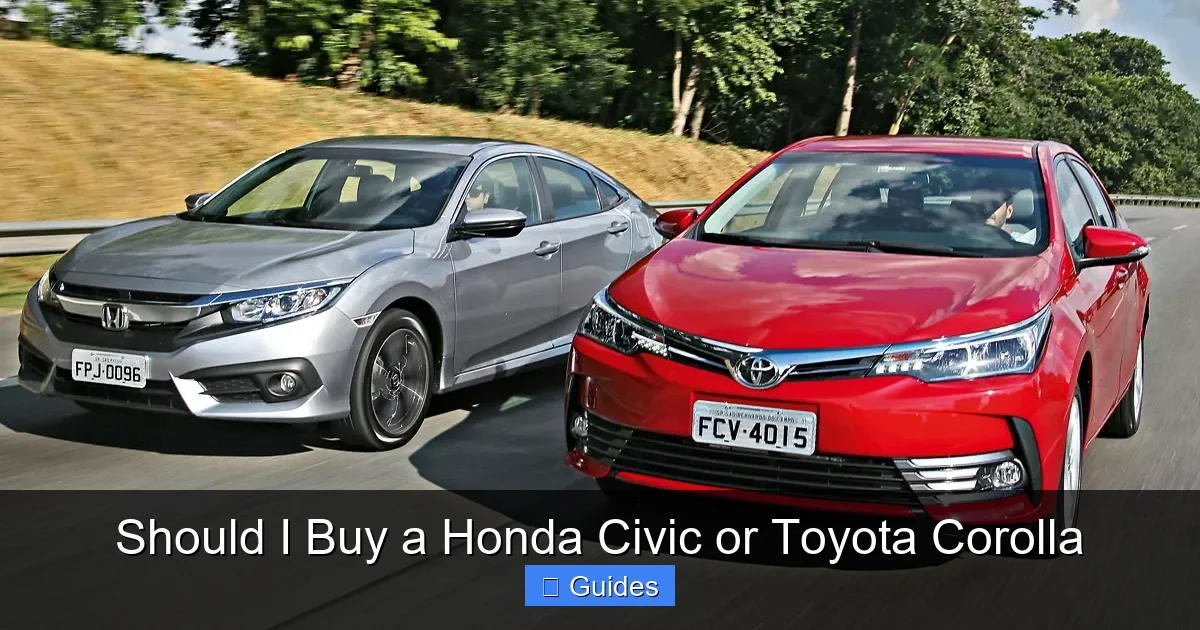
One of the biggest differences between the Honda Civic and Toyota Corolla comes down to how they feel behind the wheel. While both are designed for everyday driving, their engineering philosophies lead to distinct experiences.
Honda Civic: Sporty and Responsive
The Honda Civic has long been praised for its engaging driving dynamics. Even in its base form, the Civic feels nimble and responsive. The steering is precise, the suspension is tuned for a balance of comfort and control, and the overall ride feels more connected to the road. This makes the Civic a favorite among drivers who actually enjoy driving—even if it’s just to the grocery store.
The standard 2.0-liter four-cylinder engine delivers 158 horsepower, which is adequate for city and highway driving. But if you want more excitement, the turbocharged 1.5-liter engine in the EX and Sport trims bumps output to 180 horsepower. That extra power, combined with the Civic’s lighter chassis and sportier suspension, gives it a clear edge in acceleration and handling.
For the ultimate driving experience, the Civic Si offers a manual transmission, upgraded brakes, and a sport-tuned suspension. It’s not a full-blown sports car, but it’s one of the most fun-to-drive compact sedans on the market.
Toyota Corolla: Smooth and Comfortable
The Toyota Corolla, on the other hand, prioritizes comfort and ease of use. Its ride is softer, absorbing bumps and road imperfections with ease. The steering is lighter, making it effortless to maneuver in tight parking lots or heavy traffic. This makes the Corolla ideal for drivers who value a relaxed, stress-free commute.
The base 2.0-liter engine produces 169 horsepower, which is slightly more than the Civic’s standard engine. However, the Corolla feels less eager to accelerate, partly due to its heavier curb weight and more comfort-oriented tuning. The continuously variable transmission (CVT) is smooth but can feel a bit sluggish when you need quick bursts of speed.
That said, the Corolla isn’t slow—it’s just tuned for efficiency and comfort over performance. If you’re not looking for thrills and just want a car that gets you from point A to point B without fuss, the Corolla excels.
Manual Transmission and Driving Enthusiasts
One area where the Civic pulls ahead is in transmission options. While most compact cars have abandoned the manual, the Civic still offers a six-speed manual in the Sport and Si trims. This is a big deal for driving enthusiasts who enjoy the control and engagement of a stick shift.
The Corolla, unfortunately, no longer offers a manual transmission in the U.S. market. Even the sportier SE trim comes only with a CVT. So if you’re someone who loves the feel of shifting gears, the Civic is your only choice between these two.
Fuel Economy and Efficiency
Visual guide about Should I Buy a Honda Civic or Toyota Corolla
Image source: news.brannonhonda.com
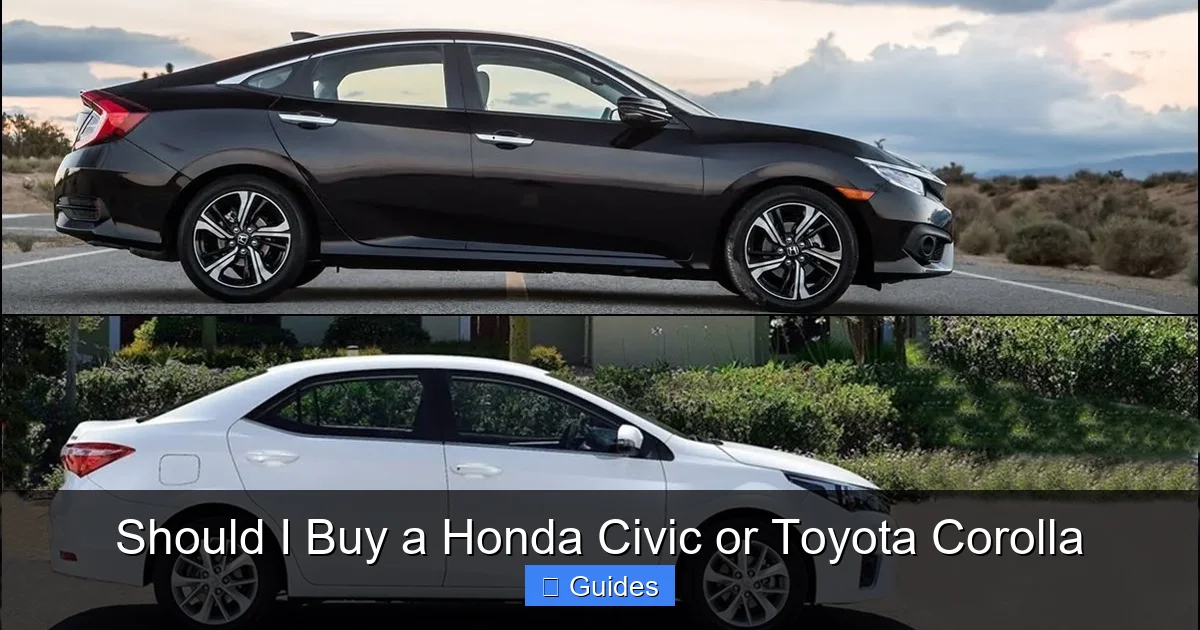
Fuel efficiency is a major selling point for both the Honda Civic and Toyota Corolla. In a world of rising gas prices and environmental concerns, these compact cars deliver impressive mileage without sacrificing practicality.
Gas-Powered Models: A Close Race
For the 2024 model year, the Honda Civic with the 2.0-liter engine and CVT achieves an EPA-estimated 32 MPG in the city and 42 MPG on the highway, for a combined 36 MPG. The turbocharged 1.5-liter engine in higher trims is slightly less efficient, coming in at 31/40/35 MPG (city/highway/combined).
The Toyota Corolla with the 2.0-liter engine and CVT gets 32 MPG in the city and 41 MPG on the highway, for a combined 35 MPG. So, in real-world terms, the difference is negligible—just one mile per gallon in combined driving.
Both cars are excellent choices for commuters, students, or anyone looking to save at the pump. The slight edge goes to the Civic, but it’s not enough to be a deciding factor unless you drive extremely high mileage.
Hybrid Options: The Efficiency Kings
If fuel economy is your top priority, both brands offer hybrid versions that push efficiency into the stratosphere.
The Honda Civic Hybrid (available in select markets) delivers an estimated 50 MPG in the city and 45 MPG on the highway, for a combined 47 MPG. It uses a two-motor hybrid system that’s smooth and quiet, with seamless transitions between electric and gasoline power.
The Toyota Corolla Hybrid, however, takes the crown. It achieves an EPA-estimated 53 MPG in the city and 46 MPG on the highway, for a combined 50 MPG. That’s among the best in the compact class. The Corolla Hybrid uses Toyota’s proven Hybrid Synergy Drive system, which has been refined over two decades.
For city drivers or those with long commutes, the Corolla Hybrid is hard to beat. It offers exceptional efficiency, low emissions, and the reliability Toyota is known for. The Civic Hybrid is strong, but the Corolla Hybrid is slightly more efficient and often more affordable.
Real-World Fuel Costs
Let’s put this into perspective. Assume you drive 15,000 miles per year and gas costs $3.50 per gallon.
– Civic (gas): 15,000 ÷ 36 MPG = 417 gallons × $3.50 = $1,459 per year
– Corolla (gas): 15,000 ÷ 35 MPG = 429 gallons × $3.50 = $1,501 per year
– Civic Hybrid: 15,000 ÷ 47 MPG = 319 gallons × $3.50 = $1,116 per year
– Corolla Hybrid: 15,000 ÷ 50 MPG = 300 gallons × $3.50 = $1,050 per year
Over five years, the Corolla Hybrid could save you over $2,000 in fuel compared to the gas-powered Civic. That’s a significant amount, especially when combined with lower maintenance costs.
Interior Quality and Comfort
Visual guide about Should I Buy a Honda Civic or Toyota Corolla
Image source: i.gaw.to
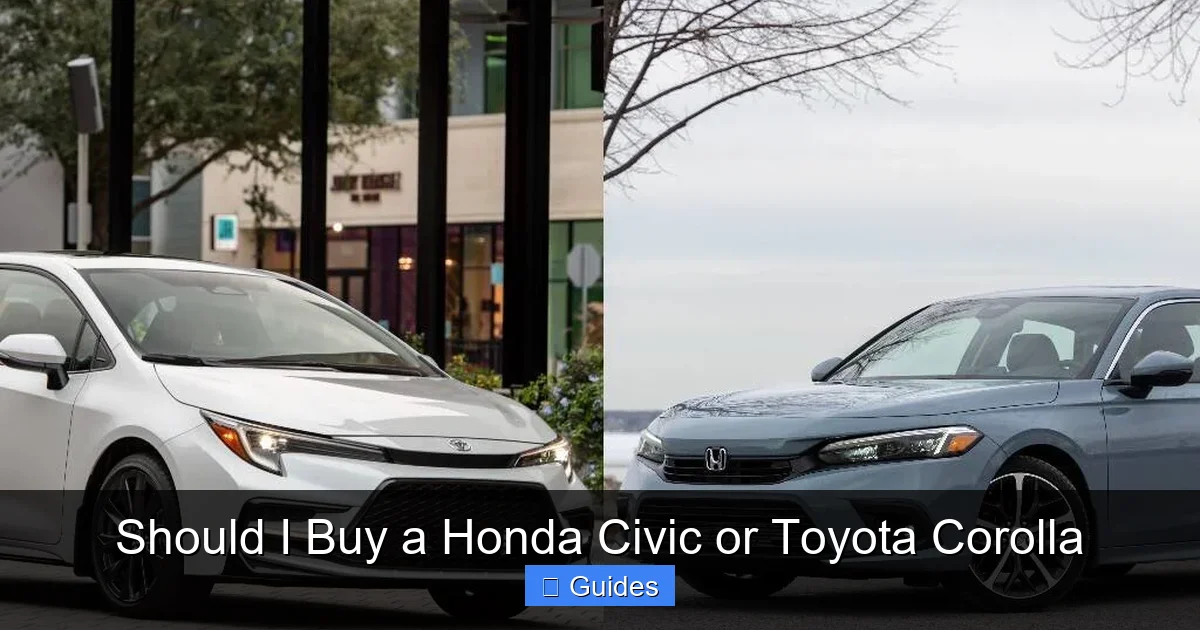
Step inside both cars, and you’ll notice differences in design philosophy. The Honda Civic leans toward a modern, driver-focused layout, while the Toyota Corolla emphasizes simplicity and ease of use.
Honda Civic: Modern and Driver-Centric
The Civic’s interior feels more upscale, especially in higher trims. Soft-touch materials, a sleek dashboard, and a well-placed infotainment screen give it a premium feel. The seats are supportive, with good bolstering in the Sport and Si models. Rear-seat space is generous, with plenty of legroom for adults.
The 7-inch touchscreen (standard on most trims) is responsive and intuitive. Apple CarPlay and Android Auto are standard, and higher trims add wireless connectivity. The digital instrument cluster in the Touring trim adds a futuristic touch.
One standout feature is the Civic’s excellent visibility. Large windows and a low dashboard make it easy to see out of, reducing blind spots and increasing confidence when parking or merging.
Toyota Corolla: Practical and User-Friendly
The Corolla’s interior is more conservative but highly functional. Materials are durable and easy to clean, though not as plush as the Civic’s. The design is straightforward, with physical buttons for climate and audio controls—something many drivers appreciate over touchscreens.
The 8-inch touchscreen (on most trims) is larger than the Civic’s base screen and includes standard Apple CarPlay and Android Auto. However, the interface can feel a bit dated compared to Honda’s system. The digital gauge cluster is available but not as customizable.
Rear-seat space is adequate, though slightly tighter than the Civic’s. Headroom is good, but taller passengers might find legroom a bit limited on long trips.
Cargo Space and Practicality
Both cars offer similar trunk space: the Civic has 14.8 cubic feet, while the Corolla has 13.1 cubic feet. That’s enough for groceries, luggage, or a few suitcases. The Civic’s slightly larger trunk gives it a small advantage for road trips or families.
If you need more space, both offer hatchback versions—the Civic Hatchback and Corolla Hatchback. These provide up to 24.5 cubic feet with the rear seats up, making them ideal for outdoor enthusiasts or small business owners.
Technology and Infotainment
Modern drivers expect more than just a radio and AC. Both the Honda Civic and Toyota Corolla deliver with advanced tech, but they approach it differently.
Infotainment Systems
The Honda Civic’s infotainment system is clean and responsive. The 7-inch touchscreen is standard, with crisp graphics and intuitive menus. Higher trims add wireless Apple CarPlay and Android Auto, a premium audio system, and navigation. The system supports over-the-air updates, keeping it current.
The Toyota Corolla’s 8-inch touchscreen is larger and includes standard wireless Apple CarPlay and Android Auto on most trims. However, the interface can feel cluttered, and some users report slower response times. Toyota’s Entune system has improved, but it still lags behind Honda’s in terms of polish.
Safety and Driver-Assist Features
Both cars come standard with comprehensive safety suites.
The Honda Sensing suite includes:
– Collision Mitigation Braking
– Road Departure Mitigation
– Adaptive Cruise Control
– Lane Keeping Assist
– Traffic Sign Recognition
The Toyota Safety Sense 3.0 includes:
– Pre-Collision System with Pedestrian Detection
– Lane Departure Alert with Steering Assist
– Dynamic Radar Cruise Control
– Road Sign Assist
– Automatic High Beams
Both systems are highly rated by the IIHS and NHTSA, earning Top Safety Pick+ awards. The Civic has a slight edge in forward collision prevention, while the Corolla excels in lane-keeping accuracy.
Convenience and Connectivity
Higher trims on both cars offer features like wireless charging, dual-zone climate control, and remote start. The Civic Touring adds a head-up display and Bose audio, while the Corolla XSE includes a JBL sound system and ambient lighting.
One area where the Corolla stands out is in its available digital key, which lets you lock, unlock, and start the car using your smartphone. The Civic doesn’t offer this feature yet.
Reliability and Long-Term Value
When it comes to reliability, both the Honda Civic and Toyota Corolla are legends. But which one holds up better over time?
Reliability Ratings
According to J.D. Power, Consumer Reports, and RepairPal, both cars score exceptionally well. The Civic consistently ranks in the top 3 for compact cars, with low repair frequency and high owner satisfaction. The Corolla often takes the #1 spot, praised for its bulletproof engines and minimal issues.
Toyota’s reputation for longevity is well-earned. Many Corollas reach 200,000 miles with only routine maintenance. The Civic is nearly as durable, with strong engine and transmission reliability.
Warranty and Maintenance
Both offer similar warranties:
– 3-year/36,000-mile basic warranty
– 5-year/60,000-mile powertrain warranty
Toyota includes two years of complimentary maintenance (oil changes, inspections), while Honda does not. This can save Corolla owners $300–$500 in the first two years.
Resale Value
Both cars hold their value well, but the Corolla has a slight edge. According to Kelley Blue Book, the Corolla retains about 55% of its value after three years, compared to 52% for the Civic. Over five years, the difference grows, making the Corolla a better long-term investment.
Pricing and Trim Options
Let’s talk money. Both cars are affordable, but pricing and available trims can influence your decision.
Starting Prices (2024 Models)
– Honda Civic LX: $25,045
– Toyota Corolla LE: $23,500
The Corolla starts about $1,500 cheaper, making it more accessible for budget buyers.
Trim Levels and Features
The Civic offers more performance-oriented trims like the Sport and Si, while the Corolla focuses on comfort and efficiency with the LE, SE, and XSE.
Higher trims on both cars add luxury features, but the Civic Touring feels more premium with its leather seats, navigation, and head-up display. The Corolla XSE is sporty but still prioritizes comfort over performance.
Hybrid Pricing
– Honda Civic Hybrid: Starting around $28,000
– Toyota Corolla Hybrid: Starting around $24,500
The Corolla Hybrid is significantly more affordable, offering better value for eco-conscious buyers.
Which One Should You Choose?
So, should you buy a Honda Civic or Toyota Corolla? The answer depends on your priorities.
Choose the Honda Civic if:
– You enjoy driving and want a sportier feel
– You value a modern, upscale interior
– You want a manual transmission option
– You’re willing to pay a bit more for style and performance
Choose the Toyota Corolla if:
– You prioritize comfort and ease of use
– You want the best fuel economy, especially with the hybrid
– You value long-term reliability and lower ownership costs
– You’re on a tighter budget
Both are excellent cars. The Civic is the better driver’s car. The Corolla is the better daily companion. Test drive both, compare features, and go with the one that fits your lifestyle.
Frequently Asked Questions
Which is more reliable, the Honda Civic or Toyota Corolla?
Both are extremely reliable, but the Toyota Corolla often ranks slightly higher in long-term dependability studies. It’s known for lasting over 200,000 miles with minimal issues.
Is the Honda Civic faster than the Toyota Corolla?
Yes, especially in turbocharged trims. The Civic’s 1.5-liter turbo engine delivers 180 horsepower, while the Corolla’s 2.0-liter engine makes 169 hp. The Civic also has better handling and optional manual transmission.
Which car has better fuel economy?
The Toyota Corolla Hybrid wins with 50 MPG combined. The gas-powered models are nearly identical, but the Corolla Hybrid is the most efficient option overall.
Do both cars come with Apple CarPlay and Android Auto?
Yes, both the Honda Civic and Toyota Corolla include standard Apple CarPlay and Android Auto on all trims for the 2024 model year.
Which has more cargo space?
The Honda Civic has a slight edge with 14.8 cubic feet of trunk space compared to the Corolla’s 13.1 cubic feet. The Civic Hatchback offers even more room.
Is the Corolla or Civic better for families?
Both are great for small families. The Civic offers more rear-seat space and a sportier ride, while the Corolla provides a smoother, quieter experience. Choose based on your preference for comfort vs. driving dynamics.

At CarLegit, we believe information should be clear, factual, and genuinely helpful. That’s why every guide, review, and update on our website is created with care, research, and a strong focus on user experience.