
Most Toyota Corolla models come equipped with one catalytic converter, but some newer or performance-oriented versions may have two. The exact number depends on the model year, engine type, and emissions regulations in your region. Understanding this helps with maintenance, repairs, and compliance.
If you’re driving a Toyota Corolla—or thinking about buying one—you’ve probably wondered about its emissions system. One of the most important components in that system is the catalytic converter. But here’s a question many Corolla owners ask: *How many catalytic converters are in a Toyota Corolla?* The answer isn’t always straightforward. While most people assume there’s just one, the reality depends on several factors, including the model year, engine configuration, and even where the car was sold.
The Toyota Corolla is one of the best-selling cars of all time, known for its reliability, fuel efficiency, and low maintenance costs. But like any vehicle, it must meet strict environmental regulations. That’s where the catalytic converter comes in. This small but mighty component plays a vital role in reducing harmful emissions by converting toxic gases like carbon monoxide, nitrogen oxides, and unburned hydrocarbons into less harmful substances like carbon dioxide, nitrogen, and water vapor. Over the years, as emissions standards have tightened, Toyota has adapted the Corolla’s exhaust system to stay compliant—sometimes adding more than one catalytic converter.
In this guide, we’ll break down everything you need to know about how many catalytic converters are in a Toyota Corolla. We’ll explore how engine types, model years, and regional regulations affect the number and placement of these components. Whether you’re troubleshooting a check engine light, planning a repair, or just curious about your car’s inner workings, this article will give you the clarity you need. Plus, we’ll share practical tips on maintenance, theft prevention, and what to do if your catalytic converter fails.
In This Article
- 1 Key Takeaways
- 2 📑 Table of Contents
- 3 Understanding the Catalytic Converter’s Role in Your Corolla
- 4 How Engine Type Affects the Number of Catalytic Converters
- 5 Model Year and Emissions Standards: A Timeline
- 6 Where Are the Catalytic Converters Located?
- 7 Why Does the Number of Catalytic Converters Matter?
- 8 Maintenance, Theft Prevention, and Common Issues
- 9 Conclusion
- 10 Frequently Asked Questions
- 10.1 How many catalytic converters does a 2020 Toyota Corolla have?
- 10.2 Do Toyota Corolla Hybrids have catalytic converters?
- 10.3 Can I drive my Corolla with a missing catalytic converter?
- 10.4 Why are catalytic converters stolen from Corollas?
- 10.5 How much does it cost to replace a catalytic converter on a Toyota Corolla?
- 10.6 Can a bad catalytic converter cause poor gas mileage?
Key Takeaways
- Typical Setup: Most standard Toyota Corolla models feature a single catalytic converter located in the exhaust system.
- Dual Converters in Some Models: Certain newer Corollas, especially those with turbocharged engines or hybrid systems, may include two catalytic converters for improved emissions control.
- Engine Type Matters: Four-cylinder naturally aspirated engines usually have one converter, while turbocharged or high-performance variants might use dual setups.
- Model Year Impact: Emissions standards have evolved over time, influencing whether your Corolla has one or two converters—especially post-2010 models.
- Hybrid Variants Differ: Toyota Corolla Hybrid models often integrate catalytic converters into the exhaust manifold or use close-coupled designs, sometimes appearing as multiple units.
- Location Awareness: Knowing where your catalytic converter(s) are located (under the car near the engine or further back) helps with diagnostics and theft prevention.
- Maintenance & Theft Prevention: Regular inspections and anti-theft measures are crucial, as catalytic converters contain precious metals and are frequent targets for theft.
📑 Table of Contents
- Understanding the Catalytic Converter’s Role in Your Corolla
- How Engine Type Affects the Number of Catalytic Converters
- Model Year and Emissions Standards: A Timeline
- Where Are the Catalytic Converters Located?
- Why Does the Number of Catalytic Converters Matter?
- Maintenance, Theft Prevention, and Common Issues
- Conclusion
Understanding the Catalytic Converter’s Role in Your Corolla
Before diving into how many catalytic converters your Corolla has, it’s important to understand what this component actually does. The catalytic converter is a key part of your vehicle’s exhaust system. It’s typically a metal canister located underneath the car, usually between the engine and the muffler. Inside, it contains a ceramic honeycomb structure coated with precious metals like platinum, palladium, and rhodium. These metals act as catalysts—hence the name—to speed up chemical reactions that convert harmful exhaust gases into safer ones.
For example, when your Corolla’s engine burns fuel, it produces carbon monoxide (a poisonous gas), nitrogen oxides (which contribute to smog), and unburned hydrocarbons (which can form ozone). The catalytic converter transforms these into carbon dioxide, nitrogen, and water vapor—gases that are far less harmful to the environment and human health.
Modern vehicles, including the Corolla, are required by law to have catalytic converters. In the United States, the Clean Air Act mandates their use, and similar regulations exist in Europe, Canada, Japan, and many other countries. Over time, these regulations have become stricter, pushing automakers to design more efficient and effective emissions control systems.
In older Corolla models—say, from the 1990s or early 2000s—the catalytic converter was often a single unit located under the car, closer to the rear. But as engines became more advanced and emissions standards tightened, Toyota began integrating catalytic converters closer to the engine. This “close-coupled” design allows the converter to heat up faster, making it more effective during cold starts—when most emissions occur.
How Engine Type Affects the Number of Catalytic Converters
Visual guide about How Many Catalytic Converters Are in a Toyota Corolla
Image source: mufflerexpress.com
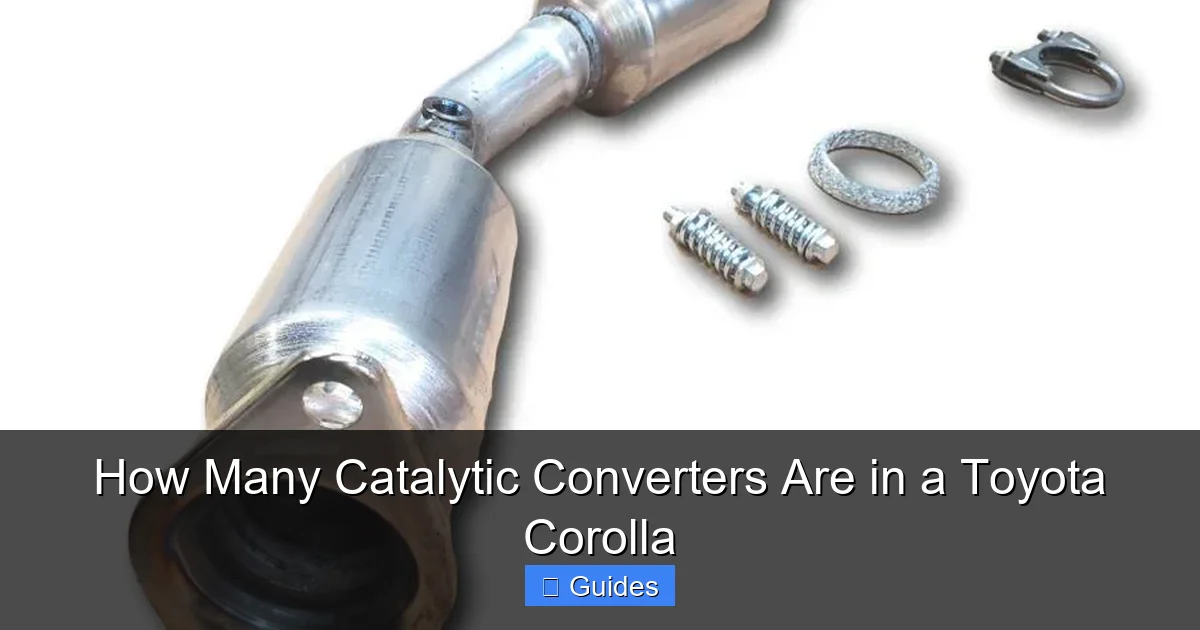
One of the biggest factors influencing how many catalytic converters are in your Toyota Corolla is the engine under the hood. The Corolla has been offered with a variety of engines over the decades, from simple 1.6-liter four-cylinders to more modern 2.0-liter Dynamic Force engines and even hybrid powertrains. Each of these engines has different emissions profiles and may require different exhaust configurations.
Let’s start with the most common setup: the standard four-cylinder gasoline engine. Most Corollas from the 2000s through the 2010s, such as the 1.8L 2ZR-FE engine, use a single catalytic converter. This converter is typically located in the exhaust manifold or just downstream of it. Because these engines are naturally aspirated and relatively simple, one converter is usually sufficient to meet emissions standards.
However, things get more interesting with turbocharged engines. Starting around 2019, Toyota introduced the 2.0-liter Dynamic Force engine in certain Corolla models, including the Corolla SE and XSE trims. These engines are more powerful and efficient, but they also produce higher exhaust temperatures and different emissions patterns. To manage this, some of these models use a dual catalytic converter setup.
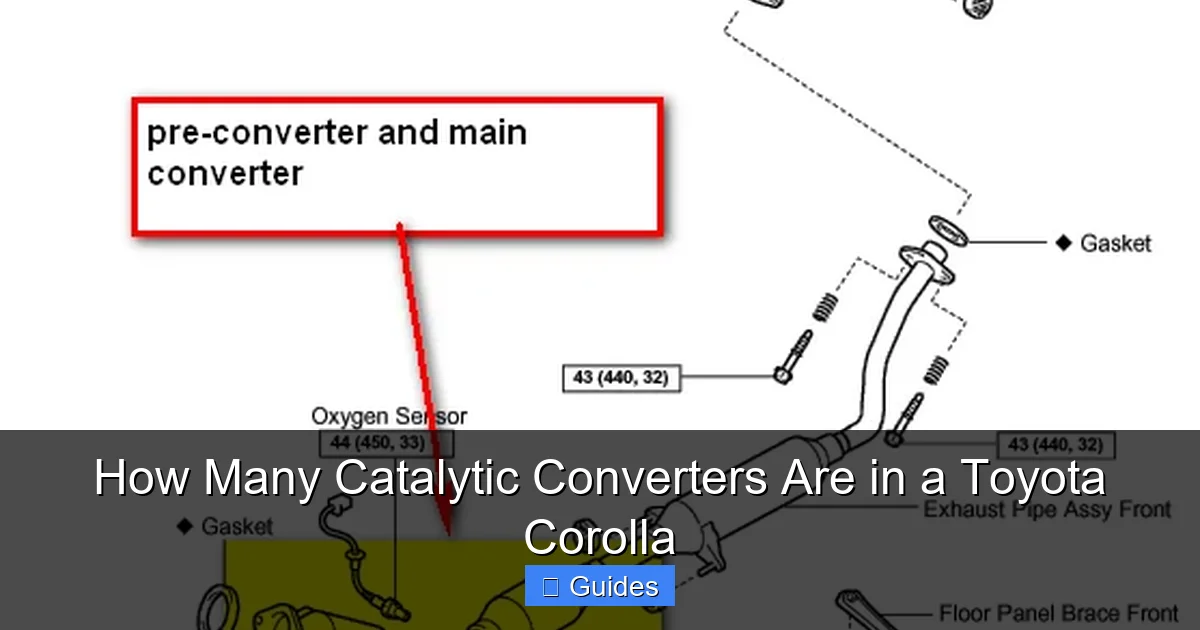
In these cases, you might find one converter integrated into the exhaust manifold (called a “pre-cat” or “close-coupled” converter) and another further downstream in the exhaust pipe (the “main” or “underfloor” converter). The close-coupled converter heats up quickly and handles initial emissions reduction, while the downstream converter provides additional cleaning as the exhaust gases cool. This dual system ensures that the Corolla meets strict emissions standards, especially during cold starts and high-load driving.
Hybrid Models: A Special Case
The Toyota Corolla Hybrid adds another layer of complexity. These models use a combination of a gasoline engine and an electric motor, which changes how the exhaust system operates. Because the engine doesn’t run all the time—especially at low speeds or when idling—the catalytic converter must stay hot enough to function efficiently even during intermittent use.
To solve this, Toyota often uses a close-coupled catalytic converter mounted directly to the engine’s exhaust manifold. In some hybrid Corollas, this setup may appear as two separate units: one integrated into the manifold and another slightly downstream. While technically there may be two physical components, they often work together as part of a single emissions control strategy.
Additionally, hybrid models may use advanced materials and designs to retain heat longer, reducing the need for a second converter. However, in regions with particularly strict emissions laws—like California or the European Union—Toyota may include a secondary converter to ensure compliance.
Model Year and Emissions Standards: A Timeline
Visual guide about How Many Catalytic Converters Are in a Toyota Corolla
Image source: justanswer.com
The number of catalytic converters in your Corolla also depends heavily on when it was made. Emissions regulations have evolved significantly over the past few decades, and Toyota has updated the Corolla’s exhaust system accordingly.
In the 1990s and early 2000s, most Corollas had a single catalytic converter located under the car, usually near the transmission or rear axle. These early converters were effective but took longer to reach operating temperature, which meant higher emissions during cold starts.
By the mid-2000s, as emissions standards tightened (especially with the introduction of Tier 2 and LEV II standards in the U.S.), Toyota began moving the catalytic converter closer to the engine. This “close-coupled” design allowed the converter to heat up faster, improving efficiency and reducing emissions.
Around 2010, with the rollout of even stricter standards like EPA Tier 3 and Euro 6, Toyota started using more advanced exhaust systems. Some Corollas from this era—particularly those with larger engines or sold in high-regulation markets—began featuring dual catalytic converters.
For example, the 2014–2018 Toyota Corolla with the 1.8L engine typically has one converter, but the 2019–2022 Corolla with the 2.0L Dynamic Force engine may have two, especially in trims like the SE or XSE. The 2023 and newer models continue this trend, with some variants using dual converters to meet the latest emissions requirements.
It’s also worth noting that regional differences play a role. A Corolla sold in California or Europe may have more stringent emissions controls than one sold in a less regulated market. This means two Corollas of the same model year and engine could have different numbers of catalytic converters depending on where they were manufactured or registered.
Where Are the Catalytic Converters Located?
Visual guide about How Many Catalytic Converters Are in a Toyota Corolla
Image source: vehiclefreak.com
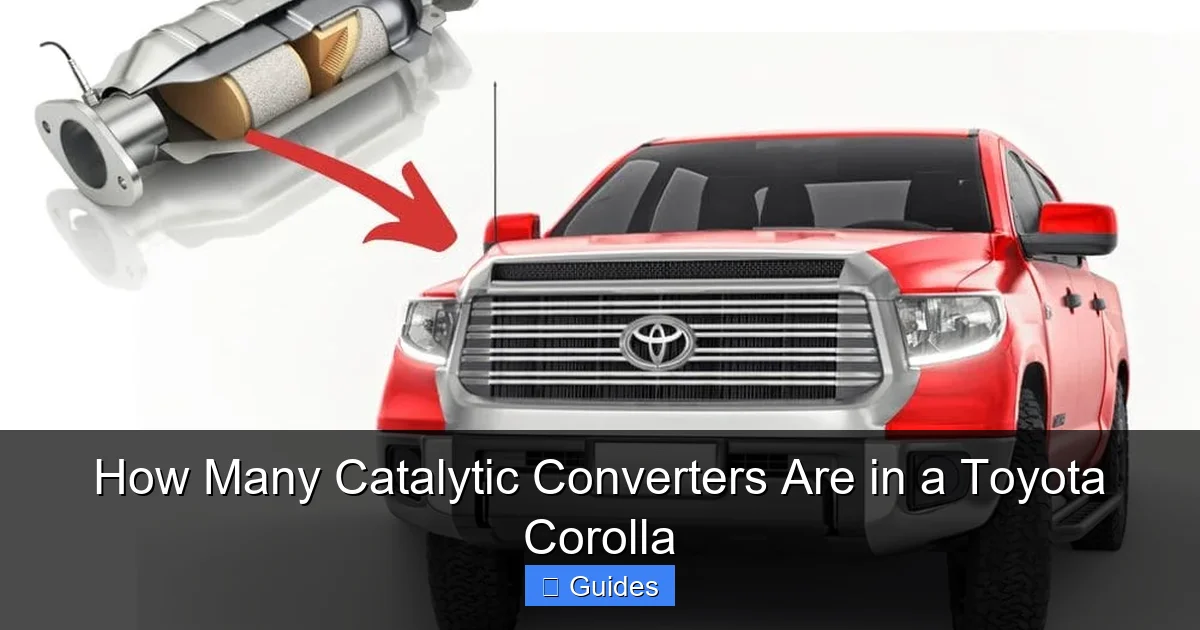
Knowing where your catalytic converter(s) are located can help you with maintenance, diagnostics, and theft prevention. In most Toyota Corollas, the primary catalytic converter is found underneath the vehicle, close to the engine. You can usually spot it by looking for a metal canister with a honeycomb-like structure inside, connected to the exhaust manifold.
In single-converter setups, this is the only unit you’ll find. It’s typically mounted just behind the engine, sometimes bolted directly to the exhaust manifold. This location allows it to heat up quickly when the engine starts, which is crucial for reducing cold-start emissions.
In dual-converter systems, the first converter (the pre-cat) is often integrated into the exhaust manifold itself. This means it’s mounted right on top of the engine, making it part of the engine’s exhaust ports. The second converter is located further down the exhaust pipe, usually under the passenger side of the car, closer to the rear.
For example, in a 2020 Corolla XSE with the 2.0L engine, you might find a small catalytic converter built into the exhaust manifold and a larger one about halfway down the undercarriage. This dual setup ensures that emissions are controlled at multiple stages, improving overall efficiency.
Hybrid Corollas often have their catalytic converter mounted very close to the engine block, sometimes even inside the exhaust manifold housing. This design helps retain heat during engine-off periods, ensuring the converter remains active when the gasoline engine restarts.
How to Identify Your Corolla’s Catalytic Converter(s)
If you’re unsure how many catalytic converters your Corolla has, there are a few ways to check. First, consult your owner’s manual. Toyota often includes a diagram of the exhaust system, which can show the location and number of converters.
You can also look under the car. With the vehicle safely lifted or on a lift, inspect the exhaust system. Look for metal canisters with a honeycomb interior—these are your catalytic converters. Count how many you see. Keep in mind that some converters are small and may be hidden or integrated into other components.
Another option is to use an OBD2 scanner. When you connect a scanner to your Corolla’s diagnostic port, it can read trouble codes related to the catalytic converter. Codes like P0420 (“Catalyst System Efficiency Below Threshold”) can indicate a problem with the converter, and the scanner may specify which bank or converter is affected—helping you determine if there’s more than one.
Finally, you can contact a Toyota dealership or trusted mechanic. They can look up your vehicle’s VIN and provide accurate information about its emissions system configuration.
Why Does the Number of Catalytic Converters Matter?
You might be wondering: *Does it really matter how many catalytic converters my Corolla has?* The short answer is yes—especially when it comes to maintenance, repairs, and compliance.
First, knowing the number and location of your converters helps with diagnostics. If your check engine light comes on and you get a P0420 code, understanding whether your car has one or two converters can help you pinpoint the issue. For example, if you have two converters and only one is failing, you may only need to replace that specific unit—saving you money.
Second, catalytic converters contain precious metals like platinum, palladium, and rhodium. These materials are valuable, which makes catalytic converters a prime target for theft. In recent years, catalytic converter theft has surged, especially in compact cars like the Corolla. Knowing where your converter(s) are located can help you take preventive measures, such as installing a protective shield or parking in well-lit areas.
Third, emissions compliance is critical. If your Corolla fails an emissions test, it could be due to a faulty catalytic converter. In some regions, having the correct number of functioning converters is a legal requirement. Replacing a missing or damaged converter with the wrong type could result in fines or registration issues.
Finally, understanding your exhaust system can help you make informed decisions about repairs and upgrades. For instance, if you’re considering a performance exhaust system, you’ll need to ensure it includes the proper catalytic converters to remain street-legal.
Maintenance, Theft Prevention, and Common Issues
Catalytic converters are designed to last the life of the vehicle, but they can fail due to age, contamination, or damage. Common signs of a failing converter include reduced engine performance, poor fuel economy, a sulfur-like smell (like rotten eggs), and the check engine light.
To maintain your catalytic converter, avoid using leaded fuel (which can poison the catalyst), fix engine misfires promptly (unburned fuel can overheat the converter), and keep up with regular oil changes. Contaminants like oil or coolant entering the exhaust system can also damage the converter.
Theft is another major concern. Because catalytic converters contain precious metals, they can be sold for hundreds of dollars on the black market. To protect your Corolla, consider installing a catalytic converter shield or etching your VIN onto the converter. Parking in secure, well-lit areas and using motion-sensor lights can also deter thieves.
If your converter fails, replacement can be expensive—often costing $1,000 or more, depending on the model and labor costs. However, in some cases, cleaning or repairing the converter may be possible. Always consult a professional mechanic to determine the best course of action.
Conclusion
So, how many catalytic converters are in a Toyota Corolla? For most standard models, the answer is one. But depending on the engine, model year, and emissions regulations, some Corollas—especially newer or performance-oriented versions—may have two. Understanding this helps you maintain your vehicle, troubleshoot issues, and stay compliant with environmental laws.
Whether you drive a 2005 Corolla with a single converter or a 2023 Corolla Hybrid with a close-coupled setup, knowing your car’s emissions system is key to keeping it running smoothly and legally. With rising concerns about theft and stricter emissions standards, staying informed is more important than ever.
By following the tips in this guide—checking your owner’s manual, inspecting under the car, and consulting a mechanic when needed—you can ensure your Corolla’s catalytic converter(s) are in top condition. After all, a well-maintained emissions system doesn’t just protect the environment—it protects your wallet and your peace of mind.
Frequently Asked Questions
How many catalytic converters does a 2020 Toyota Corolla have?
Most 2020 Toyota Corolla models with the 1.8L engine have one catalytic converter. However, the 2.0L Dynamic Force engine used in SE and XSE trims may have two—one close-coupled and one downstream—depending on the market and emissions requirements.
Do Toyota Corolla Hybrids have catalytic converters?
Yes, Toyota Corolla Hybrids are equipped with catalytic converters. They often use a close-coupled design mounted near the engine to maintain efficiency during intermittent engine use, and some models may appear to have multiple units.
Can I drive my Corolla with a missing catalytic converter?
No, driving without a catalytic converter is illegal in most regions and will cause your car to fail emissions tests. It also increases harmful emissions and can trigger the check engine light.
Why are catalytic converters stolen from Corollas?
Catalytic converters contain valuable precious metals like platinum, palladium, and rhodium. Thieves target Corollas because they are common, easy to access, and often have converters that can be removed quickly.
How much does it cost to replace a catalytic converter on a Toyota Corolla?
Replacement costs vary, but typically range from $800 to $2,500, including parts and labor. OEM converters are more expensive, while aftermarket options may be cheaper but must meet emissions standards.
Can a bad catalytic converter cause poor gas mileage?
Yes, a clogged or failing catalytic converter can restrict exhaust flow, reducing engine efficiency and leading to decreased fuel economy, sluggish acceleration, and increased emissions.

At CarLegit, we believe information should be clear, factual, and genuinely helpful. That’s why every guide, review, and update on our website is created with care, research, and a strong focus on user experience.