
Checking tire pressure on your 2021 Toyota Corolla is essential for safety, fuel efficiency, and tire longevity. This guide walks you through manual and digital methods, explains the correct PSI, and highlights common mistakes to avoid—all in easy-to-follow steps.
In This Article
- 1 Key Takeaways
- 2 📑 Table of Contents
- 3 Why Checking Tire Pressure Matters on Your 2021 Toyota Corolla
- 4 Understanding the Recommended Tire Pressure for Your 2021 Corolla
- 5 Tools You’ll Need to Check Tire Pressure
- 6 Step-by-Step Guide: How to Check Tire Pressure Manually
- 7 Using the Toyota Corolla’s Built-In Tire Pressure Monitoring System (TPMS)
- 8 Common Mistakes to Avoid When Checking Tire Pressure
- 9 Seasonal Tips for Maintaining Proper Tire Pressure
- 10 Conclusion: Make Tire Pressure Checks a Habit
- 11 Frequently Asked Questions
- 11.1 What is the recommended tire pressure for a 2021 Toyota Corolla?
- 11.2 Can I rely only on the TPMS warning light to know if my tires are low?
- 11.3 How often should I check my tire pressure?
- 11.4 Is it okay to use the air pump gauge at gas stations?
- 11.5 What should I do if the TPMS light stays on after inflating my tires?
- 11.6 Do I need to check the spare tire?
Key Takeaways
- Use the correct PSI: The recommended tire pressure for a 2021 Toyota Corolla is typically 32–35 PSI, found on the driver’s door jamb sticker.
- Check when tires are cold: Always measure tire pressure before driving or after the car has been parked for at least 3 hours for accurate readings.
- Invest in a quality gauge: A reliable digital or analog tire pressure gauge ensures precision—avoid relying solely on gas station air pumps.
- Use the built-in TPMS: The 2021 Corolla includes a Tire Pressure Monitoring System that alerts you via dashboard warning lights if pressure is low.
- Inspect tires visually: Look for signs of underinflation like bulging sidewalls or uneven tread wear during routine checks.
- Adjust seasonally: Tire pressure drops in cold weather—check more frequently in winter to maintain optimal levels.
- Don’t forget the spare: If your Corolla comes with a spare tire, include it in your monthly pressure checks.
📑 Table of Contents
- Why Checking Tire Pressure Matters on Your 2021 Toyota Corolla
- Understanding the Recommended Tire Pressure for Your 2021 Corolla
- Tools You’ll Need to Check Tire Pressure
- Step-by-Step Guide: How to Check Tire Pressure Manually
- Using the Toyota Corolla’s Built-In Tire Pressure Monitoring System (TPMS)
- Common Mistakes to Avoid When Checking Tire Pressure
- Seasonal Tips for Maintaining Proper Tire Pressure
- Conclusion: Make Tire Pressure Checks a Habit
Why Checking Tire Pressure Matters on Your 2021 Toyota Corolla
Your 2021 Toyota Corolla is designed for efficiency, reliability, and comfort—but none of that matters if your tires aren’t properly inflated. Proper tire pressure isn’t just about avoiding a flat; it’s about safety, performance, and saving money in the long run. Underinflated tires increase rolling resistance, which means your engine works harder and burns more fuel. Overinflated tires reduce traction and can lead to uneven wear, making your ride harsher and less safe, especially in wet or icy conditions.
Imagine driving down the highway on a rainy day. If your tires are underinflated, they’re more likely to hydroplane because the tread can’t channel water away effectively. That’s not just annoying—it’s dangerous. On the flip side, overinflated tires have less contact with the road, reducing grip and increasing stopping distance. Whether you’re commuting to work, taking a weekend road trip, or driving your kids to school, proper tire pressure ensures your Corolla handles predictably and responds quickly when you need it most.
Beyond safety, maintaining correct tire pressure extends the life of your tires. Tires that are consistently underinflated wear out faster on the edges, while overinflated ones wear down the center. Either way, you’re replacing them sooner than necessary—and that’s an unnecessary expense. Plus, Toyota engineers designed the 2021 Corolla with specific tire specifications in mind. Sticking to the recommended PSI helps preserve the car’s suspension, alignment, and overall driving dynamics.
Understanding the Recommended Tire Pressure for Your 2021 Corolla
Visual guide about How to Check Tire Pressure on Toyota Corolla 2021
Image source: ebaymotorsblog.com
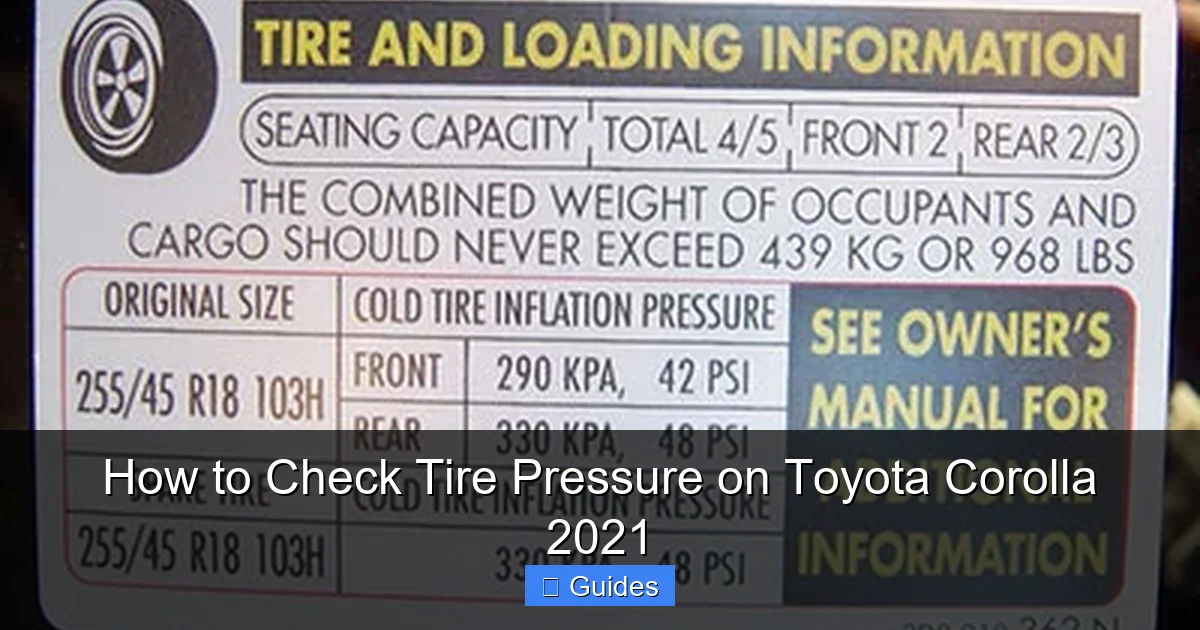
So, what’s the magic number? For most 2021 Toyota Corolla models—whether it’s the base L, the mid-tier LE, or the sporty SE—the recommended tire pressure is between 32 and 35 PSI (pounds per square inch). But don’t just take our word for it. The exact number is printed right on your car, specifically on a sticker located on the driver’s side door jamb. Open the door and look near the latch—you’ll see a label with tire size, load index, and the correct cold inflation pressure.
Why “cold”? Because tire pressure changes with temperature. When you drive, your tires heat up, and the air inside expands, increasing the PSI. That’s why you should always check tire pressure when the tires are cold—meaning the car hasn’t been driven for at least three hours, or no more than one mile at low speed. If you check pressure right after a drive, you’ll get a falsely high reading, which could lead you to underinflate your tires when you top them off.
For example, let’s say you drive 20 minutes to work, park, and then check your tires. The pressure might read 36 PSI, but that’s because the tires are warm. The actual cold pressure could be closer to 33 PSI—right in the ideal range. If you add air based on the warm reading, you might overinflate, which defeats the purpose. Always wait or check first thing in the morning for the most accurate results.
It’s also worth noting that the recommended PSI on the door jamb is for the front and rear tires—unless your Corolla is equipped with a full-size spare or different tire sizes (which is rare). Most models use the same size tires all around, so the same PSI applies to all four. However, if you’ve upgraded to performance tires or are carrying a heavy load (like on a road trip with luggage), you might need to adjust slightly. Toyota’s owner’s manual provides guidance for these scenarios, so it’s a good idea to keep it handy.
Tools You’ll Need to Check Tire Pressure
Visual guide about How to Check Tire Pressure on Toyota Corolla 2021
Image source: i.ytimg.com
You don’t need a mechanic’s toolkit to check your tire pressure—just a few simple, affordable tools. The most important is a tire pressure gauge. There are two main types: analog (dial) and digital. Both work well, but digital gauges are often easier to read and more precise, especially in low light. Look for one with a backlit display if you plan to check tires at night or in a dim garage.
Analog gauges use a needle and dial, which some people prefer for their simplicity and durability. They don’t require batteries, so you never have to worry about them dying at the worst moment. However, they can be harder to read accurately, especially if the needle wobbles or the dial is small. Digital gauges, on the other hand, display the exact PSI in clear numbers. Many also have features like automatic shutoff to save battery and memory functions to store previous readings.
You can find reliable tire pressure gauges at auto parts stores, big-box retailers, or online for under $20. Brands like Accutire, AstroAI, and Michelin offer solid options. Avoid the cheap, flimsy gauges often found at gas stations—they’re often inaccurate and break easily. Investing in a good gauge pays off in peace of mind and long-term use.
In addition to a gauge, you’ll need access to an air compressor to add air if your tires are low. Most gas stations have air pumps with built-in gauges, but as mentioned earlier, these aren’t always reliable. If you check your tires regularly, consider buying a portable 12V air compressor that plugs into your Corolla’s cigarette lighter or USB port. These compact devices let you inflate tires at home, in a parking lot, or even on a remote road trip. Some models even come with their own pressure gauges and automatic shutoff features.
Another helpful tool is a tire tread depth gauge, though it’s not required for pressure checks. It helps you monitor tire wear over time, which is important because worn tires can’t maintain proper pressure as effectively. But for now, focus on the pressure gauge and air source.
Step-by-Step Guide: How to Check Tire Pressure Manually
Visual guide about How to Check Tire Pressure on Toyota Corolla 2021
Image source: i.ytimg.com
Now that you have your tools, let’s walk through the process of checking your tire pressure manually. It’s quick, easy, and something you can do in under 10 minutes.
Step 1: Park on a Level Surface
Start by parking your Corolla on a flat, level surface. This ensures the tires aren’t tilted or compressed unevenly, which could affect the reading. Turn off the engine and engage the parking brake. If you’re checking the tires at home, do this in your driveway or garage. If you’re at a gas station, make sure the car is fully stopped and not on a slope.
Step 2: Locate the Valve Stem
Each tire has a small valve stem—a metal or rubber protrusion near the rim. It’s usually covered by a small plastic cap. Remove the cap by twisting it counterclockwise. Keep it in a safe place (like your pocket or car cup holder) so you don’t lose it. The valve stem is where you’ll attach the pressure gauge.
Step 3: Attach the Pressure Gauge
Press the gauge firmly onto the valve stem. You’ll hear a brief hiss of air—that’s normal. Hold it steady for a second or two until the reading stabilizes. If you’re using a digital gauge, the number will appear on the screen. If it’s analog, read the needle position on the dial. Make sure the gauge is perpendicular to the valve stem to avoid air leaks.
Step 4: Read and Record the Pressure
Note the PSI reading. Compare it to the recommended pressure on your door jamb sticker. If it’s below the recommended level, you’ll need to add air. If it’s above, you may need to release some air (though this is less common). Write down the reading for each tire so you can track changes over time.
Step 5: Repeat for All Four Tires
Check each tire individually—front left, front right, rear left, and rear right. It’s easy to forget one, especially if you’re in a hurry. Take your time and go one by one. After checking, replace the valve cap on each tire. Don’t overtighten it—just hand-tight is fine.
Step 6: Add or Release Air as Needed
If a tire is low, use your air compressor to add air. Attach the compressor nozzle to the valve stem and turn it on. Add air in short bursts, checking the pressure frequently with your gauge. Stop when you reach the recommended PSI. If you overinflate, press the gauge onto the valve stem again to release a small amount of air—most gauges have a small button or lever for this.
Step 7: Recheck and Secure
After adjusting, recheck the pressure to confirm it’s correct. Replace all valve caps and store your tools. You’re done!
Using the Toyota Corolla’s Built-In Tire Pressure Monitoring System (TPMS)
The 2021 Toyota Corolla comes equipped with a Tire Pressure Monitoring System (TPMS), a smart feature that alerts you when tire pressure is too low. It’s a great backup to manual checks, but it shouldn’t replace them entirely.
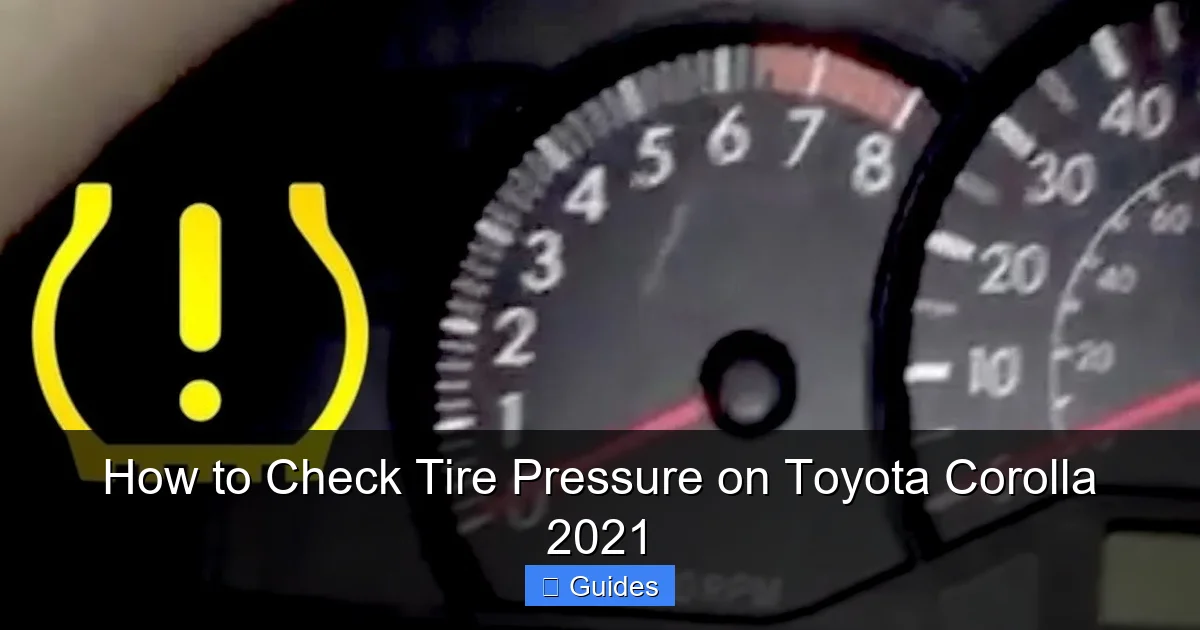
The TPMS uses sensors inside each tire (or in the valve stems) to monitor pressure in real time. If the pressure drops below a certain threshold—usually around 25% below the recommended level—a warning light will appear on your dashboard. It looks like a flat tire with an exclamation point inside. When you see this light, it’s time to check your tires immediately.
However, the TPMS isn’t perfect. It only alerts you when pressure is significantly low, not when it’s slightly underinflated. For example, if your recommended PSI is 33 and your tire drops to 30, the TPMS might not trigger. But 30 PSI is still below optimal and can affect fuel economy and handling. That’s why manual checks are still essential—especially since the TPMS doesn’t tell you which tire is low or by how much.
If the TPMS light comes on, don’t panic. Pull over safely and check all four tires with your gauge. Often, the issue is a slow leak, a temperature drop, or a faulty sensor. Once you’ve corrected the pressure, the light should turn off after driving a short distance. If it stays on, there may be a sensor problem or a more serious issue—visit a Toyota service center.
You can also reset the TPMS after adjusting tire pressure. On most 2021 Corolla models, this is done through the multi-information display (MID) on the dashboard. Press the “Menu” or “Trip” button on the steering wheel until you find the “TPMS” or “Tire Pressure” option. Follow the on-screen prompts to reset the system. This ensures the sensors recalibrate to the new pressure levels.
Common Mistakes to Avoid When Checking Tire Pressure
Even with the best intentions, it’s easy to make mistakes when checking tire pressure. Here are some common pitfalls and how to avoid them.
Checking Tires When They’re Hot
As mentioned earlier, checking pressure right after driving gives a false reading. Always wait until the tires are cold—ideally overnight. If you must check after a short drive, add 1–2 PSI to your target to account for heat expansion, then recheck when cold.
Relying Solely on Gas Station Gauges
Many drivers use the air pump’s built-in gauge at gas stations. While convenient, these gauges are often poorly maintained and inaccurate. Always double-check with your own reliable gauge.
Ignoring the Spare Tire
If your Corolla has a spare tire (some models don’t), include it in your checks. A flat spare is useless in an emergency. Check it every few months or before long trips.
Overinflating to “Be Safe”
Some people think more air equals better performance. But overinflation reduces traction, increases wear, and makes the ride rougher. Stick to the recommended PSI—no more, no less.
Forgetting to Replace Valve Caps
Valve caps keep dirt and moisture out of the valve stem. Without them, the valve can corrode or leak air over time. Always replace them after checking pressure.
Not Checking Regularly
Tire pressure can drop gradually due to temperature changes, leaks, or punctures. Make it a habit to check monthly—or before long drives. Set a reminder on your phone if needed.
Seasonal Tips for Maintaining Proper Tire Pressure
Tire pressure isn’t a “set it and forget it” task—it changes with the seasons. In winter, cold temperatures cause air to contract, lowering PSI. For every 10°F drop in temperature, tire pressure can decrease by about 1 PSI. That means a tire at 33 PSI in summer could drop to 30 PSI in winter—below the recommended range.
To combat this, check your tire pressure more frequently in colder months—ideally once a week. If you live in a region with harsh winters, consider using nitrogen instead of regular air. Nitrogen molecules are larger and less prone to leakage, helping maintain stable pressure. Many tire shops offer nitrogen fills for a small fee.
In summer, the opposite happens. Heat causes air to expand, potentially leading to overinflation. While less common, it’s still worth monitoring, especially during heatwaves. Avoid parking in direct sunlight for long periods if possible, and check pressure in the early morning when temperatures are cooler.
Regardless of the season, always refer to the door jamb sticker for the correct PSI. Don’t adjust based on feel or guesswork. Your Corolla’s handling and efficiency depend on precise inflation.
Conclusion: Make Tire Pressure Checks a Habit
Checking tire pressure on your 2021 Toyota Corolla is one of the simplest yet most impactful maintenance tasks you can do. It takes just a few minutes, costs almost nothing, and delivers big benefits: better fuel economy, longer tire life, improved safety, and a smoother ride. Whether you use a manual gauge or rely on the built-in TPMS, consistency is key.
Start by investing in a quality pressure gauge and making monthly checks part of your routine. Keep an eye on seasonal changes, especially in winter, and don’t ignore the spare tire. Remember, the correct PSI is on your door jamb—not the tire sidewall (which shows maximum pressure, not recommended). And always check when tires are cold for the most accurate reading.
Your Corolla is designed to go the distance. With proper tire care, you’ll enjoy every mile of the journey—safely, efficiently, and confidently.
Frequently Asked Questions
What is the recommended tire pressure for a 2021 Toyota Corolla?
The recommended tire pressure for most 2021 Toyota Corolla models is between 32 and 35 PSI. You can find the exact number on the sticker located on the driver’s side door jamb. Always check when tires are cold for accuracy.
Can I rely only on the TPMS warning light to know if my tires are low?
No, the TPMS only alerts you when pressure is significantly low—usually 25% below recommended. It won’t catch minor underinflation, so manual checks with a gauge are still essential for optimal performance and safety.
How often should I check my tire pressure?
Check your tire pressure at least once a month and before long trips. In colder months, consider checking weekly, as temperature drops can reduce PSI quickly.
Is it okay to use the air pump gauge at gas stations?
Gas station gauges are convenient but often inaccurate. Always double-check with your own reliable tire pressure gauge to ensure proper inflation.
What should I do if the TPMS light stays on after inflating my tires?
If the light remains on after correcting the pressure, there may be a sensor issue or a slow leak. Visit a Toyota service center for diagnosis and repair.
Do I need to check the spare tire?
Yes, if your 2021 Corolla comes with a spare tire, include it in your routine checks. A flat spare won’t help in an emergency, so keep it properly inflated.

At CarLegit, we believe information should be clear, factual, and genuinely helpful. That’s why every guide, review, and update on our website is created with care, research, and a strong focus on user experience.