
Your Toyota Tundra requires a specific type of coolant to ensure optimal engine performance and longevity. Using the right coolant prevents corrosion, overheating, and costly repairs, so it’s essential to follow Toyota’s guidelines for both new and older models.
If you own a Toyota Tundra—whether it’s a rugged 2007 model with a V8 under the hood or a sleek 2023 hybrid—you know this truck is built to last. But like any high-performance vehicle, it needs the right care to keep running strong. One of the most overlooked yet critical aspects of Tundra maintenance is the coolant. You might be asking: *What kind of coolant does a Toyota Tundra take?* The answer isn’t just about picking up any bottle from the auto parts store. It’s about choosing the right formula that protects your engine, prevents corrosion, and ensures your truck handles everything from desert heat to mountain snow without breaking a sweat.
Coolant—also known as antifreeze—does more than just keep your engine from overheating. It also prevents freezing in cold climates, lubricates the water pump, and protects metal and rubber components from rust and degradation. Using the wrong type can lead to clogs, leaks, or even engine damage over time. That’s why Toyota has specific recommendations for the Tundra, and why it’s essential to follow them closely. Whether you’re topping off the reservoir or doing a full system flush, knowing the correct coolant type is the first step toward long-term reliability.
In this guide, we’ll walk you through everything you need to know about coolant for your Toyota Tundra. From identifying the right product to understanding when and how to change it, we’ll cover all the bases. We’ll also clear up common myths, like whether you can mix coolants or if “universal” formulas really work. By the end, you’ll have the confidence to maintain your Tundra’s cooling system like a pro—no mechanic degree required.
In This Article
- 1 Key Takeaways
- 2 📑 Table of Contents
- 3 Why Coolant Matters for Your Toyota Tundra
- 4 Toyota’s Recommended Coolant: Super Long Life Coolant (SLLC)
- 5 Coolant Types: Understanding the Differences
- 6 How to Check and Add Coolant to Your Tundra
- 7 When and How to Flush Your Cooling System
- 8 Common Coolant Myths and Misconceptions
- 9 Conclusion
- 10 Frequently Asked Questions
Key Takeaways
- Use Toyota Super Long Life Coolant (SLLC): This is the factory-recommended coolant for most Tundra models, offering extended protection and compatibility with Toyota’s engine materials.
- Avoid mixing coolant types: Mixing different coolants can cause chemical reactions, sludge formation, and reduced cooling efficiency.
- Check your owner’s manual: Always refer to your specific model year and engine type for the most accurate coolant specifications.
- 50/50 premix or concentrate: You can use pre-diluted coolant or mix concentrate with distilled water—never use tap water.
- Flush every 60,000–100,000 miles: Regular coolant flushes maintain system health and prevent buildup or corrosion.
- Look for red or pink color: Genuine Toyota SLLC is typically red or pink; avoid green or yellow coolants unless specified.
- Professional service recommended: If unsure, have a certified Toyota technician handle coolant changes to ensure proper procedure and disposal.
📑 Table of Contents
Why Coolant Matters for Your Toyota Tundra
Your Toyota Tundra’s engine generates a tremendous amount of heat, especially when towing heavy loads, climbing steep grades, or idling in traffic. The cooling system is designed to manage that heat by circulating coolant through the engine block and radiator. But if the coolant isn’t up to the task, your engine could overheat, warp cylinder heads, or even seize—leading to repairs that cost thousands of dollars.
Coolant isn’t just water in a bottle. It’s a carefully engineered mixture of ethylene or propylene glycol and additives that protect against corrosion, scale, and biological growth. Over time, these additives break down, and the coolant loses its effectiveness. That’s why regular changes are necessary—even if your Tundra isn’t showing signs of trouble.
Using the wrong coolant can be just as bad as neglecting changes altogether. For example, older green coolant (IAT—Inorganic Acid Technology) contains silicates that can form sludge when mixed with newer formulas. This sludge can clog radiator tubes, reduce heat transfer, and damage the water pump. On the other hand, using a coolant with the wrong pH balance can corrode aluminum components, which are common in modern Tundra engines.
Toyota designs its cooling systems with specific materials in mind—aluminum heads, rubber hoses, plastic reservoirs—and the coolant must be compatible with all of them. That’s why the manufacturer recommends a specific type: Toyota Super Long Life Coolant (SLLC). This formula is tailored to protect your Tundra’s engine for up to 100,000 miles or 10 years under normal driving conditions.
How Coolant Protects Your Engine
Think of coolant as your engine’s personal bodyguard. It doesn’t just absorb heat—it actively defends against internal threats. The additives in high-quality coolant form a protective layer on metal surfaces, preventing rust and pitting. They also inhibit the growth of algae and bacteria that can thrive in stagnant coolant, especially in warmer climates.
Another key role is lubrication. The water pump, which circulates coolant throughout the system, relies on the fluid to keep its seals and bearings functioning smoothly. If the coolant breaks down or becomes acidic, it can wear out the pump prematurely, leading to leaks and overheating.
Finally, coolant helps maintain the right operating temperature. Modern engines are designed to run hot—around 195°F to 220°F—for optimal fuel efficiency and emissions control. If the coolant can’t transfer heat effectively, the engine runs too hot, increasing wear and reducing performance.
Signs Your Coolant Needs Attention
Even with the right coolant, your Tundra’s cooling system needs regular checks. Here are a few warning signs that your coolant might be due for a change or top-off:
– **Low coolant level:** If you frequently need to add coolant, you may have a leak in the system.
– **Discolored coolant:** Healthy coolant is bright red or pink. If it looks brown, murky, or has floating particles, it’s time for a flush.
– **Overheating:** If the temperature gauge climbs into the red, pull over immediately. Overheating can cause serious engine damage.
– **Sweet smell or white smoke:** This could indicate a coolant leak into the combustion chamber—a sign of a blown head gasket.
– **Rust or scale in the reservoir:** This suggests corrosion is already happening inside the system.
Ignoring these signs can lead to bigger problems down the road. A simple coolant change is far cheaper than replacing a water pump or radiator.
Toyota’s Recommended Coolant: Super Long Life Coolant (SLLC)
Visual guide about What Kind of Coolant Does a Toyota Tundra Take
Image source: i.ytimg.com
When it comes to what kind of coolant a Toyota Tundra takes, the official answer is clear: Toyota Super Long Life Coolant (SLLC). This is the factory-fill coolant used in all new Tundras and the only type Toyota recommends for ongoing use. It’s specifically formulated for Toyota’s aluminum engines and cooling system components, offering superior protection and longevity.
SLLC is a phosphate-free, organic acid technology (OAT) coolant that provides extended service life—up to 100,000 miles or 10 years, whichever comes first. Unlike older coolants that require changes every 30,000 miles, SLLC is designed to last much longer, reducing maintenance frequency and cost.
One of the key advantages of SLLC is its compatibility. It won’t react with rubber hoses, plastic tanks, or aluminum parts, which are common in Tundra engines. It also resists the formation of scale and sludge, keeping the cooling system clean and efficient.
Identifying Genuine Toyota SLLC
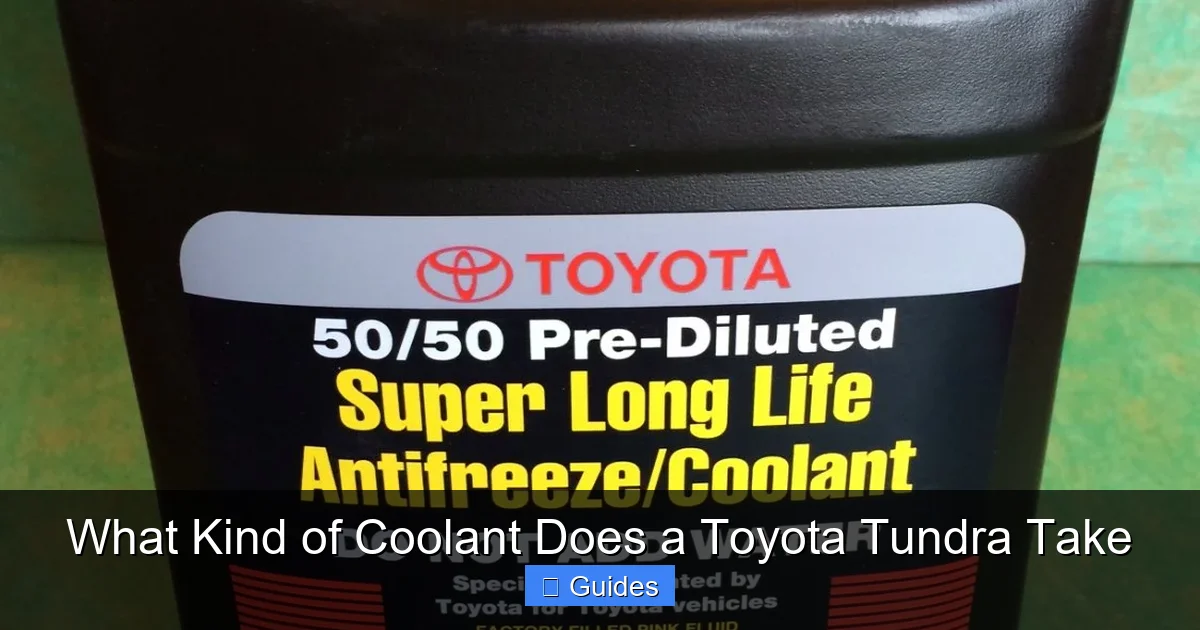
Genuine Toyota Super Long Life Coolant is easy to spot. It comes in a bright red or pink color and is sold in 1-gallon jugs or 50/50 premix bottles at Toyota dealerships and authorized retailers. The label will clearly state “Toyota Super Long Life Coolant” and include the part number (usually 00295-1LLC2 for concentrate or 00295-1LLC5 for premix).
Be cautious of knockoff products that mimic the color and packaging. Always buy from a trusted source to ensure you’re getting the real deal. Counterfeit coolants may lack the proper additives and could damage your engine.
Can You Use Other Coolants?
While Toyota recommends SLLC, some aftermarket coolants claim to be “compatible” with Toyota vehicles. In general, it’s best to stick with the OEM recommendation. However, if you must use an alternative, look for coolants that meet Toyota’s specification: **Toyota Type 2** or **LLC (Long Life Coolant)**.
These coolants are typically red or pink and are formulated with similar OAT technology. Brands like Prestone MAX, Zerex G-05, and Peak Final Charge offer Toyota-compatible options, but always double-check the label for compatibility.
Never use traditional green coolant (IAT) in a Tundra. These older formulas contain silicates and phosphates that can react with SLLC and cause sludge. Mixing them can reduce the effectiveness of both coolants and lead to system failure.
Coolant Types: Understanding the Differences
Visual guide about What Kind of Coolant Does a Toyota Tundra Take
Image source: s.ecrater.com
Not all coolants are created equal. To make the right choice for your Tundra, it helps to understand the different types available and how they work.
Inorganic Acid Technology (IAT)
This is the oldest type of coolant, often green in color. It contains silicates and phosphates that provide quick corrosion protection but break down quickly—usually within 2–3 years or 30,000 miles. IAT coolants are common in older vehicles but are not recommended for modern Toyotas.
Organic Acid Technology (OAT)
OAT coolants, like Toyota SLLC, use organic acids to provide long-lasting protection. They don’t contain silicates, which means they’re less likely to form sludge. OAT coolants are typically orange or red and are designed for extended service intervals.
Hybrid Organic Acid Technology (HOAT)
HOAT coolants combine OAT with small amounts of silicates for added protection. They’re often yellow or turquoise and are used in some European and American vehicles. While some HOAT coolants are compatible with Toyota, they’re not the first choice unless specified.
Dexcool and Other Manufacturer-Specific Formulas
Dexcool is a GM-developed OAT coolant that’s orange and used in many General Motors vehicles. It’s not recommended for Toyota Tundras, as it may not be compatible with Toyota’s materials and additives.
The key takeaway: **Stick with Toyota SLLC or a verified Toyota-compatible OAT coolant.** Avoid mixing types, and never use universal coolants unless they explicitly state compatibility with Toyota Type 2.
How to Check and Add Coolant to Your Tundra
Visual guide about What Kind of Coolant Does a Toyota Tundra Take
Image source: i.ytimg.com
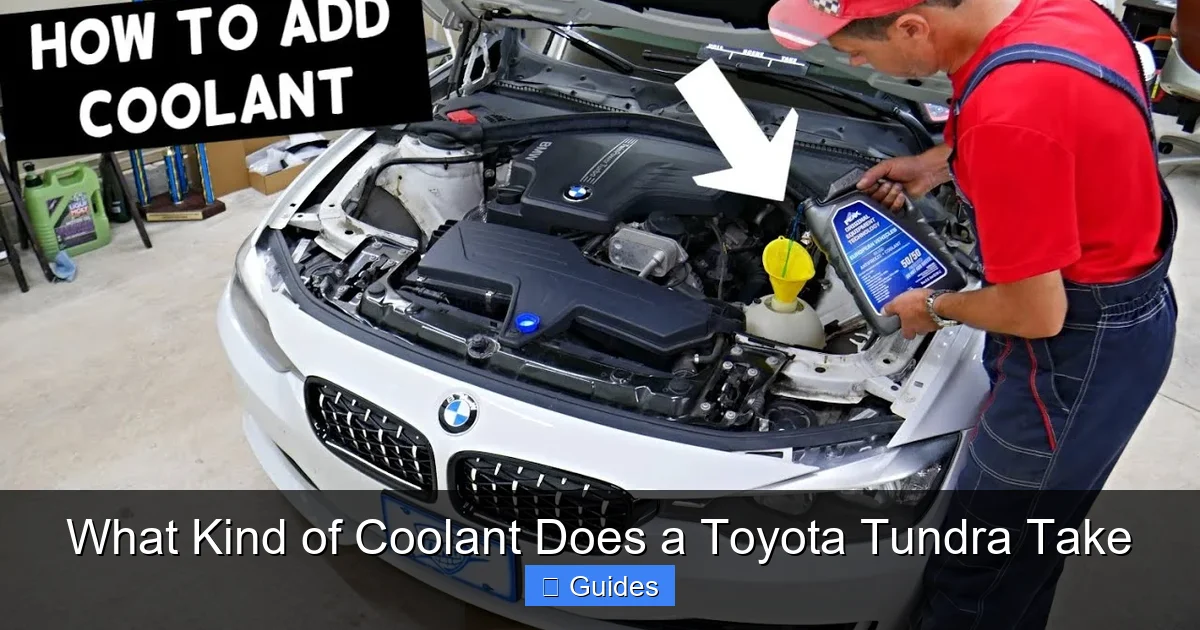
Maintaining the right coolant level is simple, but it’s important to do it safely and correctly. Here’s a step-by-step guide to checking and adding coolant to your Toyota Tundra.
Step 1: Let the Engine Cool
Never open the radiator cap or coolant reservoir when the engine is hot. Coolant is under pressure and can spray out, causing severe burns. Wait at least 30 minutes after driving before checking the system.
Step 2: Locate the Coolant Reservoir
In most Tundra models, the coolant reservoir is a translucent plastic tank near the radiator. It has “MIN” and “MAX” markings on the side. The coolant level should be between these lines when the engine is cold.
Step 3: Check the Coolant Condition
Look at the color and clarity. Healthy coolant is bright red or pink and clear. If it’s brown, cloudy, or has debris, it’s time for a flush.
Step 4: Add Coolant if Needed
If the level is low, add Toyota SLLC or a compatible 50/50 premix. If using concentrate, mix it with distilled water in a 50/50 ratio. Never use tap water, as minerals can cause scale and corrosion.
Pour slowly to avoid air bubbles. Fill to the “MAX” line, then replace the cap securely.
Step 5: Check for Leaks
After adding coolant, start the engine and let it run for a few minutes. Check under the truck for leaks and monitor the temperature gauge. If the level drops again, you may have a leak that needs professional attention.
When and How to Flush Your Cooling System
Even with the best coolant, your Tundra’s cooling system needs a full flush periodically. Over time, rust, scale, and old coolant can build up, reducing efficiency and increasing the risk of overheating.
Recommended Flush Interval
Toyota recommends flushing the cooling system every 60,000 to 100,000 miles, or every 5 to 10 years, depending on driving conditions. If you frequently tow, drive in extreme temperatures, or notice signs of coolant degradation, consider flushing sooner.
DIY vs. Professional Flush
You can flush the system yourself with a few tools, but it’s a messy job. You’ll need a drain pan, funnel, distilled water, and new coolant. The process involves draining the old coolant, flushing with water, and refilling with fresh SLLC.
However, a professional flush is often more thorough. Technicians use pressurized equipment to remove all old coolant and debris, ensuring the system is completely clean. They can also check for leaks, test the thermostat, and inspect hoses and belts.
Steps for a Basic DIY Flush
1. **Drain the old coolant:** Place a pan under the radiator drain plug, open it, and let the coolant flow out.
2. **Flush with water:** Close the drain, fill the system with distilled water, run the engine for 5 minutes, then drain again. Repeat until the water runs clear.
3. **Refill with new coolant:** Add Toyota SLLC or 50/50 premix to the proper level.
4. **Bleed air from the system:** Start the engine with the radiator cap off and let it run until the thermostat opens. Top off coolant as needed.
Always dispose of old coolant properly—never pour it down the drain or on the ground. Most auto parts stores accept used coolant for recycling.
Common Coolant Myths and Misconceptions
There’s a lot of misinformation about coolant, especially when it comes to trucks like the Tundra. Let’s clear up some of the most common myths.
Myth: All Coolants Are the Same
False. Coolants vary widely in chemistry, additives, and compatibility. Using the wrong type can damage your engine. Always use the manufacturer-recommended coolant.
Myth: You Can Mix Any Coolants
Mixing coolants can cause chemical reactions, sludge, and reduced protection. Never mix IAT with OAT or HOAT coolants unless the label explicitly allows it.
Myth: Water Can Replace Coolant
While water can be used in an emergency, it lacks corrosion inhibitors and antifreeze properties. Prolonged use can lead to rust, overheating, and freezing.
Myth: Color Doesn’t Matter
Color is a rough indicator of coolant type. Green usually means IAT, red/pink means OAT, and yellow/turquoise means HOAT. Always check the label, but color can help you avoid mixing incompatible types.
Myth: Coolant Lasts Forever
Even long-life coolants break down over time. Follow the recommended change interval to keep your system protected.
Conclusion
So, what kind of coolant does a Toyota Tundra take? The answer is simple: **Toyota Super Long Life Coolant (SLLC)**. This factory-recommended formula is designed specifically for your Tundra’s engine and cooling system, offering up to 10 years or 100,000 miles of protection. It’s red or pink, phosphate-free, and compatible with all Tundra models from 2000 onward.
Using the right coolant isn’t just about following the manual—it’s about protecting your investment. A well-maintained cooling system prevents overheating, extends engine life, and saves you money on repairs. Whether you’re topping off the reservoir or doing a full flush, always choose quality over convenience.
Remember to check your coolant level regularly, avoid mixing types, and follow the recommended service intervals. And when in doubt, consult your owner’s manual or visit a certified Toyota service center. Your Tundra deserves the best—and so do you.
Frequently Asked Questions
Can I use Prestone coolant in my Toyota Tundra?
Yes, but only if it’s labeled as Toyota-compatible. Prestone MAX and some other OAT coolants meet Toyota Type 2 specifications and can be used as alternatives to SLLC. Always check the label before use.
Is it okay to mix red and green coolant?
No, never mix red (OAT) and green (IAT) coolants. They have different chemistries and can react to form sludge, clogging the cooling system and reducing efficiency.
How often should I check my coolant level?
Check your coolant level every month or before long trips. Look at the reservoir when the engine is cold and ensure it’s between the MIN and MAX marks.
Can I use distilled water instead of coolant?
Distilled water can be used temporarily in an emergency, but it lacks corrosion inhibitors and antifreeze protection. Replace it with proper coolant as soon as possible.
What happens if I use the wrong coolant?
Using the wrong coolant can cause corrosion, sludge buildup, overheating, and damage to the water pump, radiator, and engine components. It may also void your warranty.
Where can I buy Toyota Super Long Life Coolant?
You can purchase genuine Toyota SLLC at any Toyota dealership, authorized parts retailer, or online through Toyota’s official website. Look for part numbers 00295-1LLC2 (concentrate) or 00295-1LLC5 (premix).

At CarLegit, we believe information should be clear, factual, and genuinely helpful. That’s why every guide, review, and update on our website is created with care, research, and a strong focus on user experience.