
Yes, you can jumpstart a car with a bad alternator, but it won’t solve the underlying problem. The engine may start briefly, but without a working alternator, the battery won’t recharge and the car will likely stall soon after. Jump-starting is a temporary fix—get your alternator checked immediately to avoid being stranded.
In This Article
- 1 Key Takeaways
- 2 📑 Table of Contents
- 3 Can You Jumpstart a Car with a Bad Alternator?
- 4 Understanding the Role of the Alternator
- 5 Can You Jumpstart a Car with a Bad Alternator?
- 6 Risks of Driving with a Bad Alternator
- 7 How to Safely Jumpstart a Car with a Bad Alternator
- 8 How to Diagnose a Bad Alternator
- 9 What to Do After Confirming a Bad Alternator
- 10 Conclusion
- 11 Frequently Asked Questions
- 11.1 Can a car run with a completely dead alternator?
- 11.2 How long can you drive after jump-starting a car with a bad alternator?
- 11.3 Will a bad alternator drain a new battery?
- 11.4 Can you test an alternator without a multimeter?
- 11.5 Is it safe to jump-start a car with a bad alternator?
- 11.6 What happens if you keep driving with a bad alternator?
Key Takeaways
- Jump-starting works temporarily: A bad alternator won’t prevent a jump-start, but the car will only run as long as the battery holds charge.
- Battery vs. alternator confusion: A dead battery is often mistaken for alternator failure—test both to diagnose correctly.
- Risk of stalling: Even after a successful jump, the engine may shut off once the battery drains, especially at low RPMs.
- Drive time matters: If you must drive after a jump, go directly to a mechanic—don’t stop the engine unless absolutely necessary.
- Safety first: Always use proper jump-start procedures to avoid sparks, battery damage, or injury.
- Alternator symptoms: Dim lights, warning lights, strange noises, or electrical issues often signal alternator problems.
- Professional diagnosis recommended: Use a multimeter or visit a mechanic to confirm if the alternator is truly faulty.
📑 Table of Contents
- Can You Jumpstart a Car with a Bad Alternator?
- Understanding the Role of the Alternator
- Can You Jumpstart a Car with a Bad Alternator?
- Risks of Driving with a Bad Alternator
- How to Safely Jumpstart a Car with a Bad Alternator
- How to Diagnose a Bad Alternator
- What to Do After Confirming a Bad Alternator
- Conclusion
Can You Jumpstart a Car with a Bad Alternator?
Picture this: You’re running late for work, you hop in your car, turn the key—and nothing. The engine won’t start. You pop the hood, check the battery terminals, and everything looks fine. You call a friend, they bring jumper cables, and after a few minutes of connecting cables and revving engines, your car sputters to life. Relief washes over you—until five minutes down the road, the dashboard lights flicker, the radio dies, and the engine stalls. Sound familiar?
This frustrating scenario is more common than you think, and it often points to a deeper issue: a failing alternator. Many people assume that if a car won’t start, the battery is the culprit. But what if the battery is fine, and the real problem lies in the alternator? Can you still jumpstart a car with a bad alternator? The short answer is yes—but it’s not a long-term solution. In fact, attempting to drive with a faulty alternator after a jump-start can lead to more serious problems, including being stranded on the side of the road.
Understanding the relationship between your car’s battery and alternator is key to diagnosing and resolving starting issues. While the battery provides the initial power to start the engine, the alternator takes over once the engine is running, recharging the battery and powering the electrical systems. If the alternator fails, the battery will eventually drain, even if it was fully charged before. This is why a jump-start might get your car running temporarily, but it won’t keep it running for long.
In this guide, we’ll walk you through everything you need to know about jump-starting a car with a bad alternator—from how it works, to the risks involved, to what you should do next. Whether you’re a seasoned driver or a beginner, this information could save you time, money, and a lot of frustration.
Understanding the Role of the Alternator
Visual guide about Can You Jumpstart a Car with a Bad Alternator
Image source: piketransit.com
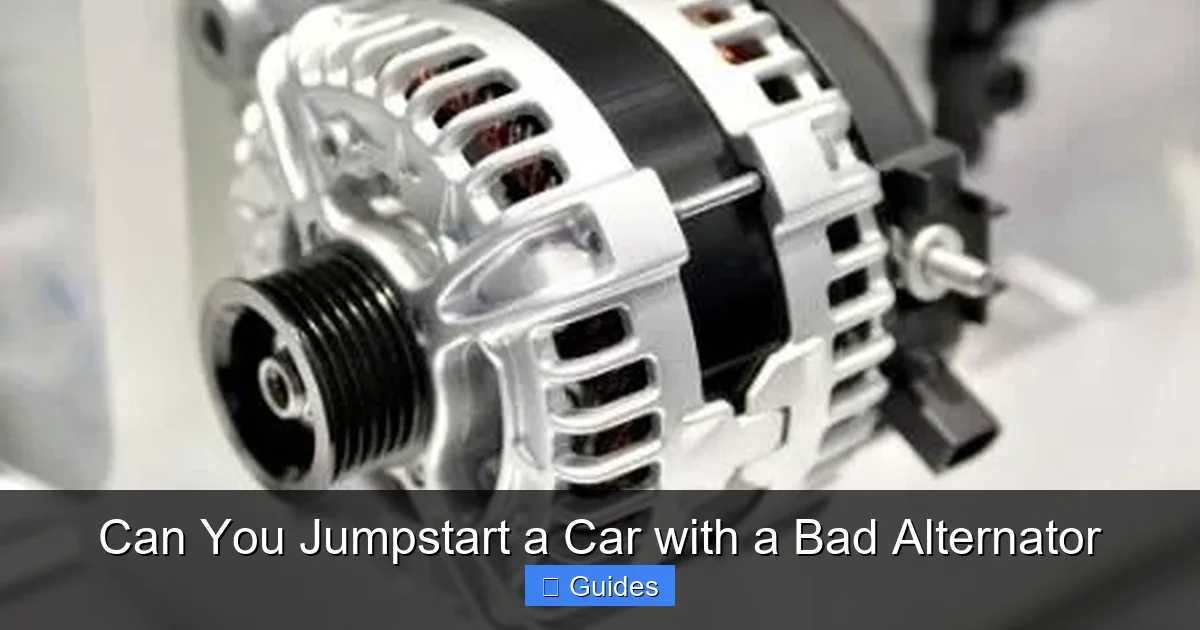
Before diving into whether you can jumpstart a car with a bad alternator, it’s important to understand what the alternator actually does. Think of your car’s electrical system like a team: the battery is the sprinter who gives a quick burst of energy to start the race, while the alternator is the marathon runner who keeps the energy flowing throughout the journey.
The alternator is a small but powerful device located near the engine, usually driven by a belt connected to the crankshaft. Its main job is to convert mechanical energy from the engine into electrical energy. This electricity powers everything in your car—from the headlights and radio to the fuel injectors and ignition system. At the same time, the alternator recharges the battery, ensuring it has enough power to start the car the next time you turn the key.
When the alternator is working properly, it maintains a steady voltage output—typically between 13.5 and 14.5 volts—while the engine is running. This keeps the battery charged and all electrical components functioning smoothly. However, if the alternator begins to fail, it can’t generate enough electricity to meet the car’s demands. As a result, the battery starts to drain, even while driving.
Common signs of a bad alternator include dim or flickering headlights, a battery warning light on the dashboard, slow electrical accessories (like power windows or seats), and a burning smell or unusual noises from under the hood. In some cases, the car may start fine one day and not the next—especially if the battery was recently charged or jump-started.
It’s easy to confuse alternator failure with a dead battery, especially since both can cause starting problems. However, a dead battery usually results from leaving lights on, extreme temperatures, or an old battery reaching the end of its life. A failing alternator, on the other hand, means the battery isn’t being recharged, so even a new battery will eventually die.
How the Alternator Powers Your Car
To better understand why a bad alternator affects jump-starting, let’s break down how the alternator powers your car. Once the engine starts, the alternator takes over as the primary source of electrical power. It uses a rotor and stator to generate alternating current (AC), which is then converted to direct current (DC) by diodes inside the alternator. This DC power is sent to the battery and distributed throughout the vehicle’s electrical system.
The alternator also includes a voltage regulator, which ensures the output stays within the safe range for your car’s electronics. If the voltage drops too low, the battery won’t charge. If it spikes too high, it can damage sensitive components like the ECU (engine control unit) or infotainment system.
When the alternator fails, the battery becomes the sole source of power. But batteries aren’t designed to run a car indefinitely—they’re meant to provide a short burst of energy to start the engine. Once the battery is drained, the car will stall, and you won’t be able to restart it without a jump.
Common Causes of Alternator Failure
Several factors can lead to alternator failure. Over time, the internal components—such as the brushes, bearings, and diodes—can wear out. A loose or worn serpentine belt can also prevent the alternator from spinning properly, reducing its output. In some cases, electrical shorts or corrosion on the terminals can disrupt the flow of electricity.
Extreme temperatures can also take a toll. In cold weather, the battery works harder to start the engine, putting extra strain on the alternator. In hot climates, the alternator can overheat, especially if it’s already weakened.
Regular maintenance can help extend the life of your alternator. Checking the belt tension, cleaning terminals, and monitoring voltage output with a multimeter are simple steps that can prevent unexpected failures.
Can You Jumpstart a Car with a Bad Alternator?
Visual guide about Can You Jumpstart a Car with a Bad Alternator
Image source: piketransit.com
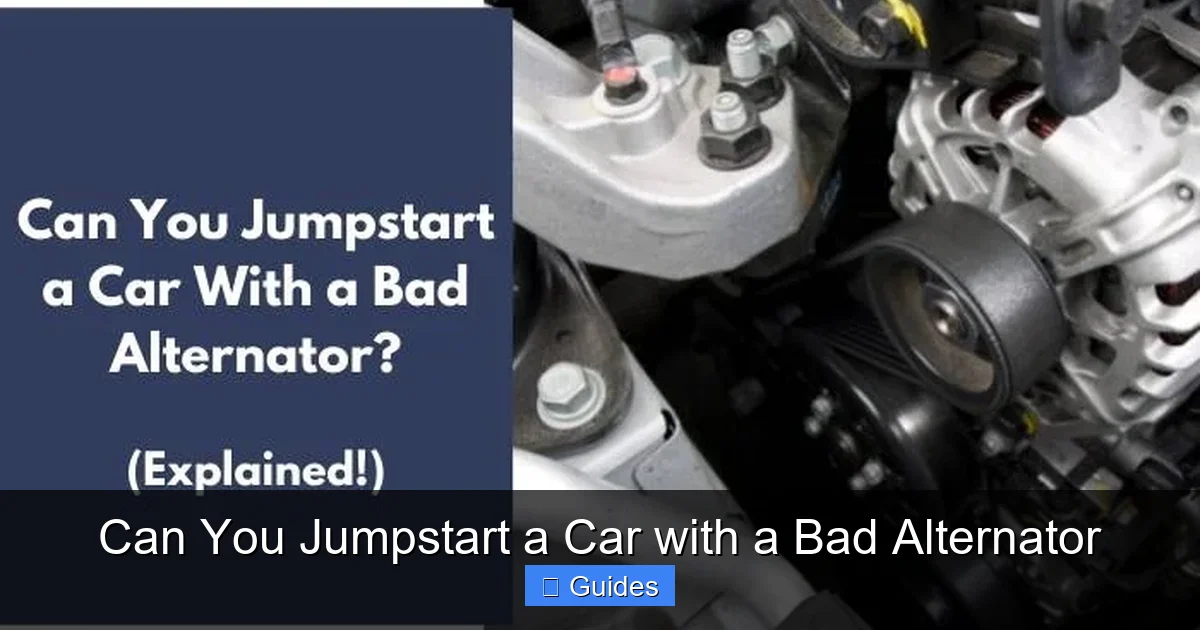
Now, let’s get to the heart of the question: Can you jumpstart a car with a bad alternator? The answer is yes—but with important caveats.
When you jumpstart a car, you’re essentially using another vehicle’s battery (or a portable jump starter) to provide the initial power needed to crank the engine. This bypasses the need for your own battery to have a full charge. Once the engine starts, the alternator should take over and begin recharging the battery. However, if the alternator is faulty, it won’t generate enough electricity to sustain the car’s electrical system or recharge the battery.
So, while the jump-start may get the engine running, the car will only operate as long as the battery has enough charge. Depending on how much power is being used—headlights, air conditioning, radio, etc.—and how much charge is left in the battery, the car might run for a few minutes, a few miles, or not long at all.
In practical terms, this means you might be able to drive to a nearby mechanic or auto parts store after a jump-start, but you shouldn’t plan on making a long trip or stopping the engine unless absolutely necessary. If you turn the car off, there’s a good chance it won’t start again without another jump.
What Happens After a Jump-Start?
After a successful jump-start, the engine will run, but the electrical system will still be under stress. Since the alternator isn’t recharging the battery, every component that uses electricity—from the fuel pump to the spark plugs—is drawing power directly from the battery. This accelerates the drain.
You might notice symptoms like dimming lights, a slow cranking sound when you try to restart, or warning lights on the dashboard. These are signs that the battery is losing charge quickly. If you continue driving, the engine may stall, especially at idle or low speeds, when the alternator’s output is lowest.
In some cases, the car might run fine for a short distance, only to die when you come to a stop. This is because the alternator needs the engine to be running at a certain RPM to generate sufficient power. At idle, a failing alternator may not produce enough electricity to keep the engine running.
Real-World Example: A Common Scenario
Imagine you’re at the grocery store, and your car won’t start. You call a friend, they jump-start it, and you drive home. Everything seems fine—until you try to start the car the next morning. It won’t turn over. You jump it again, and it starts, but the headlights are noticeably dimmer. You drive to the auto shop, but halfway there, the radio cuts out, the dashboard lights flicker, and the engine sputters to a stop.
This is a classic case of a bad alternator. The jump-start provided temporary power, but without a functioning alternator, the battery couldn’t recharge. The car ran only as long as the battery had enough juice left.
Risks of Driving with a Bad Alternator
Visual guide about Can You Jumpstart a Car with a Bad Alternator
Image source: autogos.com
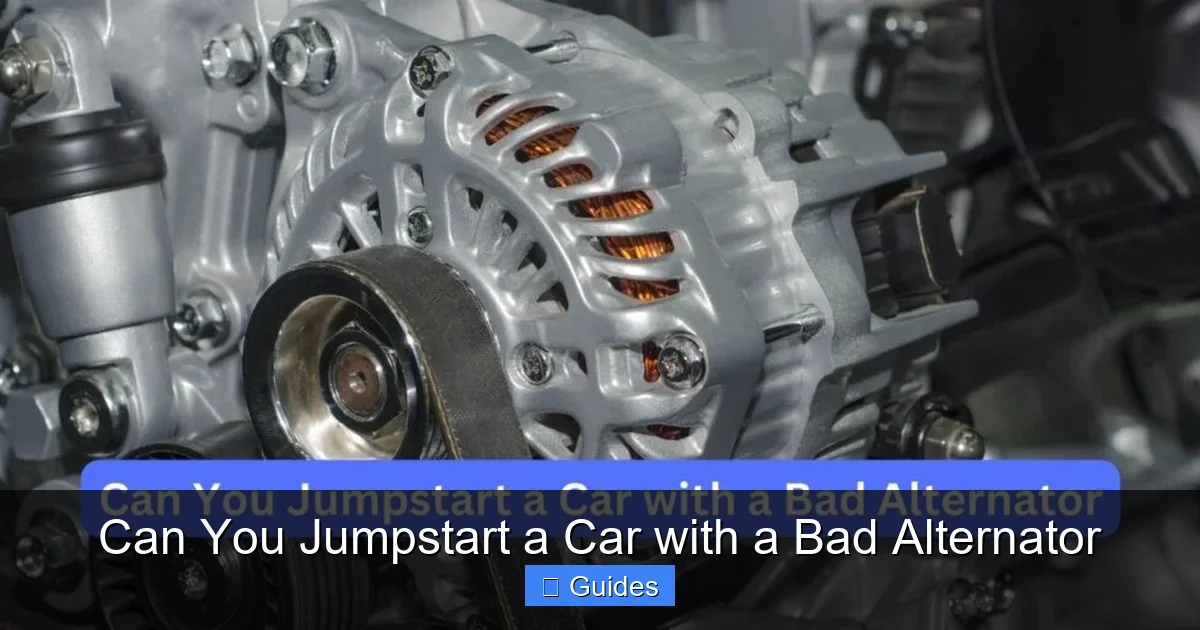
While jump-starting a car with a bad alternator can get you moving in a pinch, it’s not without risks. Driving with a failing alternator can lead to several problems, some of which can be dangerous or costly.
Battery Drain and Stalling
The most immediate risk is that your car will stall, potentially in traffic or on a busy road. If the engine shuts off while you’re driving, you’ll lose power steering and brake assist, making it harder to control the vehicle. This can be especially dangerous at high speeds or in poor weather conditions.
Even if the car doesn’t stall completely, a weak electrical system can cause erratic behavior. For example, the fuel pump might not receive enough power to deliver fuel consistently, leading to hesitation or misfires. The ignition system might struggle to spark the plugs, causing rough idling or stalling.
Damage to Electrical Components
A failing alternator can produce inconsistent voltage, which can damage sensitive electronics. Modern cars rely heavily on computers and sensors, and voltage spikes or drops can corrupt data or fry circuits. Components like the ECU, infotainment system, or even the transmission control module can be affected.
In some cases, a bad alternator can cause the battery to overcharge, leading to swelling, leakage, or even explosion. This is rare but extremely dangerous. Overcharging occurs when the voltage regulator fails and the alternator sends too much power to the battery.
Increased Wear on the Battery
Continuously draining and recharging a battery without a functioning alternator puts extra stress on it. This can shorten the battery’s lifespan and lead to premature failure. Even if you replace the alternator later, you may still need a new battery.
Safety Concerns
Beyond mechanical issues, there are safety concerns. If your car stalls in the middle of an intersection or on a highway, you could be at risk of a collision. Additionally, if the alternator fails completely while driving, you might lose essential systems like headlights or brake lights, making it harder for other drivers to see you.
How to Safely Jumpstart a Car with a Bad Alternator
If you find yourself in a situation where you need to jumpstart a car with a suspected bad alternator, it’s important to do it safely and correctly. Follow these steps to minimize risks and maximize your chances of getting to a repair shop.
Step-by-Step Jump-Start Procedure
- Park the donor vehicle close to the dead car—but not touching—so the jumper cables can reach both batteries.
- Turn off both engines and all electrical accessories (lights, radio, AC, etc.).
- Connect the red (positive) clamp to the positive terminal of the dead battery.
- Connect the other red clamp to the positive terminal of the donor battery.
- Connect the black (negative) clamp to the negative terminal of the donor battery.
- Connect the other black clamp to an unpainted metal surface on the dead car’s engine block—not the battery terminal. This reduces the risk of sparks near the battery.
- Start the donor vehicle and let it run for a few minutes to charge the dead battery.
- Try to start the dead car. If it doesn’t start, wait a few more minutes and try again.
- Once the dead car starts, disconnect the cables in reverse order—black from the engine block, black from the donor battery, red from the donor battery, red from the dead battery.
- Keep the jumped car running and drive it directly to a mechanic or auto parts store for diagnosis.
Important Tips
- Never let the clamps touch each other while connected to a battery.
- Avoid jump-starting in the rain or near flammable materials.
- If the battery is swollen, leaking, or damaged, do not attempt to jump-start it.
- Use a portable jump starter if no donor vehicle is available.
- Wear safety glasses and gloves if possible.
What to Do After the Jump
Once your car is running, don’t turn it off unless absolutely necessary. Drive straight to a mechanic or auto parts store that offers free alternator testing. Many chain stores like AutoZone, O’Reilly, or Advance Auto Parts can test your alternator and battery on the spot.
If you must stop, try to keep the engine running at a higher RPM (by gently pressing the accelerator) to help generate more power from the alternator—even if it’s failing. Avoid using high-power accessories like the heater, defroster, or radio, as they drain the battery faster.
How to Diagnose a Bad Alternator
If your car won’t start or keeps dying after a jump, it’s time to diagnose the alternator. While a mechanic can perform a thorough inspection, you can do some basic checks at home.
Check the Dashboard Warning Light
Most cars have a battery or alternator warning light on the dashboard. If it’s illuminated, it could indicate a charging system problem. However, not all warning lights are specific to the alternator—some may point to a loose belt or voltage issue.
Use a Multimeter
A multimeter is a handy tool for testing voltage. Here’s how to use it:
- Set the multimeter to DC voltage (usually marked as “V” with a straight line).
- Turn off the car and connect the red probe to the positive battery terminal and the black probe to the negative terminal.
- A healthy battery should read around 12.6 volts.
- Start the car and check the voltage again. It should rise to 13.5–14.5 volts if the alternator is working.
- If the voltage stays the same or drops, the alternator is likely faulty.
Listen for Unusual Noises
A failing alternator may produce a whining, grinding, or squealing noise, especially when the engine is cold. This could indicate worn bearings or a loose belt.
Inspect the Belt
Check the serpentine belt for cracks, fraying, or looseness. A slipping belt can prevent the alternator from spinning properly, reducing its output.
Test the Battery
Sometimes, the battery is the real problem. Use a battery tester or have it checked at an auto parts store. A weak or old battery can mimic alternator failure.
What to Do After Confirming a Bad Alternator
If you’ve confirmed that your alternator is bad, the next step is replacement. While some DIYers can replace an alternator at home, it’s often a complex job that requires special tools and knowledge.
Replacement Options
- DIY Replacement: If you’re mechanically inclined, you can replace the alternator yourself. Costs range from $100 to $300 for the part, plus tools. Watch online tutorials for your specific vehicle.
- Professional Installation: Most people opt for a mechanic. Labor costs vary, but expect to pay $200–$500 total, depending on the car and location.
- Rebuilt or Remanufactured Alternators: These are cheaper than new ones and often come with warranties. They’re a good middle-ground option.
Preventative Maintenance
To avoid future alternator issues:
- Check the serpentine belt regularly for wear and tension.
- Keep battery terminals clean and tight.
- Avoid overloading the electrical system with aftermarket accessories.
- Get regular vehicle inspections, especially as the car ages.
Conclusion
So, can you jumpstart a car with a bad alternator? Yes—but it’s only a temporary solution. The jump-start may get your engine running, but without a functioning alternator, the battery will quickly drain, and the car will likely stall. This can leave you stranded and put you at risk of electrical damage or safety hazards.
Understanding the difference between a dead battery and a bad alternator is crucial for proper diagnosis and repair. While jump-starting can buy you time to get to a mechanic, it’s not a fix. Always have your charging system tested after a jump-start, especially if the car dies again soon after.
Remember: a healthy alternator is essential for reliable driving. If you notice warning signs like dim lights, strange noises, or frequent stalling, don’t ignore them. Addressing alternator issues early can save you from bigger problems down the road.
In the end, the best approach is prevention. Regular maintenance, timely repairs, and paying attention to your car’s behavior can keep you safe and your vehicle running smoothly. And if you ever find yourself needing a jump-start, now you know what to expect—and what to do next.
Frequently Asked Questions
Can a car run with a completely dead alternator?
Yes, but only for a short time. The car will run on battery power alone, but once the battery drains, the engine will stall and won’t restart without a jump.
How long can you drive after jump-starting a car with a bad alternator?
It depends on the battery’s charge and electrical load, but typically only a few minutes to a few miles. Drive directly to a repair shop and avoid stopping the engine.
Will a bad alternator drain a new battery?
Yes. Even a new battery will drain quickly if the alternator isn’t recharging it. The alternator is responsible for maintaining the battery’s charge while driving.
Can you test an alternator without a multimeter?
You can check for warning lights or unusual noises, but a multimeter is the most accurate way to test voltage output. Many auto parts stores offer free testing.
Is it safe to jump-start a car with a bad alternator?
Yes, as long as you follow proper jump-start procedures. The risk comes from driving with a failing alternator, not from the jump-start itself.
What happens if you keep driving with a bad alternator?
The battery will drain, the car may stall, and electrical components could be damaged. In extreme cases, the battery could overcharge and become dangerous.

At CarLegit, we believe information should be clear, factual, and genuinely helpful. That’s why every guide, review, and update on our website is created with care, research, and a strong focus on user experience.