
Yes, you can buy a car directly from the manufacturer—but it’s not as simple as clicking “buy now.” While some brands like Tesla and Rivian sell exclusively online, most automakers still rely on dealerships. This guide breaks down how it works, what to expect, and whether it’s worth skipping the lot.
In This Article
- 1 Key Takeaways
- 2 📑 Table of Contents
- 3 Can You Buy a Car Directly from the Manufacturer?
- 4 How Car Sales Have Changed Over Time
- 5 Which Brands Let You Buy Directly?
- 6 The Pros and Cons of Buying Directly from the Manufacturer
- 7 How to Buy a Car Directly: Step-by-Step
- 7.1 Step 1: Research Your Options Start by identifying which brands sell directly in your area. Check the manufacturer’s website for availability and delivery options. Look for customer reviews and owner forums to learn about real-world experiences. Step 2: Configure Your Vehicle Use the online configurator to build your ideal car. Choose your trim, color, options, and accessories. Pay attention to delivery timelines—some custom builds can take weeks or months. Step 3: Review Pricing and Incentives Make sure you understand the total cost, including taxes, registration, and delivery fees. Check for any federal or state incentives, especially for electric vehicles. Some manufacturers offer referral programs or loyalty discounts. Step 4: Arrange Financing Most direct-selling brands offer financing through their own financial services. You can apply online and get pre-approved. Compare rates with banks or credit unions to ensure you’re getting the best deal. Step 5: Handle Your Trade-In If you’re trading in a vehicle, use the manufacturer’s online tool to get an estimate. You may need to schedule an inspection. Some brands allow you to apply the trade-in value directly to your new purchase. Step 6: Place Your Order Once everything is set, place your order online. You’ll typically pay a deposit (often refundable) to secure your build slot. Keep track of your order status through the manufacturer’s portal. Step 7: Schedule Delivery When your vehicle is ready, the manufacturer will contact you to schedule delivery. This could be at a service center, a pop-up location, or your home. Be prepared to complete final paperwork and take possession of your new car. Step 8: Register and Insure After delivery, you’ll need to register the vehicle and obtain insurance. Some manufacturers offer assistance with registration, but it’s ultimately your responsibility. Real-World Examples: What It’s Like to Buy Direct Let’s look at a few real-world scenarios to see how direct car buying plays out. Example 1: Buying a Tesla Model Y Sarah, a software engineer in Austin, Texas, wanted a Tesla Model Y. She visited Tesla.com, configured her vehicle with white exterior, black interior, and full self-driving capability. The total came to $58,000. She applied for financing through Tesla Financial Services, got approved at 3.9% APR, and placed her order with a $100 deposit. Three weeks later, she received an email saying her car was ready for delivery. She scheduled a time at a nearby Tesla service center, signed the paperwork, and drove off in her new SUV. No haggling, no surprises. Example 2: Ordering a Rivian R1T Mike, an outdoor enthusiast in Colorado, ordered a Rivian R1T online. He chose the Launch Edition with max battery and quad-motor drive. The price was $85,000. Rivian offered a trade-in estimate for his old truck, which he accepted. He financed through Rivian Financial and received his truck six months later via home delivery. While he loved the truck, he noted that service appointments were limited and required travel to Denver. Example 3: Trying to Buy a Ford F-150 Directly James, a contractor in Ohio, wanted to buy a Ford F-150 Lightning. He visited Ford’s website and configured his truck. He got a price quote and even applied for financing online. But when he tried to complete the purchase, he was redirected to a local Ford dealer. The dealer honored the online price but added a $1,500 “market adjustment” fee. James ended up negotiating and paying $5,000 more than the online quote. His experience highlights the limitations of hybrid models—convenience online, but dealer influence at the end. These examples show that while direct buying can be smooth and transparent, it’s not always perfect. Your experience will depend on the brand, your location, and your expectations. The Future of Car Buying: Will Direct Sales Take Over? As electric vehicles become more popular and consumer expectations shift, the way we buy cars is evolving. Will direct sales eventually replace dealerships? It’s possible—but unlikely to happen overnight. Traditional automakers have too much invested in their dealer networks to abandon them completely. Dealerships provide jobs, local service, and a familiar buying experience for many consumers. However, the trend is clear: more manufacturers are moving toward digital-first sales models. Even legacy brands are investing in online configurators, virtual showrooms, and home delivery options. The goal is to offer the convenience of direct sales while still leveraging dealer support. Regulatory changes will also play a role. As more states update their laws to allow direct sales—especially for EVs—we may see a broader shift. Some experts predict that by 2030, a majority of new car purchases could involve some form of direct or hybrid model. In the meantime, consumers benefit from more choices. Whether you prefer the control of buying directly or the support of a local dealer, the options are expanding. Conclusion So, can you buy a car directly from the manufacturer? The answer is yes—for some brands and in some locations. Tesla, Rivian, Lucid, and Polestar have proven that direct-to-consumer sales can work, offering transparency, convenience, and a modern buying experience. But for most traditional automakers, dealerships remain the primary channel due to legal and logistical reasons. If you’re considering a direct purchase, weigh the pros and cons carefully. Think about your need for test drives, service access, and personal interaction. Research your options, compare financing, and understand your state’s laws. The future of car buying is digital, but it’s not one-size-fits-all. Whether you buy directly or through a dealer, the most important thing is to make an informed decision that fits your lifestyle and budget. Frequently Asked Questions Can I buy a Tesla without going to a dealership?
- 7.2 Does Ford allow direct purchases?
- 7.3 Are direct car purchases cheaper?
- 7.4 Can I test drive a car before buying directly?
- 7.5 What happens if my direct-purchased car needs repairs?
- 7.6 Are there any states where direct car sales are illegal?
Key Takeaways
- Some brands sell direct-to-consumer: Tesla, Rivian, Lucid, and Polestar bypass traditional dealers and sell cars online or through company-owned stores.
- Most manufacturers use franchised dealers: Brands like Ford, Toyota, and Honda require you to buy through licensed dealerships due to state laws and franchise agreements.
- Direct purchases offer price transparency: Online orders often show fixed pricing with fewer hidden fees compared to dealer negotiations.
- Test drives and service may be limited: Buying direct can mean fewer local service centers or challenges scheduling test drives before purchase.
- State laws impact your options: Some states prohibit or restrict direct sales, forcing even direct-selling brands to use third-party partners.
- Customization is easier online: Many manufacturers let you build and configure your vehicle online with real-time pricing and delivery estimates.
- Financing and trade-ins still apply: Even when buying direct, you’ll need to arrange financing and handle trade-in valuations—often through the manufacturer’s financial arm.
📑 Table of Contents
- Can You Buy a Car Directly from the Manufacturer?
- How Car Sales Have Changed Over Time
- Which Brands Let You Buy Directly?
- The Pros and Cons of Buying Directly from the Manufacturer
- How to Buy a Car Directly: Step-by-Step
- Real-World Examples: What It’s Like to Buy Direct
- The Future of Car Buying: Will Direct Sales Take Over?
- Conclusion
Can You Buy a Car Directly from the Manufacturer?
So, you’re in the market for a new car. You’ve done your research, compared models, and maybe even taken a few test drives. But now you’re wondering: *Can I just buy this thing straight from the company that made it?* No middlemen, no dealership pressure, no haggling—just you, your credit score, and a shiny new ride delivered to your driveway.
The short answer? Yes—but it depends on the brand, your location, and how much control you want over the process.
For decades, the traditional car-buying experience has meant visiting a franchised dealership. These independently owned businesses sell vehicles on behalf of manufacturers like Ford, Chevrolet, or Toyota. But in recent years, a new model has emerged: direct-to-consumer sales. Companies like Tesla pioneered this approach, selling cars online and through company-owned stores instead of relying on third-party dealers. Now, other automakers are following suit—some fully, others partially.
This shift raises big questions: Is buying directly from the manufacturer better? Is it cheaper? And most importantly—can you actually do it where you live? In this guide, we’ll walk you through everything you need to know about purchasing a car straight from the source. Whether you’re eyeing an electric vehicle from Rivian or a hybrid from Toyota, we’ll help you understand your options, avoid pitfalls, and make the smartest choice for your next vehicle.
How Car Sales Have Changed Over Time

Visual guide about Can You Buy a Car Directly from the Manufacturer
Image source: sherpaautotransport-media.s3.amazonaws.com
To understand whether you can buy a car directly from the manufacturer, it helps to know how we got here. For nearly a century, the automotive industry operated under a franchise model. Automakers like General Motors, Ford, and Chrysler would manufacture vehicles and then distribute them to independently owned dealerships across the country. These dealers would sell, service, and support the cars—acting as the public face of the brand.
This system worked well for a long time. Dealers provided local presence, test drives, financing options, and after-sales service. But it also came with downsides: inconsistent pricing, aggressive sales tactics, and limited transparency. Customers often felt pressured or confused during the buying process.
Then came Tesla. In the late 2000s, Elon Musk’s electric car company decided to challenge the status quo. Instead of partnering with existing dealerships, Tesla opened its own stores and sold vehicles directly to consumers—first in person, then online. This allowed Tesla to control the entire customer experience, from pricing to delivery.
At first, this move was controversial. Many states had laws protecting the franchise system, arguing that direct sales could harm local dealers. Tesla faced legal battles in several states, including Texas and Michigan, where it was initially banned from selling directly. Over time, however, public demand and shifting attitudes led to changes. Some states updated their laws, while others granted exemptions for electric vehicle manufacturers.
Today, Tesla sells nearly all of its vehicles online. You can configure your Model Y, place an order, and have it delivered to your home—all without ever stepping foot in a traditional dealership. This model has inspired other EV startups like Rivian, Lucid, and Polestar to adopt similar strategies.
But what about traditional automakers? Can you buy a Ford F-150 or a Toyota Camry directly from the factory? The answer is more complicated.
Which Brands Let You Buy Directly?

Visual guide about Can You Buy a Car Directly from the Manufacturer
Image source: vehiclefreak.com
Not all car manufacturers offer the same buying experience. Some have fully embraced direct sales, while others remain tied to the dealership model. Here’s a breakdown of where major brands stand.
Brands That Sell Directly to Consumers
A growing number of automakers—especially in the electric vehicle space—allow you to buy a car directly from the manufacturer. These companies typically operate online configurator tools, company-owned showrooms, and direct delivery services.
Tesla is the most well-known example. You can visit Tesla.com, build your vehicle, place an order, and schedule delivery—all online. Tesla doesn’t have traditional dealerships. Instead, it uses “galleries” and “service centers” that are owned and operated by the company. This gives Tesla full control over pricing, customer experience, and branding.
Rivian, the maker of the R1T pickup and R1S SUV, also sells directly. You can configure and order your Rivian online, and the company handles delivery and setup. Rivian has a small network of service centers and mobile service vans to support customers.
Lucid Motors follows a similar model. Its luxury electric sedans and SUVs are sold through the Lucid website and company-owned studios. Like Tesla, Lucid avoids franchised dealers entirely.
Polestar, the Swedish performance brand owned by Volvo, sells its vehicles online and through Polestar Spaces—small, urban showrooms where you can see the cars but not negotiate prices. All transactions happen digitally.
These brands benefit from direct sales by offering fixed pricing, reducing overhead, and creating a consistent brand experience. But they also face challenges, such as limited service networks and regulatory hurdles in certain states.
Brands That Still Use Dealerships
The majority of automakers—including Ford, Chevrolet, Toyota, Honda, Hyundai, and BMW—still rely on franchised dealerships to sell their vehicles. This means you can’t buy a new Ford Mustang or a Toyota RAV4 directly from the factory. Instead, you must go through a local dealer.
Why? There are two main reasons: legal restrictions and business models.
First, many states have “anti-direct sales” laws that prohibit manufacturers from selling vehicles directly to consumers. These laws were originally designed to protect independent dealerships from being undercut by their own manufacturers. While some states have amended these laws to allow exceptions for electric vehicles, most still require traditional automakers to use dealers.
Second, dealerships provide valuable services. They offer test drives, trade-in evaluations, financing assistance, and local service. For many buyers, especially those purchasing gas-powered vehicles, the dealership model still makes sense.
That said, even traditional automakers are moving toward more digital experiences. For example, you can now configure a Ford F-150 on Ford’s website and get a price quote. But to complete the purchase, you’ll still need to visit or contact a local dealer. Some brands, like Hyundai and Kia, offer “click-to-buy” programs that let you finalize the deal online, but the vehicle is still sold through a dealership.
Hybrid Models: The Best of Both Worlds?
Some manufacturers are experimenting with hybrid sales models that blend direct and dealer elements.
Volvo, for instance, launched a program called “Care by Volvo,” which offers subscription-based access to vehicles through a monthly fee. While not a direct purchase, it allows customers to bypass traditional ownership and dealer interactions.
General Motors has tested direct-to-consumer sales for certain electric models, like the Chevrolet Bolt, in select markets. However, these efforts have been limited and often involve partnerships with dealers for final delivery and service.
Ford has also introduced online tools that let you build, price, and even finance a vehicle online—but again, the final sale goes through a dealer.
These hybrid approaches aim to give customers more convenience and transparency while still leveraging the existing dealer network for support.
The Pros and Cons of Buying Directly from the Manufacturer
Visual guide about Can You Buy a Car Directly from the Manufacturer
Image source: miro.medium.com
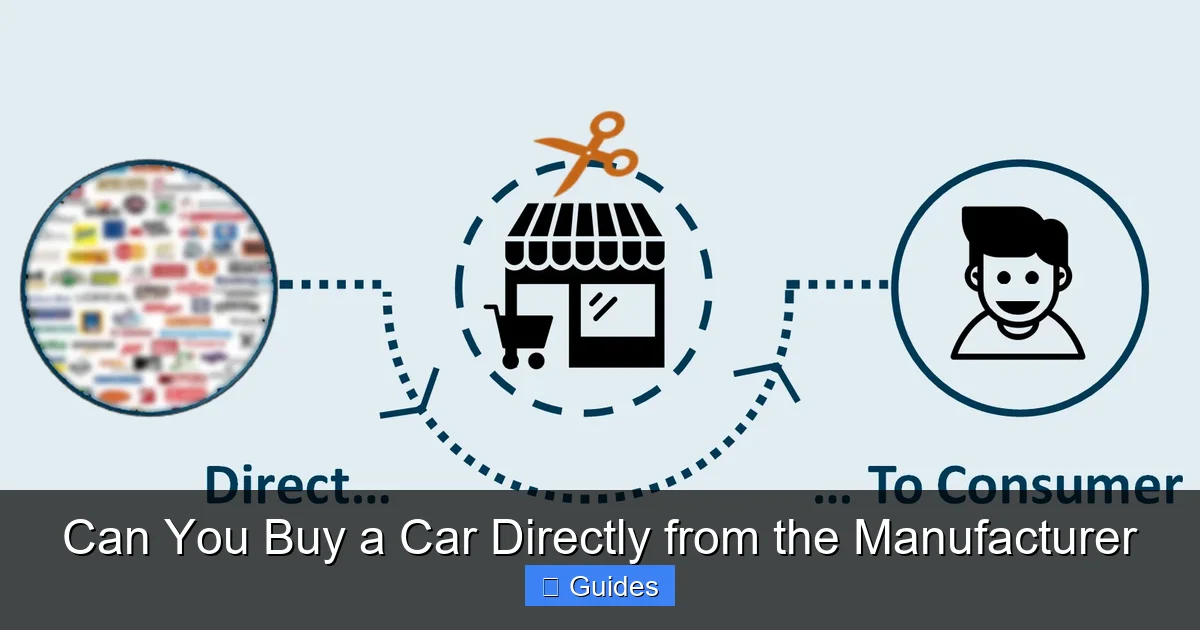
So, is buying directly from the manufacturer the right choice for you? Like any major purchase, it comes with advantages and drawbacks. Let’s break them down.
Advantages of Direct Purchases
1. Transparent Pricing
One of the biggest benefits of buying directly is price clarity. When you order a Tesla or Rivian online, the price you see is the price you pay—no hidden fees, no dealer markups, no surprise add-ons. This eliminates the stress of negotiation and ensures you’re getting a fair deal.
2. Convenience
You can shop from home, at any time. No need to take time off work to visit a dealership. You can compare models, read reviews, and place an order in minutes. Delivery is often scheduled at your convenience, sometimes even to your doorstep.
3. Customization
Direct sales platforms usually offer robust configurators. You can choose your paint color, interior, wheels, and tech packages with real-time pricing updates. This level of personalization is harder to achieve at a dealership, where inventory may be limited.
4. Consistent Experience
Because the manufacturer controls the process, the customer experience is more uniform. Whether you’re in California or Colorado, the ordering process, delivery timeline, and support should be similar.
5. Fewer Conflicts of Interest
Dealerships often make money from financing, warranties, and service packages. This can lead to upselling or pressure to buy extras you don’t need. With direct sales, the focus is on the vehicle itself.
Disadvantages of Direct Purchases
1. Limited Test Drives
One of the biggest drawbacks is the lack of test drives. While some direct-selling brands offer test drive events or mobile test drives, it’s not the same as visiting a local dealership and taking a car for a spin. This can be a dealbreaker for buyers who want to feel the car before committing.
2. Service and Support Challenges
If your car needs repairs or maintenance, you may have to travel farther to reach a service center. Tesla has been expanding its service network, but it’s still not as widespread as traditional dealer networks. Rivian and Lucid are even newer, with fewer service locations.
3. No Local Relationship
Dealerships often build long-term relationships with customers. They may offer loyalty discounts, recall notifications, or personalized service. With direct sales, you’re dealing with a corporate entity, not a local business.
4. Trade-In and Financing Complexity
While many manufacturers offer financing and trade-in tools online, the process can be less flexible than working with a dealer. Dealers may offer better trade-in values or special financing deals based on local incentives.
5. State Restrictions
As mentioned earlier, some states don’t allow direct sales. Even if a brand wants to sell directly, legal barriers may prevent it. This limits your options depending on where you live.
How to Buy a Car Directly: Step-by-Step
If you’ve decided to buy directly from the manufacturer, here’s how to do it the right way.
Step 1: Research Your Options
Start by identifying which brands sell directly in your area. Check the manufacturer’s website for availability and delivery options. Look for customer reviews and owner forums to learn about real-world experiences.
Step 2: Configure Your Vehicle
Use the online configurator to build your ideal car. Choose your trim, color, options, and accessories. Pay attention to delivery timelines—some custom builds can take weeks or months.
Step 3: Review Pricing and Incentives
Make sure you understand the total cost, including taxes, registration, and delivery fees. Check for any federal or state incentives, especially for electric vehicles. Some manufacturers offer referral programs or loyalty discounts.
Step 4: Arrange Financing
Most direct-selling brands offer financing through their own financial services. You can apply online and get pre-approved. Compare rates with banks or credit unions to ensure you’re getting the best deal.
Step 5: Handle Your Trade-In
If you’re trading in a vehicle, use the manufacturer’s online tool to get an estimate. You may need to schedule an inspection. Some brands allow you to apply the trade-in value directly to your new purchase.
Step 6: Place Your Order
Once everything is set, place your order online. You’ll typically pay a deposit (often refundable) to secure your build slot. Keep track of your order status through the manufacturer’s portal.
Step 7: Schedule Delivery
When your vehicle is ready, the manufacturer will contact you to schedule delivery. This could be at a service center, a pop-up location, or your home. Be prepared to complete final paperwork and take possession of your new car.
Step 8: Register and Insure
After delivery, you’ll need to register the vehicle and obtain insurance. Some manufacturers offer assistance with registration, but it’s ultimately your responsibility.
Real-World Examples: What It’s Like to Buy Direct
Let’s look at a few real-world scenarios to see how direct car buying plays out.
Example 1: Buying a Tesla Model Y
Sarah, a software engineer in Austin, Texas, wanted a Tesla Model Y. She visited Tesla.com, configured her vehicle with white exterior, black interior, and full self-driving capability. The total came to $58,000. She applied for financing through Tesla Financial Services, got approved at 3.9% APR, and placed her order with a $100 deposit. Three weeks later, she received an email saying her car was ready for delivery. She scheduled a time at a nearby Tesla service center, signed the paperwork, and drove off in her new SUV. No haggling, no surprises.
Example 2: Ordering a Rivian R1T
Mike, an outdoor enthusiast in Colorado, ordered a Rivian R1T online. He chose the Launch Edition with max battery and quad-motor drive. The price was $85,000. Rivian offered a trade-in estimate for his old truck, which he accepted. He financed through Rivian Financial and received his truck six months later via home delivery. While he loved the truck, he noted that service appointments were limited and required travel to Denver.
Example 3: Trying to Buy a Ford F-150 Directly
James, a contractor in Ohio, wanted to buy a Ford F-150 Lightning. He visited Ford’s website and configured his truck. He got a price quote and even applied for financing online. But when he tried to complete the purchase, he was redirected to a local Ford dealer. The dealer honored the online price but added a $1,500 “market adjustment” fee. James ended up negotiating and paying $5,000 more than the online quote. His experience highlights the limitations of hybrid models—convenience online, but dealer influence at the end.
These examples show that while direct buying can be smooth and transparent, it’s not always perfect. Your experience will depend on the brand, your location, and your expectations.
The Future of Car Buying: Will Direct Sales Take Over?
As electric vehicles become more popular and consumer expectations shift, the way we buy cars is evolving. Will direct sales eventually replace dealerships?
It’s possible—but unlikely to happen overnight. Traditional automakers have too much invested in their dealer networks to abandon them completely. Dealerships provide jobs, local service, and a familiar buying experience for many consumers.
However, the trend is clear: more manufacturers are moving toward digital-first sales models. Even legacy brands are investing in online configurators, virtual showrooms, and home delivery options. The goal is to offer the convenience of direct sales while still leveraging dealer support.
Regulatory changes will also play a role. As more states update their laws to allow direct sales—especially for EVs—we may see a broader shift. Some experts predict that by 2030, a majority of new car purchases could involve some form of direct or hybrid model.
In the meantime, consumers benefit from more choices. Whether you prefer the control of buying directly or the support of a local dealer, the options are expanding.
Conclusion
So, can you buy a car directly from the manufacturer? The answer is yes—for some brands and in some locations. Tesla, Rivian, Lucid, and Polestar have proven that direct-to-consumer sales can work, offering transparency, convenience, and a modern buying experience. But for most traditional automakers, dealerships remain the primary channel due to legal and logistical reasons.
If you’re considering a direct purchase, weigh the pros and cons carefully. Think about your need for test drives, service access, and personal interaction. Research your options, compare financing, and understand your state’s laws.
The future of car buying is digital, but it’s not one-size-fits-all. Whether you buy directly or through a dealer, the most important thing is to make an informed decision that fits your lifestyle and budget.
Frequently Asked Questions
Can I buy a Tesla without going to a dealership?
Yes, Tesla sells all of its vehicles directly to consumers. You can configure, order, and finance your Tesla entirely online, with delivery scheduled at a service center or your home.
Does Ford allow direct purchases?
No, Ford requires you to buy through franchised dealerships. While you can configure and get a price quote online, the final sale must go through a local dealer.
Are direct car purchases cheaper?
Not always, but they often have more transparent pricing. Direct sales eliminate dealer markups and negotiation, but you may miss out on local incentives or trade-in deals.
Can I test drive a car before buying directly?
It depends on the brand. Tesla and Rivian offer test drive events and mobile test drives, but options are more limited than at traditional dealerships.
What happens if my direct-purchased car needs repairs?
You’ll need to visit a manufacturer-owned service center or use mobile service. Availability varies by brand and location, so check the service network before buying.
Are there any states where direct car sales are illegal?
Yes, some states restrict or prohibit manufacturers from selling directly to consumers. These laws vary, so check your state’s regulations before placing an order.

At CarLegit, we believe information should be clear, factual, and genuinely helpful. That’s why every guide, review, and update on our website is created with care, research, and a strong focus on user experience.
Use the online configurator to build your ideal car. Choose your trim, color, options, and accessories. Pay attention to delivery timelines—some custom builds can take weeks or months.
Step 3: Review Pricing and Incentives
Make sure you understand the total cost, including taxes, registration, and delivery fees. Check for any federal or state incentives, especially for electric vehicles. Some manufacturers offer referral programs or loyalty discounts.
Step 4: Arrange Financing
Most direct-selling brands offer financing through their own financial services. You can apply online and get pre-approved. Compare rates with banks or credit unions to ensure you’re getting the best deal.
Step 5: Handle Your Trade-In
If you’re trading in a vehicle, use the manufacturer’s online tool to get an estimate. You may need to schedule an inspection. Some brands allow you to apply the trade-in value directly to your new purchase.
Step 6: Place Your Order
Once everything is set, place your order online. You’ll typically pay a deposit (often refundable) to secure your build slot. Keep track of your order status through the manufacturer’s portal.
Step 7: Schedule Delivery
When your vehicle is ready, the manufacturer will contact you to schedule delivery. This could be at a service center, a pop-up location, or your home. Be prepared to complete final paperwork and take possession of your new car.
Step 8: Register and Insure
After delivery, you’ll need to register the vehicle and obtain insurance. Some manufacturers offer assistance with registration, but it’s ultimately your responsibility.
Real-World Examples: What It’s Like to Buy Direct
Let’s look at a few real-world scenarios to see how direct car buying plays out.
Example 1: Buying a Tesla Model Y
Sarah, a software engineer in Austin, Texas, wanted a Tesla Model Y. She visited Tesla.com, configured her vehicle with white exterior, black interior, and full self-driving capability. The total came to $58,000. She applied for financing through Tesla Financial Services, got approved at 3.9% APR, and placed her order with a $100 deposit. Three weeks later, she received an email saying her car was ready for delivery. She scheduled a time at a nearby Tesla service center, signed the paperwork, and drove off in her new SUV. No haggling, no surprises.
Example 2: Ordering a Rivian R1T
Mike, an outdoor enthusiast in Colorado, ordered a Rivian R1T online. He chose the Launch Edition with max battery and quad-motor drive. The price was $85,000. Rivian offered a trade-in estimate for his old truck, which he accepted. He financed through Rivian Financial and received his truck six months later via home delivery. While he loved the truck, he noted that service appointments were limited and required travel to Denver.
Example 3: Trying to Buy a Ford F-150 Directly
James, a contractor in Ohio, wanted to buy a Ford F-150 Lightning. He visited Ford’s website and configured his truck. He got a price quote and even applied for financing online. But when he tried to complete the purchase, he was redirected to a local Ford dealer. The dealer honored the online price but added a $1,500 “market adjustment” fee. James ended up negotiating and paying $5,000 more than the online quote. His experience highlights the limitations of hybrid models—convenience online, but dealer influence at the end.
These examples show that while direct buying can be smooth and transparent, it’s not always perfect. Your experience will depend on the brand, your location, and your expectations.
The Future of Car Buying: Will Direct Sales Take Over?
As electric vehicles become more popular and consumer expectations shift, the way we buy cars is evolving. Will direct sales eventually replace dealerships?
It’s possible—but unlikely to happen overnight. Traditional automakers have too much invested in their dealer networks to abandon them completely. Dealerships provide jobs, local service, and a familiar buying experience for many consumers.
However, the trend is clear: more manufacturers are moving toward digital-first sales models. Even legacy brands are investing in online configurators, virtual showrooms, and home delivery options. The goal is to offer the convenience of direct sales while still leveraging dealer support.
Regulatory changes will also play a role. As more states update their laws to allow direct sales—especially for EVs—we may see a broader shift. Some experts predict that by 2030, a majority of new car purchases could involve some form of direct or hybrid model.
In the meantime, consumers benefit from more choices. Whether you prefer the control of buying directly or the support of a local dealer, the options are expanding.
Conclusion
So, can you buy a car directly from the manufacturer? The answer is yes—for some brands and in some locations. Tesla, Rivian, Lucid, and Polestar have proven that direct-to-consumer sales can work, offering transparency, convenience, and a modern buying experience. But for most traditional automakers, dealerships remain the primary channel due to legal and logistical reasons.
If you’re considering a direct purchase, weigh the pros and cons carefully. Think about your need for test drives, service access, and personal interaction. Research your options, compare financing, and understand your state’s laws.
The future of car buying is digital, but it’s not one-size-fits-all. Whether you buy directly or through a dealer, the most important thing is to make an informed decision that fits your lifestyle and budget.
Frequently Asked Questions
Can I buy a Tesla without going to a dealership?
Yes, Tesla sells all of its vehicles directly to consumers. You can configure, order, and finance your Tesla entirely online, with delivery scheduled at a service center or your home.
Does Ford allow direct purchases?
No, Ford requires you to buy through franchised dealerships. While you can configure and get a price quote online, the final sale must go through a local dealer.
Are direct car purchases cheaper?
Not always, but they often have more transparent pricing. Direct sales eliminate dealer markups and negotiation, but you may miss out on local incentives or trade-in deals.
Can I test drive a car before buying directly?
It depends on the brand. Tesla and Rivian offer test drive events and mobile test drives, but options are more limited than at traditional dealerships.
What happens if my direct-purchased car needs repairs?
You’ll need to visit a manufacturer-owned service center or use mobile service. Availability varies by brand and location, so check the service network before buying.
Are there any states where direct car sales are illegal?
Yes, some states restrict or prohibit manufacturers from selling directly to consumers. These laws vary, so check your state’s regulations before placing an order.
At CarLegit, we believe information should be clear, factual, and genuinely helpful. That’s why every guide, review, and update on our website is created with care, research, and a strong focus on user experience.
Most direct-selling brands offer financing through their own financial services. You can apply online and get pre-approved. Compare rates with banks or credit unions to ensure you’re getting the best deal.
Step 5: Handle Your Trade-In
If you’re trading in a vehicle, use the manufacturer’s online tool to get an estimate. You may need to schedule an inspection. Some brands allow you to apply the trade-in value directly to your new purchase.
Step 6: Place Your Order
Once everything is set, place your order online. You’ll typically pay a deposit (often refundable) to secure your build slot. Keep track of your order status through the manufacturer’s portal.
Step 7: Schedule Delivery
When your vehicle is ready, the manufacturer will contact you to schedule delivery. This could be at a service center, a pop-up location, or your home. Be prepared to complete final paperwork and take possession of your new car.
Step 8: Register and Insure
After delivery, you’ll need to register the vehicle and obtain insurance. Some manufacturers offer assistance with registration, but it’s ultimately your responsibility.
Real-World Examples: What It’s Like to Buy Direct
Let’s look at a few real-world scenarios to see how direct car buying plays out.
Example 1: Buying a Tesla Model Y
Sarah, a software engineer in Austin, Texas, wanted a Tesla Model Y. She visited Tesla.com, configured her vehicle with white exterior, black interior, and full self-driving capability. The total came to $58,000. She applied for financing through Tesla Financial Services, got approved at 3.9% APR, and placed her order with a $100 deposit. Three weeks later, she received an email saying her car was ready for delivery. She scheduled a time at a nearby Tesla service center, signed the paperwork, and drove off in her new SUV. No haggling, no surprises.
Example 2: Ordering a Rivian R1T
Mike, an outdoor enthusiast in Colorado, ordered a Rivian R1T online. He chose the Launch Edition with max battery and quad-motor drive. The price was $85,000. Rivian offered a trade-in estimate for his old truck, which he accepted. He financed through Rivian Financial and received his truck six months later via home delivery. While he loved the truck, he noted that service appointments were limited and required travel to Denver.
Example 3: Trying to Buy a Ford F-150 Directly
James, a contractor in Ohio, wanted to buy a Ford F-150 Lightning. He visited Ford’s website and configured his truck. He got a price quote and even applied for financing online. But when he tried to complete the purchase, he was redirected to a local Ford dealer. The dealer honored the online price but added a $1,500 “market adjustment” fee. James ended up negotiating and paying $5,000 more than the online quote. His experience highlights the limitations of hybrid models—convenience online, but dealer influence at the end.
These examples show that while direct buying can be smooth and transparent, it’s not always perfect. Your experience will depend on the brand, your location, and your expectations.
The Future of Car Buying: Will Direct Sales Take Over?
As electric vehicles become more popular and consumer expectations shift, the way we buy cars is evolving. Will direct sales eventually replace dealerships?
It’s possible—but unlikely to happen overnight. Traditional automakers have too much invested in their dealer networks to abandon them completely. Dealerships provide jobs, local service, and a familiar buying experience for many consumers.
However, the trend is clear: more manufacturers are moving toward digital-first sales models. Even legacy brands are investing in online configurators, virtual showrooms, and home delivery options. The goal is to offer the convenience of direct sales while still leveraging dealer support.
Regulatory changes will also play a role. As more states update their laws to allow direct sales—especially for EVs—we may see a broader shift. Some experts predict that by 2030, a majority of new car purchases could involve some form of direct or hybrid model.
In the meantime, consumers benefit from more choices. Whether you prefer the control of buying directly or the support of a local dealer, the options are expanding.
Conclusion
So, can you buy a car directly from the manufacturer? The answer is yes—for some brands and in some locations. Tesla, Rivian, Lucid, and Polestar have proven that direct-to-consumer sales can work, offering transparency, convenience, and a modern buying experience. But for most traditional automakers, dealerships remain the primary channel due to legal and logistical reasons.
If you’re considering a direct purchase, weigh the pros and cons carefully. Think about your need for test drives, service access, and personal interaction. Research your options, compare financing, and understand your state’s laws.
The future of car buying is digital, but it’s not one-size-fits-all. Whether you buy directly or through a dealer, the most important thing is to make an informed decision that fits your lifestyle and budget.
Frequently Asked Questions
Can I buy a Tesla without going to a dealership?
Yes, Tesla sells all of its vehicles directly to consumers. You can configure, order, and finance your Tesla entirely online, with delivery scheduled at a service center or your home.
Does Ford allow direct purchases?
No, Ford requires you to buy through franchised dealerships. While you can configure and get a price quote online, the final sale must go through a local dealer.
Are direct car purchases cheaper?
Not always, but they often have more transparent pricing. Direct sales eliminate dealer markups and negotiation, but you may miss out on local incentives or trade-in deals.
Can I test drive a car before buying directly?
It depends on the brand. Tesla and Rivian offer test drive events and mobile test drives, but options are more limited than at traditional dealerships.
What happens if my direct-purchased car needs repairs?
You’ll need to visit a manufacturer-owned service center or use mobile service. Availability varies by brand and location, so check the service network before buying.
Are there any states where direct car sales are illegal?
Yes, some states restrict or prohibit manufacturers from selling directly to consumers. These laws vary, so check your state’s regulations before placing an order.
At CarLegit, we believe information should be clear, factual, and genuinely helpful. That’s why every guide, review, and update on our website is created with care, research, and a strong focus on user experience.
Once everything is set, place your order online. You’ll typically pay a deposit (often refundable) to secure your build slot. Keep track of your order status through the manufacturer’s portal.
Step 7: Schedule Delivery
When your vehicle is ready, the manufacturer will contact you to schedule delivery. This could be at a service center, a pop-up location, or your home. Be prepared to complete final paperwork and take possession of your new car.
Step 8: Register and Insure
After delivery, you’ll need to register the vehicle and obtain insurance. Some manufacturers offer assistance with registration, but it’s ultimately your responsibility.
Real-World Examples: What It’s Like to Buy Direct
Let’s look at a few real-world scenarios to see how direct car buying plays out.
Example 1: Buying a Tesla Model Y
Sarah, a software engineer in Austin, Texas, wanted a Tesla Model Y. She visited Tesla.com, configured her vehicle with white exterior, black interior, and full self-driving capability. The total came to $58,000. She applied for financing through Tesla Financial Services, got approved at 3.9% APR, and placed her order with a $100 deposit. Three weeks later, she received an email saying her car was ready for delivery. She scheduled a time at a nearby Tesla service center, signed the paperwork, and drove off in her new SUV. No haggling, no surprises.
Example 2: Ordering a Rivian R1T
Mike, an outdoor enthusiast in Colorado, ordered a Rivian R1T online. He chose the Launch Edition with max battery and quad-motor drive. The price was $85,000. Rivian offered a trade-in estimate for his old truck, which he accepted. He financed through Rivian Financial and received his truck six months later via home delivery. While he loved the truck, he noted that service appointments were limited and required travel to Denver.
Example 3: Trying to Buy a Ford F-150 Directly
James, a contractor in Ohio, wanted to buy a Ford F-150 Lightning. He visited Ford’s website and configured his truck. He got a price quote and even applied for financing online. But when he tried to complete the purchase, he was redirected to a local Ford dealer. The dealer honored the online price but added a $1,500 “market adjustment” fee. James ended up negotiating and paying $5,000 more than the online quote. His experience highlights the limitations of hybrid models—convenience online, but dealer influence at the end.
These examples show that while direct buying can be smooth and transparent, it’s not always perfect. Your experience will depend on the brand, your location, and your expectations.
The Future of Car Buying: Will Direct Sales Take Over?
As electric vehicles become more popular and consumer expectations shift, the way we buy cars is evolving. Will direct sales eventually replace dealerships?
It’s possible—but unlikely to happen overnight. Traditional automakers have too much invested in their dealer networks to abandon them completely. Dealerships provide jobs, local service, and a familiar buying experience for many consumers.
However, the trend is clear: more manufacturers are moving toward digital-first sales models. Even legacy brands are investing in online configurators, virtual showrooms, and home delivery options. The goal is to offer the convenience of direct sales while still leveraging dealer support.
Regulatory changes will also play a role. As more states update their laws to allow direct sales—especially for EVs—we may see a broader shift. Some experts predict that by 2030, a majority of new car purchases could involve some form of direct or hybrid model.
In the meantime, consumers benefit from more choices. Whether you prefer the control of buying directly or the support of a local dealer, the options are expanding.
Conclusion
So, can you buy a car directly from the manufacturer? The answer is yes—for some brands and in some locations. Tesla, Rivian, Lucid, and Polestar have proven that direct-to-consumer sales can work, offering transparency, convenience, and a modern buying experience. But for most traditional automakers, dealerships remain the primary channel due to legal and logistical reasons.
If you’re considering a direct purchase, weigh the pros and cons carefully. Think about your need for test drives, service access, and personal interaction. Research your options, compare financing, and understand your state’s laws.
The future of car buying is digital, but it’s not one-size-fits-all. Whether you buy directly or through a dealer, the most important thing is to make an informed decision that fits your lifestyle and budget.
Frequently Asked Questions
Can I buy a Tesla without going to a dealership?
Yes, Tesla sells all of its vehicles directly to consumers. You can configure, order, and finance your Tesla entirely online, with delivery scheduled at a service center or your home.
Does Ford allow direct purchases?
No, Ford requires you to buy through franchised dealerships. While you can configure and get a price quote online, the final sale must go through a local dealer.
Are direct car purchases cheaper?
Not always, but they often have more transparent pricing. Direct sales eliminate dealer markups and negotiation, but you may miss out on local incentives or trade-in deals.
Can I test drive a car before buying directly?
It depends on the brand. Tesla and Rivian offer test drive events and mobile test drives, but options are more limited than at traditional dealerships.
What happens if my direct-purchased car needs repairs?
You’ll need to visit a manufacturer-owned service center or use mobile service. Availability varies by brand and location, so check the service network before buying.
Are there any states where direct car sales are illegal?
Yes, some states restrict or prohibit manufacturers from selling directly to consumers. These laws vary, so check your state’s regulations before placing an order.
At CarLegit, we believe information should be clear, factual, and genuinely helpful. That’s why every guide, review, and update on our website is created with care, research, and a strong focus on user experience.
After delivery, you’ll need to register the vehicle and obtain insurance. Some manufacturers offer assistance with registration, but it’s ultimately your responsibility.
Real-World Examples: What It’s Like to Buy Direct
Let’s look at a few real-world scenarios to see how direct car buying plays out.
Example 1: Buying a Tesla Model Y
Sarah, a software engineer in Austin, Texas, wanted a Tesla Model Y. She visited Tesla.com, configured her vehicle with white exterior, black interior, and full self-driving capability. The total came to $58,000. She applied for financing through Tesla Financial Services, got approved at 3.9% APR, and placed her order with a $100 deposit. Three weeks later, she received an email saying her car was ready for delivery. She scheduled a time at a nearby Tesla service center, signed the paperwork, and drove off in her new SUV. No haggling, no surprises.
Example 2: Ordering a Rivian R1T
Mike, an outdoor enthusiast in Colorado, ordered a Rivian R1T online. He chose the Launch Edition with max battery and quad-motor drive. The price was $85,000. Rivian offered a trade-in estimate for his old truck, which he accepted. He financed through Rivian Financial and received his truck six months later via home delivery. While he loved the truck, he noted that service appointments were limited and required travel to Denver.
Example 3: Trying to Buy a Ford F-150 Directly
James, a contractor in Ohio, wanted to buy a Ford F-150 Lightning. He visited Ford’s website and configured his truck. He got a price quote and even applied for financing online. But when he tried to complete the purchase, he was redirected to a local Ford dealer. The dealer honored the online price but added a $1,500 “market adjustment” fee. James ended up negotiating and paying $5,000 more than the online quote. His experience highlights the limitations of hybrid models—convenience online, but dealer influence at the end.
These examples show that while direct buying can be smooth and transparent, it’s not always perfect. Your experience will depend on the brand, your location, and your expectations.
The Future of Car Buying: Will Direct Sales Take Over?
As electric vehicles become more popular and consumer expectations shift, the way we buy cars is evolving. Will direct sales eventually replace dealerships?
It’s possible—but unlikely to happen overnight. Traditional automakers have too much invested in their dealer networks to abandon them completely. Dealerships provide jobs, local service, and a familiar buying experience for many consumers.
However, the trend is clear: more manufacturers are moving toward digital-first sales models. Even legacy brands are investing in online configurators, virtual showrooms, and home delivery options. The goal is to offer the convenience of direct sales while still leveraging dealer support.
Regulatory changes will also play a role. As more states update their laws to allow direct sales—especially for EVs—we may see a broader shift. Some experts predict that by 2030, a majority of new car purchases could involve some form of direct or hybrid model.
In the meantime, consumers benefit from more choices. Whether you prefer the control of buying directly or the support of a local dealer, the options are expanding.
Conclusion
So, can you buy a car directly from the manufacturer? The answer is yes—for some brands and in some locations. Tesla, Rivian, Lucid, and Polestar have proven that direct-to-consumer sales can work, offering transparency, convenience, and a modern buying experience. But for most traditional automakers, dealerships remain the primary channel due to legal and logistical reasons.
If you’re considering a direct purchase, weigh the pros and cons carefully. Think about your need for test drives, service access, and personal interaction. Research your options, compare financing, and understand your state’s laws.
The future of car buying is digital, but it’s not one-size-fits-all. Whether you buy directly or through a dealer, the most important thing is to make an informed decision that fits your lifestyle and budget.
Frequently Asked Questions
Can I buy a Tesla without going to a dealership?
Yes, Tesla sells all of its vehicles directly to consumers. You can configure, order, and finance your Tesla entirely online, with delivery scheduled at a service center or your home.
Does Ford allow direct purchases?
No, Ford requires you to buy through franchised dealerships. While you can configure and get a price quote online, the final sale must go through a local dealer.
Are direct car purchases cheaper?
Not always, but they often have more transparent pricing. Direct sales eliminate dealer markups and negotiation, but you may miss out on local incentives or trade-in deals.
Can I test drive a car before buying directly?
It depends on the brand. Tesla and Rivian offer test drive events and mobile test drives, but options are more limited than at traditional dealerships.
What happens if my direct-purchased car needs repairs?
You’ll need to visit a manufacturer-owned service center or use mobile service. Availability varies by brand and location, so check the service network before buying.
Are there any states where direct car sales are illegal?
Yes, some states restrict or prohibit manufacturers from selling directly to consumers. These laws vary, so check your state’s regulations before placing an order.
At CarLegit, we believe information should be clear, factual, and genuinely helpful. That’s why every guide, review, and update on our website is created with care, research, and a strong focus on user experience.