
Most cars need between 1.5 to 3 cans of Freon (R-134a) to refill the AC system, but the exact amount depends on the vehicle make, model, and system capacity. Overcharging can damage your AC, so always check your owner’s manual or use a recharge kit with a gauge for accuracy.
In This Article
- 1 Key Takeaways
- 2 📑 Table of Contents
- 3 Understanding Your Car’s Air Conditioning System
- 4 How Much Freon Does a Typical Car Need?
- 5 Types of Refrigerant: R-134a vs. R-1234yf
- 6 Signs Your Car Needs a Freon Recharge
- 7 DIY vs. Professional Recharge: What You Need to Know
- 8 Step-by-Step Guide to Safely Recharging Your Car’s AC
- 8.1 Gather Your Tools
- 8.2 Locate the Low-Pressure Port
- 8.3 Start the Engine and Turn On the AC
- 8.4 Attach the Recharge Hose
- 8.5 Monitor the Pressure Gauge
- 8.6 Add Refrigerant Gradually Add refrigerant in short bursts, pausing between each to let the system stabilize. Don’t tip the can upside down—this releases liquid refrigerant, which can damage the compressor. Keep the can upright to dispense vapor only. Stop When Full
- 8.7 Test and Inspect
- 9 Common Mistakes to Avoid When Adding Freon
- 10 When to Call a Professional
- 11 Maintaining Your Car’s AC System
- 12 Conclusion
- 13 Frequently Asked Questions
- 13.1 How many cans of Freon does a car typically take?
- 13.2 Can I use any Freon recharge kit on my car?
- 13.3 Is it safe to recharge my car’s AC myself?
- 13.4 Why does my AC stop working after a recharge?
- 13.5 How do I know if my car uses R-134a or R-1234yf?
- 13.6 What happens if I overcharge my car’s AC with Freon?
Key Takeaways
- Typical car AC systems hold 14 to 28 ounces of refrigerant: This equals roughly 1.5 to 3 standard 12-ounce cans of R-134a.
- Check your owner’s manual for exact capacity: Manufacturers specify the precise amount needed—don’t guess.
- Use a recharge kit with a pressure gauge: This prevents overcharging, which can damage the compressor and reduce cooling efficiency.
- Freon isn’t “used up”—it leaks: If your AC loses refrigerant quickly, there’s likely a leak that needs repair before recharging.
- Modern cars may use R-1234yf instead of R-134a: Newer models (2013+) often require this newer, eco-friendly refrigerant—check compatibility first.
- DIY recharging is possible but has risks: Improper handling can cause injury or system damage; when in doubt, consult a certified technician.
- Overcharging is more dangerous than undercharging: Too much refrigerant increases pressure, leading to compressor failure and costly repairs.
📑 Table of Contents
- Understanding Your Car’s Air Conditioning System
- How Much Freon Does a Typical Car Need?
- Types of Refrigerant: R-134a vs. R-1234yf
- Signs Your Car Needs a Freon Recharge
- DIY vs. Professional Recharge: What You Need to Know
- Step-by-Step Guide to Safely Recharging Your Car’s AC
- Common Mistakes to Avoid When Adding Freon
- When to Call a Professional
- Maintaining Your Car’s AC System
- Conclusion
Understanding Your Car’s Air Conditioning System
Your car’s air conditioning (AC) system is more than just a comfort feature—it’s a complex network of components working together to keep you cool during hot drives. At the heart of this system is the refrigerant, commonly referred to as “Freon,” though that term technically refers to a brand name for certain types of refrigerants. Today, most vehicles use R-134a or the newer R-1234yf, both of which are hydrofluorocarbon (HFC) gases designed to absorb and release heat efficiently.
The AC system operates in a closed loop. The refrigerant circulates through components like the compressor, condenser, expansion valve, and evaporator. As it moves, it changes from a low-pressure gas to a high-pressure liquid and back again, absorbing heat from inside the cabin and releasing it outside. This cycle keeps your car’s interior cool and comfortable.
One common misconception is that refrigerant gets “used up” like gasoline or oil. In reality, the system is sealed, and the refrigerant should remain at a consistent level throughout the life of the vehicle—unless there’s a leak. If your AC stops blowing cold air, it’s usually because the refrigerant has escaped due to a leak, wear, or damage, not because it’s been consumed.
Understanding how your AC system works is the first step in determining how much refrigerant it needs. Without this foundation, you risk overcharging or undercharging the system, both of which can lead to poor performance or expensive repairs.
How Much Freon Does a Typical Car Need?

Visual guide about How Many Cans of Freon Does a Car Take
Image source: cherishyourcar.com
So, how many cans of Freon does a car take? The short answer: most passenger vehicles require between 14 and 28 ounces of refrigerant to operate properly. Since standard recharge cans contain 12 ounces of R-134a, this translates to roughly 1.5 to 3 cans per full recharge.
However, this is just a general estimate. The exact amount varies significantly based on your vehicle’s make, model, year, and AC system design. For example, a compact sedan like a Honda Civic might need only 14–16 ounces, while a larger SUV such as a Ford Explorer or Chevrolet Tahoe could require up to 28 ounces or more. Luxury vehicles and those with dual-zone or rear AC systems often have larger capacities.
To find the precise amount for your car, consult the owner’s manual or look for a label under the hood—many manufacturers print the refrigerant type and capacity near the AC compressor or on the radiator support. Some vehicles even have the information stamped on the compressor itself.
Here’s a practical example: A 2015 Toyota Camry typically holds about 18 ounces of R-134a. That means you’d need one full 12-ounce can and a partial second can to top it off. In contrast, a 2020 Jeep Grand Cherokee with rear AC might need nearly 30 ounces, requiring two full cans and a bit more from a third.
It’s also important to note that refrigerant is measured by weight, not volume. Cans are labeled by weight (e.g., 12 oz), and your system’s capacity is specified in ounces or grams. This precision matters—adding too little won’t restore cooling, and adding too much can cause serious damage.
Types of Refrigerant: R-134a vs. R-1234yf
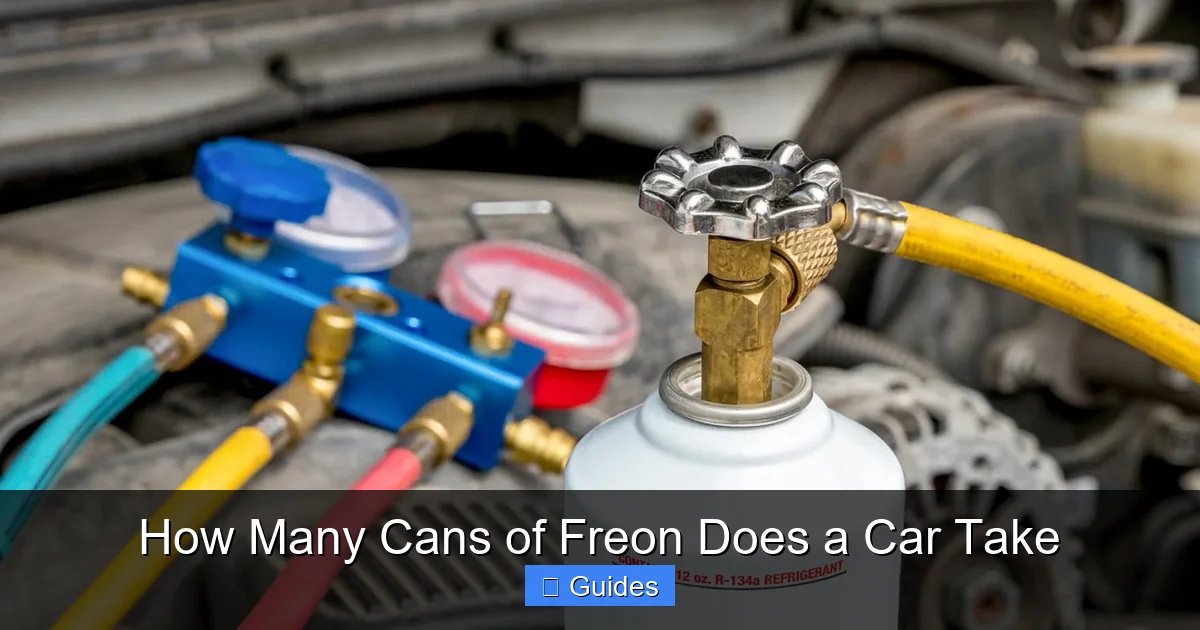
Visual guide about How Many Cans of Freon Does a Car Take
Image source: hvacseer.com
Not all cars use the same type of refrigerant, and using the wrong kind can ruin your AC system. The two most common types today are R-134a and R-1234yf.
R-134a has been the standard in most vehicles since the mid-1990s, when it replaced the older, ozone-depleting R-12 (the original “Freon”). It’s widely available, relatively affordable, and compatible with most older and mid-range vehicles. If your car was made before 2013, it likely uses R-134a.
However, due to environmental regulations aimed at reducing greenhouse gas emissions, automakers began transitioning to R-1234yf starting around 2013. This newer refrigerant has a much lower global warming potential (GWP) and is required in all new vehicles sold in the U.S. and Europe. While it performs similarly to R-134a, it’s not interchangeable—mixing the two can cause chemical reactions that damage seals and compressors.
So how do you know which one your car uses? Check the label under the hood or in the owner’s manual. R-1234yf systems often have yellow service ports and warning labels to distinguish them from R-134a systems, which use blue or black ports. If you’re unsure, don’t guess—using the wrong refrigerant can cost hundreds in repairs.
Another thing to keep in mind: R-1234yf is more expensive and requires specialized equipment for handling and recharging. Most DIY recharge kits are designed for R-134a, so if your car uses R-1234yf, it’s best to have a professional handle the job.
Signs Your Car Needs a Freon Recharge
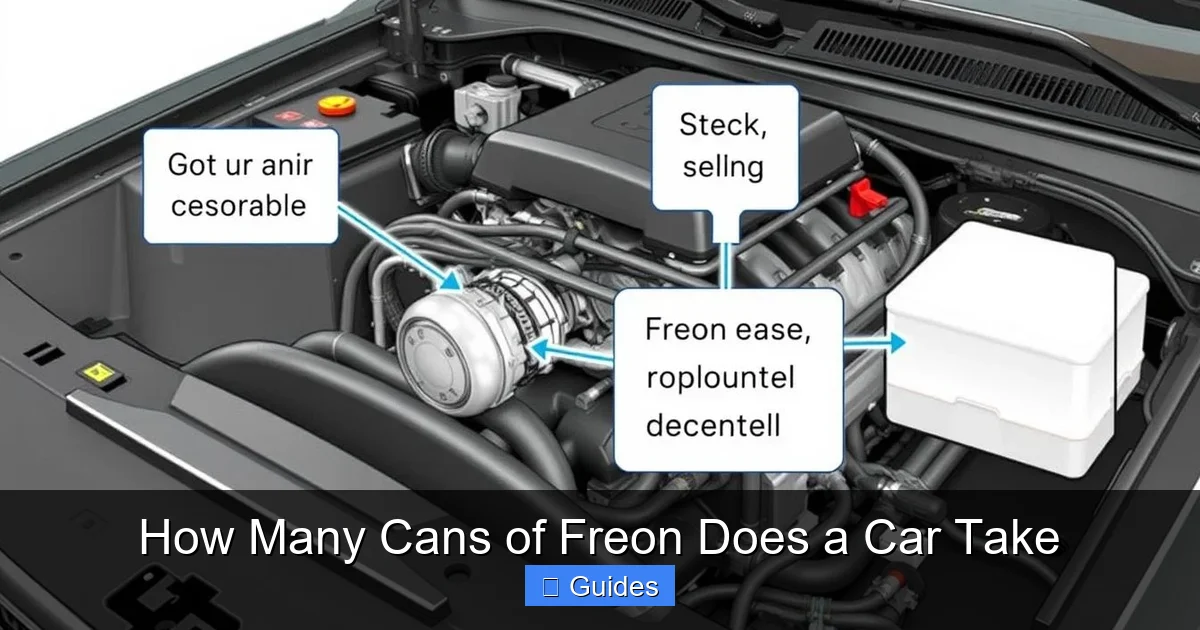
Visual guide about How Many Cans of Freon Does a Car Take
Image source: vehiclerides.com
How do you know if your car’s AC needs more refrigerant? While a lack of cold air is the most obvious sign, there are several other symptoms to watch for.
First, if your AC blows air that’s only slightly cooler than outside temperature—or worse, warm air—it’s a strong indicator that refrigerant levels are low. This happens because the system can’t absorb enough heat without the proper amount of refrigerant.
You might also notice that the AC works better at higher speeds. This is because the compressor cycles more frequently when the engine is revving, temporarily increasing refrigerant flow. If cooling improves on the highway but fades in traffic, low refrigerant could be the culprit.
Another clue is hissing or bubbling sounds coming from the AC system, especially after turning it off. This could indicate a leak, which is often the root cause of low refrigerant. Similarly, oily residue around AC components—like the compressor, hoses, or condenser—can signal a refrigerant leak, as the gas carries oil with it as it escapes.
Fogging or icing on the evaporator core inside the dashboard is another red flag. When refrigerant levels are too low, the evaporator can get excessively cold and freeze, blocking airflow. Once it thaws, you’ll notice reduced cooling and possible water leakage inside the car.
Finally, if your AC clutch (the pulley that engages the compressor) doesn’t engage when you turn on the AC, it could be due to low pressure. Most systems have a low-pressure switch that prevents the compressor from running if refrigerant is too low, protecting it from damage.
If you notice any of these signs, it’s time to check your refrigerant levels. But remember: a recharge is only a temporary fix if there’s an underlying leak. Always inspect for leaks before adding more Freon.
DIY vs. Professional Recharge: What You Need to Know
Many car owners wonder whether they can recharge their AC system themselves or if they should leave it to the professionals. The answer depends on your experience, tools, and the condition of your system.
DIY recharging is possible and can be cost-effective if done correctly. Most auto parts stores sell recharge kits that include a can of R-134a, a hose, and a pressure gauge. These kits are designed for homeowners and come with step-by-step instructions. They’re ideal for topping off a system that’s slightly low—say, down by 20–30%.
However, DIY kits have limitations. They typically don’t include UV dye or electronic leak detectors, so you won’t be able to find hidden leaks. Also, without a vacuum pump, you can’t properly evacuate moisture and air from the system, which can reduce efficiency and cause corrosion over time.
Moreover, overcharging is a real risk with DIY kits. Since most don’t have precise weight measurements, it’s easy to add too much refrigerant by eyeballing it. Overcharging increases system pressure, which can blow seals, damage the compressor, and even cause the AC to stop working entirely.
On the other hand, a professional technician has the tools and training to do the job right. They can:
– Use a manifold gauge set to measure high and low-side pressures
– Evacuate the system with a vacuum pump to remove air and moisture
– Add the exact amount of refrigerant by weight
– Perform a leak test using electronic detectors or UV dye
– Check compressor operation and system performance
For these reasons, if your AC is completely empty, has a known leak, or hasn’t been serviced in years, it’s best to visit a certified mechanic. The cost—usually $100–$200—is worth it to avoid costly repairs down the line.
That said, if you’re just topping off a slightly low system and your car is relatively new with no signs of leaks, a DIY recharge can be safe and effective—just follow the instructions carefully and use a kit with a built-in gauge.
Step-by-Step Guide to Safely Recharging Your Car’s AC
If you’ve decided to recharge your car’s AC yourself, here’s a simple, safe process to follow. Always work in a well-ventilated area and wear safety glasses and gloves—refrigerant can cause frostbite if it contacts your skin.
Gather Your Tools
You’ll need:
– A recharge kit with R-134a (check compatibility first)
– A pressure gauge (built into most kits)
– Safety glasses and gloves
– A rag or towel
Locate the Low-Pressure Port
Open the hood and find the AC service ports. The low-pressure port is usually on the larger aluminum tubing near the firewall or compressor. It’s marked with an “L” and has a blue or black cap. Never connect to the high-pressure port (marked “H” and red)—it’s dangerous and can damage the system.
Start the Engine and Turn On the AC
Start your car and set the AC to the coldest setting with the fan on high. This ensures the compressor is running and refrigerant is circulating.
Attach the Recharge Hose
Shake the can well, then attach the hose from the recharge kit to the can. Screw the other end onto the low-pressure port. Make sure it’s tight to prevent leaks.
Monitor the Pressure Gauge
Open the valve on the can slowly. Watch the pressure gauge—ideal low-side pressure is typically between 25 and 45 psi, depending on ambient temperature. Refer to your kit’s instructions or a pressure chart for guidance.
Add Refrigerant Gradually
Add refrigerant in short bursts, pausing between each to let the system stabilize. Don’t tip the can upside down—this releases liquid refrigerant, which can damage the compressor. Keep the can upright to dispense vapor only.
Stop When Full
Once the pressure reaches the recommended range and cold air is blowing from the vents, close the valve and disconnect the hose. Replace the cap on the service port.
Test and Inspect
Let the AC run for 10–15 minutes, then check for leaks, unusual noises, or performance issues. If the air isn’t cold, there may be a leak or other problem requiring professional attention.
Common Mistakes to Avoid When Adding Freon
Even with the best intentions, it’s easy to make mistakes when recharging your car’s AC. Here are the most common pitfalls and how to avoid them.
Overcharging the System
This is the #1 mistake. Adding too much refrigerant increases pressure, which can blow seals, damage the compressor, and reduce cooling efficiency. Always use a gauge and stop when pressure is in the safe range.
Using the Wrong Refrigerant
Never mix R-134a and R-1234yf. Check your vehicle’s specifications before buying a recharge can. Using the wrong type can destroy your AC system.
Recharging Without Checking for Leaks
If your system is low, there’s likely a leak. Recharging without fixing it is a temporary fix—the refrigerant will escape again. Look for oil stains, use a UV dye kit, or have a professional inspect it.
Adding Liquid Refrigerant
Always keep the can upright. Tipping it releases liquid, which can flood the compressor and cause hydraulic lock—a costly repair.
Ignoring Safety Precautions
Refrigerant is under high pressure and can cause frostbite or eye injury. Wear gloves and safety glasses, and never inhale the gas.
Assuming All Cans Are the Same
Not all recharge kits are created equal. Cheap kits may lack accurate gauges or quality hoses. Invest in a reputable brand for better results and safety.
When to Call a Professional
While DIY recharging is possible, there are times when you should leave it to the experts.
If your AC system is completely empty, it likely has a significant leak that needs repair. A professional can locate and fix the leak, then properly evacuate and recharge the system.
If you’re unsure about the refrigerant type or system capacity, don’t guess. A technician can quickly identify the correct specs and handle the job safely.
If your car uses R-1234yf, DIY kits aren’t suitable. This refrigerant requires specialized equipment and handling procedures.
If you’ve tried recharging and the AC still doesn’t work, there may be a deeper issue—like a faulty compressor, clogged expansion valve, or electrical problem—that requires diagnostic tools and expertise.
Finally, if you’re uncomfortable working under the hood or handling pressurized chemicals, it’s always better to call a pro. Your safety and your car’s performance are worth the investment.
Maintaining Your Car’s AC System
Prevention is the best way to avoid frequent recharges. Regular maintenance can keep your AC running efficiently for years.
Have your AC system inspected annually, especially before summer. A technician can check refrigerant levels, inspect for leaks, and test performance.
Replace the cabin air filter every 12,000 to 15,000 miles. A dirty filter restricts airflow, reducing cooling efficiency and straining the system.
Run your AC regularly, even in winter. This keeps the seals lubricated and prevents them from drying out and cracking.
Watch for warning signs like weak airflow, strange noises, or musty odors—these can indicate mold, leaks, or mechanical issues.
By staying proactive, you can extend the life of your AC system and avoid the hassle of frequent recharges.
Conclusion
So, how many cans of Freon does a car take? The answer isn’t one-size-fits-all. Most vehicles need between 1.5 and 3 cans of R-134a, but the exact amount depends on your car’s design and refrigerant type. Always check your owner’s manual, use a recharge kit with a gauge, and avoid overcharging.
While DIY recharging is possible for minor top-offs, a professional should handle major leaks, R-1234yf systems, or complete recharges. Regular maintenance and leak detection are key to keeping your AC cool and efficient.
Remember: refrigerant doesn’t get used up—it leaks. If your AC loses cold air quickly, there’s likely an underlying issue that needs attention. Don’t just keep adding Freon; find and fix the root cause.
With the right knowledge and care, you can keep your car’s AC blowing cold all summer long—without breaking the bank or damaging your system.
Frequently Asked Questions
How many cans of Freon does a car typically take?
Most cars need between 1.5 to 3 standard 12-ounce cans of R-134a refrigerant. The exact amount depends on the vehicle’s make, model, and AC system capacity.
Can I use any Freon recharge kit on my car?
Only if it matches your car’s refrigerant type. Most kits are for R-134a. If your car uses R-1234yf, you’ll need a specialized kit or professional service.
Is it safe to recharge my car’s AC myself?
Yes, for minor top-offs with R-134a and no leaks. Use a kit with a gauge, follow instructions, and avoid overcharging. For major issues, see a professional.
Why does my AC stop working after a recharge?
If your AC loses refrigerant quickly, there’s likely a leak. Recharging without fixing the leak is only a temporary solution.
How do I know if my car uses R-134a or R-1234yf?
Check the label under the hood or in the owner’s manual. R-1234yf systems often have yellow service ports and warning labels.
What happens if I overcharge my car’s AC with Freon?
Overcharging increases system pressure, which can damage the compressor, blow seals, and reduce cooling efficiency. Always use a pressure gauge.

At CarLegit, we believe information should be clear, factual, and genuinely helpful. That’s why every guide, review, and update on our website is created with care, research, and a strong focus on user experience.