
Leaving your car running while pumping gas is dangerous and often illegal. Even with modern technology, the risk of fire from static electricity or engine sparks remains real. Always turn off your engine, stay near the pump, and follow safety guidelines to protect yourself and others.
In This Article
- 1 Key Takeaways
- 2 📑 Table of Contents
- 3 Can I Leave My Car On While Pumping Gas? The Short Answer
- 4 Why Is It Dangerous to Leave Your Car Running at the Pump?
- 5 The Science Behind Gasoline Vapors and Ignition Risks
- 6 Legal and Policy Rules: What the Law Says
- 7 Common Myths and Misconceptions
- 8 Best Practices for Safe Refueling
- 9 What to Do If a Fire Starts
- 10 The Bottom Line: Safety Over Convenience
- 11 Frequently Asked Questions
- 11.1 Is it illegal to leave your car running while pumping gas?
- 11.2 Can a cell phone cause a fire at the gas pump?
- 11.3 Do electric cars need to be turned off when pumping gas?
- 11.4 What should I do if I accidentally leave my car running at the pump?
- 11.5 Can static electricity really cause a gas pump fire?
- 11.6 How long does it take for gasoline vapors to dissipate?
Key Takeaways
- Turn off your engine: It’s the number one rule when refueling—running engines can create sparks that ignite gasoline vapors.
- Static electricity is a real hazard: Even with the engine off, static discharge from your body can cause a fire if you re-enter the car during fueling.
- Modern cars aren’t immune: Despite advanced electronics, no vehicle is 100% safe from fuel-related ignition risks while running.
- It’s often against the law: Many states and gas stations prohibit running vehicles during refueling—violations can lead to fines or liability.
- Stay outside the vehicle: Remain near the pump nozzle, avoid using your phone, and never smoke or use lighters.
- Electric and hybrid drivers aren’t exempt: Even if the gas engine isn’t running, auxiliary systems can still pose risks—turn everything off.
- Safety first, convenience second: Taking two extra minutes to shut off your car could prevent a life-threatening accident.
📑 Table of Contents
- Can I Leave My Car On While Pumping Gas? The Short Answer
- Why Is It Dangerous to Leave Your Car Running at the Pump?
- The Science Behind Gasoline Vapors and Ignition Risks
- Legal and Policy Rules: What the Law Says
- Common Myths and Misconceptions
- Best Practices for Safe Refueling
- What to Do If a Fire Starts
- The Bottom Line: Safety Over Convenience
Can I Leave My Car On While Pumping Gas? The Short Answer
If you’ve ever pulled up to a gas station and wondered, “Can I leave my car on while pumping gas?”—you’re not alone. It’s a common question, especially for busy drivers trying to multitask. Maybe you’re rushing to work, keeping the AC on for comfort, or letting the kids nap inside. But here’s the hard truth: **no, you should never leave your car running while pumping gas.**
Despite how harmless it might seem, leaving your engine on during refueling poses serious safety risks. Gasoline is highly flammable, and even a tiny spark—whether from your car’s electrical system, a static shock, or a loose wire—can ignite fuel vapors. The consequences can be catastrophic: fires, explosions, and severe injuries have occurred because someone thought it was safe to keep their car running for “just a minute.”
This isn’t just a matter of personal opinion or outdated advice. It’s backed by fire safety experts, government agencies, and gas station policies nationwide. In fact, many states have laws explicitly prohibiting vehicles from running during fueling. So whether you’re driving a compact sedan, a rugged pickup, or a high-tech hybrid, the rule remains the same: **turn off your engine before you start pumping.**
Why Is It Dangerous to Leave Your Car Running at the Pump?
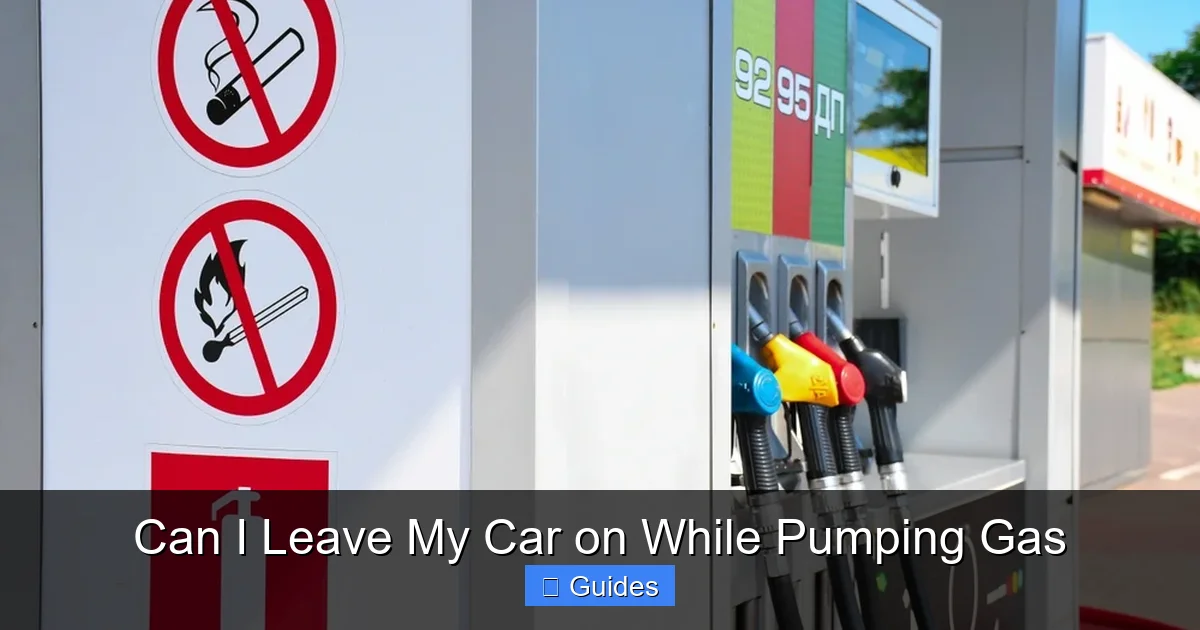
Visual guide about Can I Leave My Car on While Pumping Gas
Image source: mycarmakesnoise.com
At first glance, modern cars seem too advanced to cause a fire at the gas pump. After all, they’re packed with safety features, sealed fuel systems, and computer-controlled engines. But technology doesn’t eliminate all risks—especially when dealing with volatile substances like gasoline.
The primary danger comes from **ignition sources**. Even when your car is idling, its engine and electrical systems are active. Components like the alternator, spark plugs, fuel injectors, and onboard computers can generate small electrical sparks. While these are normally contained, gasoline vapors are invisible, highly flammable, and can travel several feet from the pump nozzle. If a spark meets those vapors, it can ignite a fire in milliseconds.
Consider this real-world example: In 2019, a driver in Texas left his SUV running while refueling. A small electrical fault in the vehicle’s wiring created a spark near the fuel tank. The result? A flash fire that engulfed the car and damaged the pump. Fortunately, no one was seriously injured, but the incident was caught on surveillance video and widely shared as a cautionary tale.
Another often-overlooked risk is **static electricity**. When you slide out of your seat, your clothes rub against the fabric, building up a static charge. If you re-enter your car during fueling and then touch the nozzle, that static discharge can ignite fuel vapors. This is why experts recommend staying outside the vehicle the entire time you’re pumping gas.
Even if your car has a “fuel shut-off” sensor or automatic engine stop features, these aren’t foolproof. Mechanical failures, software glitches, or unexpected electrical surges can still occur. Relying on technology to protect you is a gamble—one that’s simply not worth taking.
The Science Behind Gasoline Vapors and Ignition Risks

Visual guide about Can I Leave My Car on While Pumping Gas
Image source: thedailyautomotive.com
To truly understand why leaving your car on is dangerous, it helps to know a bit about how gasoline behaves. Gasoline doesn’t need to be a liquid to burn—it’s the **vapors** that are the real threat. These vapors are lighter than air and can spread quickly, especially in warm weather or windy conditions.
When you open your gas cap and insert the nozzle, vapors escape from the tank. They can travel several feet, forming an invisible cloud around the pump and your vehicle. This vapor cloud is highly explosive if it encounters an ignition source.
Now, let’s talk about what counts as an ignition source. It’s not just open flames or lit cigarettes (though those are obviously dangerous). Common culprits include:
– Electrical sparks from a running engine
– Static discharge from your body
– Faulty wiring or loose connections in the vehicle
– Cell phones (though rare, some older models have been suspected of causing sparks)
– Running accessories like radios, GPS units, or charging devices
Even something as simple as a loose ground wire in your car’s electrical system can create a spark under the right conditions. And because gasoline vapors are invisible, you won’t see the danger until it’s too late.
The National Fire Protection Association (NFPA) reports that dozens of gas pump fires occur each year in the U.S., many involving vehicles that were left running. While fatalities are rare, the potential for disaster is very real. In one documented case, a woman in Florida re-entered her running car to answer a phone call. When she returned to the nozzle, a static spark ignited the vapors, causing a fire that destroyed her vehicle and injured her hand.
This is why safety protocols are so strict. They’re not arbitrary rules—they’re based on decades of research and real-life incidents.
Legal and Policy Rules: What the Law Says
Visual guide about Can I Leave My Car on While Pumping Gas
Image source: i.ytimg.com
Beyond safety concerns, there’s another compelling reason to turn off your engine: **it’s often the law.** Many states in the U.S. have regulations that explicitly prohibit operating a vehicle while refueling. These laws are enforced not just for public safety, but also to reduce liability for gas stations and drivers.
For example, in California, Vehicle Code Section 22355 states that “no person shall drive or leave running any motor vehicle while fueling it with gasoline.” Violators can face fines, and in the event of an accident, they may be held fully liable—even if the fire wasn’t directly their fault.
Other states with similar laws include New York, Texas, Illinois, and Pennsylvania. Even in states without specific statutes, most gas stations post clear signage requiring engines to be turned off. Ignoring these signs can result in being asked to leave the premises or reported to authorities.
Gas station operators take these rules seriously. They’re trained to monitor pumps and intervene if they see a vehicle running. Some stations even have remote shut-off systems that can disable pumps if a hazard is detected.
International regulations are even stricter. In countries like the UK, Germany, and Australia, it’s illegal to have any electrical device active while refueling—including leaving the radio on or using a phone. The reasoning is simple: every active electrical component increases the risk of a spark.
So whether you’re at a busy highway station or a quiet rural pump, the message is clear: **turn off your engine, and keep it off until you’re done fueling.**
Common Myths and Misconceptions
Despite clear safety guidelines, several myths persist about leaving cars on while pumping gas. Let’s clear them up once and for all.
Myth 1: “My Car Is Too New to Cause a Fire”
Some drivers believe that modern vehicles are too advanced to pose a risk. They argue that sealed fuel systems, electronic fuel injection, and onboard diagnostics make fires impossible. But while newer cars are safer, they’re not immune.
Even the most advanced vehicles have electrical systems that can malfunction. A failing alternator, a short in the wiring, or a software glitch can create unexpected sparks. And remember—gasoline vapors don’t care how new your car is.
Myth 2: “I Need the AC or Heat On for Comfort”
It’s understandable to want to keep the cabin comfortable, especially in extreme weather. But the risk far outweighs the convenience. Most gas pumps take less than five minutes to fill a tank. Use that time to step outside, stretch your legs, and enjoy the fresh air. If it’s too hot or cold, consider timing your fuel stops for cooler parts of the day or using a sunshade.
Myth 3: “I’ll Just Be Quick—What’s the Harm?”
This is perhaps the most dangerous mindset. “Just a minute” can turn into a lifetime of regret. Fires at gas pumps happen in seconds. There’s no time to react once vapors ignite. The few seconds you save by leaving your car running aren’t worth the potential loss of life or property.
Myth 4: “Electric and Hybrid Cars Are Safe to Leave On”
This one surprises many people, but it’s true: **even electric and hybrid vehicles should be turned off during fueling.** While pure electric cars don’t use gasoline, plug-in hybrids do—and they still have internal combustion engines that can create sparks. Additionally, auxiliary systems like climate control, infotainment, and charging circuits can generate electrical activity.
In fact, some hybrid owners have reported static shocks when re-entering their vehicles during fueling, precisely because the systems remain active. The safest practice? Turn off the entire vehicle—including all electronics—before pumping gas.
Myth 5: “I’ve Done It a Hundred Times and Been Fine”
This is the gambler’s fallacy. Just because nothing bad has happened yet doesn’t mean it won’t. Gas pump fires are rare, but that’s because most people follow the rules. When accidents do occur, they’re often due to a combination of factors—like leaving the car running, re-entering the vehicle, and using a phone—all at once.
Don’t rely on luck. Follow the safety guidelines every single time.
Best Practices for Safe Refueling
Now that we’ve covered the risks and myths, let’s talk about what you *should* do when pumping gas. These simple steps can keep you, your passengers, and others safe.
1. Turn Off the Engine
This is non-negotiable. Before you even open the gas cap, make sure your engine is off. For hybrids and electric vehicles, turn off the entire system—don’t just put it in “accessory” mode.
2. Stay Outside the Vehicle
Remain near the pump nozzle the entire time. Don’t get back in the car to check your phone, adjust the radio, or tend to children. If you must re-enter, touch a metal part of the car door before touching the nozzle to discharge any static buildup.
3. Avoid Using Your Phone
While the risk of a phone causing a spark is low, it’s still a distraction. Keep your phone in your pocket or purse. Focus on the task at hand—safely fueling your vehicle.
4. Never Smoke or Use Lighters
This should go without saying, but it’s worth repeating: no smoking, vaping, or open flames near the pump. Gasoline vapors can ignite from a single spark.
5. Ground Yourself
Before handling the nozzle, touch a metal part of the pump or your vehicle’s frame. This discharges any static electricity built up from sliding in and out of your seat.
6. Don’t Overfill the Tank
Stop pumping when the nozzle clicks off. Overfilling can cause fuel to spill, increasing the risk of fire and environmental damage.
7. Keep Children and Pets Secure
If you have kids or pets in the car, keep them buckled in and supervised. Never leave them unattended, even for a moment.
8. Report Any Issues Immediately
If you notice a fuel leak, strange smell, or malfunctioning pump, stop fueling right away and alert the station attendant.
Following these steps takes just a few extra seconds but can prevent a disaster.
What to Do If a Fire Starts
Despite your best efforts, accidents can still happen. If a fire starts while you’re pumping gas, stay calm and act quickly.
First, **do not try to remove the nozzle**. Trying to pull it out can spread the fire. Instead, use the emergency shut-off switch located near the pump. Most stations have a large red button or lever that cuts off fuel flow immediately.
Next, **evacuate the area**. Move at least 50 feet away from the pump and warn others to do the same. Do not attempt to put out the fire yourself unless you have a fire extinguisher and are trained to use it.
Finally, **call 911**. Report the fire and provide your location. Emergency responders are trained to handle fuel-related incidents and will arrive quickly.
Remember: your safety is more important than your vehicle. Let the professionals handle the situation.
The Bottom Line: Safety Over Convenience
At the end of the day, the question “Can I leave my car on while pumping gas?” has a clear answer: **no, and you shouldn’t even consider it.** The risks—fire, explosion, injury, legal consequences—far outweigh any perceived convenience.
Modern life is fast-paced, and we’re all looking for ways to save time. But when it comes to fueling your vehicle, taking two extra minutes to turn off the engine, stay outside, and follow safety rules is a small price to pay for peace of mind.
Think of it this way: would you run into a burning building to save your car? Of course not. So why take a risk that could turn your vehicle—and your life—into a fireball?
By making safe refueling a habit, you’re not just protecting yourself. You’re setting a good example for others, especially younger drivers who may not know the dangers. Share this knowledge with friends and family. Post it on social media. Talk about it at the dinner table.
Because when it comes to gas pump safety, awareness saves lives.
Frequently Asked Questions
Is it illegal to leave your car running while pumping gas?
Yes, in many states it is illegal to leave your vehicle running during fueling. Laws vary by location, but most gas stations also enforce this rule with posted signs. Violations can result in fines or liability in case of an accident.
Can a cell phone cause a fire at the gas pump?
While extremely rare, there have been unconfirmed reports of cell phones causing sparks. However, the bigger risk comes from static electricity or engine sparks. For safety, it’s best to avoid using your phone while pumping gas.
Do electric cars need to be turned off when pumping gas?
Yes. Even though electric cars don’t use gasoline, plug-in hybrids do—and all vehicles should be turned off during fueling to eliminate any electrical risks.
What should I do if I accidentally leave my car running at the pump?
Turn off the engine immediately and stay outside the vehicle. If you’ve already started pumping, stop the process, ground yourself, and restart only after the engine is off.
Can static electricity really cause a gas pump fire?
Yes. Static discharge from your body can ignite gasoline vapors, especially if you re-enter your car during fueling. Always touch a metal part of the pump before handling the nozzle.
How long does it take for gasoline vapors to dissipate?
Gasoline vapors can linger for several minutes, especially in still air. It’s safest to assume they’re present the entire time you’re near the pump and avoid any ignition sources.

At CarLegit, we believe information should be clear, factual, and genuinely helpful. That’s why every guide, review, and update on our website is created with care, research, and a strong focus on user experience.