
Yes, you can make a copy of a car key—whether it’s a basic metal key, a transponder key, or a smart fob. The process varies by key type, and while some can be copied at hardware stores, others require professional automotive locksmiths or dealerships. Always check legality and security before duplicating.
In This Article
- 1 Key Takeaways
- 2 📑 Table of Contents
- 3 Can You Make a Copy of a Car Key?
- 4 Understanding the Different Types of Car Keys
- 5 Where Can You Make a Copy of a Car Key?
- 6 How Much Does It Cost to Copy a Car Key?
- 7 Can You Make a Copy of a Car Key Yourself?
- 8 Legal and Security Considerations
- 9 Tips for Safely and Effectively Copying Your Car Key
- 10 Conclusion
- 11 Frequently Asked Questions
Key Takeaways
- Most car keys can be copied: From simple metal keys to advanced smart fobs, duplication is possible with the right tools and expertise.
- Key type determines the method: Basic keys can be copied at hardware stores, while transponder and smart keys need specialized programming.
- Dealerships aren’t your only option: Certified automotive locksmiths often offer faster, cheaper alternatives to dealerships for key duplication.
- Security matters: Copying high-security keys without authorization may be illegal or void your vehicle’s warranty.
- Always have a backup plan: Keep a spare key in a safe place to avoid lockouts and emergency costs.
- DIY kits exist—but use caution: Some home duplication tools work for basic keys, but they lack precision and may damage advanced keys.
- Check your vehicle’s compatibility: Not all key-cutting machines can handle modern laser-cut or sidewinder keys.
📑 Table of Contents
- Can You Make a Copy of a Car Key?
- Understanding the Different Types of Car Keys
- Where Can You Make a Copy of a Car Key?
- How Much Does It Cost to Copy a Car Key?
- Can You Make a Copy of a Car Key Yourself?
- Legal and Security Considerations
- Tips for Safely and Effectively Copying Your Car Key
- Conclusion
Can You Make a Copy of a Car Key?
Have you ever locked your keys in the car—or worse, lost them entirely? It’s one of those frustrating moments that can ruin your entire day. But what if you could just make a copy of your car key and avoid the panic next time? The good news is: **yes, you absolutely can make a copy of a car key**. Whether you drive a 1995 sedan or a 2024 electric SUV, duplicating your key is not only possible—it’s often easier and more affordable than you think.
But here’s the catch: not all car keys are created equal. The method you use to copy your key depends entirely on the type of key your vehicle uses. A simple metal key from the 1990s can be duplicated in minutes at your local hardware store. But a modern smart key fob with push-button start? That’s a whole different story. It involves electronics, programming, and sometimes even your car’s onboard computer system.
In this guide, we’ll walk you through everything you need to know about copying a car key—from the different types of keys and where to get them duplicated, to the costs, risks, and best practices. Whether you’re preparing for an emergency or just want peace of mind, knowing how to make a copy of your car key is a smart move.
Understanding the Different Types of Car Keys

Visual guide about Can You Make a Copy of a Car Key
Image source: sp-ao.shortpixel.ai
Before you rush off to make a copy, it’s important to understand what kind of key you’re working with. Car keys have evolved dramatically over the past few decades, and each type requires a different approach for duplication.
1. Traditional Metal Keys
These are the simplest and oldest type of car keys. Made entirely of metal with no electronics, they’re used to manually unlock doors and start the ignition by turning a physical key. You’ll still find these in older vehicles, especially base models or cars from the 1990s and early 2000s.
Because they contain no chips or electronics, traditional metal keys are the easiest to copy. All you need is a blank key of the same shape and a key-cutting machine. Most hardware stores, big-box retailers like Walmart or Home Depot, and even some grocery stores offer key duplication services for these types of keys. The process takes just a few minutes and costs between $2 and $10.
For example, if you own a 1998 Honda Civic with a standard metal key, you can walk into almost any hardware store, hand them your key, and walk out with a working copy in under five minutes. No programming, no hassle.
2. Transponder Keys
Introduced in the mid-1990s, transponder keys were a major leap in vehicle security. These keys look similar to traditional metal keys but contain a small electronic chip embedded in the plastic head. When you insert the key into the ignition, the car’s immobilizer system sends a signal to the chip. If the chip responds with the correct code, the engine will start. If not, the car won’t start—even if the key physically turns the ignition.
This added layer of security made it much harder for thieves to hot-wire cars, but it also made duplication more complex. To copy a transponder key, you need more than just a physical copy. You also need to program the new key’s chip to match your vehicle’s immobilizer system.
This means you can’t just walk into a hardware store and get a copy. You’ll need a locksmith with the right equipment or visit a dealership. Some auto parts stores like AutoZone or O’Reilly Auto Parts offer basic transponder key cutting and programming, but not all vehicles are supported.
For instance, if you drive a 2005 Toyota Camry with a transponder key, you’ll need a professional to cut the key and program the chip. This process typically takes 15–30 minutes and costs between $50 and $150, depending on the vehicle and service provider.
3. Remote Key Fobs (Flip Keys)
Remote key fobs, also known as flip keys or smart keys, combine the functions of a transponder key with remote locking and unlocking. These keys often have a flip-out metal blade and buttons for locking, unlocking, and sometimes even opening the trunk or activating a panic alarm.
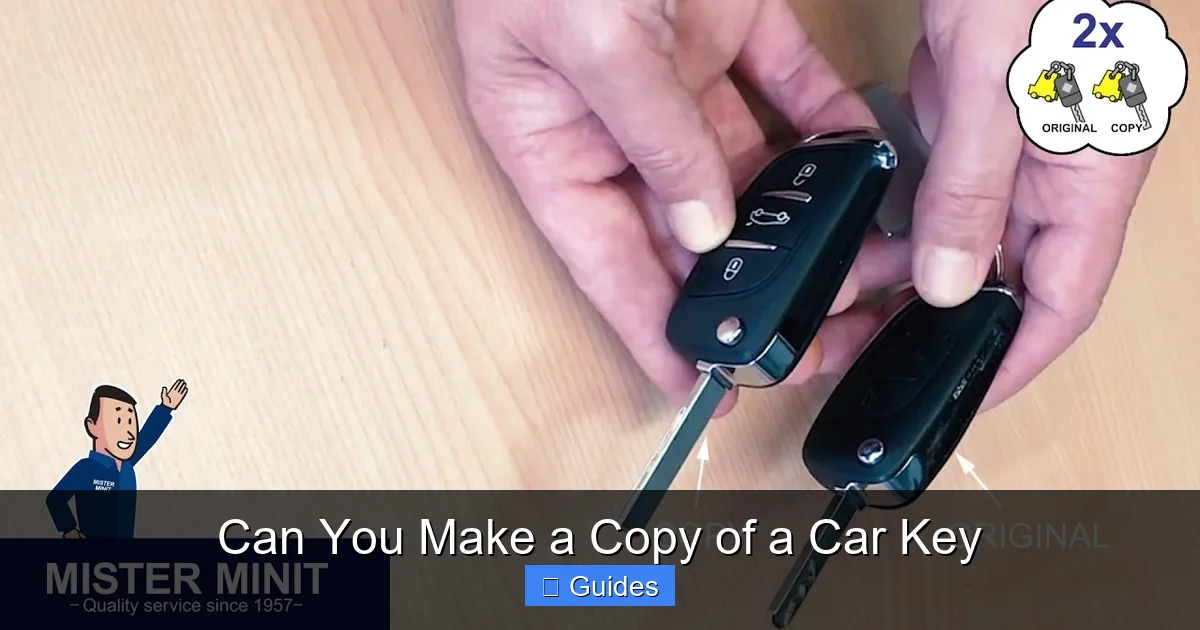
Because they include both a physical key and electronic components, copying a remote key fob requires two steps: cutting the metal blade and programming the remote functions. Some fobs also include a transponder chip, so the programming process may involve syncing with the car’s immobilizer system as well.
For example, a 2012 Ford F-150 with a remote key fob will need both the blade cut and the remote programmed. This usually requires a professional locksmith or dealership. Costs range from $75 to $200, depending on the complexity.
4. Smart Keys (Proximity Keys)
Smart keys, also known as proximity keys or keyless entry fobs, are the most advanced type of car key. These keys don’t need to be inserted into the ignition at all. Instead, they use radio frequency identification (RFID) to communicate with the car. As long as the key is inside the vehicle (usually in your pocket or purse), you can start the engine with the push of a button.
Smart keys often include additional features like remote start, trunk release, and personalized settings (seat position, climate control, etc.). Because of their complexity, duplicating a smart key is the most challenging and expensive process.
You’ll need specialized equipment to clone the key’s signal and program it to your vehicle. This is typically done by a dealership or a high-end automotive locksmith. The cost can range from $150 to $500 or more, depending on the make and model.
For instance, copying a smart key for a 2020 BMW X5 could cost upwards of $400 at a dealership, while a certified locksmith might offer the same service for $250–$300.
Where Can You Make a Copy of a Car Key?
Visual guide about Can You Make a Copy of a Car Key
Image source: cdn.cheapism.com
Now that you know the types of keys, the next question is: where can you actually get a copy made? The answer depends on your key type, budget, and urgency.
1. Hardware Stores and Big-Box Retailers
For traditional metal keys, hardware stores like Lowe’s, Home Depot, and Ace Hardware are your best bet. Many also offer basic transponder key cutting, though programming may not be available. Stores like Walmart and Target often have self-service key machines that can duplicate simple keys in minutes.
Pros: Fast, cheap, convenient
Cons: Limited to basic keys, no programming for advanced keys
Tip: Always test the copied key in your car before leaving the store. A poorly cut key might look right but fail to turn the ignition.
2. Auto Parts Stores
Stores like AutoZone, O’Reilly Auto Parts, and Advance Auto Parts often provide key cutting and programming services for transponder and remote keys. They carry a wide range of blank keys and have the equipment to program many popular vehicles.
Pros: Affordable, knowledgeable staff, wide selection of blanks
Cons: Not all vehicles supported, may require multiple visits
Example: AutoZone can cut and program a transponder key for a 2008 Honda Accord for around $75. However, they may not support luxury brands like Mercedes or Audi.
3. Dealerships
Your car’s dealership is the most reliable option for duplicating any type of key—especially smart keys and high-security models. They have access to manufacturer-specific tools, software, and original equipment manufacturer (OEM) parts.
Pros: Guaranteed compatibility, professional service, warranty-safe
Cons: Expensive, time-consuming, may require appointment
For example, getting a copy of a smart key for a 2021 Tesla Model 3 at a Tesla service center could cost $300–$500 and take several days if they need to order the key.
4. Automotive Locksmiths
Certified automotive locksmiths are often the best middle ground between cost and quality. They specialize in car keys and locks, and many offer mobile services—meaning they can come to your home or office to cut and program your key.
Pros: Fast, convenient, often cheaper than dealerships, wide vehicle coverage
Cons: Quality varies, not all locksmiths are certified
Tip: Look for locksmiths certified by organizations like the Associated Locksmiths of America (ALOA). Avoid unlicensed “pop-up” services that may use low-quality blanks or improper programming.
5. Online Key Services
Some companies allow you to mail in your original key or provide your vehicle information online to receive a pre-cut and pre-programmed key. This is convenient if you don’t have immediate access to a service provider.
Pros: Convenient, nationwide service
Cons: Shipping delays, risk of losing your original key, not all vehicles supported
Example: Companies like KeylessRide or CarKeysExpress offer online key duplication for many models, but you’ll need to wait 3–7 days for delivery.
How Much Does It Cost to Copy a Car Key?
Visual guide about Can You Make a Copy of a Car Key
Image source: i.ytimg.com
The cost of copying a car key varies widely based on the key type, service provider, and vehicle make and model. Here’s a general breakdown:
- Traditional Metal Key: $2–$10 at hardware stores
- Transponder Key: $50–$150 (cutting + programming)
- Remote Key Fob: $75–$200
- Smart Key: $150–$500+
Dealerships are typically the most expensive, while locksmiths and auto parts stores offer more competitive pricing. Always get a quote before proceeding, and ask if there are additional fees for programming or emergency service.
Can You Make a Copy of a Car Key Yourself?
With the rise of DIY culture and online tutorials, you might be wondering: can you copy a car key at home? The short answer is: **sometimes**.
DIY Key Cutting
For traditional metal keys, yes—you can buy a key-cutting machine or a handheld duplicator online. These devices allow you to trace your original key and cut a blank to match. However, they require steady hands and practice. A poorly cut key can damage your ignition or door locks.
Tip: If you’re determined to try DIY cutting, start with an inexpensive blank and practice on an old key first.
DIY Programming
Programming a transponder or smart key at home is much more difficult. Some vehicles allow “self-programming” using a specific sequence of turning the ignition on and off. This method works for certain Honda, Toyota, and Ford models, but not all.
For example, some Honda Accords allow you to program a new key by inserting the original key, turning it to “on,” then inserting the new key within 10 seconds. However, this only works if you already have one working key. If you’ve lost all keys, self-programming won’t help.
Smart keys almost always require professional programming tools. Attempting to clone or hack a smart key can damage your vehicle’s security system or trigger anti-theft alarms.
Risks of DIY Key Duplication
While DIY methods can save money, they come with risks:
- Poorly cut keys can damage locks or ignition
- Improper programming can disable your car’s immobilizer
- Using low-quality blanks may result in breakage
- Voiding your vehicle’s warranty (if done improperly)
For most people, especially with modern vehicles, it’s safer and more reliable to use a professional service.
Legal and Security Considerations
Before making a copy of your car key, it’s important to consider the legal and security implications.
Is It Legal to Copy a Car Key?
In most cases, **yes—it’s legal to copy your own car key**. However, copying a key for someone else’s vehicle without their permission is illegal and considered tampering or theft. Always ensure you own the vehicle or have explicit permission from the owner.
Some high-security keys, especially those used in luxury or commercial vehicles, may be protected by patents or encryption. Unauthorized duplication could violate intellectual property laws.
Security Risks of Key Duplication
Every time you make a copy of your key, you increase the risk of it falling into the wrong hands. A lost or stolen spare key can be used to steal your car, especially if it’s a basic metal key with no security features.
To reduce risk:
- Keep spare keys in a secure location (not in your wallet or glove compartment)
- Use a key tracker like Tile or Apple AirTag
- Consider upgrading to a keyless entry system with remote disable features
Warranty and Insurance Implications
Using non-OEM keys or unlicensed locksmiths may void your vehicle’s warranty, especially if the key causes damage to the ignition or immobilizer system. Some insurance companies also require proof of professional key duplication for claims related to theft or lockouts.
Always check your warranty terms and insurance policy before choosing a duplication method.
Tips for Safely and Effectively Copying Your Car Key
To ensure a smooth and secure key duplication process, follow these best practices:
- Know your key type: Identify whether you have a metal, transponder, remote, or smart key before seeking service.
- Use a reputable provider: Choose certified locksmiths or authorized dealers over unknown online sellers.
- Test the copy immediately: Try the new key in all locks and the ignition to ensure it works properly.
- Keep records: Save receipts and documentation in case you need to prove ownership or file an insurance claim.
- Have a backup plan: Store a spare key with a trusted friend or family member, or use a magnetic key box hidden on your vehicle.
- Upgrade when possible: If you’re still using a basic metal key, consider upgrading to a transponder or smart key for better security.
Conclusion
So, can you make a copy of a car key? Absolutely. Whether you drive a classic car with a simple metal key or a high-tech vehicle with a smart fob, duplication is not only possible—it’s a smart precaution. The key (pun intended) is understanding your key type, choosing the right service provider, and prioritizing security and legality.
While DIY options exist for basic keys, modern vehicles often require professional tools and expertise. Don’t let cost or convenience lead you to cut corners—your car’s security and your peace of mind are worth the investment.
By following the tips in this guide, you can ensure that you always have a working spare key when you need it most. Whether you’re preparing for a road trip, moving to a new city, or just want to avoid the stress of a lockout, making a copy of your car key is a simple step that can save you time, money, and frustration down the road.
Frequently Asked Questions
Can I copy a car key without the original?
No, you generally cannot copy a car key without the original. Most duplication methods require the original key to trace the cuts or read the chip. If you’ve lost all keys, you’ll need to contact a locksmith or dealership to create a new key from scratch, which may require proof of ownership.
How long does it take to copy a car key?
The time varies by key type. Basic metal keys can be copied in 2–5 minutes at a hardware store. Transponder and remote keys take 15–30 minutes with programming. Smart keys may take 30–60 minutes or longer, depending on the vehicle and service provider.
Can I copy a car key at home?
You can copy a basic metal key at home with a DIY key cutter, but it requires skill and practice. Programming transponder or smart keys at home is rarely successful and can damage your vehicle’s security system. Professional service is recommended for advanced keys.
Is it cheaper to copy a key at a dealership or locksmith?
Locksmiths are usually cheaper than dealerships, often by 30–50%. Dealerships charge more for OEM parts and labor, but they guarantee compatibility. For budget-conscious drivers, a certified locksmith is often the best value.
What happens if I lose all my car keys?
If you lose all keys, you’ll need to contact a locksmith or dealership to create a new key. This process may involve verifying ownership, reprogramming the immobilizer, and cutting a new key from code—costing $100–$500 or more depending on the vehicle.
Can I use a copied key if the original is damaged?
Yes, as long as the copied key is properly cut and programmed. However, if the original key is severely damaged or worn, it may not provide an accurate template. In such cases, a professional may need to decode the key manually or use the vehicle’s VIN to create a new key.

At CarLegit, we believe information should be clear, factual, and genuinely helpful. That’s why every guide, review, and update on our website is created with care, research, and a strong focus on user experience.