
An emission system problem on an Acura MDX indicates an issue with components designed to reduce harmful exhaust gases. This warning often triggers the check engine light and can stem from faulty sensors, leaks, or catalytic converter issues. Prompt diagnosis and repair are essential to maintain performance, fuel efficiency, and emissions compliance.
In This Article
- 1 Key Takeaways
- 2 📑 Table of Contents
- 3 What Does Emission System Problem Mean on Acura MDX?
- 4 How the Acura MDX Emission System Works
- 5 Common Causes of Emission System Problems in Acura MDX
- 6 Symptoms of an Emission System Problem
- 7 How to Diagnose an Emission System Problem
- 8 How to Fix Emission System Problems on Acura MDX
- 9 Preventing Emission System Problems
- 10 Conclusion
- 11 Frequently Asked Questions
- 11.1 What does it mean when my Acura MDX says “Emission System Problem”?
- 11.2 Can I drive my Acura MDX with an emission system problem?
- 11.3 How much does it cost to fix an emission system problem on an Acura MDX?
- 11.4 Will a loose gas cap cause an emission system warning?
- 11.5 How do I reset the emission system warning light?
- 11.6 Can bad gas cause an emission system problem?
Key Takeaways
- Emission system problems trigger the check engine light and reduce vehicle efficiency. Ignoring the warning can lead to failed inspections and increased pollution.
- Common causes include faulty oxygen sensors, EVAP leaks, and catalytic converter failure. These components are critical for controlling exhaust emissions.
- The Acura MDX uses advanced emissions technology like VCM and direct injection. These systems require precise monitoring and maintenance.
- Diagnosing the issue requires an OBD-II scanner to read trouble codes. Codes like P0420 or P0442 point directly to emission-related faults.
- Regular maintenance helps prevent emission system failures. Replace air filters, use quality fuel, and inspect hoses routinely.
- Driving with an unresolved emission issue can damage the catalytic converter. This repair is expensive and often preventable with early action.
- Professional diagnosis is recommended for accurate repairs. Certified Acura technicians have the tools and expertise for proper fixes.
📑 Table of Contents
- What Does Emission System Problem Mean on Acura MDX?
- How the Acura MDX Emission System Works
- Common Causes of Emission System Problems in Acura MDX
- Symptoms of an Emission System Problem
- How to Diagnose an Emission System Problem
- How to Fix Emission System Problems on Acura MDX
- Preventing Emission System Problems
- Conclusion
What Does Emission System Problem Mean on Acura MDX?
If you’re driving your Acura MDX and suddenly see a warning light on the dashboard that says “Emission System Problem,” your first reaction might be panic. But don’t worry—this alert doesn’t always mean a major breakdown is imminent. Instead, it’s your vehicle’s way of saying, “Hey, something in my emissions control system isn’t working right.”
The emission system in your Acura MDX is a network of sensors, valves, hoses, and components designed to reduce the amount of harmful gases released into the atmosphere. These include carbon monoxide, nitrogen oxides, and hydrocarbons. When the system detects a malfunction—whether it’s a loose gas cap or a failing sensor—it triggers a warning to protect both the environment and your vehicle’s performance.
This warning often appears alongside the check engine light, and in some cases, the message may flash or stay solid depending on the severity. While it might seem alarming, understanding what it means and how to respond can save you time, money, and stress. In this guide, we’ll break down what an emission system problem means on your Acura MDX, the most common causes, how to diagnose it, and what steps you should take next.
How the Acura MDX Emission System Works
Visual guide about What Does Emission System Problem Mean on Acura Mdx
Image source: geargan.com
To truly understand what an emission system problem means, it helps to know how the system functions in your Acura MDX. Modern vehicles like the MDX are equipped with sophisticated emissions control technology to meet strict environmental regulations. The system works by monitoring and managing the gases produced during combustion and ensuring they’re treated before exiting the tailpipe.
One of the key components is the **oxygen (O2) sensor**, which measures the amount of oxygen in the exhaust. This data helps the engine control unit (ECU) adjust the air-fuel mixture for optimal combustion. If the mixture is too rich (too much fuel) or too lean (too much air), it can increase emissions and reduce fuel economy.
Another critical part is the **catalytic converter**, which converts harmful gases like carbon monoxide and nitrogen oxides into less harmful substances like carbon dioxide and nitrogen. It’s essentially a filter for your exhaust, and it works best when the engine is running efficiently.
The **evaporative emission control system (EVAP)** is also vital. It captures fuel vapors from the gas tank and prevents them from escaping into the air. These vapors are stored in a charcoal canister and later burned in the engine. A leak or malfunction in this system—like a cracked hose or loose gas cap—can trigger an emission warning.
Additionally, the Acura MDX uses **Variable Cylinder Management (VCM)**, a feature that shuts down some cylinders during light-load driving to save fuel. While this improves efficiency, it also adds complexity to the emissions system, as the ECU must carefully manage transitions between cylinder modes to avoid misfires or increased emissions.
All these components work together under the watchful eye of the onboard diagnostics system (OBD-II). When a sensor detects an anomaly—such as inconsistent oxygen readings or a pressure drop in the EVAP system—the ECU logs a trouble code and illuminates the emission system warning light.
Common Causes of Emission System Problems in Acura MDX
Visual guide about What Does Emission System Problem Mean on Acura Mdx
Image source: i2.wp.com
Now that you know how the system works, let’s look at the most common reasons why your Acura MDX might display an emission system problem. While the issue can stem from various sources, a few culprits appear more frequently than others.
Faulty Oxygen (O2) Sensors
Oxygen sensors are among the most common causes of emission warnings. Located in the exhaust manifold and downstream of the catalytic converter, these sensors monitor oxygen levels to help the engine maintain the ideal air-fuel ratio. Over time, they can become contaminated with oil, coolant, or carbon deposits, leading to inaccurate readings.
When an O2 sensor fails, the engine may run rich or lean, increasing emissions and reducing fuel efficiency. You might notice poor gas mileage, rough idling, or hesitation during acceleration. In the Acura MDX, especially models from 2007–2013, O2 sensor failure is a well-documented issue. Replacing a faulty sensor typically resolves the problem, but it’s important to use OEM or high-quality aftermarket parts.
Evaporative Emission (EVAP) System Leaks
The EVAP system is designed to trap fuel vapors and prevent them from escaping into the atmosphere. Even a small leak—such as a cracked hose, loose gas cap, or damaged purge valve—can trigger an emission warning.
One of the most common EVAP issues is a loose or missing gas cap. It might sound trivial, but the gas cap creates a seal that maintains pressure in the fuel system. If it’s not tightened properly after refueling, the system may detect a leak and illuminate the warning light. Always make sure the cap clicks three times when you tighten it.
Other EVAP problems include cracked vacuum hoses, a faulty canister vent solenoid, or a malfunctioning purge valve. These issues often result in trouble codes like P0442 (small EVAP leak) or P0455 (large EVAP leak). A smoke test performed by a technician can pinpoint the exact location of the leak.
Catalytic Converter Failure
The catalytic converter is one of the most expensive components in the emission system, and it’s also prone to failure over time. It can become clogged with carbon buildup, contaminated by oil or coolant, or damaged by overheating.
Symptoms of a failing catalytic converter include reduced engine performance, poor acceleration, a sulfur-like smell (rotten eggs), and increased exhaust emissions. In severe cases, the vehicle may enter “limp mode” to prevent further damage.
On the Acura MDX, catalytic converter issues are more common in high-mileage vehicles or those that frequently drive short distances. Short trips don’t allow the converter to reach optimal operating temperature, leading to moisture buildup and clogging. Regular highway driving can help keep the converter clean, but once it fails, replacement is usually necessary.
Mass Airflow (MAF) Sensor Issues
The MAF sensor measures the amount of air entering the engine and helps the ECU calculate the correct fuel injection. If the sensor is dirty or malfunctioning, it can send incorrect data, leading to a rich or lean fuel mixture.
A dirty MAF sensor is often the culprit. Over time, dirt, oil, and debris can accumulate on the sensor’s wire or film, disrupting its readings. Cleaning it with a specialized MAF cleaner can sometimes resolve the issue. However, if the sensor is damaged or worn out, replacement is required.
Symptoms include rough idle, hesitation, stalling, and decreased fuel economy. In some cases, the check engine light may come on with codes like P0101 or P0102.
Exhaust Gas Recirculation (EGR) Valve Problems
The EGR valve reduces nitrogen oxide emissions by recirculating a portion of exhaust gases back into the combustion chamber. This lowers combustion temperatures and minimizes harmful emissions.
However, the EGR valve can become clogged with carbon deposits, especially in vehicles that do a lot of city driving. When this happens, the valve may stick open or closed, causing rough idling, engine knocking, or increased emissions.
Cleaning the EGR valve and passage can often restore function, but in severe cases, replacement is needed. Acura MDX models from the late 2000s are known to experience EGR-related issues, particularly if maintenance has been neglected.
Faulty Spark Plugs or Ignition Coils
While not directly part of the emission system, ignition problems can indirectly cause emission warnings. Misfiring cylinders produce unburned fuel that enters the exhaust system, overloading the catalytic converter and increasing emissions.
Worn spark plugs or failing ignition coils can lead to misfires, especially under load or at idle. The ECU detects these misfires and may trigger codes like P0300 (random misfire) or P0301–P0306 (cylinder-specific misfires).
Regular ignition system maintenance—such as replacing spark plugs every 60,000 to 100,000 miles—can prevent these issues. Using OEM parts ensures compatibility and reliability.
Symptoms of an Emission System Problem
Visual guide about What Does Emission System Problem Mean on Acura Mdx
Image source: theautoinsiderblog.com
Recognizing the symptoms of an emission system problem can help you address it before it worsens. While the most obvious sign is the warning light on your dashboard, there are other clues to watch for.
Check Engine Light or Emission Warning
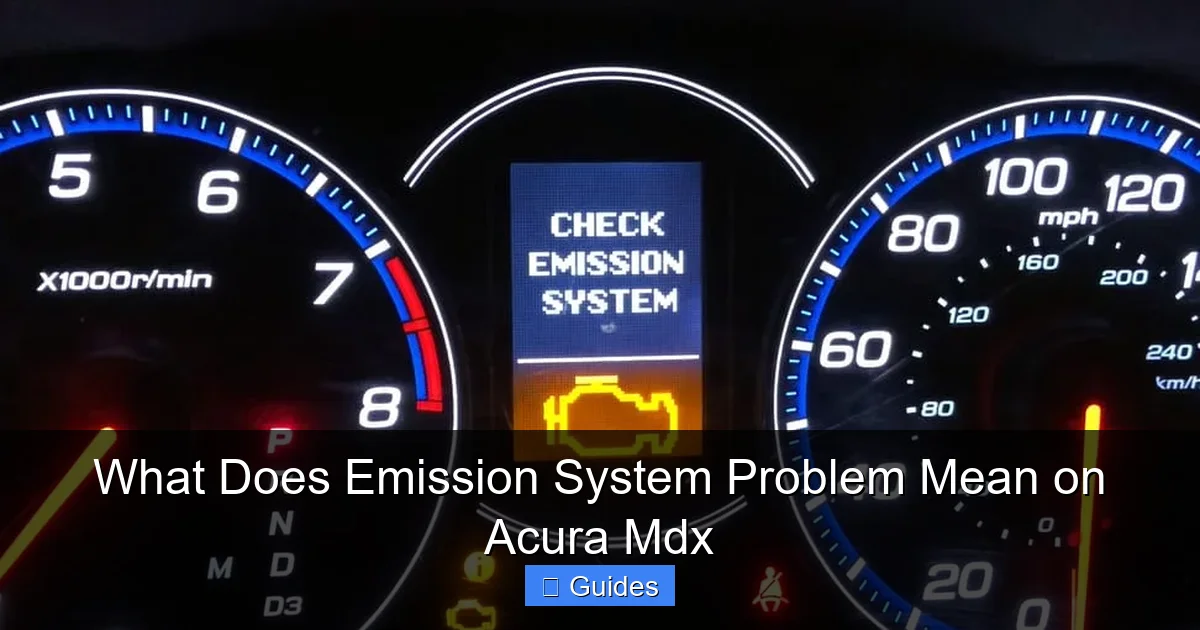
The most common symptom is the illumination of the check engine light or a specific “Emission System Problem” message on the instrument cluster. This light may stay on steadily or flash, depending on the severity of the issue. A flashing light usually indicates a severe misfire that could damage the catalytic converter.
Reduced Fuel Economy
If your Acura MDX suddenly starts using more gas than usual, it could be due to an emission system issue. A faulty O2 sensor, MAF sensor, or clogged catalytic converter can cause the engine to run inefficiently, burning extra fuel.
Rough Idling or Stalling
A malfunctioning emission component can disrupt the air-fuel mixture, leading to rough idling, hesitation, or even stalling. You might notice the engine shaking at stoplights or struggling to stay running when cold.
Reduced Engine Performance
A clogged catalytic converter or misfiring cylinders can limit engine power. You may feel sluggish acceleration, especially when merging onto highways or climbing hills.
Unusual Smells
A sulfur or rotten egg smell from the exhaust often indicates a failing catalytic converter. This odor is caused by unburned hydrogen sulfide in the exhaust gases.
Failed Emissions Test
If you live in an area that requires emissions testing, an unresolved emission system problem will likely cause your vehicle to fail. The test measures levels of hydrocarbons, carbon monoxide, and nitrogen oxides—all of which can be elevated due to system malfunctions.
How to Diagnose an Emission System Problem
Diagnosing an emission system problem starts with reading the trouble codes stored in your vehicle’s onboard computer. These codes provide valuable clues about what’s wrong and where to look.
Use an OBD-II Scanner
The first step is to connect an OBD-II scanner to the diagnostic port, usually located under the dashboard near the steering column. Once connected, the scanner reads the trouble codes and displays them on the screen.
Common emission-related codes include:
– **P0420**: Catalyst system efficiency below threshold (Bank 1)
– **P0442**: Evaporative emission control system leak detected (small leak)
– **P0455**: Evaporative emission control system leak detected (large leak)
– **P0135**: O2 sensor heater circuit malfunction (Bank 1, Sensor 1)
– **P0171**: System too lean (Bank 1)
These codes help narrow down the issue, but they don’t always tell the whole story. For example, a P0420 code could mean a failing catalytic converter, but it could also be caused by a faulty O2 sensor or exhaust leak.
Inspect Common Components
After retrieving the codes, visually inspect key components:
– Check the gas cap for damage or looseness.
– Look for cracked or disconnected vacuum hoses.
– Inspect the catalytic converter for physical damage or discoloration.
– Examine the O2 sensors and wiring for corrosion or damage.
Perform a Smoke Test
For EVAP system leaks, a smoke test is the most effective diagnostic method. A technician introduces smoke into the EVAP system and looks for leaks. This can reveal tiny cracks or loose connections that are hard to spot otherwise.
Check Live Data
Using a professional scan tool, you can monitor live data from sensors like the O2 sensor, MAF sensor, and fuel trims. This helps determine if sensors are responding correctly or if the engine is running rich or lean.
Consult a Professional
While DIY diagnosis is possible, emission system problems can be complex. A certified Acura technician has access to advanced tools, service bulletins, and technical knowledge specific to your vehicle. They can perform a thorough inspection and recommend the right repairs.
How to Fix Emission System Problems on Acura MDX
Once you’ve identified the issue, the next step is repair. The solution depends on the root cause, but here are the most common fixes.
Replace Faulty Oxygen Sensors
If an O2 sensor is faulty, replacement is usually straightforward. Most sensors are located in the exhaust manifold or downpipe and can be removed with a special O2 sensor socket. Always use a high-quality sensor and torque it to specification.
Tighten or Replace the Gas Cap
If the issue is a loose gas cap, simply tighten it until it clicks three times. If the cap is damaged or worn, replace it with an OEM part. After replacement, drive the vehicle for a few days to see if the light turns off.
Repair EVAP Leaks
For small EVAP leaks, replacing cracked hoses or the purge valve often resolves the issue. For larger leaks, a full inspection and smoke test are recommended. In some cases, the charcoal canister may need replacement.
Clean or Replace the MAF Sensor
Clean the MAF sensor with a dedicated cleaner spray. Avoid touching the sensor element. If cleaning doesn’t work, replace the sensor with an OEM or reputable aftermarket unit.
Replace the Catalytic Converter
If the catalytic converter is clogged or damaged, replacement is necessary. This is a costly repair, often exceeding $1,000, but it’s essential for emissions compliance and performance. Always use a high-quality converter to avoid premature failure.
Service the EGR System
Clean the EGR valve and passage with a carbon cleaner. If the valve is stuck or damaged, replace it. Regular maintenance can prevent future buildup.
Replace Spark Plugs and Ignition Coils
If misfires are causing the issue, replace worn spark plugs and faulty ignition coils. Use OEM parts for best results and follow the recommended service interval.
Preventing Emission System Problems
Prevention is always better than repair. Here are some tips to keep your Acura MDX’s emission system in top condition.
Follow the Maintenance Schedule
Refer to your owner’s manual for the recommended maintenance schedule. Replace air filters, spark plugs, and fuel filters on time. Regular oil changes also help prevent carbon buildup.
Use Quality Fuel
Fill up at reputable gas stations and consider using a fuel system cleaner every 3,000 to 5,000 miles. This helps remove deposits from injectors and valves.
Drive Regularly on Highways
Short trips prevent the catalytic converter from reaching optimal temperature. Take your MDX on a 20–30 minute highway drive once a week to burn off moisture and carbon buildup.
Inspect Hoses and Connections
Check vacuum hoses and EVAP lines for cracks, leaks, or loose connections during routine maintenance. Replace any damaged parts immediately.
Avoid Overloading the Vehicle
Excessive weight and towing can strain the engine and increase emissions. Stay within the recommended load limits.
Address Warning Lights Promptly
Don’t ignore the check engine light. Early diagnosis can prevent minor issues from becoming major repairs.
Conclusion
An emission system problem on your Acura MDX is a serious warning that should not be ignored. While it can stem from a variety of causes—from a loose gas cap to a failing catalytic converter—understanding the symptoms and taking prompt action can save you from costly repairs and ensure your vehicle remains environmentally friendly.
By staying on top of maintenance, using quality parts, and addressing issues early, you can keep your MDX running smoothly for years to come. If you’re unsure about the cause or how to fix it, don’t hesitate to consult a certified Acura technician. They have the expertise and tools to diagnose and repair emission system problems accurately.
Remember, your vehicle’s emission system plays a crucial role in protecting the environment and maintaining performance. Treat it with care, and it will reward you with reliable, efficient driving.
Frequently Asked Questions
What does it mean when my Acura MDX says “Emission System Problem”?
It means a component in your vehicle’s emissions control system is malfunctioning. This could be due to a faulty sensor, leak, or catalytic converter issue. The warning often appears with the check engine light.
Can I drive my Acura MDX with an emission system problem?
You can drive short distances, but it’s not recommended for long. Ignoring the issue can damage the catalytic converter or reduce fuel efficiency. Have it diagnosed as soon as possible.
How much does it cost to fix an emission system problem on an Acura MDX?
Costs vary widely. A loose gas cap is free to fix, while a catalytic converter replacement can cost $1,000 or more. Most repairs range from $100 to $500 depending on the cause.
Will a loose gas cap cause an emission system warning?
Yes, a loose or damaged gas cap is one of the most common causes. It disrupts the EVAP system’s pressure, triggering a leak code. Tighten or replace the cap to resolve it.
How do I reset the emission system warning light?
After fixing the issue, the light may turn off automatically after a few drive cycles. You can also use an OBD-II scanner to clear the codes. If the problem persists, the light will return.
Can bad gas cause an emission system problem?
Yes, low-quality or contaminated fuel can lead to poor combustion, increased emissions, and sensor damage. Always use reputable gas stations and consider fuel additives occasionally.

At CarLegit, we believe information should be clear, factual, and genuinely helpful. That’s why every guide, review, and update on our website is created with care, research, and a strong focus on user experience.