
Resetting the flat tire warning on your Infiniti Q60 is simple once you know the right steps. This guide walks you through the TPMS reset process, explains why the warning appears, and offers troubleshooting tips to keep your tires properly monitored.
In This Article
- 1 Key Takeaways
- 2 📑 Table of Contents
- 3 Why Does the Flat Tire Warning Light Come On?
- 4 Understanding the Infiniti Q60 TPMS System
- 5 Step-by-Step Guide to Resetting the Flat Tire Warning
- 6 Troubleshooting Common TPMS Issues
- 7 Tips for Maintaining Your TPMS and Tires
- 8 When to Visit a Professional
- 9 Conclusion
- 10 Frequently Asked Questions
- 10.1 How often should I check my tire pressure?
- 10.2 Can I reset the TPMS without driving the car?
- 10.3 Why does the TPMS light come on in cold weather?
- 10.4 Do I need special tools to reset the TPMS on my Infiniti Q60?
- 10.5 What if the TPMS light flashes and stays on?
- 10.6 Can I drive with the TPMS warning light on?
Key Takeaways
- Understand the TPMS system: The Tire Pressure Monitoring System (TPMS) alerts you when tire pressure is too low, helping prevent unsafe driving conditions.
- Check tire pressure first: Always verify that all tires are inflated to the recommended PSI before attempting a reset.
- Use the correct reset method: The Infiniti Q60 uses a manual reset procedure via the steering wheel controls and dashboard menu.
- Drive after resetting: A short drive (5–10 minutes) helps the system recalibrate and confirm the warning is cleared.
- Address persistent warnings: If the light stays on, there may be a sensor issue, slow leak, or system malfunction requiring professional diagnosis.
- Maintain regular tire care: Check pressure monthly and before long trips to avoid unnecessary warnings.
- Know your model year: Reset steps may vary slightly between 2017–2023 Infiniti Q60 models—always refer to your owner’s manual.
📑 Table of Contents
Why Does the Flat Tire Warning Light Come On?
If you’ve ever been driving your Infiniti Q60 and suddenly noticed a yellow or orange light on your dashboard shaped like a tire with an exclamation point, you’ve encountered the Tire Pressure Monitoring System (TPMS) warning. This isn’t just a random alert—it’s your car’s way of telling you that one or more tires may be underinflated, which can affect handling, fuel efficiency, and safety.
The TPMS in the Infiniti Q60 is designed to monitor the air pressure in all four tires (and sometimes the spare, depending on the model). When pressure drops below the recommended level—typically around 25% below the ideal PSI—the system triggers a warning light. This can happen for several reasons: a slow leak from a nail or puncture, temperature changes (cold weather reduces tire pressure), or simply forgetting to check your tires during routine maintenance.
It’s important not to ignore this warning. Driving with underinflated tires increases the risk of a blowout, reduces traction, and can even damage the tire sidewall over time. Plus, it can negatively impact your car’s fuel economy—by as much as 3% per PSI drop, according to the U.S. Department of Energy.
But here’s the good news: once you’ve addressed the root cause—like inflating a low tire or repairing a puncture—you can easily reset the flat tire warning on your Infiniti Q60. The process is straightforward, doesn’t require special tools, and can be done in just a few minutes from the driver’s seat.
Understanding the Infiniti Q60 TPMS System
Visual guide about How to Reset Flat Tire Warning on Infiniti Q60
Image source: carnewsbox.com
Before diving into the reset process, it helps to understand how the TPMS works in your Infiniti Q60. This knowledge not only makes the reset easier but also helps you troubleshoot if the light comes back on.
The Infiniti Q60 uses a direct TPMS system, which means each tire is equipped with a small sensor mounted inside the wheel, usually attached to the valve stem. These sensors continuously measure air pressure and temperature, then transmit that data wirelessly to the car’s onboard computer. When the system detects a significant drop in pressure, it triggers the dashboard warning light.
There are two types of TPMS warnings you might see:
– A flashing TPMS light that stays on: This usually indicates a system malfunction, such as a dead sensor battery or a communication error.
– A solid TPMS light: This means one or more tires are underinflated.
Most Infiniti Q60 models from 2017 to 2023 use the same basic TPMS setup, but there can be minor differences in how the system behaves or how the reset is performed. For example, earlier models might require a slightly different menu navigation path, or some trims may have additional tire pressure displays.
It’s also worth noting that the TPMS sensors have batteries that last about 5–10 years. Once the battery dies, the sensor can’t send data, and the system may show a warning even if tire pressure is fine. In such cases, the sensor needs to be replaced—usually by a tire shop or dealership.
Another key point: the TPMS doesn’t automatically reset when you inflate your tires. Even after you’ve topped off the air, the warning light may stay on until you manually reset the system. That’s why knowing how to reset the flat tire warning on your Infiniti Q60 is so important.
Step-by-Step Guide to Resetting the Flat Tire Warning
Visual guide about How to Reset Flat Tire Warning on Infiniti Q60
Image source: vehiclefreak.com
Now that you understand why the warning appears and how the system works, let’s walk through the actual reset process. This method works for most Infiniti Q60 models from 2017 onward, but always double-check your owner’s manual if you’re unsure.
Step 1: Ensure All Tires Are Properly Inflated
Before resetting the system, make sure all four tires are inflated to the correct pressure. You can find the recommended PSI on a sticker inside the driver’s side door jamb or in your owner’s manual. For most Q60 models, it’s around 32–35 PSI for normal driving conditions.
Use a reliable tire pressure gauge to check each tire. Don’t rely solely on the gas station air pump’s built-in gauge—they’re often inaccurate. If any tire is low, inflate it to the correct level. Don’t forget the spare tire if your model includes a TPMS sensor in it.
Pro tip: Check tire pressure when the tires are cold (before driving or after the car has been parked for at least 3 hours). Heat from driving can increase pressure readings, giving you a false sense that your tires are fine.
Step 2: Turn the Ignition to the “ON” Position
Sit in the driver’s seat and turn the ignition key to the “ON” position—but don’t start the engine yet. If you have a push-button start, press the start button twice without pressing the brake pedal. This powers up the dashboard and infotainment system without engaging the engine.
You should see all the dashboard lights illuminate briefly, including the TPMS warning light. This confirms the system is active and ready for input.
Now it’s time to access the vehicle settings menu. Here’s how:
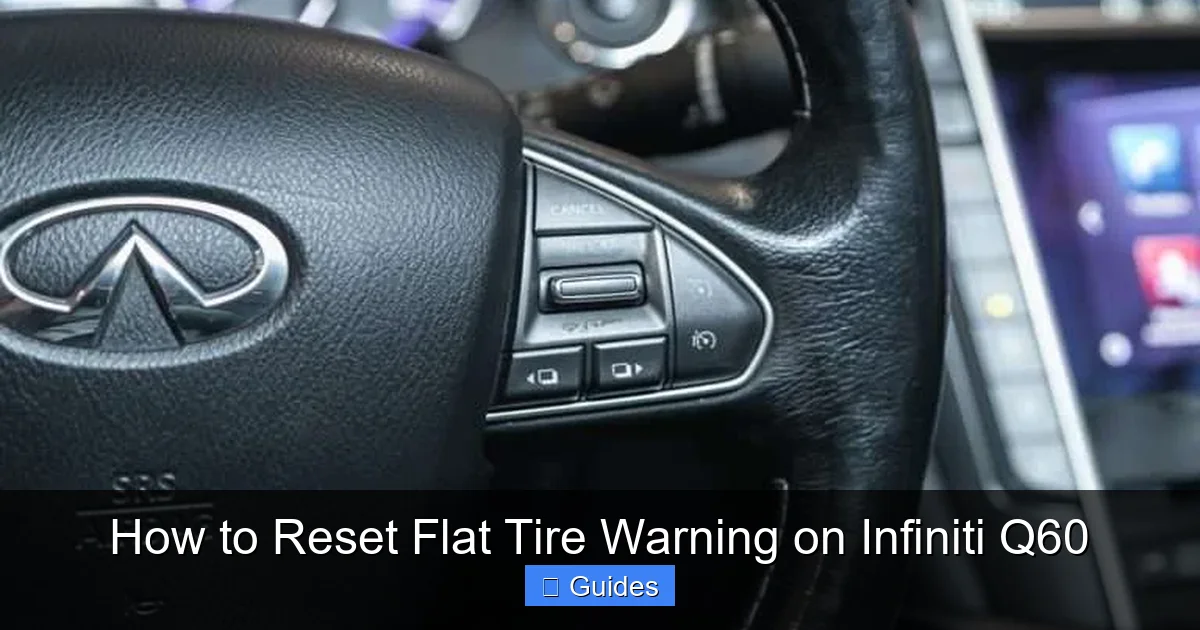
1. Use the steering wheel controls (the buttons on the left side of the steering wheel) to scroll through the dashboard display.
2. Look for the “Settings” or “Vehicle” menu. The exact wording may vary slightly by model year.
3. Navigate to “Tire Pressure” or “TPMS” within the settings menu.
4. Select “Reset” or “Initialize TPMS.”
On some models, you may need to press and hold a specific button combination. For example, on certain 2018–2020 Q60s, you might need to press and hold the “Menu” button on the steering wheel for 5–10 seconds until the TPMS reset option appears.
Step 4: Confirm the Reset
Once you’ve selected the reset option, the system will prompt you to confirm. Use the steering wheel controls to select “Yes” or “Confirm.” The dashboard may display a message like “TPMS Reset in Progress” or “Please Drive Vehicle.”
At this point, the system is preparing to recalibrate. It’s not done yet—you still need to drive the car to complete the process.
Step 5: Drive the Vehicle for 5–10 Minutes
Start the engine and drive your Infiniti Q60 at a moderate speed (around 30–50 mph) for at least 5–10 minutes. This allows the TPMS sensors to transmit updated pressure data and the system to verify that all tires are properly inflated.
During this drive, avoid sudden stops, sharp turns, or aggressive acceleration. The system needs stable conditions to accurately read the sensor data.
After the drive, the TPMS warning light should turn off. If it doesn’t, repeat the reset process or check for other issues.
Step 6: Verify the Reset Was Successful
Once the light is off, park your car and turn off the ignition. Wait a few minutes, then restart the vehicle. The TPMS light should remain off during startup and while driving.
You can also check the tire pressure display (if your Q60 has one) to confirm that all tires show the correct PSI. Some models display individual tire pressures in the dashboard menu under “Tire Pressure” or “Vehicle Status.”
If the light comes back on after a few days, there may be an underlying issue—like a slow leak or a faulty sensor—that needs attention.
Troubleshooting Common TPMS Issues
Visual guide about How to Reset Flat Tire Warning on Infiniti Q60
Image source: vehiclefreak.com
Even after following the reset steps correctly, you might find that the flat tire warning light won’t turn off. Don’t panic—this is more common than you think. Here are some common issues and how to fix them.
The Light Won’t Turn Off After Reset
If the TPMS warning persists after a proper reset, the most likely cause is that one or more tires are still underinflated. Double-check each tire with a gauge. Sometimes, a tire may appear full but actually be low—especially if it was recently driven on.
Another possibility is a malfunctioning TPMS sensor. These sensors can fail due to age, corrosion, or physical damage. If a sensor isn’t transmitting data, the system can’t confirm the tire pressure, so it keeps the warning on.
In rare cases, the issue could be with the car’s TPMS control module or wiring. This requires professional diagnosis with a scan tool.
One Tire Keeps Losing Pressure
If you notice that the same tire consistently loses air, there’s likely a slow leak. Common causes include:
– A nail or screw in the tread
– A damaged valve stem
– A cracked wheel rim
– Poor seal between the tire and rim
Visit a tire shop for a professional inspection. They can perform a bubble test or use a leak detection spray to find the source of the leak.
TPMS Light Flashes and Stays On
A flashing TPMS light (rather than a solid one) usually indicates a system fault—not just low pressure. This could mean:
– A dead sensor battery
– A sensor that’s been damaged or dislodged
– A communication error between the sensor and the car
In this case, a reset won’t fix the problem. You’ll need to have the system scanned by a technician who can read the fault codes and identify which sensor is malfunctioning.
After Replacing Tires or Rotating Them
If you’ve recently had your tires rotated or replaced, the TPMS sensors may need to be relearned. The system needs to know which sensor is in which position (front left, rear right, etc.).
Some tire shops can perform a TPMS relearn procedure using a special tool. If not, you may need to visit an Infiniti dealership. In some cases, you can do it yourself using the reset menu—but the process varies by model year.
Extreme Temperature Changes
Cold weather can cause tire pressure to drop significantly—about 1 PSI for every 10°F drop in temperature. If you reset the TPMS in warm weather and then drive in cold conditions, the light may come back on.
The solution? Check and adjust tire pressure seasonally. Many drivers keep a portable air compressor in their trunk for quick top-offs during winter.
Tips for Maintaining Your TPMS and Tires
Preventing TPMS warnings is easier than dealing with them after they appear. Here are some practical tips to keep your Infiniti Q60’s tires in top shape.
Check Tire Pressure Monthly
Make it a habit to check your tire pressure at least once a month. Keep a digital tire pressure gauge in your glove compartment or center console. It’s a small investment that can save you from flats, poor fuel economy, and safety risks.
Use the Correct PSI
Always inflate your tires to the manufacturer’s recommended pressure—not the maximum PSI listed on the tire sidewall. The correct number is on the door jamb sticker. Overinflating can reduce traction and cause uneven wear; underinflating increases rolling resistance and heat buildup.
Inspect Tires Regularly
Look for signs of damage like cuts, bulges, or embedded objects. Check the tread depth using the “penny test”: insert a penny into the tread with Lincoln’s head upside down. If you can see the top of his head, it’s time for new tires.
Rotate Tires Every 5,000–7,000 Miles
Regular tire rotation ensures even wear and extends tire life. Most mechanics include TPMS sensor checks during rotation, which helps catch issues early.
Replace TPMS Sensors When Needed
If a sensor fails, don’t ignore it. Most last 5–10 years, but they can die sooner due to corrosion or impact. Replacing a sensor typically costs $50–$150 per wheel, including labor.
Keep a Portable Air Compressor Handy
A small 12V air compressor can be a lifesaver when you’re away from home and notice low pressure. Many models plug into your car’s cigarette lighter and come with built-in pressure gauges.
When to Visit a Professional
While resetting the flat tire warning on your Infiniti Q60 is something you can do yourself, there are times when it’s best to seek professional help.
If the TPMS light won’t turn off after multiple resets and confirmed proper inflation, visit an Infiniti dealership or trusted tire shop. They have the tools to scan the system, read error codes, and test individual sensors.
You should also see a professional if:
– You suspect a slow leak but can’t find the source
– A tire has been damaged and needs repair or replacement
– The TPMS sensor battery is dead and needs replacement
– You’ve had a wheel removed and the sensor was disturbed
Attempting to fix complex TPMS issues without the right tools can lead to further problems or inaccurate readings.
Conclusion
Resetting the flat tire warning on your Infiniti Q60 is a simple but essential skill for any owner. By understanding how the TPMS works, following the correct reset steps, and maintaining your tires properly, you can keep your car safe, efficient, and reliable.
Remember: the warning light is there to protect you. Don’t ignore it. Check your tire pressure, inflate as needed, and reset the system using the dashboard menu. If the problem persists, don’t hesitate to get professional help.
With a little attention and routine care, your Infiniti Q60 will continue to deliver the smooth, confident driving experience it’s known for—without unexpected dashboard surprises.
Frequently Asked Questions
How often should I check my tire pressure?
Check your tire pressure at least once a month and before long trips. Cold weather can cause pressure to drop, so seasonal checks are especially important.
Can I reset the TPMS without driving the car?
No, driving is required after resetting. The system needs to recalibrate by receiving updated sensor data during a 5–10 minute drive at moderate speed.
Why does the TPMS light come on in cold weather?
Cold temperatures reduce air pressure in tires—about 1 PSI per 10°F drop. This can trigger the warning even if tires were properly inflated in warmer conditions.
Do I need special tools to reset the TPMS on my Infiniti Q60?
No special tools are needed. The reset is done through the steering wheel controls and dashboard menu. A tire pressure gauge is helpful for checking PSI.
What if the TPMS light flashes and stays on?
A flashing TPMS light usually indicates a system malfunction, such as a dead sensor or communication error. This requires professional diagnosis and repair.
Can I drive with the TPMS warning light on?
You can drive short distances, but it’s not safe for long. Underinflated tires increase the risk of blowouts, poor handling, and reduced fuel efficiency. Address the issue as soon as possible.

At CarLegit, we believe information should be clear, factual, and genuinely helpful. That’s why every guide, review, and update on our website is created with care, research, and a strong focus on user experience.