
Turning off daytime running lights (DRLs) on your Infiniti QX60 isn’t as simple as flipping a switch—but it’s doable with the right approach. This guide walks you through factory settings, fuse modifications, OBD2 tools, and professional options to help you disable DRLs safely and legally.
In This Article
- 1 Key Takeaways
- 2 📑 Table of Contents
- 3 Understanding Daytime Running Lights on the Infiniti QX60
- 4 Why You Might Want to Turn Off DRLs
- 5 Legal and Safety Considerations
- 6 Method 1: Using the Vehicle Settings (If Available)
- 7 Method 2: Removing the DRL Fuse
- 8 Method 3: Using an OBD2 Programmer or Scanner
- 9 Method 4: Professional Installation or Dealer Assistance
- 10 Alternative Solutions and Best Practices
- 11 Conclusion
- 12 Frequently Asked Questions
- 12.1 Can I turn off DRLs using the Infiniti QX60 dashboard menu?
- 12.2 Will removing the DRL fuse damage my vehicle?
- 12.3 Is it legal to disable DRLs on my Infiniti QX60?
- 12.4 Can I use an OBD2 scanner to turn off DRLs?
- 12.5 Will disabling DRLs affect my headlights or other lights?
- 12.6 Should I disable DRLs for better fuel efficiency?
Key Takeaways
- DRLs are designed for safety: They improve visibility during daylight hours, reducing the risk of accidents.
- No built-in off switch: The Infiniti QX60 doesn’t offer a dashboard or menu option to disable DRLs through normal settings.
- Fuse removal is a common DIY method: Pulling the DRL fuse can disable the lights, but may trigger warning messages.
- OBD2 programmers offer advanced control: Tools like the OBD2 scanner with coding features allow precise DRL deactivation.
- Professional installation ensures reliability: A certified technician can disable DRLs without affecting other vehicle systems.
- Check local laws first: Some regions require DRLs to remain active—disabling them may violate traffic regulations.
- Consider alternatives: Using parking lights or low beams manually may be safer than fully disabling DRLs.
📑 Table of Contents
- Understanding Daytime Running Lights on the Infiniti QX60
- Why You Might Want to Turn Off DRLs
- Legal and Safety Considerations
- Method 1: Using the Vehicle Settings (If Available)
- Method 2: Removing the DRL Fuse
- Method 3: Using an OBD2 Programmer or Scanner
- Method 4: Professional Installation or Dealer Assistance
- Alternative Solutions and Best Practices
- Conclusion
Understanding Daytime Running Lights on the Infiniti QX60
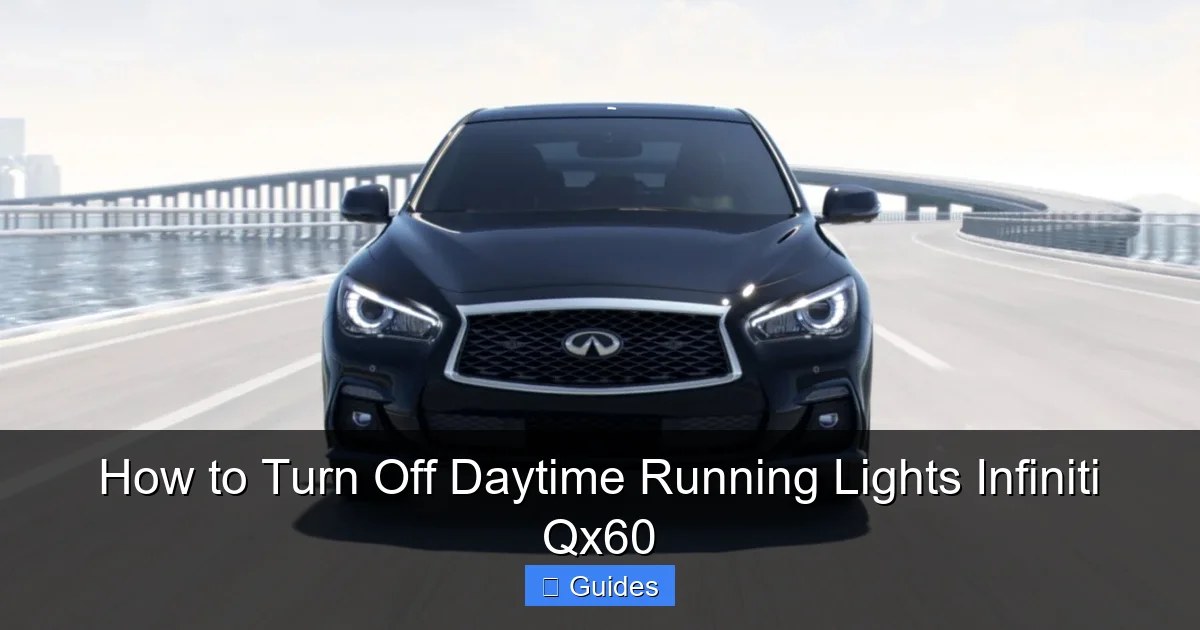
If you’ve ever driven an Infiniti QX60, you’ve likely noticed that the headlights glow faintly even when it’s broad daylight and the car is in motion. These aren’t your regular headlights—they’re called daytime running lights (DRLs), and they’re a standard feature on most modern vehicles, including the QX60. But what exactly are DRLs, and why can’t you just turn them off like you would with your high beams?
Daytime running lights are low-intensity headlights that automatically turn on when the engine is running and the vehicle is in drive. Unlike full headlights, DRLs don’t illuminate the road as brightly—instead, they’re designed to make your vehicle more visible to other drivers, pedestrians, and cyclists during daylight hours. Studies have shown that DRLs can reduce daytime multi-vehicle crashes by up to 10%, which is why many automakers, including Infiniti, have made them a permanent fixture.
On the Infiniti QX60, DRLs typically use LED bulbs located in the headlight assembly. They activate as soon as you shift out of park and turn off when you engage the full headlights or turn off the engine. The system is controlled by the vehicle’s body control module (BCM), which manages various electrical functions. Because DRLs are integrated into the car’s safety and lighting architecture, there’s no simple “off” button in the infotainment system or dashboard menu.
This lack of a user-friendly toggle has led many QX60 owners to search for ways to disable DRLs—whether due to personal preference, aesthetic reasons, or concerns about bulb wear. However, it’s important to understand that tampering with factory safety systems can have unintended consequences, including warning lights on the dashboard, reduced visibility, or even legal issues depending on where you live.
Why You Might Want to Turn Off DRLs
Visual guide about How to Turn Off Daytime Running Lights Infiniti Qx60
Image source: i.ytimg.com
So why would someone want to turn off daytime running lights on their Infiniti QX60? While DRLs serve an important safety function, there are legitimate reasons why owners might seek to disable them.
One common reason is aesthetics. Some drivers feel that the soft glow of DRLs gives the vehicle a “half-lit” appearance, especially when parked or idling. This can be particularly noticeable with certain paint colors or in low-light conditions where the DRLs stand out more than intended. For those who prefer a cleaner, more subdued look when the car is stationary, turning off DRLs can enhance the vehicle’s visual appeal.
Another reason is concern over bulb longevity. Although LED DRLs are designed to last a long time, they still consume power and generate heat. Over thousands of driving hours, this could theoretically contribute to wear on the bulbs or the electrical system. While this is rarely a major issue, some owners prefer to minimize unnecessary electrical load, especially if they frequently drive short distances or live in areas with extreme temperatures.
Additionally, some drivers find DRLs distracting or overly bright, particularly in foggy or overcast conditions where full headlights might be more appropriate. In such cases, the automatic nature of DRLs can feel limiting—drivers may want more control over when and how their lights are used.
There’s also the issue of compatibility with aftermarket lighting. If you’ve installed custom LED or HID headlights, the DRL function might not work properly with the new setup, leading to flickering, error messages, or inconsistent lighting. Disabling DRLs can resolve these conflicts and ensure your upgraded lights perform as intended.
Finally, in rare cases, DRLs may interfere with certain vehicle modifications, such as rally lighting kits or auxiliary light systems. Turning off the factory DRLs can free up electrical capacity and prevent system conflicts.
Legal and Safety Considerations
Visual guide about How to Turn Off Daytime Running Lights Infiniti Qx60
Image source: i.ytimg.com
Before you attempt to disable the daytime running lights on your Infiniti QX60, it’s crucial to understand the legal and safety implications. While DRLs are not mandatory in all countries, they are required in Canada and many European nations. In the United States, DRLs are not federally mandated, but some states have their own regulations.
For example, in states like California and New York, vehicles must be equipped with DRLs, and disabling them could result in a failed vehicle inspection or even a traffic citation. Even in states without strict DRL laws, modifying safety systems can affect your insurance coverage or void certain warranties. Always check your local Department of Motor Vehicles (DMV) or transportation authority before making any changes.
From a safety standpoint, DRLs are proven to enhance visibility. The National Highway Traffic Safety Administration (NHTSA) has found that vehicles with DRLs are less likely to be involved in daytime collisions. Turning them off reduces your vehicle’s visibility to other road users, especially in conditions with glare, haze, or low sun angles.
Moreover, disabling DRLs may trigger warning lights on your dashboard. The Infiniti QX60’s onboard computer monitors the lighting system, and if it detects an anomaly—such as a missing DRL signal—it may illuminate the “Check Engine” light or a dedicated warning icon. This can be annoying and may require a diagnostic scan to clear.
Another consideration is the impact on other systems. The DRL circuit is often linked to the automatic headlight sensor and ambient light detection. Tampering with it could affect how your headlights behave at dusk or in tunnels, potentially leaving you in the dark when you need light the most.
In short, while turning off DRLs is technically possible, it’s not a decision to take lightly. Weigh the benefits against the potential risks, and consider whether alternative solutions—like using parking lights or adjusting your driving habits—might meet your needs without compromising safety or legality.
Method 1: Using the Vehicle Settings (If Available)
Visual guide about How to Turn Off Daytime Running Lights Infiniti Qx60
Image source: trucksauthority.com
The first method to try when attempting to turn off daytime running lights on your Infiniti QX60 is checking the vehicle’s onboard settings. While most Infiniti models, including the QX60, do not offer a direct DRL disable option in the infotainment system, it’s always worth a look—especially if your vehicle has been updated or modified.
Start by turning on the ignition (you don’t need to start the engine). Navigate to the “Settings” menu on the central display. From there, look for options like “Lighting,” “Vehicle Settings,” or “Convenience.” Some Infiniti models allow you to adjust headlight sensitivity, auto-off timers, or welcome lighting, but DRL control is rarely included.
If you don’t see a DRL toggle, check the owner’s manual. Infiniti occasionally adds or removes features in different model years or trim levels. For example, higher trims like the QX60 Luxe or Premium may have more customization options than base models. However, as of the latest model years (2020–2024), there is no factory setting to disable DRLs.
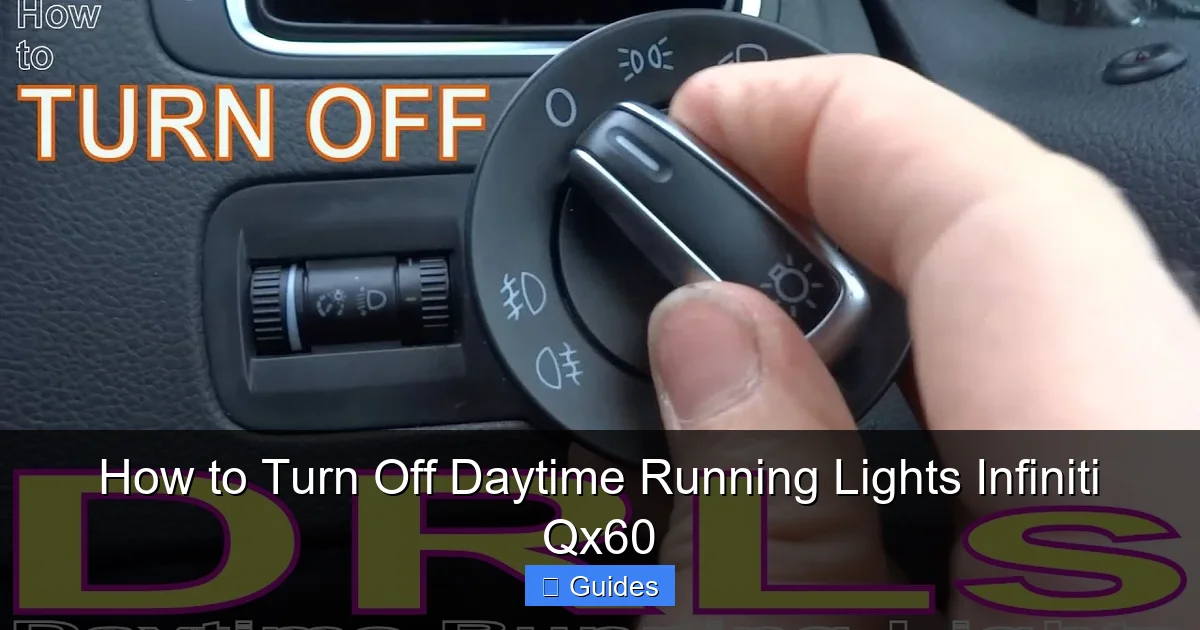
That said, some owners have reported success using the “Auto Light” feature to indirectly control DRL behavior. If you turn off the automatic headlight sensor (usually via a stalk switch on the steering column), the DRLs may remain off in certain conditions. However, this is inconsistent and not a reliable method—DRLs often stay on regardless of the auto light setting.
Another workaround is to leave the headlights in the “Off” position and rely on manual control. While this doesn’t disable DRLs, it prevents the full headlights from turning on automatically, which some drivers prefer. But again, the DRLs will still activate when the engine is running.
In summary, the Infiniti QX60 does not provide a built-in way to turn off DRLs through the dashboard or menu system. If you’re hoping for a simple software solution, you’ll likely be disappointed. However, this doesn’t mean all is lost—there are other methods that offer more control, though they require a bit more effort.
Method 2: Removing the DRL Fuse
One of the most common DIY methods to disable daytime running lights on the Infiniti QX60 is removing the DRL fuse. This approach is straightforward, requires no special tools, and can be reversed easily if needed. However, it comes with some caveats that every owner should understand.
First, locate the fuse box. In the QX60, there are typically two fuse panels: one under the hood (engine compartment) and one inside the cabin, usually on the lower left side of the dashboard near the driver’s knee. The DRL fuse is most commonly found in the under-hood fuse box.
Consult your owner’s manual or the fuse box cover diagram to identify the correct fuse. It’s often labeled as “DRL,” “Daytime Running Lamp,” or “Headlight (DRL).” The fuse is usually a 10A or 15A blade-type fuse. Once you’ve located it, use a fuse puller (or needle-nose pliers) to gently remove it.
After removing the fuse, start the vehicle and check if the DRLs are off. In most cases, they will remain dark even when the engine is running. This method effectively cuts power to the DRL circuit, disabling the lights.
However, there are a few downsides. First, removing the fuse may trigger a warning message on the dashboard, such as “Check Headlight System” or “DRL Malfunction.” This happens because the vehicle’s computer detects an open circuit and assumes there’s a fault. While the car will still operate normally, the warning can be persistent and annoying.
Second, this method may affect other lighting functions. In some vehicles, the DRL fuse also powers related systems like the parking lights or license plate lights. Removing it could cause those to stop working as well. Always double-check which circuits are connected before pulling a fuse.
Third, this is a temporary fix. If you ever need to sell the vehicle or have it inspected, you’ll need to reinstall the fuse to restore factory functionality. Additionally, if the fuse is accidentally reinserted (e.g., during a battery replacement), the DRLs will turn back on.
Despite these limitations, fuse removal remains a popular option for owners who want a quick, reversible way to disable DRLs. It’s especially useful for those who only want to turn them off temporarily—say, for a car show or photoshoot.
Method 3: Using an OBD2 Programmer or Scanner
For a more advanced and permanent solution, many Infiniti QX60 owners turn to OBD2 programmers or diagnostic scanners with coding capabilities. These devices plug into the OBD2 port (usually located under the dashboard near the steering column) and allow you to modify various vehicle settings, including DRL behavior.
Popular tools include the OBDeleven, Carista, and VCDS (for VW/Audi, but some features work on Infiniti). These scanners connect to your smartphone or tablet via Bluetooth and provide a user-friendly interface to access hidden settings.
To disable DRLs using an OBD2 programmer:
1. Plug the device into the OBD2 port.
2. Open the companion app and select your vehicle (Infiniti QX60).
3. Navigate to the “Lighting” or “Body Control Module” section.
4. Look for an option labeled “Daytime Running Lights” or “DRL Function.”
5. Toggle the setting to “Off” or “Disabled.”
6. Save the changes and restart the vehicle.
This method is highly effective because it reprograms the vehicle’s computer to ignore the DRL command. Unlike fuse removal, it doesn’t trigger warning lights (in most cases), and it doesn’t affect other electrical systems.
However, OBD2 programming requires some technical know-how. If you’re not comfortable with electronics or software, it’s best to consult a professional. Additionally, not all scanners support Infiniti vehicles, so make sure the tool you choose is compatible with your model year.
Another advantage is that these devices often allow you to re-enable DRLs later, making them ideal for owners who want flexibility. Some even offer additional features like disabling seat belt chimes, adjusting horn behavior, or enabling hidden menus.
Keep in mind that modifying factory settings can void your warranty or affect resale value. Always document any changes and consider reverting them before servicing or selling the vehicle.
Method 4: Professional Installation or Dealer Assistance
If you’re not comfortable with DIY methods or OBD2 tools, the safest and most reliable way to turn off daytime running lights on your Infiniti QX60 is to visit a certified Infiniti dealership or a qualified automotive technician.
Dealerships have access to factory diagnostic tools like CONSULT-III or TechMate, which allow them to modify vehicle settings with precision. A technician can disable DRLs through the vehicle’s software without triggering error codes or affecting other systems.
The process typically involves:
– Connecting the diagnostic tool to the OBD2 port.
– Accessing the body control module (BCM) settings.
– Disabling the DRL function in the lighting configuration.
– Verifying the change and clearing any stored error codes.
This method is clean, professional, and reversible. It also ensures that your vehicle remains compliant with factory standards, which is important for warranty coverage and resale.
However, dealership services can be expensive—expect to pay $100–$200 for a simple DRL disable. Independent shops with Infiniti experience may offer the same service at a lower cost.
Another option is to install a DRL disable module. These are aftermarket devices that plug into the DRL circuit and interrupt the signal when desired. They often include a switch or remote control, allowing you to turn DRLs on and off as needed. While not as seamless as a software solution, they offer flexibility and are easy to install.
Alternative Solutions and Best Practices
If you’re hesitant to disable DRLs entirely, there are alternative approaches that balance personal preference with safety.
One option is to use the parking lights instead. On the QX60, turning the headlight stalk to the “Parking Light” position keeps the front and rear lights on at a low intensity. While not as bright as DRLs, they improve visibility without the full glow. This method doesn’t require any modifications and is completely legal.
Another idea is to adjust your driving habits. For example, if you’re concerned about DRLs being too bright, try driving during times of day when natural light reduces their impact. Or, use sunglasses or a sun visor to minimize glare.
If you’re modifying your vehicle’s lighting, consider upgrading to high-quality LED DRLs that offer adjustable brightness or color temperature. Some aftermarket kits include a dimming feature or a switch to disable DRLs manually.
Finally, always prioritize safety. If you do disable DRLs, make sure your headlights are functional and consider using fog lights or auxiliary lights in low-visibility conditions.
Conclusion
Turning off daytime running lights on your Infiniti QX60 is possible, but it requires careful consideration of safety, legality, and technical factors. While there’s no built-in off switch, methods like fuse removal, OBD2 programming, and professional installation offer viable solutions.
Remember: DRLs exist for a reason—they make your vehicle more visible and reduce the risk of accidents. Before disabling them, ask yourself whether the benefits outweigh the risks. If you do proceed, choose a method that’s safe, reversible, and compliant with local laws.
Whether you’re doing it for style, function, or personal preference, always prioritize your safety and the safety of others on the road.
Frequently Asked Questions
No, the Infiniti QX60 does not have a built-in option in the dashboard or infotainment system to disable daytime running lights. You’ll need to use alternative methods like fuse removal or OBD2 programming.
Will removing the DRL fuse damage my vehicle?
Removing the DRL fuse won’t damage your vehicle, but it may trigger warning lights on the dashboard. It’s a safe and reversible method, but be aware of potential alerts.
Is it legal to disable DRLs on my Infiniti QX60?
It depends on your location. In some states and countries, DRLs are required by law. Check your local DMV or transportation authority before disabling them to avoid fines or inspection failures.
Can I use an OBD2 scanner to turn off DRLs?
Yes, if the scanner supports Infiniti vehicles and has coding features. Tools like OBDeleven or Carista can disable DRLs through the vehicle’s software without physical modifications.
Will disabling DRLs affect my headlights or other lights?
In most cases, no—but if the DRL fuse also controls parking or license plate lights, those may be affected. Always verify which circuits are connected before making changes.
Should I disable DRLs for better fuel efficiency?
DRLs consume minimal power, so disabling them won’t significantly improve fuel economy. The safety benefits of DRLs far outweigh any negligible fuel savings.

At CarLegit, we believe information should be clear, factual, and genuinely helpful. That’s why every guide, review, and update on our website is created with care, research, and a strong focus on user experience.