
Using the correct coolant in your Dodge Ram 2500 diesel is essential for engine longevity and performance. This guide breaks down the approved coolant types, mixing ratios, and maintenance tips to prevent overheating and corrosion.
If you own a Dodge Ram 2500 with a diesel engine—especially the legendary Cummins—you already know it’s built for power, towing, and long-haul durability. But even the toughest engines need proper care, and one of the most overlooked yet critical aspects of diesel maintenance is the coolant. You might think all coolants are the same, but when it comes to your Ram 2500 diesel, using the wrong kind can lead to costly repairs, overheating, and even engine failure.
Coolant, also known as antifreeze, does more than just keep your engine from freezing in winter. It regulates engine temperature, prevents corrosion, lubricates the water pump, and protects metal and rubber components from wear. In a high-performance diesel like the 5.9L or 6.7L Cummins found in many Ram 2500 models, the cooling system works harder than in a standard gas engine. That’s why using the right coolant isn’t just a suggestion—it’s a necessity.
In this guide, we’ll walk you through everything you need to know about choosing, maintaining, and replacing coolant in your Dodge Ram 2500 diesel. Whether you’re a DIY mechanic or just want to understand what your technician is talking about, we’ll break it down in simple, practical terms. From the science behind coolant chemistry to real-world tips for checking levels and flushing the system, this is your go-to resource for keeping your diesel cool under pressure.
In This Article
- 1 Key Takeaways
- 2 📑 Table of Contents
- 3 Why Coolant Matters for Your Dodge Ram 2500 Diesel
- 4 Types of Coolant: What’s Approved for the Ram 2500 Diesel
- 5 Recommended Coolant Brands and Products
- 6 How to Check and Maintain Your Coolant
- 7 Common Coolant Mistakes to Avoid
- 8 Conclusion
- 9 Frequently Asked Questions
- 9.1 Can I use regular green coolant in my Dodge Ram 2500 diesel?
- 9.2 How often should I change the coolant in my Ram 2500 diesel?
- 9.3 Can I mix different brands of HOAT coolant?
- 9.4 What happens if I use tap water to mix coolant?
- 9.5 Is it safe to top off with water only?
- 9.6 How do I know if my coolant is contaminated?
Key Takeaways
- Use only HOAT or OAT coolants: Dodge recommends hybrid organic acid technology (HOAT) or extended-life organic acid technology (OAT) coolants for the Ram 2500 diesel.
- Stick to Mopar-approved products: Mopar EC-33 or equivalent coolants meet Chrysler’s strict specifications and protect your Cummins engine.
- Never mix coolant types: Mixing HOAT with traditional green IAT coolants can cause sludge and reduce cooling efficiency.
- Check coolant every 6 months: Inspect color, level, and condition to catch leaks or contamination early.
- Flush every 100,000 miles: Follow the manufacturer’s interval to remove old additives and prevent corrosion.
- Use distilled water for mixing: Tap water contains minerals that can damage the cooling system over time.
- Watch for overheating signs: Steam, sweet smell, or dashboard warnings mean immediate action is needed.
📑 Table of Contents
Why Coolant Matters for Your Dodge Ram 2500 Diesel
Your Dodge Ram 2500 diesel engine operates under intense conditions. Whether you’re hauling a heavy trailer up a mountain pass or idling in stop-and-go traffic, the engine generates a lot of heat. The cooling system’s job is to absorb that heat and release it through the radiator, keeping the engine at an optimal operating temperature—usually around 195°F to 220°F.
But heat isn’t the only enemy. Over time, coolant breaks down, loses its protective additives, and can become acidic. This leads to corrosion inside the radiator, water pump, heater core, and engine block. In diesel engines, which have tighter tolerances and higher compression ratios, even minor corrosion can cause big problems. A failing water pump or clogged radiator can leave you stranded and facing a repair bill in the thousands.
That’s why using the right coolant is so important. The correct formula not only resists boiling and freezing but also contains additives that protect aluminum, cast iron, and rubber parts from rust and degradation. For the Ram 2500 diesel, Dodge specifies coolants that meet Chrysler Material Standard MS-9769. This standard ensures the coolant is compatible with the engine’s materials and can handle the thermal stress of diesel operation.
How Diesel Engines Differ from Gas Engines
Diesel engines run hotter and under higher compression than gasoline engines. They also have more complex cooling systems, often including oil coolers, EGR (exhaust gas recirculation) coolers, and turbocharger cooling circuits. All of these components rely on the coolant to function properly.
For example, the EGR system in modern Ram 2500 diesels recirculates exhaust gases to reduce emissions. This process generates extra heat, which the coolant must manage. If the coolant isn’t up to the task, the EGR cooler can crack or clog, leading to performance issues and expensive repairs.
Additionally, diesel engines often use aluminum components—like cylinder heads and radiator tanks—that are more susceptible to corrosion. Traditional green coolant, which uses inorganic acid technology (IAT), doesn’t offer the same long-term protection as modern organic acid formulas. That’s why Dodge moved away from IAT coolants in favor of HOAT and OAT types.
The Risks of Using the Wrong Coolant
Using the wrong coolant—or mixing incompatible types—can have serious consequences. One of the most common mistakes is topping off with regular green antifreeze. While it might seem harmless, mixing IAT with HOAT or OAT coolant can cause a chemical reaction that forms a gel-like sludge. This sludge clogs passages in the radiator and heater core, reducing cooling efficiency and potentially causing overheating.
Another risk is using coolant that doesn’t meet the MS-9769 standard. Some aftermarket coolants claim to be “universal” or “compatible with all engines,” but they may not contain the right balance of corrosion inhibitors. Over time, this can lead to pitting in the water pump impeller, leaks from degraded hoses, or even head gasket failure due to overheating.
We’ve seen cases where owners used cheap coolant to save a few bucks, only to end up replacing the entire radiator or water pump within a year. In one instance, a Ram 2500 owner mixed green coolant with the factory HOAT formula, resulting in a blocked heater core and no heat in the cabin during winter. The repair cost over $800.
The bottom line? Don’t cut corners when it comes to coolant. Your engine’s health depends on it.
Types of Coolant: What’s Approved for the Ram 2500 Diesel

Visual guide about What Kind of Coolant for Dodge Ram 2500 Diesel
Image source: dodgecarnews.com
Not all coolants are created equal, and for your Dodge Ram 2500 diesel, only certain types are approved by the manufacturer. Let’s break down the main coolant technologies and which ones are safe to use.
Inorganic Acid Technology (IAT)
IAT coolants are the old-school green antifreeze you might remember from older vehicles. They use inorganic additives like silicates and phosphates to prevent corrosion. While effective in the short term, these additives deplete quickly—usually within 12,000 to 15,000 miles—requiring frequent changes.
Dodge no longer recommends IAT coolants for the Ram 2500 diesel. In fact, using green coolant in a modern Cummins engine can void your warranty and lead to premature component failure. The high operating temperatures and aluminum components in the cooling system demand longer-lasting protection.
Organic Acid Technology (OAT)
OAT coolants use organic acids to inhibit corrosion. They’re typically orange or red in color and offer extended service life—up to 100,000 miles or 5 years in some cases. OAT formulas are common in European and Asian vehicles, but they’re also used in some Chrysler applications.
For the Ram 2500 diesel, OAT coolants are acceptable as long as they meet the MS-9769 standard. Mopar’s EC-33 coolant is an OAT-based formula that’s specifically designed for Chrysler diesel engines. It provides excellent protection for aluminum and cast iron and resists cavitation—a common issue in diesel water pumps.
Hybrid Organic Acid Technology (HOAT)
HOAT coolants combine the best of both worlds: the long-lasting corrosion protection of OAT with the quick-acting silicates of IAT. These coolants are usually yellow or turquoise and are used in many GM, Ford, and Chrysler vehicles.
For the Dodge Ram 2500 diesel, HOAT is the preferred coolant type. It offers superior protection for mixed-metal cooling systems and is compatible with the Cummins engine’s design. HOAT coolants typically last 100,000 miles or 5 years, making them ideal for heavy-duty use.
Phosphate-Free and Nitrite-Free Formulas
Modern coolants are often labeled as “phosphate-free” and “nitrite-free.” This is important because phosphates can form deposits in high-heat areas, and nitrites can degrade over time and produce ammonia, which attacks aluminum.
The Ram 2500 diesel cooling system includes components that are sensitive to these chemicals. Using a phosphate-free, nitrite-free coolant ensures long-term compatibility and prevents internal buildup.
What About “Universal” Coolants?
You might see coolants labeled as “universal” or “compatible with all makes and models.” While these products are convenient, they’re not always the best choice. Universal coolants are often a blend of different technologies and may not meet the specific requirements of your Ram 2500 diesel.
Dodge recommends using only coolants that meet MS-9769. If a universal coolant doesn’t list this specification on the label, don’t use it. Stick with trusted brands like Mopar, Zerex G-05, or Peak Final Charge, which are formulated to meet Chrysler’s standards.
Recommended Coolant Brands and Products
Visual guide about What Kind of Coolant for Dodge Ram 2500 Diesel
Image source: cdn.shopify.com
Now that you know what type of coolant to look for, let’s talk about specific products that are safe and effective for your Ram 2500 diesel.
Mopar EC-33 Coolant
Mopar EC-33 is the factory-recommended coolant for Dodge Ram 2500 diesel models. It’s an OAT-based formula that meets MS-9769 and is designed specifically for Chrysler’s diesel engines. EC-33 is bright orange and provides up to 100,000 miles of protection.
You can find Mopar EC-33 at most dealerships or online auto parts stores. It’s available in concentrated and pre-mixed forms. If you buy the concentrated version, make sure to mix it 50/50 with distilled water.
Zerex G-05
Zerex G-05 is a HOAT coolant that’s widely available and meets many OEM specifications, including Chrysler’s MS-9769. It’s yellow in color and offers excellent corrosion protection for aluminum and cast iron.
Many Ram 2500 owners use Zerex G-05 as a cost-effective alternative to Mopar coolant. Just make sure the label confirms it’s compatible with Chrysler vehicles. Some versions of Zerex are formulated for European cars and may not be suitable.
Peak Final Charge
Peak Final Charge is another HOAT coolant that’s approved for use in Dodge diesel engines. It’s bright yellow and provides long-lasting protection. Like Zerex, it’s available at most auto parts stores and is a popular choice among DIYers.
One advantage of Peak Final Charge is that it comes in a pre-mixed 50/50 formula, so you don’t have to worry about mixing it yourself. This is convenient if you’re doing a top-off or a quick flush.
Avoid These Coolants
Stay away from traditional green IAT coolants like Prestone Original or any coolant that doesn’t list MS-9769 compatibility. Also, avoid coolants with high silicate content, as they can cause foaming and reduce heat transfer.
Some coolants are labeled as “diesel-specific,” but that doesn’t automatically mean they’re right for your Ram 2500. Always check the label for Chrysler approval.
How to Check and Maintain Your Coolant
Visual guide about What Kind of Coolant for Dodge Ram 2500 Diesel
Image source: i.ytimg.com
Using the right coolant is only half the battle. Regular maintenance is key to keeping your cooling system in top shape.
Checking Coolant Level
Check your coolant level every month or before long trips. Here’s how:
1. Make sure the engine is cool. Never open the radiator cap when the engine is hot—pressure can cause scalding.
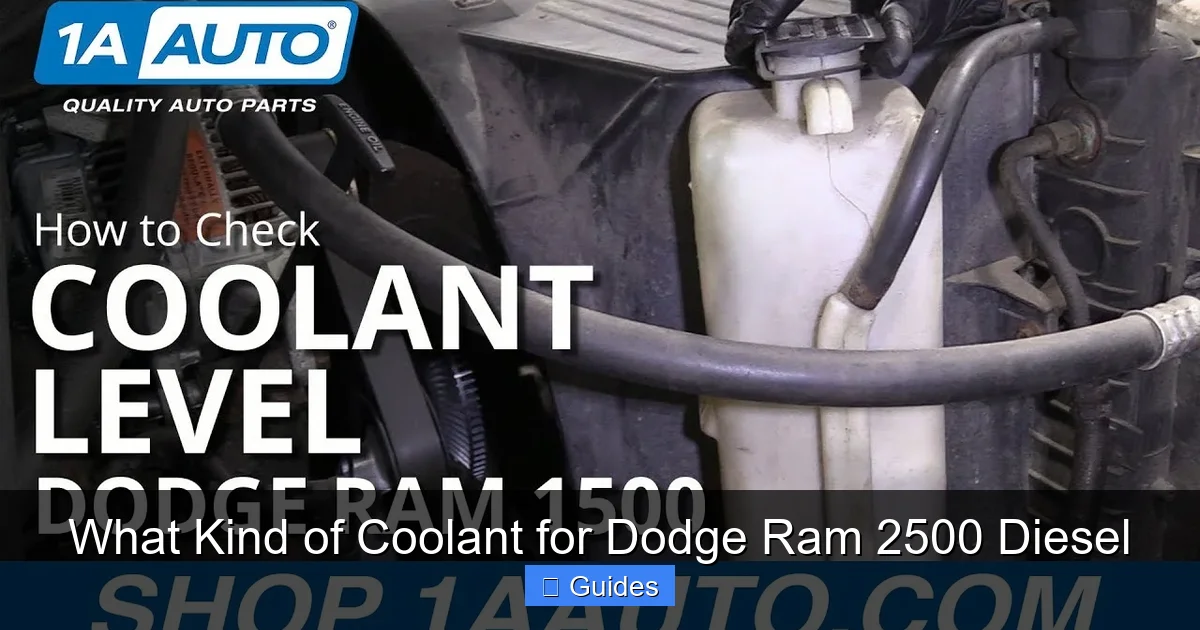
2. Locate the coolant reservoir (usually a translucent plastic tank near the radiator).
3. Look at the “Full” and “Low” markings on the side.
4. The coolant should be between these two lines.
If the level is low, top it off with the same type of coolant. Never mix different colors or types.
Inspecting Coolant Condition
Color isn’t everything, but it’s a good starting point. Healthy coolant should be bright and translucent—orange, yellow, or red, depending on the type. If it looks cloudy, muddy, or has floating particles, it’s time for a flush.
Also, check for signs of contamination. If you see oil in the coolant (a milky appearance), it could indicate a head gasket leak. If there’s rust or scale, the system may be corroding.
Flushing the Cooling System
Dodge recommends flushing the cooling system every 100,000 miles or 5 years. This removes old coolant, sludge, and contaminants.
Here’s a simple DIY flush process:
1. Drain the old coolant into a container. Dispose of it properly—coolant is toxic to pets and wildlife.
2. Flush the system with clean water until it runs clear.
3. Add a cooling system cleaner (optional but recommended for heavy buildup).
4. Let the engine run for 10–15 minutes to circulate the cleaner.
5. Drain again, then flush with distilled water.
6. Refill with a 50/50 mix of new coolant and distilled water.
Always use distilled water. Tap water contains minerals like calcium and magnesium that can form scale and reduce cooling efficiency.
Tips for Long-Term Care
– Check hoses and clamps for cracks or leaks during oil changes.
– Inspect the radiator for debris, especially if you drive off-road.
– Replace the thermostat every 100,000 miles to ensure proper coolant flow.
– Use a coolant tester to check freeze/boil protection annually.
Common Coolant Mistakes to Avoid
Even experienced owners make coolant mistakes. Here are the most common ones and how to avoid them.
Mixing Coolant Types
This is the #1 mistake. Mixing green IAT with orange OAT or yellow HOAT can cause sludge and clog the system. If you’re unsure what’s in your radiator, have it tested or flush it completely before adding new coolant.
Using Tap Water
Tap water may seem harmless, but it’s full of minerals. Over time, these minerals build up and reduce cooling efficiency. Always use distilled water when mixing or topping off.
Ignoring the Flush Interval
Some owners think coolant lasts forever. It doesn’t. Additives break down, and contaminants accumulate. Stick to the 100,000-mile flush schedule.
Overfilling the Reservoir
The coolant expands when hot. If the reservoir is overfilled, it can overflow and leave you low when the engine cools. Keep it between the “Full” and “Low” marks.
Not Using the Right Mix Ratio
A 50/50 mix of coolant and water provides the best balance of freeze protection, boil-over resistance, and heat transfer. Don’t go straight concentrate or full water—it won’t protect your engine.
Conclusion
Your Dodge Ram 2500 diesel is a powerhouse built for work and adventure. But to keep it running strong, you need to treat it right—and that starts with using the correct coolant. Stick to HOAT or OAT formulas that meet Chrysler’s MS-9769 standard, like Mopar EC-33, Zerex G-05, or Peak Final Charge. Avoid mixing types, use distilled water, and follow the recommended maintenance schedule.
By taking care of your cooling system, you’re not just preventing overheating—you’re protecting your investment. A well-maintained coolant system means fewer breakdowns, lower repair costs, and a longer life for your Cummins engine. So the next time you pop the hood, give your coolant a quick check. Your truck will thank you.
Frequently Asked Questions
Can I use regular green coolant in my Dodge Ram 2500 diesel?
No, regular green IAT coolant is not recommended. It lacks the long-term corrosion protection needed for the Cummins engine and can cause sludge when mixed with HOAT or OAT formulas.
How often should I change the coolant in my Ram 2500 diesel?
Dodge recommends flushing and replacing the coolant every 100,000 miles or 5 years, whichever comes first. This ensures additives remain effective and prevents corrosion.
Can I mix different brands of HOAT coolant?
Yes, as long as both coolants meet the MS-9769 standard and are the same color (usually yellow or orange). Avoid mixing HOAT with OAT or IAT types.
What happens if I use tap water to mix coolant?
Tap water contains minerals that can form scale and reduce cooling efficiency. Always use distilled water to protect your engine and cooling system.
Is it safe to top off with water only?
Only in an emergency. Water lacks corrosion inhibitors and freeze protection. Top off with the correct coolant mix as soon as possible.
How do I know if my coolant is contaminated?
Look for cloudiness, floating particles, or a milky appearance. These signs indicate contamination or a possible head gasket leak—flush the system and inspect immediately.

At CarLegit, we believe information should be clear, factual, and genuinely helpful. That’s why every guide, review, and update on our website is created with care, research, and a strong focus on user experience.