
If your Dodge Ram shuts off while driving, it’s often due to electrical issues, fuel system problems, or sensor failures. Ignoring this can be dangerous—prompt diagnosis and repair are essential for safety and reliability.
In This Article
- 1 Key Takeaways
- 2 📑 Table of Contents
- 3 Why Does My Dodge Ram Shut Off While Driving? A Complete Guide
- 4 Common Causes of Sudden Engine Shutdown in Dodge Rams
- 5 Ignition and Starting System Issues
- 6 Engine Management and Computer Glitches
- 7 Mechanical and Environmental Factors
- 8 Diagnosis and Repair Tips
- 9 Prevention and Maintenance
- 10 Conclusion
- 11 Frequently Asked Questions
- 11.1 Can a bad alternator cause my Dodge Ram to shut off while driving?
- 11.2 Why does my Ram stall only when it’s hot?
- 11.3 Is it safe to keep driving if my Ram stalls occasionally?
- 11.4 How much does it cost to fix a stalling Dodge Ram?
- 11.5 Will disconnecting the battery reset the PCM and fix the stalling?
- 11.6 Do all Dodge Rams have known stalling issues?
Key Takeaways
- Electrical system faults like a failing alternator or bad battery can cause sudden engine shutdowns.
- Fuel delivery issues such as a clogged filter or weak fuel pump may starve the engine of gas.
- Faulty crankshaft or camshaft position sensors can trick the engine into thinking it’s not running, causing it to cut out.
- Ignition switch problems are common in older Rams and can interrupt power to critical systems.
- Loose or corroded wiring in the engine bay may lead to intermittent power loss.
- Software glitches or PCM errors might require a reflash or replacement of the powertrain control module.
- Regular maintenance and diagnostic scans can catch issues before they leave you stranded.
📑 Table of Contents
Why Does My Dodge Ram Shut Off While Driving? A Complete Guide
Picture this: You’re cruising down the highway in your trusty Dodge Ram—maybe hauling gear, towing a trailer, or just commuting to work—when suddenly, the engine sputters and dies. The dashboard lights flicker, power steering goes stiff, and you’re left coasting to the shoulder with your heart pounding. It’s scary, frustrating, and potentially dangerous. If your Dodge Ram shuts off while driving, you’re not alone. This issue has plagued owners across multiple model years, from the Ram 1500 to the heavier-duty 2500 and 3500 trucks.
But why does this happen? The answer isn’t always straightforward. Unlike a simple dead battery or flat tire, an engine stalling while in motion points to deeper systemic problems—often involving the electrical system, fuel delivery, or engine management components. What makes it even trickier is that the symptoms can come and go, making diagnosis feel like solving a mystery. One day your Ram runs smooth as silk; the next, it cuts out at 60 mph with no warning.
The good news? Most causes are identifiable and fixable—if you know where to look. In this guide, we’ll walk you through the most common reasons your Dodge Ram might shut off unexpectedly, how to spot the warning signs early, and what steps you can take to get back on the road safely. Whether you’re a DIY mechanic or prefer leaving it to the pros, understanding these issues empowers you to make informed decisions about your truck’s health.
Common Causes of Sudden Engine Shutdown in Dodge Rams
Visual guide about Why Does My Dodge Ram Shut Off While Driving
Image source: 2carpros.com
When your Dodge Ram shuts off while driving, it’s usually because the engine isn’t getting what it needs to keep running: fuel, spark, air, or proper electronic signals. Modern trucks like the Ram rely heavily on computerized systems to manage these functions, so even a small glitch can cascade into a full shutdown. Let’s break down the top culprits.
Electrical System Failures
Your Ram’s electrical system is its nervous system. If it falters, everything else follows. The alternator, for example, charges the battery while the engine runs. If it fails, the battery drains quickly—and once voltage drops below a certain threshold, the engine control unit (ECU) may shut down to protect itself. You might notice dimming headlights, sluggish accessories, or a battery warning light before a total stall.
Another electrical weak spot? The ignition switch. In many 2000s-era Rams, the ignition switch can wear out over time. It’s responsible for sending power to the fuel pump, ignition system, and ECU when you turn the key. If internal contacts corrode or wear down, they can momentarily lose connection—especially when driving over bumps—causing the engine to cut out abruptly. Owners often report that jiggling the key or turning it slightly restores power, which is a classic sign.
Corroded or loose battery terminals are also frequent offenders. Vibration from driving can loosen connections, leading to intermittent power loss. Even a seemingly secure cable can have hidden corrosion underneath the clamp, creating resistance that starves critical systems of voltage.
Fuel Delivery Problems
Without fuel, your engine can’t run—plain and simple. But it’s not just about having gas in the tank. The fuel pump, filter, and injectors must all work in harmony. A failing fuel pump is one of the most common reasons a Ram stalls unexpectedly. These pumps are electric and located inside the fuel tank. Over time, they can wear out, overheat, or develop electrical faults. When they weaken, they may not maintain adequate pressure, especially under load (like climbing a hill or towing). The engine might run fine at idle but die when demand increases.
A clogged fuel filter is another stealthy villain. While newer Rams have filters that last longer, they still trap dirt and debris over time. A restricted filter reduces fuel flow, leading to lean conditions and stalling. Unlike older models where the filter was easily accessible, many modern Rams integrate the filter into the fuel pump assembly—making replacement more involved.
Fuel injectors can also cause trouble if they become dirty or electrically faulty. However, injector failure usually causes rough idling or misfires rather than sudden shutdowns. Still, if multiple injectors fail simultaneously (rare but possible), it could lead to a complete loss of combustion.
Sensor Malfunctions
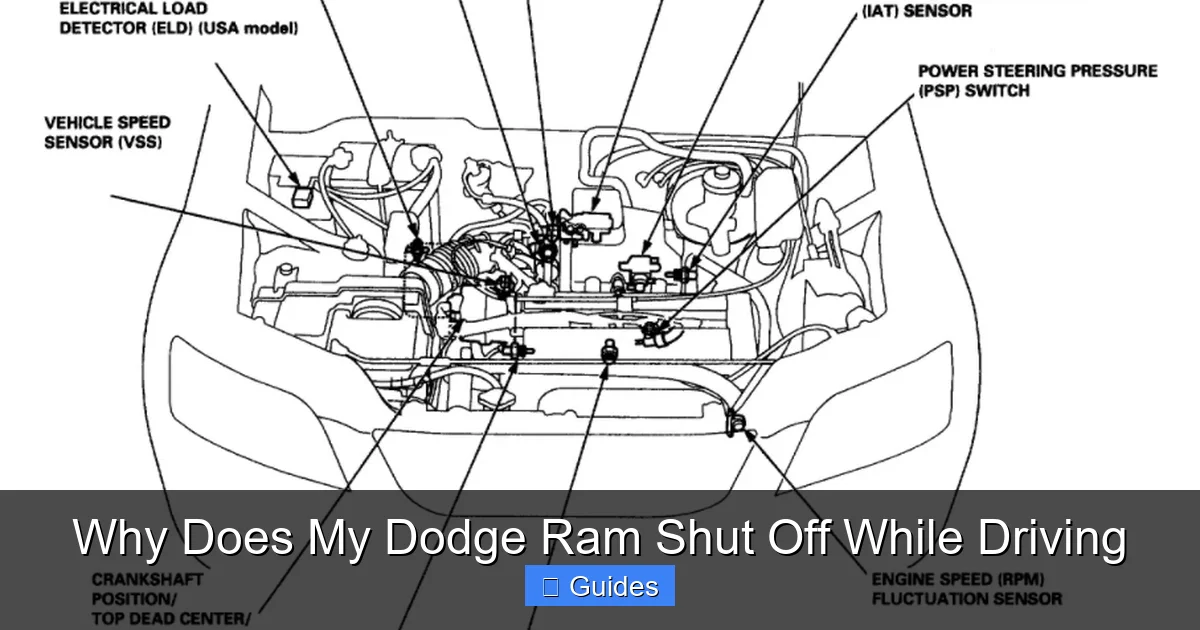
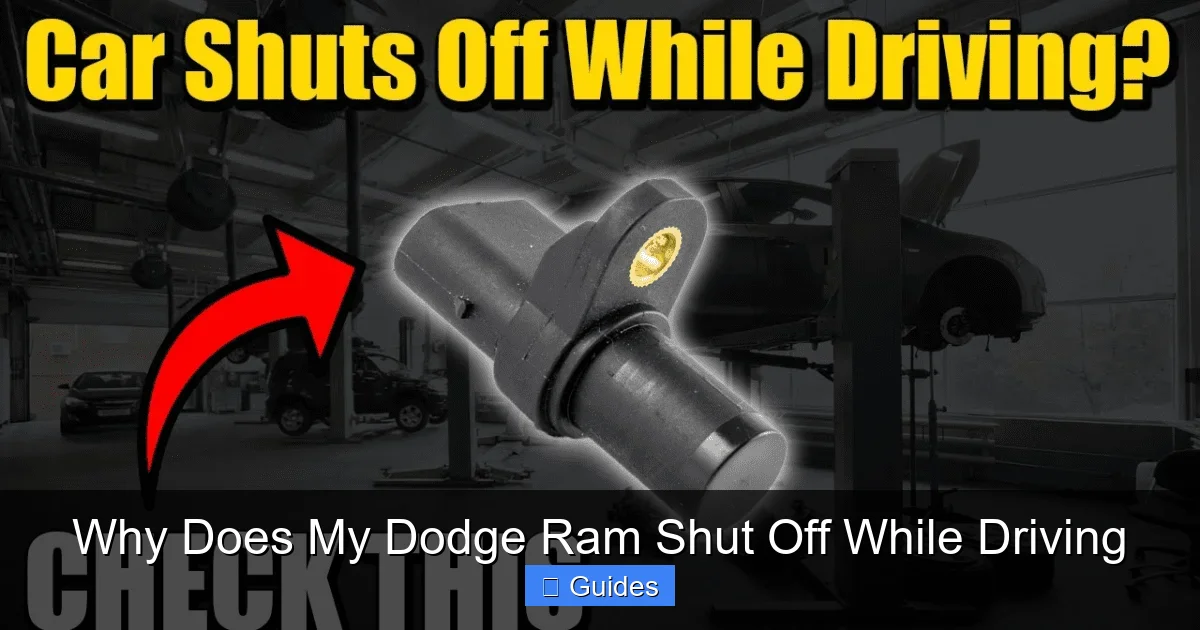
Your Ram’s engine relies on a network of sensors to monitor everything from crankshaft position to throttle input. Two of the most critical are the crankshaft position sensor (CKP) and camshaft position sensor (CMP). These tell the ECU exactly when to fire the spark plugs and inject fuel. If either sensor fails or sends erratic signals, the ECU may think the engine has stopped—even when it’s still turning—and shut it down to prevent damage.
The CKP sensor is especially prone to failure in Rams due to its location near hot engine components and exposure to vibration. Symptoms include random stalling, no-start conditions, or hesitation during acceleration. Interestingly, some owners report that the problem worsens when the engine is hot, suggesting heat-related sensor degradation.
Other sensors like the mass airflow (MAF) sensor or throttle position sensor (TPS) can also contribute, though they more commonly cause drivability issues rather than outright shutdowns. Still, a severely faulty MAF can cause the engine to run so lean that it stalls.
Ignition and Starting System Issues
Visual guide about Why Does My Dodge Ram Shut Off While Driving
Image source: mechanictimes.com
While often grouped with electrical problems, ignition-specific components deserve their own spotlight—especially in Rams known for certain design quirks.
Faulty Ignition Switch
As mentioned earlier, the ignition switch is a known weak point in many Dodge Rams, particularly models from 2002–2008. Chrysler issued Technical Service Bulletins (TSBs) acknowledging that the switch could wear prematurely, leading to intermittent power loss. The switch contains internal contacts that complete circuits for the fuel pump, ignition coil, and ECU. When those contacts degrade, they can lose connection momentarily—especially during vibration or temperature changes.
A telltale sign? Your truck stalls, but turning the key back to “off” and then “on” again restarts it immediately. Some owners even report that tapping the steering column or jiggling the key helps. If this sounds familiar, the ignition switch is a prime suspect.
Replacement isn’t overly complex but does require removing the steering column covers and disconnecting the electrical connector. Always use an OEM or high-quality aftermarket switch to avoid repeating the problem.
Bad Ignition Coil or Spark Plugs
While less likely to cause a complete shutdown, failing ignition components can lead to misfires severe enough to stall the engine—especially under load. Modern Rams use coil-on-plug systems, meaning each cylinder has its own ignition coil. If one fails, that cylinder stops firing, causing rough running and potential stalling.
However, a single bad coil rarely kills the whole engine. More often, you’ll notice a check engine light, reduced power, or poor fuel economy first. That said, if multiple coils fail simultaneously (due to age or moisture intrusion), a total stall becomes possible.
Spark plugs should be replaced according to your owner’s manual—typically every 30,000 to 100,000 miles depending on the type (copper, platinum, or iridium). Worn plugs increase the load on the ignition system and can contribute to misfires.
Engine Management and Computer Glitches
Visual guide about Why Does My Dodge Ram Shut Off While Driving
Image source: vehiclerides.com
Your Dodge Ram’s powertrain control module (PCM)—the brain of the engine—constantly processes data from dozens of sensors to optimize performance. But like any computer, it can glitch.
PCM Software Bugs or Hardware Failure
In some cases, the PCM itself may be the culprit. Software bugs can cause erratic behavior, including unintended engine shutdowns. Dodge has released multiple software updates (reflashes) over the years to address issues like false stall conditions, erratic idle, or communication errors with other modules.
If your Ram stalls randomly and no mechanical faults are found, a PCM reflash might solve the problem. Dealerships can perform this update using factory diagnostic tools. In rare cases, the PCM hardware fails entirely—often due to water intrusion, voltage spikes, or age—and must be replaced.
Signs of PCM trouble include multiple unrelated warning lights, erratic gauge behavior, or the truck starting and running fine after a battery reset (which temporarily clears volatile memory).
Communication Network Errors
Modern Rams use a Controller Area Network (CAN bus) to let different modules “talk” to each other. If communication breaks down—due to a faulty module, damaged wiring, or poor grounding—the PCM might not receive vital signals and could shut down the engine as a safety precaution.
For example, if the brake pedal position sensor stops communicating, the PCM might interpret it as a crash scenario and cut fuel. These issues often trigger U-codes (network communication codes) in addition to engine-related DTCs.
Mechanical and Environmental Factors
Not all causes are electronic. Sometimes, old-fashioned mechanical wear or environmental conditions play a role.
Vacuum Leaks
A large vacuum leak can cause the engine to run extremely lean, leading to stalling—especially at idle or low speeds. Common sources include cracked vacuum hoses, a leaking intake manifold gasket, or a faulty PCV valve. While less likely to cause highway stalling, a severe leak can destabilize the air-fuel mixture enough to kill the engine.
Listen for a hissing sound near the engine when idling, and watch for erratic idle behavior. A smoke test is the best way to pinpoint vacuum leaks.
Overheating or Low Oil Pressure
Most Rams have safety systems that shut down the engine if coolant temperature exceeds safe limits or oil pressure drops too low. If your temperature gauge spikes or the oil light comes on before stalling, pull over immediately—continued driving could cause catastrophic engine damage.
Overheating might stem from a stuck thermostat, low coolant, or a failing water pump. Low oil pressure could indicate worn bearings, a failing oil pump, or simply low oil level.
Extreme Weather Conditions
Cold weather can exacerbate electrical issues (batteries lose capacity, connections contract), while heat can accelerate sensor or pump failures. Additionally, water ingress during heavy rain or car washes can short out connectors or sensors—particularly if seals are worn.
Diagnosis and Repair Tips
So, how do you figure out what’s really going on? Start with the basics.
Scan for Trouble Codes
Even if the check engine light isn’t on, a professional scan tool can reveal pending codes or freeze-frame data from the moment of the stall. Codes like P0335 (Crankshaft Position Sensor) or P0230 (Fuel Pump Primary Circuit) point directly to likely causes. Free OBD2 scanners are available at auto parts stores, or you can visit a mechanic for a full diagnostic.
Check Battery and Charging System
Use a multimeter to test battery voltage (should be ~12.6V off, ~13.5–14.5V running). Have the alternator load-tested—many parts stores offer this for free. Inspect terminals for corrosion and ensure cables are tight.
Inspect Fuel Pressure
A fuel pressure gauge can confirm whether the pump is delivering adequate pressure (typically 45–65 psi for most Rams). Low pressure suggests a weak pump or clogged filter.
Test Sensors and Wiring
Use a scan tool to monitor live data from the CKP and CMP sensors. Erratic readings or signal dropouts indicate failure. Also, wiggle-test wiring harnesses near the engine while the truck is running to see if stalling occurs—a sign of loose or damaged wires.
Consider Professional Help
If DIY troubleshooting doesn’t reveal the issue, don’t hesitate to visit a trusted mechanic or Dodge dealership. Intermittent electrical problems can be notoriously difficult to replicate and diagnose without specialized tools.
Prevention and Maintenance
The best way to avoid sudden stalls is proactive care.
– Replace the fuel filter per the maintenance schedule (if applicable).
– Keep battery terminals clean and tight.
– Address check engine lights promptly—don’t ignore them.
– Use quality fuel and consider occasional fuel system cleaners.
– Have the ignition system inspected during routine service.
– Update PCM software during dealer visits.
Regular maintenance isn’t just about longevity—it’s about safety. A well-cared-for Ram is far less likely to leave you stranded.
Conclusion
If your Dodge Ram shuts off while driving, it’s a serious issue that demands immediate attention. While the causes range from simple (loose battery cable) to complex (PCM failure), most are diagnosable and repairable with the right approach. Electrical faults, fuel delivery problems, and sensor failures top the list, but don’t overlook mechanical or environmental factors.
The key is not to panic—but to act. Scan for codes, inspect critical systems, and seek professional help when needed. Your Ram is built to handle tough jobs, but even the toughest trucks need TLC. By staying vigilant and addressing issues early, you’ll keep your truck running reliably mile after mile.
Remember: safety first. If your Ram stalls unexpectedly, pull over as soon as it’s safe, turn on your hazards, and call for assistance. Never ignore recurring stalling—it’s your truck’s way of saying, “Hey, I need help!”
Frequently Asked Questions
Can a bad alternator cause my Dodge Ram to shut off while driving?
Yes, a failing alternator can drain the battery while driving, causing voltage to drop below the level needed to run the engine and electronics. This often leads to sudden shutdowns, especially at higher speeds or under electrical load.
Why does my Ram stall only when it’s hot?
This is commonly linked to heat-sensitive components like the crankshaft position sensor or fuel pump. As these parts overheat, their performance degrades, leading to stalling. Cooling the engine may temporarily restore function.
Is it safe to keep driving if my Ram stalls occasionally?
No. Intermittent stalling poses serious safety risks, especially at highway speeds or in traffic. It indicates an underlying fault that could worsen suddenly, leaving you stranded or causing an accident.
How much does it cost to fix a stalling Dodge Ram?
Costs vary widely: a new ignition switch may cost $100–$200 parts and labor, while a fuel pump replacement can run $400–$800. PCM replacement is the most expensive, often exceeding $1,000 including programming.
Will disconnecting the battery reset the PCM and fix the stalling?
Temporarily, yes—resetting the PCM can clear glitches or adaptive memory issues. But if the root cause remains (like a bad sensor), the problem will likely return. Use a reset as a diagnostic step, not a permanent fix.
Do all Dodge Rams have known stalling issues?
Not all, but certain model years—especially 2002–2008 Ram 1500s—have higher reported rates of ignition switch and electrical problems. Regular maintenance and staying updated on TSBs can help mitigate risks.

At CarLegit, we believe information should be clear, factual, and genuinely helpful. That’s why every guide, review, and update on our website is created with care, research, and a strong focus on user experience.