
Resetting the electronic throttle control (ETC) on your Chrysler 200 can resolve poor acceleration, idle issues, and warning lights. This guide walks you through a safe, manual reset process using simple steps—no special tools required.
In This Article
- 1 Key Takeaways
- 2 📑 Table of Contents
- 3 Introduction: Why Your Chrysler 200 Needs a Throttle Reset
- 4 Understanding the Electronic Throttle Control System
- 5 Tools and Safety Precautions
- 6 Step-by-Step Guide to Manually Reset the ETC
- 6.1 Step 1: Turn Off the Vehicle and Wait
- 6.2 Step 2: Disconnect the Battery
- 6.3 Step 3: Wait 15–20 Minutes
- 6.4 Step 4: Reconnect the Battery
- 6.5 Step 5: Turn the Ignition On (But Don’t Start the Engine)
- 6.6 Step 6: Turn the Ignition Off Again
- 6.7 Step 7: Start the Engine
- 6.8 Step 8: Drive Normally for Relearning
- 7 Optional: Cleaning the Throttle Body
- 8 When the Reset Doesn’t Work: Next Steps
- 9 Preventing Future ETC Problems
- 10 Conclusion: Take Control of Your Chrysler 200’s Performance
- 11 Frequently Asked Questions
- 11.1 How often should I reset the electronic throttle control on my Chrysler 200?
- 11.2 Will disconnecting the battery reset the check engine light?
- 11.3 Can I reset the throttle control without disconnecting the battery?
- 11.4 Is it safe to clean the throttle body myself?
- 11.5 Why does my car go into limp mode after a reset?
- 11.6 Can a bad battery affect the electronic throttle control?
Key Takeaways
- Understand what the electronic throttle control does: It manages airflow into the engine using sensors and an electronic motor instead of a traditional cable.
- Recognize common symptoms of ETC issues: Rough idle, hesitation, check engine light, or reduced power mode may indicate a problem.
- Manual reset is often effective: A simple power cycle can recalibrate the system and clear minor glitches.
- Always disconnect the battery safely: Turn off the ignition, wait, and follow proper steps to avoid electrical damage.
- Relearn procedure may be needed: After reset, drive the vehicle normally to allow the ECU to relearn throttle positions.
- When to seek professional help: If problems persist after reset, there may be a deeper mechanical or sensor issue.
- Prevent future issues: Keep the throttle body clean and avoid abrupt throttle inputs during cold starts.
📑 Table of Contents
- Introduction: Why Your Chrysler 200 Needs a Throttle Reset
- Understanding the Electronic Throttle Control System
- Tools and Safety Precautions
- Step-by-Step Guide to Manually Reset the ETC
- Optional: Cleaning the Throttle Body
- When the Reset Doesn’t Work: Next Steps
- Preventing Future ETC Problems
- Conclusion: Take Control of Your Chrysler 200’s Performance
Introduction: Why Your Chrysler 200 Needs a Throttle Reset
If your Chrysler 200 has been acting up—jerking when you press the gas, idling roughly, or showing a “Check Engine” light—you might be dealing with an issue in the electronic throttle control (ETC) system. Unlike older cars that use a physical cable to connect the gas pedal to the throttle body, modern vehicles like the Chrysler 200 rely on a sophisticated electronic system. This system uses sensors, motors, and computer commands to regulate how much air enters the engine. While this improves fuel efficiency and performance, it also means that glitches can occur—and sometimes, all you need is a simple reset to get things back on track.
The good news? You don’t always need to visit a mechanic or spend hundreds of dollars on diagnostics. In many cases, resetting the electronic throttle control manually can resolve common issues and restore smooth driving. This guide will walk you through the entire process step by step, using only basic tools and a little patience. Whether you’re a DIY enthusiast or just trying to save a trip to the shop, this method is safe, effective, and designed specifically for the Chrysler 200 model years 2011–2014 (and some later variants with similar systems).
Understanding the Electronic Throttle Control System
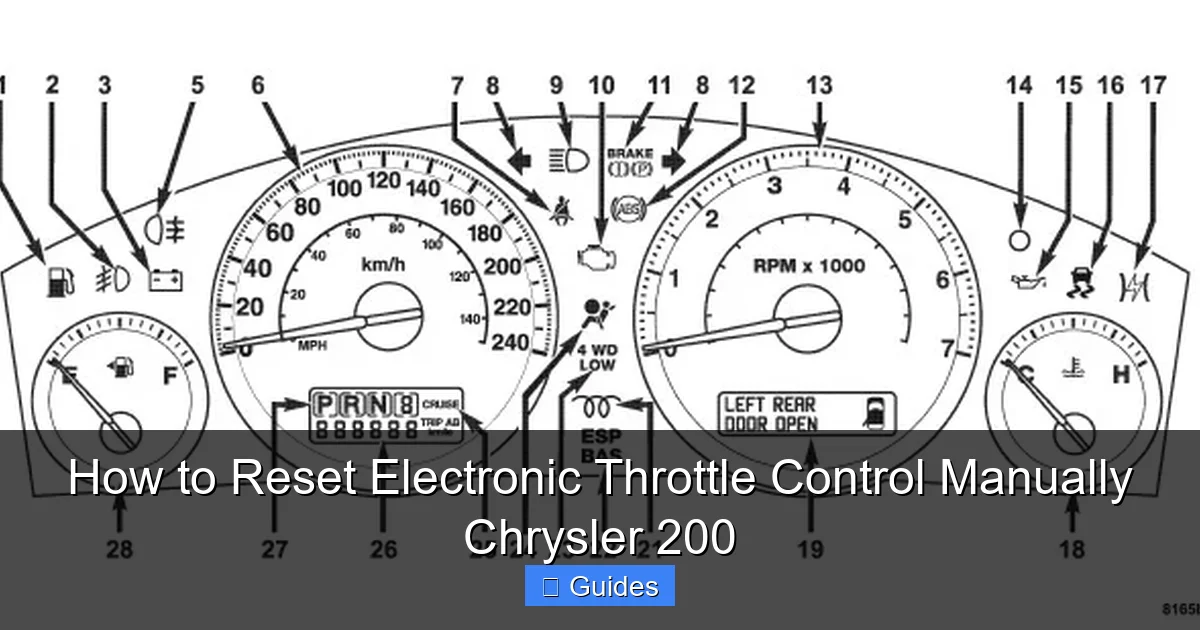
Visual guide about How to Reset Electronic Throttle Control Manually Chrysler 200
Image source: ww2.justanswer.com
Before diving into the reset process, it helps to understand how the electronic throttle control works in your Chrysler 200. The ETC system—also known as “drive-by-wire”—eliminates the mechanical linkage between the accelerator pedal and the throttle body. Instead, when you press the gas pedal, sensors detect the movement and send signals to the engine control unit (ECU). The ECU then commands a small electric motor to open or close the throttle plate inside the throttle body, controlling airflow into the engine.
This system relies on several key components:
– Throttle Position Sensor (TPS): Monitors the angle of the throttle plate.
– Accelerator Pedal Position Sensor (APPS): Detects how far you’ve pressed the gas pedal.
– Throttle Actuator Motor: Physically moves the throttle plate.
– Engine Control Unit (ECU): The brain that interprets sensor data and controls the motor.
Over time, dust, carbon buildup, or electrical glitches can cause these components to send incorrect signals. The ECU may respond by limiting engine power (entering “limp mode”) or triggering warning lights. A manual reset helps the system relearn proper throttle positions and clear temporary faults.
Common Signs Your ETC Needs a Reset
You might not always know exactly what’s wrong with your car, but certain symptoms strongly suggest an ETC issue. Here are the most common signs that a reset could help:
– Rough or fluctuating idle: The engine RPM jumps up and down when stopped, especially after starting.
– Hesitation or lack of response: You press the gas, but the car doesn’t accelerate smoothly—it feels sluggish or delayed.
– Reduced power mode: The dashboard shows a “Reduced Power” or “Service Throttle” message, and acceleration is severely limited.
– Check Engine Light: Often accompanied by trouble codes like P0121, P0221, or P2135 related to throttle position sensors.
– Stalling or hard starts: The engine stalls at idle or struggles to start, particularly when cold.
If you’re experiencing one or more of these issues, a manual reset is a great first step. It’s non-invasive, takes less than 30 minutes, and costs nothing. Even if the problem turns out to be something more serious, ruling out a simple software glitch saves time and money.
Tools and Safety Precautions
Visual guide about How to Reset Electronic Throttle Control Manually Chrysler 200
Image source: i.ytimg.com
One of the best things about resetting the electronic throttle control on a Chrysler 200 is that you don’t need fancy equipment. However, you do need to take a few safety precautions to protect yourself and your vehicle.
What You’ll Need
– A wrench or socket set (typically 10mm for battery terminals)
– Safety gloves (optional but recommended)
– Safety glasses (to protect eyes from battery acid)
– A clean rag or towel
– About 15–30 minutes of uninterrupted time
That’s it! No scan tools, no diagnostic software, and no special knowledge required. This method works by cutting power to the ECU and throttle system, forcing it to reset its learned values and start fresh.
Safety First: Handling the Battery
The 12-volt battery in your Chrysler 200 powers all the electronics, including the ECU. Disconnecting it safely is crucial. Here’s how to do it right:
1. Turn off the ignition: Make sure the key is removed or the start button is off. Do not just turn the key to “ACC”—fully power down the vehicle.
2. Wait 2–3 minutes: This allows any residual power in the system to drain. Modern cars have capacitors that can hold a charge even when off.
3. Locate the battery: In most Chrysler 200 models, the battery is in the engine bay on the driver’s side.
4. Disconnect the negative terminal first: Always remove the negative (black) cable before the positive (red). This reduces the risk of short circuits.
5. Use proper tools: A 10mm wrench usually fits the terminal nut. Loosen it gently—don’t force it.
6. Secure the cable: Once disconnected, tuck the negative cable away from the battery terminal so it can’t accidentally touch.
⚠️ Warning: Never touch both battery terminals at the same time with a metal tool. This can cause a short circuit, sparks, or even injury. Also, avoid spilling battery acid—if you do, rinse with water immediately.
Step-by-Step Guide to Manually Reset the ETC
Visual guide about How to Reset Electronic Throttle Control Manually Chrysler 200
Image source: ehcar.net
Now that you’re prepared, let’s walk through the actual reset process. This method is known as a “power cycle” or “battery reset,” and it’s widely used for resetting electronic systems in modern vehicles.
Step 1: Turn Off the Vehicle and Wait
Start by ensuring your Chrysler 200 is completely off. Remove the key or press the start button until all lights are out. Wait at least 2–3 minutes. This gives the ECU time to fully power down and discharge any stored energy. Skipping this step might mean the system doesn’t fully reset.
Step 2: Disconnect the Battery
Open the hood and locate the battery. Identify the negative terminal—it’s marked with a minus sign (–) and usually has a black cable. Use your 10mm wrench to loosen the nut and carefully remove the cable. Place it aside where it won’t touch the terminal.
Pro Tip: If the terminal is tight, gently wiggle the connector while pulling—don’t twist the cable itself, as it can damage the wire inside.
Step 3: Wait 15–20 Minutes
This is a critical step. Leaving the battery disconnected for at least 15 minutes ensures that all capacitors in the ECU and throttle system fully discharge. Think of it like restarting your computer—sometimes a quick reboot isn’t enough; you need a full power drain.
During this time, you can clean the throttle body (optional but helpful—see next section) or just take a short break.
Step 4: Reconnect the Battery
After the wait, reattach the negative cable to the battery terminal. Tighten the nut securely—snug is fine; don’t over-tighten, as it can strip the threads. Make sure the connection is clean and free of corrosion.
Step 5: Turn the Ignition On (But Don’t Start the Engine)
Insert the key or press the start button to turn the ignition to the “ON” position. You’ll see dashboard lights come on, but do not start the engine yet. Leave it in this state for about 30 seconds. This allows the ECU to power up and begin reinitializing the throttle system.
Step 6: Turn the Ignition Off Again
After 30 seconds, turn the ignition back off. Wait another 30 seconds. This completes the reset cycle and ensures the system has fully recalibrated.
Step 7: Start the Engine
Now, start your Chrysler 200 as usual. The engine may idle a bit roughly at first—this is normal. Let it run for 2–3 minutes to allow the ECU to relearn basic throttle positions.
Step 8: Drive Normally for Relearning
Take your car for a short drive—about 10–15 minutes—with normal acceleration and braking. Avoid aggressive driving during this period. The ECU uses this time to relearn optimal throttle response based on your driving habits. After this, most symptoms should be resolved.
Optional: Cleaning the Throttle Body
While the battery is disconnected, it’s a great time to clean the throttle body. Over time, carbon deposits can build up on the throttle plate and bore, causing sticking or poor airflow. This can mimic ETC problems even after a reset.
How to Clean the Throttle Body
1. Locate the throttle body: It’s usually attached to the intake manifold and has a large air hose connected to it.
2. Remove the air intake hose: Loosen the clamps and gently pull the hose off. You may need a screwdriver or pliers.
3. Spray with throttle cleaner: Use a dedicated throttle body cleaner (not carb cleaner—it’s too harsh). Spray it directly onto the throttle plate and bore. Let it sit for 30 seconds.
4. Wipe gently: Use a clean rag to remove loosened carbon. Avoid scratching the surface.
5. Reassemble: Reattach the air hose and tighten the clamps.
Note: Do not force the throttle plate open with tools—it’s controlled by the motor and can be damaged. Let the cleaner do the work.
Cleaning the throttle body can improve idle quality and responsiveness, especially if you’ve noticed rough running even after a reset.
When the Reset Doesn’t Work: Next Steps
Sometimes, a manual reset resolves the issue immediately. Other times, the problem returns or persists. If your Chrysler 200 still shows symptoms after following the steps above, it’s time to dig deeper.
Possible Causes Beyond a Simple Reset
– Faulty throttle position sensor: If the TPS is damaged or sending incorrect signals, the ECU can’t control the throttle properly.
– Dirty or stuck throttle plate: Heavy carbon buildup may prevent smooth movement, even after cleaning.
– Wiring or connector issues: Corroded or loose connections between the pedal, throttle body, and ECU can cause intermittent faults.
– ECU software glitch: Rare, but sometimes a firmware update from a dealership is needed.
– Mechanical failure: Internal damage to the throttle actuator motor or gear assembly.
Using an OBD2 Scanner
If the problem continues, plug in an OBD2 scanner (available for under $20 online). Look for trouble codes related to the throttle system, such as:
– P0121 – Throttle Position Sensor/Switch A Circuit Range/Performance
– P0221 – Throttle Position Sensor/Switch B Circuit Range/Performance
– P2135 – Throttle/Pedal Position Sensor/Switch A/B Voltage Correlation
These codes can help pinpoint the exact component at fault. Many auto parts stores offer free code reading if you don’t own a scanner.
When to Visit a Mechanic
If you’ve tried the reset, cleaned the throttle body, and still have issues, it’s wise to consult a professional. A certified technician can perform a throttle relearn procedure using specialized tools, test sensor outputs, and inspect wiring. While dealerships can be expensive, some independent shops specialize in Chrysler vehicles and offer competitive rates.
Preventing Future ETC Problems
Once your throttle system is working smoothly, take steps to keep it that way. Prevention is always easier (and cheaper) than repair.
Regular Maintenance Tips
– Clean the throttle body every 30,000–50,000 miles: Especially if you drive in stop-and-go traffic or use lower-quality fuel.
– Use quality fuel: Top-tier gasoline with detergent additives helps reduce carbon buildup.
– Avoid abrupt throttle inputs when cold: Let the engine warm up for 30–60 seconds before driving aggressively.
– Keep the air filter clean: A clogged filter forces the throttle to work harder and can contribute to deposits.
– Address warning lights promptly: Don’t ignore the Check Engine light—early diagnosis prevents bigger issues.
Driving Habits That Help
Smooth, gradual acceleration reduces stress on the throttle system. Avoid “flooring it” from a stop, especially in cold weather. Also, try to avoid short trips where the engine never fully warms up—this promotes carbon buildup.
Conclusion: Take Control of Your Chrysler 200’s Performance
Resetting the electronic throttle control on your Chrysler 200 is a simple, effective way to resolve common drivability issues. By following the manual reset process—disconnecting the battery, waiting, and allowing the system to relearn—you can often restore smooth acceleration, stable idle, and eliminate warning lights. This DIY fix saves time, money, and the hassle of a shop visit.
Remember, the key is patience. Rushing the process or skipping steps can reduce effectiveness. And while a reset works for many problems, don’t hesitate to seek professional help if issues persist. Your Chrysler 200’s ETC system is vital to performance and safety—treat it with care, and it will serve you well for years to come.
With this guide, you’re now equipped to handle throttle troubles like a pro. So the next time your car feels sluggish or acts up, you’ll know exactly what to do: reset, restart, and get back on the road with confidence.
Frequently Asked Questions
How often should I reset the electronic throttle control on my Chrysler 200?
You only need to reset the ETC when you notice performance issues like rough idle or hesitation. There’s no scheduled maintenance for it—only do it as needed.
Will disconnecting the battery reset the check engine light?
Yes, in many cases, disconnecting the battery will clear the check engine light temporarily. However, if the underlying issue isn’t fixed, the light will likely return.
Can I reset the throttle control without disconnecting the battery?
Some vehicles allow a reset via the ignition cycle (on-off-on), but for the Chrysler 200, a full battery disconnect is the most reliable method.
Is it safe to clean the throttle body myself?
Yes, as long as you use the right cleaner and avoid forcing the throttle plate. Take your time and follow safety steps to prevent damage.
Why does my car go into limp mode after a reset?
Limp mode may occur if the ECU detects a fault during relearning. Drive gently for 10–15 minutes to allow the system to recalibrate. If it persists, have it checked.
Can a bad battery affect the electronic throttle control?
Yes, a weak or failing battery can cause voltage fluctuations that confuse the ECU and trigger ETC errors. Always ensure your battery is in good condition.

At CarLegit, we believe information should be clear, factual, and genuinely helpful. That’s why every guide, review, and update on our website is created with care, research, and a strong focus on user experience.