
The Chrysler 300 typically features a dual fuel pump system—a primary in-tank pump and a secondary lift pump—depending on the model year and engine type. This setup ensures consistent fuel delivery, especially in high-performance variants like the 300C or SRT models. Understanding this system helps with troubleshooting, maintenance, and maximizing your vehicle’s performance.
If you’re a proud owner of a Chrysler 300—or considering buying one—you’ve likely admired its bold styling, powerful engine options, and smooth ride. But beyond the chrome accents and leather seats lies a sophisticated fuel delivery system that keeps this American luxury sedan running strong. One of the most common questions among Chrysler 300 enthusiasts and mechanics alike is: *How many fuel pumps does a Chrysler 300 have?* The answer isn’t always straightforward, as it depends on the model year, engine configuration, and trim level. But one thing’s for sure: understanding your fuel pump setup is key to maintaining performance, reliability, and fuel efficiency.
The Chrysler 300 has evolved significantly since its reintroduction in 2005. From the base V6 models to the high-octane SRT8 variants, each version demands a different level of fuel delivery. Early models relied on simpler systems, but as engine technology advanced—especially with the introduction of larger displacement V8s and improved fuel injection—Chrysler upgraded the fuel pump architecture to meet those demands. Today, most Chrysler 300s come equipped with a dual fuel pump system, though some older or base models may still use a single pump. Knowing which setup your car has can save you time, money, and frustration when diagnosing performance issues or planning maintenance.
In This Article
- 1 Key Takeaways
- 2 📑 Table of Contents
- 3 Understanding the Chrysler 300 Fuel System
- 4 How Many Fuel Pumps Does a Chrysler 300 Have?
- 5 Where Are the Fuel Pumps Located?
- 6 Signs of a Failing Fuel Pump
- 7 Replacing the Fuel Pump in a Chrysler 300
- 8 Performance Upgrades and Aftermarket Options
- 9 Conclusion
- 10 Frequently Asked Questions
- 10.1 Does every Chrysler 300 have two fuel pumps?
- 10.2 Where is the fuel pump located in a Chrysler 300?
- 10.3 Can I drive my Chrysler 300 with a failing fuel pump?
- 10.4 How often should I replace the fuel pump in my Chrysler 300?
- 10.5 Can I replace the fuel pump myself?
- 10.6 Will upgrading my fuel pump increase horsepower?
Key Takeaways
- Most Chrysler 300 models use two fuel pumps: a main high-pressure pump inside the fuel tank and a secondary lift pump to assist fuel flow.
- The dual-pump design supports high-demand engines: especially in V8 and turbocharged versions, ensuring adequate fuel pressure under acceleration.
- Fuel pump location varies by model year: earlier models (2005–2010) may have a single pump, while newer ones (2011–2023) often include both pumps for improved reliability.
- Regular maintenance prevents pump failure: replacing fuel filters and using quality fuel helps extend the life of both pumps.
- Symptoms of a failing fuel pump include: engine hesitation, stalling, difficulty starting, and reduced fuel efficiency.
- Diagnosing fuel pump issues requires professional tools: a fuel pressure gauge and scan tool can pinpoint whether the problem is with the pump, relay, or electrical system.
- Replacing a fuel pump is complex and often requires tank removal: it’s recommended to have a certified mechanic handle the job unless you’re experienced with automotive repairs.
📑 Table of Contents
Understanding the Chrysler 300 Fuel System
Before diving into the number of fuel pumps, it’s important to understand how the fuel system works in the Chrysler 300. Like most modern vehicles, the 300 uses an electronic fuel injection (EFI) system. This means fuel is delivered under high pressure directly into the engine’s intake manifold or combustion chamber, allowing for precise control over fuel-air mixture and improved efficiency.
The fuel system begins in the gas tank, where fuel is stored. From there, it travels through fuel lines to the engine, passing through a fuel filter, fuel pressure regulator, and finally the fuel injectors. The fuel pump is the heart of this system—it’s responsible for pressurizing the fuel and ensuring a steady supply, even under heavy acceleration or high engine loads.
In the Chrysler 300, the fuel pump system is designed to handle the demands of both everyday driving and spirited performance. Whether you’re cruising down the highway in a 300 Touring with a 3.6L V6 or pushing the limits in a 300C SRT8 with a 6.4L HEMI V8, your fuel system must deliver fuel consistently and reliably. That’s where the dual-pump setup comes into play.
How Fuel Delivery Works in Modern Vehicles
Modern fuel systems rely on electric fuel pumps, which are typically submerged in the fuel tank. This design helps cool the pump and prevents vapor lock—a condition where fuel turns to vapor before reaching the engine, causing performance issues. The pump is controlled by the engine control unit (ECU), which monitors engine load, throttle position, and fuel pressure to adjust delivery in real time.
In high-performance applications, a single pump may not be enough to maintain adequate pressure, especially during rapid acceleration or when the tank is low on fuel. This is why many performance-oriented vehicles, including the Chrysler 300, use a dual-pump system. The primary pump handles normal driving conditions, while the secondary pump kicks in during high-demand situations.
The Role of the Fuel Pump in Engine Performance
The fuel pump doesn’t just move fuel—it plays a critical role in engine performance and longevity. If the pump fails or can’t maintain proper pressure, the engine may run lean (too much air, not enough fuel), leading to overheating, misfires, or even engine damage. Conversely, too much fuel pressure can cause rich running conditions, reducing fuel economy and increasing emissions.
In the Chrysler 300, the fuel pump system is engineered to deliver the right amount of fuel at the right time. This ensures smooth idle, responsive acceleration, and optimal fuel efficiency. Whether you’re driving a 2006 model with a 2.7L V6 or a 2020 300S with a 5.7L V8, the fuel pump is working hard behind the scenes to keep everything running smoothly.
How Many Fuel Pumps Does a Chrysler 300 Have?
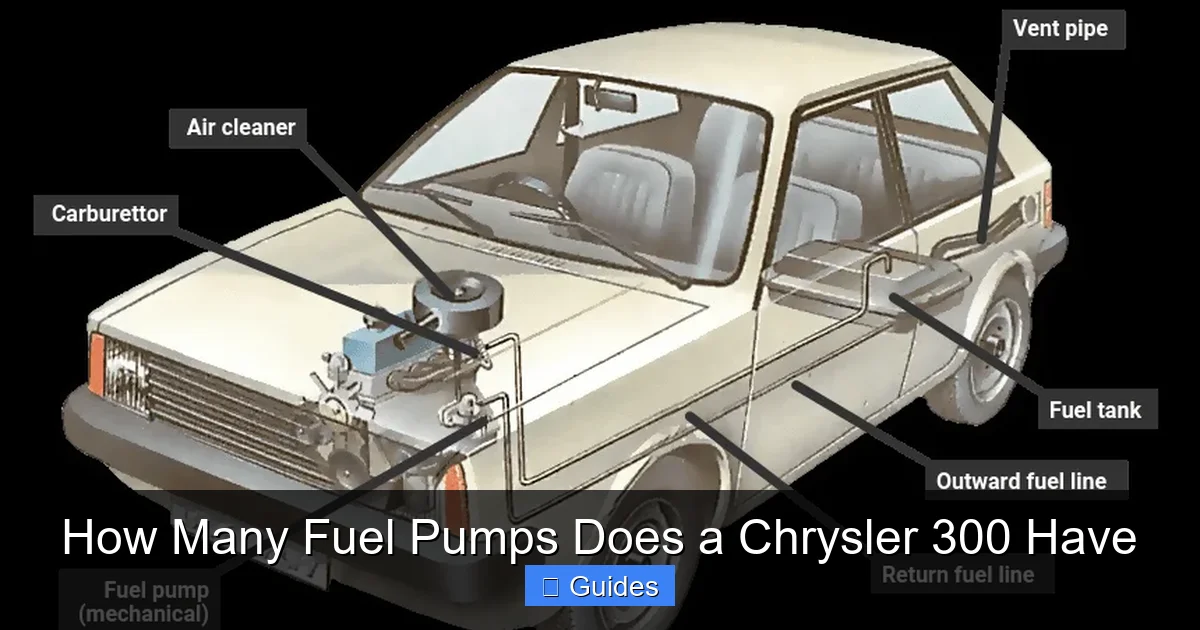
Visual guide about How Many Fuel Pumps Does a Chrysler 300 Have
Image source: howacarworks.com
Now, let’s get to the heart of the question: *How many fuel pumps does a Chrysler 300 have?* The short answer is: **most Chrysler 300 models from 2011 onward are equipped with two fuel pumps**, while earlier models (2005–2010) often have just one. However, the exact configuration can vary based on the engine and trim level.
Dual Fuel Pump System (2011–2023 Models)
Starting around 2011, Chrysler began equipping the 300 with a dual fuel pump system, especially in models with larger engines like the 5.7L or 6.4L HEMI V8. This system includes:
– **Primary High-Pressure Fuel Pump (HPFP):** Located inside the fuel tank, this is the main pump responsible for delivering fuel to the engine under normal and high-load conditions. It operates at high pressure (typically 55–65 psi) to meet the demands of direct fuel injection systems.
– **Secondary Lift Pump (or Low-Pressure Pump):** Also located in the fuel tank, this pump assists the primary pump by moving fuel from the tank to the high-pressure pump. It ensures a consistent supply of fuel, especially when the tank is low or during aggressive driving.
This dual-pump design improves reliability, reduces strain on the primary pump, and helps prevent fuel starvation—a condition where the engine doesn’t get enough fuel, often during hard cornering or acceleration.
For example, if you own a 2015 Chrysler 300C with the 5.7L V8, you likely have both pumps. The lift pump helps feed fuel to the high-pressure pump, which then delivers it to the fuel injectors. This setup is especially important in performance driving scenarios, where fuel demand can spike suddenly.
Single Fuel Pump System (2005–2010 Models)
Earlier Chrysler 300 models, particularly those with the 2.7L V6 or 3.5L V6 engines, typically used a single electric fuel pump located inside the fuel tank. While this setup was sufficient for everyday driving, it could struggle under high load or with a low fuel level.
For instance, a 2008 Chrysler 300 Limited with the 3.5L V6 relies on one pump to handle all fuel delivery. If that pump fails or becomes weak, you may notice symptoms like hesitation during acceleration or difficulty starting the engine. These older systems are more prone to failure due to wear and tear, especially if the fuel filter hasn’t been replaced regularly.
Exceptions and Special Cases
It’s worth noting that not all Chrysler 300s follow the same pattern. Some base models or fleet vehicles may have simplified fuel systems with only one pump, even in newer years. Additionally, certain aftermarket modifications—like performance fuel pumps or upgraded fuel systems—can alter the factory setup.
If you’re unsure about your specific model, consult your owner’s manual or check with a Chrysler dealership. You can also look up your vehicle identification number (VIN) on Chrysler’s official website to get detailed specifications.
Where Are the Fuel Pumps Located?

Visual guide about How Many Fuel Pumps Does a Chrysler 300 Have
Image source: goldfarbinc.com
Knowing how many fuel pumps your Chrysler 300 has is one thing—knowing where they’re located is another. The fuel pumps are housed inside the fuel tank, which means accessing them requires removing the rear seat and opening the fuel pump access panel.
Accessing the Fuel Pump Assembly
To reach the fuel pumps, follow these general steps:
1. **Disconnect the battery:** Always start by disconnecting the negative terminal to prevent electrical shorts.
2. **Remove the rear seat:** The seat cushion lifts up, revealing the access panel.
3. **Open the access panel:** Unscrew the bolts and lift the panel to expose the fuel pump module.
4. **Disconnect electrical connectors and fuel lines:** Carefully unplug the wiring harness and detach the fuel lines using a fuel line disconnect tool.
5. **Remove the pump assembly:** The entire module—including the pump(s), fuel level sender, and filter—can be lifted out as one unit.
This process can take 1–2 hours, depending on your experience level. It’s important to work in a well-ventilated area and avoid sparks or open flames, as fuel vapors are highly flammable.
Identifying the Pumps
Once the module is removed, you’ll see the fuel pump(s) mounted inside. In dual-pump systems, you’ll typically find:
– A larger, high-pressure pump (often labeled or color-coded)
– A smaller lift pump, usually positioned near the bottom of the tank
The fuel filter is usually integrated into the module and should be replaced during any pump service. Some models also include a fuel pressure sensor or regulator as part of the assembly.
Signs of a Failing Fuel Pump
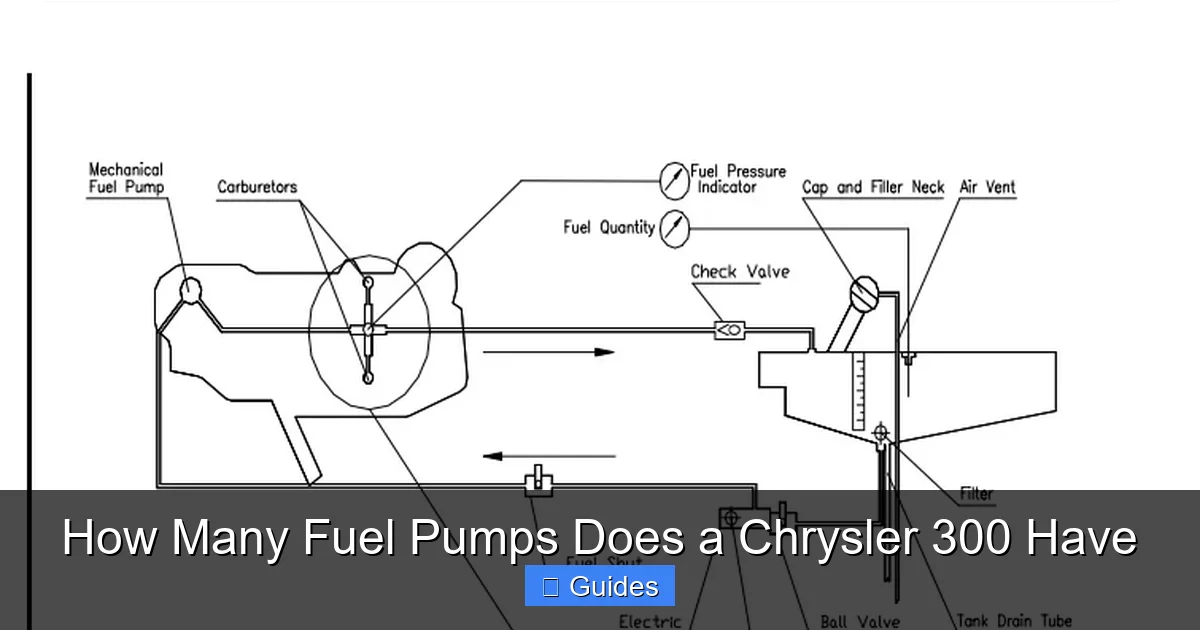
Visual guide about How Many Fuel Pumps Does a Chrysler 300 Have
Image source: i.stack.imgur.com
Even the most reliable fuel pumps can fail over time. Knowing the warning signs can help you address issues before they leave you stranded.
Common Symptoms
– **Engine hesitation or stumbling:** Especially during acceleration, this can indicate insufficient fuel pressure.
– **Difficulty starting the engine:** A weak pump may not build enough pressure to start the car, particularly when cold.
– **Stalling or sudden shutdowns:** The engine may die unexpectedly, especially at low speeds or idle.
– **Reduced fuel efficiency:** A failing pump may deliver too much or too little fuel, hurting gas mileage.
– **Whining noise from the fuel tank:** A loud whine or hum can indicate a worn-out pump motor.
If you notice any of these symptoms, it’s important to have your fuel system inspected. A professional mechanic can use a fuel pressure gauge to test the system and determine whether the pump, relay, or electrical circuit is at fault.
Preventing Fuel Pump Failure
To extend the life of your fuel pumps:
– **Keep your fuel tank at least ¼ full:** Running on low fuel can cause the pump to overheat and wear out faster.
– **Use high-quality fuel:** Avoid cheap or contaminated gasoline, which can clog the filter and damage the pump.
– **Replace the fuel filter regularly:** Most manufacturers recommend replacing it every 30,000–40,000 miles.
– **Avoid aggressive driving on low fuel:** Hard acceleration with a low tank increases strain on the pump.
Replacing the Fuel Pump in a Chrysler 300
Replacing a fuel pump in a Chrysler 300 is not a simple DIY job. Because the pumps are inside the fuel tank, the process involves significant disassembly and safety precautions.
DIY vs. Professional Service
While some experienced mechanics may attempt a DIY replacement, it’s generally recommended to have a certified technician handle the job. Reasons include:
– **Safety risks:** Fuel is flammable, and improper handling can lead to fire or injury.
– **Complexity:** The fuel pump module is delicate, and incorrect installation can cause leaks or electrical issues.
– **Special tools required:** You’ll need a fuel line disconnect tool, torque wrench, and possibly a scan tool to reset the system.
If you do decide to tackle the job yourself, make sure to:
– Work in a well-ventilated, spark-free environment
– Have a fire extinguisher nearby
– Follow the factory service manual for your specific model year
Cost of Replacement
The cost to replace a fuel pump in a Chrysler 300 varies depending on the model and labor rates. On average:
– **Parts:** $150–$400 for a new pump assembly (including filter and sender)
– **Labor:** $200–$400 (1.5–2.5 hours of work)
Total cost typically ranges from $350 to $800. While this may seem expensive, it’s a worthwhile investment to restore performance and prevent further damage.
Performance Upgrades and Aftermarket Options
For Chrysler 300 owners looking to boost performance, upgrading the fuel pump system can be a smart move—especially if you’ve added a supercharger, turbo, or high-flow injectors.
High-Flow Fuel Pumps
Aftermarket companies like DeatschWerks, Walbro, and AEM offer high-flow fuel pumps designed to deliver more fuel at higher pressures. These are ideal for modified engines that require increased fuel delivery.
For example, a Walbro 255 LPH (liters per hour) pump can support up to 500 horsepower, making it a popular choice for 300C SRT8 owners looking to push their HEMI engines further.
Fuel Pump Controllers
Some upgrades include a fuel pump controller, which adjusts pump speed based on engine demand. This improves efficiency and reduces wear on the pump. Controllers like the AEM FIC or Haltech can be programmed to work with your specific setup.
Important Considerations
Before upgrading, make sure your fuel lines, filter, and injectors can handle the increased flow. Running too much fuel without proper tuning can cause engine damage. Always consult with a performance shop or tuner to ensure compatibility.
Conclusion
So, how many fuel pumps does a Chrysler 300 have? In most modern models—especially those with V8 engines—the answer is two: a primary high-pressure pump and a secondary lift pump. This dual-pump system ensures reliable fuel delivery, supports high-performance driving, and enhances overall engine efficiency.
Understanding your fuel pump setup is essential for maintaining your Chrysler 300’s performance and longevity. Whether you’re troubleshooting a rough idle, planning a repair, or considering performance upgrades, knowing how your fuel system works gives you a significant advantage.
Regular maintenance—like keeping your tank full, using quality fuel, and replacing the filter—can go a long way in preventing pump failure. And if you do need a replacement, trust a professional to handle the job safely and correctly.
The Chrysler 300 is more than just a stylish sedan—it’s a well-engineered machine with a fuel system designed to deliver power and reliability. By taking care of your fuel pumps, you’re not just maintaining a car; you’re preserving a driving experience.
Frequently Asked Questions
Does every Chrysler 300 have two fuel pumps?
No, not every Chrysler 300 has two fuel pumps. Models from 2005 to 2010 typically have one pump, while most 2011–2023 models—especially those with V8 engines—feature a dual-pump system for improved performance and reliability.
Where is the fuel pump located in a Chrysler 300?
The fuel pump(s) are located inside the fuel tank. To access them, you must remove the rear seat and open the fuel pump access panel, which allows you to lift out the entire pump module.
Can I drive my Chrysler 300 with a failing fuel pump?
It’s not recommended. A failing fuel pump can cause stalling, poor acceleration, and engine damage. If you suspect a problem, have it inspected immediately to avoid being stranded or causing further issues.
How often should I replace the fuel pump in my Chrysler 300?
There’s no set interval, but most fuel pumps last 100,000–150,000 miles. Replace it if you notice symptoms like hard starting, hesitation, or a loud noise from the fuel tank.
Can I replace the fuel pump myself?
It’s possible but not recommended unless you have experience. The job involves handling fuel, electrical components, and precise reassembly. A professional mechanic is the safest choice.
Will upgrading my fuel pump increase horsepower?
Not by itself. A high-flow pump supports increased fuel delivery for performance modifications like turbocharging or larger injectors, but you’ll also need proper tuning to see horsepower gains.

At CarLegit, we believe information should be clear, factual, and genuinely helpful. That’s why every guide, review, and update on our website is created with care, research, and a strong focus on user experience.