
Resetting the ABS light on your Dodge Ram 2500 isn’t as complicated as it seems—whether you’re dealing with a minor sensor glitch or a recent repair. This guide walks you through simple DIY methods, advanced diagnostic tools, and safety tips to get your truck back on the road with confidence.
In This Article
- 1 Key Takeaways
- 2 📑 Table of Contents
- 3 Why Is the ABS Light On in Your Dodge Ram 2500?
- 4 How to Reset the ABS Light: Simple DIY Methods
- 5 Using an OBD2 Scanner to Reset the ABS Light
- 6 Diagnosing and Fixing Common ABS Issues
- 7 Model-Specific Tips for Dodge Ram 2500
- 8 Preventing Future ABS Light Issues
- 9 When to See a Mechanic
- 10 Conclusion
- 11 Frequently Asked Questions
- 11.1 Can I drive my Dodge Ram 2500 with the ABS light on?
- 11.2 Will disconnecting the battery reset the ABS light?
- 11.3 Do I need a special scanner to reset the ABS light?
- 11.4 How much does it cost to fix an ABS light issue?
- 11.5 Why does my ABS light come on and then go off?
- 11.6 Can low tire pressure cause the ABS light to come on?
Key Takeaways
- Understand why the ABS light comes on: Common causes include faulty wheel speed sensors, low brake fluid, or wiring issues—not always a serious problem.
- Try a simple reset first: Disconnecting the battery for 10–15 minutes can clear temporary glitches and reset the system.
- Use an OBD2 scanner for precision: A quality scanner reads ABS-specific codes and allows you to reset the light safely after repairs.
- Check wheel speed sensors regularly: Dirt, corrosion, or damage to sensors is a frequent culprit—clean or replace as needed.
- Never ignore persistent ABS warnings: If the light returns after reset, have a professional diagnose the issue to avoid brake system failure.
- Maintain your braking system: Regular inspections of brake fluid, pads, and sensors prevent future ABS light triggers.
- Know your model year: Reset procedures may vary slightly between 2003–2009, 2010–2018, and 2019–2024 Dodge Ram 2500 trucks.
📑 Table of Contents
Why Is the ABS Light On in Your Dodge Ram 2500?
If you’ve ever been driving your Dodge Ram 2500 and noticed that little yellow or orange ABS warning light glowing on your dashboard, you’re not alone. It’s one of the most common dashboard alerts truck owners encounter—and while it can be alarming, it doesn’t always mean your brakes are about to fail. The Anti-lock Braking System (ABS) is designed to prevent wheel lockup during hard braking, especially on slippery roads. When the system detects a problem, it triggers the ABS light to alert you.
But what exactly causes this light to come on? In many cases, it’s something minor—like a dirty sensor or a loose connection. Other times, it could point to a more serious issue, such as a failing wheel speed sensor or low brake fluid. The key is not to panic, but to understand what the light is trying to tell you. Ignoring it for too long, however, can compromise your safety, especially in emergency braking situations.
The ABS system relies on a network of sensors, wiring, and a control module to function properly. If any part of this system malfunctions, the computer logs a fault code and turns on the warning light. This is actually a good thing—it means your truck is doing its job by alerting you to a potential problem. The challenge is figuring out what that problem is and how to fix it. That’s where this guide comes in.
Common Causes of the ABS Light
Let’s break down the most frequent reasons your Dodge Ram 2500’s ABS light might illuminate:
- Faulty wheel speed sensors: These sensors monitor how fast each wheel is spinning. If one fails or gets covered in dirt, mud, or rust, the ABS module can’t get accurate data, triggering the light.
- Low brake fluid: The ABS system shares components with your regular braking system. Low fluid levels can affect pressure and trigger warnings.
- Damaged or corroded wiring: Wires connecting the sensors to the ABS module can fray, corrode, or get pinched—especially in older trucks exposed to harsh weather.
- Blown fuse: A simple blown fuse in the ABS circuit can disable the system and turn on the light.
- Faulty ABS module: Though less common, the control module itself can fail due to electrical issues or water damage.
- Recent repairs or battery disconnect: Sometimes, the light comes on after replacing brake parts or disconnecting the battery, even if no real issue exists.
Understanding these causes helps you narrow down the issue before jumping into a reset. For example, if you just replaced a brake rotor and the light came on, it might be a sensor alignment problem. If the light appeared after driving through deep water, corrosion could be the culprit.
How to Reset the ABS Light: Simple DIY Methods
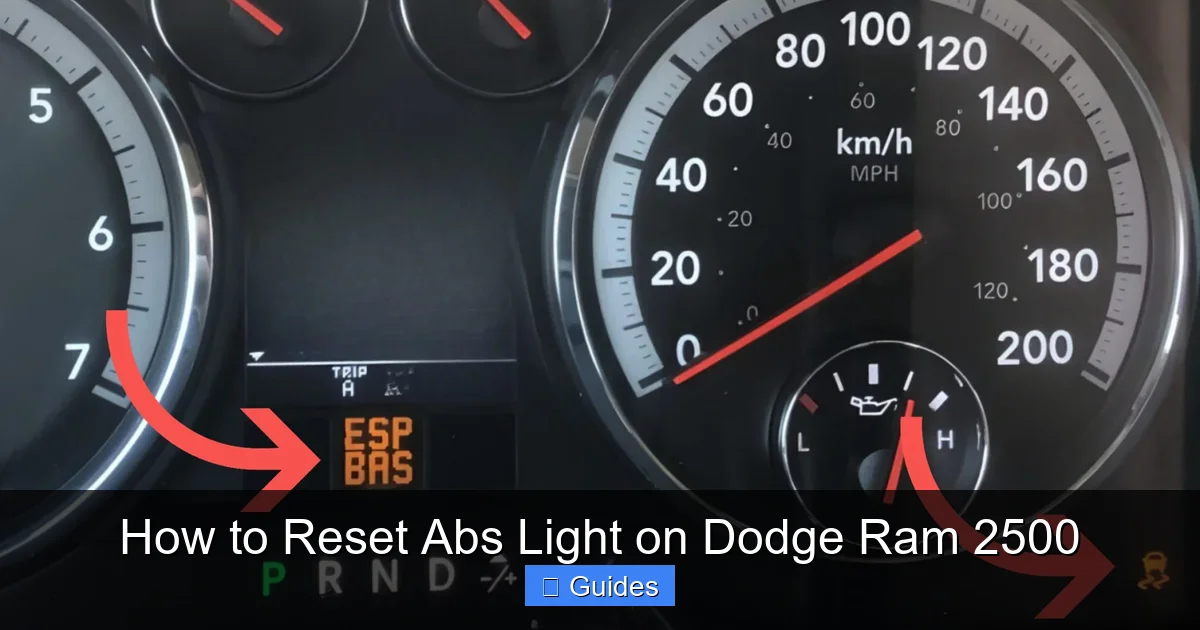
Visual guide about How to Reset Abs Light on Dodge Ram 2500
Image source: youcanic.com
Before you spend money on a mechanic or diagnostic tool, try these straightforward DIY fixes. Many times, the ABS light can be reset without any special equipment—especially if the issue was temporary.
Method 1: Disconnect the Battery
One of the easiest and most effective ways to reset the ABS light is by disconnecting the truck’s battery. This method works by cutting power to the ABS control module, forcing it to reboot and clear stored fault codes. It’s particularly useful after minor repairs or if the light came on unexpectedly.
Here’s how to do it safely:
- Turn off the ignition and remove the key.
- Open the hood and locate the negative terminal on the battery (marked with a “-” sign).
- Use a wrench to loosen the nut and carefully remove the negative cable. Tuck it away so it doesn’t touch the terminal.
- Wait at least 10–15 minutes. This gives the system enough time to fully discharge and reset.
- Reconnect the negative cable and tighten the nut securely.
- Start the truck and check if the ABS light is off.
Pro Tip: If your truck has a radio code or memory settings (like seat positions or climate control), write them down before disconnecting the battery. You may need to re-enter them afterward.
This method works best for temporary glitches. If the light returns within a few miles of driving, there’s likely an underlying issue that needs attention.
Method 2: Turn the Ignition On and Off
Sometimes, a simple ignition cycle can reset the system—especially on newer Dodge Ram 2500 models with advanced electronics.
Try this:
- Turn the ignition to the “ON” position (but don’t start the engine).
- Wait about 10 seconds.
- Turn the ignition back to “OFF.”
- Repeat this cycle 3–5 times.
- Start the engine and see if the ABS light remains off.
This method forces the ABS module to reinitialize. It’s not as reliable as a battery disconnect, but it’s worth a shot if you’re in a hurry.
Method 3: Check and Refill Brake Fluid
Low brake fluid can trigger the ABS light because the system relies on proper hydraulic pressure. If the fluid level is below the “MIN” line on the reservoir, top it off with the correct type (usually DOT 3 or DOT 4, as specified in your owner’s manual).
Steps:
- Locate the brake fluid reservoir under the hood (usually near the firewall on the driver’s side).
- Clean the cap to prevent dirt from entering.
- Remove the cap and check the fluid level.
- If low, add the recommended brake fluid slowly—don’t overfill.
- Replace the cap and start the truck.
After refilling, the ABS light may turn off on its own. If not, try one of the reset methods above.
Using an OBD2 Scanner to Reset the ABS Light
Visual guide about How to Reset Abs Light on Dodge Ram 2500
Image source: carcareassist.com
For more precise control and diagnosis, an OBD2 (On-Board Diagnostics) scanner is your best friend. While basic code readers can clear engine codes, you’ll need a scanner that supports ABS and brake system diagnostics to reset the ABS light effectively.
Why Use an OBD2 Scanner?
A quality OBD2 scanner does more than just reset lights—it reads specific fault codes from the ABS module. This helps you identify the exact problem, whether it’s a sensor on the front left wheel or a communication error with the control module. Without this information, you’re essentially guessing.
For Dodge Ram 2500 owners, we recommend scanners like the Autel MaxiCOM MK808, Foxwell NT510, or BlueDriver Bluetooth Scanner. These devices support ABS, SRS (airbag), and transmission diagnostics—not just engine codes.
Step-by-Step: Resetting with an OBD2 Scanner
Follow these steps to reset the ABS light using a scanner:
- Park your truck on a level surface and turn off the engine.
- Locate the OBD2 port—usually under the dashboard, near the steering column.
- Plug in your scanner and turn the ignition to “ON” (do not start the engine).
- Power on the scanner and wait for it to connect to the vehicle.
- Navigate to the “ABS” or “Brakes” section (not just “Engine”).
- Select “Read Codes” to see what’s causing the light.
- Note the code (e.g., C0221 – Front Left Wheel Speed Sensor).
- After fixing the issue (e.g., cleaning or replacing the sensor), go back to the menu.
- Select “Clear Codes” or “Reset ABS Light.”
- Confirm the action and wait for the scanner to complete the reset.
- Turn off the ignition, unplug the scanner, and start the truck.
If the light stays off, great! If it returns, the problem wasn’t fully resolved—or there’s another issue.
Important: Never clear codes without addressing the root cause. Resetting the light won’t fix a broken sensor—it just hides the warning.
What If the Scanner Can’t Reset the Light?
Some older Dodge Ram 2500 models (especially 2003–2009) may require a specific sequence or professional tool to reset the ABS system. If your scanner says “Reset Not Supported” or the light won’t clear, it could mean:
- The ABS module needs a hard reset via a dealership tool.
- There’s a persistent fault that prevents reset (e.g., open circuit).
- The scanner doesn’t have full Dodge compatibility.
In these cases, consider visiting a trusted mechanic or Dodge dealership. They have access to advanced diagnostic tools like the DRB III or WiTECH system.
Diagnosing and Fixing Common ABS Issues
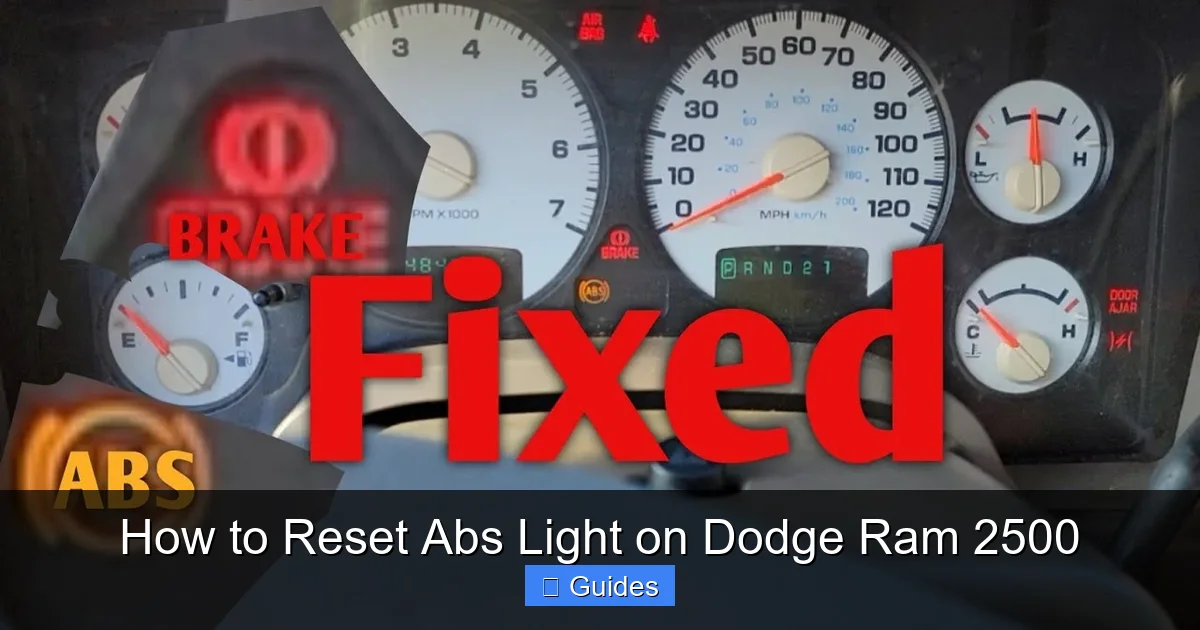
Visual guide about How to Reset Abs Light on Dodge Ram 2500
Image source: carnewsbox.com
Resetting the light is only half the battle. To prevent it from coming back, you need to fix the underlying problem. Let’s look at the most common ABS issues and how to address them.
Wheel Speed Sensor Problems
The wheel speed sensors are the most frequent offenders. Located near each wheel hub, they use magnetic fields to detect wheel rotation. Over time, they can get coated in brake dust, mud, or rust—leading to inaccurate readings.
How to inspect:
- Jack up the truck and remove the wheel (if needed).
- Locate the sensor—usually a small black module with a wire leading to the hub.
- Check for physical damage, loose connections, or corrosion.
- Clean the sensor and mounting area with brake cleaner and a wire brush.
- Ensure the sensor is properly seated and the gap between the sensor and tone ring is correct.
If cleaning doesn’t work, the sensor may need replacement. OEM sensors are more reliable than aftermarket ones, especially for ABS functionality.
Wiring and Connection Issues
Damaged wiring is another common cause. The wires running from the sensors to the ABS module can get pinched, frayed, or corroded—especially near suspension components.
What to look for:
- Cracked or exposed insulation.
- Loose or corroded connectors.
- Wires caught in moving parts (like axle shafts).
Use a multimeter to test continuity if you’re comfortable with electrical work. Otherwise, a mechanic can trace the wiring harness and repair any breaks.
ABS Module Failure
Though rare, the ABS control module can fail due to water intrusion, overheating, or electrical surges. Symptoms include:
- ABS light stays on even after reset.
- ABS activates unexpectedly on dry pavement.
- Brake pedal feels spongy or unresponsive.
Replacing the module is complex and often requires programming with a dealership tool. If you suspect module failure, consult a professional.
Model-Specific Tips for Dodge Ram 2500
Not all Dodge Ram 2500 trucks are the same. The reset process can vary slightly depending on the model year and trim level.
2003–2009 Dodge Ram 2500
These older models use a more basic ABS system. The battery disconnect method works well, but some trucks may require a scanner that supports Chrysler-specific protocols. The ABS module is typically located near the master cylinder.
2010–2018 Dodge Ram 2500
These trucks feature the more advanced Bendix ABS-6 system. They’re more sensitive to sensor alignment and wiring issues. A quality OBD2 scanner is highly recommended for diagnosis and reset.
2019–2024 Dodge Ram 2500
Newer models integrate ABS with advanced driver-assist features like traction control and electronic stability control. Resetting the light may require a scanner with full system access. Some trucks also have a “Service Brake System” message that appears alongside the ABS light.
Tip: Always check your owner’s manual for model-specific instructions. Dodge often includes troubleshooting steps and fuse locations.
Preventing Future ABS Light Issues
An ounce of prevention is worth a pound of cure. Here’s how to keep your ABS system running smoothly:
- Inspect sensors during tire rotations: Make it a habit to check wheel speed sensors every time you rotate your tires.
- Keep brake fluid fresh: Replace brake fluid every 30,000 miles or as recommended—moisture buildup can affect ABS performance.
- Protect wiring harnesses: Use zip ties or loom to secure wires away from heat and moving parts.
- Avoid deep water crossings: Water can damage sensors and the ABS module—especially in older trucks.
- Use quality replacement parts: Cheap sensors or brake components can trigger false ABS warnings.
Regular maintenance not only prevents ABS light issues but also extends the life of your braking system.
When to See a Mechanic
While many ABS light issues can be resolved at home, some situations require professional help:
- The light won’t turn off after multiple reset attempts.
- You hear unusual noises from the brakes or ABS pump.
- The brake pedal feels different (spongy, hard, or pulsating).
- Other warning lights (like Check Engine or Traction Control) are also on.
- You’re not comfortable working on electrical or brake systems.
A certified mechanic or Dodge technician has the tools and expertise to diagnose complex ABS problems safely.
Conclusion
Resetting the ABS light on your Dodge Ram 2500 doesn’t have to be a stressful experience. With the right knowledge and tools, you can often resolve the issue yourself—whether it’s a simple battery disconnect or a thorough scan with an OBD2 reader. The key is to understand what the light means, address the root cause, and take preventive steps to avoid future problems.
Remember, the ABS system is a critical safety feature. While a glowing light isn’t always an emergency, it’s a signal that something needs attention. Don’t ignore it. By following the steps in this guide, you’ll keep your truck safe, reliable, and ready for the road ahead.
Whether you’re a seasoned DIYer or just getting started, you now have the confidence to tackle ABS light issues like a pro. Stay safe, stay informed, and happy driving!
Frequently Asked Questions
Can I drive my Dodge Ram 2500 with the ABS light on?
Yes, you can still drive, but your anti-lock braking system is disabled. This means your wheels could lock up during hard braking, especially on wet or icy roads. It’s safe for short trips, but get it checked as soon as possible.
Will disconnecting the battery reset the ABS light?
In many cases, yes—especially if the light came on after a repair or temporary glitch. However, if the underlying issue isn’t fixed, the light will likely return after driving a short distance.
Do I need a special scanner to reset the ABS light?
Not always, but a basic OBD2 scanner may not support ABS diagnostics. For best results, use a scanner that can read and clear brake system codes, especially on newer Dodge Ram 2500 models.
How much does it cost to fix an ABS light issue?
Costs vary widely. A simple sensor cleaning is free, while replacing a wheel speed sensor can cost $100–$300 per wheel. ABS module replacement can exceed $1,000, including labor and programming.
Why does my ABS light come on and then go off?
This usually indicates an intermittent issue, like a loose connection or a sensor that’s failing under certain conditions (e.g., when hot or wet). It’s still worth diagnosing to prevent future problems.
Can low tire pressure cause the ABS light to come on?
Not directly, but significantly uneven tire pressure can affect wheel speed readings and confuse the ABS system. Always check tire pressure when the ABS light appears, especially after a long drive.

At CarLegit, we believe information should be clear, factual, and genuinely helpful. That’s why every guide, review, and update on our website is created with care, research, and a strong focus on user experience.