
A 2005 Dodge Ram typically requires 24 to 28 ounces (about 1.5 to 1.75 pounds) of R-134a refrigerant to properly charge its air conditioning system. This amount can vary slightly based on engine size, AC configuration, and whether the system has been fully evacuated. Always use a manifold gauge set and follow safety procedures when handling refrigerant.
If you own a 2005 Dodge Ram, you know it’s a rugged, reliable workhorse built to handle tough jobs and long drives. But when summer hits and the cabin starts feeling more like a sauna than a sanctuary, your air conditioning system becomes your best friend. One of the most common questions truck owners ask is: How much Freon does a 2005 Dodge Ram take? The answer isn’t always straightforward, but with the right knowledge, you can keep your AC blowing cold and your drives comfortable.
Understanding your truck’s AC system starts with knowing what refrigerant it uses and how much is needed for optimal performance. The 2005 Dodge Ram, like most vehicles from that era, uses R-134a refrigerant—commonly referred to as “Freon,” though that’s technically a brand name. This hydrofluorocarbon (HFC) coolant is efficient, widely available, and environmentally safer than older refrigerants like R-12. But simply knowing the type isn’t enough. You also need to know the correct charge amount to avoid undercooling or damaging the compressor.
In this guide, we’ll walk you through everything you need to know about recharging the AC in your 2005 Dodge Ram—from identifying the right amount of refrigerant to troubleshooting common issues. Whether you’re a DIY enthusiast or just want to understand what your mechanic is doing, this article will give you the confidence to tackle AC maintenance like a pro.
In This Article
- 1 Key Takeaways
- 2 📑 Table of Contents
- 3 Understanding Your 2005 Dodge Ram’s AC System
- 4 How Much Freon Does a 2005 Dodge Ram Take?
- 5 Signs Your 2005 Dodge Ram Needs a Refrigerant Recharge
- 6 How to Safely Recharge Your 2005 Dodge Ram’s AC System
- 7 When to Call a Professional
- 8 Maintaining Your AC System for Long-Term Performance
- 9 Conclusion
- 10 Frequently Asked Questions
Key Takeaways
- Standard R-134a Capacity: Most 2005 Dodge Ram models take between 24 and 28 ounces of refrigerant, depending on the specific trim and AC setup.
- Engine Size Matters: Trucks with larger engines (like the 5.7L HEMI) may have slightly larger AC systems, potentially requiring up to 30 ounces.
- Use the Right Refrigerant: Always use R-134a—never mix with older R-12 or newer R-1234yf unless the system has been professionally retrofitted.
- Professional Charging Recommended: While DIY kits are available, using a manifold gauge set ensures accurate charging and prevents overfilling.
- Check for Leaks First: Low refrigerant is often a sign of a leak—recharging without fixing the leak will only provide temporary relief.
- Safety First: Always wear safety goggles and gloves when handling refrigerant, and work in a well-ventilated area.
- System Evacuation Required: Before recharging, the AC system should be vacuumed to remove moisture and air for optimal performance.
📑 Table of Contents
Understanding Your 2005 Dodge Ram’s AC System
Before diving into how much Freon your truck needs, it’s important to understand how the air conditioning system works. The AC in your 2005 Dodge Ram is a closed-loop system that circulates refrigerant to absorb heat from the cabin and release it outside. This process involves several key components: the compressor, condenser, expansion valve (or orifice tube), evaporator, and receiver-drier (or accumulator).
The compressor, driven by a belt connected to the engine, pressurizes the refrigerant gas. This high-pressure gas flows to the condenser, usually located in front of the radiator, where it cools and turns into a liquid. From there, the refrigerant passes through the expansion valve, which reduces its pressure and temperature before it enters the evaporator inside the cabin. As warm air from the cabin blows over the cold evaporator coils, heat is absorbed, and cool air is blown into the interior. Finally, the refrigerant returns to the compressor to repeat the cycle.
One critical part of this system is the receiver-drier (on models with a thermal expansion valve) or the accumulator (on models with an orifice tube). These components filter debris and absorb moisture from the refrigerant. Moisture in the AC system can lead to corrosion, ice formation, and reduced efficiency—so keeping the system dry is essential.
Now, when it comes to refrigerant, the 2005 Dodge Ram uses R-134a. This is important because using the wrong type—like the older R-12 or the newer R-1234yf—can damage the system or void warranties. R-134a is widely available in automotive stores and comes in cans with built-in gauges for DIY use. However, for the most accurate results, professionals use a manifold gauge set connected to the high and low-pressure service ports.
Why Refrigerant Amount Matters
You might be wondering: why does the exact amount of refrigerant matter so much? After all, if the AC isn’t cold, can’t you just add more until it works? The short answer is no—and here’s why.
Overcharging the system with too much refrigerant can be just as harmful as undercharging it. Too much refrigerant increases pressure in the system, which can strain the compressor, cause premature wear, or even lead to failure. It can also reduce cooling efficiency because the system can’t properly cycle the refrigerant. On the other hand, too little refrigerant means the compressor isn’t getting enough lubrication (since refrigerant carries oil), leading to overheating and damage.
The ideal charge ensures that the system operates within the manufacturer’s specified pressure ranges. For the 2005 Dodge Ram, this typically means a low-side pressure of 25–35 psi and a high-side pressure of 150–250 psi when the engine is running and the AC is on max. These values can vary slightly based on ambient temperature and humidity, but staying within range is key.
How Much Freon Does a 2005 Dodge Ram Take?

Visual guide about How Much Freon Does a 2005 Dodge Ram Take
Image source: appgecet.co.in
Now, let’s get to the heart of the question: how much Freon does a 2005 Dodge Ram take? The standard charge for most 2005 Dodge Ram models is between 24 and 28 ounces (approximately 1.5 to 1.75 pounds) of R-134a refrigerant. This range covers the majority of configurations, including trucks with the 3.7L V6, 4.7L V8, and 5.7L HEMI V8 engines.
However, there are a few factors that can influence the exact amount needed:
- Engine Size: Larger engines often have more robust AC systems. For example, a 2005 Dodge Ram with the 5.7L HEMI may require up to 30 ounces of refrigerant due to a larger compressor or additional cooling capacity.
- Cab Configuration: Extended cab and crew cab models may have slightly larger evaporators or dual-zone climate control, which can increase refrigerant needs by 1–2 ounces.
If the system has been opened for repairs (like replacing the compressor or evaporator), it must be fully evacuated with a vacuum pump before recharging. This removes air and moisture, ensuring accurate charging. - Leak History: If your truck has had refrigerant leaks in the past, the system may have lost oil along with the refrigerant. In such cases, you may need to add compressor oil before recharging.
To give you a practical example, let’s say you have a 2005 Dodge Ram 1500 with the 4.7L V8 and a standard cab. The factory specification for this model is typically 26 ounces of R-134a. If you’re recharging from empty, you’d aim for that amount. But if you’re topping off a system that’s only partially depleted, you’ll need to use a gauge to monitor pressure and avoid overfilling.
Where to Find the Official Specification
The most reliable source for your truck’s refrigerant capacity is the vehicle’s service manual or the underhood emissions label. On many 2005 Dodge Rams, you’ll find a sticker near the radiator support or on the strut tower that lists AC system details, including refrigerant type and charge amount. This label often includes other important info like oil type and capacity.
If you can’t locate the label, consult the factory service manual for your specific model and engine. These manuals are available online through Dodge’s official website or third-party automotive resources. They provide detailed specifications and step-by-step procedures for AC maintenance.
Keep in mind that aftermarket modifications—like adding a rear AC unit or upgrading the compressor—can change the required refrigerant amount. If your truck has been modified, consult a professional or refer to the component manufacturer’s guidelines.
Signs Your 2005 Dodge Ram Needs a Refrigerant Recharge

Visual guide about How Much Freon Does a 2005 Dodge Ram Take
Image source: airconmag.com
Even if you know how much Freon your truck takes, you still need to recognize when it’s time to recharge. Low refrigerant is one of the most common causes of poor AC performance, but it’s not always obvious. Here are the most common signs to watch for:
- Weak or Warm Airflow: If the air coming from the vents isn’t as cold as it used to be—or if it starts cold and gradually warms up—your system may be low on refrigerant.
- Longer Cooling Times: It takes longer for the cabin to cool down on hot days, even with the AC on max.
- Hissing Sounds: A hissing noise near the AC components could indicate a refrigerant leak, especially if it occurs when the system is running.
- Frost on AC Lines: If you see ice or frost buildup on the low-pressure line or evaporator, it could mean the system is overcharged or has a blockage—but it can also signal low refrigerant causing improper pressure.
- AC Compressor Cycling Frequently: The compressor may turn on and off more often than usual, which can indicate low pressure in the system.
It’s important to note that low refrigerant is almost always a symptom of a leak, not normal depletion. Refrigerant doesn’t “wear out” like oil—it should remain in the system indefinitely unless there’s a breach. So if your AC is low, you’ll need to find and fix the leak before recharging.
Common Leak Points in the 2005 Dodge Ram AC System
Leaks can occur in several areas of the AC system. The most common include:
- O-Rings and Seals: Over time, rubber O-rings at connection points can dry out, crack, or degrade, allowing refrigerant to escape.
- Condenser: Located in front of the radiator, the condenser is vulnerable to damage from road debris and corrosion.
- Evaporator Core: Hidden inside the dashboard, the evaporator can develop leaks due to corrosion or manufacturing defects.
- Compressor Shaft Seal: The seal where the compressor shaft enters the housing can wear out, especially if the system has been run with low refrigerant.
- Service Ports: The Schrader valves on the high and low-pressure service ports can leak if not properly tightened or if the valve cores are damaged.
To detect leaks, professionals use electronic leak detectors, UV dye, or nitrogen testing. DIYers can use a UV dye kit—add the dye to the system, run the AC, and use a UV light to spot glowing leaks. However, for accurate diagnosis and repair, it’s often best to visit a certified technician.
How to Safely Recharge Your 2005 Dodge Ram’s AC System
Visual guide about How Much Freon Does a 2005 Dodge Ram Take
Image source: i.ytimg.com
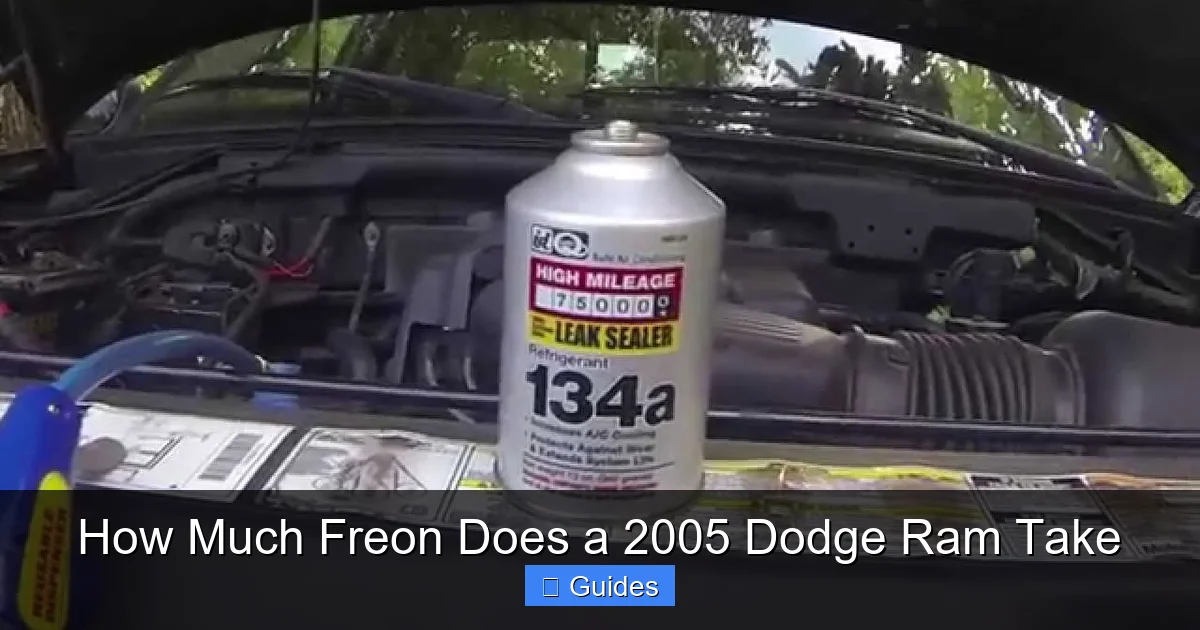
If you’ve confirmed that your truck needs a refrigerant recharge and there are no major leaks, you can proceed with adding R-134a. While it’s possible to do this yourself, it requires caution and the right tools. Here’s a step-by-step guide:
Tools and Materials You’ll Need
- R-134a refrigerant (in cans with built-in hoses and gauges, or a recharge kit)
- Manifold gauge set (recommended for accuracy)
- Safety goggles and gloves
- UV dye (optional, for leak detection)
- Vacuum pump (if evacuating the system)
- Refrigerant identifier (to ensure you’re using the correct type)
Step-by-Step Recharging Process
1. Safety First: Always wear safety goggles and gloves. Refrigerant can cause frostbite if it contacts skin, and inhaling fumes is dangerous. Work in a well-ventilated area, preferably outdoors.
2. Locate the Service Ports: The low-pressure service port is usually on the suction line near the compressor—larger diameter, with a blue or black cap. The high-pressure port is smaller, near the condenser, with a red cap. Only connect to the low-pressure port when recharging.
3. Check the System: Start the engine and turn the AC to max cool, max fan, and recirculate mode. Let it run for 5–10 minutes to stabilize pressure.
4. Connect the Gauge or Recharge Hose: Attach the hose from your recharge can or manifold gauge to the low-pressure port. If using a gauge set, connect both high and low sides to monitor pressures.
5. Add Refrigerant Slowly: Open the valve on the refrigerant can and allow it to flow into the system. Shake the can occasionally to ensure even flow. Watch the pressure gauge—stop when the low side reads 25–35 psi and the high side is within 150–250 psi.
6. Monitor Performance: Feel the air from the vents. It should be noticeably colder within a few minutes. If not, there may be a blockage or another issue.
7. Disconnect and Recap: Once the system is properly charged, close the valve, disconnect the hose, and replace the service port cap.
Important Tips for DIY Recharging
- Never charge the system while the engine is off—this can cause liquid refrigerant to enter the compressor, leading to damage.
- Don’t overfill. It’s better to add refrigerant in small increments and check pressure frequently.
- If the system won’t hold pressure or won’t accept refrigerant, there’s likely a leak or blockage that needs professional attention.
- Always use a refrigerant identifier to confirm you’re using R-134a. Using the wrong type can destroy the system.
When to Call a Professional
While DIY recharging is possible, there are situations where it’s best to leave it to the experts. If you’re not comfortable working with pressurized systems, or if your truck has a history of AC problems, a certified technician can ensure the job is done safely and correctly.
Professionals have access to advanced tools like electronic leak detectors, vacuum pumps, and recovery machines that safely remove old refrigerant. They can also perform a full system inspection, replace worn components, and ensure the correct oil balance.
Additionally, if your 2005 Dodge Ram has a dual-zone climate control system or rear AC, the charging process may be more complex. These systems often require precise calibration and may have separate service ports.
Finally, if you’ve recharged the system multiple times and the AC still doesn’t work, there’s likely an underlying issue—like a failing compressor, clogged expansion valve, or electrical problem—that requires professional diagnosis.
Maintaining Your AC System for Long-Term Performance
Recharging your AC is just one part of keeping it in top shape. Regular maintenance can prevent future issues and extend the life of your system. Here are some tips:
- Run the AC Regularly: Even in winter, run the AC for 10–15 minutes every few weeks to keep seals lubricated and prevent leaks.
- Replace the Cabin Air Filter: A clogged filter restricts airflow, reducing cooling efficiency. Replace it every 12,000 to 15,000 miles.
- Inspect Belts and Hoses: Check the AC compressor belt for cracks or wear, and inspect hoses for leaks or bulges.
- Clean the Condenser: Use a garden hose to gently clean debris from the condenser fins. Avoid high-pressure washers, which can bend the fins.
- Schedule Annual Inspections: Have a technician check your AC system once a year, especially before summer.
Conclusion
So, how much Freon does a 2005 Dodge Ram take? The answer is typically 24 to 28 ounces of R-134a, with some variations based on engine size and configuration. But knowing the right amount is only half the battle—you also need to understand how to safely recharge the system, recognize signs of low refrigerant, and maintain your AC for long-term performance.
Whether you’re tackling the job yourself or consulting a professional, proper AC maintenance ensures your 2005 Dodge Ram stays cool and comfortable, no matter how hot it gets outside. With the right tools, knowledge, and a little caution, you can keep your truck’s air conditioning running smoothly for years to come.
Frequently Asked Questions
How do I know if my 2005 Dodge Ram needs more Freon?
If the air from the vents isn’t as cold as it used to be, takes longer to cool the cabin, or you hear hissing sounds, your AC may be low on refrigerant. Always check for leaks before recharging.
Can I use R-1234yf in my 2005 Dodge Ram?
No, the 2005 Dodge Ram is designed for R-134a. Using R-1234yf without a professional retrofit can damage the system and void warranties.
Is it safe to recharge my AC myself?
Yes, if you follow safety procedures and use the right tools. However, if you’re unsure or the system has leaks, it’s best to consult a professional.
How often should I recharge my AC?
Refrigerant shouldn’t need regular recharging unless there’s a leak. If your AC is low, find and fix the leak first.
What happens if I overfill the AC system?
Overfilling can increase pressure, strain the compressor, reduce cooling efficiency, and potentially cause system failure.
Where is the low-pressure service port on a 2005 Dodge Ram?
It’s usually a larger diameter line near the compressor with a blue or black cap. Always charge through the low-pressure port, not the high-pressure one.

At CarLegit, we believe information should be clear, factual, and genuinely helpful. That’s why every guide, review, and update on our website is created with care, research, and a strong focus on user experience.