
If your Chrysler 300’s ABS light is on, it doesn’t always mean a major repair is needed. This guide walks you through simple fixes like checking fuses and sensors, resetting the system, and knowing when to seek professional help—so you can drive with confidence again.
In This Article
- 1 Key Takeaways
- 2 📑 Table of Contents
- 3 Why Is the ABS Light On in Your Chrysler 300?
- 4 Common Causes of the ABS Light in a Chrysler 300
- 5 How to Diagnose the ABS Light on a Chrysler 300
- 6 How to Turn Off the ABS Light on a Chrysler 300
- 7 Preventing Future ABS Light Issues
- 8 When to Seek Professional Help
- 9 Conclusion
- 10 Frequently Asked Questions
- 10.1 Can I drive my Chrysler 300 with the ABS light on?
- 10.2 Will disconnecting the battery turn off the ABS light?
- 10.3 How much does it cost to fix an ABS light on a Chrysler 300?
- 10.4 Can a bad battery cause the ABS light to come on?
- 10.5 How often should I check my brake fluid?
- 10.6 Do I need a special scanner to read ABS codes?
Key Takeaways
- Understand what the ABS light means: It signals an issue with the anti-lock braking system, which helps prevent wheel lockup during hard braking.
- Check simple causes first: Loose gas caps, low brake fluid, or a blown fuse can trigger the light—don’t overlook the basics.
- Use an OBD2 scanner for diagnostics: Most modern Chrysler 300 models allow you to read ABS codes with a compatible scanner.
- Inspect wheel speed sensors: Dirt, damage, or misalignment can cause false readings and trigger the light.
- Reset the system after repairs: Once the issue is fixed, use a scanner or battery reset to clear the warning light.
- Know when to visit a mechanic: If the light stays on after troubleshooting, there may be a deeper electrical or hydraulic problem.
- Regular maintenance prevents issues: Keep sensors clean and brake fluid topped off to avoid future ABS warnings.
📑 Table of Contents
Why Is the ABS Light On in Your Chrysler 300?
You’re driving down the highway in your sleek Chrysler 300, enjoying the smooth ride and quiet cabin—when suddenly, a yellow or amber light flashes on your dashboard. It’s the ABS light. Your heart skips a beat. Is it serious? Should you pull over? Can you still drive safely?
The good news is that while the ABS light shouldn’t be ignored, it doesn’t always mean your brakes are failing. The anti-lock braking system (ABS) is designed to prevent your wheels from locking up during sudden stops, especially on wet or slippery roads. When the ABS light comes on, it means the system has detected a fault and has temporarily disabled itself to avoid unsafe operation. But that doesn’t mean your regular brakes are out—they still work. You just lose the added safety of anti-lock functionality.
So, how do you turn off the ABS light on a Chrysler 300? The answer depends on what’s causing it in the first place. In many cases, the fix is simpler than you think. From loose connections to dirty sensors, we’ll walk you through the most common causes and show you step-by-step how to resolve them. Whether you’re a DIY enthusiast or just want to understand what’s happening under the hood, this guide will help you get that light off and your peace of mind back.
Common Causes of the ABS Light in a Chrysler 300
Before you can turn off the ABS light, you need to know why it’s on. The ABS system in your Chrysler 300 relies on a network of sensors, wiring, and hydraulic components working together. If any part of that system fails or sends an incorrect signal, the onboard computer will trigger the warning light. Let’s look at the most frequent culprits.
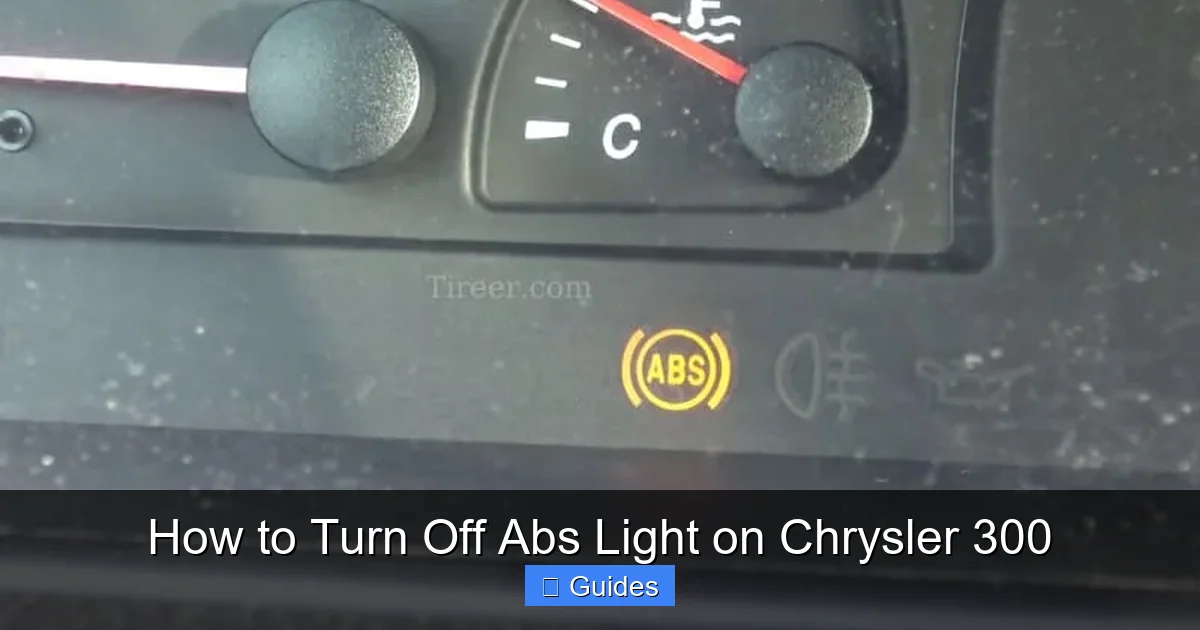
Visual guide about How to Turn Off Abs Light on Chrysler 300
Image source: tireer.com
Faulty Wheel Speed Sensors
Each wheel on your Chrysler 300 has a speed sensor that monitors how fast the wheel is rotating. These sensors send real-time data to the ABS control module. If one sensor fails—due to dirt, damage, or electrical issues—the system can’t accurately determine wheel speed. This mismatch triggers the ABS light.
For example, if the sensor on your front passenger wheel gets coated in mud or salt during winter driving, it might stop sending a signal. The ABS module thinks that wheel has locked up, even when it hasn’t. Result? The light comes on.
Low Brake Fluid Level
Your brake fluid reservoir is located under the hood, usually near the firewall on the driver’s side. The ABS system uses brake fluid to modulate pressure during hard braking. If the fluid level drops too low—often due to worn brake pads or a leak—the system may detect a pressure imbalance and activate the warning light.
Check the reservoir regularly. If it’s below the “MIN” line, top it off with the correct DOT 3 or DOT 4 fluid specified in your owner’s manual. But be cautious: low fluid could also mean your brake pads are worn and need replacement.
Blown Fuse or Bad Relay
The ABS system is powered by fuses and relays in the fuse box. A blown fuse can cut power to the ABS module, causing the light to illuminate. This is one of the easiest fixes—if you know where to look.
In most Chrysler 300 models, the ABS fuse is located in the Power Distribution Center (PDC) under the hood. It’s usually labeled “ABS” or “EBCM” (Electronic Brake Control Module). Use your owner’s manual to locate the exact fuse. If it’s blown, replace it with one of the same amperage. But if it blows again soon after, there’s likely an underlying electrical issue.
Loose or Corroded Wiring
Over time, wiring harnesses can become loose, frayed, or corroded—especially near the wheels where they’re exposed to road debris and moisture. A poor connection between a wheel sensor and the ABS module can cause intermittent signals, leading to false warnings.
Inspect the wiring near each wheel, particularly after hitting a pothole or driving through deep water. Look for cracked insulation, loose connectors, or green corrosion. Reconnect or replace damaged wires as needed.
Faulty ABS Control Module
The ABS control module is the brain of the system. It processes data from the wheel sensors and controls the hydraulic valves during braking. If the module fails—due to water damage, overheating, or internal electrical faults—it may not function properly, triggering the light.
This is a more serious issue and often requires professional diagnosis. In some cases, the module can be repaired or reprogrammed. In others, it needs replacement, which can be costly but necessary for full ABS functionality.
Worn Brake Pads or Rotors
While not directly part of the ABS system, worn brake components can indirectly cause the light to come on. For instance, if your brake pads are extremely thin, the caliper piston extends further, which can affect brake fluid levels and pressure. This may confuse the ABS module.
Regular brake inspections can prevent this. If your brakes are squeaking, grinding, or pulling to one side, have them checked immediately. Replacing pads and rotors not only improves safety but may also resolve ABS-related issues.
How to Diagnose the ABS Light on a Chrysler 300
Now that you know the possible causes, it’s time to figure out which one is affecting your Chrysler 300. Diagnosing the issue correctly is the first step toward turning off the ABS light for good. Here’s how to do it safely and effectively.

Visual guide about How to Turn Off Abs Light on Chrysler 300
Image source: carscounsel.com
Step 1: Use an OBD2 Scanner
The most reliable way to diagnose an ABS issue is with an OBD2 (On-Board Diagnostics) scanner. Modern Chrysler 300 models (2005 and newer) store trouble codes in the ABS module that can be read with a compatible scanner.
You’ll need a scanner that supports ABS codes—not all basic OBD2 tools do. Look for one labeled “ABS/SRS” or “full system scan.” Plug it into the OBD2 port, usually located under the dashboard near the steering column. Turn the ignition to “ON” (don’t start the engine), and follow the scanner’s prompts to read the codes.
Common ABS codes for Chrysler 300 include:
- C0221: Right Front Wheel Speed Sensor Circuit
- C0222: Left Front Wheel Speed Sensor Circuit
- C0223: Right Rear Wheel Speed Sensor Circuit
- C0224: Left Rear Wheel Speed Sensor Circuit
- C1234: Wheel Speed Sensor Signal Missing
These codes tell you exactly which sensor or circuit is malfunctioning. Once you know the source, you can focus your repair efforts.
Step 2: Visual Inspection
Even without a scanner, you can perform a basic visual check. Start by inspecting the wheel speed sensors. They’re usually mounted near the wheel hub and connected to a wiring harness. Look for:
- Cracked or broken sensor housing
- Loose or disconnected wiring
- Excessive dirt, grease, or rust buildup
- Damaged tone rings (the toothed ring the sensor reads from)
If you see any of these issues, cleaning or replacing the sensor may solve the problem. For example, a sensor caked with mud can be cleaned with brake cleaner and a soft brush. If the tone ring is cracked or missing teeth, it may need replacement—a job best left to a mechanic.
Step 3: Check Brake Fluid and Fuses
Pop the hood and locate the brake fluid reservoir. Check the level—it should be between the “MIN” and “MAX” lines. If it’s low, top it off with the correct fluid type. Also, inspect the reservoir cap for cracks or leaks.
Next, locate the fuse box under the hood. Find the ABS fuse (usually 20A or 30A) and check if it’s blown. A blown fuse often looks dark or has a broken filament. Replace it with an identical fuse. If it blows again, there’s likely a short circuit—don’t keep replacing it without diagnosing the root cause.
Step 4: Test Drive and Monitor
After performing any repairs, take your Chrysler 300 for a short test drive. Drive at varying speeds and apply the brakes gently and firmly. Watch the dashboard to see if the ABS light comes back on.
If the light stays off, great! You’ve likely resolved the issue. But if it returns, the problem may be intermittent or more complex. In that case, it’s time to dig deeper or consult a professional.
How to Turn Off the ABS Light on a Chrysler 300
Once you’ve identified and fixed the underlying issue, the next step is to turn off the ABS light. Simply fixing the problem won’t always clear the warning—your car’s computer needs to be reset. Here are the most effective methods.
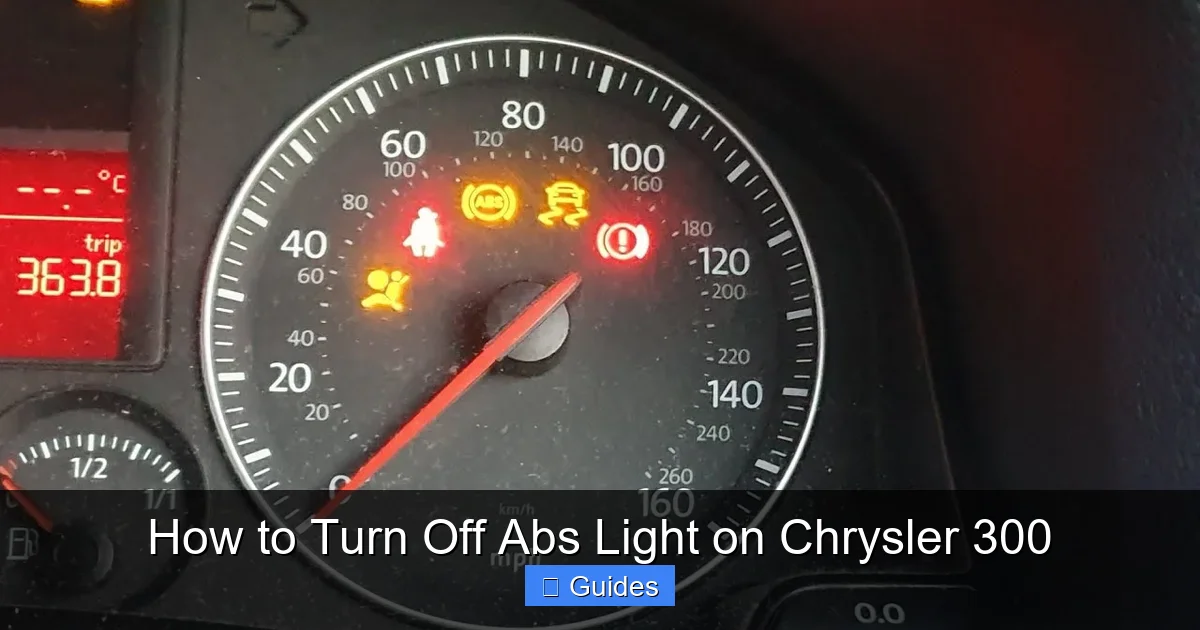
Visual guide about How to Turn Off Abs Light on Chrysler 300
Image source: i.ytimg.com
Method 1: Use an OBD2 Scanner to Clear Codes
The easiest and most reliable way to turn off the ABS light is by using an OBD2 scanner. After repairing the issue (e.g., replacing a sensor or topping off fluid), plug in your scanner and follow these steps:
- Turn the ignition to “ON” (engine off).
- Navigate to the “Clear Codes” or “Erase DTCs” option on the scanner.
- Confirm the action. The scanner will reset the ABS module.
- Turn off the ignition and restart the car.
The ABS light should now be off. If it comes back on immediately, the problem wasn’t fully resolved—double-check your repair.
Method 2: Disconnect the Battery
If you don’t have a scanner, you can try resetting the system by disconnecting the battery. This method works by cutting power to the ABS module, forcing it to reboot.
Here’s how:
- Turn off the engine and remove the key.
- Locate the negative (-) battery terminal.
- Use a wrench to loosen the clamp and disconnect the cable.
- Wait at least 15 minutes (this allows capacitors to discharge).
- Reconnect the cable and tighten the clamp.
- Start the car and check if the ABS light is off.
Note: This method may also reset other systems (radio, clock, etc.), so be prepared to reprogram them. Also, it doesn’t always work for ABS codes—some require a scanner.
Method 3: Drive Cycle Reset
In some cases, the ABS light will turn off on its own after a few drive cycles—especially if the issue was temporary (like a loose connection that reseated itself). A drive cycle involves driving at various speeds and braking conditions to allow the system to retest itself.
Try this:
- Drive at 20–30 mph and apply the brakes firmly (but safely).
- Accelerate to 50 mph and brake again.
- Repeat 3–5 times over 10–15 minutes.
If the light turns off, the system has confirmed normal operation. But if it stays on, a manual reset is needed.
Method 4: Visit a Mechanic or Dealership
If none of the above methods work, or if you’re uncomfortable performing diagnostics yourself, take your Chrysler 300 to a qualified mechanic or Chrysler dealership. They have advanced diagnostic tools (like the Chrysler WiTECH system) that can read and clear ABS codes more thoroughly.
They can also perform a full system check, including hydraulic pressure tests and module diagnostics. While this option costs more, it ensures the problem is fully resolved.
Preventing Future ABS Light Issues
Once you’ve turned off the ABS light, you’ll want to keep it off. Regular maintenance and smart driving habits can prevent many common causes of ABS warnings. Here’s how to protect your system.
Keep Wheel Sensors Clean
Dirt, salt, and debris can build up on wheel speed sensors, especially in winter. Every few months, inspect the sensors and clean them with brake cleaner and a soft brush. Avoid pressure washing directly at the sensors, as high-pressure water can damage seals.
Check Brake Fluid Regularly
Brake fluid absorbs moisture over time, which can corrode internal components. Check the fluid level monthly and top it off if needed. Also, have the fluid changed every 2–3 years or as recommended in your owner’s manual.
Inspect Brakes During Tire Rotations
Whenever you rotate your tires, take a moment to inspect the brake pads, rotors, and calipers. Look for uneven wear, cracks, or leaks. Addressing brake issues early prevents secondary problems like low fluid or sensor interference.
Avoid Deep Water and Potholes
Driving through deep puddles or hitting potholes can damage sensors, wiring, or tone rings. If you must drive through water, go slowly to minimize splash. Afterward, check for signs of damage.
Use Quality Replacement Parts
If you need to replace a sensor or fuse, use OEM (Original Equipment Manufacturer) or high-quality aftermarket parts. Cheap sensors may fail quickly or send inaccurate signals, leading to repeated ABS warnings.
When to Seek Professional Help
While many ABS issues can be fixed at home, some problems require expert attention. Here’s when you should call a mechanic:
- The ABS light comes back on after clearing it.
- You hear unusual noises (grinding, clicking) from the brakes.
- The brake pedal feels spongy or sinks to the floor.
- Multiple warning lights are on (ABS, brake, traction control).
- You’re unable to read or clear codes with a scanner.
These signs could indicate a failing ABS module, hydraulic leak, or electrical fault that needs professional diagnosis and repair. Ignoring them could compromise braking performance and safety.
Conclusion
Seeing the ABS light on your Chrysler 300 can be unsettling, but it’s often a solvable issue. By understanding the common causes—like faulty sensors, low brake fluid, or blown fuses—you can take the right steps to diagnose and fix the problem. Using an OBD2 scanner is the most effective way to pinpoint the issue and clear the warning light afterward.
Remember, the ABS light doesn’t mean your brakes are broken—just that the anti-lock system is temporarily disabled. You can still drive safely, but it’s best to address the issue promptly. With regular maintenance and a little know-how, you can keep your Chrysler 300 running smoothly and confidently, mile after mile.
Frequently Asked Questions
Can I drive my Chrysler 300 with the ABS light on?
Yes, you can drive, but with caution. Your regular brakes still work, but the anti-lock function is disabled. Avoid hard braking, especially on wet or slippery roads, and get the issue checked as soon as possible.
Will disconnecting the battery turn off the ABS light?
It might, but it’s not guaranteed. Disconnecting the battery can reset some systems, but ABS codes often require a scanner to clear. It’s a temporary fix and may not work for persistent issues.
How much does it cost to fix an ABS light on a Chrysler 300?
Costs vary. Simple fixes like fuses or fluid top-offs cost $10–$30. Replacing a wheel sensor ranges from $100–$300. A new ABS module can cost $500–$1,500, including labor.
Can a bad battery cause the ABS light to come on?
Yes, a weak or failing battery can cause voltage fluctuations that affect the ABS module. If the light comes on with other electrical issues, have your battery and alternator tested.
How often should I check my brake fluid?
Check it monthly. Also, inspect it during oil changes or tire rotations. Low or dirty fluid can trigger ABS warnings and affect braking performance.
Do I need a special scanner to read ABS codes?
Yes. Basic OBD2 scanners only read engine codes. You need one that supports ABS/SRS systems to access and clear anti-lock brake trouble codes.

At CarLegit, we believe information should be clear, factual, and genuinely helpful. That’s why every guide, review, and update on our website is created with care, research, and a strong focus on user experience.