
Seeing the “Service Electronic Stability Control” warning in your Dodge Charger can be alarming, but it’s often fixable with the right approach. This guide walks you through common causes, diagnostic steps, and proven fixes—from simple resets to sensor replacements—so you can resolve the issue safely and confidently.
In This Article
- 1 Key Takeaways
- 2 📑 Table of Contents
- 3 What Is Electronic Stability Control (ESC) in Your Dodge Charger?
- 4 Why Does the “Service Electronic Stability Control” Light Come On?
- 5 Step-by-Step Guide to Diagnosing the ESC Issue
- 6 DIY Fixes You Can Try at Home
- 7 When to Seek Professional Help
- 8 Preventing Future ESC Problems
- 9 Conclusion
- 10 Frequently Asked Questions
- 10.1 Can I drive my Dodge Charger with the ESC light on?
- 10.2 Will disconnecting the battery reset the ESC system?
- 10.3 How much does it cost to fix ESC in a Dodge Charger?
- 10.4 Is the ESC light related to the ABS system?
- 10.5 Can a bad alignment cause the ESC warning?
- 10.6 Do I need a special scanner for Dodge Charger ESC codes?
Key Takeaways
- Understand the ESC System: The Electronic Stability Control helps maintain vehicle stability during sudden maneuvers or slippery conditions by automatically applying brakes and reducing engine power.
- Common Causes Include Faulty Sensors: Wheel speed sensors, steering angle sensors, or yaw rate sensors are frequent culprits behind the warning light.
- Battery and Electrical Issues Matter: Low voltage, corroded connections, or a failing battery can trigger false ESC warnings even when the system is fine.
- Scan for Diagnostic Trouble Codes (DTCs): Use an OBD2 scanner to read specific error codes—this is the fastest way to pinpoint the root cause.
- Try a Simple Reset First: Sometimes, turning the car off and on or disconnecting the battery for 10–15 minutes can clear temporary glitches.
- Professional Help May Be Needed: If DIY steps don’t work, consult a certified mechanic—especially if ABS or traction control lights are also on.
- Prevent Future Issues: Regular maintenance, clean sensors, and timely battery checks can reduce the risk of recurring ESC problems.
📑 Table of Contents
What Is Electronic Stability Control (ESC) in Your Dodge Charger?
If you’ve ever driven your Dodge Charger through a sharp turn on wet pavement or hit a patch of ice and felt the car gently correct itself—thank the Electronic Stability Control (ESC) system. This advanced safety feature is designed to help you maintain control when your vehicle starts to lose traction or veer off its intended path. It works by monitoring steering input, wheel speed, and vehicle motion, then automatically applying brakes to individual wheels or reducing engine power to keep you stable.
In the Dodge Charger, ESC is integrated with other safety systems like ABS (Anti-lock Braking System) and traction control. When everything’s working properly, you’ll barely notice it—until something goes wrong. That’s when the dreaded “Service Electronic Stability Control” message pops up on your dashboard. It’s not just annoying; it’s a signal that your car’s ability to help you stay safe in critical moments may be compromised.
Understanding how ESC functions is the first step toward fixing it. The system relies on a network of sensors and modules that constantly communicate with each other. If one piece of the puzzle fails—even slightly—the entire system can go into protective mode, disabling itself and triggering the warning light. The good news? Most ESC issues in the Charger are repairable, and many don’t require a trip to the dealership.
Why Does the “Service Electronic Stability Control” Light Come On?
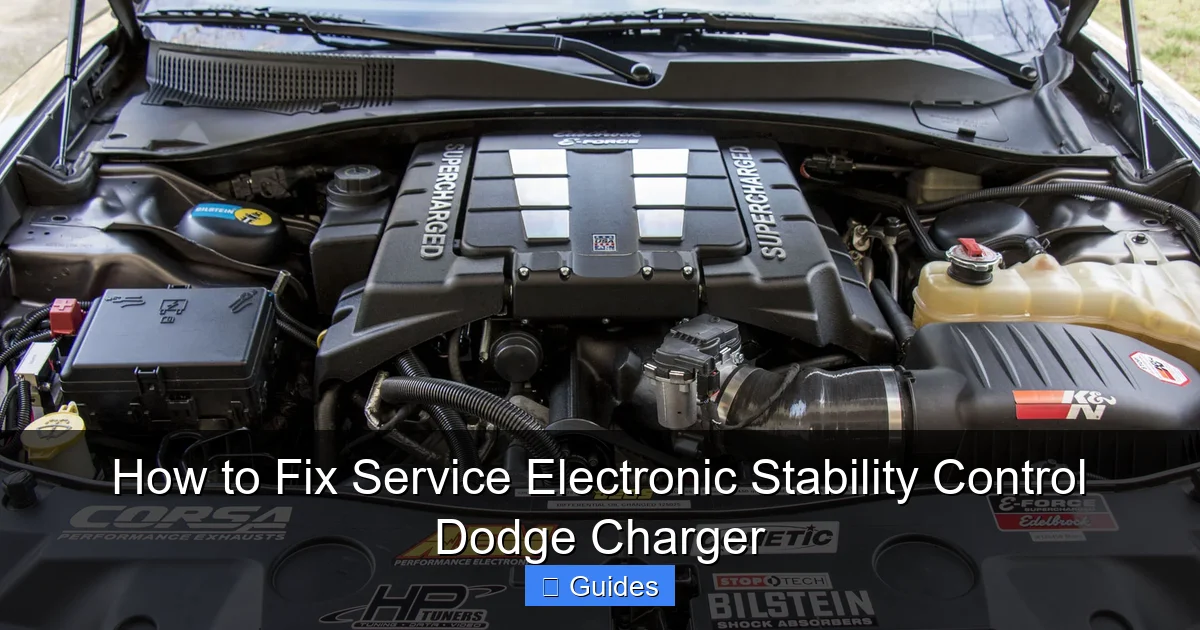
Visual guide about How to Fix Service Electronic Stability Control Dodge Charger
Image source: alcphoto.net
There’s no single reason why your Dodge Charger might display this warning—but there are several common culprits. Let’s break them down so you can start troubleshooting with confidence.
Faulty Wheel Speed Sensors
One of the most frequent causes is a malfunctioning wheel speed sensor. These small devices, located near each wheel hub, measure how fast each wheel is spinning. The ESC system uses this data to detect if one wheel is slipping or losing grip. If a sensor sends incorrect or no signal, the system assumes something’s wrong and shuts down.
For example, if your Charger has been driven through deep snow or mud, debris might have clogged the sensor or damaged its wiring. Even a small crack in the sensor housing can let moisture in, causing corrosion and signal loss. In older Chargers, wear and tear over time can also degrade sensor performance.
Steering Angle Sensor (SAS) Issues
The steering angle sensor tells the ESC system exactly how far and in what direction you’re turning the wheel. If this sensor is misaligned, dirty, or faulty, the system can’t accurately compare your intended direction with the car’s actual movement. This mismatch often triggers the warning light—even if everything else is fine.
A common scenario: after a wheel alignment or tire rotation, the SAS may need to be recalibrated. Many DIYers forget this step, leading to persistent ESC warnings. Some Chargers also have a “steering angle reset” procedure that can be done manually using the ignition cycle method.
Yaw Rate and Lateral Acceleration Sensor Problems
These sensors detect how the car is rotating (yaw) and moving side-to-side (lateral acceleration). They’re usually located under the center console or near the transmission tunnel. If they fail or lose calibration, the ESC system can’t accurately assess vehicle dynamics.
Water intrusion is a known issue in some Charger models—especially if the cabin has flooded or there’s a leak in the HVAC system. Moisture can short out these sensitive sensors, leading to false readings and system shutdown.
Low Battery Voltage or Electrical Glitches
Believe it or not, a weak battery can cause the ESC warning to appear. The Charger’s electrical system requires stable voltage to operate complex modules like the ESC control unit. If the battery is old, the alternator is failing, or there’s a poor ground connection, voltage drops can confuse the system.
We’ve seen cases where a Charger started fine but threw the ESC light within minutes of driving—only for it to disappear after replacing a 5-year-old battery. Corroded battery terminals or loose cables can also cause intermittent issues.
ABS Module or Hydraulic Faults
Since ESC relies on the ABS system to apply individual brakes, any problem with the ABS module, pump, or hydraulic lines can affect ESC functionality. A failing ABS pump motor or a stuck valve can prevent the system from responding correctly, triggering the warning.
In some cases, the issue is as simple as low brake fluid or air in the brake lines. But more serious problems—like internal module failure—may require professional diagnosis and repair.
Software Glitches or Module Communication Errors
Modern vehicles like the Charger use a network of computers that communicate over a CAN bus. If one module (like the ESC or ABS) fails to “talk” to others, the system may shut down as a safety precaution. This can happen due to software bugs, corrupted firmware, or communication line faults.
Sometimes, a simple software update from a dealership can resolve the issue—especially if your Charger is a few years old and hasn’t had recent recalls or updates.
Step-by-Step Guide to Diagnosing the ESC Issue
Visual guide about How to Fix Service Electronic Stability Control Dodge Charger
Image source: images.platforum.cloud
Before you start replacing parts or spending money at the shop, it’s crucial to diagnose the problem correctly. Here’s a practical, step-by-step approach you can follow at home or in your garage.
Step 1: Check for Other Warning Lights
First, look at your dashboard. Is the ABS light on? Is the traction control light flashing? If multiple lights are illuminated, it’s likely a shared system issue—like a faulty ABS module or low brake fluid. If only the ESC light is on, the problem might be more isolated.
Step 2: Use an OBD2 Scanner to Read Codes
This is the most important step. Plug a compatible OBD2 scanner into your Charger’s diagnostic port (usually under the dashboard near the steering column). Turn the ignition to “ON” (don’t start the engine) and let the scanner communicate with the vehicle.
Look for codes related to:
– C0241–C0245 (Wheel Speed Sensor faults)
– C1234–C1237 (Steering Angle Sensor issues)
– U0121 (Lost Communication with ABS Module)
– C0561 (System Disabled – often due to low voltage)
Write down all codes and research them using your scanner’s manual or online forums. Free tools like the Dodge-specific Tech Authority website or forums like ChargerForums.com can help interpret codes accurately.
Step 3: Inspect the Battery and Charging System
Grab a multimeter and check your battery voltage. With the engine off, it should read 12.4–12.7 volts. With the engine running, it should be 13.7–14.7 volts. If it’s lower, your alternator may not be charging properly.
Also, inspect the battery terminals for corrosion (white or green powder). Clean them with a wire brush and baking soda solution if needed. Tighten all connections firmly.
Step 4: Visually Inspect Sensors and Wiring
Lift your Charger safely using jack stands (never rely on just a jack). Check each wheel speed sensor for:
– Physical damage or cracks
– Loose or frayed wiring
– Dirt, mud, or metal shavings stuck near the sensor
Use a flashlight to look at the sensor mounting area. If it’s loose or wobbly, it may not be reading correctly. Also, check the steering column area for any signs of water damage or loose connectors related to the steering angle sensor.
Step 5: Test Sensor Resistance (Optional)
If you’re comfortable with basic electronics, you can test wheel speed sensors with a multimeter. Disconnect the sensor and measure resistance between its terminals. Most sensors should read between 800–2000 ohms. If it’s open (infinite resistance) or shorted (near zero), the sensor is likely bad.
Note: This test won’t catch all issues—some sensors fail only under certain conditions—but it’s a good starting point.
DIY Fixes You Can Try at Home
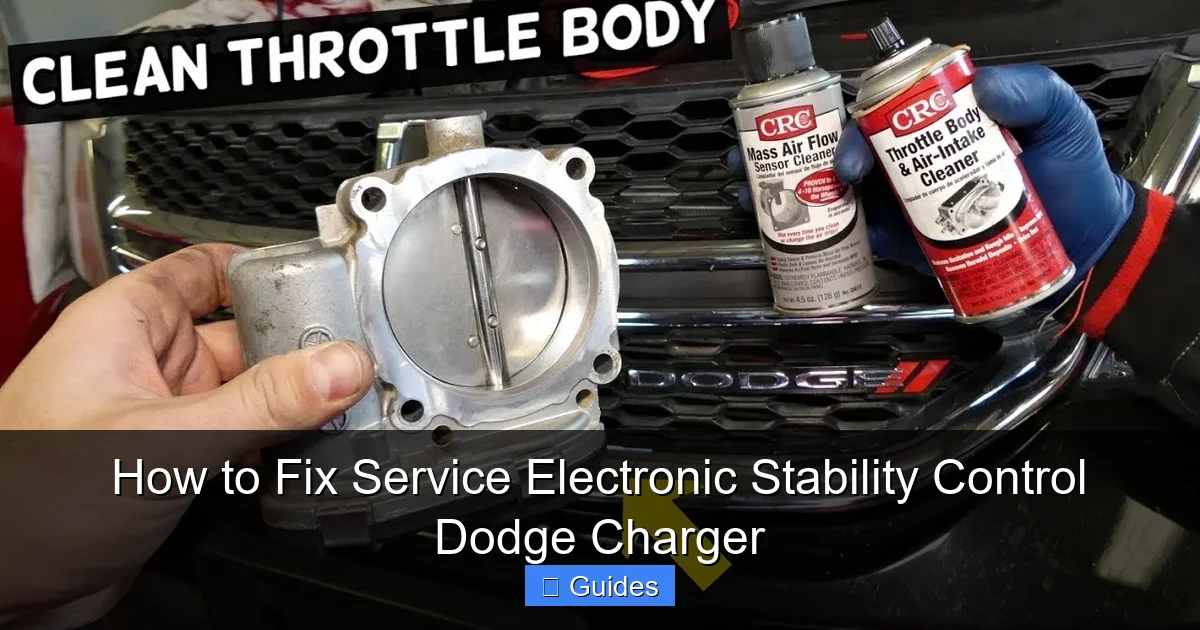
Visual guide about How to Fix Service Electronic Stability Control Dodge Charger
Image source: i.ytimg.com
Once you’ve diagnosed the issue, you may be able to fix it yourself—saving time and money. Here are proven DIY solutions for common ESC problems.
Fix #1: Reset the ESC System
Sometimes, the system just needs a fresh start. Try this simple reset:
1. Turn the ignition to “ON” (do not start the engine).
2. Press and hold the ESC button (usually near the gear shifter) for 5–10 seconds.
3. Release the button—you should hear a chime or see the light blink.
4. Turn the ignition off, wait 30 seconds, then restart the car.
If the light stays off, great! If it returns, move to the next step.
Fix #2: Recalibrate the Steering Angle Sensor
If your Charger had recent suspension work or wheel alignment, the SAS may need recalibration. Here’s a common method:
1. Start the car and let it idle for 10 seconds.
2. Turn the steering wheel fully left, then fully right, then return to center.
3. Drive straight for at least 20 feet at speeds over 15 mph.
4. The system should auto-calibrate. If not, repeat the process.
Some models require a scan tool for full calibration—check your owner’s manual or a repair guide.
Fix #3: Clean or Replace Wheel Speed Sensors
If a sensor is dirty or lightly corroded, cleaning it might help. Remove the sensor (usually held by one bolt), wipe it with brake cleaner, and inspect the tone ring (the toothed wheel it reads from). Make sure there’s no debris or damage.
If the sensor is cracked or shows no resistance, replace it. Sensors cost $30–$80 each and can be installed with basic tools. Always replace in pairs if both front or both rear sensors are faulty.
Fix #4: Address Battery and Electrical Issues
Replace a weak battery if it’s over 4 years old or fails a load test. Clean all ground connections—especially the main ground strap from the engine to the chassis. A poor ground can cause all sorts of electrical gremlins.
Also, check the alternator output. If it’s below 13.5 volts at idle, have it tested or replaced.
Fix #5: Top Off Brake Fluid and Bleed the System
Low brake fluid can trigger ABS and ESC warnings. Check the reservoir under the hood—it should be between “MIN” and “MAX.” If low, top it off with DOT 3 or DOT 4 fluid (check your owner’s manual).
If you suspect air in the lines (spongy brake pedal), bleed the brakes. This requires a helper and a brake bleeder kit, but it’s doable at home.
When to Seek Professional Help
While many ESC issues can be resolved DIY, some problems require specialized tools or expertise. Here’s when it’s time to visit a mechanic or dealership.
Persistent or Recurring Warnings
If the light keeps coming back after your fixes, there may be an intermittent fault—like a failing ABS module or internal wiring short. These issues often require advanced diagnostics.
Multiple System Failures
If ABS, traction control, and ESC lights are all on, the problem is likely in a shared component like the ABS hydraulic unit or main control module. These parts are expensive and complex to replace.
Software or Firmware Issues
Some ESC problems stem from outdated software. Dealerships have access to the latest updates and can reflash your Charger’s modules. This is especially common after recalls or model-year updates.
Safety Concerns
If you notice unusual braking behavior, loss of traction control, or the car pulling to one side, stop driving and get it checked immediately. ESC is a critical safety system—don’t ignore it.
Preventing Future ESC Problems
An ounce of prevention is worth a pound of cure. Here’s how to keep your Charger’s ESC system running smoothly.
Regular Maintenance Checks
Include ESC-related components in your routine maintenance:
– Inspect wheel speed sensors during tire rotations
– Check brake fluid level every oil change
– Test battery and alternator annually
Keep Sensors Clean
After driving in mud, snow, or salt, rinse under the wheel wells to remove debris that could damage sensors.
Avoid Water Intrusion
Check for leaks around the windshield, sunroof, and HVAC system. Water in the cabin can ruin sensitive electronics.
Use Quality Parts
If replacing sensors or modules, choose OEM or high-quality aftermarket parts. Cheap sensors often fail prematurely.
Stay Updated
Check for technical service bulletins (TSBs) or recalls related to ESC on your Charger model. Dealerships can perform free updates if applicable.
Conclusion
The “Service Electronic Stability Control” warning in your Dodge Charger doesn’t have to be a nightmare. With the right knowledge and tools, you can often diagnose and fix the issue yourself—whether it’s a dirty sensor, a weak battery, or a simple reset. Start with an OBD2 scan, check the basics, and work your way up. And remember: when in doubt, consult a professional. Your safety—and your Charger’s performance—are worth it.
By understanding how ESC works and staying proactive with maintenance, you’ll spend less time worrying about warning lights and more time enjoying the thrill of driving America’s favorite muscle car.
Frequently Asked Questions
Can I drive my Dodge Charger with the ESC light on?
You can drive short distances, but it’s not recommended. The ESC system helps maintain stability in emergencies, so driving without it increases the risk of skidding or losing control—especially in wet or icy conditions.
Will disconnecting the battery reset the ESC system?
Yes, disconnecting the battery for 10–15 minutes can reset the system and clear temporary glitches. However, if the underlying issue isn’t fixed, the light will likely return.
How much does it cost to fix ESC in a Dodge Charger?
Costs vary: a wheel speed sensor replacement may cost $100–$200 parts and labor, while an ABS module repair can exceed $1,000. DIY fixes can save significant money.
Yes, they’re closely linked. The ESC system uses ABS components to apply brakes. If the ABS light is also on, the problem is likely in a shared part like the ABS module or sensors.
Can a bad alignment cause the ESC warning?
Indirectly, yes. If the steering angle sensor isn’t recalibrated after an alignment, it can send incorrect data to the ESC system, triggering the warning light.
Do I need a special scanner for Dodge Charger ESC codes?
A standard OBD2 scanner can read basic codes, but for full diagnostics—especially ABS and ESC-specific data—a professional-grade scanner or dealership tool may be needed.

At CarLegit, we believe information should be clear, factual, and genuinely helpful. That’s why every guide, review, and update on our website is created with care, research, and a strong focus on user experience.