
The GMC Terrain is designed to run efficiently on regular unleaded gasoline with an octane rating of 87 or higher. While premium fuel isn’t required, using it occasionally may offer minor performance benefits in certain driving conditions.
If you’re a proud owner of a GMC Terrain—or thinking about becoming one—you’ve probably asked yourself: “What kind of gas does a GMC Terrain take?” It’s a smart question. After all, fuel isn’t just fuel. The type you choose can affect your SUV’s performance, fuel economy, and even how long your engine lasts. Whether you’re cruising down the highway, hauling gear for a weekend adventure, or just commuting to work, knowing the right fuel for your Terrain ensures you get the most out of every mile.
The good news? GMC has made things pretty straightforward. Most Terrain models are designed to run efficiently on regular unleaded gasoline. That means you don’t need to hunt down premium fuel every time you stop at the pump—unless you want to. But there’s more to the story. Depending on your model year, engine size, and driving habits, your fuel choices might vary slightly. In this guide, we’ll break down everything you need to know about fueling your GMC Terrain, from octane ratings to ethanol blends, and even tips to keep your engine running smoothly for years to come.
In This Article
- 1 Key Takeaways
- 2 📑 Table of Contents
- 3 Understanding Octane Ratings and Why They Matter
- 4 Fuel Recommendations by GMC Terrain Model Year
- 5 Top-Tier Gasoline: Why It’s Worth the Extra Care
- 6 Driving Habits and Fuel Efficiency Tips
- 7 Long-Term Fueling Strategies for Terrain Owners
- 8 Environmental and Cost Considerations
- 9 Conclusion: Fuel Smart, Drive Happy
- 10 Frequently Asked Questions
- 10.1 Can I use 89 octane gas in my GMC Terrain?
- 10.2 Will using premium gas improve my Terrain’s fuel economy?
- 10.3 Is it bad to mix different octane fuels?
- 10.4 Can I use E85 in my GMC Terrain?
- 10.5 What happens if I accidentally put diesel in my Terrain?
- 10.6 How often should I use a fuel system cleaner?
Key Takeaways
- Regular unleaded gasoline (87 octane) is recommended: Most GMC Terrain models are engineered to run optimally on standard fuel, making it cost-effective and widely available.
- Premium fuel is optional, not required: Using 91–93 octane fuel may slightly improve performance in high-load situations but won’t damage the engine if avoided.
- Avoid E85 unless your model is Flex Fuel capable: Only specific Terrain trims support E85 ethanol blends; using it in non-Flex Fuel models can harm the engine.
- Fuel quality matters more than brand: Choose top-tier detergent gasoline to reduce carbon buildup and maintain long-term engine health.
- Model year and engine type affect fuel needs: Turbocharged engines (like the 2.0L) may benefit more from higher-octane fuel under heavy use.
- Proper fueling habits improve longevity: Keep the tank above ¼ full, avoid topping off, and use a fuel stabilizer if storing the vehicle long-term.
- Check your owner’s manual for specifics: Always refer to your vehicle’s manual for the most accurate and up-to-date fuel recommendations.
📑 Table of Contents
- Understanding Octane Ratings and Why They Matter
- Fuel Recommendations by GMC Terrain Model Year
- Top-Tier Gasoline: Why It’s Worth the Extra Care
- Driving Habits and Fuel Efficiency Tips
- Long-Term Fueling Strategies for Terrain Owners
- Environmental and Cost Considerations
- Conclusion: Fuel Smart, Drive Happy
Understanding Octane Ratings and Why They Matter
When you pull up to the gas pump, you’ll usually see three options: regular (87 octane), mid-grade (89 octane), and premium (91–93 octane). But what do these numbers actually mean? And how do they affect your GMC Terrain?
Octane rating measures a fuel’s ability to resist “knocking” or “pinging” during combustion—unwanted engine noise that can damage internal components over time. Higher octane fuels are more resistant to this knocking, which is why high-performance or turbocharged engines often recommend or require premium fuel.
For the GMC Terrain, the standard recommendation is 87 octane regular unleaded gasoline. This is true for the majority of models, especially those equipped with the 1.5L or 1.6L turbocharged four-cylinder engines. These engines are designed with knock sensors that adjust timing to prevent issues, even if you occasionally use lower-octane fuel.
That said, if you frequently drive in hot weather, tow heavy loads, or drive aggressively, you might notice a slight improvement in responsiveness and smoothness with 89 or 91 octane fuel. It won’t hurt your engine—but it’s not required. Think of premium fuel like a performance boost, not a necessity.
Can You Use Premium Gas in a GMC Terrain?
Yes, absolutely. Using premium fuel in your Terrain won’t cause any harm. In fact, some drivers report a smoother idle or slightly better throttle response when using higher-octane gasoline. However, unless your owner’s manual specifically recommends it, you won’t see a significant increase in fuel economy or horsepower.
GMC engineers design the Terrain’s engine to operate efficiently on regular fuel. The engine management system automatically adjusts to the fuel you use. So, while premium gas might feel a little peppier under hard acceleration, the difference is often subtle—and not worth the extra cost for everyday driving.
One exception? If you have a 2.0L turbocharged engine (available in certain model years), you might benefit from premium fuel during high-demand situations. These engines produce more power and operate under higher pressures, so using 91 octane can help prevent knocking and maintain peak performance. But again, it’s optional, not mandatory.
What Happens If You Use the Wrong Octane?
Using lower-octane fuel than recommended (like putting 87 in a vehicle that requires 91) can lead to engine knocking, reduced performance, and in extreme cases, long-term damage. But for the GMC Terrain, which is designed for 87 octane, you’re safe using regular fuel—even if it’s the only option at a rural gas station.
On the flip side, using higher-octane fuel than needed won’t damage your engine. It just might cost you more at the pump with little to no benefit. So unless you’re pushing your Terrain to its limits—like towing a trailer up a mountain pass—stick with regular unleaded.
Fuel Recommendations by GMC Terrain Model Year

Visual guide about What Kind of Gas Does a Gmc Terrain Take
Image source: i0.wp.com
Fuel requirements can vary slightly depending on when your GMC Terrain was made and what engine it has. Let’s break it down by model year and engine type so you know exactly what to look for.
2010–2017 GMC Terrain (First Generation)
The first-generation Terrain came with two engine options: a 2.4L four-cylinder and a 3.6L V6. Both were designed to run on regular unleaded gasoline with an octane rating of 87. The 3.6L V6 offered more power and towing capacity, but it didn’t require premium fuel. GMC even stated that using higher-octane fuel wouldn’t improve performance or fuel economy in these models.
One thing to note: early 2010 models had some reports of carbon buildup on intake valves due to direct fuel injection. Using a top-tier detergent gasoline (more on that later) can help reduce this issue.
2018–2024 GMC Terrain (Second Generation)
The second-generation Terrain introduced more efficient turbocharged engines, including the 1.5L and 2.0L four-cylinders. These engines are more advanced and responsive, but still designed for 87 octane regular fuel.
The 1.5L engine is the most common and is optimized for everyday driving. It delivers a good balance of power and fuel economy, and GMC confirms it runs best on regular unleaded.
The 2.0L turbocharged engine, available in higher trims like the SLT and Denali, produces up to 252 horsepower. While it can benefit from premium fuel during spirited driving or towing, it’s not required. The engine’s knock sensors and advanced timing controls allow it to adapt to regular fuel without issue.
Flex Fuel Capability: Can You Use E85?
Some GMC Terrain models—particularly those from 2010–2017 with the 3.6L V6—are Flex Fuel capable. This means they can run on E85, a blend of up to 85% ethanol and 15% gasoline.
If your Terrain is Flex Fuel, you’ll see a yellow gas cap or a badge on the fuel door. You can safely use E85, regular gasoline, or any blend in between. However, E85 typically offers lower fuel economy (about 15–30% less) due to ethanol’s lower energy content.
Important: If your Terrain is not Flex Fuel capable, do not use E85. Ethanol can damage fuel lines, seals, and injectors in non-Flex Fuel engines. Always check your owner’s manual or the gas cap to confirm compatibility.
Top-Tier Gasoline: Why It’s Worth the Extra Care
Visual guide about What Kind of Gas Does a Gmc Terrain Take
Image source: ksa.carsprite.com
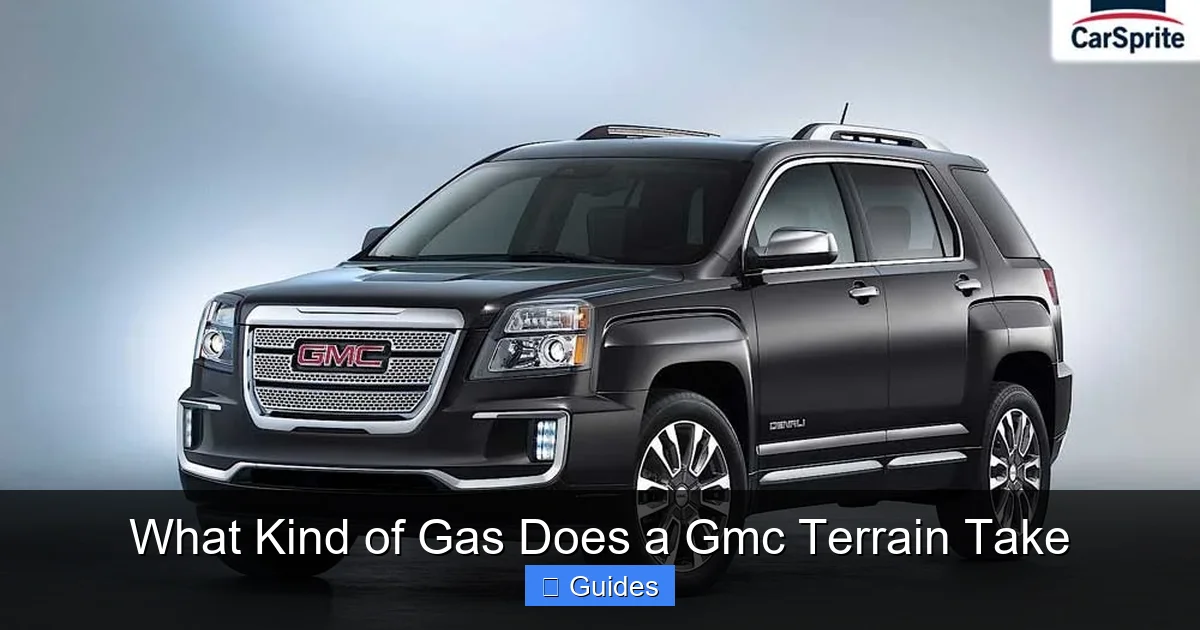
You might not think much about the brand of gas you buy, but the quality of detergent additives can make a real difference in your engine’s health. That’s where “Top-Tier” gasoline comes in.
Top-Tier is a voluntary certification program created by automakers—including GM—to ensure gasoline contains higher levels of detergent additives. These additives help prevent carbon buildup on intake valves and fuel injectors, which can lead to rough idling, reduced performance, and lower fuel economy over time.
GMC recommends using Top-Tier detergent gasoline whenever possible. Brands like Shell, Chevron, Exxon, Mobil, and Costco (in select regions) meet Top-Tier standards. You don’t need to stick to one brand forever, but choosing Top-Tier fuel regularly can help keep your Terrain running smoothly.
How to Identify Top-Tier Gas Stations
Look for the Top-Tier logo on the pump or station signage. It’s usually a small badge or sticker. You can also check the official Top-Tier website (toptiergas.com) for a list of participating retailers.
Even if you’re not near a Top-Tier station, don’t panic. Most major brands still use adequate detergent levels. But if you’re filling up in a rural area or using discount stations frequently, consider adding a fuel system cleaner every few thousand miles to compensate.
Driving Habits and Fuel Efficiency Tips
Visual guide about What Kind of Gas Does a Gmc Terrain Take
Image source: autoalmanac.com
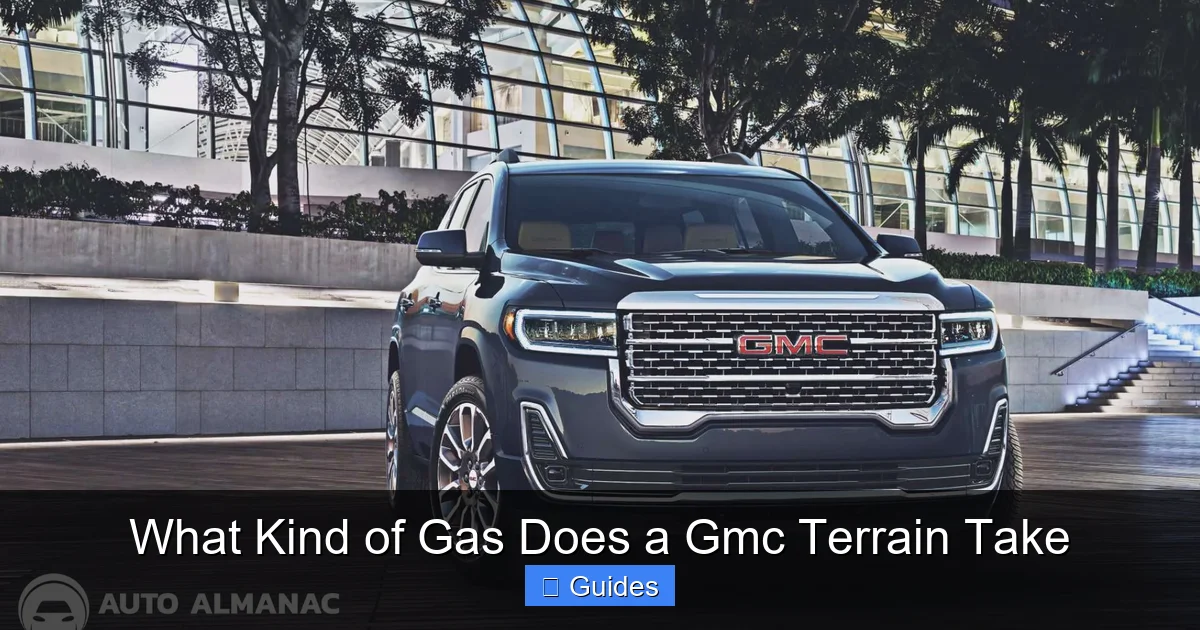
The kind of gas you use is important, but so is how you drive. Your habits behind the wheel can have a bigger impact on fuel economy than the octane rating of your fuel.
Aggressive Driving vs. Smooth Operation
Rapid acceleration, hard braking, and speeding can significantly reduce your Terrain’s fuel efficiency. In fact, aggressive driving can lower gas mileage by 15–30% on the highway and 10–40% in stop-and-go traffic.
Instead, try to drive smoothly. Accelerate gradually, maintain a steady speed, and anticipate stops to avoid unnecessary braking. Using cruise control on long highway trips can also help improve fuel economy.
Proper Tire Inflation and Maintenance
Underinflated tires increase rolling resistance, which means your engine has to work harder—and burn more fuel. Check your tire pressure at least once a month and before long trips. The recommended pressure for your Terrain is usually listed on a sticker inside the driver’s door jamb.
Regular maintenance also plays a role. A dirty air filter, worn spark plugs, or a malfunctioning oxygen sensor can reduce fuel efficiency. Stick to your scheduled maintenance plan to keep everything running optimally.
Reduce Weight and Drag
Carrying unnecessary weight in your Terrain—like heavy tools, sports equipment, or luggage—can lower fuel economy. Remove roof racks or cargo carriers when not in use, as they create aerodynamic drag.
Even small changes, like closing windows at high speeds or using the air conditioning wisely, can add up over time.
Long-Term Fueling Strategies for Terrain Owners
To get the most out of your GMC Terrain—and your wallet—adopt smart fueling habits that go beyond just choosing the right octane.
Keep Your Tank Above ¼ Full
Running your Terrain on a near-empty tank can cause the fuel pump to overheat and wear out prematurely. It also increases the risk of sediment from the bottom of the tank entering the fuel system. Try to refuel when the tank reaches ¼ full.
Avoid Topping Off
When the pump automatically shuts off, stop. Topping off can cause fuel to spill into the vapor recovery system, potentially damaging the charcoal canister and triggering a check engine light. It’s also a fire hazard.
Use Fuel Stabilizer for Long-Term Storage
If you’re storing your Terrain for more than 30 days—say, during winter or while traveling—add a fuel stabilizer to the tank. This prevents gasoline from degrading and forming varnish or gum that can clog fuel injectors.
Fill the tank about 95% full to minimize air space and reduce condensation, then add the stabilizer and drive the vehicle for a few minutes to circulate it.
Monitor Fuel Economy Trends
Keep an eye on your Terrain’s fuel economy over time. A sudden drop in miles per gallon could indicate a problem—like a faulty sensor, dirty air filter, or tire pressure issue. Catching these early can save you money and prevent bigger repairs.
Environmental and Cost Considerations
Fuel choice isn’t just about performance—it’s also about cost and environmental impact.
Regular vs. Premium: Is It Worth the Price?
Premium gasoline typically costs 20–50 cents more per gallon than regular. Over a year, that can add up to $100–$300 extra, depending on how much you drive. Unless your Terrain specifically benefits from higher octane, that money is better spent on maintenance or savings.
Ethanol Blends and the Environment
Ethanol is a renewable fuel made from corn and other plant materials. It burns cleaner than pure gasoline and reduces greenhouse gas emissions. However, E85 produces less energy, so you’ll burn more fuel to go the same distance.
If you’re concerned about your carbon footprint, consider driving more efficiently, carpooling, or even exploring hybrid or electric alternatives for your next vehicle.
Fuel Prices and Regional Variations
Gas prices vary widely by region and season. Use apps like GasBuddy or Waze to find the cheapest stations near you. Some credit cards also offer cashback or discounts on fuel purchases.
Conclusion: Fuel Smart, Drive Happy
So, what kind of gas does a GMC Terrain take? The simple answer: regular unleaded gasoline with an octane rating of 87. It’s the fuel GMC designed your SUV to run on, and it delivers the best balance of performance, efficiency, and cost.
While premium fuel won’t hurt your engine, it’s usually not necessary—unless you have a 2.0L turbocharged engine and frequently drive under heavy loads. And if your model is Flex Fuel capable, you have the added flexibility of using E85, though with a trade-off in fuel economy.
Beyond octane, focus on fuel quality. Choose Top-Tier detergent gasoline when possible, maintain your vehicle regularly, and drive efficiently. These habits will keep your Terrain running smoothly for years to come.
At the end of the day, fueling your GMC Terrain doesn’t have to be complicated. Stick to the basics, follow your owner’s manual, and enjoy the ride. After all, your Terrain is built for adventure—and the right fuel helps make every journey better.
Frequently Asked Questions
Can I use 89 octane gas in my GMC Terrain?
Yes, you can safely use 89 octane (mid-grade) gasoline in your GMC Terrain. It won’t damage the engine and may offer slightly smoother performance in some driving conditions, but it’s not required.
Generally, no. Unless your owner’s manual specifically recommends premium fuel, using higher-octane gasoline won’t significantly improve fuel economy or horsepower in a GMC Terrain.
Is it bad to mix different octane fuels?
No, it’s perfectly safe to mix regular, mid-grade, and premium gasoline. Your engine’s computer will adjust to the blend, so you don’t need to worry about switching between fuel types.
Can I use E85 in my GMC Terrain?
Only if your Terrain is Flex Fuel capable. Check for a yellow gas cap or Flex Fuel badge. Using E85 in a non-Flex Fuel model can damage the fuel system.
What happens if I accidentally put diesel in my Terrain?
Diesel fuel will not ignite properly in a gasoline engine and can cause severe damage. If this happens, do not start the engine. Have the vehicle towed to a service center for fuel system flushing.
How often should I use a fuel system cleaner?
Using a quality fuel system cleaner every 3,000 to 5,000 miles can help remove carbon deposits and maintain injector performance, especially if you don’t regularly use Top-Tier gasoline.

At CarLegit, we believe information should be clear, factual, and genuinely helpful. That’s why every guide, review, and update on our website is created with care, research, and a strong focus on user experience.