
The 2009 Buick Enclave is known for solid build quality and can easily last 150,000 to 200,000 miles with proper care. With regular maintenance and timely repairs, some owners have pushed their Enclaves beyond 250,000 miles, making it a dependable long-term SUV choice.
In This Article
- 1 Key Takeaways
- 2 📑 Table of Contents
- 3 How Many Miles Will a 2009 Buick Enclave Last?
- 4 Understanding the 2009 Buick Enclave’s Design and Build Quality
- 5 Real-World Mileage: What Owners Are Saying
- 6 Maintenance Tips to Extend Your Enclave’s Life
- 7 Common Problems and How to Prevent Them
- 8 Resale Value and Long-Term Ownership Costs
- 9 Conclusion: Is the 2009 Buick Enclave a Good Long-Term Investment?
- 10 Frequently Asked Questions
- 10.1 How many miles can a 2009 Buick Enclave realistically last?
- 10.2 What is the most common problem with the 2009 Enclave?
- 10.3 Is the 3.6L V6 engine in the 2009 Enclave reliable?
- 10.4 Should I buy a high-mileage 2009 Buick Enclave?
- 10.5 How often should I change the transmission fluid in a 2009 Enclave?
- 10.6 Can a 2009 Buick Enclave be driven in winter conditions?
Key Takeaways
- Typical lifespan: Most 2009 Buick Enclaves reach 150,000–200,000 miles with routine maintenance.
- High-mileage potential: Well-maintained models can exceed 250,000 miles, especially with diligent care.
- Engine reliability: The 3.6L V6 engine is durable but benefits from timely oil changes and cooling system upkeep.
- Common issues: Watch for transmission problems, suspension wear, and electrical glitches after 120,000 miles.
- Maintenance is key: Following the factory schedule and using quality parts greatly extends longevity.
- Resale value: High-mileage Enclaves hold value better than average if documented service history is available.
- Owner habits matter: Gentle driving, avoiding short trips, and winter care boost engine life.
📑 Table of Contents
- How Many Miles Will a 2009 Buick Enclave Last?
- Understanding the 2009 Buick Enclave’s Design and Build Quality
- Real-World Mileage: What Owners Are Saying
- Maintenance Tips to Extend Your Enclave’s Life
- Common Problems and How to Prevent Them
- Resale Value and Long-Term Ownership Costs
- Conclusion: Is the 2009 Buick Enclave a Good Long-Term Investment?
How Many Miles Will a 2009 Buick Enclave Last?
If you’re considering buying a used 2009 Buick Enclave—or already own one—you’re probably wondering: how long will it really last? It’s a fair question. SUVs from the late 2000s often get a bad rap for high repair costs and declining reliability after a certain mileage. But the 2009 Buick Enclave stands out as one of the more dependable models of its era. With the right care, this three-row crossover can serve you well for well over a decade and hundreds of thousands of miles.
The 2009 Buick Enclave was part of the brand’s push to compete with luxury SUVs like the Lexus RX and Acura MDX. It offered a smooth ride, upscale interior materials, and a spacious cabin—features that made it a favorite among families and commuters alike. Under the hood, it came standard with a 3.6-liter V6 engine producing 275 horsepower, paired with a six-speed automatic transmission. While not the most powerful SUV in its class, it delivered adequate performance and, more importantly, solid reliability when maintained properly.
So, what’s the real answer to the million-dollar question? On average, a 2009 Buick Enclave will last between 150,000 and 200,000 miles. But that’s just the average. Many owners report pushing their Enclaves past 220,000 or even 250,000 miles with consistent upkeep. The key isn’t just luck—it’s smart maintenance, early problem detection, and understanding the vehicle’s common weak points. In this guide, we’ll break down everything you need to know to maximize your Enclave’s lifespan, from engine care to suspension tips and real owner experiences.
Understanding the 2009 Buick Enclave’s Design and Build Quality
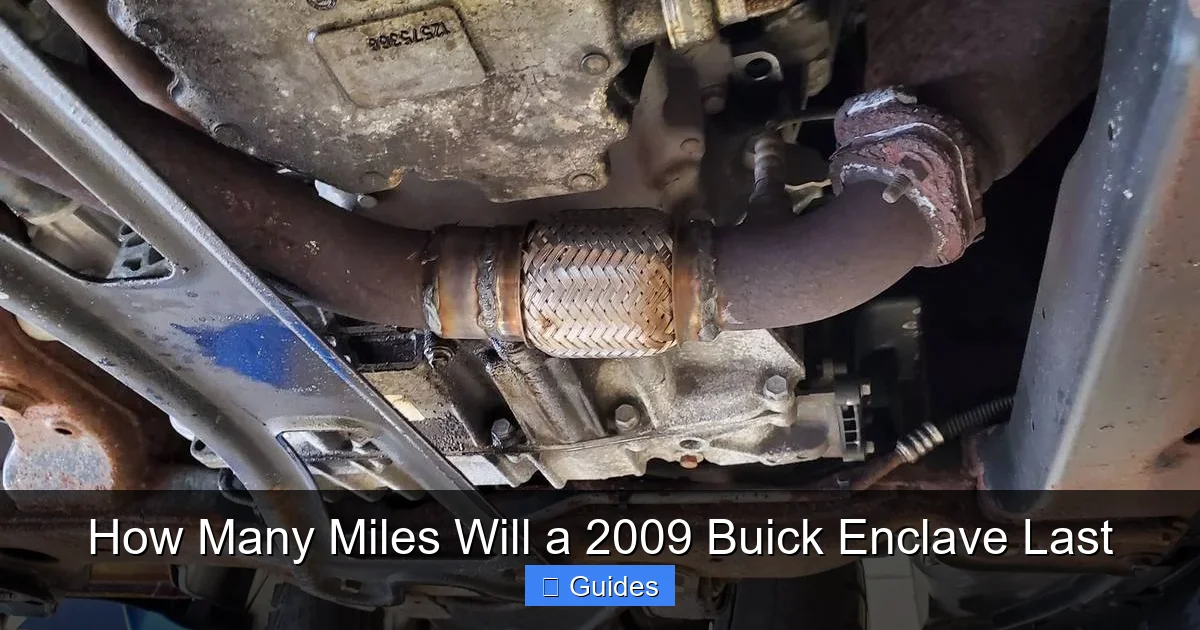
Visual guide about How Many Miles Will a 2009 Buick Enclave Last
Image source: primeexhaust.com
To understand how long a 2009 Buick Enclave can last, it helps to know what you’re working with. This SUV was built on GM’s Lambda platform, shared with the Chevrolet Traverse, GMC Acadia, and Saturn Outlook. That means it benefited from shared engineering and parts availability, which is a plus for long-term ownership. The unibody construction provided a comfortable, car-like ride, while the independent suspension helped absorb road imperfections better than truck-based SUVs.
One of the Enclave’s strongest points is its interior. Unlike many competitors of the time, Buick used higher-quality plastics, soft-touch materials, and real wood trim (on higher trims). The seats were well-padded and supportive, and the third row, while tight for adults, was usable for kids. The cabin was also notably quiet thanks to acoustic glass and sound-dampening materials—features usually reserved for luxury brands.
Under the hood, the 3.6L V6 (LY7 engine) was a workhorse. It wasn’t the most advanced engine of its time, but it was known for durability. This engine was used across multiple GM vehicles, which means parts are widely available and mechanics are familiar with it. The six-speed automatic transmission, while not perfect, was generally reliable if serviced on schedule.
Engine and Transmission Overview
The 3.6L V6 in the 2009 Enclave produces 275 horsepower and 251 lb-ft of torque. It’s not a speed demon, but it’s more than capable of handling highway merging, towing (up to 5,200 lbs when properly equipped), and daily driving. The engine uses a timing chain instead of a belt, which reduces maintenance needs—no need to replace it every 60,000–100,000 miles like some other engines.
The six-speed automatic transmission (6T75) is generally solid, but it’s not immune to issues. Some owners report rough shifting or delayed engagement, especially as the vehicle ages. These symptoms often point to low or degraded transmission fluid. The good news? Regular fluid changes every 30,000–50,000 miles can prevent most transmission problems.
Build Quality and Common Weak Points
While the Enclave was well-built for its time, it’s not without flaws. One common issue is the intake manifold gasket, which can leak coolant over time. This usually shows up around 100,000–130,000 miles. Symptoms include overheating, coolant loss, or a sweet smell from the engine bay. The fix isn’t cheap—typically $800–$1,200—but it’s manageable if caught early.
Another weak point is the suspension. The front struts and rear shocks can wear out by 120,000 miles, leading to a bouncy ride or poor handling. The control arms and ball joints also wear over time, especially if you drive on rough roads. Regular inspections during oil changes can help catch these issues before they become safety concerns.
Electrical issues are less common but do occur. Some owners report problems with the infotainment system, power windows, or dashboard lights. These are often traced to faulty switches or wiring harnesses. While not catastrophic, they can be annoying and costly to diagnose.
Real-World Mileage: What Owners Are Saying
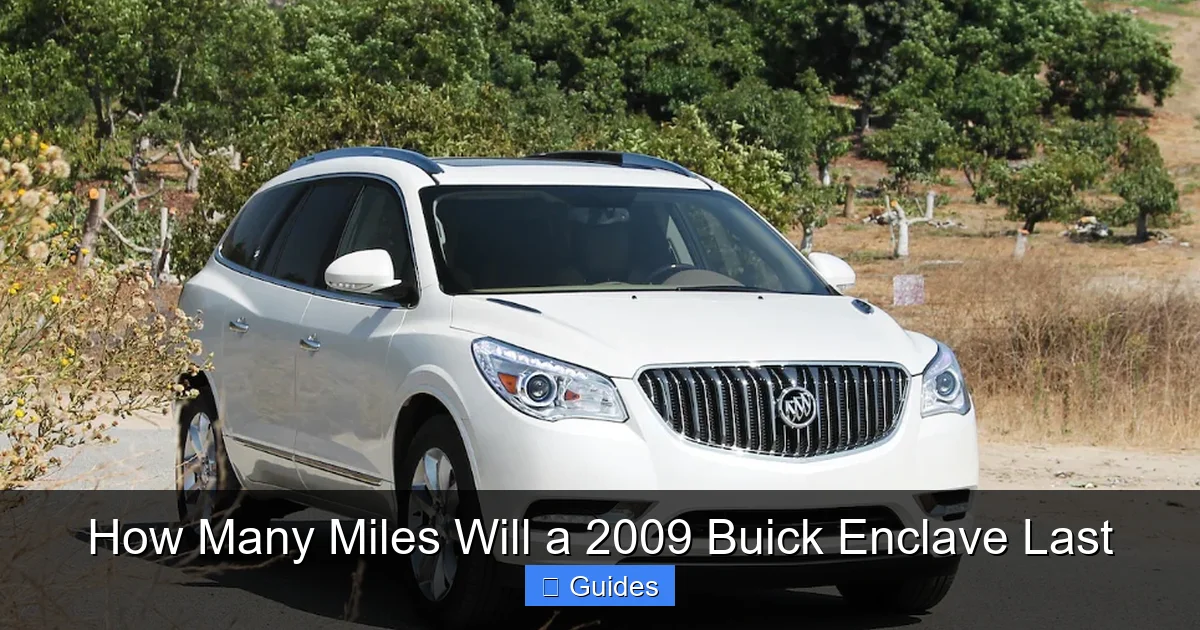
Visual guide about How Many Miles Will a 2009 Buick Enclave Last
Image source: newbuick2022.com
The best way to gauge how long a 2009 Buick Enclave will last is to listen to real owners. Online forums like Edmunds, CarGurus, and Buick Enclave forums are filled with high-mileage success stories. Many owners report driving their Enclaves well past 200,000 miles with only routine maintenance.
One owner on a popular SUV forum shared that his 2009 Enclave hit 247,000 miles before the transmission finally gave out. He attributed the long life to regular oil changes every 5,000 miles, transmission fluid changes every 30,000 miles, and addressing small issues immediately. He also mentioned that the engine still ran smoothly and had never needed a rebuild.
Another owner, a nurse who drove long shifts, logged over 220,000 miles in her Enclave over 11 years. She replaced the struts, brakes, and tires multiple times but never had major engine or transmission work. She sold it to a friend who planned to drive it another 50,000 miles.
These stories aren’t outliers. They’re the result of consistent care and understanding the vehicle’s needs. Of course, not every Enclave reaches these mileages. Some fail early due to neglect, accidents, or manufacturing defects. But the pattern is clear: with attention to maintenance, the 2009 Enclave can be a long-lasting SUV.
High-Mileage Enclave Case Studies
Let’s look at a few real-world examples:
– **Case 1:** A 2009 Enclave with 263,000 miles. Owner replaced the water pump, alternator, and struts but kept the original engine and transmission. Still running strong in rural Ohio.
– **Case 2:** A fleet vehicle used for medical transport. Reached 210,000 miles before being retired. Required regular brake and tire replacements but no major mechanical failures.
– **Case 3:** A family SUV driven primarily on highways. Hit 195,000 miles with only oil changes, tire rotations, and brake jobs. Owner plans to drive it to 250,000.
These examples show that the Enclave’s lifespan isn’t just about the engine—it’s about how it’s used and maintained.
Maintenance Tips to Extend Your Enclave’s Life
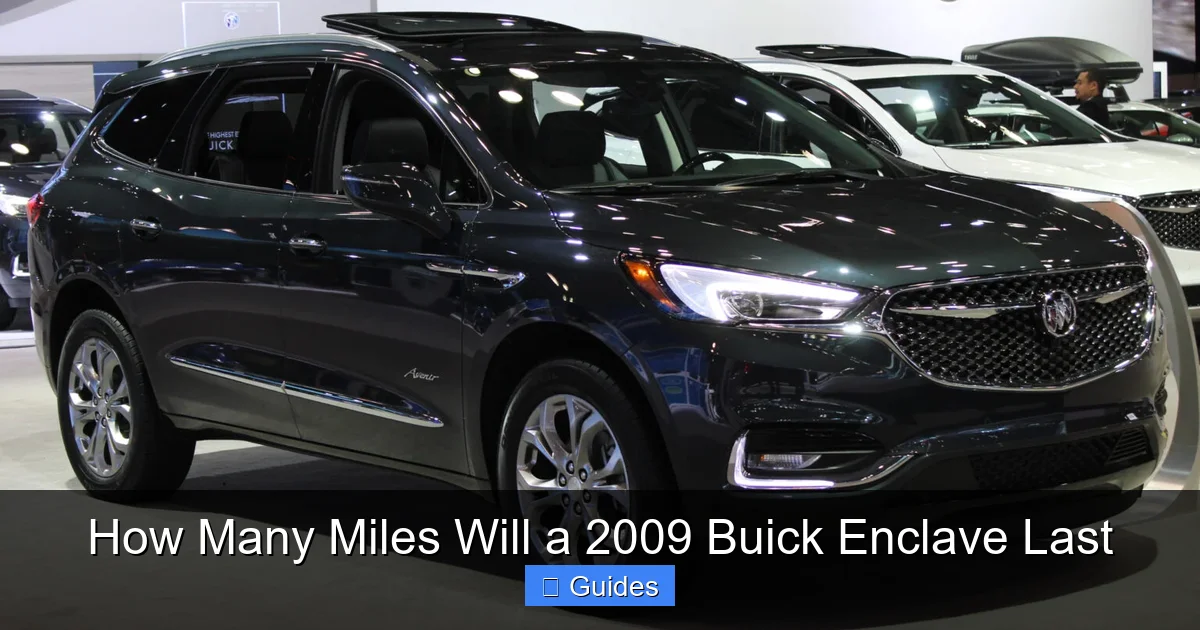
Visual guide about How Many Miles Will a 2009 Buick Enclave Last
Image source: thedriveradviser.com
The single biggest factor in how many miles your 2009 Buick Enclave will last is maintenance. Skipping oil changes, ignoring warning lights, or using cheap parts will shorten its life. But following a disciplined routine can add years—and tens of thousands of miles—to its service life.
Follow the Factory Maintenance Schedule
Buick provides a detailed maintenance schedule in the owner’s manual. Stick to it. Key items include:
– **Oil changes:** Every 5,000–7,500 miles with synthetic oil.
– **Transmission fluid:** Every 30,000–50,000 miles (flush recommended).
– **Coolant:** Every 100,000 miles or 5 years.
– **Brake fluid:** Every 30,000 miles.
– **Spark plugs:** Every 100,000 miles (the 3.6L V6 uses long-life plugs).
Using high-quality synthetic oil (like Mobil 1 or Pennzoil Platinum) helps protect the engine, especially in extreme temperatures. It also flows better when cold, reducing wear during startup.
Address Issues Early
Small problems become big ones if ignored. For example, a minor coolant leak might seem harmless, but it can lead to overheating and engine damage. A squeaky suspension component could mean a worn ball joint—left unchecked, it could fail and cause a loss of control.
Listen to your Enclave. If you notice a new noise, vibration, or warning light, get it checked. Many auto shops offer free inspections, and catching issues early saves money and extends vehicle life.
Use Quality Parts and Fluids
Don’t skimp on parts. Use OEM (original equipment manufacturer) or high-quality aftermarket components for critical systems like brakes, suspension, and cooling. Cheap alternators or water pumps may fail prematurely, leaving you stranded.
For fluids, stick to manufacturer-recommended types. Using the wrong transmission fluid can cause shifting problems or even transmission failure.
Drive Smart
Your driving habits affect longevity. Avoid aggressive acceleration and hard braking. Let the engine warm up in cold weather—especially important for the 3.6L V6, which can be sensitive to cold starts.
Also, minimize short trips. Frequent cold starts without reaching operating temperature can lead to sludge buildup in the engine. If you only drive a few miles at a time, consider taking longer drives occasionally to “exercise” the engine.
Common Problems and How to Prevent Them
No vehicle is perfect, and the 2009 Enclave has its share of known issues. But most are preventable or manageable with proactive care.
Transmission Issues
The 6T75 transmission is generally reliable, but it can develop problems if fluid isn’t changed regularly. Symptoms include slipping, delayed shifting, or a burning smell. To prevent this:
– Change transmission fluid every 30,000–50,000 miles.
– Use only Dexron VI fluid.
– Avoid towing beyond the 5,200-pound limit.
If you notice shifting issues, have the transmission scanned for codes. Early diagnosis can prevent a $3,000+ rebuild.
Suspension Wear
The Enclave’s suspension is comfortable but wears over time. Signs of wear include:
– Excessive bouncing over bumps
– Pulling to one side
– Clunking noises when turning
Inspect suspension components during oil changes. Replace struts, shocks, and control arms as needed. Consider upgrading to heavy-duty parts if you drive on rough roads.
Cooling System Problems
The 3.6L V6 is prone to intake manifold gasket leaks. To reduce risk:
– Use high-quality coolant (DEX-COOL).
– Replace coolant every 100,000 miles.
– Watch for coolant loss or overheating.
If the engine overheats, stop driving immediately. Continuing to drive can warp the cylinder head or damage the head gasket.
Electrical and Interior Issues
Power windows, door locks, and infotainment systems can fail due to worn switches or corroded connectors. Keep interior electronics clean and dry. Use dielectric grease on connectors to prevent corrosion.
The infotainment screen may develop dead pixels or fail to respond. In some cases, a software update or replacement module can fix it.
Resale Value and Long-Term Ownership Costs
Even if your Enclave reaches 200,000 miles, it may still have value. High-mileage SUVs are in demand, especially for budget-conscious buyers or those needing a reliable second vehicle. A well-maintained 2009 Enclave with 180,000 miles can sell for $4,000–$6,000, depending on condition and location.
Long-term ownership costs are reasonable if you stay on top of maintenance. Major repairs (transmission, engine) are rare before 150,000 miles. After that, budget $1,000–$2,000 per year for repairs and replacements.
Compared to newer SUVs, the Enclave has lower depreciation and insurance costs. It’s also less complex than modern vehicles with turbocharged engines and advanced electronics, making repairs easier and cheaper.
Conclusion: Is the 2009 Buick Enclave a Good Long-Term Investment?
So, how many miles will a 2009 Buick Enclave last? The answer is: as many as you’re willing to give it. With proper care, this SUV can easily surpass 200,000 miles and continue serving reliably for years. It’s not the flashiest or most powerful SUV of its class, but it offers a compelling mix of comfort, space, and durability.
The key to longevity is consistency. Follow the maintenance schedule, use quality parts, and address issues early. Avoid neglect, and your Enclave will reward you with dependable transportation.
If you’re buying a used 2009 Enclave, look for one with a detailed service history, low rust, and no major accidents. Have it inspected by a trusted mechanic before purchase. And once you own it, treat it well—it’ll treat you right back.
In a world of planned obsolescence and rapidly changing technology, the 2009 Buick Enclave stands as a testament to solid engineering and long-term value. It may not be new, but with care, it can still go the distance.
Frequently Asked Questions
How many miles can a 2009 Buick Enclave realistically last?
Most 2009 Buick Enclaves last between 150,000 and 200,000 miles with regular maintenance. Well-cared-for models often exceed 250,000 miles.
What is the most common problem with the 2009 Enclave?
The most common issue is the intake manifold gasket leak, which can cause coolant loss and overheating. It typically appears after 100,000 miles.
Is the 3.6L V6 engine in the 2009 Enclave reliable?
Yes, the 3.6L V6 is known for durability. With timely oil changes and cooling system care, it can run smoothly for over 200,000 miles.
Should I buy a high-mileage 2009 Buick Enclave?
Yes, if it has a solid service history and no major damage. High-mileage Enclaves can be great buys if they’ve been well maintained.
How often should I change the transmission fluid in a 2009 Enclave?
Every 30,000 to 50,000 miles. Regular changes help prevent shifting problems and extend transmission life.
Can a 2009 Buick Enclave be driven in winter conditions?
Yes, but use winter tires and check the cooling system. The Enclave handles well in snow, but cold weather can stress older components.

At CarLegit, we believe information should be clear, factual, and genuinely helpful. That’s why every guide, review, and update on our website is created with care, research, and a strong focus on user experience.