
The Mazda CX-5 and CX-30 differ primarily in size, performance, and intended use, with the CX-5 offering a larger, more powerful SUV experience ideal for families, while the CX-30 delivers a compact, agile drive perfect for urban adventures. The CX-5 boasts a more robust engine lineup, three-row seating options, and greater cargo space, whereas the CX-30 focuses on sleek design, fuel efficiency, and a lower price point. Ultimately, your choice depends on whether you prioritize space and power or agility and affordability.
In This Article
- 1 Key Takeaways
- 2 📑 Table of Contents
- 3 What Is the Difference Between Mazda CX-5 and CX-30
- 4 Size and Design: Bigger Isn’t Always Better
- 5 Performance and Driving Experience: Zoom-Zoom in Two Flavors
- 6 Interior Quality and Comfort: Premium Feel, Different Priorities
- 7 Technology and Safety Features: Smart Choices for Modern Drivers
- 8 Price and Value: Which One Gives You More for Your Money?
- 9 Which One Should You Choose? A Practical Decision
- 10 Frequently Asked Questions
- 10.1 What is the difference between Mazda CX5 and CX30?
- 10.2 Which is bigger, the Mazda CX5 or CX30?
- 10.3 Is the Mazda CX30 or CX5 better for city driving?
- 10.4 What are the key features that set the CX5 apart from the CX30?
- 10.5 Can the Mazda CX30 or CX5 tow a trailer?
- 10.6 Which Mazda SUV has better fuel economy, the CX30 or CX5?
Key Takeaways
- CX-5 is larger with more cargo and passenger space than the CX-30.
- CX-30 is more compact, ideal for city driving and tight parking.
- CX-5 offers stronger engine options, including a turbocharged variant for more power.
- CX-30 has better fuel efficiency due to its smaller size and lighter weight.
- CX-5 includes more standard features in higher trims, enhancing comfort and tech.
- CX-30 is more affordable at entry-level pricing compared to the CX-5.
- Choose CX-5 for space and power, CX-30 for agility and efficiency.
📑 Table of Contents
- What Is the Difference Between Mazda CX-5 and CX-30
- Size and Design: Bigger Isn’t Always Better
- Performance and Driving Experience: Zoom-Zoom in Two Flavors
- Interior Quality and Comfort: Premium Feel, Different Priorities
- Technology and Safety Features: Smart Choices for Modern Drivers
- Price and Value: Which One Gives You More for Your Money?
- Which One Should You Choose? A Practical Decision
What Is the Difference Between Mazda CX-5 and CX-30
Choosing the right compact SUV can feel like navigating a maze of similar-looking vehicles, all promising style, efficiency, and practicality. If you’ve been researching Mazda’s lineup, chances are you’ve come across two popular models that often get compared: the Mazda CX-5 and the Mazda CX-30. At first glance, they look like siblings—same sleek design language, same Zoom-Zoom spirit—but under the skin, they’re built for slightly different lifestyles.
I remember when my cousin was shopping for a new car last year. She loved Mazda’s reputation for driving enjoyment and upscale interiors, but couldn’t decide between the CX-5 and CX-30. “They’re both so pretty,” she said, “but which one actually fits my life?” That’s the real question. Are you a family of four who needs room for weekend road trips? Or a city dweller who values agility and fuel efficiency in tight parking spots? Understanding the differences between these two models isn’t just about specs—it’s about matching the car to your daily reality.
In this guide, we’ll break down everything you need to know about the Mazda CX-5 vs. CX-30. From size and seating to performance, tech, and real-world usability, we’ll help you figure out which one suits your needs—without the sales pitch. Whether you’re a first-time buyer or upgrading from an older model, this comparison will give you the clarity you need to make a confident decision.
Size and Design: Bigger Isn’t Always Better
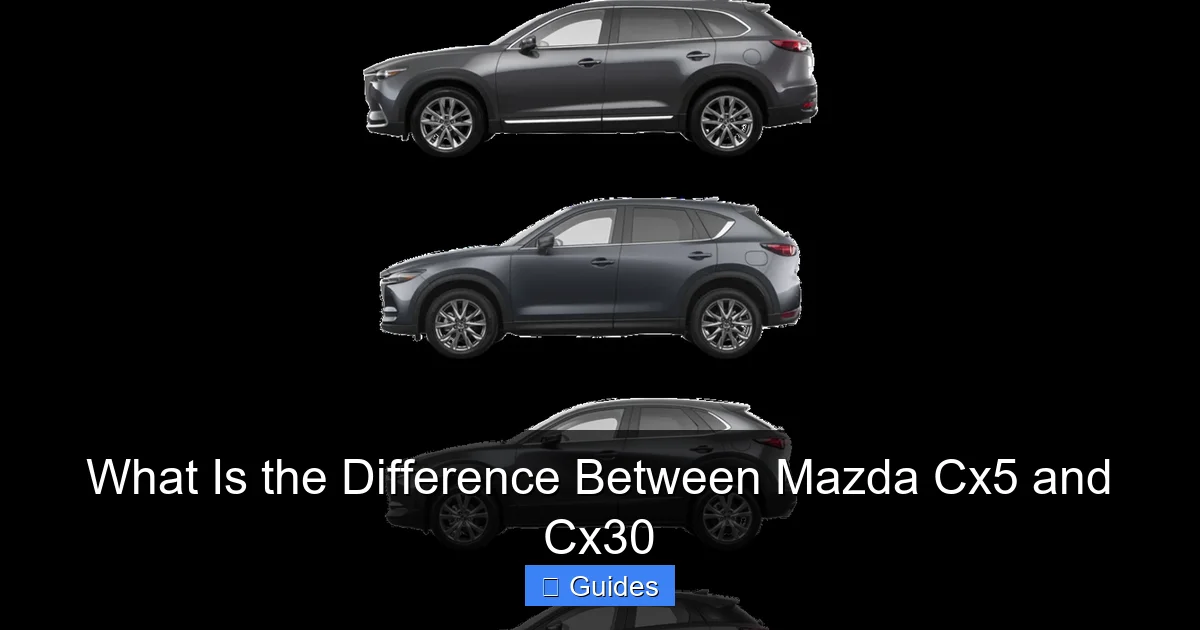
One of the most noticeable differences between the Mazda CX-5 and CX-30 is their physical dimensions. The CX-5 is Mazda’s midsize SUV offering, while the CX-30 sits in the compact crossover category. That means the CX-5 is longer, wider, and taller—giving it a more commanding presence on the road.
Visual guide about What Is the Difference Between Mazda Cx5 and Cx30
Image source: img.sm360.ca
Exterior Dimensions at a Glance
The CX-5 measures about 180 inches in length, 73 inches in width, and 66 inches in height. In contrast, the CX-30 is noticeably smaller at approximately 173 inches long, 71 inches wide, and 63 inches tall. That might not sound like a huge gap, but when you’re parallel parking on a busy downtown street or squeezing into a tight garage, those extra inches matter. The CX-30’s smaller footprint makes it more nimble in urban environments, while the CX-5 offers a more substantial feel for highway cruising.
Interior Space and Cargo Capacity
Inside, the CX-5 shines with more passenger and cargo space. Rear-seat legroom is noticeably better in the CX-5—about 39 inches compared to the CX-30’s 36 inches. That extra three inches can make a big difference for taller passengers or when carpooling with teens. Cargo volume behind the rear seats is also superior: the CX-5 offers 30.9 cubic feet, while the CX-30 provides 20.2 cubic feet. Fold down the rear seats, and the CX-5 expands to 59.6 cubic feet, nearly double the CX-30’s 45.2 cubic feet.
For example, if you regularly haul camping gear, strollers, or weekend groceries for a family, the CX-5’s larger cargo area is a clear advantage. But if you’re mostly commuting solo or with one passenger and only need space for a backpack or small suitcase, the CX-30’s compact cargo hold is more than sufficient—and easier to manage in tight spaces.
Design Language and Styling
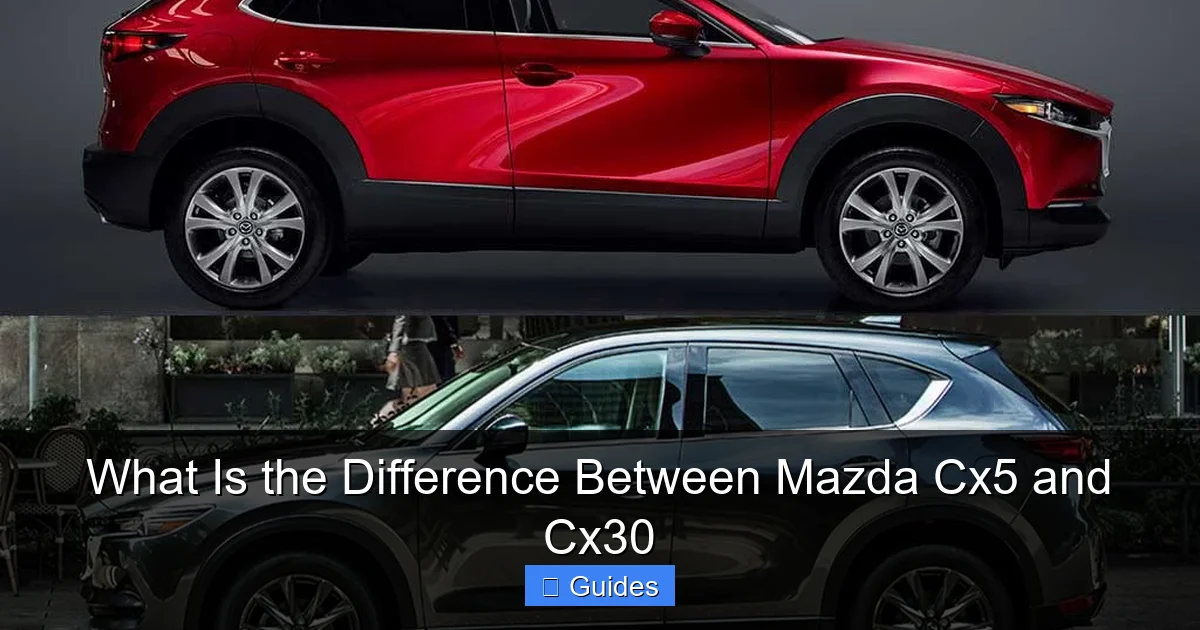
Both models share Mazda’s signature Kodo design philosophy—elegant, minimalist, and athletic. However, the CX-5 leans slightly more toward a rugged, SUV-like stance, while the CX-30 has a lower, sportier profile that blurs the line between crossover and hatchback. The CX-30’s roofline slopes more dramatically toward the rear, giving it a coupe-like appearance that some buyers find more modern and dynamic.
If you value a higher driving position and a more traditional SUV silhouette, the CX-5 wins. But if you prefer a sleek, car-like look with a touch of sportiness, the CX-30 might appeal more. It’s really a matter of personal taste, but the design differences do influence how each vehicle feels on the road.
Performance and Driving Experience: Zoom-Zoom in Two Flavors
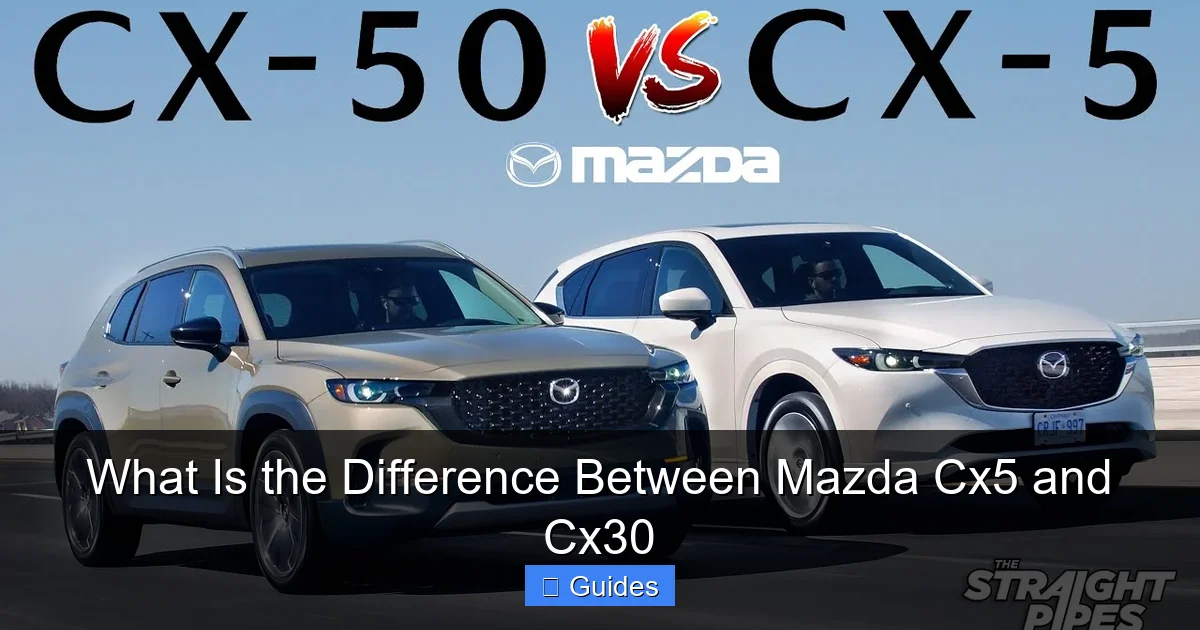
Mazda is known for building cars that are fun to drive, and both the CX-5 and CX-30 deliver on that promise—but in different ways. The driving experience is where these two models begin to diverge significantly, especially when it comes to engine options and handling dynamics.
Visual guide about What Is the Difference Between Mazda Cx5 and Cx30
Image source: i.ytimg.com
Engine Options and Power Output
The base engine in both models is a 2.5-liter four-cylinder, but the CX-5 offers a more powerful turbocharged version as an option. The standard CX-5 produces 187 horsepower and 186 lb-ft of torque, while the turbocharged variant bumps that up to 250 horsepower and 320 lb-ft of torque. That’s a substantial jump, especially for highway merging or towing light loads.
The CX-30, on the other hand, sticks with the naturally aspirated 2.5-liter engine across all trims, delivering 191 horsepower and 186 lb-ft of torque. While it’s slightly more powerful than the base CX-5, it lacks the turbo option, which means it doesn’t offer the same level of performance for drivers who want extra punch.
For instance, if you live in a hilly area or frequently drive on highways with steep inclines, the CX-5’s turbo engine can make a noticeable difference in acceleration and confidence. But if you’re mostly driving in flat city terrain and prioritize smoothness over speed, the CX-30’s engine is more than adequate.
Transmission and Drivetrain
Both models come standard with a smooth-shifting six-speed automatic transmission and front-wheel drive. All-wheel drive (AWD) is available on all trims for both vehicles, which is a big plus for drivers in snowy or rainy climates. Mazda’s i-Activ AWD system is praised for its responsiveness and ability to send power to the wheels with the most traction, enhancing stability in adverse conditions.
One thing to note: the CX-30’s smaller size and lighter weight give it a slight edge in agility. It feels more responsive in tight corners and easier to maneuver in traffic. The CX-5, while still nimble for its size, has a more planted, stable feel at higher speeds. So if you enjoy a sporty driving experience with quick steering and minimal body roll, the CX-30 might feel more engaging. But if you prefer a more substantial, confident ride, the CX-5 delivers.
Fuel Efficiency: A Close Call
When it comes to fuel economy, the difference is minimal. The CX-30 edges out the CX-5 slightly due to its lighter weight and smaller dimensions. According to EPA estimates, the CX-30 gets around 26 mpg city and 33 mpg highway with FWD, while the CX-5 achieves 25 mpg city and 31 mpg highway. With AWD, both drop by about 1–2 mpg.
While the CX-30 is technically more efficient, the gap is small enough that it probably won’t make a huge difference in your monthly gas bill unless you drive thousands of miles per year. For most buyers, the decision will come down to other factors like space and performance.
Interior Quality and Comfort: Premium Feel, Different Priorities
Mazda has built a reputation for offering near-luxury interiors in mainstream vehicles, and both the CX-5 and CX-30 reflect that commitment. High-quality materials, thoughtful design, and excellent fit and finish are standard across the board. But again, the differences lie in how each model uses that space.
Visual guide about What Is the Difference Between Mazda Cx5 and Cx30
Image source: gearopen.com
Seating and Passenger Comfort
The CX-5 offers more rear-seat space, as mentioned earlier, making it a better choice for families or frequent carpoolers. The rear seats are also more reclined and supportive, which is great for long trips. The CX-30’s rear seats are comfortable for shorter journeys but can feel a bit cramped for adults on extended drives.
Up front, both models provide excellent support and adjustability. The driver’s seat in both vehicles is positioned well, with good visibility and intuitive controls. However, the CX-5’s higher seating position gives a better view of the road, which some drivers prefer—especially when navigating busy intersections or parking lots.
Materials and Craftsmanship
Mazda uses soft-touch plastics, real wood or metal trim (depending on trim level), and stitched leather in higher trims. The CX-5 and CX-30 both feel upscale, but the CX-5’s larger cabin allows for more generous use of premium materials. For example, the CX-5 Grand Touring and Signature trims feature Nappa leather and genuine wood accents, giving it a more luxurious ambiance.
The CX-30, while still well-appointed, has a slightly more compact feel. That’s not a bad thing—some people prefer a cozier, more intimate cabin. But if you’re looking for a more spacious, open interior with room to stretch out, the CX-5 wins.
Noise Levels and Ride Comfort
Both models are quiet on the highway, thanks to sound-dampening materials and aerodynamic design. However, the CX-5’s larger size and longer wheelbase contribute to a smoother ride over bumps and potholes. The CX-30, while still comfortable, can feel a bit more jittery on rough roads due to its shorter wheelbase.
If you frequently drive on uneven pavement or gravel roads, the CX-5’s suspension tuning offers better isolation from road imperfections. But for city driving on smooth asphalt, the difference is barely noticeable.
Technology and Safety Features: Smart Choices for Modern Drivers
Mazda equips both the CX-5 and CX-30 with a robust suite of tech and safety features, but there are some differences in availability and user experience.
Infotainment System
Both models come standard with an 8.8-inch infotainment display controlled by a rotary knob on the center console—a design Mazda insists on to reduce driver distraction. The system is intuitive, with crisp graphics and responsive controls. Apple CarPlay and Android Auto are standard, which is a big plus for smartphone integration.
However, the CX-5 offers a larger 10.25-inch display on higher trims, along with a premium Bose audio system. The CX-30 also offers Bose audio, but only on the top Premium trim. If you’re an audiophile or just want a bigger screen for navigation, the CX-5 has a slight edge.
Safety and Driver Assistance
Mazda’s i-Activsense suite of safety features is standard on both models and includes:
- Adaptive cruise control
- Lane departure warning and lane-keep assist
- Automatic emergency braking
- Blind-spot monitoring
- Rear cross-traffic alert
These features work reliably and help make both vehicles among the safest in their class. The CX-5, however, adds a few extras on higher trims, such as a 360-degree camera system and traffic sign recognition—features not available on the CX-30.
For example, if you frequently park in tight garages or drive in heavy traffic, the CX-5’s 360-degree camera can be a lifesaver. But if you mostly drive on open roads and don’t need advanced parking aids, the CX-30’s standard safety suite is more than sufficient.
Connectivity and Convenience
Both models offer USB ports, wireless phone charging (on higher trims), and available Wi-Fi hotspot capability. The CX-5 also offers a head-up display on the Signature trim, which projects key driving info onto the windshield—a nice touch for keeping your eyes on the road.
One area where the CX-30 shines is in its lower starting price for well-equipped trims. You can get a CX-30 Premium with most of the tech features of a mid-level CX-5 for less money. So if you want a tech-rich interior without breaking the bank, the CX-30 might be the smarter buy.
Price and Value: Which One Gives You More for Your Money?
Price is often the deciding factor, and here the CX-30 holds a clear advantage. The CX-30 starts around $24,000, while the CX-5 begins at approximately $27,000. That $3,000 difference can add up, especially when you factor in insurance, taxes, and financing.
Trim Levels and Options
The CX-30 comes in four trims: Base, Select, Preferred, and Premium. The CX-5 offers five: Base, Touring, Grand Touring, Grand Touring Reserve, and Signature. The higher trim count on the CX-5 means more options for customization, but it also pushes the price higher—topping out near $40,000 with the turbo engine and all options.
For example, a fully loaded CX-30 Premium with AWD and Bose audio might cost around $32,000. A similarly equipped CX-5 Grand Touring Reserve with turbo engine and AWD could easily exceed $38,000. That’s a significant difference for buyers on a budget.
Resale Value and Ownership Costs
Both models hold their value well, thanks to Mazda’s strong reputation for reliability and driving enjoyment. According to industry reports, Mazda vehicles typically retain about 50% of their value after three years, which is above average for the segment.
Maintenance and repair costs are similar for both models, though the CX-5’s turbo engine may require slightly more expensive servicing over time. Insurance premiums are also comparable, with the CX-30 sometimes being slightly cheaper due to its lower purchase price.
If you’re looking for the best long-term value—balancing upfront cost, features, and resale potential—the CX-30 often comes out ahead for budget-conscious buyers. But if you need the extra space and performance of the CX-5, the higher price may be justified.
Which One Should You Choose? A Practical Decision
So, which is better: the Mazda CX-5 or the CX-30? The answer depends entirely on your lifestyle, priorities, and budget.
If you need more passenger and cargo space, frequently drive with passengers in the back, or want the option of a turbocharged engine for extra power, the Mazda CX-5 is the clear winner. It’s ideal for families, road trippers, and anyone who values a more substantial, comfortable ride.
On the other hand, if you prioritize agility, fuel efficiency, and a lower price tag, the Mazda CX-30 is a fantastic choice. It’s perfect for urban drivers, singles, couples, or small families who don’t need maximum space but still want a stylish, fun-to-drive vehicle with premium features.
Here’s a quick summary to help you decide:
| Feature | Mazda CX-5 | Mazda CX-30 |
|---|---|---|
| Length | 180 inches | 173 inches |
| Rear Legroom | 39 inches | 36 inches |
| Cargo Space (rear seats up) | 30.9 cu ft | 20.2 cu ft |
| Max Horsepower | 250 hp (turbo) | 191 hp |
| Starting Price | ~$27,000 | ~$24,000 |
| Best For | Families, long trips, extra space | City driving, budget buyers, style |
Ultimately, both the CX-5 and CX-30 are excellent vehicles that reflect Mazda’s commitment to quality, design, and driving pleasure. The “better” choice isn’t about which one is superior overall—it’s about which one fits your life.
Take a test drive in both if you can. Feel how each one handles, sit in the back seat, load up the trunk with your usual gear. Sometimes, the decision comes down to a gut feeling—the car that just feels right. And with Mazda, you really can’t go wrong.
Frequently Asked Questions
What is the difference between Mazda CX5 and CX30?
The Mazda CX-5 is a compact SUV, while the CX-30 is a subcompact SUV, making the CX-5 larger in size and interior space. The CX-5 also offers more powerful engine options and a higher towing capacity compared to the CX-30.
Which is bigger, the Mazda CX5 or CX30?
The Mazda CX-5 is larger than the CX-30, offering more passenger and cargo space. This makes the CX-5 better suited for families or those needing extra room for gear and longer trips.
Is the Mazda CX30 or CX5 better for city driving?
The Mazda CX-30 is more maneuverable and easier to park in tight city spaces due to its smaller size. While both are agile, the CX-30’s compact dimensions give it an edge in urban environments.
What are the key features that set the CX5 apart from the CX30?
The CX-5 offers available all-wheel drive, a more powerful turbocharged engine option, and a more upscale interior with higher trims. It also has a longer wheelbase, contributing to a smoother ride and greater comfort on highways.
Can the Mazda CX30 or CX5 tow a trailer?
The Mazda CX-5 can tow up to 2,000 pounds when properly equipped, making it capable of light towing. The CX-30 is not recommended for towing and lacks a factory tow rating, so it’s better suited for daily commuting and light cargo.
Which Mazda SUV has better fuel economy, the CX30 or CX5?
The Mazda CX-30 generally has better fuel economy due to its smaller size and lighter weight. With similar engine options, the CX-30 achieves slightly higher MPG in city and highway driving compared to the CX-5.

At CarLegit, we believe information should be clear, factual, and genuinely helpful. That’s why every guide, review, and update on our website is created with care, research, and a strong focus on user experience.