
Yes, it is generally safe to sit in your Tesla while it’s charging. Tesla vehicles are designed with multiple safety systems to protect occupants during charging. However, understanding best practices and potential risks ensures a safer, more comfortable experience.
In This Article
- 1 Key Takeaways
- 2 📑 Table of Contents
- 3 Is It Safe to Sit in Tesla While Charging?
- 4 Understanding How Tesla Charging Works
- 5 Debunking Common Myths About Sitting in a Charging Tesla
- 6 Real-World Scenarios: When It Makes Sense to Sit in Your Tesla While Charging
- 7 Best Practices for Sitting in Your Tesla While Charging
- 8 What Tesla Says About Charging Safety
- 9 Conclusion: Yes, It’s Safe—and Smart
- 10 Frequently Asked Questions
- 10.1 Can I sleep in my Tesla while it’s charging?
- 10.2 Does charging damage the battery if I sit in the car?
- 10.3 Is it safe to charge in the rain while sitting inside?
- 10.4 Can I use the Tesla app while charging?
- 10.5 What should I do if the car overheats while charging?
- 10.6 Are there any health risks from long-term exposure to charging EMFs?
Key Takeaways
- It is safe to sit in a Tesla while charging: Tesla vehicles are engineered with advanced electrical and thermal safety systems that minimize risks during charging.
- No harmful radiation exposure: Studies confirm that electromagnetic fields (EMFs) from Tesla charging are well within safe limits set by international health organizations.
- Climate control remains functional: You can use the cabin’s heating and cooling systems while charging, making it comfortable to stay inside during long sessions.
- Avoid fast charging in extreme heat or cold: While safe, sitting in the car during rapid DC fast charging in extreme temperatures may reduce comfort and efficiency.
- Stay aware of your surroundings: Always park in safe, well-lit areas and remain cautious of your environment, especially at public charging stations.
- Use Tesla’s built-in safety features: Features like Sentry Mode and cabin overheat protection enhance safety and security while you’re inside the vehicle.
- Follow manufacturer guidelines: Tesla recommends staying near the vehicle during charging, especially when using unfamiliar stations.
📑 Table of Contents
- Is It Safe to Sit in Tesla While Charging?
- Understanding How Tesla Charging Works
- Debunking Common Myths About Sitting in a Charging Tesla
- Real-World Scenarios: When It Makes Sense to Sit in Your Tesla While Charging
- Best Practices for Sitting in Your Tesla While Charging
- What Tesla Says About Charging Safety
- Conclusion: Yes, It’s Safe—and Smart
Is It Safe to Sit in Tesla While Charging?
Imagine this: You’ve just pulled into a Tesla Supercharger station on a long road trip. The battery is at 15%, and you’re about to plug in for a 30-minute top-up. You’re tired, maybe a little hungry, and the idea of sitting in the car while it charges sounds more appealing than standing outside in the heat or cold. But then a thought pops up—*Is it actually safe to sit in my Tesla while it’s charging?*
You’re not alone in wondering. Many Tesla owners, especially new ones, have the same question. After all, electric vehicles (EVs) are still relatively new to the mainstream, and the idea of sitting inside a car that’s actively drawing high-voltage electricity can feel a bit unsettling. But here’s the good news: **Yes, it is safe to sit in your Tesla while it’s charging.** In fact, Tesla has designed its vehicles with this exact scenario in mind.
Tesla vehicles are built with multiple layers of safety systems that protect both the car and its occupants during charging. From thermal management to electrical isolation, every component is engineered to prevent hazards like overheating, electric shock, or fire. So whether you’re charging at home on a Level 2 charger or at a busy Supercharger station, you can relax knowing that Tesla has your back.
But safety isn’t just about the car’s engineering—it’s also about how you use it. While the vehicle itself is safe, there are still best practices to follow to ensure your comfort and security. In this guide, we’ll dive deep into the science, the myths, and the real-world tips that will help you feel confident every time you plug in.
Understanding How Tesla Charging Works
Visual guide about Is It Safe to Sit in Tesla While Charging
Image source: cdn.shopify.com
Before we get into safety, it helps to understand how Tesla charging actually works. This knowledge will help you see why sitting in the car during charging is not only safe but often encouraged.
Tesla vehicles use lithium-ion battery packs, similar to those in laptops and smartphones, but much larger and more sophisticated. When you plug in, electricity flows from the charger into the car’s onboard charging system, which then converts and manages the power to safely charge the battery.
There are three main types of charging:
- Level 1 (120V): Uses a standard household outlet. Slowest method, typically adds 3–5 miles of range per hour.
- Level 2 (240V): Common at homes, workplaces, and public stations. Adds 20–60 miles per hour.
- DC Fast Charging (Supercharger): High-powered stations that can add up to 200 miles in 15–30 minutes.
During any of these charging methods, the car’s battery management system (BMS) continuously monitors voltage, current, temperature, and state of charge. If anything goes outside safe parameters, the system automatically reduces power or stops charging altogether.
Now, here’s the key point: **The charging process is isolated from the cabin.** The high-voltage components are sealed and shielded, and the electrical systems are designed so that no current flows through the passenger area. This means you’re not sitting on top of live wires—you’re safely insulated from the charging process.
Electrical Safety and Isolation
One of the biggest concerns people have is the risk of electric shock. After all, EVs deal with high-voltage systems—up to 400 volts or more in Tesla’s case. But rest assured, Tesla vehicles are built with multiple layers of electrical isolation.
The high-voltage battery and charging components are housed in a sealed, grounded enclosure. This prevents any accidental contact. Additionally, the vehicle’s chassis is designed to act as a Faraday cage, shielding the interior from electromagnetic interference.
Tesla also uses isolation monitoring systems that constantly check for ground faults or leakage currents. If a problem is detected, the system immediately disconnects the high-voltage circuit. This is similar to a GFCI (ground fault circuit interrupter) outlet in your home, which cuts power if it senses a fault.
So, even if you spill a drink or touch a metal part of the interior, there’s no risk of electric shock. The car’s design ensures that the high-voltage system is completely separate from the cabin.
Thermal Management During Charging
Another important aspect of charging safety is thermal management. Lithium-ion batteries perform best within a specific temperature range—typically between 20°C and 40°C (68°F to 104°F). Charging generates heat, and if the battery gets too hot or too cold, it can degrade faster or even become unsafe.
Tesla vehicles come equipped with an advanced thermal management system that keeps the battery at an optimal temperature during charging. This system uses coolant loops, heat pumps, and sometimes even refrigerant to regulate temperature.
For example, if you’re charging in cold weather, the car may use waste heat from the motor or electric heaters to warm the battery. In hot climates, the system activates cooling to prevent overheating. This not only protects the battery but also ensures efficient charging.
And here’s the best part: **This thermal system also helps keep the cabin comfortable.** If you’re sitting inside while charging, the car can use excess thermal energy to heat or cool the interior. So, you’re not just safe—you’re also cozy.
Debunking Common Myths About Sitting in a Charging Tesla
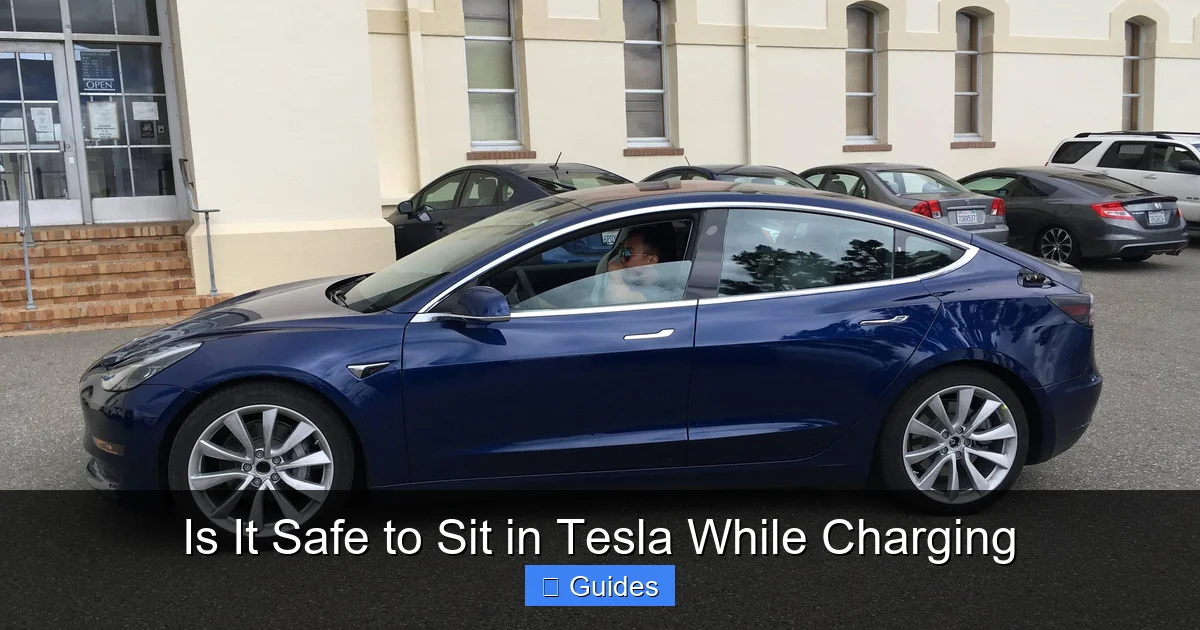
Visual guide about Is It Safe to Sit in Tesla While Charging
Image source: s1.cdn.autoevolution.com
Despite the clear engineering and safety features, myths about charging still persist. Let’s clear up some of the most common misconceptions.
Myth 1: You’ll Be Exposed to Harmful Radiation
Some people worry that sitting in a Tesla while charging exposes them to dangerous levels of electromagnetic fields (EMFs). This fear often comes from confusion between ionizing radiation (like X-rays) and non-ionizing EMFs (like those from power lines or Wi-Fi).
The truth is, Tesla charging produces non-ionizing EMFs, which are low-energy and not known to cause harm. According to the World Health Organization (WHO) and the International Commission on Non-Ionizing Radiation Protection (ICNIRP), the EMF levels around EVs are well below safety limits.
In fact, studies have shown that EMF exposure inside a Tesla during charging is comparable to that of a laptop or microwave oven—both of which we use daily without concern. So, no, you won’t be zapped by invisible energy waves.
Myth 2: The Car Could Catch Fire While You’re Inside
Battery fires in EVs are extremely rare. According to data from the National Fire Protection Association (NFPA), EVs are less likely to catch fire than gasoline-powered vehicles. When fires do occur, they’re usually due to extreme physical damage (like a high-speed crash) or manufacturing defects—not normal charging.
Tesla’s battery packs are designed with fire-resistant materials and multiple safety mechanisms. Each battery cell is monitored individually, and if one overheats, the system isolates it to prevent a chain reaction. Additionally, the battery is surrounded by a robust aluminum casing that contains any potential fire.
Even in the unlikely event of a thermal runaway, the design ensures that the fire is contained and progresses slowly, giving occupants plenty of time to exit safely.
Myth 3: Charging Drains the 12V Battery
Some owners worry that using the car’s systems while charging—like the climate control or infotainment screen—will drain the 12V auxiliary battery. But this isn’t true.
Tesla vehicles are designed so that the main high-voltage battery powers the 12V system when the car is plugged in. In fact, charging helps maintain the 12V battery’s charge. So, you can safely use lights, fans, music, and even seat heaters without worrying about a dead battery.
Myth 4: You Should Never Sit in the Car While Charging
This myth likely comes from older EV models or hybrid vehicles that had limited cabin functionality during charging. But Tesla vehicles are built for comfort and convenience.
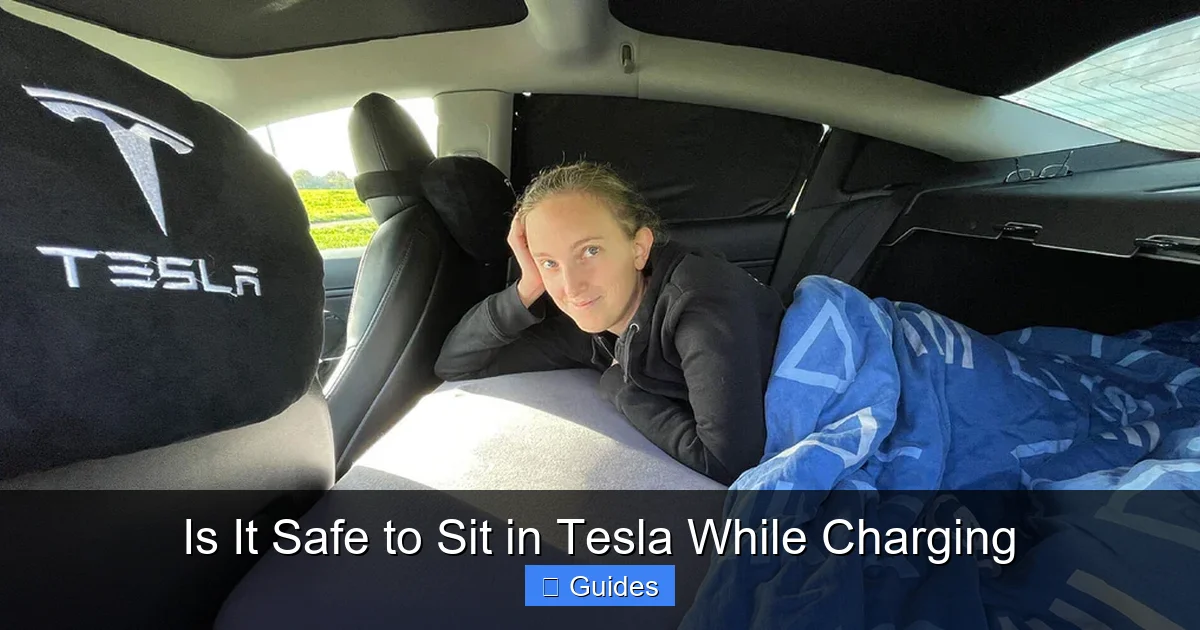
You can sit in the car, use the climate control, watch movies on the screen, or even take a nap—all while charging. Many Tesla owners do this regularly, especially during long road trips or when waiting at a Supercharger.
In fact, Tesla encourages this behavior. The car’s “Camp Mode” and “Dog Mode” are specifically designed for extended periods inside the vehicle, whether charging or not.
Real-World Scenarios: When It Makes Sense to Sit in Your Tesla While Charging
Visual guide about Is It Safe to Sit in Tesla While Charging
Image source: cdn.shopify.com
Now that we’ve covered the safety and debunked the myths, let’s talk about when it actually makes sense to sit in your Tesla while it’s charging.
Long Road Trips
If you’re on a cross-country drive and stop at a Supercharger, you’ll likely need 20–30 minutes to recharge. Instead of standing outside, you can relax in the driver’s seat, listen to music, or even take a short nap. With climate control running, you’ll stay comfortable no matter the weather.
Many Tesla owners use this time to stretch, eat a meal, or catch up on emails. It’s a great way to make the most of your charging break.
Charging in Extreme Weather
In hot summer months, sitting in a parked car can be dangerous due to cabin overheating. But Tesla’s “Cabin Overheat Protection” feature keeps the interior below 105°F (40.5°C), even when the car is off. When charging, this feature works even better because the car has a constant power source.
Similarly, in cold weather, you can pre-heat the cabin using the Tesla app before you get in. Once you’re inside, the car continues to warm up using energy from the charger—no need to idle or waste battery.
Charging at Home or Work
If you’re charging at home overnight or at work during the day, you might want to sit in the car to run errands, make calls, or just relax. Since Level 2 charging is slower, you’ll likely be there for an hour or more—plenty of time to get comfortable.
And because home charging is typically in a safe, private location, there’s little risk involved.
Using Sentry Mode for Security
Tesla’s Sentry Mode uses the car’s cameras to monitor the surroundings and alert you to potential threats. If you’re charging in a public place and want extra security, you can activate Sentry Mode and sit inside with peace of mind.
The system will notify you via the Tesla app if it detects suspicious activity, and it records video evidence. This is especially useful in unfamiliar or high-traffic areas.
Best Practices for Sitting in Your Tesla While Charging
While it’s safe to sit in your Tesla while charging, following a few best practices will make the experience even better.
1. Park in a Safe, Well-Lit Area
Always choose a secure location to charge, especially if you plan to stay inside. Supercharger stations are generally safe, but it’s still wise to pick a spot with good lighting and visibility.
Avoid isolated or poorly lit areas, particularly at night. If you’re unsure, use the Tesla app to check station reviews and photos.
2. Keep the Windows Slightly Open (If Needed)
While Tesla’s cabin air filtration system is excellent, some people prefer a bit of fresh air. If you’re sitting for a long time, consider cracking a window slightly—especially if you’re sleeping or feeling stuffy.
Just be mindful of security and weather conditions.
3. Use Climate Control Wisely
Running the heater or AC while charging is perfectly fine, but be aware of energy use. On a Supercharger, you have plenty of power, but at a slower Level 2 station, excessive climate use might slow down charging slightly.
If you’re trying to charge quickly, consider wearing a jacket in cold weather or using a sunshade in hot weather to reduce cabin temperature.
4. Stay Connected with the Tesla App
The Tesla app lets you monitor charging progress, adjust climate settings, and receive alerts. Keep your phone nearby so you can stay informed without needing to constantly check the car.
You can also use the app to start or stop charging remotely, which is handy if you’re stepping away briefly.
5. Be Mindful of Charging Speed
DC fast charging generates more heat than slower methods. While the car manages this automatically, sitting inside during a rapid charge in extreme heat might feel less comfortable due to increased fan noise or cabin temperature fluctuations.
If possible, plan your stops to avoid charging during the hottest part of the day.
6. Follow Local Laws and Station Rules
Some charging stations have rules about how long you can occupy a spot or whether you can sit in the vehicle. Always follow posted guidelines to avoid fines or conflicts.
At busy Supercharger stations, be considerate of other drivers who may be waiting.
What Tesla Says About Charging Safety
Tesla is transparent about vehicle safety, and the company encourages owners to use their cars as intended—including sitting inside while charging.
According to Tesla’s official documentation, the vehicle is designed to be safe for occupants during all phases of charging. The high-voltage system is isolated, and the cabin is protected from electrical and thermal hazards.
Tesla also emphasizes the importance of using genuine charging equipment and following proper procedures. For example, always ensure the charging cable is fully inserted and the connector is clean.
In rare cases of charging issues, Tesla’s over-the-air updates can often resolve software-related problems remotely. This proactive approach further enhances safety and reliability.
Conclusion: Yes, It’s Safe—and Smart
So, is it safe to sit in your Tesla while charging? The answer is a resounding yes. Tesla vehicles are engineered with multiple safety systems that protect you from electrical, thermal, and environmental risks. From advanced battery management to cabin isolation, every component is designed with your safety in mind.
Not only is it safe, but it’s also practical. Whether you’re on a road trip, charging at home, or just waiting at a station, sitting in your Tesla allows you to stay comfortable, productive, and secure. With features like climate control, Sentry Mode, and overheat protection, you can make the most of your charging time.
Of course, common sense still applies. Choose safe locations, follow best practices, and stay aware of your surroundings. But don’t let fear hold you back. Your Tesla is built for this—so go ahead, plug in, kick back, and enjoy the ride.
Frequently Asked Questions
Can I sleep in my Tesla while it’s charging?
Yes, you can safely sleep in your Tesla while charging. Use “Camp Mode” to keep the climate comfortable and the doors locked. Just ensure you’re in a safe location and monitor charging progress via the app.
Does charging damage the battery if I sit in the car?
No, sitting in the car does not damage the battery. The charging process is independent of cabin use. Tesla’s battery management system ensures safe and efficient charging regardless of what you’re doing inside.
Is it safe to charge in the rain while sitting inside?
Yes, Tesla vehicles are designed to charge safely in wet conditions. The charging port and connectors are waterproof, and the electrical systems are isolated from the cabin.
Can I use the Tesla app while charging?
Absolutely. The Tesla app works normally while charging. You can monitor charge level, adjust climate, and receive alerts—all from your phone.
What should I do if the car overheats while charging?
Overheating is extremely rare due to Tesla’s thermal management system. If you notice unusual heat or warning messages, exit the vehicle safely and contact Tesla Support immediately.
Are there any health risks from long-term exposure to charging EMFs?
No. Scientific studies confirm that EMF levels from EV charging are well below safety thresholds. There is no evidence of health risks from normal use.

At CarLegit, we believe information should be clear, factual, and genuinely helpful. That’s why every guide, review, and update on our website is created with care, research, and a strong focus on user experience.