
The value of a Subaru Outback catalytic converter varies widely based on model year, engine size, and precious metal content. On average, you can expect anywhere from $100 to $1,200 when selling it for scrap or recycling—especially if it’s from a newer or high-performance model.
If you’ve ever popped the hood of your Subaru Outback and wondered what that bulky, muffler-like component under the exhaust manifold is worth—you’re not alone. That’s your catalytic converter, and it might be sitting on a goldmine… or at least a platinum-and-palladium mine. Yes, really. These seemingly unremarkable parts contain precious metals that make them surprisingly valuable—especially in today’s market.
But how much is a Subaru Outback catalytic converter actually worth? The short answer: it depends. A lot. From the year your Outback was made to the type of engine under the hood, several factors influence its scrap or resale value. And with catalytic converter thefts on the rise—Subaru Outbacks are among the top targets—knowing your converter’s worth isn’t just smart; it’s practical.
In this guide, we’ll break down everything you need to know about the value of a Subaru Outback catalytic converter. Whether you’re looking to sell a damaged unit, replace a stolen one, or simply satisfy your curiosity, we’ve got you covered. We’ll explore pricing trends, what makes some converters more valuable than others, where to sell them, and how to protect your investment. By the end, you’ll understand not just the dollar amount—but the real worth of this often-overlooked car part.
In This Article
- 1 Key Takeaways
- 2 📑 Table of Contents
- 3 What Is a Catalytic Converter and Why Is It Valuable?
- 4 Factors That Determine the Value of a Subaru Outback Catalytic Converter
- 5 How Much Can You Actually Get for a Subaru Outback Catalytic Converter?
- 6 Where to Sell Your Subaru Outback Catalytic Converter
- 7 Why Are Subaru Outback Catalytic Converters So Often Stolen?
- 8 Should You Sell or Recycle Your Old Converter?
- 9 Final Thoughts: Know Your Converter’s Worth
- 10 Frequently Asked Questions
- 10.1 How much is a 2020 Subaru Outback catalytic converter worth?
- 10.2 Can I sell a stolen catalytic converter?
- 10.3 Do all Subaru Outbacks have the same catalytic converter value?
- 10.4 How do I know if my catalytic converter is valuable?
- 10.5 Is it worth replacing a catalytic converter?
- 10.6 How can I prevent catalytic converter theft on my Outback?
Key Takeaways
- Scrap Value Range: Most Subaru Outback catalytic converters sell for $100–$1,200 depending on condition and market demand.
- Model Year Matters: Newer models (2015+) with higher platinum, palladium, and rhodium content fetch significantly higher prices.
- Engine Type Impacts Value: V6 and turbocharged engines often have more valuable catalytic converters than 4-cylinder versions.
- Location Affects Pricing: Scrap yards in urban areas or regions with strict emissions laws may pay more due to higher demand.
- Sell to Licensed Recyclers: Always work with certified recyclers to avoid legal issues and ensure fair payment.
- Theft Risk is Real: Outback cats are prime targets for thieves—consider anti-theft measures if replacing or storing one.
- OEM vs. Aftermarket: Original equipment manufacturer (OEM) converters typically hold more value than aftermarket units.
📑 Table of Contents
- What Is a Catalytic Converter and Why Is It Valuable?
- Factors That Determine the Value of a Subaru Outback Catalytic Converter
- How Much Can You Actually Get for a Subaru Outback Catalytic Converter?
- Where to Sell Your Subaru Outback Catalytic Converter
- Why Are Subaru Outback Catalytic Converters So Often Stolen?
- Should You Sell or Recycle Your Old Converter?
- Final Thoughts: Know Your Converter’s Worth
What Is a Catalytic Converter and Why Is It Valuable?
Before diving into pricing, let’s clarify what a catalytic converter actually does—and why it’s worth more than most people think.
A catalytic converter is an emissions control device located in your vehicle’s exhaust system. Its job is to convert harmful pollutants like carbon monoxide, nitrogen oxides, and unburned hydrocarbons into less harmful substances such as carbon dioxide, nitrogen, and water vapor. In short, it helps your Subaru Outback meet environmental regulations and reduce its impact on air quality.
But here’s the kicker: to do this job effectively, catalytic converters use a ceramic or metallic honeycomb structure coated with precious metals. These include:
– Platinum
– Palladium
– Rhodium
These metals act as catalysts—hence the name—speeding up the chemical reactions that clean the exhaust gases. And because they’re rare, expensive, and difficult to mine, they hold significant value on the global commodities market.
For example, as of 2024, rhodium can cost over $8,000 per troy ounce, while palladium hovers around $1,200 and platinum around $950. Even small amounts in a catalytic converter can add up quickly. A single Subaru Outback converter might contain anywhere from 3 to 10 grams of these metals combined—depending on the model and year.
That’s why scrap yards, recycling centers, and even black-market thieves are so interested in catalytic converters. It’s not just about the part itself—it’s about the hidden treasure inside.
Factors That Determine the Value of a Subaru Outback Catalytic Converter
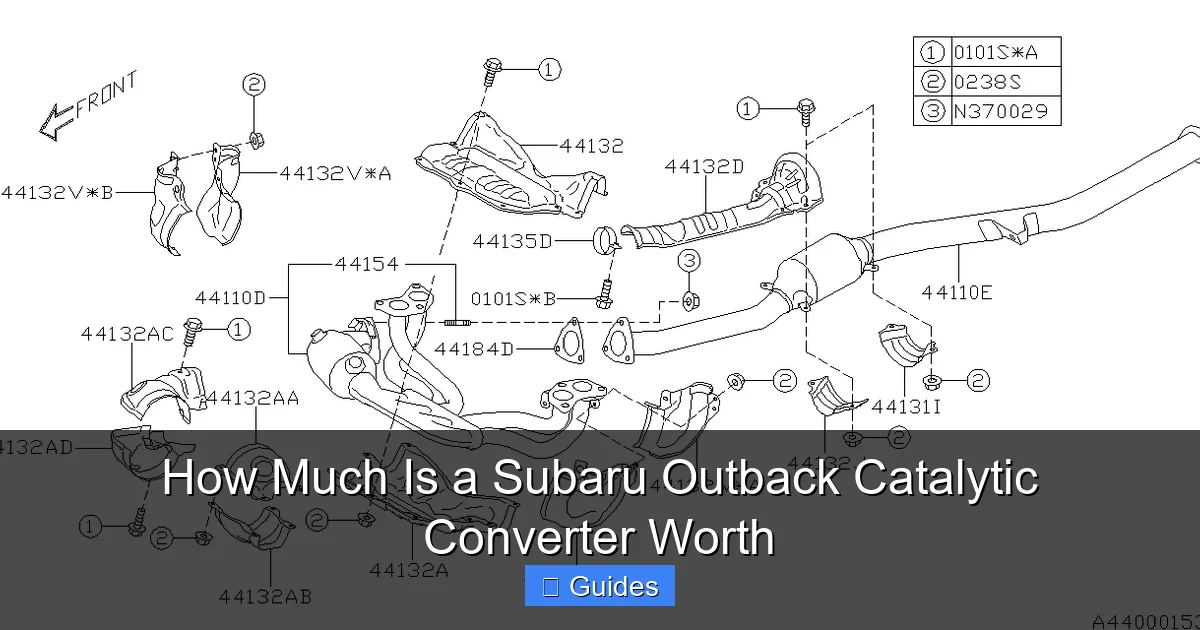
Visual guide about How Much Is a Subaru Outback Catalytic Converter Worth
Image source: images.simplepart.com
So, how much is a Subaru Outback catalytic converter worth? The answer isn’t one-size-fits-all. Several key factors influence its market value. Let’s break them down.
1. Model Year and Generation
The year your Subaru Outback was manufactured plays a huge role in determining converter value. Generally, newer models (2015 and later) contain higher concentrations of precious metals due to stricter emissions standards. For instance:
– 2000–2009 Outbacks: These older models often have lower metal content. Expect scrap values between $100 and $300.
– 2010–2014 Outbacks: Mid-range value, typically $200–$500, depending on engine type.
– 2015–2024 Outbacks: These are the most valuable, often fetching $500–$1,200 or more, especially if they’re from V6 or turbocharged models.
Why the jump? Automakers increased the amount of rhodium and palladium in converters to meet tighter EPA regulations. So, a 2020 Outback with a 3.6L H6 engine will almost always be worth more than a 2005 2.5L 4-cylinder version.
2. Engine Type and Configuration
Not all Subaru Outback engines are created equal—and neither are their catalytic converters.
The Outback has been offered with several engine options over the years:
– 2.5L 4-cylinder (naturally aspirated)
– 2.5L 4-cylinder (turbocharged, in the WRX-inspired models)
– 3.0L and 3.6L H6 (flat-six) engines
The larger, more powerful engines typically have bigger or dual catalytic converters, which means more precious metal content. For example:
– A 2018 Outback with a 2.5L 4-cylinder might have a converter worth $300–$400.
– The same year with a 3.6L H6 could be worth $700–$1,000+.
Turbocharged engines (like those in the Outback XT or performance trims) often use high-flow, high-efficiency converters with even more rhodium and palladium—making them prime targets for theft and high-value resale.
3. OEM vs. Aftermarket Converters
Are you selling an original Subaru catalytic converter, or one that was replaced with an aftermarket unit? This makes a big difference.
OEM (Original Equipment Manufacturer) converters are made by Subaru or its certified suppliers. They’re built to exact specifications and typically contain higher-grade materials. As a result, they command premium prices in the scrap market.
Aftermarket converters, while often cheaper to buy new, usually have lower precious metal content. Manufacturers cut costs by using less rhodium or palladium, or substituting with cheaper alternatives. These units might only be worth $100–$300, even on newer models.
So, if you’re selling a converter, always check the stamp or label. OEM units often have a Subaru logo or part number. Aftermarket ones may say “Universal,” “EPA Compliant,” or bear brands like MagnaFlow or Walker.
4. Condition and Usability
Is your catalytic converter still in your car, or has it been removed? Is it damaged, clogged, or melted?
A converter that’s intact, clean, and free of physical damage will always fetch a higher price. Scrap yards and recyclers can extract more precious metals from units that haven’t been overheated or contaminated with oil or coolant.
On the other hand, a converter that’s cracked, filled with debris, or has a melted substrate (the internal honeycomb) may be worth significantly less—sometimes 50% less or more. In extreme cases, it might only be good for parts or be completely unusable.
Tip: If you’re planning to sell, avoid cutting the converter open. Recyclers prefer whole units because they can test and process them more efficiently.
5. Geographic Location and Market Demand
Believe it or not, where you live affects how much your catalytic converter is worth.
Scrap metal prices fluctuate based on regional demand, local regulations, and the number of recycling facilities. For example:
– In California, where emissions laws are strict and vehicle turnover is high, catalytic converters are in high demand. You might get 10–20% more for your Outback converter than in a rural area with fewer recyclers.
– Urban areas with higher theft rates (like Los Angeles, Houston, or Atlanta) often have more competitive scrap markets, driving up prices.
Additionally, international demand plays a role. Much of the world’s catalytic converter recycling happens overseas, where precious metals are extracted and reused in new electronics, jewelry, or industrial applications. When global metal prices rise, so does the value of your converter.
How Much Can You Actually Get for a Subaru Outback Catalytic Converter?
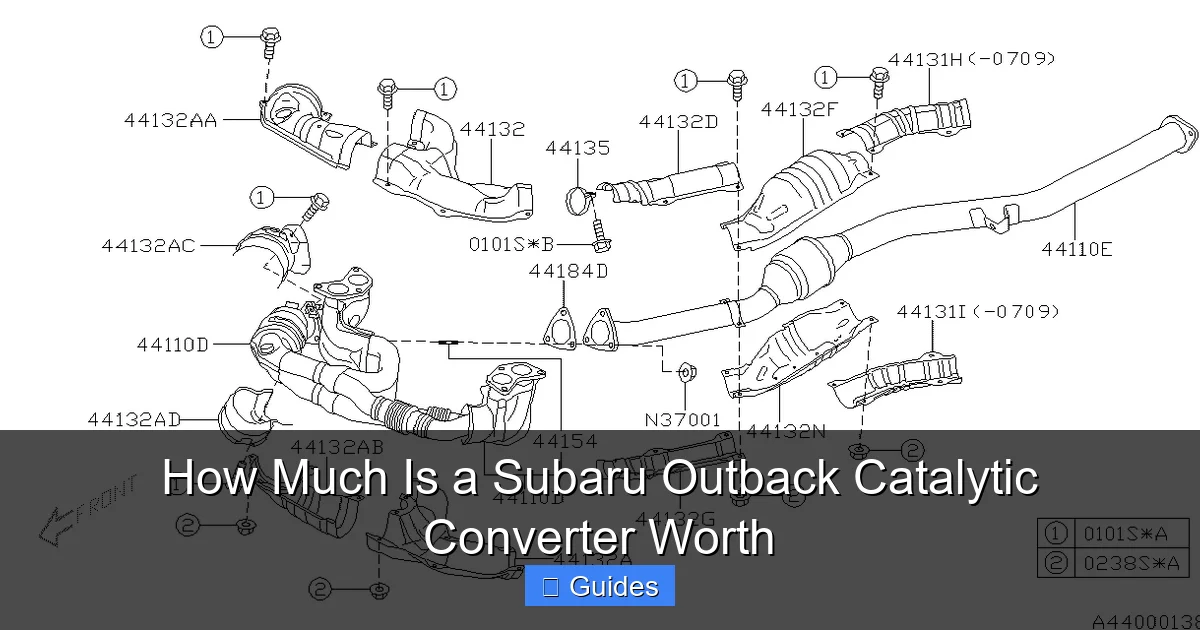
Visual guide about How Much Is a Subaru Outback Catalytic Converter Worth
Image source: images.simplepart.com
Now for the million-dollar question—well, maybe not a million, but close.
Let’s look at real-world examples based on recent scrap market data (2023–2024).
Estimated Scrap Values by Model Year and Engine
Here’s a breakdown of average catalytic converter values for popular Subaru Outback models:
– 2000–2004 Outback (2.5L 4-cylinder): $100–$200
These older models have minimal precious metal content. Often used as baseline pricing.
– 2005–2009 Outback (2.5L or 3.0L): $150–$350
Slight increase due to improved catalyst technology. The 3.0L H6 version leans toward the higher end.
– 2010–2014 Outback (2.5L or 3.6L): $250–$500
The 3.6L H6 models are especially valuable, often hitting $450–$500.
– 2015–2019 Outback (2.5L or 3.6L): $400–$800
Major jump in value due to increased rhodium use. The 3.6L can exceed $700.
– 2020–2024 Outback (2.5L Turbo or 2.4L Turbo): $600–$1,200+
The new 2.4L turbocharged engine (introduced in 2020) uses high-efficiency converters with premium metal loads. These are among the most valuable on the market.
Keep in mind: these are scrap values—what a recycling center or scrap yard will pay you. If you’re selling to a private buyer or a specialty metal refiner, you might get more. But most people sell through certified recyclers for convenience and legal compliance.
Real-Life Example: 2021 Subaru Outback XT
Let’s say you own a 2021 Subaru Outback XT with the 2.4L turbocharged engine. You’ve had a check engine light for months, and a mechanic confirms the catalytic converter is failing. You decide to replace it and sell the old one.
After removing it, you take it to a local recycling center. They test it and confirm it’s an OEM unit with high rhodium content. Based on current market rates, they offer you $950.
That’s not bad for a part you were going to throw away! And if you shop around or sell online to a metal refiner, you might even get $1,100.
Now compare that to a 2006 Outback with a 2.5L engine. Same process—remove, test, sell. This time, the recycler offers $180. Still better than nothing, but a far cry from the newer model.
This example shows how dramatically value can vary—even within the same vehicle line.
Where to Sell Your Subaru Outback Catalytic Converter
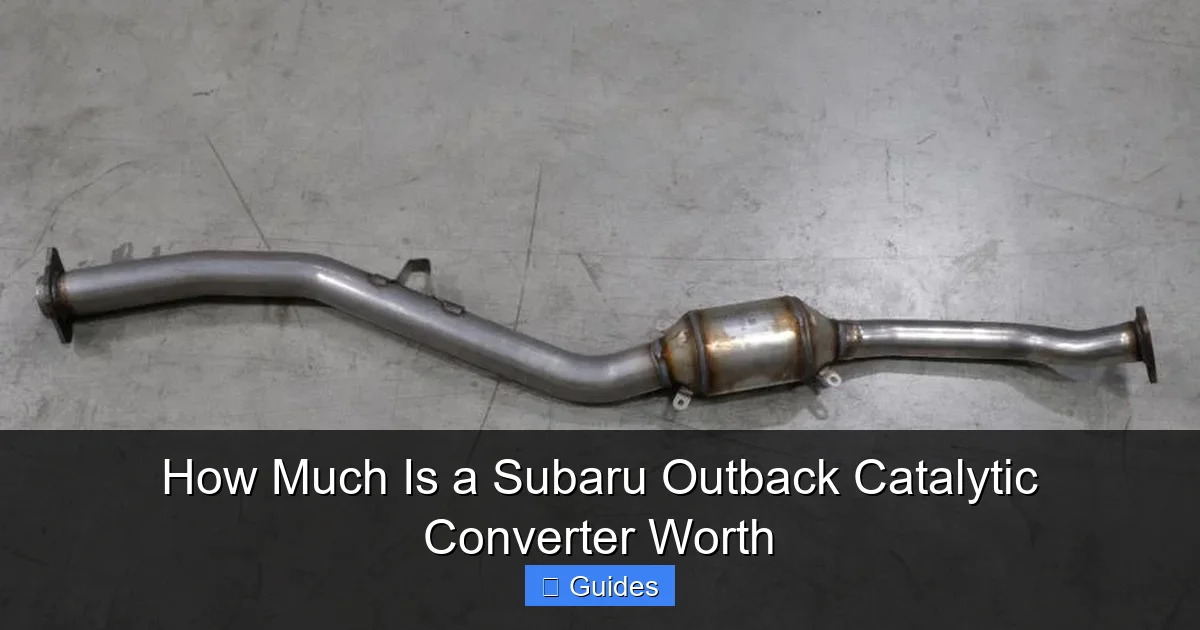
Visual guide about How Much Is a Subaru Outback Catalytic Converter Worth
Image source: images.simplepart.com
So, you’ve got a converter in hand. Now what? Where should you sell it to get the best price?
1. Certified Scrap Yards and Recycling Centers
This is the most common and reliable option. Look for facilities that are licensed and follow EPA or state regulations. They’ll test your converter, weigh it, and pay you on the spot—usually in cash or check.
Tip: Call ahead and ask if they accept catalytic converters and what their current rates are. Some yards post prices online, while others require an in-person evaluation.
2. Online Marketplaces and Metal Refiners
Websites like eBay, Craigslist, or specialty platforms like CatalyticConverterRecycling.com allow you to sell directly to refiners or collectors. You can often get higher prices this way, but be cautious:
– Only deal with verified buyers.
– Never ship a converter without a signed agreement or payment upfront.
– Be aware of shipping costs and regulations (some states restrict the transport of used converters).
Some refiners will even send you a prepaid shipping label and pay you after they receive and test the unit.
3. Auto Repair Shops and Junkyards
Some mechanics and salvage yards buy used converters, especially if they’re still functional. They might resell them as “used OEM” parts, which can fetch $300–$800 depending on condition.
However, prices are usually lower than scrap value because the buyer assumes risk. Still, it’s a convenient option if you’re already at the shop for a replacement.
4. Avoid Unlicensed Buyers
Steer clear of “cash for converters” ads from unverified sources. These are often fronts for illegal operations. Selling to unlicensed buyers can get you in legal trouble, especially in states with strict converter tracking laws (like California and Texas).
Always ask for a business license and proof of compliance with environmental regulations.
Why Are Subaru Outback Catalytic Converters So Often Stolen?
If you’ve heard horror stories about catalytic converter theft, you’re not imagining things. Subaru Outbacks are among the most targeted vehicles—and for good reason.
High Value, Easy Access
Outback converters are valuable (as we’ve seen), and they’re relatively easy to access. The vehicle sits higher off the ground than a sedan, giving thieves more room to slide underneath with a reciprocating saw. In under two minutes, they can cut out the converter and disappear.
Common on Roads
Subarus are popular in rural, suburban, and mountainous areas—places where people drive longer distances and keep their cars longer. That means more older Outbacks on the road, and more opportunities for theft.
Limited Identification
Unlike car parts with VINs, catalytic converters aren’t serialized. Once removed, they’re nearly impossible to trace back to a specific vehicle. This makes them ideal for black-market resale.
What You Can Do to Protect Your Outback
– Install a catalytic converter shield: Aftermarket guards (like the Cat Shield by Rugged Ridge) make it much harder to cut out the converter.
– Park in well-lit, secure areas: Garages, monitored lots, or busy streets reduce theft risk.
– Engrave your VIN on the converter: Some shops offer this service. It won’t stop theft, but it can help law enforcement recover stolen parts.
– Consider insurance coverage: Comprehensive auto insurance often covers catalytic converter theft—check your policy.
Should You Sell or Recycle Your Old Converter?
Once you’ve replaced your catalytic converter, you’re left with a decision: sell it or recycle it?
In most cases, selling it for scrap is the best option—especially if it’s from a newer Outback. The money you get can help offset the cost of the new converter, which can run $1,000–$3,000 for an OEM unit.
However, if the converter is severely damaged or from an older model with low metal content, recycling might be more about environmental responsibility than profit. Many recyclers will still take it for free or a small fee, ensuring the materials are disposed of safely.
Either way, never throw a catalytic converter in the trash. It contains hazardous materials and is illegal in many areas.
Final Thoughts: Know Your Converter’s Worth
So, how much is a Subaru Outback catalytic converter worth? The answer isn’t fixed—but now you know how to find it.
From $100 for an early 2000s model to over $1,200 for a 2023 turbocharged Outback, the value depends on year, engine, condition, and market demand. By understanding these factors, you can make informed decisions whether you’re selling, replacing, or protecting your converter.
And remember: this isn’t just about money. Catalytic converters play a vital role in reducing pollution and keeping our air clean. Recycling them responsibly ensures those precious metals get reused—instead of ending up in landfills or the wrong hands.
Whether you’re a longtime Subaru owner or just curious about car parts, knowing the worth of your catalytic converter is a smart move. It’s a small component with a big impact—on your wallet, your vehicle, and the environment.
Frequently Asked Questions
How much is a 2020 Subaru Outback catalytic converter worth?
A 2020 Subaru Outback catalytic converter is typically worth between $600 and $1,000 when sold for scrap, depending on the engine type. The 2.4L turbocharged model usually fetches the highest prices due to its high rhodium and palladium content.
Can I sell a stolen catalytic converter?
No, selling a stolen catalytic converter is illegal and can result in fines or criminal charges. Always ensure you legally own the part and sell only to licensed recyclers with proper documentation.
Do all Subaru Outbacks have the same catalytic converter value?
No. Value varies significantly by model year, engine size, and whether it’s OEM or aftermarket. Newer, high-performance models are worth far more than older 4-cylinder versions.
How do I know if my catalytic converter is valuable?
Check the model year and engine type. Newer Outbacks (2015+) with V6 or turbo engines are most valuable. You can also take it to a recycler for a free assessment.
Is it worth replacing a catalytic converter?
Yes, if your check engine light is on and diagnostics confirm a failing converter, replacement is usually necessary to pass emissions tests and maintain fuel efficiency. Selling the old one can help offset costs.
How can I prevent catalytic converter theft on my Outback?
Install a protective shield, park in secure areas, engrave your VIN on the converter, and consider comprehensive insurance coverage. These steps significantly reduce theft risk.

At CarLegit, we believe information should be clear, factual, and genuinely helpful. That’s why every guide, review, and update on our website is created with care, research, and a strong focus on user experience.