
Changing your Honda Civic’s transmission fluid on time is one of the simplest yet most impactful ways to protect your car’s performance and longevity. While Honda recommends intervals based on driving conditions, most experts agree that proactive maintenance every 30,000 to 60,000 miles helps prevent costly repairs and ensures smooth shifting.
In This Article
- 1 Key Takeaways
- 2 📑 Table of Contents
- 3 Why Transmission Fluid Matters in Your Honda Civic
- 4 Honda’s Official Recommendations
- 5 Factors That Affect How Often You Should Change the Fluid
- 6 Signs It’s Time to Change Your Transmission Fluid
- 7 DIY vs. Professional Transmission Fluid Change
- 8 Choosing the Right Transmission Fluid
- 9 Conclusion: Protect Your Civic with Regular Maintenance
- 10 Frequently Asked Questions
- 10.1 How often should I change transmission fluid in my Honda Civic?
- 10.2 Can I check my Honda Civic’s transmission fluid myself?
- 10.3 What happens if I don’t change my transmission fluid?
- 10.4 Can I use any transmission fluid in my Honda Civic?
- 10.5 Is a transmission flush better than a drain and fill?
- 10.6 How much does a transmission fluid change cost for a Honda Civic?
Key Takeaways
- Standard interval: Honda typically recommends changing transmission fluid every 30,000 to 60,000 miles, depending on driving habits and model year.
- Severe driving conditions: If you frequently drive in stop-and-go traffic, tow loads, or live in extreme temperatures, you may need to change the fluid every 15,000 to 30,000 miles.
- Check your owner’s manual: Always refer to your specific Honda Civic’s manual for the manufacturer’s official recommendation—this is the most reliable source.
- Signs it’s time: Slipping gears, delayed shifting, burnt smell, or dark/discolored fluid are clear indicators your transmission fluid needs attention.
- DIY vs. professional service: While some owners can safely change the fluid themselves, a professional service ensures proper disposal and inspection of the transmission system.
- Use the right fluid: Always use Honda Genuine ATF or an approved equivalent (like DW-1 for newer models) to avoid damage.
- Don’t ignore it: Neglecting transmission fluid changes can lead to overheating, wear, and eventual transmission failure—costing thousands in repairs.
📑 Table of Contents
- Why Transmission Fluid Matters in Your Honda Civic
- Honda’s Official Recommendations
- Factors That Affect How Often You Should Change the Fluid
- Signs It’s Time to Change Your Transmission Fluid
- DIY vs. Professional Transmission Fluid Change
- Choosing the Right Transmission Fluid
- Conclusion: Protect Your Civic with Regular Maintenance
Why Transmission Fluid Matters in Your Honda Civic
Your Honda Civic’s transmission is one of the most complex and hardworking systems in your vehicle. Whether you drive a manual or automatic model, the transmission relies heavily on clean, high-quality fluid to function properly. Transmission fluid does more than just lubricate moving parts—it also cools the system, transfers power, cleans internal components, and prevents corrosion.
Think of transmission fluid like the lifeblood of your car’s drivetrain. Over time, this fluid breaks down due to heat, friction, and contamination. When that happens, it loses its ability to protect critical components. This can lead to increased wear, overheating, and eventually, transmission failure. That’s why staying on top of fluid changes isn’t just a suggestion—it’s a necessity for long-term reliability.
Honda Civics are known for their durability and fuel efficiency, but even the most dependable cars need regular maintenance. The transmission, in particular, is sensitive to neglect. A small investment in timely fluid changes can save you from a massive repair bill down the road. In fact, many transmission failures could have been prevented with routine maintenance.
How Transmission Fluid Works
Transmission fluid serves multiple roles in your Honda Civic. In automatic transmissions, it acts as a hydraulic fluid that helps engage gears smoothly. It also cools the transmission by carrying heat away from internal parts. Without proper cooling, components can warp or seize.
Additionally, modern transmission fluids contain additives that help clean sludge and varnish buildup. They also protect against oxidation and foaming, which can reduce efficiency. Over time, these additives deplete, and the fluid becomes contaminated with metal particles, dirt, and moisture.
In manual transmissions, the fluid primarily lubricates gears and synchronizers. While it doesn’t face the same hydraulic demands as automatic fluid, it still degrades with use and exposure to heat.
The Risks of Old or Low Transmission Fluid
Driving with old or low transmission fluid is like running your engine without oil. The consequences can be severe. One of the first signs of trouble is rough or delayed shifting. You might notice your Civic hesitating when accelerating or jerking when changing gears.
Another red flag is a burning smell. This usually means the fluid has overheated and broken down, losing its protective properties. You might also hear unusual noises—whining, grinding, or clunking—especially when the transmission is under load.
In extreme cases, the transmission may slip, meaning the engine revs but the car doesn’t move as expected. This is dangerous and can leave you stranded. Worst of all, prolonged neglect can lead to complete transmission failure, requiring a rebuild or replacement that can cost $2,000 to $5,000 or more.
Honda’s Official Recommendations

Visual guide about How Often Should You Change Transmission Fluid Honda Civic
Image source: carglassadvisor.com
Honda provides specific maintenance schedules for the Civic, and transmission fluid change intervals are clearly outlined in the owner’s manual. However, these recommendations can vary depending on the model year, transmission type, and driving conditions.
For most modern Honda Civics with automatic transmissions (especially those made from 2006 onward), Honda recommends changing the transmission fluid every 30,000 to 60,000 miles. Some newer models, particularly those with CVT (continuously variable transmission), may have longer intervals—up to 100,000 miles under ideal conditions.
Manual transmission Civics typically require less frequent changes, often around 60,000 to 100,000 miles, because they don’t generate as much heat and don’t rely on the fluid for hydraulic operation.
Understanding Honda’s Maintenance Minder
Many Honda Civics come equipped with a Maintenance Minder system, which uses sensors and algorithms to track your driving habits and alert you when service is due. This system can recommend a transmission fluid change based on real-world usage, not just mileage.
When the Maintenance Minder displays code “4” or “7,” it typically indicates that a transmission fluid change is needed. Code 4 is for automatic transmissions, while code 7 is for manual. These codes may appear alongside other maintenance reminders, so it’s important to read them carefully.
While the Maintenance Minder is a helpful tool, it’s not perfect. It assumes average driving conditions, so if you frequently drive in severe conditions (like heavy traffic or extreme heat), you may need to change the fluid sooner than the system suggests.
Model Year Differences
Transmission fluid change intervals can vary significantly between different Honda Civic generations. For example:
– **1996–2000 Civics:** These older models often used conventional automatic transmissions and required fluid changes every 30,000 miles.
– **2001–2005 Civics:** Some of these models introduced Honda’s Multi-Matic CVT, which had different fluid requirements and longer intervals.
– **2006–2015 Civics:** Most automatic models used the Honda ATF-Z1 or later DW-1 fluid, with recommended changes every 30,000 to 60,000 miles.
– **2016–2023 Civics:** Newer models with CVT or 10-speed automatic transmissions may go up to 100,000 miles between changes, but only under normal driving conditions.
Always check your owner’s manual or consult a Honda dealer to confirm the correct interval for your specific model.
Factors That Affect How Often You Should Change the Fluid

Visual guide about How Often Should You Change Transmission Fluid Honda Civic
Image source: autorideup.com
While Honda provides general guidelines, your actual driving habits and environment play a huge role in determining how often you should change your transmission fluid. Some drivers may need to change it every 15,000 miles, while others can safely go 60,000 miles or more.
The key is understanding what counts as “severe” driving—conditions that put extra stress on your transmission and cause the fluid to degrade faster.
Severe Driving Conditions
Honda defines severe driving as any situation that increases heat, friction, or contamination in the transmission. Common examples include:
– **Stop-and-go traffic:** Frequent braking and accelerating, especially in hot weather, causes the transmission to work harder and overheat.
– **Towing or hauling:** Carrying heavy loads increases strain on the transmission and generates excess heat.
– **Driving in extreme temperatures:** Very hot or very cold climates can break down fluid faster or make it too thick to flow properly.
– **Short trips:** Driving less than 10 miles at a time, especially in cold weather, doesn’t allow the transmission to reach optimal operating temperature, leading to moisture buildup and sludge.
– **Off-roading or mountainous terrain:** Constant gear changes and steep inclines put additional stress on the transmission.
If you regularly experience any of these conditions, Honda recommends changing your transmission fluid more frequently—often every 15,000 to 30,000 miles.
Climate and Geography
Where you live also affects your transmission’s health. In hot climates like Arizona or Texas, high ambient temperatures can cause transmission fluid to oxidize and break down faster. In cold regions like Minnesota or Alaska, thickened fluid in winter can reduce lubrication and increase wear.
Even if you don’t drive aggressively, living in an extreme climate means your transmission is under constant stress. In these cases, more frequent fluid changes can help maintain performance and prevent premature wear.
Vehicle Age and Mileage
Older Civics with high mileage may need more frequent fluid changes, even if they’re driven gently. Over time, seals and gaskets can degrade, allowing contaminants to enter the transmission. Additionally, internal wear can produce more metal particles, which contaminate the fluid.
If your Civic has over 100,000 miles, consider changing the fluid every 30,000 miles or sooner, especially if you’re unsure of its maintenance history.
Signs It’s Time to Change Your Transmission Fluid
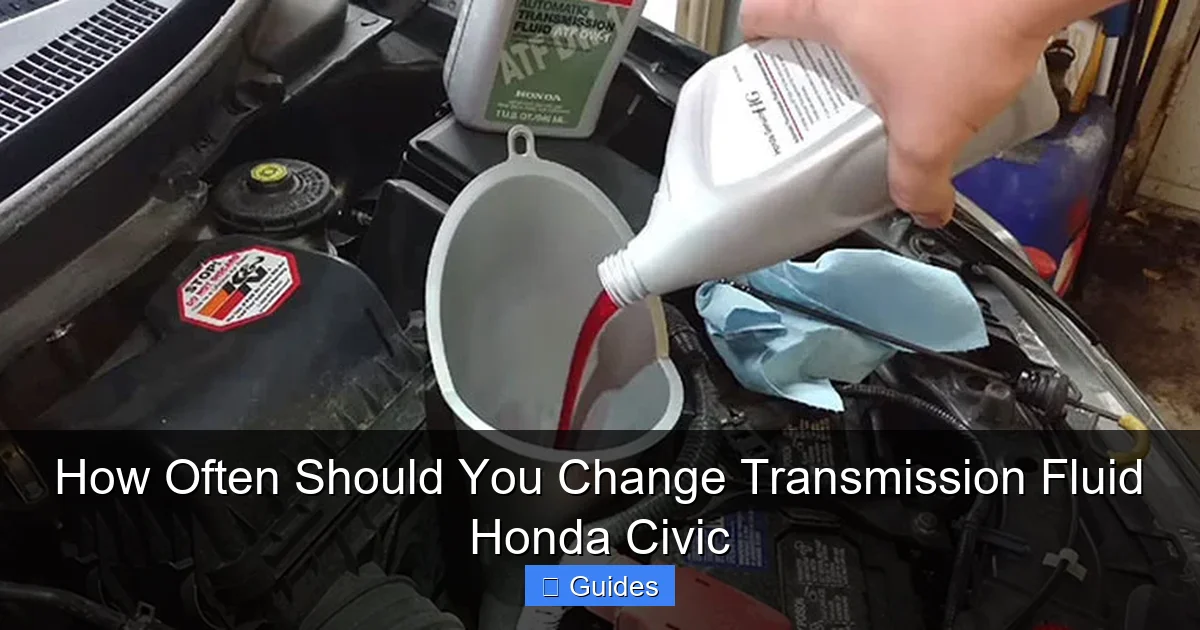
Visual guide about How Often Should You Change Transmission Fluid Honda Civic
Image source: hondatheotherside.com
Even if you’re following the recommended schedule, it’s smart to watch for signs that your transmission fluid needs attention. Early detection can prevent major problems and keep your Civic running smoothly.
Visual and Smell Checks
One of the easiest ways to check your transmission fluid is by inspecting the dipstick (if your model has one). Pull it out, wipe it clean, reinsert it, and check the level and color.
Fresh transmission fluid is usually bright red and translucent. If it’s dark brown, black, or has a burnt smell, it’s time for a change. Cloudy or milky fluid may indicate coolant contamination, which is a serious issue requiring immediate attention.
Note: Some newer Civics don’t have a dipstick and require a professional inspection using a scan tool.
Driving Performance Issues
Your driving experience can also reveal transmission problems. Pay attention to:
– **Delayed engagement:** When you shift from Park to Drive, does the car hesitate before moving? This could mean the fluid isn’t providing enough hydraulic pressure.
– **Slipping gears:** If the engine revs but the car doesn’t accelerate as expected, the transmission may be slipping due to low or degraded fluid.
– **Rough or jerky shifts:** Instead of smooth transitions, you feel hard jerks or clunks when changing gears.
– **Unusual noises:** Whining, humming, or grinding sounds from the transmission area often indicate low fluid or internal wear.
These symptoms don’t always mean the fluid is bad—they could point to other issues—but they’re strong reasons to check the fluid level and condition.
Dashboard Warning Lights
Modern Civics may display a “Check Engine” or “Transmission” warning light if the system detects a problem. While these lights can have many causes, they shouldn’t be ignored. Use an OBD2 scanner to read the error code and determine if it’s related to the transmission.
Even if no light is on, regular inspections are wise. Prevention is always cheaper than repair.
DIY vs. Professional Transmission Fluid Change
When it’s time to change your transmission fluid, you have two main options: do it yourself or take it to a professional. Both have pros and cons, and the best choice depends on your skill level, tools, and comfort with car maintenance.
Doing It Yourself
Changing transmission fluid at home can save you money and give you peace of mind knowing the job was done right. For many Honda Civics, it’s a straightforward process involving draining the old fluid, replacing the filter (if applicable), and refilling with new fluid.
Here’s a basic overview:
1. **Warm up the engine:** Run the car for a few minutes to warm the fluid, making it easier to drain.
2. **Lift the car safely:** Use jack stands or a lift to access the transmission pan.
3. **Drain the fluid:** Place a drain pan underneath, remove the drain plug, and let the old fluid flow out.
4. **Replace the filter (if applicable):** Some automatics have a replaceable filter; manuals typically don’t.
5. **Reinstall the pan and refill:** Reattach the pan, replace the drain plug, and add new fluid through the dipstick tube or fill port.
6. **Check the level:** Start the engine, shift through the gears, and check the fluid level with the dipstick.
Tips for a Successful DIY Change
– Always use the correct fluid type (e.g., Honda ATF-DW1 for most 2006+ automatics).
– Don’t overfill—too much fluid can cause foaming and overheating.
– Dispose of old fluid responsibly at a recycling center or auto parts store.
– If your Civic has a CVT, avoid DIY changes unless you’re experienced—CVTs are more sensitive and require precise procedures.
When to Go to a Professional
While DIY is possible, many owners prefer professional service for several reasons:
– **Specialized equipment:** Shops use fluid exchangers that can remove nearly all old fluid, including from the torque converter, which a simple drain can’t reach.
– **Proper disposal:** Professionals handle hazardous waste correctly.
– **Inspection:** Technicians can check for leaks, worn parts, or other issues during the service.
– **Warranty protection:** If your car is under warranty, using a certified Honda technician ensures compliance.
A professional transmission fluid change typically costs $100 to $250, depending on your location and the shop. Given the potential cost of transmission repair, this is a worthwhile investment.
Choosing the Right Transmission Fluid
Using the wrong fluid can damage your transmission, so it’s crucial to choose the correct type. Honda specifies particular formulations for different models, and using anything else can void your warranty or cause performance issues.
Honda Genuine ATF vs. Aftermarket Options
Honda recommends using their Genuine Automatic Transmission Fluid (ATF), such as ATF-Z1 or ATF-DW1, depending on your model year. These fluids are specifically engineered for Honda transmissions and meet strict performance standards.
Aftermarket fluids may be cheaper, but they don’t always meet Honda’s specifications. Some may claim compatibility, but even small differences in viscosity or additives can affect performance.
For example, using a generic fluid in a CVT can cause slipping or premature wear. Stick with Honda-approved fluids or equivalents that meet Honda’s HTO-06 standard.
Can You Mix Fluids?
No—never mix different types of transmission fluid. Even if they look similar, combining fluids can alter their chemical properties and reduce effectiveness. If you’re unsure what’s in your transmission, have it completely flushed and refilled with the correct fluid.
Fluid for Manual Transmissions
Manual Civics typically use gear oil, not automatic transmission fluid. Common specifications include 75W-80 or 75W-90 synthetic gear oil. Check your manual for the exact recommendation.
Conclusion: Protect Your Civic with Regular Maintenance
Your Honda Civic is designed to last for hundreds of thousands of miles—but only if you take care of it. Changing the transmission fluid on time is one of the most effective ways to protect your investment and ensure smooth, reliable performance.
While Honda’s recommendations provide a solid starting point, your actual driving habits and environment should guide your maintenance schedule. If you frequently drive in severe conditions, don’t wait for the Maintenance Minder—change the fluid every 15,000 to 30,000 miles.
Whether you do it yourself or visit a professional, using the right fluid and following proper procedures is essential. And remember: a small investment in routine maintenance today can prevent a major repair bill tomorrow.
By staying proactive and attentive to your Civic’s needs, you’ll enjoy years of trouble-free driving and peace of mind on the road.
Frequently Asked Questions
How often should I change transmission fluid in my Honda Civic?
Honda recommends changing transmission fluid every 30,000 to 60,000 miles for most automatic Civics, and every 60,000 to 100,000 miles for manuals. However, if you drive in severe conditions, change it every 15,000 to 30,000 miles.
Can I check my Honda Civic’s transmission fluid myself?
Yes, if your model has a dipstick. Pull it out, wipe it clean, reinsert it, and check the level and color. Fresh fluid is bright red; dark or burnt-smelling fluid means it’s time for a change.
What happens if I don’t change my transmission fluid?
Old fluid can cause overheating, slipping gears, rough shifting, and eventually transmission failure. Repairing or replacing a transmission can cost thousands of dollars.
Can I use any transmission fluid in my Honda Civic?
No. Always use Honda Genuine ATF or an approved equivalent like ATF-DW1. Using the wrong fluid can damage your transmission and void your warranty.
Is a transmission flush better than a drain and fill?
A flush removes more old fluid, including from the torque converter, and is often recommended for high-mileage vehicles. A simple drain and fill is sufficient for routine maintenance.
How much does a transmission fluid change cost for a Honda Civic?
Professional service typically costs $100 to $250. DIY costs less—around $30 to $60 for fluid and a filter—if you have the tools and experience.

At CarLegit, we believe information should be clear, factual, and genuinely helpful. That’s why every guide, review, and update on our website is created with care, research, and a strong focus on user experience.