
Winter doesn’t have to mean a dead motorcycle battery. The right battery tender keeps your bike ready to ride, even in sub-zero temperatures. We’ve tested and reviewed the top options to help you choose the best battery tender for motorcycle in freezing temperature—so you never get stranded.
In This Article
- 1 Key Takeaways
- 2 📑 Table of Contents
- 3 Why Your Motorcycle Battery Needs Extra Care in Freezing Temperatures
- 4 How Cold Weather Affects Motorcycle Batteries
- 5 What to Look for in a Battery Tender for Freezing Temperatures
- 6 Top 5 Battery Tenders for Motorcycles in Freezing Temperatures
- 7 How to Use a Battery Tender in Cold Weather
- 8 Common Mistakes to Avoid
- 9 Conclusion: Stay Ready to Ride, No Matter the Weather
- 10 Frequently Asked Questions
- 10.1 Can a battery tender freeze in cold weather?
- 10.2 How long can I leave a battery tender connected?
- 10.3 Will a battery tender work on a completely dead battery?
- 10.4 Can I use a car battery tender on my motorcycle?
- 10.5 Do I need a special tender for lithium motorcycle batteries?
- 10.6 Should I remove the battery before using a tender?
Key Takeaways
- Freeze-proof charging technology: The best battery tenders use temperature-compensated charging to adjust voltage based on ambient cold, preventing undercharging or damage.
- Smart maintenance mode: Look for tenders with float or maintenance modes that keep batteries at optimal charge without overcharging during long winter storage.
- Compatibility with all battery types: Whether you have a lead-acid, AGM, gel, or lithium-ion battery, choose a tender that supports multiple chemistries safely.
- Weather-resistant design: Outdoor-rated enclosures and cold-weather cables ensure reliable performance in snow, ice, and freezing rain.
- Safety features matter: Reverse polarity protection, spark-proof clamps, and short-circuit prevention are essential for safe winter use.
- Ease of use and portability: Compact, lightweight tenders with quick-connect harnesses make winter battery care simple and hassle-free.
- Trusted brands deliver results: Products from Battery Tender, NOCO, and CTEK consistently rank highest for cold-weather reliability and durability.
📑 Table of Contents
- Why Your Motorcycle Battery Needs Extra Care in Freezing Temperatures
- How Cold Weather Affects Motorcycle Batteries
- What to Look for in a Battery Tender for Freezing Temperatures
- Top 5 Battery Tenders for Motorcycles in Freezing Temperatures
- How to Use a Battery Tender in Cold Weather
- Common Mistakes to Avoid
- Conclusion: Stay Ready to Ride, No Matter the Weather
Why Your Motorcycle Battery Needs Extra Care in Freezing Temperatures
When winter hits, your motorcycle might be parked for weeks—or months. But even when it’s sitting in the garage or under a tarp, your battery is working hard. Cold weather slows down the chemical reactions inside a lead-acid or lithium battery, reducing its ability to hold and deliver charge. In fact, at 32°F (0°C), a battery can lose up to 35% of its cranking power. At 0°F (-18°C), that number jumps to 60%. That’s why a dead battery is one of the most common winter motorcycle problems.
Without proper care, your battery can freeze, swell, or permanently lose capacity. And once a battery freezes, it’s often ruined. The good news? A high-quality battery tender can prevent all of this. Unlike a standard charger, a battery tender is designed for long-term maintenance. It monitors the battery’s state of charge and delivers just the right amount of power to keep it healthy—without overcharging. For riders in cold climates, investing in the best battery tender for motorcycle in freezing temperature isn’t just smart—it’s essential.
How Cold Weather Affects Motorcycle Batteries
The Science Behind Battery Performance in the Cold
Batteries rely on chemical reactions to produce electricity. In cold temperatures, these reactions slow down significantly. This means the battery can’t deliver the same amount of current, making it harder to start your bike. Additionally, cold weather increases the internal resistance of the battery, which further reduces performance. Even if your battery shows a full charge on a voltmeter, it may not have enough power to turn over the engine in freezing conditions.
Visual guide about Best Battery Tender for Motorcycle in Freezing Temperature
Image source: m.media-amazon.com
Risks of Freezing and Sulfation
A discharged battery is especially vulnerable to freezing. Water in the electrolyte can turn to ice, expanding and cracking the battery case or damaging internal plates. This kind of damage is often irreversible. Another cold-weather enemy is sulfation—when lead sulfate crystals build up on the battery plates during discharge. In cold weather, sulfation happens faster and can permanently reduce battery capacity. A battery tender combats both issues by maintaining a full charge, preventing deep discharge, and minimizing sulfation.
Real-World Example: The Difference a Tender Makes
Imagine two identical motorcycles stored over winter. One has a battery tender connected; the other doesn’t. In spring, the untended bike struggles to start—or doesn’t start at all. The battery may read 12.2 volts, but that’s misleading. It’s actually only 50% charged and may not deliver enough current to crank the engine. The tended bike, however, starts instantly. Its battery stayed at 12.6–12.8 volts, fully charged and ready to go. This isn’t just theory—it’s what riders in Minnesota, Canada, and the Alps experience every year.
What to Look for in a Battery Tender for Freezing Temperatures
Temperature-Compensated Charging
The most important feature for cold-weather use is temperature-compensated charging. This technology adjusts the charging voltage based on the ambient temperature. In cold conditions, the tender increases voltage slightly to ensure the battery reaches a full charge. In warmer conditions, it reduces voltage to prevent overcharging. Without this feature, your tender might undercharge in winter, leaving your battery weak and vulnerable.
Visual guide about Best Battery Tender for Motorcycle in Freezing Temperature
Image source: bikersrights.com
Multi-Stage Charging Process
Top-tier battery tenders use a multi-stage charging process: bulk, absorption, and float. During the bulk stage, the tender delivers maximum current to quickly recharge a depleted battery. In the absorption stage, it slows down and holds a steady voltage to top off the charge. Finally, in float mode, it maintains the battery at 100% without overcharging. This process is especially important in winter, when batteries take longer to charge due to cold.
Compatibility with Your Battery Type
Not all battery tenders work with all battery types. Most motorcycles use lead-acid, AGM (Absorbent Glass Mat), or lithium-ion batteries. Some older models still have conventional flooded lead-acid batteries. Make sure your tender supports your specific battery chemistry. For example, lithium batteries require a different charging profile than lead-acid. Using the wrong tender can damage the battery or even pose a fire risk. Look for tenders labeled as “multi-chemistry” or “universal” if you’re unsure.
Weather Resistance and Durability
If you’re storing your bike outside or in an unheated garage, your tender needs to withstand the elements. Look for models with weather-resistant casings, cold-rated cables (that stay flexible in freezing temps), and outdoor-safe connectors. Some tenders are rated for use down to -4°F (-20°C) or lower. Also, check the cable length—longer cables (6–12 feet) give you more flexibility in where you can plug in.
Safety Features You Can’t Ignore
Safety should never be an afterthought. The best battery tenders include reverse polarity protection (so you won’t fry the unit if you connect the clamps backward), spark-proof technology, and short-circuit protection. Overcharge protection is also critical—especially during long winter storage. These features not only protect your battery but also reduce the risk of fire or electrical damage.
Top 5 Battery Tenders for Motorcycles in Freezing Temperatures
1. Battery Tender Plus 12V 1.25A
The Battery Tender Plus is a classic for a reason. It’s reliable, affordable, and built to handle cold weather. With temperature-compensated charging and a 4-step charging process (initialize, bulk, absorption, float), it keeps your battery in peak condition all winter. It works with lead-acid and AGM batteries and includes all the safety features you’d expect. The 1.25-amp output is perfect for motorcycles—enough to charge quickly but gentle enough for long-term maintenance. Plus, the LED indicators make it easy to see the charging status at a glance.
Visual guide about Best Battery Tender for Motorcycle in Freezing Temperature
Image source: m.media-amazon.com
2. NOCO Genius1
The NOCO Genius1 is a compact, smart charger that punches above its weight. It’s only 1-amp, but it’s packed with technology. It features temperature compensation, multi-stage charging, and compatibility with lead-acid, AGM, gel, and lithium batteries. The Genius1 also has a “recondition” mode that can help revive slightly sulfated batteries—a nice bonus for older bikes. Its weather-resistant design and cold-flex cables make it ideal for winter use. And at under $50, it’s one of the best values on the market.
3. CTEK MXS 5.0
For riders who want premium performance, the CTEK MXS 5.0 is a top choice. This 5-amp charger is powerful enough to revive deeply discharged batteries but smart enough to maintain them safely. It uses CTEK’s patented 8-step charging process, including a desulfation mode that can extend battery life. The MXS 5.0 works with all battery types and includes temperature compensation. It’s also weatherproof and comes with a 5-year warranty. While it’s pricier than some options, its reliability in extreme cold makes it worth the investment.
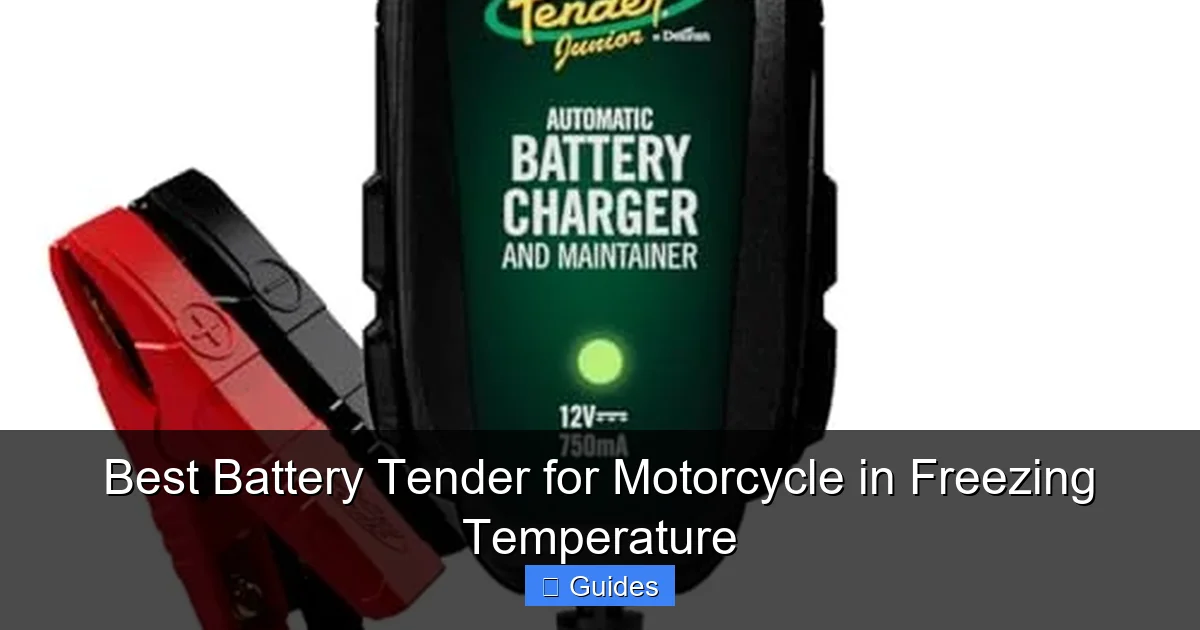
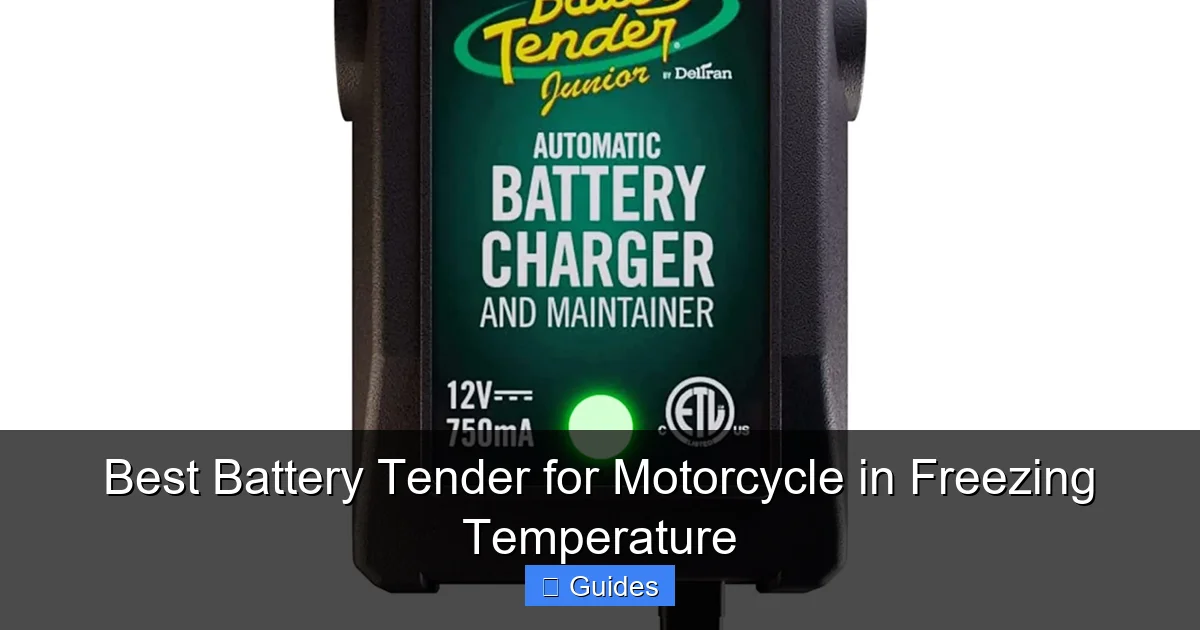
4. Battery Tender Junior 12V 0.75A
If you’re on a tight budget, the Battery Tender Junior is a solid pick. At just 0.75 amps, it’s slower than the Plus model, but it’s still effective for maintenance charging. It includes temperature compensation and a 4-stage charging process. It’s compatible with lead-acid and AGM batteries and has all the standard safety features. The compact size makes it easy to store, and the quick-disconnect harness lets you plug in without removing the battery. It’s a great entry-level option for casual riders in cold climates.
5. NOCO Genius5
The NOCO Genius5 is the bigger brother to the Genius1, offering 5 amps of power for faster charging. It’s perfect if you need to top off a battery quickly before a winter ride. Like the Genius1, it supports all battery types and includes temperature compensation, reconditioning, and float mode. The built-in battery health monitor gives you real-time feedback on your battery’s condition. It’s also weather-resistant and comes with a 5-year warranty. If you ride year-round or have multiple vehicles, the Genius5 is a versatile, long-term solution.
How to Use a Battery Tender in Cold Weather
Step-by-Step Setup Guide
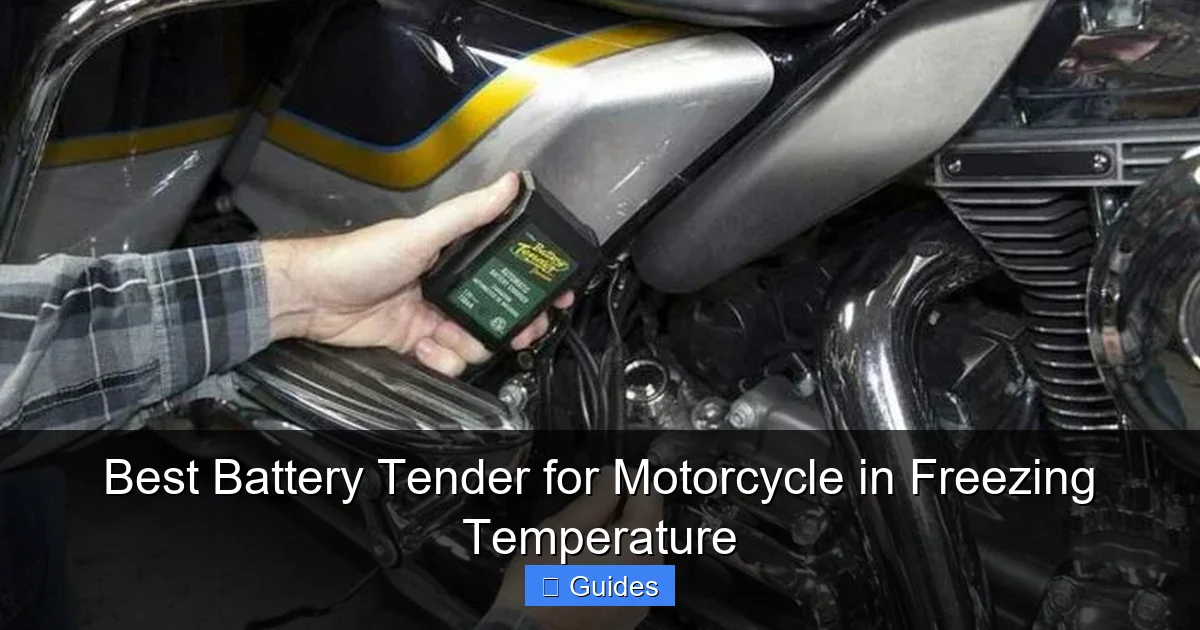
Using a battery tender in freezing temperatures is simple, but a few best practices ensure maximum effectiveness. First, clean the battery terminals with a wire brush to remove corrosion. Poor connections can prevent proper charging. Next, connect the tender’s clamps—red to positive, black to negative. If your tender has a quick-disconnect harness, install it permanently on the battery for easy plug-in access. Then, plug the tender into a GFCI outlet (important for outdoor or damp locations). Finally, turn it on and let it do its job.
Where to Store Your Motorcycle
Location matters. If possible, store your bike in a garage or shed. Even an unheated space is better than leaving it outside. Cold concrete floors can draw heat away from the battery, so consider placing the bike on a wooden pallet or rubber mat. If you must store it outside, use a high-quality motorcycle cover and consider a battery insulator or thermal wrap for extra protection.
How Often to Check the Tender
Most modern tenders are designed to run unattended for months. But it’s still a good idea to check on it every few weeks. Make sure the tender is still plugged in, the LEDs are showing the correct status, and there’s no snow or ice blocking ventilation. Also, inspect the battery for swelling, leaks, or corrosion. A quick visual check takes just a minute but can prevent bigger problems down the road.
Tips for Long-Term Winter Storage
For extended storage (3+ months), consider these extra steps: Remove the battery and store it indoors in a cool, dry place. This reduces the risk of freezing and extends battery life. If you leave the battery in the bike, use a tender with a maintenance mode and check it monthly. Also, top off the fuel tank and add a fuel stabilizer to prevent condensation and gum buildup. Finally, inflate the tires to the recommended pressure to avoid flat spots.
Common Mistakes to Avoid
Using a Regular Charger Instead of a Tender
A standard battery charger is designed for quick recharges, not long-term maintenance. If you leave it connected too long, it can overcharge and damage the battery. A tender, on the other hand, switches to float mode once the battery is full. Always use a dedicated battery tender for winter storage.
Ignoring Battery Type Compatibility
Using a lead-acid tender on a lithium battery—or vice versa—can be dangerous. Lithium batteries require precise voltage control and can overheat or catch fire if charged incorrectly. Always check the manufacturer’s recommendations and choose a tender that matches your battery type.
Storing the Bike Without Disconnecting Accessories
Even when the key is off, some motorcycle accessories (like alarms, GPS trackers, or USB chargers) can draw small amounts of power. Over time, this “parasitic drain” can discharge the battery. To prevent this, disconnect the negative terminal or use a tender with a low-voltage disconnect feature.
Skipping Regular Maintenance
A battery tender isn’t a set-it-and-forget-it solution. You still need to check the battery, clean terminals, and ensure the tender is working. Neglecting basic maintenance can lead to unexpected failures, even with the best equipment.
Conclusion: Stay Ready to Ride, No Matter the Weather
Winter doesn’t have to mean saying goodbye to your motorcycle. With the right care and the best battery tender for motorcycle in freezing temperature, you can keep your bike in top shape all season long. The key is choosing a tender with temperature-compensated charging, multi-stage processing, and compatibility with your battery type. Brands like Battery Tender, NOCO, and CTEK offer reliable, weather-resistant options that deliver real results in cold climates.
Investing in a quality battery tender is one of the smartest things you can do for your motorcycle. It saves you money by extending battery life, prevents frustrating no-starts in spring, and gives you peace of mind all winter. Whether you’re storing your bike for a few months or riding through the snow, don’t leave your battery to chance. Plug in, power up, and stay ready to ride—no matter how cold it gets outside.
Frequently Asked Questions
Can a battery tender freeze in cold weather?
No, a properly designed battery tender won’t freeze. Most models are built with weather-resistant casings and cold-rated components. However, always check the manufacturer’s temperature rating before use in extreme cold.
How long can I leave a battery tender connected?
You can leave a battery tender connected indefinitely. Modern tenders switch to float mode once the battery is fully charged, preventing overcharging and maintaining optimal voltage.
Will a battery tender work on a completely dead battery?
It depends. Most tenders can revive batteries with a partial charge, but deeply discharged or sulfated batteries may not respond. Some models, like the CTEK MXS 5.0, include reconditioning modes to help recover weak batteries.
Can I use a car battery tender on my motorcycle?
It’s not recommended. Car tenders often deliver higher amperage, which can overcharge or damage a smaller motorcycle battery. Always use a tender rated for motorcycle or powersport batteries.
Do I need a special tender for lithium motorcycle batteries?
Yes. Lithium batteries require a specific charging profile. Use a tender labeled as lithium-compatible, such as the NOCO Genius series or CTEK MXS 5.0, to avoid damage or safety risks.
Should I remove the battery before using a tender?
It’s not necessary, but removing the battery and storing it indoors can extend its life. If left in the bike, ensure the tender is compatible with your setup and check it periodically.

At CarLegit, we believe information should be clear, factual, and genuinely helpful. That’s why every guide, review, and update on our website is created with care, research, and a strong focus on user experience.