
Choosing the right scanner for your Chevy, Ford, or Dodge 2 vehicle can save time, money, and frustration. This guide breaks down the top diagnostic tools, what to look for, and how to pick the perfect one for your needs—whether you’re a weekend mechanic or a professional technician.
In This Article
- 1 Key Takeaways
- 2 📑 Table of Contents
- 3 Introduction: Why You Need a Reliable Scanner for Chevy, Ford, and Dodge 2
- 4 What to Look for in a Scanner for Chevy, Ford, and Dodge 2
- 5 Top Scanners for Chevy, Ford, and Dodge 2 Vehicles
- 6 How to Use Your Scanner: Step-by-Step Guide
- 7 Common Issues and How Your Scanner Can Help
- 8 Maintenance Tips to Keep Your Scanner Working
- 9 Conclusion: Choose the Right Tool for the Job
- 10 Frequently Asked Questions
- 10.1 What is the best scanner for Chevy Ford and Dodge 2 trucks?
- 10.2 Can a basic OBD2 scanner work on Dodge Cummins engines?
- 10.3 Do I need a scanner with ABS and SRS coverage?
- 10.4 How often should I update my scanner?
- 10.5 Can I use a smartphone app instead of a standalone scanner?
- 10.6 Will clearing a code fix my check engine light?
Key Takeaways
- Compatibility is crucial: Not all scanners work with all makes and models. Ensure your tool supports Chevy, Ford, and Dodge 2 vehicles, including older and newer models.
- OBD2 support is a must: Most vehicles from 1996 onward use OBD2 systems. A good scanner should read and clear codes across all three brands.
- Live data and freeze frame features: These help diagnose intermittent issues by showing real-time sensor data and capturing conditions when a fault occurred.
- User-friendly interface matters: Look for clear screens, intuitive menus, and easy navigation—especially if you’re not a professional mechanic.
- Updates and software matter: Regular firmware and software updates ensure your scanner stays compatible with new vehicle models and systems.
- Price vs. performance balance: You don’t need the most expensive tool to get great results. Mid-range scanners often offer the best value for home users.
- Brand-specific enhancements: Some scanners offer enhanced diagnostics for Ford’s Powerstroke, Chevy’s Duramax, or Dodge’s Cummins engines—ideal for diesel owners.
📑 Table of Contents
- Introduction: Why You Need a Reliable Scanner for Chevy, Ford, and Dodge 2
- What to Look for in a Scanner for Chevy, Ford, and Dodge 2
- Top Scanners for Chevy, Ford, and Dodge 2 Vehicles
- How to Use Your Scanner: Step-by-Step Guide
- Common Issues and How Your Scanner Can Help
- Maintenance Tips to Keep Your Scanner Working
- Conclusion: Choose the Right Tool for the Job
Introduction: Why You Need a Reliable Scanner for Chevy, Ford, and Dodge 2
If you own a Chevy, Ford, or Dodge 2 vehicle—especially one with a diesel engine like the Duramax, Powerstroke, or Cummins—you know how complex modern trucks can be. These machines are built tough, but they’re also packed with electronics, sensors, and onboard computers that monitor everything from fuel injection to emissions. When something goes wrong, the check engine light might flash, but that little light doesn’t tell you much on its own.
That’s where a good scanner comes in. A quality diagnostic tool doesn’t just read error codes—it helps you understand what’s really happening under the hood. Whether you’re troubleshooting a rough idle, diagnosing a transmission hiccup, or just doing routine maintenance, the right scanner can save you hundreds of dollars in mechanic fees. And for DIYers, it’s like having a professional mechanic in your toolbox.
But with so many scanners on the market, how do you choose the best one? Not all tools are created equal. Some are basic code readers that only tell you the problem. Others go deeper, offering live data, system tests, and even bi-directional controls. The best scanner for Chevy Ford and Dodge 2 vehicles will depend on your specific needs, budget, and how much you want to dive into diagnostics.
What to Look for in a Scanner for Chevy, Ford, and Dodge 2
Visual guide about Best Scanner for Chevy Ford and Dodge 2
Image source: tieronetransmissions.com
When shopping for a scanner, it’s easy to get overwhelmed by technical jargon and flashy features. But don’t worry—we’ll break it down into simple, practical terms. Here’s what really matters when choosing a scanner for your Chevy, Ford, or Dodge 2 truck.
1. Vehicle Compatibility
First and foremost, your scanner must work with your vehicle. While most OBD2 scanners support vehicles from 1996 and newer, not all are created equal when it comes to brand-specific systems. Chevy, Ford, and Dodge (especially Dodge 2 with Cummins engines) often use proprietary protocols or enhanced diagnostics that generic scanners can’t access.
For example, a basic OBD2 reader might pull a P0401 code (EGR flow insufficient) on a Ford F-250, but it won’t tell you if the issue is with the EGR valve, the sensor, or the wiring. A more advanced scanner, however, can run an EGR test, monitor live EGR position data, and even command the valve to open and close—giving you a much clearer picture.
So, always check the scanner’s compatibility list. Look for tools that specifically mention support for GM (Chevy), Ford, and Dodge/Chrysler platforms. Some scanners even list compatibility with specific engines like the 6.7L Powerstroke or 6.6L Duramax.
2. OBD2 and Enhanced Diagnostics
All modern vehicles use the OBD2 (On-Board Diagnostics II) system, which standardizes how vehicles report problems. A good scanner should read and clear OBD2 trouble codes across all three brands. But here’s the catch: OBD2 only covers emissions-related systems. That means if your transmission is slipping or your ABS light is on, a basic OBD2 scanner might not help.
That’s why you need a scanner with enhanced diagnostics. These tools go beyond standard OBD2 and can access manufacturer-specific systems like:
– ABS (Anti-lock Braking System)
– SRS (Airbag system)
– Transmission control
– Body control modules
For instance, if your Dodge 2500 has an ABS warning light, a basic scanner might not even see the ABS module. But a scanner with enhanced capabilities can read ABS codes, view wheel speed sensor data, and even perform brake bleed procedures.
3. Live Data and Freeze Frame
One of the most powerful features of a good scanner is live data. This shows real-time information from your vehicle’s sensors—things like engine RPM, coolant temperature, fuel pressure, and oxygen sensor readings. It’s like watching your truck’s vital signs in real time.
Imagine your Chevy Silverado is running rough at idle. A live data stream might show that the MAF (Mass Air Flow) sensor is reading abnormally low, even though the engine is getting plenty of air. That could point to a dirty sensor or a vacuum leak.
Freeze frame data is equally useful. When a trouble code is triggered, the scanner “freezes” a snapshot of the engine’s conditions at that moment—speed, load, temperature, etc. This helps you understand what was happening when the problem occurred. Was the engine cold? Was it under heavy load? That context can be the difference between a quick fix and hours of guesswork.
4. Ease of Use
Let’s be honest—most of us aren’t professional mechanics. We want a scanner that’s easy to use, with a clear display, simple menus, and helpful explanations. A scanner with a color screen, intuitive navigation, and built-in code definitions is worth its weight in gold.
Look for tools that offer:
– Large, backlit screens (especially useful in dim garages)
– One-touch code reading and clearing
– Built-in DTC (Diagnostic Trouble Code) library
– Help menus or troubleshooting tips
Some scanners even come with mobile apps that let you view data on your phone or tablet. This can be a game-changer if you prefer a bigger screen or want to save diagnostic logs.
5. Update Capability
Vehicle technology evolves fast. New models come out every year with updated software, new sensors, and revised diagnostic protocols. If your scanner can’t be updated, it will quickly become obsolete.
The best scanners allow you to download firmware and software updates via USB or Wi-Fi. This ensures compatibility with newer Chevy, Ford, and Dodge 2 models. Some brands even offer free lifetime updates—definitely a feature to look for.
6. Price vs. Performance
Scanners range from under $30 to over $2,000. But you don’t need to spend a fortune to get great results. For most DIYers, a mid-range scanner ($100–$300) offers the best balance of features and affordability.
Basic code readers ($20–$50) are fine for reading and clearing check engine lights, but they lack live data and enhanced diagnostics. Professional-grade tools ($500+) offer bi-directional controls, advanced programming, and full system access—great for shops, but overkill for home use.
The sweet spot? Look for scanners in the $150–$250 range. These often include live data, freeze frame, ABS/SRS coverage, and regular updates—perfect for tackling most issues on Chevy, Ford, and Dodge 2 trucks.
Top Scanners for Chevy, Ford, and Dodge 2 Vehicles
Visual guide about Best Scanner for Chevy Ford and Dodge 2
Image source: youcanic.com
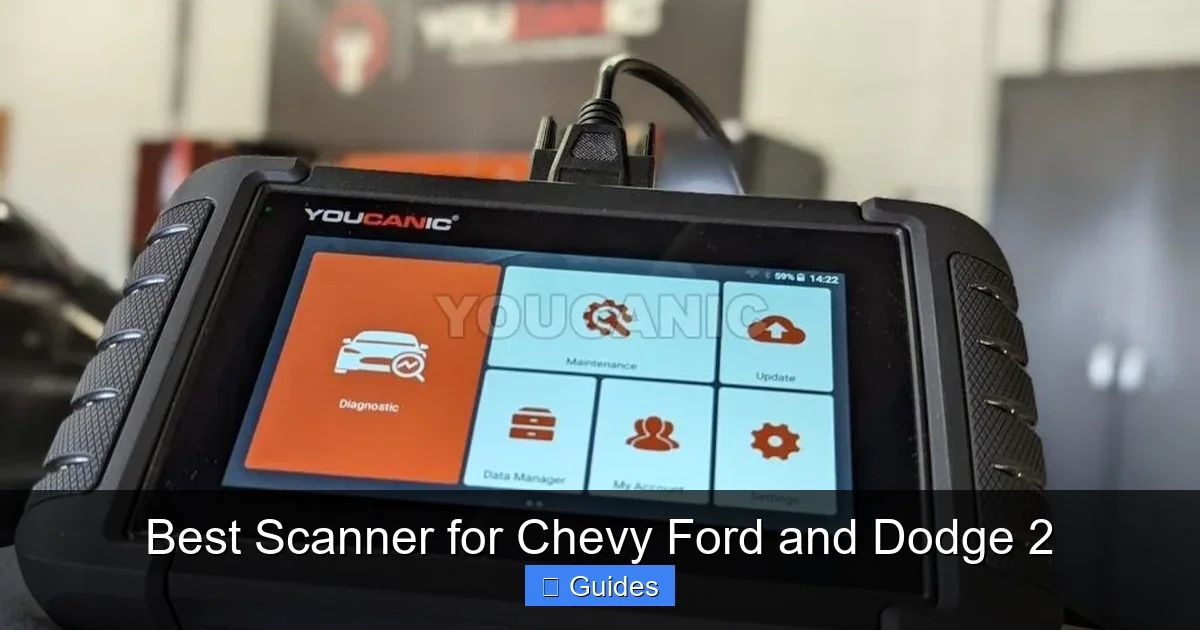
Now that you know what to look for, let’s dive into some of the best scanners on the market. These tools have been tested and reviewed by mechanics and DIYers alike, and they offer excellent performance for the price.
1. Autel MaxiCOM MK808
The Autel MaxiCOM MK808 is a favorite among professionals and serious DIYers. It’s a full-featured diagnostic tool that supports Chevy, Ford, and Dodge 2 vehicles with enhanced diagnostics.
Key features:
– 7-inch touchscreen with crisp display
– Reads and clears codes for engine, transmission, ABS, SRS, and more
– Live data streaming with graphing capability
– Freeze frame and playback functions
– Wi-Fi updates and cloud-based diagnostics
– Compatible with over 80 vehicle makes and models
Why it’s great: The MK808 offers professional-level features at a consumer-friendly price. It’s especially strong on Ford Powerstroke and Dodge Cummins engines, with access to diesel-specific systems like DPF (Diesel Particulate Filter) regeneration.
One user reported using it to diagnose a no-start issue on a 2015 Ford F-350 with a 6.7L Powerstroke. The scanner showed low fuel pressure and helped pinpoint a failing fuel pump—saving a $1,200 tow and diagnostic fee.
2. Foxwell NT530 Pro
The Foxwell NT530 Pro is another excellent mid-range option. It’s compact, easy to use, and packed with features for Chevy, Ford, and Dodge 2 trucks.
Key features:
– 4.3-inch color screen
– Full OBD2 support plus enhanced diagnostics
– Live data with customizable views
– ABS, SRS, and transmission coverage
– One-click code reading and clearing
– Free lifetime updates
Why it’s great: The NT530 Pro is user-friendly and reliable. It’s perfect for weekend mechanics who want more than a basic code reader but don’t need professional programming tools.
A Chevy Duramax owner used it to troubleshoot a P2459 code (DPF regeneration issue). The scanner showed that the DPF was 98% full and allowed the user to initiate a forced regeneration—fixing the problem without a dealer visit.
3. Launch CRP129X
The Launch CRP129X is a budget-friendly scanner that punches above its weight. At under $200, it offers features typically found in more expensive tools.
Key features:
– 4-inch color screen
– Reads and clears engine, ABS, SRS, and transmission codes
– Live data with graphing
– Freeze frame and I/M readiness status
– Wi-Fi updates
– Compatible with GM, Ford, and Chrysler systems
Why it’s great: It’s affordable, reliable, and surprisingly capable. It’s ideal for owners of older Chevy, Ford, and Dodge 2 trucks who need basic diagnostics without breaking the bank.
One Dodge Ram 2500 owner used it to diagnose a P0700 transmission code. The live data showed erratic solenoid signals, leading to a simple solenoid replacement that fixed the shifting issue.
4. BlueDriver Bluetooth Pro
If you prefer a smartphone-based solution, the BlueDriver Bluetooth Pro is a top choice. It connects to your phone via Bluetooth and uses a powerful app to display diagnostics.
Key features:
– Works with iOS and Android
– Reads and clears all OBD2 codes
– Live data with customizable dashboards
– Freeze frame and trip logging
– Built-in repair reports with fix suggestions
– No subscription fees
Why it’s great: It’s portable, convenient, and integrates seamlessly with your phone. The app is intuitive and offers helpful explanations for each code.
A Ford F-150 owner used BlueDriver to diagnose a P0171 (system too lean) code. The live data showed a faulty MAF sensor, and the app even suggested replacement parts and estimated repair costs.
5. Innova 3160g
The Innova 3160g is a solid choice for those who want a standalone scanner with strong brand support. It’s known for its reliability and ease of use.
Key features:
– 3.5-inch color screen
– Reads and clears engine, ABS, and SRS codes
– Live data with graphing
– Smog check readiness monitor
– Built-in code library with definitions
– Compatible with Chevy, Ford, and Dodge
Why it’s great: It’s straightforward and dependable. It’s perfect for quick diagnostics and routine maintenance.
A Chevy Tahoe owner used it to check readiness monitors before a smog test. The scanner showed one monitor wasn’t ready, so they took the truck for a drive cycle—passing the test on the first try.
How to Use Your Scanner: Step-by-Step Guide
Visual guide about Best Scanner for Chevy Ford and Dodge 2
Image source: repairsmith-prod-wordpress.s3.amazonaws.com
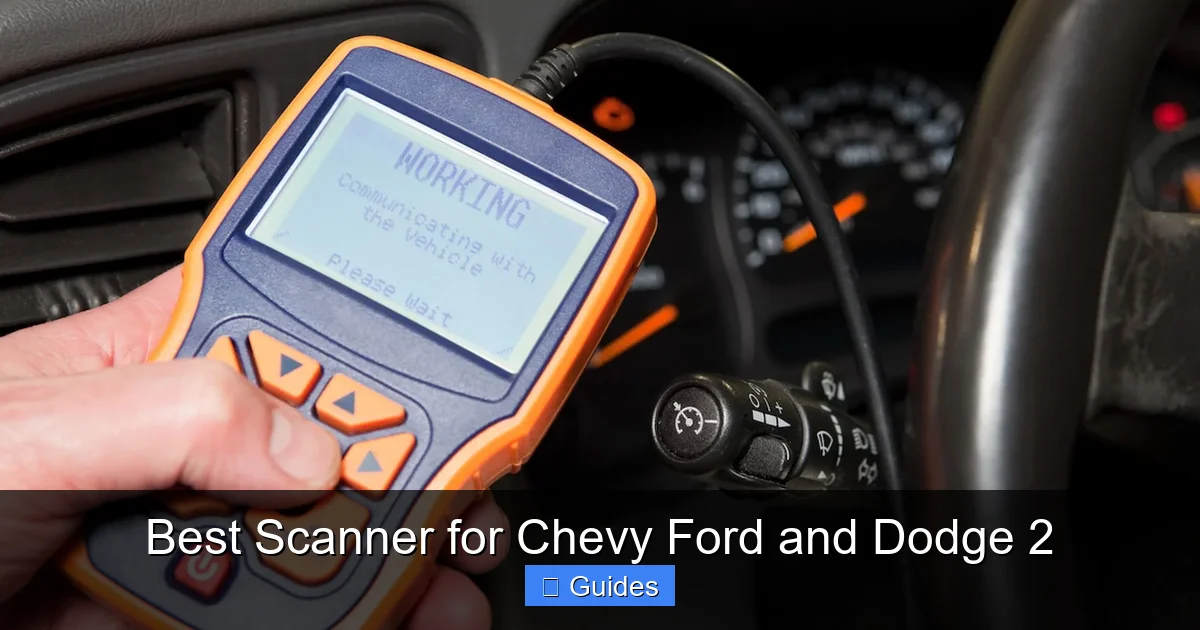
Owning a scanner is one thing—using it effectively is another. Here’s a simple guide to get the most out of your tool.
Step 1: Locate the OBD2 Port
The OBD2 port is usually under the dashboard, near the steering column. In most Chevy, Ford, and Dodge 2 trucks, it’s within easy reach of the driver’s seat. Look for a 16-pin connector—it’s often labeled “OBD” or “DLC.”
Step 2: Plug In the Scanner
Turn off the ignition, plug in the scanner, and then turn the key to the “ON” position (don’t start the engine). The scanner should power up and begin communicating with the vehicle.
Step 3: Read the Codes
Navigate to the “Read Codes” or “DTC” menu. The scanner will retrieve any stored trouble codes. Write them down or take a screenshot if using a phone app.
Step 4: Interpret the Codes
Use the scanner’s built-in code library or a trusted online resource to understand what each code means. For example, P0304 means cylinder 4 is misfiring.
Step 5: View Live Data
Go to the “Live Data” or “Data Stream” menu. Watch key parameters like RPM, coolant temp, and fuel trim. Look for values that seem off—like a MAF sensor reading 0.0 g/s at idle.
Step 6: Clear the Codes
Once you’ve diagnosed and fixed the issue, use the “Clear Codes” function to reset the check engine light. If the problem is truly fixed, the light should stay off.
Step 7: Perform System Tests (if available)
Some scanners let you run tests like EGR actuation, fuel pump control, or ABS bleed. Use these to verify repairs or troubleshoot further.
Common Issues and How Your Scanner Can Help
Let’s look at some real-world problems you might face with your Chevy, Ford, or Dodge 2 truck—and how a good scanner can help solve them.
Check Engine Light On
This is the most common reason people reach for a scanner. A P0420 code (catalyst efficiency below threshold) on a Chevy Silverado might point to a failing catalytic converter. But before you spend $1,000 on a new cat, use live data to check oxygen sensor activity. If the downstream O2 sensor is mirroring the upstream, the cat is likely bad. If not, it could be a sensor or wiring issue.
Transmission Slipping
A P0700 code on a Ford F-250 could mean a transmission problem. Use the scanner to check transmission fluid temperature, solenoid status, and gear position. If solenoids are erratic, it might be a simple electrical issue—not a $3,000 rebuild.
ABS Light On
On a Dodge Ram 2500, an ABS light could mean a bad wheel speed sensor. Use the scanner to view live wheel speed data. If one wheel shows 0 mph while others are moving, that sensor is likely faulty.
DPF Regeneration Issues
Diesel trucks like the Duramax or Cummins often have DPF problems. A P2459 code means the DPF isn’t regenerating. Use the scanner to check DPF soot load and initiate a forced regen if needed. This can save a trip to the dealer.
Maintenance Tips to Keep Your Scanner Working
Your scanner is a valuable tool—treat it well and it will serve you for years.
– Store it in a dry, cool place. Avoid extreme heat or moisture.
– Keep the screen clean with a soft cloth.
– Update the software regularly to ensure compatibility.
– Use a protective case if you transport it often.
– Don’t force the OBD2 connector—align it properly to avoid damage.
Conclusion: Choose the Right Tool for the Job
Finding the best scanner for Chevy Ford and Dodge 2 vehicles doesn’t have to be complicated. Focus on compatibility, features, ease of use, and update capability. Whether you choose the Autel MK808 for its professional features or the BlueDriver for its smartphone convenience, the right tool will pay for itself in saved repairs and peace of mind.
Remember, a scanner isn’t just for when something goes wrong—it’s a preventive maintenance tool. Use it to check readiness monitors before smog tests, monitor fuel trims for efficiency, or verify repairs. With the right scanner in your garage, you’re not just fixing problems—you’re staying ahead of them.
So don’t wait for the check engine light to come on. Invest in a quality scanner today and take control of your vehicle’s health. Your Chevy, Ford, or Dodge 2 will thank you.
Frequently Asked Questions
What is the best scanner for Chevy Ford and Dodge 2 trucks?
The Autel MaxiCOM MK808 and Foxwell NT530 Pro are among the best scanners for Chevy, Ford, and Dodge 2 vehicles. They offer enhanced diagnostics, live data, and strong brand-specific support.
Can a basic OBD2 scanner work on Dodge Cummins engines?
A basic OBD2 scanner can read emissions codes, but it won’t access diesel-specific systems like DPF or turbo controls. For Cummins engines, choose a scanner with enhanced diagnostics.
Do I need a scanner with ABS and SRS coverage?
Yes, if you want to diagnose ABS or airbag issues. Basic scanners only cover the engine. For full diagnostics, look for tools that support ABS, SRS, and transmission systems.
How often should I update my scanner?
Update your scanner whenever new firmware is available—usually every few months. This ensures compatibility with new vehicle models and fixes bugs.
Can I use a smartphone app instead of a standalone scanner?
Yes, apps like BlueDriver work well for basic diagnostics. They’re convenient and affordable, but may lack advanced features like bi-directional controls.
Will clearing a code fix my check engine light?
Clearing a code resets the light, but it won’t fix the underlying problem. If the issue persists, the light will come back on. Always diagnose and repair first.

At CarLegit, we believe information should be clear, factual, and genuinely helpful. That’s why every guide, review, and update on our website is created with care, research, and a strong focus on user experience.