
Choosing the right tires for your 2016 Hyundai Santa Fe Sport can dramatically improve ride quality, fuel efficiency, and safety. This guide breaks down the top tire options across categories, helping you find the perfect match for your driving style and climate.
In This Article
- 1 Key Takeaways
- 2 📑 Table of Contents
- 3 Why Choosing the Right Tires for Your 2016 Hyundai Santa Fe Sport Matters
- 4 Understanding Tire Types: Which One Is Right for You?
- 5 Tire Sizes and Specifications for the 2016 Hyundai Santa Fe Sport
- 6 Top-Rated Tires for the 2016 Hyundai Santa Fe Sport
- 7 Performance Factors to Consider When Choosing Tires
- 8 Installation, Maintenance, and Safety Tips
- 9 Conclusion: Making the Right Choice for Your Santa Fe Sport
- 10 Frequently Asked Questions
- 10.1 What size tires does a 2016 Hyundai Santa Fe Sport use?
- 10.2 Can I use different tire brands on my Santa Fe Sport?
- 10.3 How often should I rotate the tires on my Santa Fe Sport?
- 10.4 Are all-season tires good for snow?
- 10.5 How long do tires typically last on a Santa Fe Sport?
- 10.6 Can I upgrade to larger wheels on my Santa Fe Sport?
Key Takeaways
- All-Season Tires Are Ideal for Most Drivers: The 2016 Hyundai Santa Fe Sport performs best with high-quality all-season tires that balance wet, dry, and light snow traction.
- Consider Your Climate: If you live in an area with heavy snow or extreme heat, consider dedicated winter or summer tires for optimal performance.
- Tire Size Matters: The standard tire size for the Santa Fe Sport is 235/65R17 or 245/60R18, depending on trim—always match OEM specifications.
- Fuel Efficiency and Ride Comfort Are Key: Low rolling resistance and noise-reducing designs enhance both gas mileage and cabin quietness.
- Top Brands Deliver Proven Performance: Michelin, Bridgestone, Goodyear, and Continental consistently rank highest for durability and handling in SUV tires.
- Regular Maintenance Extends Tire Life: Rotate tires every 6,000–8,000 miles and check alignment to prevent uneven wear.
- Budget Wisely: While premium tires cost more upfront, they often last longer and perform better, saving money over time.
📑 Table of Contents
- Why Choosing the Right Tires for Your 2016 Hyundai Santa Fe Sport Matters
- Understanding Tire Types: Which One Is Right for You?
- Tire Sizes and Specifications for the 2016 Hyundai Santa Fe Sport
- Top-Rated Tires for the 2016 Hyundai Santa Fe Sport
- Performance Factors to Consider When Choosing Tires
- Installation, Maintenance, and Safety Tips
- Conclusion: Making the Right Choice for Your Santa Fe Sport
Why Choosing the Right Tires for Your 2016 Hyundai Santa Fe Sport Matters
Your 2016 Hyundai Santa Fe Sport is a versatile, mid-size SUV built for comfort, reliability, and everyday performance. Whether you’re commuting to work, taking weekend road trips, or navigating city streets, your tires are the only point of contact between your vehicle and the road. That means they play a critical role in safety, handling, fuel economy, and overall driving experience.
Many owners overlook tire selection, assuming that any tire labeled “SUV” will do. But the truth is, not all tires are created equal. The right set can improve braking distance, reduce road noise, enhance cornering stability, and even help you save on gas. On the flip side, the wrong tires can lead to poor traction, faster wear, and a rougher ride.
With so many options on the market, it’s easy to feel overwhelmed. That’s why we’ve put together this comprehensive guide to help you find the best tires for your 2016 Hyundai Santa Fe Sport. We’ll walk you through key factors like tire types, sizes, performance ratings, and top-rated models—so you can make a confident, informed decision.
Understanding Tire Types: Which One Is Right for You?

Visual guide about Best Tires for 2016 Hyundai Santa Fe Sport
Image source: s1.cdn.autoevolution.com
Not all tires are designed for the same conditions. The first step in choosing the best tires for your Santa Fe Sport is understanding the different types available and how they match your driving needs.
All-Season Tires: The Most Popular Choice
All-season tires are the go-to option for most 2016 Hyundai Santa Fe Sport owners. They’re engineered to perform well in a variety of conditions—dry pavement, wet roads, and even light snow. These tires feature a balanced tread pattern and rubber compound that offers reliable grip year-round without the need to swap them seasonally.
For drivers in moderate climates—think parts of the Midwest, Southeast, or Pacific Northwest—all-season tires provide the best mix of comfort, longevity, and performance. They’re quiet, fuel-efficient, and built to last 50,000 to 70,000 miles with proper care.
Top all-season models like the Michelin Defender T+H and Continental CrossContact LX25 are excellent matches for the Santa Fe Sport, offering smooth rides and dependable traction.
All-Weather Tires: A Step Up from All-Season
If you experience occasional snow or icy conditions but don’t want to deal with seasonal tire changes, all-weather tires are a smart compromise. These tires carry the Three-Peak Mountain Snowflake (3PMSF) symbol, meaning they meet strict snow traction standards set by the U.S. Tire Manufacturers Association.
Unlike all-season tires, all-weather tires use a more flexible rubber compound that stays pliable in cold temperatures. This gives them better grip on snow and ice while still performing well in rain and dry conditions.
The Nokian WR G4 and General Altimax Arctic 12 are standout all-weather options that work great for Santa Fe Sport owners in regions with mild to moderate winters.
Winter Tires: For Extreme Cold and Snow
If you live in a region with heavy snowfall, freezing temperatures, or frequent ice—like the Northeast, Upper Midwest, or mountainous areas—winter tires are the safest choice. These tires are made with a softer rubber compound and deeper, more aggressive tread patterns designed specifically for cold-weather performance.
Winter tires significantly improve braking, acceleration, and cornering on snow and ice. In fact, studies show they can reduce stopping distances by up to 30% compared to all-season tires in winter conditions.
While they’re not ideal for summer driving (the soft rubber wears quickly in warm weather), winter tires are worth the investment if safety in harsh conditions is a priority. The Bridgestone Blizzak WS90 and Michelin X-Ice Snow are top-rated winter tires compatible with the Santa Fe Sport.
Touring Tires: For Comfort and Quiet Rides
Touring tires are a subcategory of all-season tires, but they’re specifically designed for long-distance comfort and reduced road noise. If you spend a lot of time on highways or value a smooth, quiet cabin, touring tires are an excellent fit.
These tires often feature advanced noise-canceling technology, reinforced sidewalls for better ride quality, and optimized tread designs that reduce vibration. They’re perfect for families, commuters, and road-trippers.
The Goodyear Assurance MaxLife and Pirelli Scorpion Verde All Season Plus II are premium touring tires that pair beautifully with the Santa Fe Sport’s refined suspension.
Tire Sizes and Specifications for the 2016 Hyundai Santa Fe Sport
Visual guide about Best Tires for 2016 Hyundai Santa Fe Sport
Image source: s1.cdn.autoevolution.com
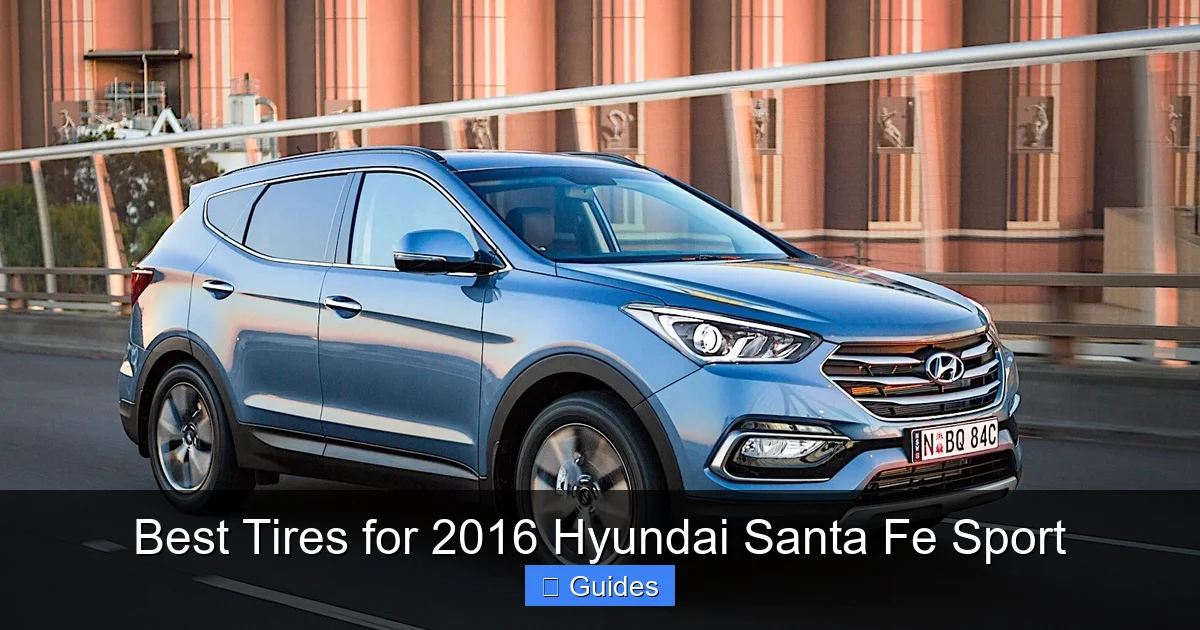
Using the correct tire size is essential for safety, performance, and avoiding damage to your vehicle. The 2016 Hyundai Santa Fe Sport comes in several trim levels, each with different wheel and tire configurations.
Standard Tire Sizes by Trim
Most Santa Fe Sport models roll off the lot with one of two standard tire sizes:
– **235/65R17**: Found on base and mid-level trims with 17-inch wheels. This size offers a comfortable ride and good fuel economy.
– **245/60R18**: Standard on higher trims with 18-inch wheels. Slightly wider, this size improves handling and gives a sportier look.
Always check your owner’s manual or the tire information placard on the driver’s side door jamb to confirm your exact size. Never mix different tire sizes or types on the same axle.
Understanding Tire Codes
Tire sizes may look like a string of numbers, but each part has a specific meaning. Let’s break down 235/65R17:
– **235**: The tire’s width in millimeters (from sidewall to sidewall).
– **65**: The aspect ratio—the height of the sidewall as a percentage of the width. A 65 means the sidewall is 65% of 235mm.
– **R**: Indicates radial construction (the standard for modern tires).
– **17**: The diameter of the wheel in inches.
Sticking to the manufacturer-recommended size ensures your speedometer, ABS, and traction control systems work correctly. Upsizing or downsizing can affect handling, fuel economy, and even void your warranty.
Can You Upgrade Tire Size?
Yes, but with caution. Some owners want to upgrade to larger wheels for a more aggressive look or better handling. While possible, it’s important to maintain the overall diameter of the tire to avoid issues.
For example, you could switch from 235/65R17 to 245/60R18 without changing the overall height much. But going from 17-inch to 20-inch wheels may require a lower-profile tire, which can lead to a harsher ride and increased risk of damage from potholes.
Always consult a tire professional or use an online tire size calculator before making changes.
Top-Rated Tires for the 2016 Hyundai Santa Fe Sport
Visual guide about Best Tires for 2016 Hyundai Santa Fe Sport
Image source: paulstravelpictures.com
Now that you understand tire types and sizing, let’s look at some of the best-performing tires for the 2016 Hyundai Santa Fe Sport. These models have been tested and reviewed by experts and real drivers, earning high marks for performance, durability, and value.
Michelin Defender T+H
The Michelin Defender T+H is a top-tier all-season touring tire that excels in nearly every category. It’s known for its exceptional tread life—often lasting over 80,000 miles—and outstanding wet and dry traction.
Drivers love its quiet, comfortable ride and low rolling resistance, which helps improve fuel economy. The Defender T+H also performs well in light snow, making it a great all-around choice for most Santa Fe Sport owners.
It’s a premium tire with a premium price tag, but the long-term value is hard to beat. If you’re looking for reliability and performance, this is one of the best tires for 2016 Hyundai Santa Fe Sport.
Continental CrossContact LX25
The Continental CrossContact LX25 is another excellent all-season option, especially for SUV drivers who prioritize comfort and handling. It features Continental’s EcoPlus Technology, which reduces rolling resistance and improves fuel efficiency.
The tread design includes wide circumferential grooves for excellent water evacuation, reducing the risk of hydroplaning. It also has a noise-optimized tread pattern that keeps cabin sound levels low.
Owners report smooth rides, responsive steering, and solid performance in rain and light snow. It’s a great balance of performance, comfort, and value.
Bridgestone Dueler H/L Alenza Plus
Designed specifically for SUVs and crossovers, the Bridgestone Dueler H/L Alenza Plus delivers a luxury-car-like ride with strong all-season capabilities. It’s engineered for long tread life, quiet operation, and confident handling.
The tire uses Bridgestone’s proprietary silica-enhanced tread compound for improved wet grip and fuel efficiency. It also features a symmetric tread pattern that promotes even wear.
This tire is a favorite among Santa Fe Sport owners who want a premium feel without sacrificing durability. It’s ideal for highway driving and long-distance travel.
Goodyear Assurance MaxLife
The Goodyear Assurance MaxLife is a touring tire built for longevity and comfort. It features Goodyear’s Wear Gauge technology, which lets you easily monitor tread depth, and a durable tread compound that resists wear.
It offers excellent wet traction and a smooth, quiet ride—perfect for daily commuting and family trips. While not as sporty as some competitors, it’s a reliable, cost-effective option for drivers who want dependable performance.
Nokian WR G4 (All-Weather)
For drivers in colder climates, the Nokian WR G4 is one of the best all-weather tires on the market. It carries the 3PMSF symbol and delivers impressive snow and ice performance without sacrificing summer usability.
The tire uses Nokian’s Silent Groove Design to reduce road noise and features a directional tread pattern for enhanced grip in wet and snowy conditions. It’s a great choice if you want year-round performance without seasonal tire swaps.
Performance Factors to Consider When Choosing Tires
Beyond brand and type, several performance factors should influence your decision. These include tread life, traction, noise levels, fuel efficiency, and handling.
Tread Life and Warranty
Tread life is measured in miles and often comes with a manufacturer’s warranty. Most high-quality all-season tires offer 60,000 to 80,000 miles of tread life. Look for tires with a high treadwear rating (e.g., 800+) and a solid mileage warranty.
Keep in mind that driving habits, road conditions, and maintenance affect actual lifespan. Aggressive driving, underinflation, and poor alignment can shorten tire life significantly.
Wet and Dry Traction
Traction ratings are crucial for safety. The UTQG (Uniform Tire Quality Grading) system provides a traction grade: AA (best), A, B, or C. Most premium tires earn an AA or A rating.
Wet traction is especially important—hydroplaning can occur when water builds up between the tire and road. Tires with deep grooves and siping (small slits in the tread) channel water away more effectively.
Noise and Ride Comfort
No one wants a noisy ride. Tire noise comes from tread pattern, rubber compound, and construction. Touring and premium all-season tires often use noise-reducing technologies like variable pitch sequencing or foam liners.
If comfort is a priority, look for tires with reinforced sidewalls and optimized tread designs that absorb road imperfections.
Fuel Efficiency
Low rolling resistance tires help improve gas mileage by reducing the energy needed to keep the tires moving. Many modern tires are designed with eco-friendly compounds and lightweight materials to enhance fuel economy.
While the difference may seem small, it can add up over time—especially for drivers who log high mileage.
Handling and Responsiveness
How a tire responds to steering input affects your confidence on the road. Performance-oriented tires offer sharper cornering and better feedback, while touring tires prioritize comfort over agility.
For the Santa Fe Sport, a balanced tire that offers both stability and comfort is ideal. Avoid overly stiff or sporty tires unless you frequently drive on winding roads.
Installation, Maintenance, and Safety Tips
Buying the right tires is only half the battle. Proper installation and maintenance are key to getting the most out of your investment.
Professional Installation
Always have your tires installed by a certified technician. They’ll ensure proper mounting, balancing, and alignment. Unbalanced tires can cause vibrations, while misalignment leads to uneven wear.
Ask about road hazard protection and whether the shop offers free rotations and flat repairs.
Tire Rotation and Alignment
Rotate your tires every 6,000 to 8,000 miles to promote even wear. Front tires typically wear faster due to steering and braking forces.
Check wheel alignment annually or if you notice uneven tread wear, pulling to one side, or steering wheel vibration.
Proper Inflation
Underinflated tires increase rolling resistance, reduce fuel economy, and cause overheating. Overinflated tires lead to a harsh ride and center tread wear.
Check tire pressure monthly using a reliable gauge. Use the recommended PSI listed on the door jamb—not the maximum pressure on the tire sidewall.
Tread Depth and Replacement
The legal minimum tread depth is 2/32 of an inch, but experts recommend replacing tires at 4/32 for better wet traction. Use a tread depth gauge or the “penny test” (insert a penny into the tread with Lincoln’s head upside down—if you can see the top of his head, it’s time to replace).
Inspect tires regularly for cracks, bulges, or embedded objects. These can lead to blowouts.
Seasonal Storage
If you use winter tires, store your all-season tires properly during the colder months. Keep them in a cool, dry place away from sunlight and ozone sources (like motors or heaters). Use tire covers or stack them vertically to prevent flat spots.
Conclusion: Making the Right Choice for Your Santa Fe Sport
Choosing the best tires for your 2016 Hyundai Santa Fe Sport doesn’t have to be complicated. Start by considering your climate, driving habits, and performance priorities. For most owners, a high-quality all-season touring tire like the Michelin Defender T+H or Continental CrossContact LX25 offers the ideal balance of comfort, safety, and longevity.
If you face harsh winters, consider all-weather or dedicated winter tires. Always match the correct tire size and maintain your tires with regular rotations, proper inflation, and alignment checks.
Investing in the right tires enhances every aspect of your driving experience—from safety and fuel efficiency to ride comfort and peace of mind. With the information in this guide, you’re well-equipped to make a smart, confident decision.
Your Santa Fe Sport deserves the best. Give it the tires it needs to perform at its peak.
Frequently Asked Questions
What size tires does a 2016 Hyundai Santa Fe Sport use?
The 2016 Hyundai Santa Fe Sport typically uses either 235/65R17 or 245/60R18 tires, depending on the trim level and wheel size. Always check your door jamb placard or owner’s manual to confirm the correct size for your vehicle.
Can I use different tire brands on my Santa Fe Sport?
It’s best to use the same brand and model on all four wheels for consistent performance. Mixing brands can lead to differences in handling, wear, and traction, especially in wet or snowy conditions.
How often should I rotate the tires on my Santa Fe Sport?
Rotate your tires every 6,000 to 8,000 miles to ensure even tread wear. Regular rotation helps extend tire life and maintains balanced handling.
Are all-season tires good for snow?
All-season tires can handle light snow, but they’re not ideal for heavy snowfall or icy conditions. For better winter performance, consider all-weather or dedicated winter tires with the 3PMSF symbol.
How long do tires typically last on a Santa Fe Sport?
High-quality tires can last 50,000 to 80,000 miles, depending on driving habits, road conditions, and maintenance. Check tread depth regularly and replace tires when they reach 4/32 of an inch.
Can I upgrade to larger wheels on my Santa Fe Sport?
Yes, but you must maintain the overall tire diameter to avoid affecting speedometer accuracy and handling. Consult a tire professional or use a size calculator before making changes.

At CarLegit, we believe information should be clear, factual, and genuinely helpful. That’s why every guide, review, and update on our website is created with care, research, and a strong focus on user experience.