
Upgrading the shocks and struts on your 2001 Toyota Tundra can dramatically improve ride quality, handling, and safety. Whether you’re hauling heavy loads, off-roading, or just cruising the highway, the right suspension components make all the difference. This guide breaks down the top options, installation tips, and what to look for when choosing the best fit for your truck.
In This Article
- 1 Key Takeaways
- 2 📑 Table of Contents
- 3 Why Upgrading Your 2001 Toyota Tundra’s Shocks and Struts Matters
- 4 Understanding Shocks vs. Struts: What’s the Difference?
- 5 Signs It’s Time to Replace Your Shocks and Struts
- 6 Top 5 Best Shocks and Struts for 2001 Toyota Tundra
- 7 How to Choose the Right Shocks and Struts for Your Needs
- 8 Installation Tips and What to Expect
- 9 Maintenance Tips to Extend the Life of Your New Shocks and Struts
- 10 Conclusion: Invest in Your Tundra’s Ride
- 11 Frequently Asked Questions
- 11.1 How often should I replace shocks and struts on my 2001 Toyota Tundra?
- 11.2 Can I install shocks and struts myself?
- 11.3 Do I need to replace all four shocks and struts at once?
- 11.4 Will new shocks and struts improve my Tundra’s towing capacity?
- 11.5 Are monotube shocks better than twin-tube?
- 11.6 Do I need a lift kit to install Bilstein 5100 struts?
Key Takeaways
- Improved Ride Comfort: High-quality shocks and struts absorb road imperfections, reducing bumps and vibrations for a smoother drive.
- Enhanced Handling and Stability: Upgraded suspension components provide better control, especially during sharp turns or sudden maneuvers.
- Increased Load Capacity: Heavy-duty shocks help maintain performance when towing or carrying heavy cargo.
- Longer Tire Life: Proper suspension reduces uneven tire wear, saving you money in the long run.
- Better Off-Road Performance: Specialized shocks like monotube or remote reservoir designs excel on rough terrain.
- Easy DIY Installation: Many aftermarket shocks and struts are designed for straightforward replacement with basic tools.
- Warranty and Durability: Top brands offer extended warranties and corrosion-resistant coatings for long-term reliability.
📑 Table of Contents
- Why Upgrading Your 2001 Toyota Tundra’s Shocks and Struts Matters
- Understanding Shocks vs. Struts: What’s the Difference?
- Signs It’s Time to Replace Your Shocks and Struts
- Top 5 Best Shocks and Struts for 2001 Toyota Tundra
- How to Choose the Right Shocks and Struts for Your Needs
- Installation Tips and What to Expect
- Maintenance Tips to Extend the Life of Your New Shocks and Struts
- Conclusion: Invest in Your Tundra’s Ride
Why Upgrading Your 2001 Toyota Tundra’s Shocks and Struts Matters
If you’re driving a 2001 Toyota Tundra, you already know it’s a rugged, dependable truck built to last. But even the most reliable vehicles need maintenance and upgrades over time—especially when it comes to suspension. The shocks and struts are the unsung heroes of your ride, quietly working to keep your tires on the road, your cabin comfortable, and your handling predictable.
Over the years, factory-installed shocks and struts can wear out. You might notice your Tundra bouncing more over bumps, swaying during lane changes, or taking longer to stop. These aren’t just annoyances—they’re signs that your suspension isn’t doing its job. Replacing worn shocks and struts isn’t just about comfort; it’s about safety, performance, and extending the life of your truck.
Upgrading to high-quality aftermarket shocks and struts can transform your driving experience. Whether you use your Tundra for daily commuting, weekend off-roading, or heavy-duty towing, the right suspension setup ensures you get the most out of your vehicle. In this guide, we’ll walk you through everything you need to know to choose the best shocks and struts for your 2001 Toyota Tundra—plus tips on installation, maintenance, and what to avoid.
Understanding Shocks vs. Struts: What’s the Difference?
Before diving into product recommendations, it’s important to understand the difference between shocks and struts—because they’re not interchangeable, even though people often use the terms loosely.
What Are Shocks?
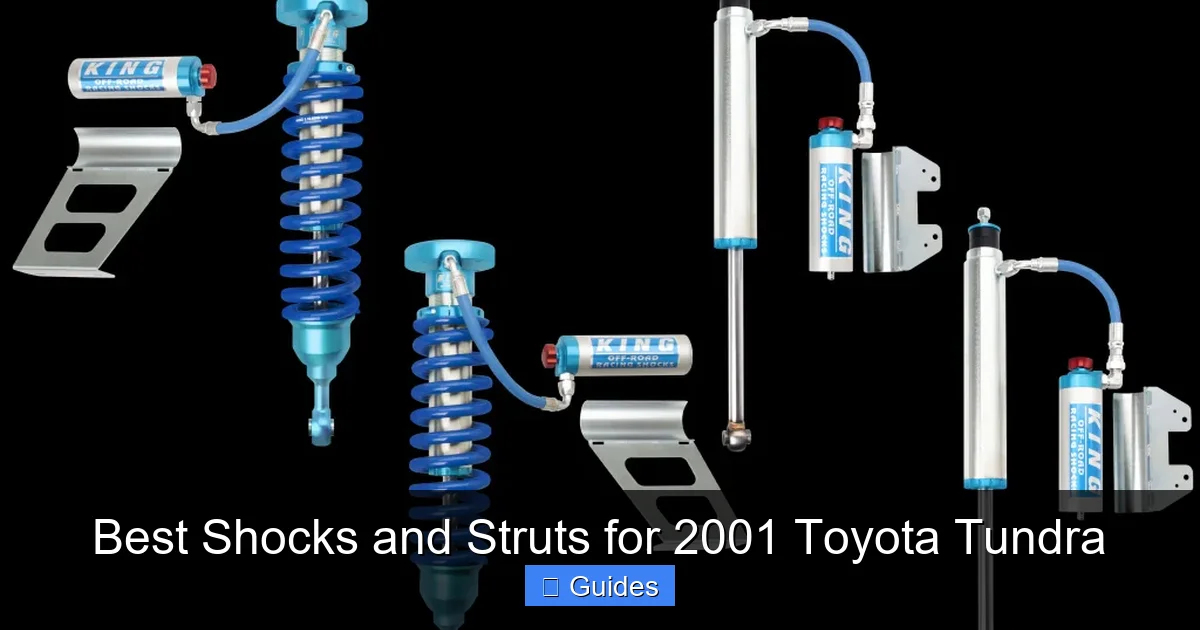
Shock absorbers, or “shocks,” are standalone components that control the movement of your suspension springs. They don’t support the vehicle’s weight but help dampen oscillations, preventing your truck from bouncing up and down after hitting a bump. On the 2001 Tundra, the rear suspension uses shocks.

Visual guide about Best Shocks and Struts for 2001 Toyota Tundra
Image source: m.media-amazon.com
What Are Struts?
Struts are more complex. They combine a shock absorber with a structural component that supports the vehicle’s weight and helps maintain wheel alignment. The front suspension on your 2001 Tundra uses struts, which means replacing them is a bigger job—but also offers greater performance gains.
Why Both Matter for Your Tundra
Since your Tundra uses struts in the front and shocks in the rear, you’ll likely need to replace both sets for balanced performance. Upgrading both ensures consistent handling, better ride quality, and improved safety. Skimping on one end can lead to uneven wear and compromised control.
Signs It’s Time to Replace Your Shocks and Struts
How do you know if your 2001 Toyota Tundra needs new shocks and struts? Here are the most common warning signs:
Excessive Bouncing
If your truck continues to bounce after hitting a bump—especially more than once or twice—it’s a clear sign your shocks or struts are worn. A simple test: press down firmly on each corner of your truck. If it bounces more than once before settling, your suspension is likely due for replacement.
Visual guide about Best Shocks and Struts for 2001 Toyota Tundra
Image source: kingshocksaustralia.com.au
Poor Handling and Steering
Worn struts can cause your front end to dip during braking or sway during turns. You might feel like the truck is “floating” or less responsive to steering inputs. This not only affects comfort but can be dangerous in emergency situations.
Uneven Tire Wear
Shocks and struts help keep your tires in constant contact with the road. When they fail, tires can wear unevenly—especially on the edges or in a cupping pattern. Regular tire inspections can help you catch suspension issues early.
Nose Diving and Rear Squat
If the front of your Tundra dips dramatically when you brake, or the rear squats when you accelerate or tow, your suspension isn’t controlling weight transfer effectively. This is especially common with worn front struts.
Leaking Fluid
Check under your truck for oily residue around the shock or strut bodies. Hydraulic fluid leaks mean the seals are broken, and the component is no longer functioning properly.
High Mileage
Even if you don’t notice obvious symptoms, most manufacturers recommend replacing shocks and struts every 50,000 to 100,000 miles. If your 2001 Tundra has over 100,000 miles, it’s likely time for an upgrade—even if it still feels okay.
Top 5 Best Shocks and Struts for 2001 Toyota Tundra
Now that you know why and when to replace your suspension, let’s look at the best options on the market. These picks are based on performance, durability, customer reviews, and value for money.
1. Bilstein 5100 Series Shocks and Struts
The Bilstein 5100 series is a favorite among Tundra owners for good reason. These monotube gas-pressurized shocks and struts offer superior damping, reduced fade, and excellent heat dissipation. They’re ideal for daily driving, light off-roading, and towing.
One of the standout features is the adjustable front strut, which allows you to lift your Tundra by 1.5 to 2.5 inches without additional parts. This makes the 5100 a great choice if you want a slight lift for better ground clearance or a more aggressive look.
Installation is straightforward, and Bilstein offers a lifetime warranty on the 5100 series. Many users report a noticeable improvement in ride quality and handling, especially on rough roads or when carrying heavy loads.
2. KYB Gas-a-Just Shocks and Struts
KYB is a trusted name in suspension, and the Gas-a-Just series is designed for trucks like the 2001 Tundra. These twin-tube shocks and struts provide a firm yet comfortable ride, with enhanced control over body roll and dive.
The Gas-a-Just uses a high-pressure gas charge to prevent aeration, which keeps performance consistent even under heavy use. They’re a direct replacement for OEM parts, so installation is simple and requires no modifications.
KYB offers a solid warranty and excellent customer support. If you’re looking for a reliable, no-frills upgrade that improves ride quality without breaking the bank, the Gas-a-Just is a smart choice.
3. Rancho RS5000X Shocks
For off-road enthusiasts, the Rancho RS5000X shocks are a top pick. These monotube shocks feature advanced valving technology that adapts to terrain, providing a smooth ride on pavement and excellent control on trails.
The RS5000X is built with a durable nitro-carburized rod and a self-lubricating seal, making it resistant to wear and corrosion. They’re also available in multiple lengths, so you can choose the right fit for your Tundra—whether it’s stock height or lifted.
While they’re slightly more expensive than some alternatives, the performance gain is worth it if you frequently drive on rough terrain. Many users report better traction, reduced body roll, and a more confident feel behind the wheel.
4. Monroe Reflex Shocks and Struts
Monroe is a household name in suspension, and the Reflex series offers a great balance of comfort and control. These twin-tube shocks and struts use advanced fluid technology to reduce harshness and improve responsiveness.
The Reflex is designed to handle the demands of modern trucks, including towing and hauling. They’re also easy to install and come with a limited lifetime warranty. If you’re on a budget but still want a quality upgrade, Monroe is a solid option.
One downside is that they may not perform as well under extreme conditions as monotube designs, but for everyday driving, they’re more than capable.
5. Fox 2.0 Performance Series Shocks
For serious off-roaders or those who want the best performance possible, the Fox 2.0 Performance Series is hard to beat. These aluminum-bodied monotube shocks are built for durability and precision.
The Fox 2.0 features a high-flow piston and a velocity-sensitive damping system, which adjusts to road conditions in real time. They’re also rebuildable, so you can service them over time instead of replacing them entirely.
While they’re on the higher end of the price spectrum, the Fox 2.0 offers unmatched performance for demanding applications. If you take your Tundra off-road regularly or want the ultimate in suspension control, this is the upgrade to consider.
How to Choose the Right Shocks and Struts for Your Needs
With so many options available, how do you pick the best shocks and struts for your 2001 Toyota Tundra? It comes down to your driving habits, budget, and performance goals.
Consider Your Driving Style
If you mostly drive on paved roads and want a smoother, more comfortable ride, a set like the KYB Gas-a-Just or Monroe Reflex will serve you well. These are designed for everyday use and offer a good balance of comfort and control.
Off-Roading and Towing
For off-road adventures or frequent towing, go with a monotube design like the Bilstein 5100 or Rancho RS5000X. These handle heat and stress better than twin-tube shocks, making them ideal for demanding conditions.
Budget vs. Performance
You don’t have to spend a fortune to get a quality upgrade. The Monroe Reflex and KYB Gas-a-Just offer excellent value. But if you’re willing to invest more for long-term performance, the Bilstein or Fox shocks are worth the extra cost.
Lifted or Stock Height?
If your Tundra is lifted, make sure to choose shocks and struts designed for that height. Using stock-length components on a lifted truck can cause binding, reduced travel, and premature failure. Many brands, like Rancho and Fox, offer extended-length options.
Warranty and Brand Reputation
Look for brands with strong warranties and good customer support. Bilstein, KYB, and Fox all offer solid coverage, which gives you peace of mind knowing your investment is protected.
Installation Tips and What to Expect
Replacing shocks and struts on a 2001 Toyota Tundra is a job many DIYers can handle with basic tools and some patience. Here’s what you need to know.
Tools You’ll Need
- Jack and jack stands (or a lift)
- Socket set and wrenches
- Torque wrench
- Spring compressor (for front struts)
- Pry bar
- Penetrating oil (like WD-40)
Step-by-Step Overview
Start by safely lifting your truck and removing the wheels. For the rear shocks, disconnect the lower mount and upper mount, then slide out the old shock and install the new one. It’s usually a straightforward process.
The front struts are more involved. You’ll need to remove the sway bar link, brake line bracket, and upper strut mount. Then, use a spring compressor to safely remove the coil spring before replacing the strut assembly. Reassembly is the reverse—just take your time and follow torque specs.
Safety First
Never skip the spring compressor when working on struts. Coil springs are under extreme tension and can cause serious injury if released improperly. If you’re not confident, consider having a professional handle the front struts.
Alignment Check
After installation, get a wheel alignment. Replacing struts can affect camber and toe settings, which impacts tire wear and handling. Most shops will do this for a reasonable fee.
Maintenance Tips to Extend the Life of Your New Shocks and Struts
Once you’ve installed your new shocks and struts, a little maintenance goes a long way.
Regular Inspections
Check your suspension every 10,000 miles or during oil changes. Look for leaks, damage, or loose mounts. Catching issues early prevents bigger problems down the road.
Keep Them Clean
Wash your undercarriage regularly, especially after off-roading or driving in salted conditions. Dirt and grime can accelerate wear on seals and rods.
Avoid Overloading
Even heavy-duty shocks have limits. Don’t exceed your Tundra’s payload or towing capacity. Overloading puts extra stress on your suspension and can lead to premature failure.
Replace in Pairs
Always replace shocks and struts in pairs (both front or both rear). Mismatched components can cause uneven handling and wear.
Conclusion: Invest in Your Tundra’s Ride
Your 2001 Toyota Tundra is a capable, hardworking truck—but it deserves more than just basic maintenance. Upgrading your shocks and struts is one of the most impactful improvements you can make. Not only will you enjoy a smoother, more comfortable ride, but you’ll also improve safety, handling, and the overall longevity of your vehicle.
Whether you choose the rugged performance of Bilstein, the off-road prowess of Rancho, or the premium build of Fox, the right suspension upgrade will make every drive better. Take the time to assess your needs, choose quality components, and install them properly. Your Tundra—and your back—will thank you.
Frequently Asked Questions
How often should I replace shocks and struts on my 2001 Toyota Tundra?
Most experts recommend replacing shocks and struts every 50,000 to 100,000 miles, depending on driving conditions. If you frequently drive on rough roads or tow heavy loads, consider replacing them closer to the 50,000-mile mark.
Can I install shocks and struts myself?
Yes, many DIYers can replace rear shocks with basic tools. Front struts are more complex due to the coil spring, so a spring compressor is required. If you’re not comfortable with this step, it’s best to have a professional handle it.
Do I need to replace all four shocks and struts at once?
It’s recommended to replace them in pairs (both front or both rear) to maintain balanced handling. For best results, replace all four if they’re all worn.
Will new shocks and struts improve my Tundra’s towing capacity?
No, shocks and struts don’t increase your truck’s official towing capacity. However, they do improve stability and control when towing, making the experience safer and more comfortable.
Are monotube shocks better than twin-tube?
Monotube shocks generally offer better performance under heat and stress, making them ideal for off-roading and towing. Twin-tube shocks are often more affordable and provide a softer ride, which is great for daily driving.
Do I need a lift kit to install Bilstein 5100 struts?
No, the Bilstein 5100 struts can be installed on a stock-height Tundra. However, they offer an adjustable perch that allows you to lift the front by 1.5 to 2.5 inches if desired, without additional parts.

At CarLegit, we believe information should be clear, factual, and genuinely helpful. That’s why every guide, review, and update on our website is created with care, research, and a strong focus on user experience.