
Choosing the right rear view mirror for your Honda Pioneer 1000 can dramatically improve visibility, safety, and overall driving confidence. Whether you’re tackling tight trails or hauling gear, a high-quality mirror helps you stay aware of what’s behind you. In this guide, we break down the top options, key features, and installation tips to help you pick the perfect fit.
In This Article
- 1 Key Takeaways
- 2 📑 Table of Contents
- 3 Why Your Honda Pioneer 1000 Needs a Quality Rear View Mirror
- 4 Key Features to Look for in a Rear View Mirror
- 5 Top Rear View Mirror Options for the Honda Pioneer 1000
- 5.1 1. UTV Rear View Mirror by Kolpin – Best Overall
- 5.2 2. Extreme Max 3006.7555 Panoramic UTV Mirror – Best for Wide Visibility
- 5.3 3. SuperATV Wide Angle Rear View Mirror – Best for DIY Installers
- 5.4 4. QuadBoss Convex Rear View Mirror – Best Budget Option
- 5.5 5. Moose Racing UTV Rear View Mirror – Best for Harsh Conditions
- 6 How to Install a Rear View Mirror on Your Honda Pioneer 1000
- 7 Maintenance Tips to Keep Your Mirror Clear and Functional
- 8 Common Mistakes to Avoid When Choosing a Mirror
- 9 Conclusion: Make the Smart Upgrade Today
- 10 Frequently Asked Questions
- 10.1 What size roll bar does the Honda Pioneer 1000 have?
- 10.2 Can I install a rear view mirror myself?
- 10.3 Do I need a heated mirror?
- 10.4 Will a rear view mirror affect my visibility while driving?
- 10.5 How do I reduce mirror vibration on rough terrain?
- 10.6 Can I use a side mirror instead of a rear view mirror?
Key Takeaways
- Enhanced Safety: A good rear view mirror reduces blind spots and helps prevent collisions, especially when towing or reversing.
- Wide-Angle & Panoramic Views: Mirrors with convex or panoramic designs offer broader visibility, crucial for off-road and utility use.
- Durable Construction: Look for shatter-resistant glass and rugged housings that withstand vibrations, mud, and weather.
- Easy Installation: Most mirrors attach to the roll cage or windshield frame with clamps or brackets—no drilling required.
- Adjustable Angles: Flexible mounting arms let you fine-tune the viewing angle for different passengers or cargo loads.
- Compatibility Matters: Ensure the mirror fits your Pioneer 1000’s specific roll bar diameter (typically 1.75” or 2”).
- Anti-Glare & Night Visibility: Some models include tinted or auto-dimming features to reduce headlight glare at night.
📑 Table of Contents
- Why Your Honda Pioneer 1000 Needs a Quality Rear View Mirror
- Key Features to Look for in a Rear View Mirror
- Top Rear View Mirror Options for the Honda Pioneer 1000
- How to Install a Rear View Mirror on Your Honda Pioneer 1000
- Maintenance Tips to Keep Your Mirror Clear and Functional
- Common Mistakes to Avoid When Choosing a Mirror
- Conclusion: Make the Smart Upgrade Today
Why Your Honda Pioneer 1000 Needs a Quality Rear View Mirror
If you’ve ever driven your Honda Pioneer 1000 down a narrow trail, backed up to a trailer, or navigated a busy job site, you know how limited the stock visibility can be. The factory setup often leaves large blind spots—especially directly behind the vehicle—which can be dangerous when hauling passengers, equipment, or towing heavy loads. That’s where a reliable rear view mirror comes in.
Adding a dedicated rear view mirror isn’t just about convenience—it’s a smart safety upgrade. Whether you’re using your Pioneer for weekend trail rides, farm work, or hunting trips, being able to see what’s behind you makes a huge difference. It helps you avoid obstacles, monitor passengers in the back seat, and back up with confidence. Plus, many aftermarket mirrors offer wider fields of view than standard car mirrors, giving you better awareness in rugged terrain.
But not all mirrors are created equal. Some are flimsy, hard to adjust, or don’t stay in place over bumpy terrain. Others might look great but fog up or vibrate too much to be useful. That’s why it’s important to choose a mirror designed specifically for UTVs like the Honda Pioneer 1000. In this guide, we’ll walk you through everything you need to know—from key features to look for, top product recommendations, installation tips, and how to maintain your mirror for long-term use.
Key Features to Look for in a Rear View Mirror
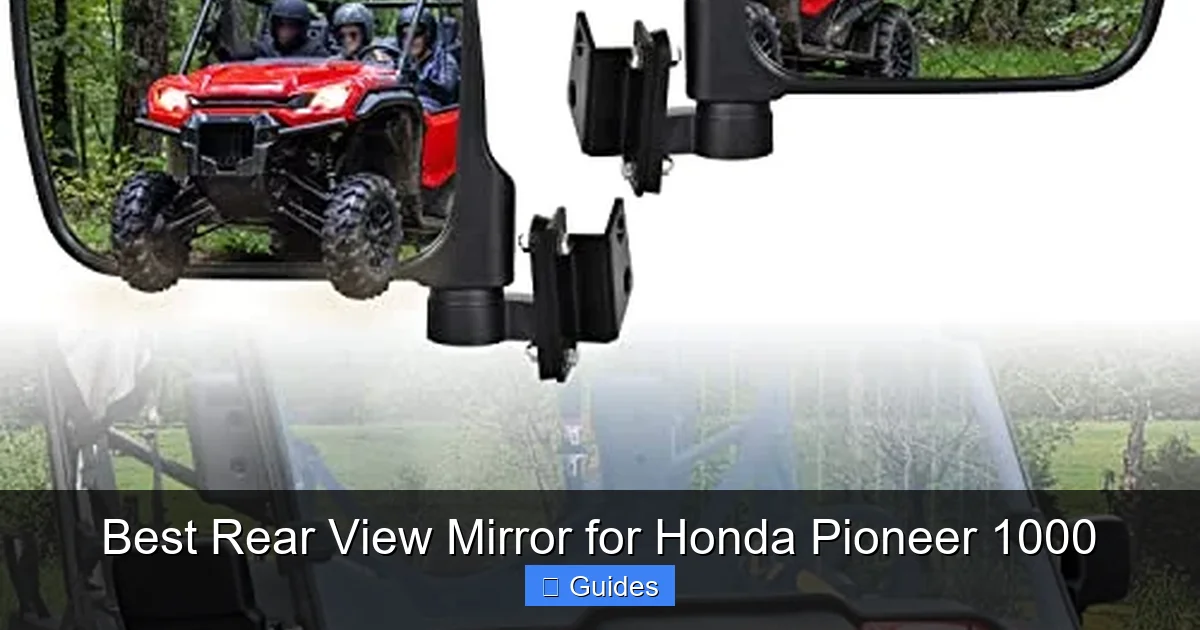
Visual guide about Best Rear View Mirror for Honda Pioneer 1000
Image source: carglassadvisor.com
When shopping for the best rear view mirror for your Honda Pioneer 1000, it’s easy to get overwhelmed by the options. But focusing on a few essential features will help you narrow down your choices and find a mirror that actually improves your driving experience.
Wide-Angle or Panoramic View
One of the biggest advantages of aftermarket UTV mirrors is the expanded field of vision. Unlike standard flat mirrors, many Pioneer-compatible mirrors use convex or panoramic lenses that curve outward. This design lets you see more of what’s behind and beside you—critical when navigating tight trails or checking on gear in the bed.
For example, a 170-degree panoramic mirror can show you nearly everything from shoulder to shoulder, reducing the need to constantly turn your head. This is especially helpful when riding with passengers or towing a trailer, where blind spots are larger.
Sturdy, Vibration-Resistant Mounting
UTVs like the Pioneer 1000 are built for rough terrain, which means your mirror needs to handle constant shaking and bouncing. A flimsy mount will quickly become useless as vibrations blur the image or cause the mirror to shift out of position.
Look for mirrors with heavy-duty clamps, rubberized mounting points, or dual-arm support systems. These features help absorb shock and keep the mirror stable, even on rocky trails. Some high-end models use ball-and-socket joints with locking mechanisms to prevent slippage.
Shatterproof and Weather-Resistant Materials
Your mirror will be exposed to mud, rain, dust, and UV rays—so durability is non-negotiable. Opt for mirrors with polycarbonate or tempered glass lenses, which are much more resistant to cracking than standard glass. The housing should be made from reinforced plastic or aluminum to resist corrosion and impact.
Additionally, consider mirrors with anti-fog coatings or hydrophobic surfaces. These help prevent condensation buildup during cold mornings or rainy rides, ensuring clear visibility when you need it most.
Easy Adjustability
No two drivers are the same, and cargo loads can change the center of gravity—and your ideal viewing angle. A good mirror should allow for quick and easy adjustments. Look for models with flexible arms, swivel heads, or tilt mechanisms that let you reposition the mirror without tools.
Some mirrors even offer 360-degree rotation, so you can switch between rear and side views depending on your needs. This is especially useful if you’re using your Pioneer for both work and recreation.
Compatibility with Roll Cage Size
The Honda Pioneer 1000 typically has a roll cage with a 1.75-inch or 2-inch diameter. Make sure the mirror you choose is compatible with your specific model. Most aftermarket mirrors come with adjustable clamps that fit both sizes, but it’s always worth double-checking before you buy.
Top Rear View Mirror Options for the Honda Pioneer 1000
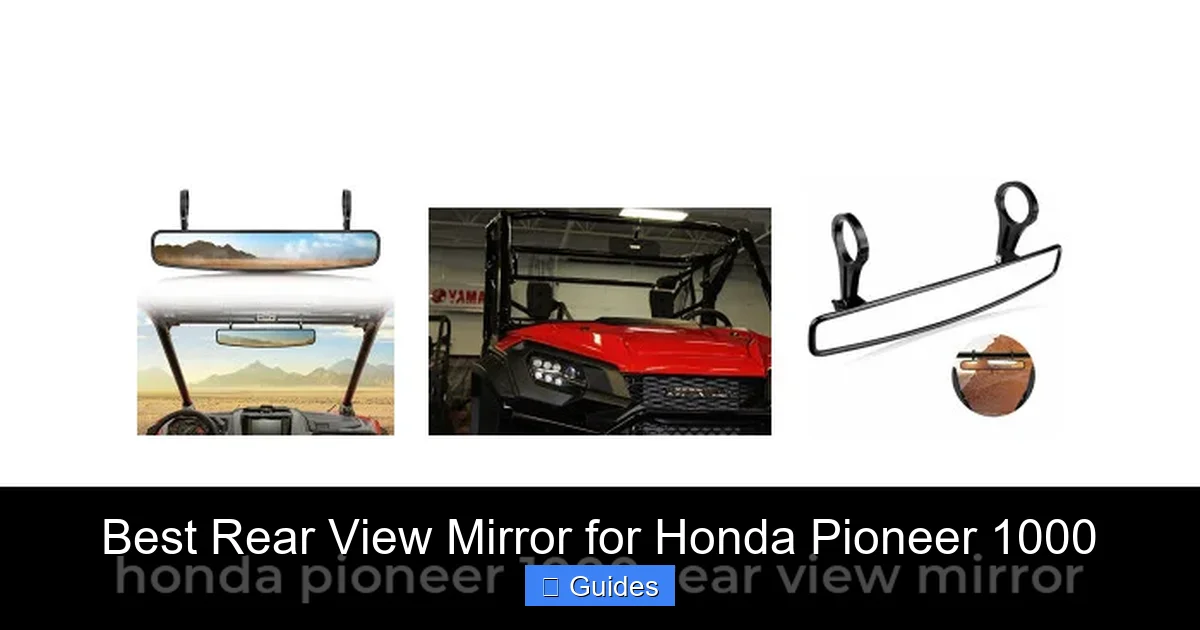
Visual guide about Best Rear View Mirror for Honda Pioneer 1000
Image source: mainstreetmobile.org
Now that you know what to look for, let’s dive into some of the best rear view mirrors currently available for the Honda Pioneer 1000. These picks are based on real user feedback, durability, ease of installation, and overall performance.
1. UTV Rear View Mirror by Kolpin – Best Overall
The Kolpin UTV Rear View Mirror is a favorite among Pioneer owners for its rugged build and wide 170-degree view. It features a convex lens made from shatterproof polycarbonate and a heavy-duty aluminum clamp that fits both 1.75” and 2” roll bars. The mirror head swivels 360 degrees and locks securely in place, so it won’t shift during rough rides.
Installation takes less than five minutes—just clamp it to the center roof bar above the windshield. Users love how clear and stable the image stays, even on bumpy trails. Plus, the anti-glare coating helps reduce headlight glare at night.
2. Extreme Max 3006.7555 Panoramic UTV Mirror – Best for Wide Visibility
If maximum visibility is your top priority, the Extreme Max panoramic mirror is hard to beat. Its ultra-wide 180-degree lens gives you a near-complete view behind your Pioneer, making it ideal for towing or riding in groups.
The mirror uses a reinforced polymer housing and a dual-clamp mounting system that minimizes vibration. It’s also designed to resist fogging and UV damage. One standout feature is the adjustable tension knob, which lets you tighten or loosen the mirror angle with a simple turn.
3. SuperATV Wide Angle Rear View Mirror – Best for DIY Installers
SuperATV is known for high-quality UTV accessories, and their wide-angle rear view mirror is no exception. This model features a 160-degree convex lens and a universal clamp that fits most roll cages. What sets it apart is the included mounting bracket that can be bolted directly to the roof or windshield frame—great if you prefer a more permanent setup.
The mirror is made from impact-resistant acrylic and comes with a protective film to prevent scratches during shipping. Users praise its clarity and the fact that it doesn’t vibrate excessively, even at high speeds.
4. QuadBoss Convex Rear View Mirror – Best Budget Option
Don’t let the lower price fool you—the QuadBoss convex mirror delivers solid performance without breaking the bank. It offers a 150-degree view and mounts easily to 1.75” or 2” roll bars with a simple clamp system.
While it doesn’t have all the premium features of higher-end models, it’s a great entry-level option for casual riders or those on a tight budget. The glass is shatter-resistant, and the housing is made from durable ABS plastic. Just be aware that it may require occasional re-tightening on very rough terrain.
5. Moose Racing UTV Rear View Mirror – Best for Harsh Conditions
Built for extreme environments, the Moose Racing mirror is a top choice for riders who push their Pioneer to the limit. It features a heated lens option (on select models) to prevent fogging and icing in cold weather—perfect for winter hunting or snow plowing.
The mirror uses a reinforced aluminum arm and a locking swivel joint to stay put under heavy vibration. The lens is coated with an anti-scratch and anti-glare layer, ensuring long-term clarity. While it’s one of the pricier options, it’s worth the investment if you ride in tough conditions.
How to Install a Rear View Mirror on Your Honda Pioneer 1000
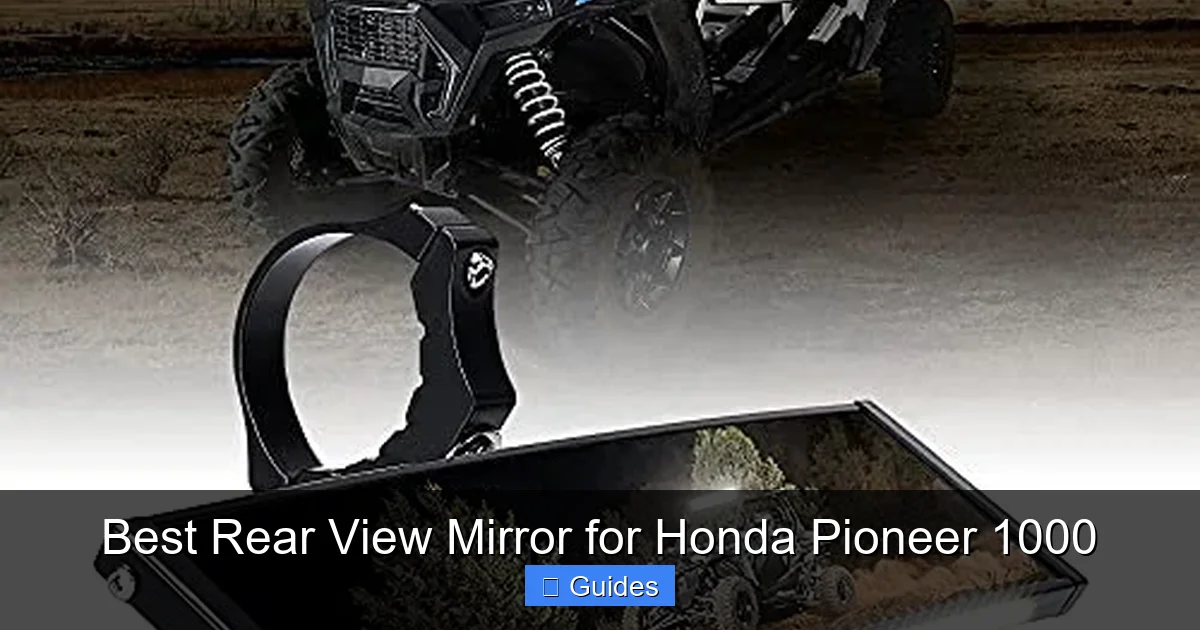
Visual guide about Best Rear View Mirror for Honda Pioneer 1000
Image source: m.media-amazon.com
Installing a rear view mirror on your Honda Pioneer 1000 is usually a quick and straightforward process—no special tools or mechanical skills required. Most mirrors attach directly to the roll cage or windshield frame using clamps or brackets. Here’s a step-by-step guide to help you get it done right.
Step 1: Choose the Right Mounting Location
The most common spot is the center roof bar, just above the windshield. This position offers the best rear visibility and keeps the mirror out of your direct line of sight. Avoid mounting it too low, as it may obstruct your view or get blocked by cargo.
If your Pioneer has a roof with pre-drilled holes, you can also use a bolt-on bracket for a more secure fit. Some riders prefer side-mounted mirrors for a wider peripheral view, but these are less common for rear viewing.
Step 2: Prepare the Mounting Surface
Clean the roll bar or mounting area with a mild cleaner to remove dirt, grease, or wax. This ensures a tight, secure grip and prevents the clamp from slipping. If you’re using a bolt-on bracket, check that the holes align properly and that the hardware is included.
Step 3: Attach the Clamp or Bracket
For clamp-style mirrors, loosen the clamp screws and slide it onto the roll bar. Position it where you want the mirror, then tighten the screws evenly. Don’t overtighten—this can damage the clamp or crack the housing.
For bolt-on models, align the bracket with the mounting holes and secure it with the provided bolts and washers. Use a wrench or socket to tighten, but again, avoid over-tightening.
Step 4: Install the Mirror Head
Attach the mirror to the mounting arm or bracket according to the manufacturer’s instructions. Most models use a ball-and-socket joint that you can adjust by hand. Once in place, tighten the locking knob or screw to secure the angle.
Step 5: Adjust and Test
Sit in the driver’s seat and adjust the mirror so you have a clear view of the area behind your Pioneer. Have a friend stand behind the vehicle to help you fine-tune the angle. Take a short test drive on a bumpy surface to make sure the mirror stays in place and doesn’t vibrate excessively.
Pro Tips for Installation
- Use thread locker on bolt-on brackets to prevent loosening over time.
- If your mirror vibrates too much, try adding rubber washers or foam padding between the clamp and roll bar.
- For added security, consider using a safety tether or zip tie as a backup in case the clamp fails.
- Check the mirror’s tightness after your first few rides, especially if you ride on rough terrain.
Maintenance Tips to Keep Your Mirror Clear and Functional
Even the best rear view mirror won’t stay useful if you don’t take care of it. Regular maintenance ensures clear visibility and extends the life of your investment. Here’s how to keep your mirror in top shape.
Clean the Lens Regularly
Dirt, mud, and bugs can quickly obscure your view. Clean the lens after every ride using a soft microfiber cloth and a mild glass cleaner. Avoid abrasive sponges or harsh chemicals, which can scratch or damage anti-glare coatings.
For tough grime, use a mixture of water and vinegar or a dedicated UTV glass cleaner. Rinse thoroughly and dry with a clean cloth to prevent water spots.
Inspect Mounting Hardware
Vibrations can loosen clamps and bolts over time. Check the tightness of your mirror’s mounting system every few rides, especially after rough terrain. Tighten any loose screws or clamps, and replace worn rubber gaskets if needed.
Protect from Extreme Weather
If you store your Pioneer outside, consider removing the mirror during winter months or covering it with a protective sleeve. Prolonged exposure to UV rays can fade housings and weaken adhesives, while freezing temperatures can make plastics brittle.
For heated mirrors, test the heating function periodically to ensure it’s working properly before cold weather hits.
Store Properly When Not in Use
If you remove the mirror for storage or transport, keep it in a padded case or wrap it in a soft cloth. This prevents scratches and damage to the lens and housing.
Common Mistakes to Avoid When Choosing a Mirror
Even with all this information, it’s easy to make a few common mistakes when shopping for a rear view mirror. Avoid these pitfalls to ensure you get the best performance and value.
Buying a Car Mirror Instead of a UTV-Specific Model
Car mirrors aren’t designed for the vibrations, angles, and conditions of a UTV. They often lack the durability and mounting options needed for off-road use. Always choose a mirror made specifically for UTVs or ATVs.
Ignoring Roll Cage Compatibility
Not all mirrors fit all roll bars. Double-check the diameter of your Pioneer’s roll cage and confirm the mirror’s clamp size before buying. Most aftermarket mirrors fit 1.75” or 2” bars, but some are only compatible with one size.
Overlooking Vibration Dampening
A mirror that vibrates too much is worse than no mirror at all. Look for models with rubberized mounts, dual arms, or shock-absorbing features. Read user reviews to see how well the mirror holds up on rough trails.
Choosing Style Over Function
While a sleek design might look cool, it won’t help if the mirror fogs up, scratches easily, or won’t stay adjusted. Prioritize functionality, durability, and visibility over aesthetics.
Skipping the Test Drive
After installation, always take your Pioneer for a test ride to check mirror stability and clarity. Adjust as needed and make sure it doesn’t obstruct your view or interfere with other components.
Conclusion: Make the Smart Upgrade Today
Adding a high-quality rear view mirror to your Honda Pioneer 1000 is one of the simplest and most effective upgrades you can make. It enhances safety, improves confidence, and makes every ride—whether work or play—more enjoyable. With so many great options available, there’s no reason to drive blind.
From the rugged Kolpin mirror to the budget-friendly QuadBoss, there’s a perfect fit for every rider and every budget. Just remember to prioritize wide-angle views, durable construction, and secure mounting. And don’t forget to maintain your mirror regularly to keep it performing at its best.
So, what are you waiting for? Upgrade your Pioneer 1000 with the best rear view mirror today and see the difference for yourself. Your safety—and your passengers—will thank you.
Frequently Asked Questions
What size roll bar does the Honda Pioneer 1000 have?
The Honda Pioneer 1000 typically has a roll cage with a 1.75-inch or 2-inch diameter. Most aftermarket rear view mirrors are designed to fit both sizes with adjustable clamps, but always double-check compatibility before purchasing.
Can I install a rear view mirror myself?
Yes! Most rear view mirrors for the Pioneer 1000 are designed for easy, tool-free installation. They clamp onto the roll cage or windshield frame in just a few minutes—no drilling or special skills required.
Do I need a heated mirror?
A heated mirror is helpful if you ride in cold or wet conditions, as it prevents fogging and icing. If you use your Pioneer for winter activities like snow plowing or hunting, a heated model like the Moose Racing mirror is a smart choice.
Will a rear view mirror affect my visibility while driving?
A properly installed mirror should enhance, not hinder, your visibility. Mount it high on the roof bar, above the windshield, to keep it out of your direct line of sight while still providing a clear rear view.
How do I reduce mirror vibration on rough terrain?
Choose a mirror with vibration-dampening features like rubberized mounts or dual-arm support. You can also add rubber washers or foam padding between the clamp and roll bar to absorb shock.
Can I use a side mirror instead of a rear view mirror?
Side mirrors are great for checking blind spots but don’t replace a rear view mirror. For full awareness, many riders install both—a center rear mirror and side mirrors for complete coverage.

At CarLegit, we believe information should be clear, factual, and genuinely helpful. That’s why every guide, review, and update on our website is created with care, research, and a strong focus on user experience.