
Yes, a Jeep Grand Cherokee can pull a camper—but only if you match the right model and setup to your trailer’s weight. With towing capacities ranging from 3,500 to 7,200 pounds depending on the year and engine, proper planning is key. Always check your specific trim, use the correct hitch, and never exceed your vehicle’s rated capacity.
So, you’ve got a Jeep Grand Cherokee—rugged, stylish, and built for adventure—and now you’re dreaming of hitting the open road with a camper in tow. Whether it’s a cozy teardrop trailer for weekend getaways or a full-sized travel trailer for cross-country trips, the big question is: *Can a Jeep Grand Cherokee pull a camper?*
The short answer? **Yes—but it depends.** Not all Grand Cherokees are created equal when it comes to towing. Your ability to safely and legally pull a camper hinges on several factors: the model year, engine type, drivetrain, and how well you prepare your setup. The Grand Cherokee has evolved over the decades from a modest off-roader to a capable SUV with serious towing chops, especially in recent years. But just because your Jeep *can* tow doesn’t mean it *should*—at least not without the right knowledge and equipment.
In this guide, we’ll walk you through everything you need to know about using your Jeep Grand Cherokee to pull a camper. From understanding towing capacities and choosing the right trailer to mastering safe towing techniques and avoiding common mistakes, we’ve got you covered. Whether you’re a first-time RVer or a seasoned road warrior, this article will help you make smart, safe decisions so you can enjoy your adventures without stress—or breakdowns.
In This Article
- 1 Key Takeaways
- 2 📑 Table of Contents
- 3 Understanding Towing Capacity: What It Means and Why It Matters
- 4 Types of Campers a Jeep Grand Cherokee Can Tow
- 5 Essential Towing Equipment for Your Jeep Grand Cherokee
- 6 Driving Tips for Towing a Camper with a Grand Cherokee
- 7 Fuel Economy and Maintenance Considerations
- 8 Common Mistakes to Avoid
- 9 Conclusion
- 10 Frequently Asked Questions
- 10.1 Can a 2023 Jeep Grand Cherokee tow a 6,000-pound camper?
- 10.2 Do I need a special license to tow a camper with a Grand Cherokee?
- 10.3 Can I tow a camper with a 4-cylinder Jeep Grand Cherokee?
- 10.4 What’s the difference between GVWR and towing capacity?
- 10.5 Can I install a fifth-wheel hitch on a Jeep Grand Cherokee?
- 10.6 How often should I service my Jeep when towing regularly?
Key Takeaways
- Towing capacity varies by model year and engine: Newer Grand Cherokees (2021–2024) with the 5.7L V8 or 3.0L EcoDiesel can tow up to 7,200 lbs, while base V6 models typically handle 3,500–6,200 lbs.
- Match your camper weight to your Jeep’s rating: Always confirm your trailer’s Gross Vehicle Weight Rating (GVWR) and ensure it’s under your Grand Cherokee’s max towing capacity—including passengers, gear, and fuel.
- Use the right towing equipment: A Class III or IV hitch, weight-distributing hitch, brake controller, and proper wiring harness are essential for safe towing.
- Consider drivetrain and cooling: 4WD models often have higher towing ratings, and towing in hot climates or uphill demands extra engine and transmission cooling.
- Fuel economy drops significantly when towing: Expect 10–15 MPG or less when pulling a camper, so plan fuel stops and budget accordingly.
- Practice towing before your trip: Maneuvering, braking, and backing up with a trailer takes skill—practice in an empty parking lot first.
- Check warranty and insurance coverage: Some modifications or heavy towing may affect your Jeep’s warranty or require additional RV insurance.
📑 Table of Contents
- Understanding Towing Capacity: What It Means and Why It Matters
- Types of Campers a Jeep Grand Cherokee Can Tow
- Essential Towing Equipment for Your Jeep Grand Cherokee
- Driving Tips for Towing a Camper with a Grand Cherokee
- Fuel Economy and Maintenance Considerations
- Common Mistakes to Avoid
- Conclusion
Understanding Towing Capacity: What It Means and Why It Matters
Before you even think about hitching up a camper, you need to understand what “towing capacity” really means. Simply put, it’s the maximum weight your vehicle can safely pull under ideal conditions. This number isn’t arbitrary—it’s determined by Jeep based on the strength of the engine, transmission, chassis, cooling systems, and braking capabilities.
For the Jeep Grand Cherokee, towing capacity varies significantly across model years and configurations. Older models (pre-2011) typically maxed out around 3,500 to 5,000 pounds, which limits you to lightweight pop-up campers or small teardrop trailers. But starting with the fourth-generation Grand Cherokee (2011–2016), Jeep began offering more powerful engines and improved towing packages, pushing capacities up to 6,200–7,200 pounds on select trims.
The latest models (2021–2024) are even more impressive. With the available 5.7L HEMI V8 engine or the 3.0L EcoDiesel V6, the Grand Cherokee can tow up to **7,200 pounds** when properly equipped. That’s enough to handle most mid-sized travel trailers, including popular models like the Jayco Jay Feather, Forest River R-Pod, or Airstream Basecamp.
But here’s the catch: **“Properly equipped” is doing a lot of work in that sentence.** That 7,200-pound rating isn’t automatic. It requires the right engine, the optional towing package, and often a 4WD drivetrain. If you have a base model with the standard 3.6L Pentastar V6 and no towing package, your capacity might be closer to 3,500–4,500 pounds—nowhere near enough for a full-sized camper.
How to Find Your Jeep’s Exact Towing Capacity
So how do you know what your specific Grand Cherokee can handle? Start by checking your owner’s manual—it’s the most reliable source. Look for the “Towing” section, which will list the maximum towing capacity based on your engine, drivetrain, and axle ratio.
You can also use Jeep’s official towing guide (available online) or tools like the EPA’s towing database. Just input your model year, engine, and trim level. Don’t rely on vague claims like “up to 7,200 lbs” without confirming your exact configuration. Even two Grand Cherokees from the same year can have different capacities if one has the towing package and the other doesn’t.
Another tip: check the driver’s side door jamb for a sticker that lists your vehicle’s Gross Combined Weight Rating (GCWR). This is the total weight of your Jeep plus the trailer, passengers, and cargo. Your actual towing capacity is calculated by subtracting your Jeep’s curb weight and payload from the GCWR. It’s a bit of math, but it’s worth doing to avoid overloading.
Types of Campers a Jeep Grand Cherokee Can Tow
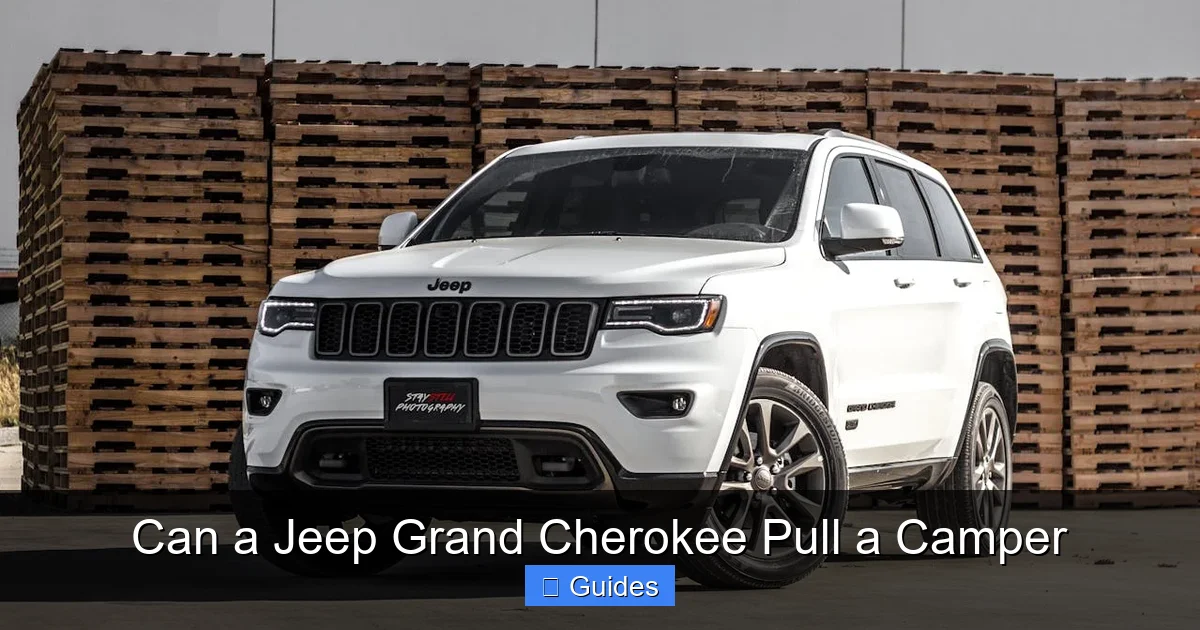
Visual guide about Can a Jeep Grand Cherokee Pull a Camper
Image source: rvparenting.com
Now that you know your towing limits, let’s talk about what kinds of campers are realistic for a Grand Cherokee. The good news? There’s a wide range of options—from ultra-lightweight teardrops to full-featured travel trailers—that can work, as long as you stay within your capacity.
Teardrop Trailers and Small Pop-Ups
If you have a base-model Grand Cherokee with a 3,500–4,500-pound towing capacity, your best bet is a lightweight teardrop trailer or a pop-up camper. These are compact, aerodynamic, and easy to maneuver. Popular models include:
– **Airstream Basecamp (2,500–3,500 lbs):** A rugged, off-road-ready teardrop with a modern interior.
– **Little Guy Mini Max (3,200 lbs):** A stylish, well-equipped micro-trailer perfect for weekend trips.
– **Forest River R-Pod RP-180 (3,800 lbs):** A small travel trailer with a queen bed, kitchenette, and bathroom.
These campers are ideal for solo travelers, couples, or small families who don’t need a lot of space. They’re also easier on fuel and simpler to park and store.
Mid-Sized Travel Trailers
With a higher-capacity Grand Cherokee (6,000+ lbs), you can step up to mid-sized travel trailers. These offer more living space, full kitchens, bathrooms, and sleeping for 4–6 people. Examples include:
– **Jayco Jay Feather 7 (4,500–5,500 lbs):** A lightweight hybrid trailer with expandable bunks.
– **Winnebago Micro Minnie FLX (5,000–6,000 lbs):** A compact but well-designed trailer with modern amenities.
– **Coachmen Apex Nano (5,500–6,500 lbs):** A fiberglass trailer with a sleek design and efficient layout.
These campers are great for longer trips and families, but they require more careful loading and driving. Always weigh your fully loaded trailer at a truck scale before hitting the road.
Larger Trailers: Proceed with Caution
Can a Grand Cherokee tow a 30-foot travel trailer? Technically, yes—if it’s a lightweight model under 7,200 lbs and your Jeep is maxed out. But in practice, it’s risky. Larger trailers are harder to control, especially in wind or on mountain roads. They also put more strain on your engine, transmission, and brakes.
If you’re set on a bigger camper, consider upgrading to a truck or SUV with a higher towing capacity, like a Jeep Wagoneer or a Ford Expedition. Or, opt for a fifth-wheel trailer with a gooseneck adapter—though this requires a different hitch setup and isn’t compatible with most Grand Cherokees.
Essential Towing Equipment for Your Jeep Grand Cherokee
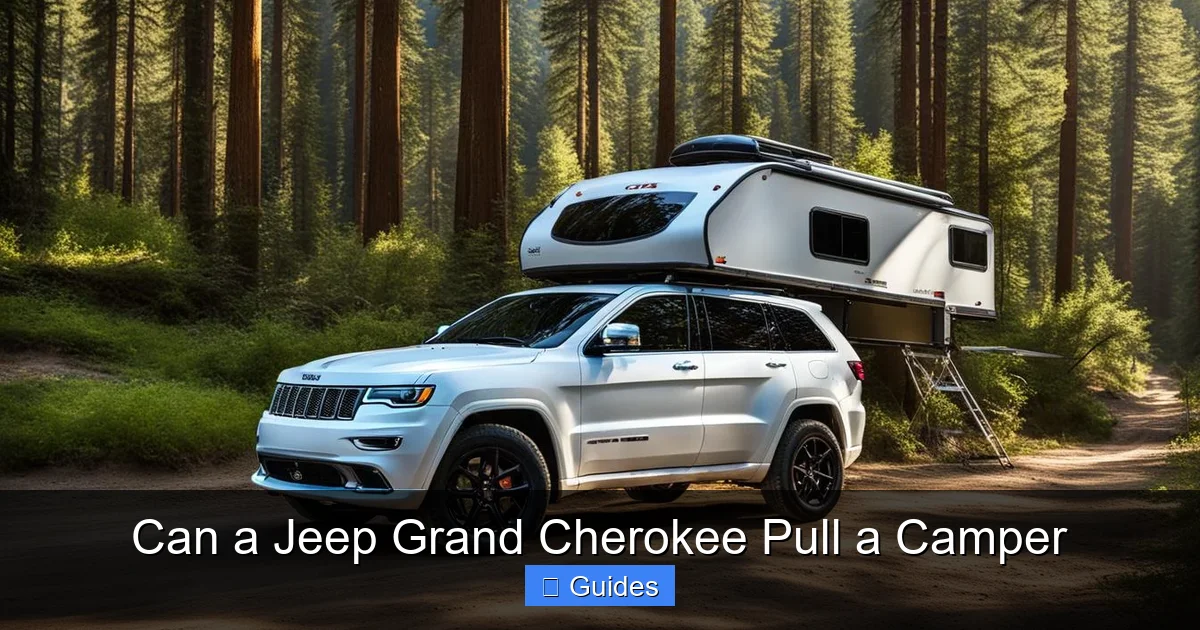
Visual guide about Can a Jeep Grand Cherokee Pull a Camper
Image source: rvparenting.com
Having the right towing capacity is only half the battle. The other half is having the right equipment. Without it, even a capable Jeep can become unsafe or damaged when towing.
Hitch and Receiver
Your Grand Cherokee likely came with a factory-installed hitch receiver, but it may not be rated for heavy towing. Most models use a **Class III hitch** (up to 6,000 lbs) or a **Class IV hitch** (up to 10,000 lbs). If you’re towing near your max capacity, upgrade to a Class IV receiver for added strength.
Make sure the hitch is properly bolted to the frame—not just the bumper—and that it’s compatible with your trailer’s coupler size (usually 2-inch or 2 5/16-inch).
Weight Distribution Hitch
When you tow a heavy trailer, the weight shifts from the front to the rear of your Jeep, which can cause sway, poor steering, and reduced braking. A **weight distribution hitch** solves this by redistributing the load across all axles.
This system uses spring bars to level the vehicle and trailer, improving stability and control. It’s especially important for trailers over 5,000 lbs or when towing in windy or hilly areas.
Brake Controller
Most campers over 1,500 lbs require electric brakes. Your Grand Cherokee’s factory brakes aren’t enough to stop both vehicles safely. That’s where a **brake controller** comes in.
This device, mounted inside your cabin, lets you manually activate the trailer’s brakes and adjust their sensitivity. Many newer Grand Cherokees come with a factory-integrated brake controller, but if yours doesn’t, you’ll need an aftermarket unit like the Tekonsha Prodigy P3.
Wiring Harness and Lights
You’ll also need a **7-pin wiring harness** to connect your Jeep’s electrical system to the trailer’s lights, brakes, and battery charging system. Most Grand Cherokees have a plug-and-play harness available from Jeep or aftermarket suppliers.
Test all lights (brake, turn, tail, and backup) before every trip. A faulty connection can lead to accidents or tickets.
Sway Control and Mirrors
For added safety, consider a **sway control device**, which reduces trailer wobble in crosswinds or when passing trucks. Many weight distribution hitches include this feature.
Also, extend your side mirrors with **towing mirrors** if your trailer is wider than your Jeep. This improves visibility and reduces blind spots.
Driving Tips for Towing a Camper with a Grand Cherokee
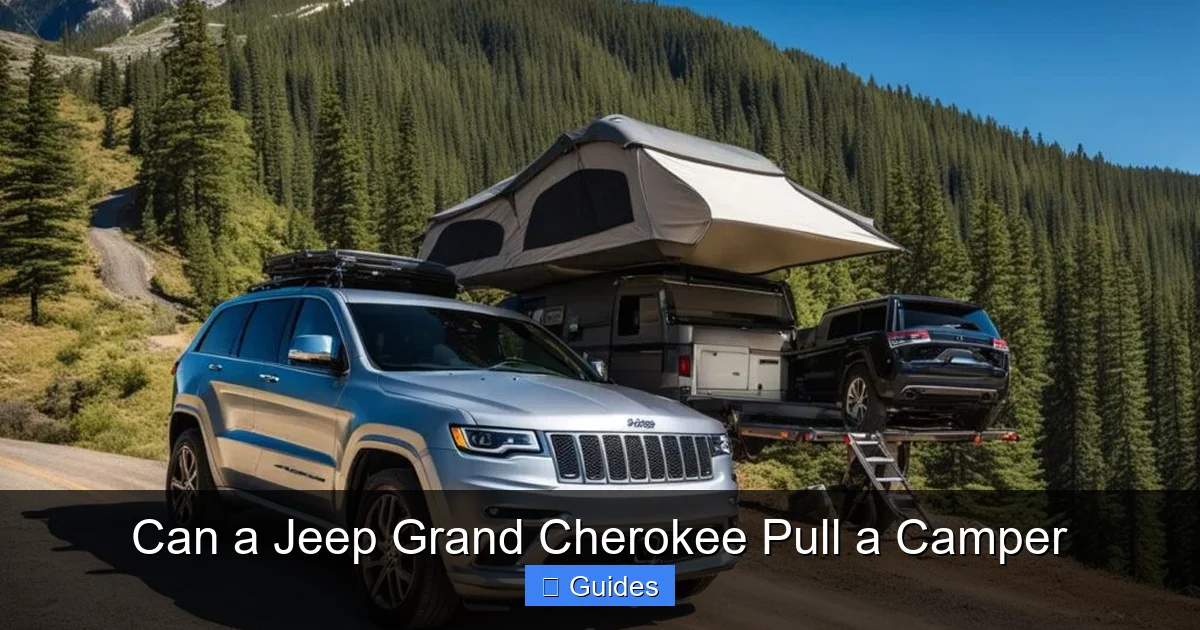
Visual guide about Can a Jeep Grand Cherokee Pull a Camper
Image source: rvparenting.com
Towing changes how your Jeep handles. It’s heavier, slower to accelerate, and harder to stop. But with practice and the right habits, you can drive confidently and safely.
Pre-Trip Inspection
Before every trip, do a full walk-around:
– Check tire pressure on both your Jeep and trailer (including the spare).
– Inspect hitch, safety chains, and brake connections.
– Test lights and brakes.
– Secure all cargo inside the camper.
– Confirm the trailer is level and properly loaded (60% of weight in front of the axle).
Loading Your Trailer Correctly
Improper loading is a leading cause of trailer sway. Always place heavier items low and forward, near the tongue. Avoid overloading the rear, which can cause fishtailing.
Use a **tongue weight scale** to ensure your trailer’s tongue weight is 10–15% of the total trailer weight. Too little, and the trailer sways; too much, and your Jeep’s rear end sags.
Driving Techniques
– **Accelerate and brake slowly:** Sudden movements can cause sway or jackknifing.
– **Increase following distance:** You’ll need more space to stop.
– **Use lower gears on hills:** Downshift to avoid overheating your transmission.
– **Avoid sudden lane changes:** Give yourself extra room when merging or passing.
– **Watch for crosswinds:** Trailers act like sails—slow down in windy conditions.
Backing Up and Parking
Backing up with a trailer is tricky. Remember: **turn the wheel in the opposite direction you want the trailer to go.** Practice in an empty parking lot with cones.
When parking, choose level ground and use wheel chocks. If you’re camping on a slope, park with the trailer uphill to reduce strain on the hitch.
Fuel Economy and Maintenance Considerations
Towing a camper isn’t just about capability—it’s also about cost and care. Expect your fuel economy to drop significantly. A Grand Cherokee that gets 25 MPG unloaded might only get 10–12 MPG when towing a 6,000-pound trailer.
Fuel Costs and Planning
Calculate your fuel needs before long trips. Use apps like GasBuddy to find cheap stations along your route. Consider carrying extra fuel in approved containers if you’re traveling through remote areas.
Engine and Transmission Care
Towing puts extra stress on your engine and transmission. To protect them:
– Use **synthetic oil** and change it more frequently.
– Install an **auxiliary transmission cooler** if you’re towing heavy loads or in hot climates.
– Avoid towing near your max capacity for extended periods—give your Jeep breaks on long climbs.
– Monitor temperature gauges; overheating can cause serious damage.
Tire and Brake Maintenance
Check tire tread and pressure regularly. Consider upgrading to **LT (Light Truck) tires** for better durability and load capacity.
Inspect brake pads and rotors before long trips. Towing wears brakes faster, so replace them as needed.
Common Mistakes to Avoid
Even experienced drivers make towing errors. Here are the most common—and how to avoid them:
– **Overloading the trailer:** Always weigh your loaded camper. Don’t guess.
– **Ignoring tongue weight:** Use a scale to get it right.
– **Skipping the brake controller:** It’s not optional for heavy trailers.
– **Towing without practice:** Take a towing course or practice in a safe area.
– **Neglecting maintenance:** Towing demands more from your vehicle—stay on top of service.
Conclusion
So, can a Jeep Grand Cherokee pull a camper? Absolutely—if you do it right. With towing capacities up to 7,200 pounds on newer models, the Grand Cherokee is a surprisingly capable RV companion. But success depends on matching your trailer to your Jeep’s specs, using the right equipment, and driving with care.
Whether you’re pulling a tiny teardrop or a mid-sized travel trailer, the key is preparation. Know your limits, invest in quality gear, and never skip the pre-trip checks. With the right setup, your Grand Cherokee can take you on unforgettable adventures—safely, comfortably, and confidently.
So pack your bags, hook up your camper, and hit the road. The great outdoors is waiting.
Frequently Asked Questions
Can a 2023 Jeep Grand Cherokee tow a 6,000-pound camper?
Yes, if it’s equipped with the 5.7L V8 or 3.0L EcoDiesel engine and the towing package. These models have a max capacity of 7,200 pounds, so a 6,000-pound camper is within range—just ensure proper loading and equipment.
Do I need a special license to tow a camper with a Grand Cherokee?
In most U.S. states, no special license is required for trailers under 10,000 pounds. However, check your local DMV rules, as some states require a trailer endorsement for larger campers.
Can I tow a camper with a 4-cylinder Jeep Grand Cherokee?
The Grand Cherokee doesn’t come with a 4-cylinder engine in recent years. Older models with smaller engines (like the 2.7L V6) have very low towing capacity—around 2,000–3,500 lbs—so only ultra-light campers are safe.
What’s the difference between GVWR and towing capacity?
GVWR (Gross Vehicle Weight Rating) is the maximum weight your trailer can safely carry, including cargo and water. Towing capacity is how much your Jeep can pull. Never exceed either number.
Can I install a fifth-wheel hitch on a Jeep Grand Cherokee?
No, fifth-wheel hitches require a truck bed and special frame reinforcement. The Grand Cherokee’s unibody design and lack of bed make it incompatible with fifth-wheel trailers.
How often should I service my Jeep when towing regularly?
If you tow frequently or heavily, service your Jeep every 3,000–5,000 miles. Focus on oil, transmission fluid, brakes, and cooling systems to prevent wear and overheating.

At CarLegit, we believe information should be clear, factual, and genuinely helpful. That’s why every guide, review, and update on our website is created with care, research, and a strong focus on user experience.