
The EIS system for Mercedes Benz—short for Electronic Ignition Switch—is a sophisticated security and access control module that manages key recognition, ignition, and vehicle startup. It plays a central role in modern Mercedes vehicles, integrating with immobilizers, key fobs, and onboard electronics to ensure only authorized users can operate the car.
If you’ve ever slid into the driver’s seat of a Mercedes-Benz, pressed the start button, and wondered how the car “knows” it’s you—welcome to the world of the EIS system. Short for Electronic Ignition Switch, the EIS is one of the most important yet often misunderstood components in modern Mercedes vehicles. It’s not just about turning a key or pressing a button; it’s about a complex web of electronics, security protocols, and smart engineering that ensures your car starts only when it should.
Think of the EIS as the brain behind your car’s access and ignition system. Gone are the days when a simple metal key could start your luxury sedan or SUV. Today’s Mercedes models rely on encrypted signals, rolling codes, and digital handshakes between your key fob and the vehicle’s onboard computer. The EIS is the gatekeeper in this process. It verifies the authenticity of your key, communicates with the engine control unit (ECU), and enables the starter motor—all in a fraction of a second. Without a functioning EIS, even a perfectly good key won’t get your car moving.
But the EIS does more than just start the engine. It’s deeply integrated into the vehicle’s security architecture, working alongside the immobilizer, the central locking system, and even the infotainment unit. When you approach your car with the key in your pocket, the EIS detects the signal and unlocks the doors. When you press the start button, it confirms the key’s identity and sends the “go” signal to the engine. It’s a seamless experience—until something goes wrong. And when it does, the results can be frustrating: a car that won’t start, doors that won’t unlock, or warning lights that flash for no apparent reason.
In This Article
- 1 Key Takeaways
- 2 📑 Table of Contents
- 3 What Is the EIS System for Mercedes Benz?
- 4 How the EIS System Works
- 5 Common EIS System Problems and Symptoms
- 6 Diagnosing and Repairing EIS Issues
- 7 EIS System Evolution in Mercedes Models
- 8 Tips for EIS System Maintenance and Care
- 9 Conclusion
- 10 Frequently Asked Questions
Key Takeaways
- EIS stands for Electronic Ignition Switch: It’s the central control unit that authenticates your key fob and enables the engine to start.
- Integrated with immobilizer system: The EIS works hand-in-hand with the immobilizer to prevent unauthorized vehicle use.
- Replaces traditional ignition switches: Modern Mercedes models use electronic signals instead of mechanical key turns.
- Common failure point: EIS modules can fail due to wear, water damage, or electrical issues, leading to no-start conditions.
- Requires professional diagnosis: Repairs often need specialized tools and coding by certified technicians.
- Key programming is essential: Adding or replacing keys requires synchronization with the EIS via diagnostic software.
- Aftermarket solutions exist: Some third-party services offer EIS repair or replacement, but OEM parts are recommended for reliability.
📑 Table of Contents
What Is the EIS System for Mercedes Benz?
The EIS system for Mercedes Benz—officially known as the Electronic Ignition Switch—is a microprocessor-controlled module that manages the vehicle’s ignition and access functions. It replaced the traditional mechanical ignition switch in the late 1990s and early 2000s as Mercedes transitioned to keyless entry and push-button start systems. Today, nearly every modern Mercedes-Benz vehicle, from the C-Class to the S-Class and GLE, relies on some version of the EIS.
At its core, the EIS is responsible for authenticating the driver’s key fob. When you insert the key into the ignition slot (in older models) or press the start button (in newer ones), the EIS sends a signal to the key fob. The fob responds with a unique, encrypted code. The EIS then checks this code against its internal database. If it matches, the system allows the engine to start. If not, the car remains immobilized—even if the key is physically present.
This process is part of a broader security framework called the immobilizer system. The immobilizer prevents the engine from running unless the correct key is detected. The EIS acts as the central hub for this system, coordinating communication between the key, the ECU, and other control units. It’s like a digital bouncer at a high-security club: only those with the right credentials get in.
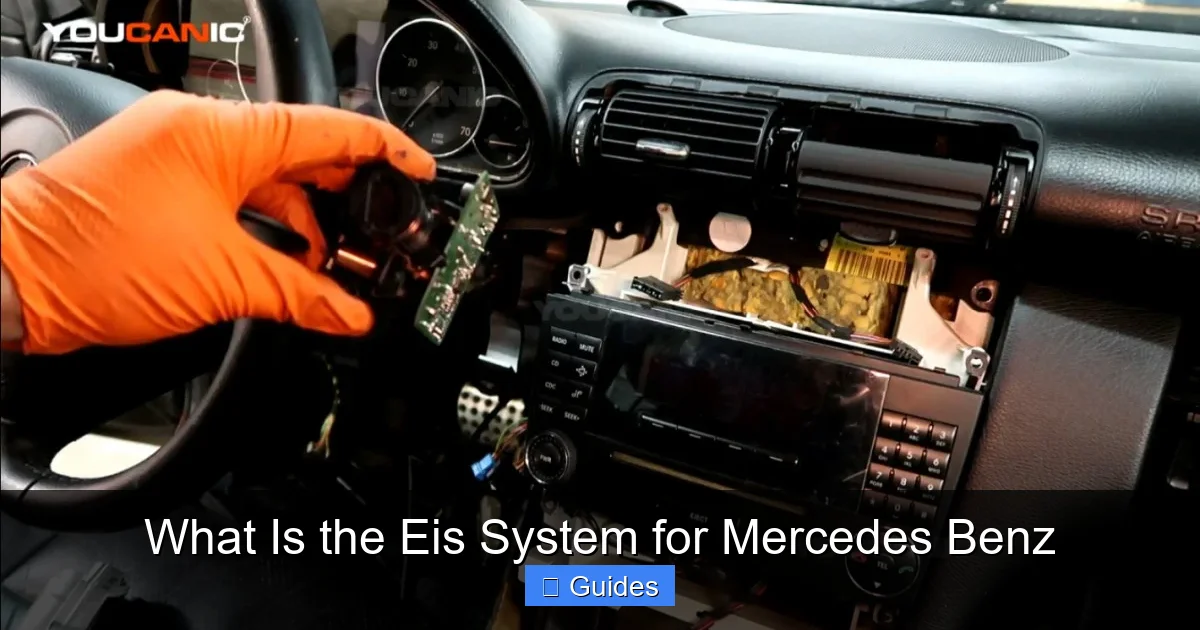
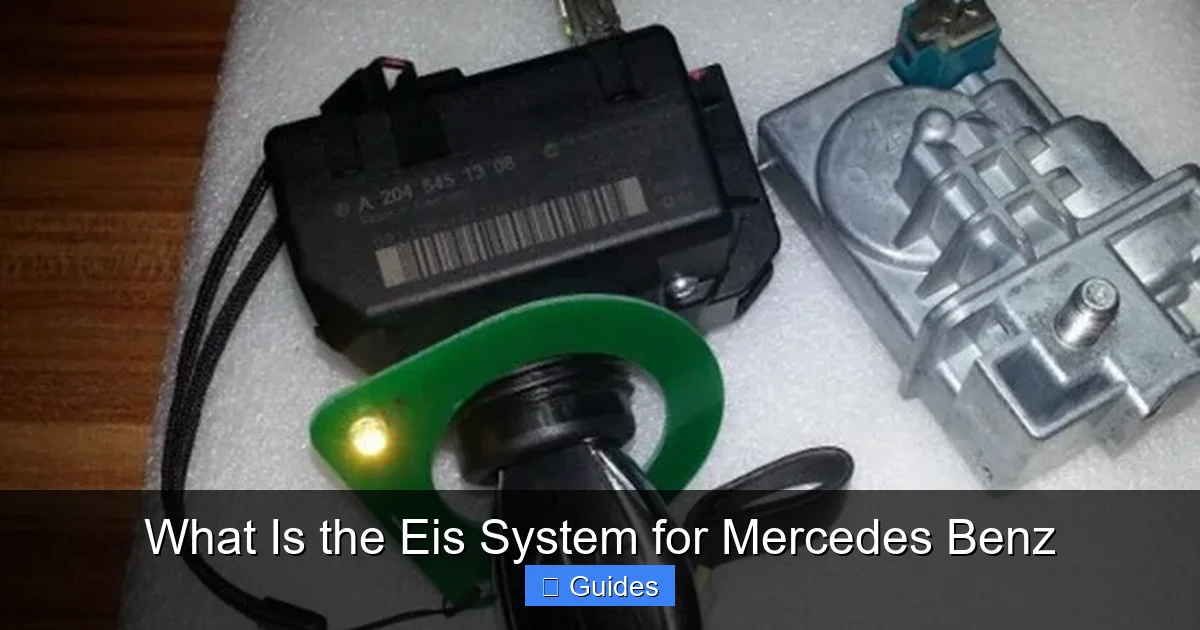
The EIS is typically located behind the steering column or integrated into the ignition assembly. In some models, it’s a standalone module; in others, it’s combined with the steering lock mechanism. Despite its small size, it’s packed with electronics, including microchips, antennas, and connectors that handle data transfer and power distribution.
One of the key features of the EIS is its ability to store key data. Each authorized key fob is programmed into the system, and the EIS remembers which keys are valid. This allows multiple drivers to use the same vehicle without needing to reconfigure settings each time. It also enables features like personalized seat positions, mirror adjustments, and climate settings based on the recognized key.
But the EIS isn’t just about convenience—it’s a critical security component. Without it, thieves could easily hot-wire a Mercedes or use cloned keys to steal the vehicle. The encryption and rolling code technology make it extremely difficult to bypass the system without the original key or specialized equipment.
How the EIS System Works
Visual guide about What Is the Eis System for Mercedes Benz
Image source: youcanic.com
Understanding how the EIS system works requires a look at the sequence of events that happen every time you start your Mercedes. It’s a finely tuned dance of signals, checks, and confirmations—all happening in under a second.
Step 1: Key Detection
When you approach your car with the key fob in your pocket or bag, the EIS system begins scanning for the signal. Most modern Mercedes models use a low-frequency (LF) antenna system embedded in the door handles and ignition area. These antennas emit a weak radio signal that activates the key fob when it’s within range—usually about 1–2 meters.
Once activated, the key fob responds with a unique identification code. This code is encrypted and changes with each use (a rolling code), making it nearly impossible to replicate.
Step 2: Authentication
The EIS receives the code and compares it to the list of authorized keys stored in its memory. This list is synced with the vehicle’s central database, often managed by the Electronic Ignition Lock (EIS) and the Central Gateway Module (CGW).
If the code matches, the EIS sends a confirmation signal to the immobilizer system. The immobilizer then disables the engine lock, allowing fuel and spark to flow when the engine is cranked.
Step 3: Ignition Activation
In vehicles with a traditional ignition slot, inserting the key sends a mechanical signal to the EIS. In push-button models, pressing the start button triggers an electronic signal.
The EIS verifies that the key is present and authenticated, then sends a command to the starter motor and engine control unit (ECU). The engine cranks and starts—assuming no other faults are present.
Step 4: Ongoing Communication
Even after the engine is running, the EIS continues to monitor the key’s presence. If the key is removed from the vehicle while the engine is on, the system may allow the car to keep running (depending on the model) but will prevent it from being restarted once turned off.
This feature prevents accidental lockouts but also ensures that the car can’t be driven away without the key.
Integration with Other Systems
The EIS doesn’t work in isolation. It communicates with multiple control units via the CAN (Controller Area Network) bus, including:
– The immobilizer control unit
– The engine control module (ECM)
– The transmission control module (TCM)
– The body control module (BCM)
– The central gateway module (CGW)
This network allows the EIS to share data and receive updates. For example, if the battery is low, the EIS might delay startup to protect the electrical system. Or if a fault is detected in the key fob, it can trigger a warning message on the dashboard.
Common EIS System Problems and Symptoms
Visual guide about What Is the Eis System for Mercedes Benz
Image source: blog.cardiagtool.co.uk
Despite its advanced design, the EIS system isn’t immune to failure. Over time, wear, environmental factors, and electrical issues can cause the module to malfunction. When this happens, the results can range from minor inconveniences to complete immobilization.
Car Won’t Start
One of the most common signs of an EIS problem is a vehicle that won’t start—even with a fully charged battery and a working key. You might press the start button and hear nothing, or the engine might crank but not fire.
This usually means the EIS isn’t recognizing the key or sending the correct signal to the ECU. It could be due to a faulty antenna, corrupted software, or internal damage to the EIS module.
Key Not Detected
If your Mercedes doesn’t recognize your key fob—doors won’t unlock, start button doesn’t respond—the EIS might be the culprit. This can happen if the key’s battery is dead, but if multiple keys fail, the issue is likely with the EIS or its antennas.
Try holding the key close to the start button (some models have a backup induction spot). If that works, it confirms the key is functional but the EIS isn’t detecting it properly.
Intermittent Starting Issues
Sometimes the EIS works fine one day and fails the next. This intermittent behavior is often caused by loose connections, corroded terminals, or moisture inside the module.
Cold weather can exacerbate these issues, as condensation may form inside the EIS housing. Over time, this leads to corrosion and electrical shorts.
Dashboard Warning Lights
A malfunctioning EIS can trigger various warning lights, including:
– “Key Not Recognized”
– “Visit Workshop”
– “Immobilizer Active”
– “Steering Lock Malfunction”
These messages indicate that the EIS has detected a fault and is preventing normal operation.
Steering Lock Stuck
In some models, the EIS controls the electronic steering lock. If the system fails, the steering wheel may become locked and won’t turn—even if the car is off.
This is a safety feature to prevent theft, but it can be dangerous if it happens while driving. Always park on level ground and avoid forcing the steering wheel.
Water Damage
The EIS is often located near the firewall or under the dashboard, making it vulnerable to water intrusion. Flooding, leaks from the HVAC system, or clogged drain tubes can allow moisture to reach the module.
Water damage is one of the leading causes of EIS failure. Signs include corrosion on connectors, fogging inside the housing, or a burnt smell.
Diagnosing and Repairing EIS Issues
Visual guide about What Is the Eis System for Mercedes Benz
Image source: blog.cardiagtool.co.uk
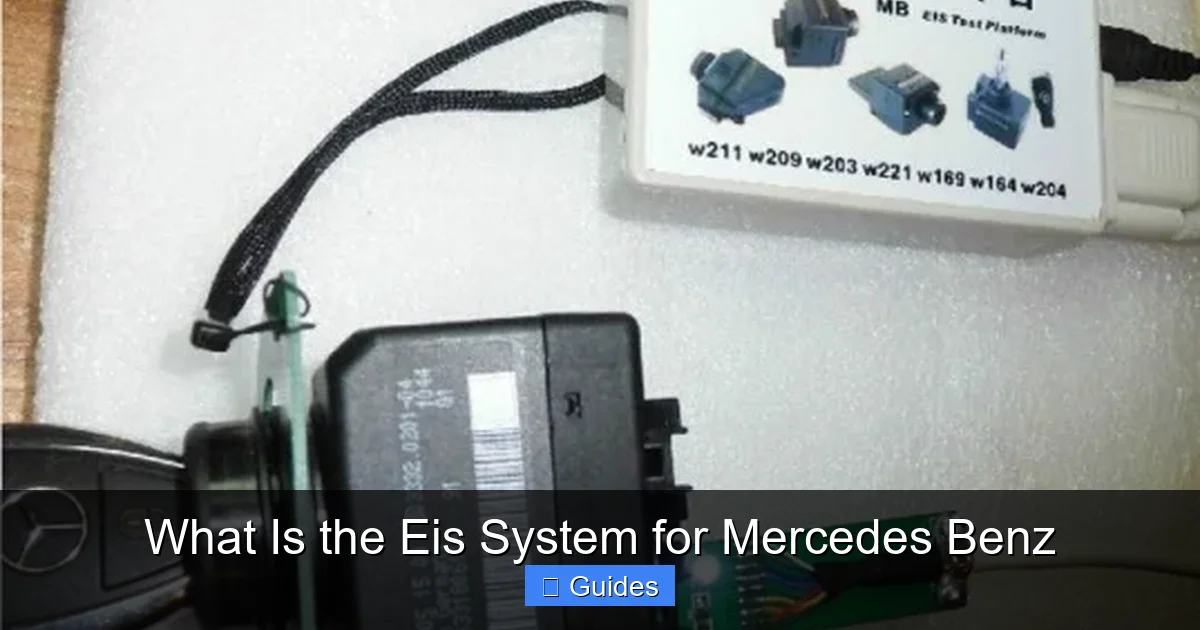
When your Mercedes shows signs of an EIS problem, the first step is proper diagnosis. Because the EIS is deeply integrated into the vehicle’s electronics, troubleshooting requires specialized tools and knowledge.
Professional Diagnostic Scan
A certified Mercedes technician will use a diagnostic tool like Xentry, DAS, or Star Diagnosis to read fault codes from the EIS and related modules. These tools can identify:
– Communication errors
– Key recognition failures
– Antenna faults
– Software glitches
The scan will also show live data, such as key signal strength and authentication status, helping pinpoint the issue.
Common Fixes
Depending on the problem, repairs may include:
– Replacing the EIS module
– Reprogramming the system
– Repairing or replacing antennas
– Cleaning or replacing connectors
– Updating software
In some cases, the EIS can be repaired rather than replaced. Skilled technicians can open the module, clean corrosion, replace damaged components, and reflash the software.
Key Programming
If you’re adding a new key or replacing a lost one, the EIS must be programmed to recognize it. This process, known as key synchronization, requires access to Mercedes’ proprietary software and security codes.
Attempting to program keys without the right tools can result in the EIS locking out all keys—a condition known as “key lockout.” This requires a full system reset by a dealer or specialist.
Aftermarket vs. OEM Parts
While aftermarket EIS modules are available, they often lack the reliability and compatibility of OEM (Original Equipment Manufacturer) parts. OEM modules are pre-programmed and tested to meet Mercedes’ strict standards.
Using non-OEM parts can lead to communication errors, reduced security, and voided warranties. For best results, always use genuine Mercedes components.
Preventive Maintenance
To avoid EIS problems:
– Keep the key fob clean and replace the battery regularly
– Avoid exposing the key to extreme temperatures or moisture
– Park in dry, covered areas to prevent water damage
– Have the system inspected during routine service
Regular maintenance can extend the life of the EIS and prevent costly repairs.
EIS System Evolution in Mercedes Models
The EIS system has evolved significantly since its introduction. Each generation has brought new features, improved security, and greater integration with other vehicle systems.
Early EIS Systems (1990s–2000s)
The first EIS modules appeared in models like the W210 E-Class and W220 S-Class. These systems used infrared signals and basic encryption. Keys had to be inserted into the ignition, and the EIS would read a transponder chip inside the key head.
These early systems were prone to wear and signal interference, leading to frequent no-start issues.
EIS 2 and EIS 3 (2000s–2010s)
Later versions, such as EIS 2 and EIS 3, introduced radio frequency (RF) communication and improved encryption. Keys could be detected at greater distances, enabling keyless entry and push-button start.
The EIS 3, used in models like the W204 C-Class and W212 E-Class, featured enhanced diagnostics and better resistance to water and vibration.
Modern EIS (2010s–Present)
Today’s EIS systems are more advanced than ever. They support features like:
– Keyless Go (hands-free entry and start)
– Remote start via smartphone app
– Personalized driver profiles
– Integration with Mercedes me connect services
The latest systems also use secure element chips and advanced encryption algorithms to prevent hacking and key cloning.
Future Trends
As Mercedes moves toward fully electric and autonomous vehicles, the EIS system will continue to evolve. Future versions may integrate with biometric authentication (like fingerprint or facial recognition) and cloud-based security platforms.
The goal is to make vehicle access even more seamless and secure—without compromising the luxury experience Mercedes is known for.
Tips for EIS System Maintenance and Care
Taking care of your EIS system doesn’t require much effort, but a few simple habits can go a long way in preventing problems.
Keep Your Key Fob in Good Condition
Your key fob is the frontline of the EIS system. Protect it from drops, water, and extreme temperatures. Replace the battery every 1–2 years, even if it seems to be working.
Store the key in a dry place, and avoid keeping it near magnets or electronic devices that could interfere with the signal.
Avoid DIY Repairs
The EIS system is highly sensitive. Attempting to repair it yourself—especially with generic tools—can cause more harm than good.
Always consult a certified Mercedes technician for diagnostics and repairs. They have the training, tools, and access to genuine parts.
Use Genuine Mercedes Keys
Aftermarket or cloned keys may not work properly with the EIS. They can trigger error messages, reduce security, or even damage the system.
If you need a replacement key, order it through a Mercedes dealer or authorized service center.
Monitor for Warning Signs
Pay attention to early symptoms like slow recognition, intermittent starting, or dashboard warnings. Addressing issues early can prevent complete failure.
Keep a record of any problems and share them with your technician during service visits.
Schedule Regular Inspections
Include the EIS system in your routine maintenance checklist. A technician can check for corrosion, loose connections, and software updates.
Regular inspections are especially important for older vehicles or those exposed to harsh conditions.
Conclusion
The EIS system for Mercedes Benz is far more than just an ignition switch—it’s the digital heart of your vehicle’s security and access control. From authenticating your key fob to enabling the engine start, the EIS ensures that only authorized users can operate your car. Its integration with the immobilizer, steering lock, and onboard electronics makes it a critical component in modern Mercedes vehicles.
While the EIS is designed for reliability, it’s not immune to failure. Water damage, electrical issues, and wear over time can lead to frustrating problems like no-start conditions or unrecognized keys. When these issues arise, professional diagnosis and repair are essential. Using genuine parts and following preventive maintenance tips can help extend the life of your EIS and keep your Mercedes running smoothly.
As automotive technology continues to advance, the EIS system will evolve alongside it—becoming smarter, more secure, and more integrated into the digital driving experience. For now, understanding how it works and how to care for it is key to enjoying the luxury, performance, and peace of mind that come with owning a Mercedes-Benz.
Frequently Asked Questions
What does EIS stand for in Mercedes Benz?
EIS stands for Electronic Ignition Switch. It’s the central module that controls key recognition, ignition, and vehicle startup in modern Mercedes vehicles.
Can I drive my Mercedes if the EIS system fails?
No, if the EIS system fails, your car likely won’t start or may not recognize the key. You’ll need professional repair to restore functionality.
How much does it cost to replace an EIS module?
Replacing an EIS module can cost between $800 and $2,500, including parts and labor. Prices vary by model and whether OEM or aftermarket parts are used.
Can I program a new key myself?
No, programming a new key requires specialized diagnostic tools and access to Mercedes’ security system. It should be done by a certified technician.
Why won’t my Mercedes start even with a working key?
This could be due to a faulty EIS module, dead key battery, or communication error. A diagnostic scan can identify the exact cause.
Is the EIS system the same as the immobilizer?
No, but they work together. The EIS manages key authentication, while the immobilizer prevents the engine from running without the correct key.

At CarLegit, we believe information should be clear, factual, and genuinely helpful. That’s why every guide, review, and update on our website is created with care, research, and a strong focus on user experience.