
Servicing your Lexus at a Toyota dealership can save you money, but it’s not always the best choice. While both brands share platforms and parts, differences in service standards, technician training, and warranty coverage mean you should weigh cost against quality. This guide breaks down the pros, cons, and smart strategies to keep your Lexus running smoothly—without overspending.
In This Article
- 1 Key Takeaways
- 2 📑 Table of Contents
- 3 Introduction: The Lexus-Toyota Connection
- 4 Why People Consider Servicing Lexus at Toyota
- 5 The Trade-Offs: What You Might Be Giving Up
- 6 When It Makes Sense to Use Toyota for Lexus Service
- 7 Alternatives: Independent Mechanics and Specialty Shops
- 8 Tips to Save Money Without Sacrificing Quality
- 9 Conclusion: Making the Right Choice for Your Lexus
- 10 Frequently Asked Questions
- 10.1 Can I service my Lexus at a Toyota dealership?
- 10.2 Will servicing my Lexus at Toyota void my warranty?
- 10.3 Are Toyota service centers as reliable as Lexus for repairs?
- 10.4 Do Toyota and Lexus use the same parts?
- 10.5 Can an independent mechanic service my Lexus?
- 10.6 How much can I save by servicing at Toyota instead of Lexus?
Key Takeaways
- Shared platforms mean some parts are interchangeable: Many Lexus and Toyota models use the same engines, transmissions, and components, which can reduce parts costs at Toyota service centers.
- Labor rates are often lower at Toyota dealerships: Toyota service departments typically charge less per hour than Lexus, making routine maintenance more affordable.
- Lexus-trained technicians offer specialized expertise: Lexus service centers have technicians specifically trained on luxury vehicles, which may result in more precise diagnostics and repairs.
- Warranty and service plans may be affected: Using non-Lexus service centers could impact certain warranty claims or complimentary maintenance programs, so check your coverage first.
- Independent shops can offer the best of both worlds: Some independent mechanics specialize in both Toyota and Lexus vehicles, offering lower prices with high-quality service.
- Use OEM parts for longevity and performance: Whether you go to Toyota, Lexus, or an independent shop, always request genuine OEM (Original Equipment Manufacturer) parts when possible.
- Compare quotes and ask about service packages: Always get multiple estimates and inquire about bundled services to maximize savings without compromising care.
📑 Table of Contents
- Introduction: The Lexus-Toyota Connection
- Why People Consider Servicing Lexus at Toyota
- The Trade-Offs: What You Might Be Giving Up
- When It Makes Sense to Use Toyota for Lexus Service
- Alternatives: Independent Mechanics and Specialty Shops
- Tips to Save Money Without Sacrificing Quality
- Conclusion: Making the Right Choice for Your Lexus
Introduction: The Lexus-Toyota Connection
If you own a Lexus, you’ve probably heard the rumor: “Just take it to Toyota—it’s cheaper and basically the same car.” And while there’s some truth to that statement, the reality is a bit more nuanced. Lexus is the luxury division of Toyota Motor Corporation, and the two brands share more than just a corporate family tree. They share platforms, engines, transmissions, and even production lines. For example, the Lexus ES is built on the same platform as the Toyota Camry, and the Lexus NX shares its underpinnings with the Toyota RAV4.
This close relationship has led many Lexus owners to wonder: Is it cheaper to service Lexus at Toyota? After all, if the parts are the same, why pay luxury prices for routine oil changes, brake jobs, or transmission services? The short answer? Sometimes yes, but not always—and not without trade-offs.
In this guide, we’ll dive deep into the cost differences, service quality, parts compatibility, and long-term implications of choosing Toyota over Lexus for your vehicle maintenance. Whether you’re driving a sleek Lexus RX or a sporty IS, understanding your options can save you hundreds—or even thousands—over the life of your car. We’ll also explore alternatives like independent mechanics and how to make the smartest decision for your wallet and your vehicle’s health.
Why People Consider Servicing Lexus at Toyota

Visual guide about Is It Cheaper to Service Lexus at Toyota
Image source: tiqwebsites.azureedge.net
The idea of taking a Lexus to a Toyota dealership for service isn’t just a money-saving hack—it’s rooted in real mechanical similarities. Because Lexus vehicles are built using Toyota’s engineering and manufacturing systems, many components are shared across both brands. This means that a Toyota technician may already be familiar with your Lexus’s engine, suspension, or electrical system, even if they don’t specialize in luxury models.
One of the biggest drivers behind this trend is cost. Toyota dealerships generally charge lower labor rates than their Lexus counterparts. For example, a standard oil change at a Lexus service center might run $120–$150, while the same service at a Toyota dealership could cost $80–$100. Over time, these savings add up, especially for routine maintenance like tire rotations, brake inspections, and fluid top-offs.
Another reason is convenience. If you already have a trusted Toyota service advisor or live closer to a Toyota dealership, it’s tempting to consolidate your automotive needs in one place. Plus, Toyota service centers often have shorter wait times and more flexible scheduling, making it easier to fit maintenance into a busy schedule.
But before you make the switch, it’s important to understand what you might be giving up. While the parts may be similar, the service experience, technician training, and attention to detail can differ significantly between the two brands.
To understand why servicing a Lexus at Toyota can make sense, it helps to know just how intertwined the two brands really are. Toyota uses a modular platform strategy, meaning multiple vehicles—across both Toyota and Lexus—are built on the same underlying architecture. This allows the company to reduce production costs while maintaining quality and performance.
For instance:
– The Lexus ES and Toyota Camry share the Toyota K platform.
– The Lexus NX and Toyota RAV4 are built on the Toyota New MC platform.
– The Lexus IS and Toyota Crown (in some markets) use similar rear-wheel-drive layouts.
Because of this, many mechanical components—such as engines, transmissions, suspension parts, and even some electronics—are shared or very similar. A Toyota technician who works on a RAV4 daily may already know how to diagnose an issue in a Lexus NX with minimal additional training.
Even some luxury-specific features, like adaptive cruise control or lane-keeping assist, are built on Toyota’s Safety Sense technology, which is used across both brands. This means that, in theory, a Toyota service center could handle many of the same repairs a Lexus center would.
Cost Savings: Labor and Parts
One of the most compelling reasons to consider Toyota for Lexus service is the potential for significant cost savings. Let’s break it down:
Labor Rates: On average, Toyota dealerships charge $100–$130 per hour for labor, while Lexus dealerships charge $140–$180 per hour. That’s a 30–40% difference. For a 2-hour brake job, that’s a savings of $80–$100 just on labor.
Parts Pricing: While both dealerships use genuine OEM parts, Toyota often lists parts at slightly lower prices. For example, a brake pad set for a Lexus RX might cost $120 at Lexus and $105 at Toyota. It’s not a huge difference per item, but it adds up over multiple services.
Service Packages: Toyota frequently offers promotional service packages—like “30,000-mile maintenance bundles”—that include oil changes, tire rotations, and inspections at a discounted rate. Lexus offers similar packages, but they’re often more expensive due to the luxury branding.
Example: Let’s say you need a standard 60,000-mile service on your Lexus ES. At a Lexus dealership, this might include:
– Oil and filter change: $140
– Tire rotation: $50
– Brake inspection: $80
– Fluid top-off: $40
– Multi-point inspection: $60
Total: ~$370
At a Toyota dealership, the same service might cost:
– Oil and filter change: $100
– Tire rotation: $40
– Brake inspection: $60
– Fluid top-off: $30
– Multi-point inspection: $50
Total: ~$280
That’s a savings of $90—just for routine maintenance. Over five years, these small differences can save you $500 or more.
The Trade-Offs: What You Might Be Giving Up

Visual guide about Is It Cheaper to Service Lexus at Toyota
Image source: tiqwebsites.azureedge.net
While the cost savings are real, servicing your Lexus at a Toyota dealership isn’t without drawbacks. The biggest concern? Specialized expertise.
Lexus vehicles are designed with luxury in mind—not just in terms of interior materials and ride comfort, but also in engineering tolerances, software calibration, and performance tuning. A Lexus technician undergoes specific training to understand these nuances. They’re familiar with the brand’s advanced driver-assistance systems (ADAS), adaptive suspension, and high-end infotainment setups.
A Toyota technician, while highly skilled, may not have the same depth of experience with Lexus-specific systems. For example, if your Lexus has a malfunctioning adaptive headlight system or a glitch in the Mark Levinson audio system, a Toyota service center might not have the diagnostic tools or software updates needed to fix it properly.
Warranty and Service Plan Considerations
Another critical factor is your vehicle’s warranty and service plan. Lexus offers complimentary maintenance for the first two years or 20,000 miles (whichever comes first) on new vehicles. This includes oil changes, tire rotations, and inspections—all performed at a Lexus dealership.
If you choose to service your car at a Toyota dealership during this period, you may forfeit eligibility for these free services. Additionally, some warranty repairs require documentation from an authorized Lexus service center. If a Toyota technician performs a repair that later leads to a related issue, Lexus might deny coverage if they determine the work wasn’t done to their standards.
Even if your warranty has expired, some extended service contracts or certified pre-owned (CPO) warranties may have similar requirements. Always check your contract before going outside the Lexus network.
Customer Experience and Amenities
Let’s be honest—part of the Lexus ownership experience is the service experience. Lexus dealerships are known for their upscale waiting areas, complimentary refreshments, loaner vehicles, and personalized service advisors. Toyota service centers, while professional and efficient, typically offer a more utilitarian environment.
If you value comfort and convenience during your service visits, this difference might outweigh the cost savings. On the other hand, if you’re in and out quickly and don’t mind a simpler waiting area, Toyota could be a great fit.
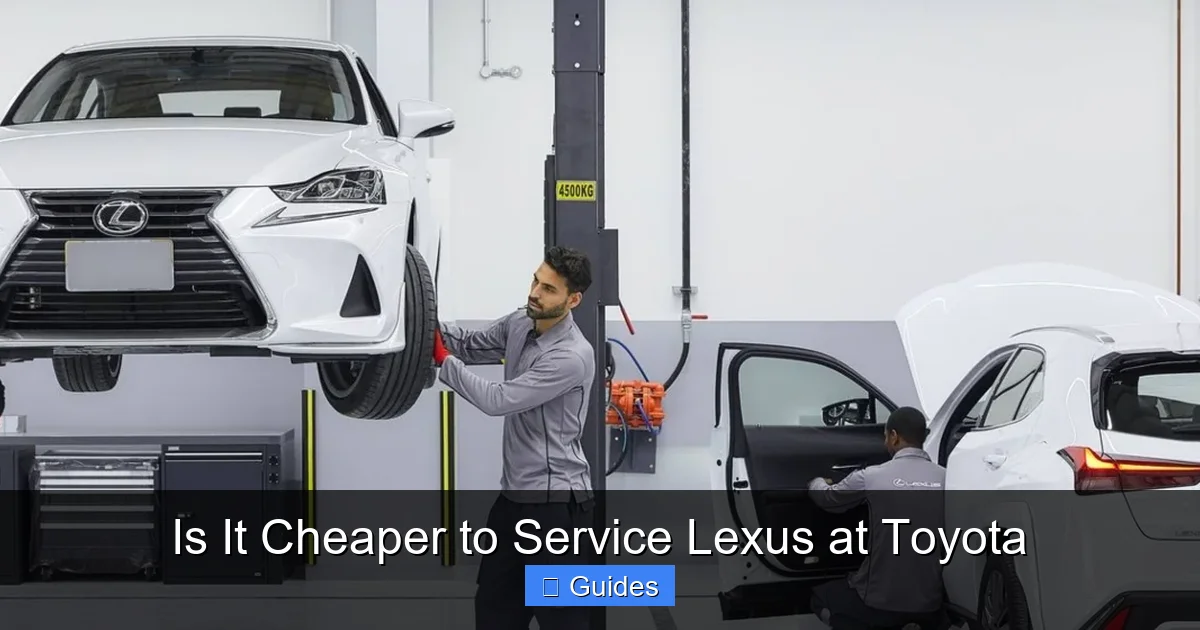
When It Makes Sense to Use Toyota for Lexus Service
Visual guide about Is It Cheaper to Service Lexus at Toyota
Image source: dam.alfuttaim.com
Despite the trade-offs, there are several scenarios where servicing your Lexus at a Toyota dealership is not only acceptable—but smart.
If you drive a Lexus model that shares a platform with a Toyota (like the ES/Camry or NX/RAV4), and you’re only doing routine maintenance—oil changes, tire rotations, brake pad replacements—then a Toyota service center is a solid choice. These tasks don’t require specialized diagnostic tools or luxury-specific knowledge, and the parts are often identical.
For example, changing the oil in a Lexus ES 350 is mechanically the same as doing it in a Toyota Camry V6. The filter, oil type, and procedure are nearly identical. A Toyota technician can handle this with ease—and at a lower cost.
Older Vehicles Out of Warranty
Once your Lexus is out of warranty and no longer covered by complimentary maintenance, the cost of service becomes a bigger factor. At this point, the luxury markup at Lexus dealerships feels less justified, especially if you’re just doing basic upkeep.
Many owners of older Lexus vehicles (7+ years) find that Toyota service centers provide reliable, affordable care without sacrificing quality. Just be sure to request OEM parts and ask for a detailed service report.
Emergency Repairs and Quick Fixes
If you’re on a road trip and your Lexus develops a minor issue—like a dead battery or a flat tire—stopping at a nearby Toyota dealership can be a lifesaver. Most Toyota service centers can handle basic repairs quickly, and you’ll avoid the hassle of finding a Lexus dealer in a remote area.
Even something like a brake light replacement or a cabin air filter change can be done at Toyota with minimal risk.
Alternatives: Independent Mechanics and Specialty Shops
Before deciding between Lexus and Toyota, consider a third option: independent repair shops that specialize in Japanese luxury vehicles.
Many independent mechanics have years of experience working on both Toyota and Lexus models. They often charge significantly less than dealerships—sometimes 30–50% less—while still using OEM or high-quality aftermarket parts. Plus, they may have access to the same diagnostic tools as dealerships, especially if they’re certified by organizations like ASE (Automotive Service Excellence).
How to Find a Reputable Independent Shop
Look for shops that:
– Specialize in Toyota/Lexus vehicles
– Employ ASE-certified technicians
– Offer warranties on parts and labor
– Have positive reviews on Google, Yelp, or Facebook
– Provide detailed invoices and use OEM parts upon request
Ask friends, family, or online forums (like Lexus forums or Reddit’s r/Lexus) for recommendations. Many owners swear by their local independent mechanic who keeps their Lexus running like new—at a fraction of the cost.
Hybrid Approach: Mix and Match
You don’t have to choose just one service provider. A smart strategy is to use a combination of options:
– Go to Lexus for warranty work, complex diagnostics, and software updates.
– Use Toyota for routine maintenance on shared models.
– Visit an independent shop for older vehicles or non-critical repairs.
This hybrid approach gives you the best of all worlds: quality, convenience, and cost savings.
Tips to Save Money Without Sacrificing Quality
No matter where you service your Lexus, there are ways to keep costs down while maintaining high standards.
Always Request OEM Parts
Even if you’re at a Toyota or independent shop, insist on genuine OEM parts. These are made by the original manufacturer and are designed specifically for your vehicle. Aftermarket parts may be cheaper, but they can wear out faster or cause compatibility issues.
Compare Quotes
Don’t assume Lexus is always more expensive. Get quotes from at least two dealerships and one independent shop. Sometimes, Lexus dealers run promotions that make them competitive with Toyota.
Ask About Service Packages
Many dealerships offer discounted bundles for multiple services. For example, a “30,000-mile package” might include an oil change, tire rotation, and inspection for a flat rate. These can save you 15–20% compared to paying for each service separately.
Stay on Schedule
Preventative maintenance is always cheaper than repairs. Follow your owner’s manual schedule for oil changes, fluid flushes, and inspections. Catching issues early can save you thousands in the long run.
Use Loyalty Programs
Some dealerships offer loyalty discounts or rewards programs. If you’ve been a long-time customer, ask if you qualify for any perks—like discounted labor or free inspections.
Conclusion: Making the Right Choice for Your Lexus
So, is it cheaper to service Lexus at Toyota? The answer is: often, yes—but not always, and not without considerations.
For routine maintenance on shared models, especially after the warranty period, Toyota dealerships can offer significant savings with reliable service. The parts are often the same, the labor is cheaper, and the technicians are well-trained. However, for complex diagnostics, warranty work, or luxury-specific systems, a Lexus service center provides specialized expertise and peace of mind.
The best approach is to be informed and flexible. Compare costs, understand your vehicle’s needs, and don’t be afraid to mix service providers. And remember: the cheapest option isn’t always the best—but the most expensive one isn’t either. With the right strategy, you can keep your Lexus in top condition without breaking the bank.
Whether you choose Lexus, Toyota, or an independent shop, the key is consistency, quality parts, and regular maintenance. Your Lexus is a precision-engineered vehicle—treat it with care, and it will reward you with years of smooth, luxurious driving.
Frequently Asked Questions
Can I service my Lexus at a Toyota dealership?
Yes, you can service your Lexus at a Toyota dealership, especially for routine maintenance like oil changes and brake inspections. Many Toyota technicians are familiar with Lexus models due to shared platforms and components.
Will servicing my Lexus at Toyota void my warranty?
Generally, no—but it depends on your warranty terms. Most warranties allow service at any qualified facility, but some extended or CPO plans may require Lexus-certified centers. Always check your contract to be safe.
Are Toyota service centers as reliable as Lexus for repairs?
For basic maintenance, Toyota centers are very reliable. However, for complex issues involving luxury features or advanced electronics, Lexus technicians have more specialized training and tools.
Do Toyota and Lexus use the same parts?
Many parts are shared or very similar, especially on models built on the same platform. However, some components—like interior trim, suspension tuning, or infotainment systems—are unique to Lexus.
Can an independent mechanic service my Lexus?
Absolutely. Many independent shops specialize in Toyota and Lexus vehicles and can provide high-quality service at lower prices. Just make sure they use OEM parts and have good reviews.
How much can I save by servicing at Toyota instead of Lexus?
You can save 20–40% on labor costs and 10–15% on parts. For routine services, that could mean $50–$100 in savings per visit. Over time, these savings add up significantly.

At CarLegit, we believe information should be clear, factual, and genuinely helpful. That’s why every guide, review, and update on our website is created with care, research, and a strong focus on user experience.