
Seeing “Trac Off” on your Lexus dashboard can be alarming, but it simply means the traction control system is disabled. This feature helps maintain grip during slippery conditions, and turning it off may be intentional or due to a system issue. Understanding when it’s safe—and when it’s not—is key to driving safely.
In This Article
- 1 Key Takeaways
- 2 📑 Table of Contents
- 3 What Does Trac Off Mean on a Lexus?
- 4 Understanding Traction Control in Lexus Vehicles
- 5 Why Would Trac Off Appear on the Dashboard?
- 6 Is It Safe to Drive with Trac Off?
- 7 How to Reset or Re-enable Traction Control
- 8 Common Causes and Fixes for Trac Off Warnings
- 9 Preventing Future Trac Off Warnings
- 10 Conclusion
- 11 Frequently Asked Questions
Key Takeaways
- Trac Off means traction control is disabled: The system that prevents wheel spin during acceleration is turned off, either manually or due to a fault.
- It can be turned off intentionally: Drivers may disable it for off-roading, snow driving, or performance situations where wheel slip is needed.
- A warning light may indicate a problem: If Trac Off appears with other warning lights (like Check Engine or ABS), there may be an underlying issue.
- Driving with Trac Off reduces stability: On wet, icy, or slick roads, disabling traction control increases the risk of skidding or losing control.
- Resetting the system is usually simple: Turning the car off and on, or pressing the Trac Off button again, often restores normal function.
- Regular maintenance helps prevent issues: Faulty wheel speed sensors or low tire pressure can trigger Trac Off warnings.
- When in doubt, consult a professional: If the light stays on or reappears frequently, have your Lexus inspected by a certified technician.
📑 Table of Contents
What Does Trac Off Mean on a Lexus?
If you’re driving your Lexus and suddenly see “Trac Off” illuminated on the dashboard, your first reaction might be concern. Is something wrong? Should you pull over? Can you keep driving? The good news is that in most cases, seeing “Trac Off” doesn’t mean your car is broken—it simply means the traction control system has been turned off.
Traction control is a vital safety feature in modern vehicles, especially in luxury brands like Lexus, which prioritize both performance and driver confidence. This system works behind the scenes to help maintain grip and stability, particularly when accelerating on slippery surfaces like rain-slicked roads, snow, or gravel. When the system detects that one or more wheels are spinning faster than the others—indicating a loss of traction—it automatically reduces engine power or applies the brakes to that wheel to regain control.
So, when you see “Trac Off,” it means this helpful system is no longer active. But why would it turn off? And is it safe to drive? The answer depends on whether the system was disabled intentionally or if it shut down due to a malfunction. Understanding the difference is crucial for safe driving and proper vehicle maintenance.
In this guide, we’ll walk you through everything you need to know about the “Trac Off” message in your Lexus. From what it means and why it appears, to how to respond and when to seek professional help, we’ve got you covered. Whether you’re a new Lexus owner or a long-time driver, this information will help you feel more confident behind the wheel—no matter the road conditions.
Understanding Traction Control in Lexus Vehicles
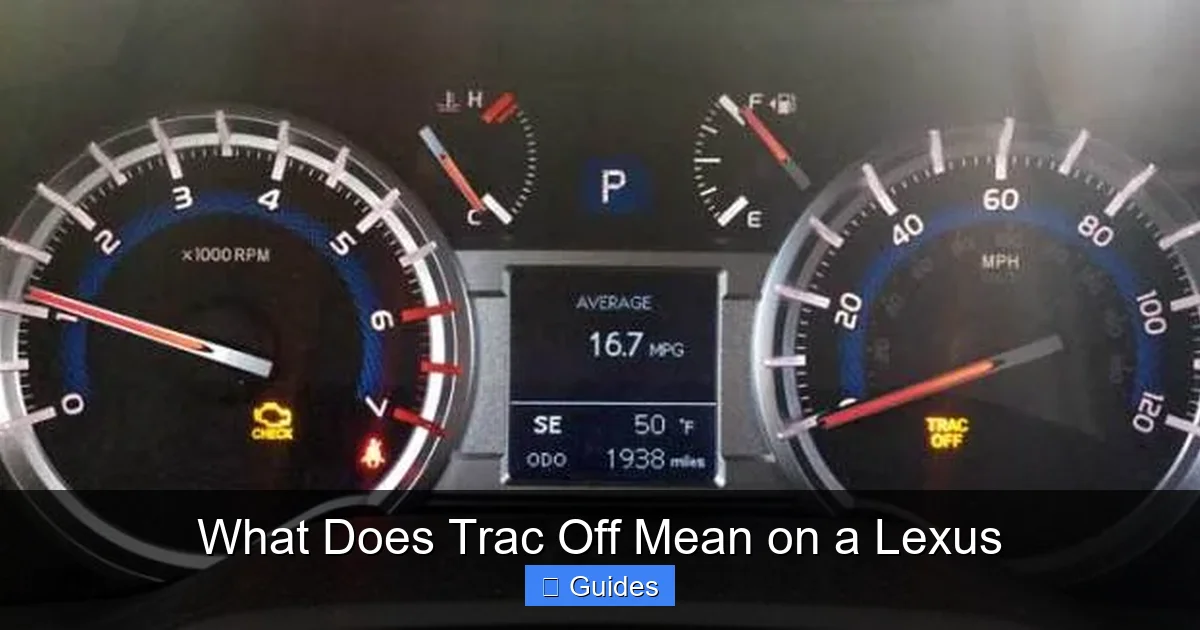
Visual guide about What Does Trac Off Mean on a Lexus
Image source: img.toyotask.com
To truly grasp what “Trac Off” means, it helps to understand how traction control works in the first place. Traction control is part of a broader suite of electronic stability systems designed to keep your vehicle stable and under control. In Lexus models, this system is often integrated with the Vehicle Stability Control (VSC) and Anti-lock Braking System (ABS), creating a layered approach to safety.
How Traction Control Works
At its core, traction control monitors the speed of each wheel using sensors. If one wheel begins to spin faster than the others—say, when you accelerate quickly on a wet road—the system detects this imbalance. It then takes action to correct it, typically by reducing engine power or applying the brake to the spinning wheel. This helps prevent wheel slip and keeps the car moving in the intended direction.
For example, imagine you’re pulling out of a parking spot on a rainy morning. The pavement is slick, and as you press the accelerator, the drive wheels start to spin. Without traction control, your car might lurch forward unpredictably or even fishtail. But with the system active, it senses the slip and instantly adjusts power delivery, helping you accelerate smoothly and safely.
Integration with Other Safety Systems
In Lexus vehicles, traction control doesn’t work in isolation. It’s closely linked with the Vehicle Stability Control (VSC) system, which monitors your steering input and compares it to the vehicle’s actual direction of travel. If the car begins to understeer (pushing wide in a turn) or oversteer (spinning out), VSC can apply individual brakes and reduce engine power to help correct the trajectory.
The Anti-lock Braking System (ABS) also plays a role. While ABS prevents wheel lockup during hard braking, traction control prevents wheel spin during acceleration. Together, these systems provide comprehensive protection in a wide range of driving conditions.
Why Lexus Includes Traction Control
Lexus vehicles are engineered for comfort, performance, and safety. Traction control is a standard feature across most models because it enhances both everyday drivability and emergency handling. Whether you’re navigating a snowy mountain pass or dealing with sudden downpours, having traction control active gives you an extra layer of confidence.
It’s also worth noting that many Lexus models come with advanced all-wheel-drive (AWD) systems, which further improve traction. However, even with AWD, wheel slip can still occur—especially during aggressive acceleration or on loose surfaces. That’s where traction control becomes indispensable.
Why Would Trac Off Appear on the Dashboard?
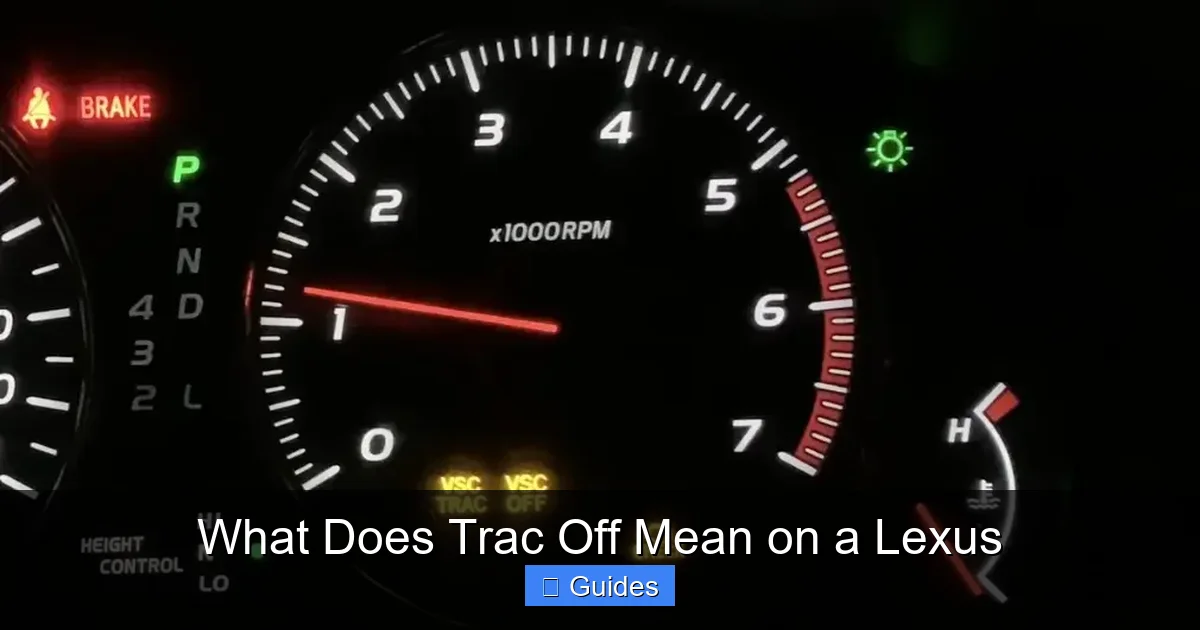
Visual guide about What Does Trac Off Mean on a Lexus
Image source: infinitycartips.com
Now that you understand how traction control works, let’s explore the reasons why “Trac Off” might appear on your Lexus dashboard. There are generally two main causes: intentional deactivation or a system malfunction.
Intentional Deactivation
The most common reason for seeing “Trac Off” is that the driver has manually turned off the traction control system. Most Lexus models are equipped with a “Trac Off” button, usually located near the gear shifter or on the center console. Pressing this button disables the traction control system, which can be useful in certain driving situations.
For example, if you’re stuck in deep snow or mud, you might need a little wheel spin to “rock” the car free. In such cases, having traction control active can actually work against you by limiting power to the wheels. Turning it off allows for more aggressive throttle input, which can help you gain momentum and get unstuck.
Similarly, performance drivers or those participating in track days may disable traction control to have more direct control over the vehicle’s behavior. In high-performance Lexus models like the IS F or RC F, drivers often prefer to manage wheel slip manually for a more engaging driving experience.
System Malfunction or Fault
While intentional deactivation is common, “Trac Off” can also appear due to a system fault. If the traction control system detects a problem—such as a faulty wheel speed sensor, low tire pressure, or an issue with the ABS module—it may automatically disable itself as a safety precaution.
For instance, if one of the wheel speed sensors is dirty, damaged, or malfunctioning, the system can’t accurately monitor wheel speeds. Without reliable data, it can’t function properly, so it shuts down and alerts you with the “Trac Off” message.
Other potential causes include:
– Low battery voltage
– Faulty steering angle sensor
– Issues with the VSC or ABS control module
– Loose or corroded electrical connections
In these cases, the “Trac Off” light may appear alongside other warning indicators, such as the Check Engine light or ABS warning light. If multiple lights are on, it’s a strong sign that something needs attention.
Environmental Triggers
Sometimes, environmental factors can trigger the “Trac Off” message—even if there’s no actual fault. For example, driving through deep snow, mud, or standing water can temporarily interfere with wheel speed sensors. Once the sensors are cleaned or the vehicle is driven on dry pavement, the system may reset itself.
Similarly, if your tires are significantly underinflated or have uneven wear, the system may interpret this as a loss of traction and disable itself. Maintaining proper tire pressure and tread depth is essential for reliable system operation.
Is It Safe to Drive with Trac Off?
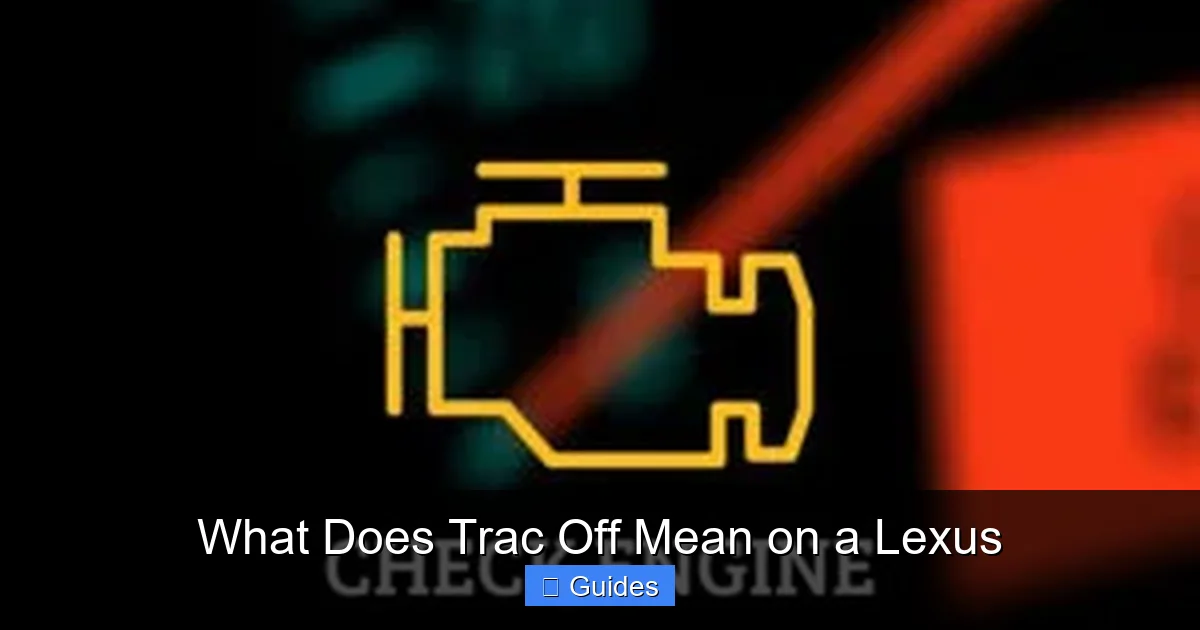
Visual guide about What Does Trac Off Mean on a Lexus
Image source: bryansgarage.com
This is one of the most common questions Lexus owners ask. The short answer is: it depends on the situation. Driving with traction control off is not inherently dangerous, but it does change how your vehicle behaves—especially in challenging conditions.
When It’s Safe to Drive with Trac Off
There are specific scenarios where driving with traction control disabled is not only safe but beneficial. These include:
– **Off-roading or driving in deep snow/mud:** As mentioned earlier, some wheel slip can help you gain traction and get unstuck.
– **Performance driving:** On a track or closed course, experienced drivers may prefer to manage traction manually.
– **Testing or diagnostics:** Mechanics may disable the system during repairs or system checks.
In these cases, the driver is usually aware of the change and driving in a controlled environment. The key is understanding the trade-off: you gain more direct control over the vehicle, but you also take on more responsibility for maintaining stability.
When It’s Not Safe to Drive with Trac Off
On the other hand, driving with traction control off in everyday conditions—especially on wet, icy, or slippery roads—can increase the risk of losing control. Without the system to intervene, your wheels are more likely to spin during acceleration, which can lead to skidding, fishtailing, or even a spinout.
For example, imagine you’re merging onto a highway during a rainstorm. You press the accelerator to match traffic speed, but the road is slick. With traction control active, the system would detect any wheel slip and adjust power to maintain grip. But with it off, the wheels could spin freely, causing a sudden loss of traction and potentially leading to an accident.
Additionally, if “Trac Off” appears unexpectedly—especially with other warning lights—it may indicate a real problem. Driving in this state could compromise not only traction control but also ABS and stability control, significantly reducing your vehicle’s safety systems.
Tips for Safe Driving with Trac Off
If you must drive with traction control disabled, follow these tips to stay safe:
– Drive smoothly and avoid sudden acceleration or hard braking.
– Reduce speed in adverse weather conditions.
– Be extra cautious on curves, hills, and slippery surfaces.
– Re-enable traction control as soon as possible.
And remember: just because you *can* drive with Trac Off doesn’t mean you *should*. In most daily driving situations, it’s best to keep the system active for maximum safety.
How to Reset or Re-enable Traction Control
If “Trac Off” appears on your dashboard and you didn’t intentionally disable it, you’ll likely want to reset the system. Fortunately, this is usually a straightforward process.
Method 1: Press the Trac Off Button
The simplest way to re-enable traction control is to press the “Trac Off” button again. This button is typically labeled and located near the gear shifter or on the center console. A single press should toggle the system back on, and the “Trac Off” light should disappear from the dashboard.
If the light remains on after pressing the button, try turning the ignition off, waiting 10–15 seconds, and then restarting the vehicle. This allows the system to reset and may clear any temporary glitches.
Method 2: Check for Obvious Issues
Before assuming a major problem, check for simple issues that could trigger the warning:
– **Tire pressure:** Use a tire pressure gauge to ensure all tires are inflated to the recommended level (found on the driver’s door jamb or in the owner’s manual).
– **Wheel sensors:** Inspect the wheels for mud, snow, or debris that might be blocking the speed sensors.
– **Battery voltage:** A weak or dying battery can cause electronic systems to malfunction. If your car has been sitting or the battery is old, consider having it tested.
Method 3: Use an OBD-II Scanner
If the light persists, you may need to diagnose the issue further. An OBD-II (On-Board Diagnostics) scanner can read trouble codes from your vehicle’s computer and help identify the root cause. Many auto parts stores offer free code reading, or you can purchase an affordable scanner for home use.
Common codes related to traction control include:
– C1201: Engine control system malfunction
– C1223: ABS control system malfunction
– C1241: Low battery positive voltage
Once you have the code, you can research the specific issue or take your vehicle to a Lexus service center for professional diagnosis.
When to Visit a Service Center
If you’ve tried the above steps and the “Trac Off” light remains on—or if it comes back frequently—it’s time to visit a certified Lexus technician. Persistent warnings often indicate a deeper issue, such as a failing sensor, wiring problem, or module failure. These require specialized tools and expertise to repair properly.
Common Causes and Fixes for Trac Off Warnings
To help you troubleshoot effectively, here are some of the most common causes of “Trac Off” warnings in Lexus vehicles—and how to address them.
1. Faulty Wheel Speed Sensor
The wheel speed sensors are critical for traction control. If one fails or becomes dirty, the system can’t monitor wheel speeds accurately. Symptoms include intermittent “Trac Off” lights, ABS warnings, or erratic speedometer readings.
**Fix:** Clean the sensor and its mounting area. If the problem persists, the sensor may need replacement. This is a relatively inexpensive repair but should be done by a professional to ensure proper calibration.
2. Low or Uneven Tire Pressure
Tires that are underinflated or have significantly different pressures can cause the system to detect false wheel slip.
**Fix:** Check and adjust tire pressure to the manufacturer’s specifications. Rotate tires regularly to ensure even wear.
3. Weak or Dying Battery
Electronic systems like traction control rely on stable voltage. A weak battery can cause intermittent faults.
**Fix:** Test the battery and charging system. Replace the battery if it’s more than 3–5 years old or showing signs of weakness.
4. Steering Angle Sensor Misalignment
After a wheel alignment or suspension repair, the steering angle sensor may need recalibration. If it’s out of sync, the VSC and traction control systems may not function correctly.
**Fix:** Have the sensor recalibrated using specialized equipment at a Lexus service center.
5. Software Glitch or System Update Needed
Sometimes, the issue is simply a software hiccup. Lexus periodically releases updates for vehicle systems.
**Fix:** Visit a dealership to check for available software updates or perform a system reset.
Preventing Future Trac Off Warnings
While you can’t always prevent “Trac Off” warnings, regular maintenance and mindful driving can reduce the likelihood of unexpected issues.
– **Keep tires properly inflated and rotated.**
– **Clean wheel wells and sensors regularly**, especially in winter or off-road conditions.
– **Avoid aggressive driving** on slippery surfaces unless necessary.
– **Address warning lights promptly**—don’t ignore them.
– **Schedule routine inspections** with a Lexus-certified technician.
By staying proactive, you’ll keep your traction control system—and your entire vehicle—running smoothly for years to come.
Conclusion
Seeing “Trac Off” on your Lexus dashboard doesn’t have to be a cause for panic. In many cases, it simply means the traction control system has been turned off—either by you or due to a temporary glitch. Understanding what this message means, why it appears, and how to respond is key to safe and confident driving.
While traction control is a valuable safety feature, there are times when disabling it makes sense—like when you’re stuck in snow or driving on a track. But for everyday driving, especially in adverse weather, it’s best to keep the system active.
If the “Trac Off” light appears unexpectedly or won’t turn off, don’t ignore it. Simple fixes like checking tire pressure or restarting the vehicle may resolve the issue. But if problems persist, professional diagnosis is essential.
Your Lexus is designed to deliver a smooth, safe, and luxurious driving experience. By staying informed and maintaining your vehicle properly, you can enjoy that experience to the fullest—no matter what the dashboard lights say.
Frequently Asked Questions
What does Trac Off mean on a Lexus?
Trac Off means the traction control system is disabled. This system helps prevent wheel spin during acceleration, especially on slippery surfaces. The light may appear if you manually turned it off or if there’s a system fault.
Is it safe to drive with Trac Off on?
It can be safe in certain situations, like off-roading or performance driving, but it’s not recommended for everyday use—especially in wet or icy conditions. Driving with Trac Off increases the risk of losing traction and control.
Why did Trac Off come on by itself?
Trac Off may activate automatically if the system detects a problem, such as a faulty wheel speed sensor, low tire pressure, or a weak battery. It’s a safety feature to prevent the system from operating incorrectly.
How do I turn Trac Off back on?
Press the Trac Off button again to re-enable the system. If the light remains on, try turning the car off and on, or check for issues like low tire pressure or a weak battery.
Can low tire pressure cause Trac Off to come on?
Yes, low or uneven tire pressure can trick the system into thinking there’s wheel slip, causing Trac Off to activate. Always maintain proper tire inflation to avoid false warnings.
Should I take my Lexus to a mechanic if Trac Off stays on?
If the light won’t turn off or appears with other warning lights, yes—visit a Lexus service center. Persistent Trac Off warnings may indicate a sensor, wiring, or module issue that requires professional repair.

At CarLegit, we believe information should be clear, factual, and genuinely helpful. That’s why every guide, review, and update on our website is created with care, research, and a strong focus on user experience.