
The Alfa Romeo Disco Volante is a rare and stunning Italian sports car from the 1950s, with original models fetching millions at auction. Today, modern replicas and restorations offer more accessible entry points, but prices still reflect its iconic design and racing heritage.
In This Article
- 1 Key Takeaways
- 2 📑 Table of Contents
- 3 Introduction: The Myth and Magic of the Alfa Romeo Disco Volante
- 4 A Brief History of the Alfa Romeo Disco Volante
- 5 How Much Does an Original Alfa Romeo Disco Volante Cost?
- 6 Modern Replicas: A More Accessible Path to Ownership
- 7 Restoration Projects: Can You Build Your Own Disco Volante?
- 8 Ongoing Costs of Ownership
- 9 Conclusion: Is the Alfa Romeo Disco Volante Worth It?
- 10 Frequently Asked Questions
- 10.1 How many Alfa Romeo Disco Volantes were ever made?
- 10.2 Can I drive a Disco Volante on public roads?
- 10.3 Are there any modern versions of the Disco Volante?
- 10.4 What affects the value of an original Disco Volante?
- 10.5 How much does it cost to maintain a Disco Volante?
- 10.6 Is a Disco Volante a good investment?
Key Takeaways
- Original Disco Volante models are extremely rare and expensive – only seven were ever built, with prices ranging from $3 million to over $10 million depending on condition and provenance.
- Modern replicas offer a more affordable alternative – companies like Disco Volante by Touring Superleggera recreate the classic design using modern Alfa Romeo platforms, priced between $500,000 and $1 million.
- Provenance and racing history dramatically affect value – cars with documented competition history or celebrity ownership command premium prices.
- Restoration costs can be substantial – bringing a neglected original back to showroom condition can cost $500,000 or more, depending on the extent of work needed.
- Maintenance and storage are ongoing expenses – due to its rarity, specialized mechanics and climate-controlled storage are essential, adding thousands annually to ownership costs.
- Insurance and registration require expert handling – standard policies won’t cover a car of this value; specialized classic car insurers are a must.
- The Disco Volante is more than a car—it’s a rolling piece of automotive art – its futuristic design and engineering legacy make it a prized collector’s item beyond just financial value.
📑 Table of Contents
- Introduction: The Myth and Magic of the Alfa Romeo Disco Volante
- A Brief History of the Alfa Romeo Disco Volante
- How Much Does an Original Alfa Romeo Disco Volante Cost?
- Modern Replicas: A More Accessible Path to Ownership
- Restoration Projects: Can You Build Your Own Disco Volante?
- Ongoing Costs of Ownership
- Conclusion: Is the Alfa Romeo Disco Volante Worth It?
Introduction: The Myth and Magic of the Alfa Romeo Disco Volante
Imagine a car so ahead of its time that it looked like it had flown in from the future. That’s the Alfa Romeo Disco Volante—literally “Flying Saucer” in Italian. Unveiled in the mid-1950s, this sleek, low-slung coupe wasn’t just a vehicle; it was a statement. With its aerodynamic body, hidden headlights, and a design that seemed ripped from a sci-fi movie, the Disco Volante captured imaginations and turned heads wherever it went. It wasn’t built for mass production. In fact, only seven were ever made. That rarity, combined with its bold styling and racing pedigree, has made it one of the most coveted classic cars in the world.
But what does it actually cost to own one? The short answer: a lot. The long answer is more nuanced. Original Disco Volantes are multi-million-dollar machines, often changing hands at private auctions or through elite collector networks. However, thanks to modern recreations and restorations, the dream of owning a Disco Volante—or something very close to it—is more attainable than ever, though still far from cheap. Whether you’re a serious collector, a design enthusiast, or just someone who appreciates automotive history, understanding the cost of this icon requires looking beyond the sticker price. It’s about provenance, craftsmanship, and the intangible value of owning a piece of automotive legend.
A Brief History of the Alfa Romeo Disco Volante
Visual guide about How Much Is an Alfa Romeo Disco Volante
Image source: miroslavdimitrov.com
The Birth of a Design Icon
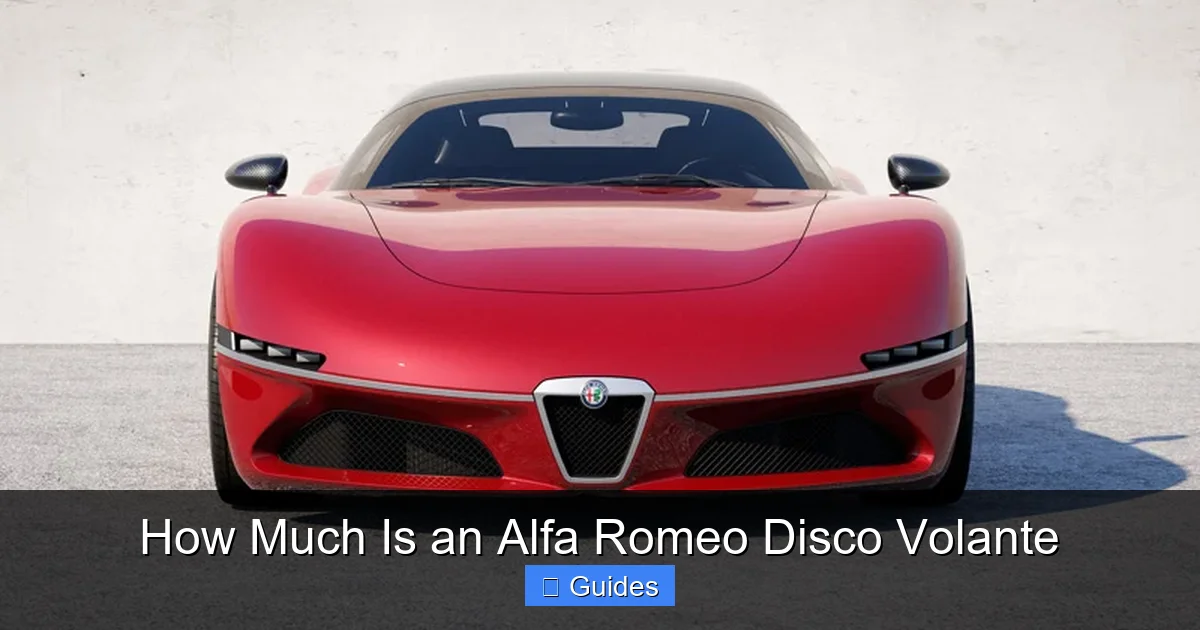
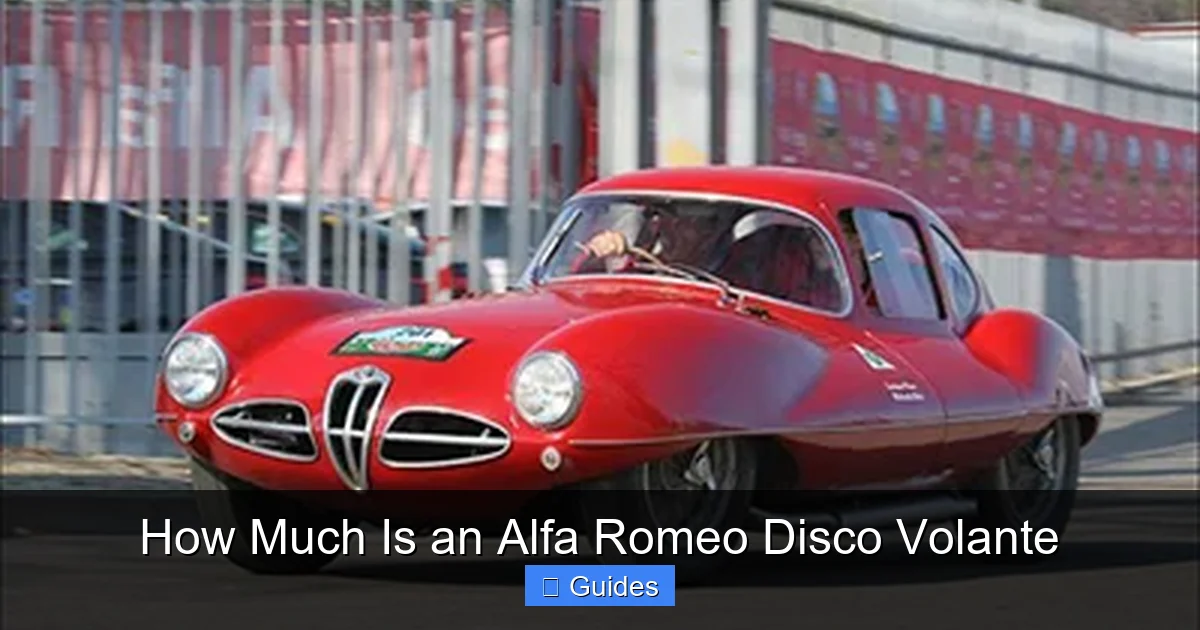
The Alfa Romeo Disco Volante was born in 1952, a product of Alfa’s racing division and the brilliant minds at Carrozzeria Touring Superleggera, the Milanese coachbuilder known for its lightweight “super light” construction techniques. The goal was simple: create a race car that could dominate the tracks while pushing the boundaries of automotive design. The result was a low, wide, and impossibly sleek coupe with a drag coefficient that was revolutionary for its era. Its name, “Flying Saucer,” wasn’t just poetic—it was descriptive. The car looked like it could hover above the ground.
Powered by a 2.0-liter inline-six engine derived from the Alfa Romeo 1900, the Disco Volante produced around 155 horsepower—modest by today’s standards, but more than enough to propel its lightweight aluminum body to impressive speeds. It was designed for endurance racing, particularly events like the Mille Miglia and the 24 Hours of Le Mans. And it delivered. The Disco Volante achieved notable successes, including class wins and strong finishes in several international competitions. Its racing success only added to its mystique.
Why Only Seven Were Built
Despite its performance and beauty, the Disco Volante never entered mass production. The reasons are both practical and economic. First, the car was hand-built, with each body crafted individually by skilled artisans at Touring. This made production slow and expensive. Second, the mid-1950s were a turbulent time for Alfa Romeo. The company was shifting focus toward more practical, mass-market vehicles to stay competitive. The Disco Volante, as stunning as it was, didn’t fit that strategy.
Additionally, the rise of more powerful engines and changing racing regulations made the original 2.0-liter model less competitive over time. By the late 1950s, Alfa Romeo had moved on to newer projects. As a result, only seven Disco Volantes were ever completed. Some were used for racing, others for testing, and a few were sold to private clients. Today, each surviving example is a priceless artifact of automotive innovation.
The Legacy Lives On
Though the original Disco Volante faded from the spotlight, its influence never disappeared. Car designers and enthusiasts continued to admire its futuristic shape and engineering. In the 2010s, Carrozzeria Touring Superleggera revived the name and spirit of the Disco Volante with a modern reinterpretation. Using the Alfa Romeo 8C Competizione as a base, they created a limited-run replica that captured the essence of the original while incorporating modern performance and safety features.
This revival reignited interest in the Disco Volante, not just as a collector’s item, but as a symbol of Italian design excellence. It also made the dream of ownership slightly more realistic—though still far from ordinary. Whether original or replica, the Disco Volante remains a testament to what happens when art, engineering, and passion collide.
How Much Does an Original Alfa Romeo Disco Volante Cost?
Visual guide about How Much Is an Alfa Romeo Disco Volante
Image source: miroslavdimitrov.com
Multi-Million Dollar Territory
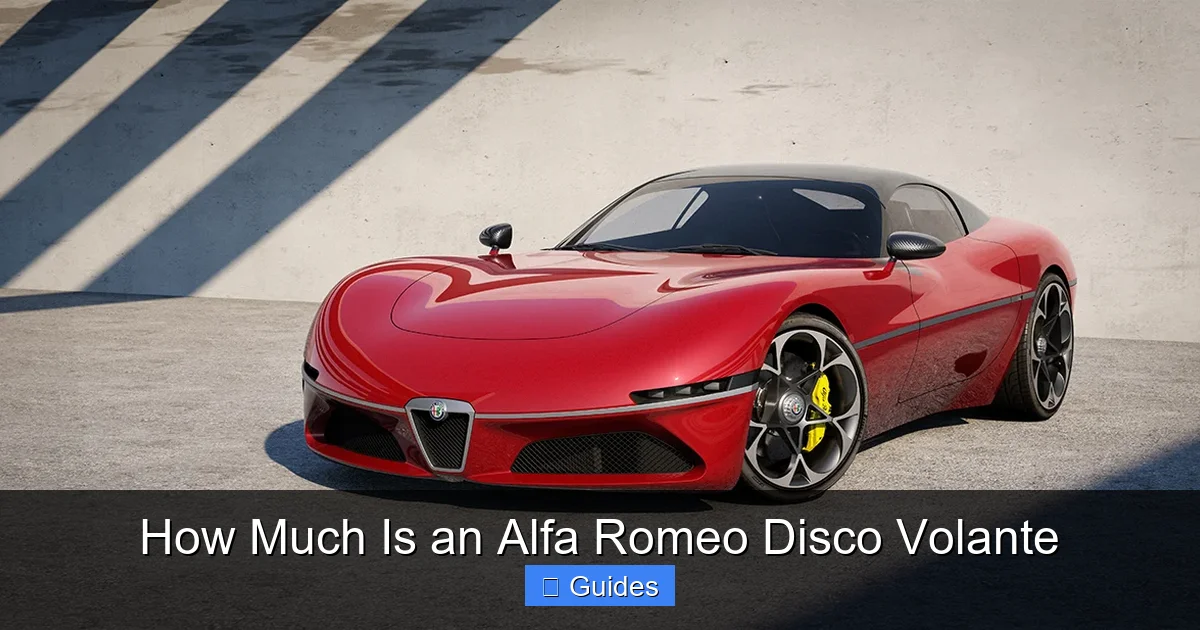
If you’re in the market for an original Alfa Romeo Disco Volante, prepare to open a very, very deep wallet. These cars are among the most expensive Alfas ever made, and for good reason. With only seven ever built, each one is essentially a unicorn. Their value is driven by rarity, historical significance, and the sheer artistry of their design.
At auction, original Disco Volantes have sold for anywhere from $3 million to over $10 million. For example, in 2015, a 1952 Disco Volante sold at RM Sotheby’s for $5.7 million. That particular car had a strong racing history and was in excellent condition, which helped push its value higher. Another example, once owned by a European aristocrat and meticulously maintained, fetched over $8 million in a private sale.
The price can vary widely based on several factors. A car with documented competition history—especially one that won or placed in major races—will command a premium. Provenance matters. If a Disco Volante was owned by a famous driver, designer, or celebrity, that can add hundreds of thousands, if not millions, to its value. Condition is also critical. A fully restored, concours-quality example will always outperform a project car, even if both are original.
Factors That Influence Price
Let’s break down what drives the cost of an original Disco Volante:
Rarity: With only seven built, supply is nonexistent. Demand, however, is high among elite collectors. This imbalance pushes prices into the stratosphere.
Provenance: A car with a clear, documented history—especially one tied to racing or notable owners—is far more valuable. Auction houses love a good story, and the Disco Volante has plenty.
Condition: Originality matters. A car that retains its original engine, body, and interior components is more desirable than one that’s been heavily modified or rebuilt with non-original parts. However, a high-quality restoration can still yield top dollar if done correctly.
Market Trends: The classic car market fluctuates. In recent years, interest in 1950s Italian sports cars has surged, driving up prices across the board. The Disco Volante, as one of the most iconic, benefits from this trend.
Auction vs. Private Sale: Public auctions can create bidding wars, especially when a rare car is offered. Private sales may be more discreet but can also result in higher prices if the buyer is particularly motivated.
Is It Worth the Money?
For most people, spending $5 million on a car is unimaginable. But for serious collectors, the Disco Volante isn’t just a vehicle—it’s an investment, a status symbol, and a piece of history. These cars often appreciate in value over time, especially if they’re well-maintained and documented. Plus, owning one means joining an exclusive club of automotive connoisseurs.
That said, it’s not a decision to take lightly. Beyond the purchase price, there are ongoing costs: storage, insurance, maintenance, and potential restoration work. And because original parts are nearly impossible to find, any repairs require custom fabrication by specialists. Still, for those who can afford it, the Disco Volante offers something money can’t buy: the thrill of driving a true legend.
Modern Replicas: A More Accessible Path to Ownership
Visual guide about How Much Is an Alfa Romeo Disco Volante
Image source: miroslavdimitrov.com
The Rise of the Replica
For most enthusiasts, buying an original Disco Volante is a fantasy. But thanks to modern recreations, that fantasy is now within reach—relatively speaking. In 2013, Carrozzeria Touring Superleggera, the original coachbuilder, launched a limited-run replica of the Disco Volante. Built on the chassis of the Alfa Romeo 8C Competizione, these modern versions capture the spirit and design of the 1950s original while offering modern reliability and performance.
These replicas are not exact copies. They’re reinterpretations—homages that honor the past while embracing the present. The body is hand-formed aluminum, just like the original, and the overall shape is unmistakably Disco Volante. But under the skin, you’ll find a modern 4.7-liter V8 engine, producing around 450 horsepower, paired with a six-speed automatic transmission. The result is a car that looks like a museum piece but drives like a modern sports car.
Price Range for Replicas
So, how much does one of these modern Disco Volantes cost? The price typically ranges from $500,000 to $1 million, depending on customization, options, and the builder. That’s still a fortune by most standards, but it’s a fraction of the cost of an original. For context, $1 million might get you a rare Ferrari or a limited-edition Lamborghini, but it won’t get you a Disco Volante—unless it’s a replica.
Buyers can choose from different trim levels and finishes. Some opt for a more period-correct interior, while others prefer modern amenities like air conditioning, navigation, and advanced audio systems. The level of customization is high, which adds to the cost. Each car is essentially bespoke, built to order.
Pros and Cons of Owning a Replica
There are clear advantages to choosing a replica over an original. First, reliability. Modern mechanicals mean fewer breakdowns and easier maintenance. You can actually drive the car regularly, not just display it at shows. Second, parts and service are more accessible. Since it’s based on the Alfa 8C, many components are shared with other models, making repairs more straightforward.
However, there are trade-offs. A replica doesn’t have the same historical value as an original. It won’t appreciate in the same way, and it won’t command the same respect at classic car events. Purists may argue that it’s not a “real” Disco Volante. But for someone who loves the design and wants to experience it on the road, a replica offers a compelling compromise.
Who Should Consider a Replica?
A modern Disco Volante replica is ideal for:
– Enthusiasts who admire the design but can’t afford an original.
– Collectors who want a unique, conversation-starting car.
– Drivers who want to actually use their car, not just store it.
– Investors looking for a high-end, limited-production vehicle with potential for appreciation.
It’s not for everyone. If your goal is to own a piece of automotive history with maximum resale value, an original is still the way to go. But if you want to experience the magic of the Disco Volante without breaking the bank—relatively speaking—a replica is a smart choice.
Restoration Projects: Can You Build Your Own Disco Volante?
The Dream of a DIY Restoration
For the truly passionate, the idea of restoring or even building a Disco Volante from scratch is a tantalizing one. After all, if only seven were made, could you create an eighth? The short answer is yes—but it’s not easy, and it’s certainly not cheap.
Some collectors have attempted to restore original Disco Volantes that were damaged or neglected over the years. These projects can take years and cost hundreds of thousands of dollars. The challenge lies in sourcing original parts, which are nearly impossible to find. Even simple components like door handles or dashboard switches may need to be custom-made.
Cost of a Full Restoration
A full restoration of an original Disco Volante can easily exceed $500,000. This includes:
– Disassembly and inspection: $20,000–$50,000
– Bodywork and paint: $100,000–$200,000 (due to the complex curves and hand-formed panels)
– Engine and transmission rebuild: $50,000–$100,000
– Interior restoration: $30,000–$60,000
– Custom fabrication of missing parts: $50,000+
– Labor (skilled craftsmen): $100,000+
And that’s if you already own the car. If you’re starting from scratch—buying a derelict example and restoring it—the total cost could easily top $1 million.
Building a Replica from Scratch
Another option is to commission a custom build using a modern platform. Some coachbuilders offer “Disco Volante-style” bodies for platforms like the Alfa Romeo 4C or even the Dodge Viper. These are not official replicas, but they capture the aesthetic. Prices start around $300,000 and can go much higher with customization.
This route offers more flexibility but less authenticity. It’s a way to own a car that looks like a Disco Volante without the astronomical cost of an original or even a Touring replica. However, it won’t have the same prestige or resale value.
Is It Worth It?
Restoration or custom builds are only for the most dedicated enthusiasts. They require patience, deep pockets, and a love for the process. But for those who succeed, the reward is immense: a one-of-a-kind machine that turns heads and tells a story.
Ongoing Costs of Ownership
Maintenance and Repairs
Owning a Disco Volante—original or replica—isn’t just about the purchase price. Maintenance is a major factor. Original models require specialists who understand 1950s Alfa engineering. These experts are rare and expensive. A simple tune-up can cost thousands. Replicas are easier to service, but still require skilled mechanics familiar with high-end Italian cars.
Storage and Insurance
These cars must be stored in climate-controlled garages to prevent rust and deterioration. Insurance is another big expense. Standard policies won’t cover a $1 million+ vehicle. You’ll need a specialized classic car insurer, which can cost $5,000–$15,000 per year, depending on value and usage.
Depreciation and Appreciation
While original Disco Volantes tend to appreciate, replicas may depreciate initially before stabilizing. Market trends, condition, and demand all play a role. It’s important to view ownership as a long-term commitment, not a quick flip.
Conclusion: Is the Alfa Romeo Disco Volante Worth It?
The Alfa Romeo Disco Volante is more than a car—it’s a masterpiece of design, engineering, and history. Whether you’re considering an original, a replica, or a custom build, the cost is significant. But for those who appreciate its beauty and legacy, the price is more than justified. It’s not just about money; it’s about passion, prestige, and the joy of owning something truly extraordinary.
Frequently Asked Questions
How many Alfa Romeo Disco Volantes were ever made?
Only seven original Alfa Romeo Disco Volantes were ever built between 1952 and 1953. Each was hand-crafted by Carrozzeria Touring Superleggera, making them extremely rare and valuable.
Can I drive a Disco Volante on public roads?
Yes, both original and replica Disco Volantes can be road-legal, depending on local regulations. Modern replicas are easier to register and insure, while originals may require special permits due to their age and rarity.
Are there any modern versions of the Disco Volante?
Yes, Carrozzeria Touring Superleggera created a limited-run replica in 2013 based on the Alfa Romeo 8C Competizione. These modern versions retain the classic design but use updated mechanicals for better performance and reliability.
What affects the value of an original Disco Volante?
Key factors include provenance, racing history, originality, condition, and market demand. Cars with documented competition history or celebrity ownership typically command higher prices.
How much does it cost to maintain a Disco Volante?
Maintenance costs vary, but expect to spend thousands annually on specialized labor, storage, and insurance. Original models are more expensive to maintain due to the rarity of parts and expertise required.
Is a Disco Volante a good investment?
Original models have historically appreciated in value, especially well-documented examples. Replicas may hold value but are less likely to see significant appreciation. Always consult a classic car investment expert before purchasing.

At CarLegit, we believe information should be clear, factual, and genuinely helpful. That’s why every guide, review, and update on our website is created with care, research, and a strong focus on user experience.