
An Alfa Romeo is more than just a car—it’s a symbol of Italian passion, performance, and design. Known for their sleek styling, responsive handling, and rich racing heritage, Alfa Romeos blend everyday usability with driving excitement. Whether you’re considering a sporty Giulia sedan or a compact Stelvio SUV, understanding what makes an Alfa Romeo unique helps you appreciate its place in the automotive world.
[FEATURED_IMAGE_PLACEHOGER]
In This Article
- 1 Key Takeaways
- 2 📑 Table of Contents
- 3 What Kind of Car Is an Alfa Romeo?
- 4 A Century of Italian Automotive Passion
- 5 Performance and Engineering: The Heart of an Alfa
- 6 Design: Italian Flair Meets Modern Function
- 7 Models in the Alfa Romeo Lineup
- 8 Alfa Romeo vs. The Competition
- 9 The Alfa Romeo Ownership Experience
- 10 The Future of Alfa Romeo
- 11 Conclusion
- 12 Frequently Asked Questions
Key Takeaways
- Alfa Romeo is an Italian automaker with over 100 years of history: Founded in 1910, the brand has deep roots in motorsport and engineering innovation.
- Alfa Romeos are known for performance and handling: They prioritize driver engagement with rear-wheel drive platforms, lightweight construction, and responsive steering.
- Design is a hallmark of every Alfa Romeo: From the iconic grille to flowing bodylines, Alfas turn heads with bold, emotional styling.
- Modern Alfas balance daily usability with sportiness: Models like the Giulia and Stelvio offer practical interiors and advanced tech without sacrificing driving fun.
- Alfa Romeo competes with German luxury brands: It positions itself against BMW, Mercedes-Benz, and Audi, but with a distinctly Italian flair.
- The brand emphasizes driver-centric engineering: Features like near-perfect 50:50 weight distribution and adaptive suspension enhance the driving experience.
- Alfa Romeo is expanding its lineup with electrification in mind: Future models may include hybrid and electric powertrains as part of its evolution.
📑 Table of Contents
- What Kind of Car Is an Alfa Romeo?
- A Century of Italian Automotive Passion
- Performance and Engineering: The Heart of an Alfa
- Design: Italian Flair Meets Modern Function
- Models in the Alfa Romeo Lineup
- Alfa Romeo vs. The Competition
- The Alfa Romeo Ownership Experience
- The Future of Alfa Romeo
- Conclusion
What Kind of Car Is an Alfa Romeo?
When someone asks, “What kind of car is an Alfa Romeo?” the answer goes far beyond a simple category like “sedan” or “SUV.” An Alfa Romeo is a blend of emotion, engineering, and Italian artistry. It’s a car that doesn’t just get you from point A to point B—it makes the journey feel special. Whether you’re behind the wheel of a sleek Giulia sedan or a rugged yet refined Stelvio SUV, you’re driving something built with passion.
Alfa Romeo stands apart in the crowded automotive market by focusing on what enthusiasts love most: driving dynamics, design, and heritage. Unlike many brands that prioritize comfort or fuel efficiency above all, Alfa Romeo leans into the thrill of the drive. This philosophy traces back over a century, to a time when racing victories defined a car’s reputation. Today, that spirit lives on in every model, even as the brand embraces modern technology and practicality.
If you’re considering an Alfa Romeo, you’re not just buying a vehicle—you’re joining a legacy. From the winding roads of the Italian countryside to city streets around the world, Alfas are built to be driven, not just parked. They’re for people who value style, performance, and a connection to the road. So, what kind of car is an Alfa Romeo? It’s a driver’s car with Italian soul.
A Century of Italian Automotive Passion
Visual guide about What Kind of Car Is an Alfa Romeo
Image source: carsales.pxcrush.net
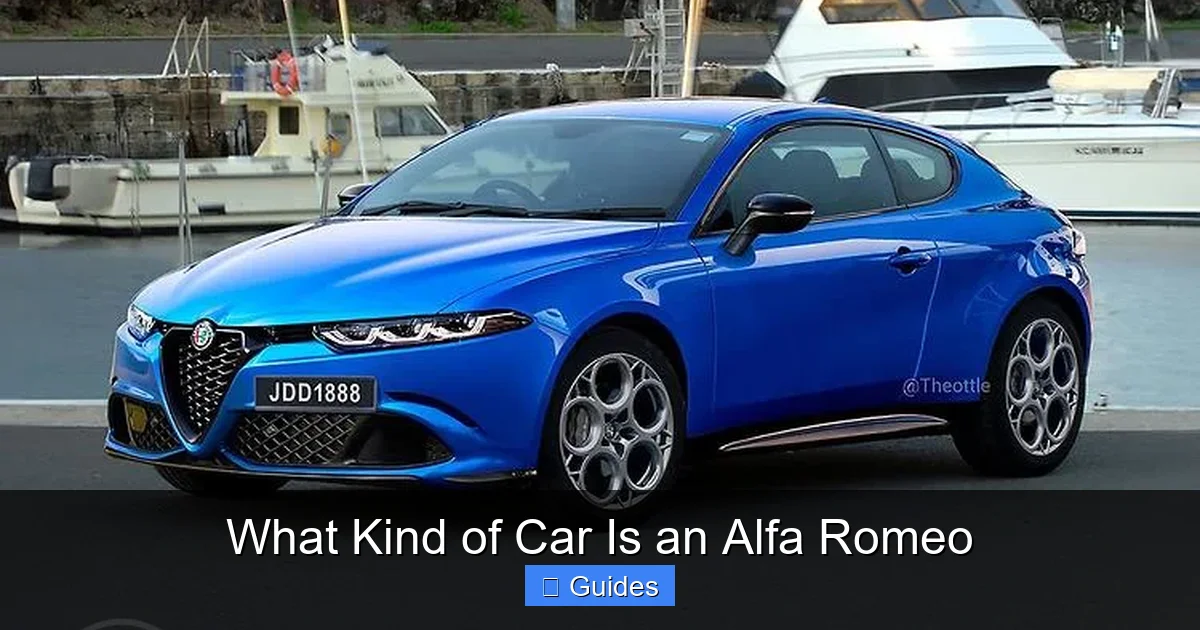
Alfa Romeo’s story begins in 1910 in Milan, Italy, when the company was founded as A.L.F.A.—Anonima Lombarda Fabbrica Automobili. The name was later changed to Alfa Romeo in 1915 when Nicola Romeo took over. From the very beginning, the brand was intertwined with performance and innovation. In the early 20th century, Alfa Romeo quickly made a name for itself in motorsport, winning prestigious races like the Targa Florio and the Mille Miglia.
Motorsport Roots That Shaped the Brand
Racing wasn’t just a side project for Alfa Romeo—it was the foundation of its identity. The brand’s early success on the track helped define its engineering philosophy. Cars were built to be lightweight, agile, and powerful. This focus on performance carried over into production models, making even everyday Alfas feel sporty.
One of the most legendary figures in Alfa Romeo history is Enzo Ferrari. Before founding his own empire, Ferrari drove and raced Alfa Romeo cars. He even managed the Alfa Corse racing team in the 1930s. This deep connection between Alfa Romeo and Ferrari underscores the brand’s racing pedigree.
Iconic Models Through the Decades
Over the years, Alfa Romeo has produced some of the most beautiful and influential cars in automotive history. The 1960s and 70s were a golden era, with models like the Giulia, Spider, and Montreal capturing the hearts of drivers and designers alike. The Spider, also known as the Duetto, became a symbol of Italian style, immortalized in films and pop culture.
In the 1980s and 90s, the brand faced challenges, including ownership changes and a shift in market focus. But even during these years, Alfas like the 75 and 164 maintained a strong following among enthusiasts. The 1990s also saw the introduction of the 156, a compact executive car that brought Alfa Romeo back into the spotlight with its striking design and sporty handling.
The Modern Revival
The 2010s marked a major comeback for Alfa Romeo. Under the ownership of Fiat Chrysler Automobiles (now Stellantis), the brand launched a new generation of vehicles designed to compete with German luxury automakers. The Giulia sedan, introduced in 2016, was a game-changer. It featured rear-wheel drive, a powerful turbocharged engine, and a design that turned heads.
This revival continued with the Stelvio SUV in 2017, named after the famous Stelvio Pass in the Italian Alps. The Stelvio offered the same driving dynamics as the Giulia but in a more practical, family-friendly package. These models signaled that Alfa Romeo was back—and ready to challenge the status quo.
Performance and Engineering: The Heart of an Alfa
Visual guide about What Kind of Car Is an Alfa Romeo
Image source: carmodelslist.com
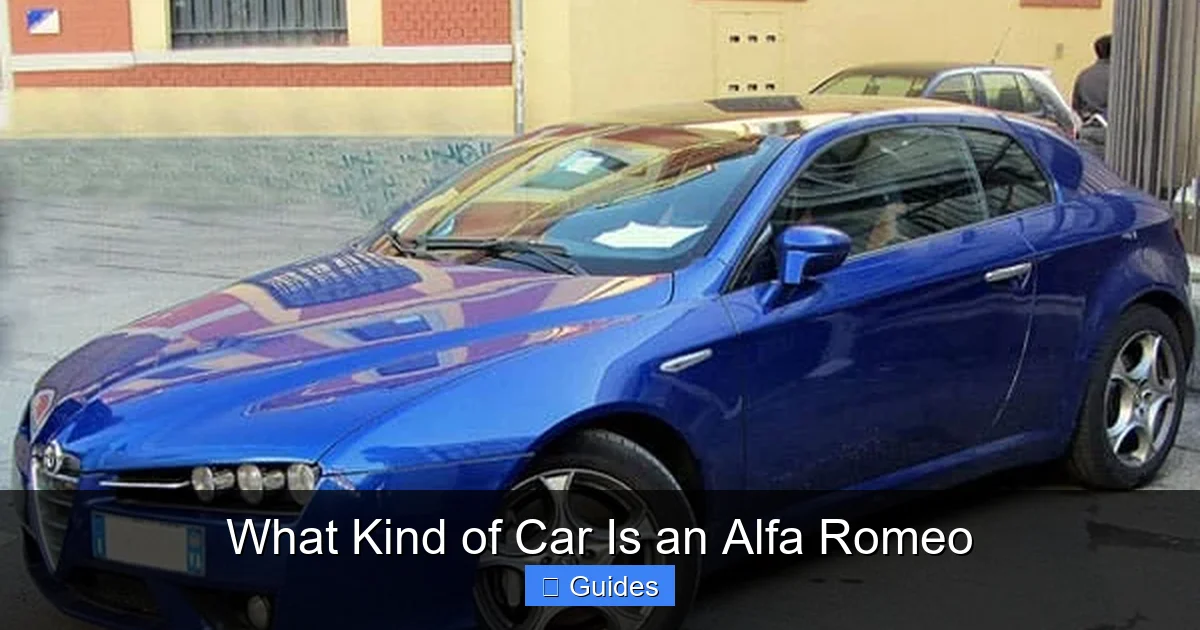
So, what makes an Alfa Romeo different from other cars in its class? The answer lies in its engineering philosophy. Alfa Romeo doesn’t just build cars—it builds experiences. Every component is designed with the driver in mind, from the steering feel to the sound of the engine.
Driver-First Design Philosophy
Alfa Romeo’s approach to engineering is rooted in the idea that a car should feel alive. This means prioritizing responsiveness, balance, and feedback. The brand’s slogan, “La meccanica delle emozioni” (“The mechanics of emotion”), captures this perfectly. It’s not just about horsepower or top speed—it’s about how the car makes you feel.
One of the key elements of this philosophy is weight distribution. Most modern Alfa Romeos, like the Giulia and Stelvio, are built with a near-perfect 50:50 front-to-rear weight balance. This helps the car feel neutral and predictable in corners, making it easier to control at the limit.
Powertrains That Deliver
Alfa Romeo offers a range of engines designed to deliver both power and character. The standard engine in many models is a 2.0-liter turbocharged four-cylinder that produces around 280 horsepower. It’s not the most powerful engine in its class, but it’s tuned for responsiveness and a satisfying exhaust note.
For those who want more performance, the Quadrifoglio (four-leaf clover) models are the top-tier option. The Giulia Quadrifoglio, for example, features a 2.9-liter twin-turbo V6 engine developed with help from Ferrari. It produces over 500 horsepower and can accelerate from 0 to 60 mph in under 4 seconds. That’s supercar territory in a practical sedan.
Even the base models are tuned for driving enjoyment. The throttle response is sharp, the gear shifts are quick (especially with the eight-speed automatic), and the exhaust system is designed to deliver a sporty sound without being overly loud.
Chassis and Suspension Tuning
Another hallmark of Alfa Romeo engineering is its focus on chassis dynamics. The brand uses advanced materials like aluminum and high-strength steel to keep weight down while maintaining rigidity. This improves both handling and ride quality.
The suspension system is tuned for a balance between comfort and sportiness. On the Giulia, for example, the front uses a double-wishbone setup, while the rear has a multi-link design. This setup allows for precise cornering and excellent road feedback.
Many models also come with adaptive suspension, which adjusts damping based on driving conditions. In Comfort mode, the ride is smooth and relaxed. In Dynamic mode, the suspension firms up for sharper handling and better control.
Design: Italian Flair Meets Modern Function
Visual guide about What Kind of Car Is an Alfa Romeo
Image source: editorial.pxcrush.net
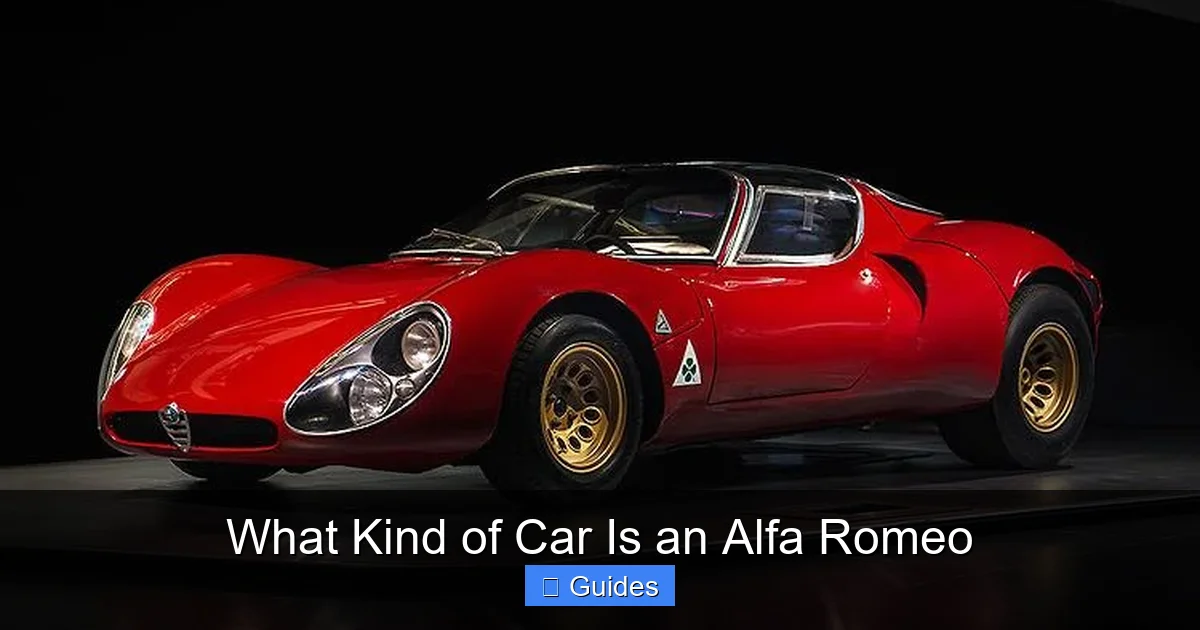
If performance is the soul of an Alfa Romeo, design is its face. From the moment you see one, you know it’s special. The styling is bold, emotional, and unmistakably Italian.
The Iconic Alfa Romeo Grille
No discussion of Alfa Romeo design is complete without mentioning the grille. The triangular “shield” grille is one of the most recognizable features in the automotive world. It’s evolved over the decades, but the core design remains consistent. On modern models, it’s flanked by sleek LED headlights and aggressive air intakes, giving the car a muscular, athletic stance.
The grille isn’t just for show—it’s functional. It helps channel air to the engine and brakes, improving cooling and performance. But more than that, it’s a symbol of identity. When you see that grille, you know it’s an Alfa.
Flowing Lines and Athletic Proportions
Alfa Romeo designers are masters of proportion. The Giulia, for example, has a long hood, short overhangs, and a fastback roofline. This gives it a coupe-like appearance, even though it’s a four-door sedan. The Stelvio follows a similar theme, with a low, wide stance and sculpted body sides that suggest motion even when the car is standing still.
The use of curves and creases adds depth and drama. Unlike some German brands that favor sharp, angular lines, Alfa Romeo embraces flowing, organic shapes. This creates a sense of elegance and movement.
Interior Craftsmanship
Inside, Alfa Romeos blend sportiness with luxury. The dashboard is driver-focused, with a wraparound design that puts controls within easy reach. High-quality materials like leather, aluminum, and soft-touch plastics are used throughout.
The seats are supportive and comfortable, with sportier versions offering extra bolstering for spirited driving. The instrument cluster is clear and easy to read, and many models feature a digital display behind the steering wheel.
Technology is also a strong point. The infotainment system, known as Alfa Connect, includes an 8.8-inch touchscreen with Apple CarPlay and Android Auto. While the interface isn’t as polished as some rivals, it’s functional and intuitive.
Models in the Alfa Romeo Lineup
Today’s Alfa Romeo lineup is smaller than some competitors, but each model is carefully crafted to deliver a unique experience. Let’s take a closer look at the current range.
Alfa Romeo Giulia: The Sport Sedan
The Giulia is the heart of the lineup. It’s a midsize luxury sedan that competes with the BMW 3 Series, Mercedes C-Class, and Audi A4. But unlike those cars, the Giulia is rear-wheel drive (with all-wheel drive available), which gives it a more engaging driving feel.
Available in several trims, from the base Sprint to the high-performance Quadrifoglio, the Giulia offers something for everyone. The base model is still fun to drive, with a responsive chassis and a well-tuned engine. The Quadrifoglio, meanwhile, is a track-ready machine with carbon fiber body panels, Brembo brakes, and a race-inspired interior.
Alfa Romeo Stelvio: The Performance SUV
The Stelvio is Alfa Romeo’s answer to the Porsche Macan and BMW X3. It’s a compact luxury SUV that doesn’t sacrifice driving dynamics for practicality. Like the Giulia, it’s built on a rear-wheel-drive platform and offers a sporty driving experience.
The Stelvio comes with the same engine options as the Giulia, including the powerful Quadrifoglio version. It also offers all-wheel drive as standard, making it capable in various weather conditions. Inside, there’s plenty of space for passengers and cargo, with a well-designed cabin and modern tech.
Alfa Romeo Tonale: The Future of the Brand
Introduced in 2022, the Tonale is Alfa Romeo’s first compact SUV and its first plug-in hybrid. It’s designed to appeal to a younger, more eco-conscious audience while still delivering the brand’s signature driving feel.
The Tonale features a 1.3-liter turbocharged engine paired with an electric motor, offering a combined output of around 280 horsepower. It can travel up to 30 miles on electric power alone, making it a great option for city driving. With its bold design and advanced tech, the Tonale represents the next chapter in Alfa Romeo’s evolution.
Alfa Romeo vs. The Competition
When shopping for a luxury car, you’ll likely compare Alfa Romeo to brands like BMW, Mercedes-Benz, and Audi. So how does it stack up?
Driving Experience
In terms of driving dynamics, Alfa Romeo often comes out on top. The Giulia and Stelvio are more engaging than many German rivals, with sharper steering and better balance. If you enjoy driving, an Alfa will likely feel more alive than a comparable BMW or Mercedes.
Design and Style
Alfa Romeo wins hands-down in the style department. While German cars are often praised for their precision and technology, they can feel a bit cold or clinical. Alfa Romeos, on the other hand, are emotional and expressive. They’re designed to make you smile.
Reliability and Ownership
This is where Alfa Romeo has historically faced challenges. In the past, the brand had a reputation for reliability issues. However, modern Alfas have improved significantly. Warranty coverage is competitive, and build quality is much better than in previous decades.
That said, it’s still a good idea to research maintenance costs and find a reputable dealer. Regular servicing and using quality parts can help keep your Alfa running smoothly.
Technology and Features
German brands still have an edge in terms of tech integration and user interface polish. Alfa’s infotainment system is functional but not as refined as BMW’s iDrive or Mercedes’ MBUX. However, the brand is catching up, and newer models like the Tonale feature more advanced systems.
The Alfa Romeo Ownership Experience
Owning an Alfa Romeo is about more than just driving a car—it’s about being part of a community. Enthusiasts love the brand for its history, character, and driving feel.
Community and Culture
Alfa Romeo has a passionate fan base. Clubs and forums around the world celebrate the brand’s heritage and share tips on maintenance, modifications, and driving events. Owning an Alfa often means joining a tribe of like-minded drivers who appreciate the art of driving.
Maintenance and Care
To keep your Alfa in top condition, regular maintenance is key. Follow the service schedule, use the recommended fluids, and address any issues promptly. While modern Alfas are more reliable than their predecessors, they still benefit from attentive care.
Many owners recommend finding a specialist mechanic who understands Alfa Romeo’s engineering. This can make a big difference in long-term ownership satisfaction.
Resale Value and Depreciation
Alfa Romeos tend to depreciate faster than German rivals, which can be a downside if you plan to sell in a few years. However, this also means you can often find great deals on used models. For enthusiasts, that’s a win.
The Future of Alfa Romeo
As the automotive industry shifts toward electrification, Alfa Romeo is adapting. The brand has announced plans to go fully electric by 2027. The Tonale is the first step, but more electric models are on the way.
Electrification and Innovation
Future Alfas will likely feature advanced battery technology, fast charging, and performance-oriented electric powertrains. The brand promises that even electric models will retain the driving dynamics and emotional appeal that define Alfa Romeo.
Expanding the Lineup
There are rumors of a new sports car to replace the 4C, as well as larger SUVs to compete with the BMW X5 and Mercedes GLE. Whatever the future holds, one thing is certain: Alfa Romeo will continue to prioritize passion, performance, and Italian design.
Conclusion
So, what kind of car is an Alfa Romeo? It’s a driver’s car with a racing heart, Italian style, and a soul that can’t be replicated. Whether you choose the sleek Giulia, the versatile Stelvio, or the innovative Tonale, you’re getting more than just transportation—you’re getting an experience.
Alfa Romeo stands apart in a world of increasingly similar cars. It doesn’t chase trends; it sets them. It values emotion over efficiency, and passion over practicality. And for those who love to drive, that makes all the difference.
If you’re looking for a car that turns heads, puts a smile on your face, and connects you to the road, an Alfa Romeo might just be the perfect choice. It’s not for everyone—but for the right person, it’s everything.
Frequently Asked Questions
Is an Alfa Romeo a luxury car?
Yes, Alfa Romeo is considered a luxury brand. It competes with other premium automakers like BMW, Mercedes-Benz, and Audi, offering high-quality materials, advanced technology, and refined interiors.
Are Alfa Romeos reliable?
Modern Alfa Romeos have improved significantly in reliability compared to older models. While they may not match German brands in long-term dependability, proper maintenance and care can ensure a positive ownership experience.
What makes Alfa Romeo different from other brands?
Alfa Romeo stands out for its Italian design, driver-focused engineering, and rich motorsport heritage. It prioritizes driving enjoyment and emotional appeal over pure comfort or technology.
Is the Alfa Romeo Giulia a good car?
Yes, the Giulia is widely praised for its handling, performance, and style. It’s a strong competitor in the midsize luxury sedan segment, especially for drivers who value engagement over outright luxury.
Does Alfa Romeo make SUVs?
Yes, Alfa Romeo offers the Stelvio, a compact performance SUV, and the Tonale, a smaller plug-in hybrid SUV. Both are designed to deliver sporty driving dynamics in a practical package.
Will Alfa Romeo go electric?
Yes, Alfa Romeo has announced plans to become a fully electric brand by 2027. The Tonale is the first step, with more electric models expected in the coming years.

At CarLegit, we believe information should be clear, factual, and genuinely helpful. That’s why every guide, review, and update on our website is created with care, research, and a strong focus on user experience.