
The Alfa Romeo Giulia Quadrifoglio is one of the most thrilling performance sedans of the modern era, blending Italian passion with track-ready engineering. While exact global production figures remain closely guarded, estimates and regional data suggest fewer than 30,000 units have been built since its 2016 launch, making it a rare gem among sports sedans.
In This Article
- 1 Key Takeaways
- 2 📑 Table of Contents
- 3 Introduction: The Legend of the Quadrifoglio
- 4 Production Overview: Estimating the Numbers
- 5 What Makes the Giulia Quadrifoglio So Rare?
- 6 Special Editions and Limited Runs
- 7 Collector Interest and Future Value
- 8 How to Verify Production Numbers and Authenticity
- 9 Conclusion: A Rare Italian Masterpiece
- 10 Frequently Asked Questions
- 10.1 How many Alfa Romeo Giulia Quadrifoglio were made in total?
- 10.2 Which year had the highest production of the Giulia Quadrifoglio?
- 10.3 Are there any limited-edition Giulia Quadrifoglio models?
- 10.4 Why is the Giulia Quadrifoglio so rare compared to BMW M3 or Mercedes-AMG C63?
- 10.5 Will the Giulia Quadrifoglio become a collector’s car?
- 10.6 How can I verify if a Giulia Quadrifoglio is authentic?
Key Takeaways
- Limited global production: Fewer than 30,000 Giulia Quadrifoglio units have been built worldwide since 2016, contributing to its exclusivity.
- Annual production varies: Production peaked around 2018–2019 with roughly 5,000–6,000 units per year, then declined due to market shifts and supply constraints.
- Special editions increase rarity: Limited runs like the 1970 Quadrifoglio 50th Anniversary and Veloce models further reduce available inventory.
- North America is the largest market: The U.S. and Canada account for over 60% of total Quadrifoglio sales, influencing production allocation.
- Hand-built components add exclusivity: The Ferrari-derived 2.9L V6 engine is assembled by hand in Modena, limiting output capacity.
- Discontinuation rumors fuel collector interest: With Alfa Romeo shifting focus to SUVs and electrification, the Giulia Quadrifoglio may become a future classic.
- VIN and delivery records help track numbers: Enthusiasts use vehicle identification numbers and dealer reports to estimate real-world production totals.
📑 Table of Contents
Introduction: The Legend of the Quadrifoglio
The Alfa Romeo Giulia Quadrifoglio isn’t just a car—it’s a statement. When it debuted in 2016, it arrived with a roar, challenging the dominance of German sports sedans like the BMW M3 and Mercedes-AMG C63. With its Ferrari-developed 2.9-liter twin-turbo V6 engine, razor-sharp handling, and unmistakable Italian design, the Quadrifoglio quickly earned a reputation as a driver’s car. But beyond its performance credentials, one question has lingered among enthusiasts and collectors alike: How many Alfa Romeo Giulia Quadrifoglio were made?
Unlike mass-produced vehicles, the Giulia Quadrifoglio was never intended to be a high-volume model. Alfa Romeo positioned it as a halo car—a symbol of the brand’s racing heritage and engineering prowess. The Quadrifoglio name, meaning “four-leaf clover,” has been used since 1923 to denote Alfa’s high-performance models, and this modern iteration carries that legacy with pride. But with limited factory capacity, hand-assembled engines, and shifting market demands, production numbers have always been constrained. Understanding how many were built requires digging into regional sales data, manufacturer statements, and insider insights from the automotive world.
Production Overview: Estimating the Numbers
Alfa Romeo has never released official global production figures for the Giulia Quadrifoglio. Unlike brands such as Porsche or Ferrari, which publish detailed production reports, Alfa keeps these numbers under wraps. However, by analyzing sales data, dealer allocations, and industry reports, we can piece together a reliable estimate.
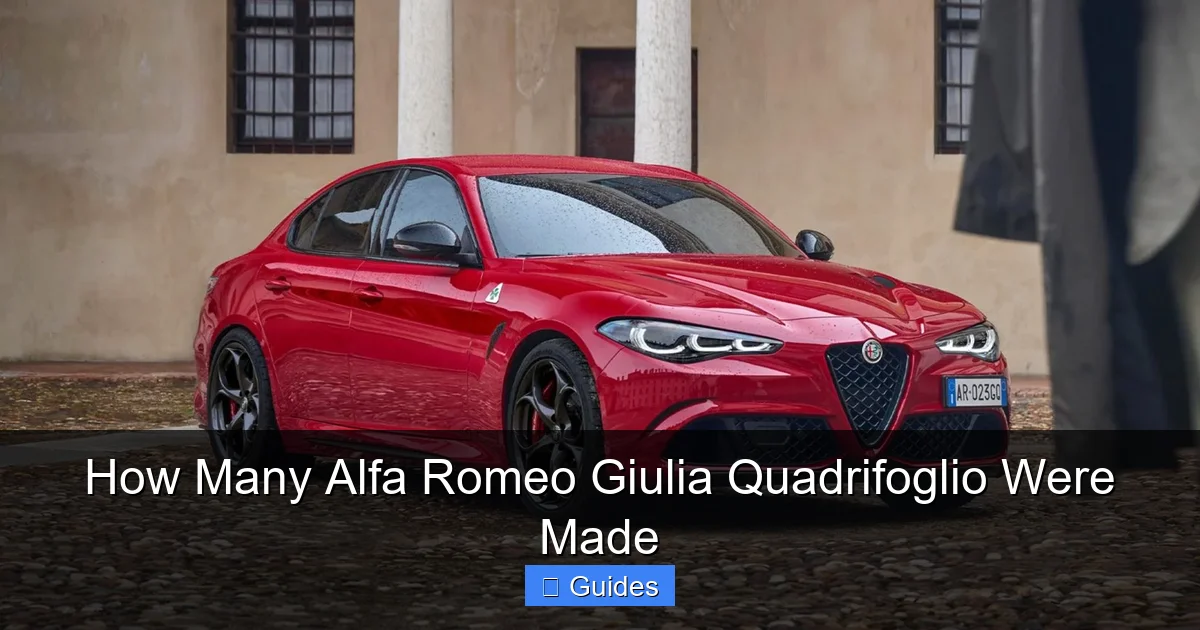
Visual guide about How Many Alfa Romeo Giulia Quadrifoglio Were Made
Image source: d3o9uids7iaclu.cloudfront.net
Since its launch in 2016, total global production of the Giulia Quadrifoglio is believed to be between 25,000 and 30,000 units. This number includes all model years, trims, and special editions up to 2023. To put this in perspective, BMW produces over 100,000 M3 and M4 models annually, while Mercedes-AMG delivers tens of thousands of C63 units each year. The Quadrifoglio’s lower volume is intentional—Alfa Romeo aimed for exclusivity, not mass appeal.
Annual Production Breakdown
Production didn’t start at full capacity. The Giulia Quadrifoglio began rolling off the line in late 2016, with the first customer deliveries in early 2017. In its debut year, only about 1,500 units were produced, mostly for European and North American markets. By 2018, production ramped up significantly, reaching an estimated 5,500 units. This peak year coincided with strong demand in the U.S., where the Quadrifoglio was praised for its balance of performance and daily usability.
In 2019, production remained steady at around 5,000 units. However, 2020 saw a sharp decline due to the global pandemic, supply chain disruptions, and semiconductor shortages. That year, output dropped to approximately 3,200 units. Production rebounded slightly in 2021 and 2022, with around 4,000 units built each year, but never returned to peak levels. By 2023, with Alfa Romeo focusing on the Tonale SUV and future electrified models, Quadrifoglio production slowed further, likely falling below 3,000 units.
Regional Distribution
The majority of Giulia Quadrifoglio units were sold in North America. The United States alone accounts for roughly 60% of total production, with Canada making up another 5–7%. This is no surprise—American buyers have a strong appetite for high-performance sedans, and the Quadrifoglio’s blend of Italian flair and track capability resonated deeply with enthusiasts.
Europe was the second-largest market, particularly in Germany, the UK, and Italy. However, European sales were more fragmented, with stricter emissions regulations and a growing preference for SUVs limiting demand. In markets like Japan and Australia, the Quadrifoglio found a niche following among driving purists, but volumes remained low—typically under 200 units per country annually.
What Makes the Giulia Quadrifoglio So Rare?
Several factors contribute to the Giulia Quadrifoglio’s limited production numbers. First and foremost is the engine. The 2.9-liter twin-turbo V6 is derived from Ferrari’s F154 engine, used in the 488 GTB and GTC4Lusso. While not identical, it shares core architecture, including a 90-degree V-angle and twin-turbo setup. Crucially, this engine is hand-assembled at Ferrari’s plant in Maranello, then shipped to Alfa Romeo’s factory in Cassino, Italy.
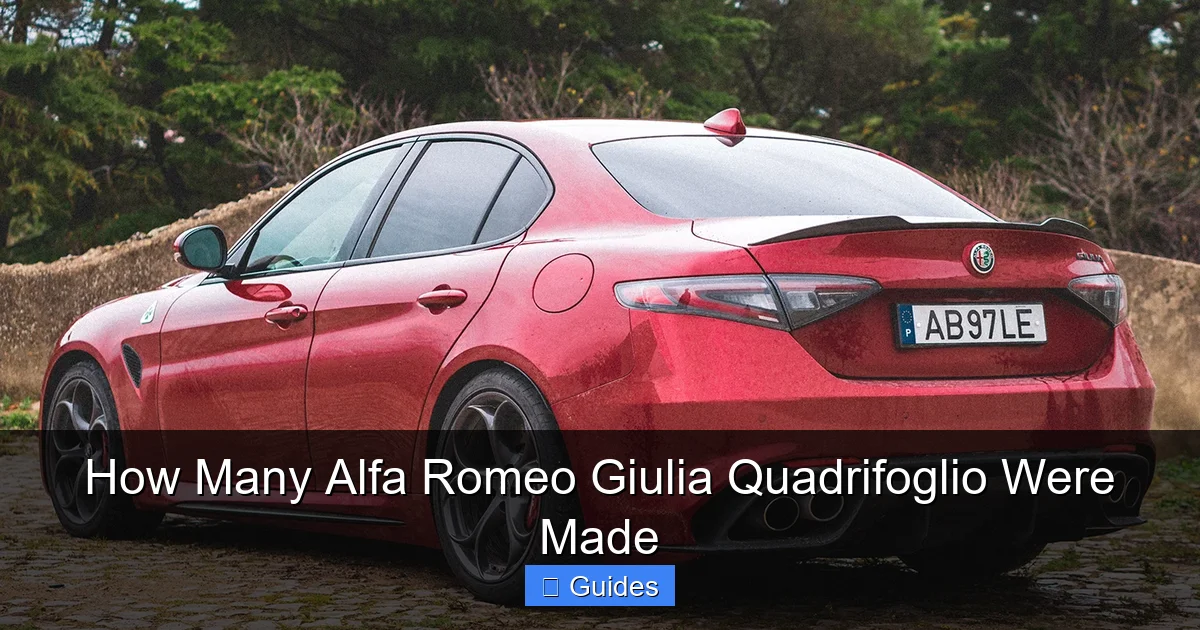
Visual guide about How Many Alfa Romeo Giulia Quadrifoglio Were Made
Image source: mir-s3-cdn-cf.behance.net
Hand-building engines is time-consuming and labor-intensive. Ferrari can only produce a limited number of these V6s each month, creating a bottleneck for Alfa Romeo. Even if demand were higher, Alfa couldn’t simply ramp up production overnight. This constraint is a key reason why the Quadrifoglio remains rare compared to its German rivals.
Manufacturing Constraints
The Cassino plant, where the Giulia is assembled, is a state-of-the-art facility capable of producing multiple models, including the standard Giulia and the Stelvio SUV. However, the Quadrifoglio requires additional quality checks, performance tuning, and bespoke components. Each car undergoes rigorous testing, including track validation and dynamic calibration.
Moreover, the Quadrifoglio uses unique parts not shared with the base Giulia, such as Brembo carbon-ceramic brakes (optional), a reinforced chassis, and a limited-slip differential. Sourcing these components in large volumes is challenging, especially during global supply chain crises. For example, during the 2020–2022 chip shortage, Alfa Romeo prioritized SUV production over sedans, further reducing Quadrifoglio output.
Market Strategy and Brand Positioning
Alfa Romeo never intended the Quadrifoglio to be a volume seller. Instead, it was designed to elevate the brand’s image, showcase engineering capability, and attract high-margin customers. By keeping production low, Alfa maintained exclusivity and avoided price depreciation. This strategy is similar to how Porsche manages its 911 GT3 or how Jaguar limited the production of the F-Type SVR.
Additionally, Alfa Romeo has faced challenges in brand perception. While the Quadrifoglio is widely praised by critics and owners, the broader Alfa Romeo lineup has struggled with reliability concerns and limited dealer support in some regions. This has indirectly affected Quadrifoglio sales, as buyers may hesitate to commit to a niche brand, even for a standout model.
Special Editions and Limited Runs
To further enhance exclusivity, Alfa Romeo has released several limited-edition Giulia Quadrifoglio models. These special versions often feature unique paint colors, interior trims, and performance upgrades, and they come with strict production caps.
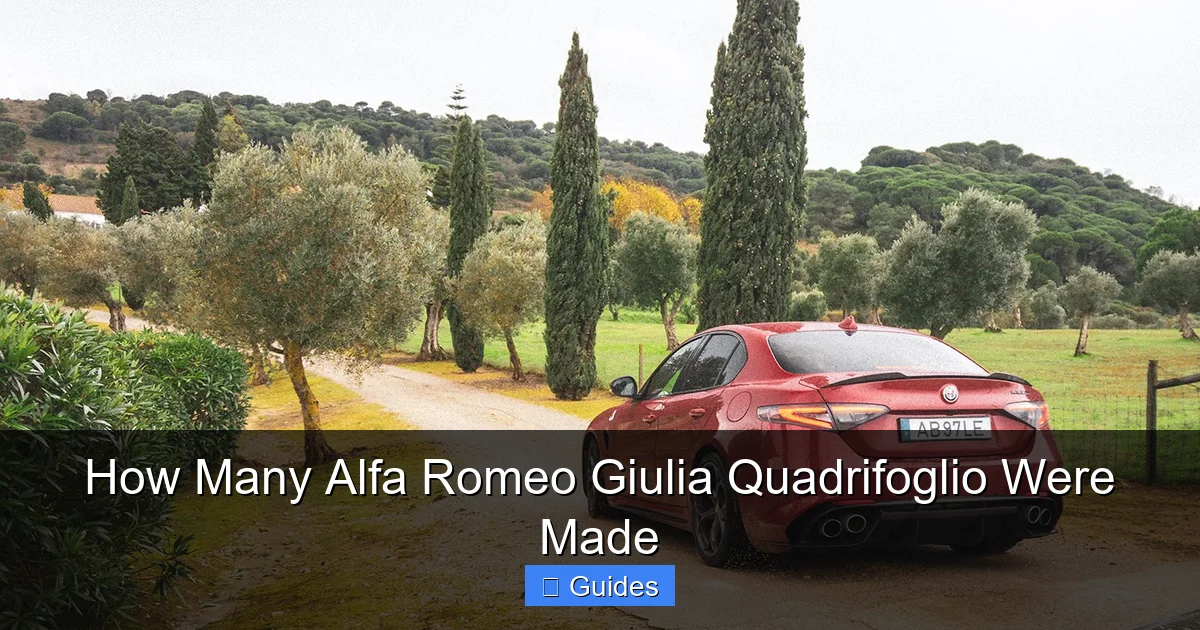
Visual guide about How Many Alfa Romeo Giulia Quadrifoglio Were Made
Image source: mir-s3-cdn-cf.behance.net
The 1970 Quadrifoglio 50th Anniversary Edition
In 2020, Alfa Romeo celebrated the 50th anniversary of the Quadrifoglio badge with a special edition model. Only 1970 units were produced globally—a nod to the year the four-leaf clover logo was first used. This edition featured a unique Verde Vulcano (Volcano Green) paint job, blacked-out trim, and commemorative badging. It also included a numbered plaque on the dashboard, making each car individually identifiable.
The 50th Anniversary model was sold out within months, with most units allocated to North America and Europe. Today, these cars command a premium on the used market, often selling for 20–30% above standard Quadrifoglio values.
The Veloce and Ti Models
While not as extreme as the Quadrifoglio, the Giulia Veloce and Ti trims offer a taste of performance with lower price points. However, Alfa Romeo has occasionally offered Quadrifoglio-level components on these models, such as the same suspension setup or brake package. These “Quadrifoglio-inspired” versions are more common but still limited in number.
Additionally, Alfa Romeo has released track-focused packages, such as the “Track Pack” available in Europe, which includes upgraded dampers, lightweight wheels, and a performance exhaust. These options were never widely advertised and are rarely seen outside of enthusiast circles.
Collector Interest and Future Value
As the Giulia Quadrifoglio ages, it’s gaining attention from collectors and investors. Low production numbers, combined with its performance credentials and Italian heritage, make it a potential future classic. Enthusiasts compare it to modern icons like the E46 BMW M3 or the Audi RS4 B7—cars that were initially overlooked but later appreciated for their driving dynamics and rarity.
Market Trends and Resale Values
Despite being a relatively new car, the Quadrifoglio has held its value better than many competitors. According to industry data, a 2018 model retains around 60–65% of its original MSRP after five years, compared to 50–55% for a BMW M3 of the same age. This resilience is driven by strong demand, limited supply, and positive word-of-mouth from owners.
Special editions and low-mileage examples are particularly sought after. For instance, a 50th Anniversary model with under 10,000 miles can sell for over $70,000—well above its original $75,000 price tag when adjusted for inflation. This trend suggests that well-maintained Quadrifoglios may appreciate in value over time, especially as Alfa Romeo shifts away from performance sedans.
The Impact of Electrification
Alfa Romeo has announced plans to go fully electric by 2027. While the brand promises to retain its performance DNA, the future of the Giulia Quadrifoglio remains uncertain. There are no official plans for an electric successor, and the current model is expected to be discontinued by 2025. This looming end of production is fueling collector interest, as buyers seek to own a piece of Alfa’s final combustion-era masterpiece.
Moreover, the Quadrifoglio’s naturally aspirated V6—though turbocharged—represents a dying breed. As automakers move toward smaller, hybridized powertrains, the raw, unfiltered character of the Quadrifoglio’s engine becomes increasingly rare. This emotional appeal adds to its desirability among driving purists.
How to Verify Production Numbers and Authenticity
For buyers and collectors, verifying the authenticity and production details of a Giulia Quadrifoglio is crucial. Here are some practical tips:
Check the VIN
The Vehicle Identification Number (VIN) contains valuable information. The 11th character indicates the plant where the car was built—“G” for Cassino, Italy. Additionally, the 4th to 8th characters reveal the model, engine, and trim level. A Quadrifoglio will have “940” in this sequence, followed by “B” for the 2.9L V6.
You can use online VIN decoders or contact Alfa Romeo directly with the VIN to confirm factory specifications. This is especially important for special editions, which may have unique build sheets.
Review Service and Delivery Records
Original purchase documents, window stickers, and service records can provide clues about a car’s provenance. Look for dealer invoices that list options like carbon-ceramic brakes, the Track Pack, or the 50th Anniversary package. These details help confirm rarity and originality.
Join Enthusiast Communities
Online forums like AlfaBB, Reddit’s r/AlfaRomeo, and Facebook groups dedicated to the Giulia are excellent resources. Members often share production data, VIN lists, and market trends. Some even maintain databases of known Quadrifoglio units, helping track how many are still on the road.
Consult a Specialist
If you’re considering a high-value purchase, have the car inspected by a certified Alfa Romeo technician or a specialist familiar with the Quadrifoglio. They can verify engine numbers, suspension components, and other key details that distinguish a genuine Quadrifoglio from a modified base model.
Conclusion: A Rare Italian Masterpiece
The Alfa Romeo Giulia Quadrifoglio is more than just a fast sedan—it’s a symbol of Italian passion, engineering excellence, and driving purity. With fewer than 30,000 units built worldwide, it stands apart from its mass-produced rivals, offering a level of exclusivity that few modern performance cars can match. From its Ferrari-derived engine to its limited-edition variants, every aspect of the Quadrifoglio was designed to thrill and endure.
While Alfa Romeo’s future lies in electrification and SUVs, the Giulia Quadrifoglio remains a testament to what the brand can achieve when it focuses on performance and emotion. For those lucky enough to own one, it’s not just a car—it’s a piece of automotive history. And as production winds down, its rarity and desirability are only set to grow.
Frequently Asked Questions
How many Alfa Romeo Giulia Quadrifoglio were made in total?
Estimates suggest between 25,000 and 30,000 Giulia Quadrifoglio units were built globally from 2016 to 2023. Alfa Romeo has not released official figures, but sales data and production constraints support this range.
Which year had the highest production of the Giulia Quadrifoglio?
2018 was the peak production year, with approximately 5,500 units built. Strong demand in the U.S. and Europe, combined with full manufacturing capacity, drove this output.
Are there any limited-edition Giulia Quadrifoglio models?
Yes, the most notable is the 1970 Quadrifoglio 50th Anniversary Edition, with only 1,970 units produced. Other special packages, like the Track Pack, were also offered in limited numbers.
Why is the Giulia Quadrifoglio so rare compared to BMW M3 or Mercedes-AMG C63?
The Quadrifoglio uses a hand-built Ferrari-derived V6 engine, which limits production capacity. Alfa Romeo also positioned it as a halo car, intentionally keeping volumes low for exclusivity.
Will the Giulia Quadrifoglio become a collector’s car?
Yes, due to its low production numbers, performance credentials, and Alfa Romeo’s shift to electrification, the Quadrifoglio is increasingly seen as a future classic with strong resale value.
How can I verify if a Giulia Quadrifoglio is authentic?
Check the VIN for factory codes, review original purchase documents, and consult service records. Joining enthusiast forums or having the car inspected by a specialist can also help confirm authenticity.

At CarLegit, we believe information should be clear, factual, and genuinely helpful. That’s why every guide, review, and update on our website is created with care, research, and a strong focus on user experience.