
The Maserati GranTurismo does not use a Ferrari engine in the traditional sense, but its powerplant shares deep engineering roots with Ferrari. Built on a Ferrari-derived platform and featuring a Maserati-developed V8 based on Ferrari architecture, the GranTurismo blends Italian performance heritage with Maserati’s unique tuning and refinement.
In This Article
- 1 Key Takeaways
- 2 📑 Table of Contents
- 3 Does the Maserati GranTurismo Have a Ferrari Engine?
- 4 The Shared DNA: Maserati and Ferrari’s Engineering Legacy
- 5 Engine Specifications: Breaking Down the GranTurismo’s Powerplant
- 6 Performance Comparison: GranTurismo vs. Ferrari Models
- 7 The Corporate Connection: Fiat, Ferrari, and Maserati
- 8 The Future: Electric Power and the End of the V8 Era
- 9 Why the Ferrari Engine Myth Persists
- 10 Conclusion: A Shared Legacy, Not a Shared Engine
- 11 Frequently Asked Questions
- 11.1 Does the Maserati GranTurismo use a Ferrari engine?
- 11.2 What engine is in the Maserati GranTurismo?
- 11.3 Is the GranTurismo faster than a Ferrari?
- 11.4 Where is the Maserati GranTurismo engine built?
- 11.5 Will future Maserati models use Ferrari engines?
- 11.6 What makes the GranTurismo’s engine special?
Key Takeaways
- Shared Heritage: The Maserati GranTurismo’s engine originates from a collaboration between Maserati and Ferrari, rooted in their shared ownership under Fiat Chrysler Automobiles (FCA).
- Ferrari-Based Architecture: The 4.2L and 4.7L V8 engines used in the GranTurismo are derived from Ferrari’s F136 engine family, originally developed for the Ferrari 458 Italia and F430.
- Maserati Tuning & Calibration: While based on Ferrari designs, Maserati engineers tuned the engines for smoother power delivery, luxury comfort, and grand touring refinement.
- No Direct Ferrari Engine Swap: The GranTurismo does not use a factory Ferrari engine; instead, it features a Maserati-specific version built at Maserati’s Modena plant.
- Performance Parallels: The GranTurismo’s V8 delivers impressive performance—0-60 mph in under 5 seconds—showcasing the Ferrari-engineered DNA in a more luxurious package.
- Future Models Go Electric: The new GranTurismo Folgore (electric version) marks a shift away from internal combustion, ending the era of Ferrari-linked V8s in this model.
- Brand Identity Matters: Maserati maintains its distinct character by adapting Ferrari technology to suit its luxury GT philosophy, not just copying outright.
📑 Table of Contents
- Does the Maserati GranTurismo Have a Ferrari Engine?
- The Shared DNA: Maserati and Ferrari’s Engineering Legacy
- Engine Specifications: Breaking Down the GranTurismo’s Powerplant
- Performance Comparison: GranTurismo vs. Ferrari Models
- The Corporate Connection: Fiat, Ferrari, and Maserati
- The Future: Electric Power and the End of the V8 Era
- Why the Ferrari Engine Myth Persists
- Conclusion: A Shared Legacy, Not a Shared Engine
Does the Maserati GranTurismo Have a Ferrari Engine?
If you’ve ever stood behind the wheel of a Maserati GranTurismo, you’ve likely felt the deep, throaty growl of its V8 engine—a sound that echoes through tunnels and turns heads on open roads. It’s a symphony of Italian engineering, one that feels both raw and refined. And if you’re anything like most car enthusiasts, you’ve probably wondered: *Is that a Ferrari engine under the hood?* The short answer? Not exactly—but it’s closer than you might think.
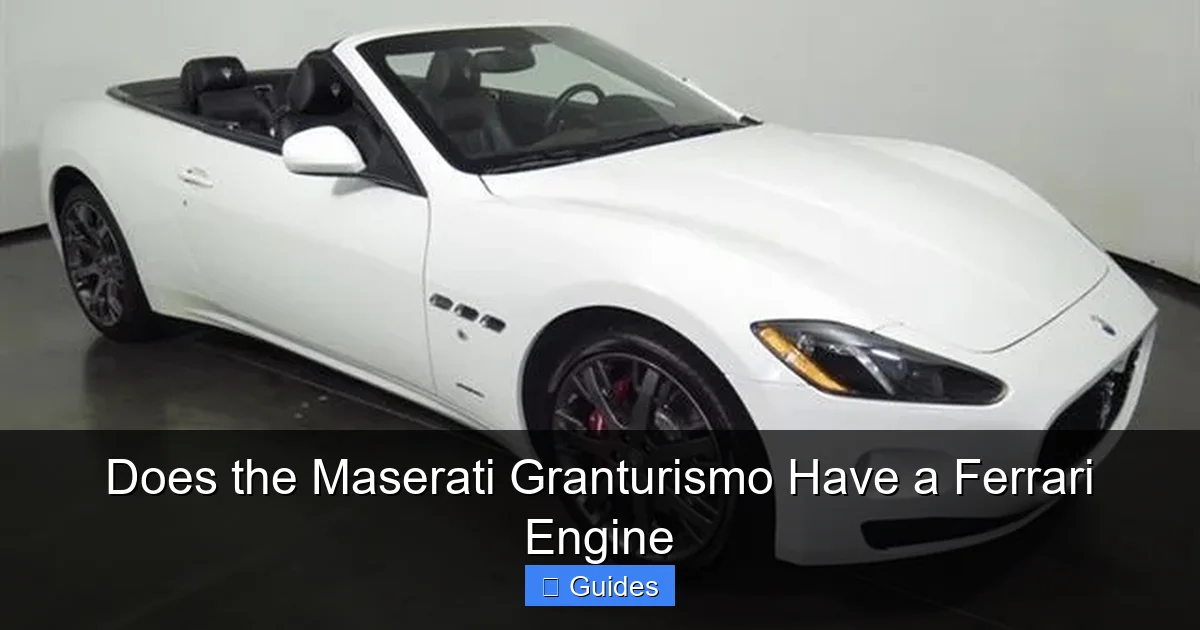
The Maserati GranTurismo has long been celebrated as one of the most beautiful grand tourers ever made. With its long hood, sculpted fenders, and timeless Pininfarina design, it blends performance and elegance in a way few cars can match. But beneath that stunning exterior lies a powertrain story that’s deeply intertwined with Ferrari. To understand whether the GranTurismo has a Ferrari engine, we need to dive into the history, engineering, and corporate relationships that shaped this iconic machine.
For decades, Maserati and Ferrari have shared more than just Italian roots. They’ve shared ownership, technology, and even engineering teams. Under the umbrella of Fiat Chrysler Automobiles (now Stellantis), these two brands have collaborated on everything from platforms to powertrains. The result? A GranTurismo that feels distinctly Maserati but carries unmistakable Ferrari DNA.
Visual guide about Does the Maserati Granturismo Have a Ferrari Engine
Image source: veh-markets.com
To truly answer whether the Maserati GranTurismo has a Ferrari engine, we need to go back to the early 2000s. At that time, Ferrari was riding high on the success of models like the F430 and 575M Maranello. Meanwhile, Maserati was re-emerging as a serious player in the luxury performance market after years of dormancy. The two brands, both owned by Fiat, began a strategic partnership that would shape the future of Italian supercars.
The F136 Engine Family: A Ferrari Foundation
The heart of the matter lies in the F136 engine family—a series of 90-degree V8 engines developed by Ferrari in the mid-2000s. This engine platform powered some of Ferrari’s most beloved models, including the F430, 458 Italia, and California. Known for its high-revving nature, compact size, and incredible power output, the F136 became a benchmark for modern V8 performance.
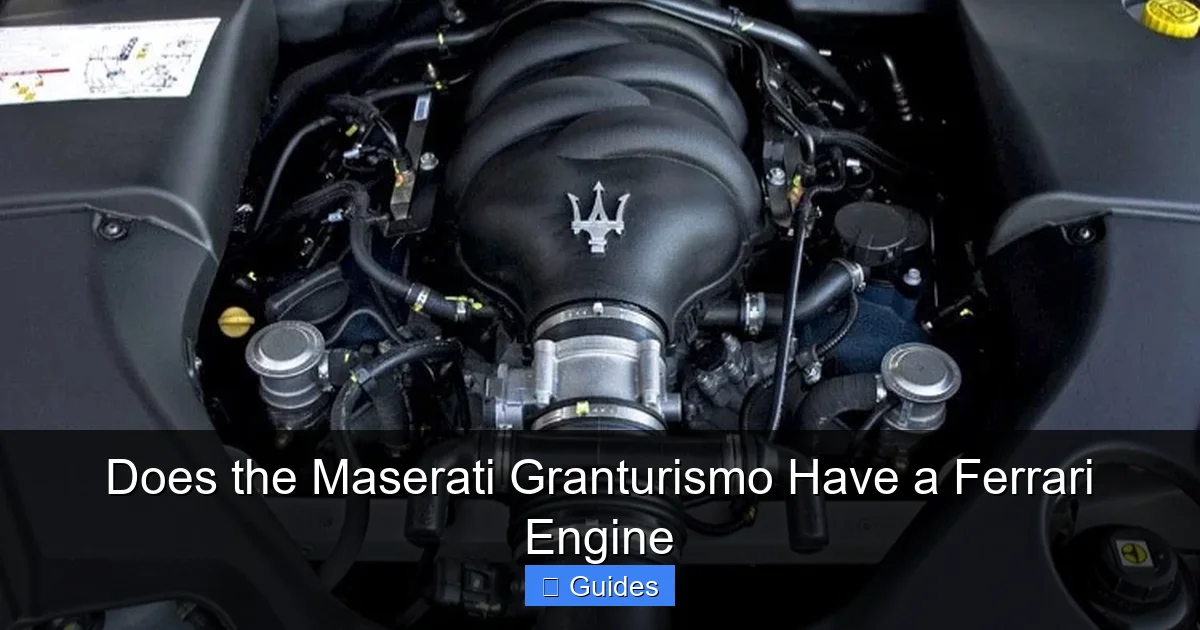
Maserati didn’t just borrow this engine—they adapted it. The GranTurismo’s 4.2L and 4.7L V8s are based on the same architecture as the F136, sharing key components like the cylinder block, crankshaft design, and valvetrain layout. However, Maserati engineers made significant modifications to suit the GranTurismo’s grand touring mission.
Maserati’s Role: Tuning for Luxury and Refinement
While Ferrari tuned the F136 for track-focused performance—high redlines, aggressive throttle response, and race-bred acoustics—Maserati took a different approach. Their goal was to create a V8 that delivered strong performance but also matched the GranTurismo’s luxurious character. That meant smoother power delivery, reduced noise under normal driving, and better low-end torque for effortless highway cruising.
For example, the 4.7L V8 in the GranTurismo MC Stradale produces around 454 horsepower—impressive, but less than the 562 hp of the Ferrari 458 Italia’s version of the same engine family. This difference isn’t due to inferior engineering, but rather a deliberate choice to prioritize drivability and comfort over outright speed.
Manufacturing and Assembly: Where the Engine Is Born
Another key point: the GranTurismo’s engine isn’t built by Ferrari. Instead, it’s assembled at Maserati’s facility in Modena, Italy—just a short drive from Ferrari’s Maranello headquarters. This proximity allowed for close collaboration, but it also meant Maserati had full control over tuning, calibration, and integration.
The engines are built using Ferrari-derived tooling and specifications, but with Maserati-specific components like intake manifolds, exhaust systems, and engine management software. This hybrid approach gives the GranTurismo a unique voice—one that’s unmistakably Italian, but distinctly Maserati.
Engine Specifications: Breaking Down the GranTurismo’s Powerplant
Visual guide about Does the Maserati Granturismo Have a Ferrari Engine
Image source: media.hagerty.com
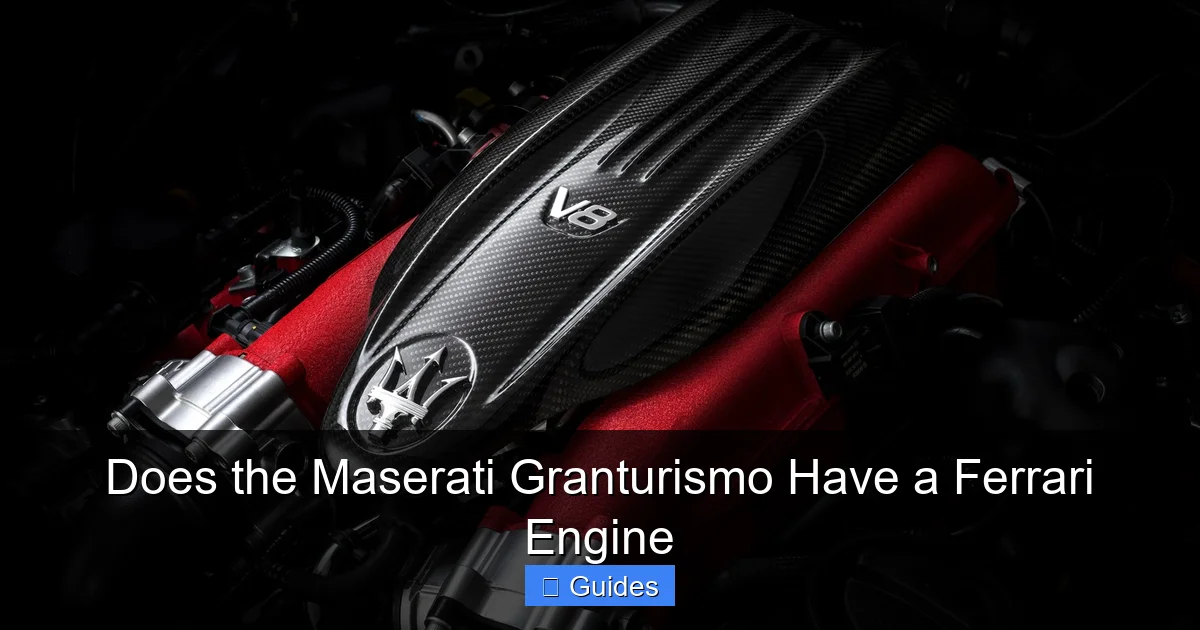
Let’s get into the nitty-gritty. What exactly powers the Maserati GranTurismo? Over its production run from 2007 to 2019, the GranTurismo offered two main V8 engine options: the 4.2L and the 4.7L. Both are naturally aspirated, rear-wheel-drive units that deliver a thrilling driving experience.
The 4.2L V8: Smooth and Sophisticated
The base engine in early GranTurismo models was a 4.2-liter V8 producing approximately 405 horsepower and 339 lb-ft of torque. This engine was essentially a detuned and refined version of the Ferrari F136, optimized for daily usability and long-distance comfort.
With a 7,500 rpm redline, it revs eagerly but doesn’t scream like its Ferrari cousins. The power delivery is linear and predictable, making it ideal for spirited drives on winding coastal roads or relaxed cruising on the autostrada. Paired with a 6-speed automatic or optional Cambiocorsa automated manual transmission, the 4.2L GranTurismo could hit 60 mph in about 5.2 seconds—respectable for a luxury GT.
The 4.7L V8: More Power, More Passion
For those seeking more performance, Maserati introduced the 4.7-liter V8 in 2009. This engine bumped output to 433 horsepower and 361 lb-ft of torque in standard form, with the high-performance MC Stradale variant pushing it to 454 hp.
The 4.7L engine features a longer stroke and higher compression ratio than the 4.2L, resulting in stronger mid-range torque and a more aggressive exhaust note. It also benefits from variable valve timing and a more responsive throttle map. The result? A 0-60 mph time of around 4.8 seconds and a top speed nearing 185 mph.
Despite these improvements, the engine still retains Maserati’s signature refinement. It’s not as razor-sharp as a Ferrari 458, but it’s more than capable of thrilling drivers on a weekend canyon run.
Transmission and Drivetrain: Balancing Performance and Comfort
The GranTurismo’s powertrain isn’t just about the engine—it’s also about how that power is delivered. Most models came with a 6-speed automatic transmission, which was smooth and responsive, though some enthusiasts preferred the optional Cambiocorsa paddle-shift system for a more engaging experience.
The rear-wheel-drive layout and near-perfect 50:50 weight distribution contribute to the car’s balanced handling. While not as track-focused as a Ferrari, the GranTurismo corners with confidence, thanks to its double-wishbone front suspension and multi-link rear setup.
Performance Comparison: GranTurismo vs. Ferrari Models
Visual guide about Does the Maserati Granturismo Have a Ferrari Engine
Image source: nsclassics.com
So how does the GranTurismo stack up against its Ferrari relatives? Let’s compare it to two key models: the Ferrari F430 and the 458 Italia.
GranTurismo vs. Ferrari F430
The F430, introduced in 2004, used the original F136 engine in its purest form. With 483 horsepower and a 8,250 rpm redline, it was a high-strung machine built for speed and agility. The F430 could hit 60 mph in just 3.6 seconds and had a top speed of 196 mph.
In contrast, the GranTurismo 4.2L feels more relaxed. It’s slower off the line and doesn’t rev as high, but it offers a more comfortable ride, better sound insulation, and a more luxurious interior. The F430 is a sports car; the GranTurismo is a grand tourer.
GranTurismo vs. Ferrari 458 Italia
The 458 Italia, launched in 2009, took the F136 to new heights with 562 horsepower, direct injection, and a 9,000 rpm redline. It was lighter, faster, and more aerodynamically advanced than the GranTurismo.
But again, the GranTurismo isn’t trying to be a Ferrari. It’s designed for different priorities: comfort, style, and long-distance usability. While the 458 is a scalpel, the GranTurismo is a velvet glove—powerful, but wrapped in luxury.
Real-World Driving Experience
Behind the wheel, the differences are clear. The GranTurismo’s engine note is deeper and more muscular, with a burble at idle that builds to a roar under acceleration. It doesn’t have the F1-style scream of a Ferrari, but it has a character all its own.
On the highway, the GranTurismo is effortlessly fast. Overtaking is a breeze, and the engine delivers power smoothly across the rev range. On twisty roads, it’s agile and responsive, though not as razor-sharp as a mid-engined Ferrari.
For many drivers, that’s exactly the point. The GranTurismo offers supercar performance in a package that’s usable every day. It’s a car you can drive to dinner, take on a road trip, or enjoy on a Sunday morning drive—without sacrificing excitement.
The Corporate Connection: Fiat, Ferrari, and Maserati
To understand the engine relationship, we need to look at the corporate structure. From 1997 to 2016, Ferrari was a subsidiary of Fiat Chrysler Automobiles (FCA), the same parent company that owned Maserati. This close relationship allowed for significant technology sharing.
Joint Development Projects
During this period, Ferrari and Maserati collaborated on several projects. The most notable was the development of the M139 platform, which underpinned both the GranTurismo and the Ferrari 612 Scaglietti. This shared architecture meant that both cars used similar suspension layouts, braking systems, and—most importantly—engine bays designed to accommodate the F136 family.
Ferrari engineers provided technical support, but Maserati had full autonomy over final tuning and integration. This allowed Maserati to maintain its brand identity while benefiting from Ferrari’s cutting-edge engineering.
The Spin-Off and Its Impact
In 2016, Ferrari was spun off from FCA and became an independent company. This marked the end of the close engineering partnership between the two brands. While Maserati continued to use Ferrari-derived engines for a few more years, future models would shift toward new platforms and powertrains.
The GranTurismo’s final years were powered by the same V8s, but the writing was on the wall. The era of shared V8 development was coming to a close.
The Future: Electric Power and the End of the V8 Era
In 2023, Maserati unveiled the new GranTurismo, and with it, a bold new direction: electrification. The flagship model, the GranTurismo Folgore, is fully electric, producing over 750 horsepower and accelerating from 0-60 mph in under 2.7 seconds.
The Folgore: A New Chapter
The Folgore (Italian for “lightning”) represents a complete departure from the V8 engines of the past. With three electric motors and a 92.5 kWh battery pack, it delivers instant torque, silent operation, and zero emissions.
While it lacks the visceral roar of the old V8, the Folgore retains the GranTurismo’s grand touring spirit. It’s luxurious, fast, and stunningly designed—just with a different kind of power.
What This Means for the Ferrari Connection
With the shift to electric, the days of Ferrari-derived V8s in the GranTurismo are over. Future Maserati models will rely on Stellantis-developed electric platforms, not Ferrari technology.
This marks the end of an era—but also the beginning of a new one. Maserati is positioning itself as a leader in luxury electric performance, and the GranTurismo Folgore is its flagship.
Why the Ferrari Engine Myth Persists
Despite the technical details, the idea that the GranTurismo has a “Ferrari engine” persists. Why? There are a few reasons.
Sound and Feel
The engine note is unmistakably Italian—deep, resonant, and full of character. To the untrained ear, it sounds like a Ferrari. And in many ways, it is. The architecture, the materials, the engineering philosophy—all are rooted in Ferrari’s legacy.
Marketing and Brand Association
Maserati has long leaned into its connection with Ferrari. Advertisements, press materials, and dealer presentations often highlight the “Ferrari DNA” in their engines. While technically accurate in a broad sense, this messaging can blur the lines for consumers.
Enthusiast Culture
Car enthusiasts love a good story. The idea of a Maserati with a Ferrari heart is compelling—it’s like getting supercar performance in a more usable package. Even if it’s not 100% true, the myth adds to the car’s allure.
So, does the Maserati GranTurismo have a Ferrari engine? The answer is nuanced. It doesn’t use a factory Ferrari engine, but its V8 is deeply rooted in Ferrari’s engineering. Built on the F136 platform, tuned by Maserati, and assembled in Modena, it represents a unique blend of performance and luxury.
The GranTurismo is more than just a car with a Ferrari-derived engine—it’s a symbol of Italian automotive excellence. It honors the legacy of both brands while carving out its own identity. Whether you’re drawn to its timeless design, its thrilling performance, or its rich heritage, the GranTurismo remains one of the most captivating grand tourers ever made.
As Maserati moves into the electric future, the V8 era may be over—but the spirit of collaboration, innovation, and passion lives on. And for those who’ve heard that deep, rumbling exhaust note echoing through the hills of Tuscany, the connection to Ferrari will always feel real.
Frequently Asked Questions
Does the Maserati GranTurismo use a Ferrari engine?
No, the Maserati GranTurismo does not use a factory Ferrari engine. However, its V8 engines are based on the Ferrari F136 architecture and share many design elements, making them closely related.
What engine is in the Maserati GranTurismo?
The GranTurismo was powered by either a 4.2-liter or 4.7-liter naturally aspirated V8 engine, both developed by Maserati using Ferrari-derived technology and tuned for grand touring performance.
Is the GranTurismo faster than a Ferrari?
No, the GranTurismo is not faster than comparable Ferrari models like the F430 or 458 Italia. It prioritizes comfort and usability over outright speed, though it still offers impressive performance.
Where is the Maserati GranTurismo engine built?
The GranTurismo’s engine is assembled at Maserati’s facility in Modena, Italy, not at Ferrari’s plant in Maranello. This allows Maserati to customize tuning and integration.
Will future Maserati models use Ferrari engines?
No, with Ferrari now independent and Maserati shifting to electric powertrains, future models will not use Ferrari engines. The new GranTurismo Folgore is fully electric.
What makes the GranTurismo’s engine special?
The engine combines Ferrari’s high-performance V8 architecture with Maserati’s tuning for smoothness, torque, and luxury, creating a unique balance of power and refinement ideal for grand touring.

At CarLegit, we believe information should be clear, factual, and genuinely helpful. That’s why every guide, review, and update on our website is created with care, research, and a strong focus on user experience.