
Maserati vehicles are powered by high-performance engines, including V6, V8, and hybrid systems—many co-developed with Ferrari. These engines deliver thrilling acceleration, rich sound, and Italian craftsmanship across models like the Ghibli, Quattroporte, and MC20.
When you think of Maserati, images of sleek Italian design, roaring engines, and luxury come to mind. But what really powers these stunning machines? If you’ve ever wondered, “What type of engine does a Maserati have?” you’re not alone. Maserati has a rich legacy of performance engineering, blending raw power with refined elegance. Whether it’s the thunderous growl of a V8 or the futuristic hum of a hybrid system, Maserati engines are designed to deliver an unforgettable driving experience.
Unlike mass-market brands that rely on shared platforms and engines, Maserati has long prioritized bespoke powertrains that reflect its racing heritage and Italian passion. From the iconic Quattroporte to the modern MC20, each model features an engine tailored to its performance goals. Over the years, Maserati has partnered with Ferrari, developed in-house innovations, and embraced electrification—all while maintaining its signature sound and soul.
In this guide, we’ll dive deep into the heart of Maserati’s engineering. You’ll learn about the different engine types used across the lineup, how they’re built, and what makes them unique. Whether you’re a car enthusiast, a potential buyer, or just curious about high-performance engines, this article will give you a complete picture of what powers these Italian masterpieces.
In This Article
Key Takeaways
- Maserati uses a range of engines: from twin-turbo V6s to naturally aspirated and hybrid V8s, depending on the model.
- Ferrari has historically supplied engines: Many Maserati models, especially older ones, feature Ferrari-built powerplants.
- The MC20 features a groundbreaking engine: The Nettuno V6 is a twin-turbo, 3.0L engine with pre-chamber combustion technology.
- Hybrid and electric models are emerging: Maserati is transitioning toward electrification with mild-hybrid and full EV options.
- Engine placement affects performance: Front-engine layouts dominate, but mid-engine designs like the MC20 enhance handling and balance.
- Sound is a key design element: Maserati engines are tuned for an emotional, throaty exhaust note that defines the brand’s identity.
- Regular maintenance is crucial: High-performance engines require premium fuel, frequent servicing, and expert care to maintain peak performance.
📑 Table of Contents
The Evolution of Maserati Engines
Maserati’s engine story begins in the early 20th century, but it wasn’t until the 1950s and 1960s that the brand truly established itself as a performance powerhouse. Early models like the 3500 GT used inline-six engines, but it was the introduction of V8 power that set Maserati apart. The 1963 Maserati Mistral, for example, featured a 4.2-liter V8 that produced around 260 horsepower—remarkable for its time.
As the brand evolved, so did its engines. In the 1980s and 1990s, Maserati experimented with turbocharged inline-fours and V6s, but it was the partnership with Ferrari in the early 2000s that marked a turning point. When Ferrari acquired a controlling stake in Maserati in 1997, it brought not just financial stability but also engineering excellence. This collaboration led to the development of high-revving, naturally aspirated V8 engines that became the heart of models like the Quattroporte and GranTurismo.
Ferrari’s Influence on Maserati Engines
One of the most significant chapters in Maserati’s engine history is its relationship with Ferrari. From 2002 to 2018, many Maserati models were powered by Ferrari-built engines. The 4.2-liter and 4.7-liter V8s used in the Quattroporte, Ghibli, and GranTurismo were essentially detuned versions of Ferrari’s F136 engine, which also powered the F430 and 458 Italia.
These engines were known for their high redlines, linear power delivery, and intoxicating sound. The 4.7-liter V8, for instance, produced up to 460 horsepower and could rev beyond 7,500 RPM. It wasn’t just about power—Ferrari’s engineering brought precision, reliability, and a racing pedigree to Maserati’s road cars.
However, as Maserati sought greater independence and cost efficiency, it began developing its own engines. This shift led to the creation of the Ferrari-derived but Maserati-tuned 3.0-liter twin-turbo V6 and, more recently, the revolutionary Nettuno engine.
The Shift to In-House and Hybrid Powertrains
In 2016, Maserati introduced the Ghibli with a new 3.0-liter twin-turbo V6 developed in-house. This engine marked a departure from naturally aspirated V8s and embraced turbocharging for better efficiency and torque. Producing up to 430 horsepower in the Ghibli S, it offered strong performance while meeting stricter emissions standards.
But the real game-changer came in 2020 with the launch of the MC20. This mid-engine supercar introduced the Nettuno engine—a 3.0-liter twin-turbo V6 developed entirely by Maserati. What makes the Nettuno special isn’t just its 630 horsepower output, but its innovative combustion technology. It uses a pre-chamber ignition system inspired by Formula 1, allowing for more efficient and powerful combustion.
As Maserati embraces electrification, hybrid versions of the Ghibli and Levante have been introduced, combining a V6 engine with an electric motor for improved fuel economy and reduced emissions. The future points toward full electrification, with the upcoming GranTurismo Folgore set to be Maserati’s first all-electric model.
Engine Types Across the Maserati Lineup
Visual guide about What Type of Engine Does a Maserati Have
Image source: i.pinimg.com
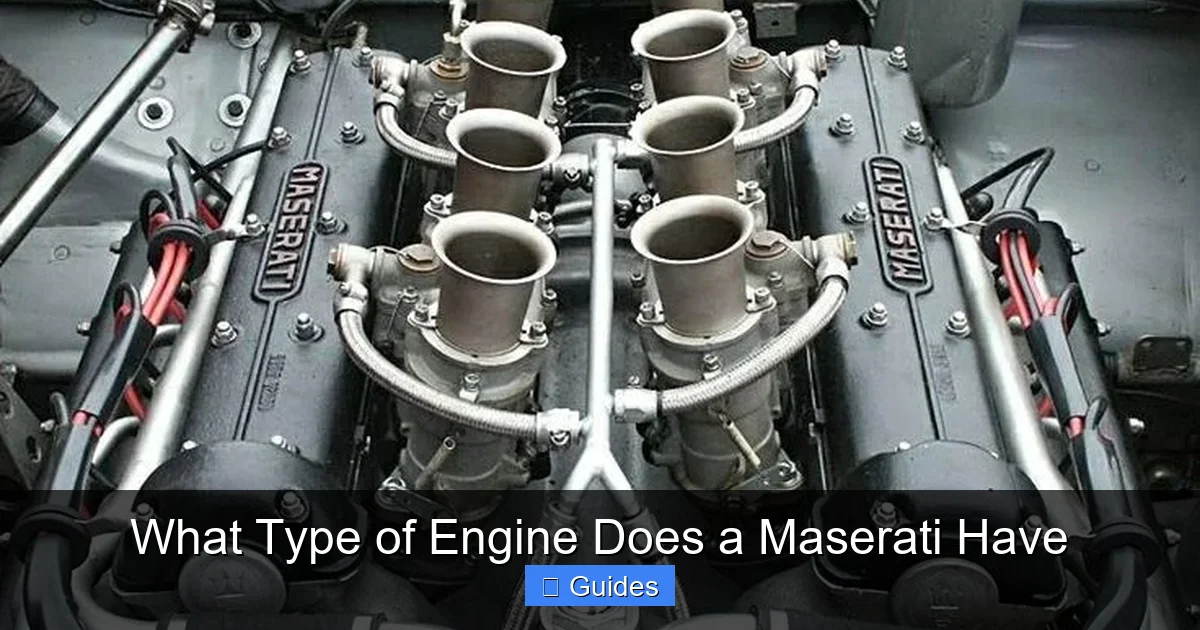
Maserati’s current lineup features a diverse range of engines, each tailored to the model’s purpose—whether it’s a luxury sedan, a sporty coupe, or a high-performance supercar. Let’s break down the engine types you’ll find in today’s Maserati vehicles.
V6 Twin-Turbo Engines
The 3.0-liter twin-turbo V6 is the workhorse of the Maserati range. Found in the Ghibli, Levante, and Quattroporte, this engine delivers a balance of power, efficiency, and responsiveness. In its base form, it produces around 350 horsepower, but in higher trims like the Ghibli Trofeo, it pushes out 430 horsepower.
This engine features direct fuel injection, variable valve timing, and twin-scroll turbochargers to minimize lag and maximize torque. It’s paired with an 8-speed automatic transmission and all-wheel drive in most models, ensuring strong acceleration and confident handling.
One of the standout features of this V6 is its sound. Maserati engineers have carefully tuned the exhaust system to produce a deep, aggressive roar that builds as the revs climb. It’s not as high-pitched as a Ferrari V8, but it’s unmistakably Italian and deeply satisfying.
V8 Engines: The Heart of Performance
While Maserati has moved away from naturally aspirated V8s in most models, the 3.8-liter twin-turbo V8 still powers the top-tier versions of the Quattroporte and Levante. This engine, developed in collaboration with Ferrari, produces up to 580 horsepower in the Quattroporte GTS.
The V8 delivers massive torque—over 500 lb-ft—making it ideal for high-speed cruising and effortless overtaking. It’s also incredibly smooth, with a refined power delivery that belies its brute strength. The exhaust note is thunderous, especially in Sport mode, where the valves open to unleash the full symphony of the engine.
Although newer models are shifting toward V6 and hybrid powertrains, the V8 remains a symbol of Maserati’s performance legacy. It’s a reminder of the brand’s racing roots and its commitment to delivering visceral driving experiences.
The Nettuno V6: Maserati’s Engineering Marvel
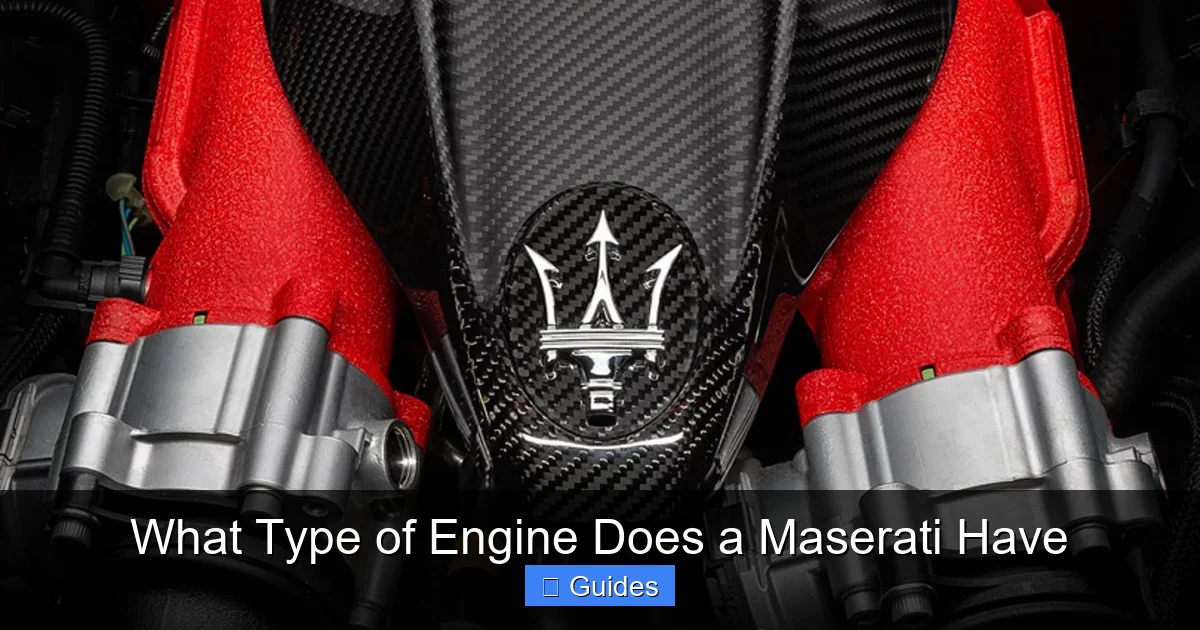
The Nettuno engine, debuting in the MC20, is perhaps the most advanced engine in Maserati’s history. This 3.0-liter twin-turbo V6 produces 630 horsepower and 538 lb-ft of torque, enabling the MC20 to sprint from 0 to 60 mph in under 2.9 seconds.
What sets the Nettuno apart is its use of twin combustion technology. Each cylinder has two spark plugs and a pre-chamber above the main combustion chamber. Fuel is injected into the pre-chamber, where it ignites and creates a flame front that rapidly burns the main charge. This results in faster, more efficient combustion and reduced emissions.
The engine also features a 90-degree V-angle, dry-sump lubrication, and a flat-plane crankshaft—features typically found in racing engines. It’s a testament to Maserati’s ability to innovate and compete with the best in the supercar world.
Hybrid and Electric Powertrains
Maserati is not ignoring the shift toward electrification. The Ghibli Hybrid and Levante Hybrid combine a 2.0-liter turbocharged four-cylinder engine with a 48-volt mild-hybrid system. While not a full hybrid, this setup improves fuel efficiency and reduces emissions without sacrificing performance.
The 2.0-liter engine produces around 330 horsepower, and the electric motor assists during acceleration and low-speed driving. The system also includes a belt-starter generator that recovers energy during braking.
Looking ahead, Maserati plans to launch fully electric models under the “Folgore” (Italian for “lightning”) branding. The GranTurismo Folgore, for example, will feature three electric motors producing over 1,200 horsepower, making it one of the most powerful Maseratis ever built.
Engine Placement and Drivetrain Configurations
Visual guide about What Type of Engine Does a Maserati Have
Image source: maserati.scene7.com
Engine placement plays a crucial role in a car’s handling, balance, and performance. Maserati has used different layouts across its models, each with its own advantages.
Front-Engine, Rear-Wheel Drive (FR)
Most Maserati sedans and SUVs, including the Ghibli, Quattroporte, and Levante, use a front-engine, rear-wheel-drive layout. This classic configuration provides good weight distribution and a traditional driving feel. Power is sent to the rear wheels via a driveshaft, giving these cars a sporty, tail-happy character.
In higher-performance versions, Maserati adds all-wheel drive (AWD) to improve traction, especially in wet or snowy conditions. The AWD system can send up to 50% of the power to the front wheels when needed, enhancing stability without compromising the rear-drive dynamics.
Front-Engine, All-Wheel Drive (AWD)
The AWD versions of the Ghibli, Quattroporte, and Levante are popular in regions with harsh weather. The system is proactive, using sensors to monitor wheel slip and adjust torque distribution in real time. This ensures confident handling in all conditions while maintaining Maserati’s sporty character.
Mid-Engine Layout: The MC20
The MC20 breaks from tradition with a mid-engine layout. The Nettuno V6 is mounted behind the driver but ahead of the rear axle, placing the car’s center of gravity low and central. This improves cornering agility, reduces understeer, and enhances overall balance.
Mid-engine cars are typically more responsive and easier to control at the limit. The MC20’s layout, combined with its lightweight carbon fiber chassis, makes it one of the most dynamic Maseratis ever built.
Performance and Driving Experience
Visual guide about What Type of Engine Does a Maserati Have
Image source: images.carexpert.com.au
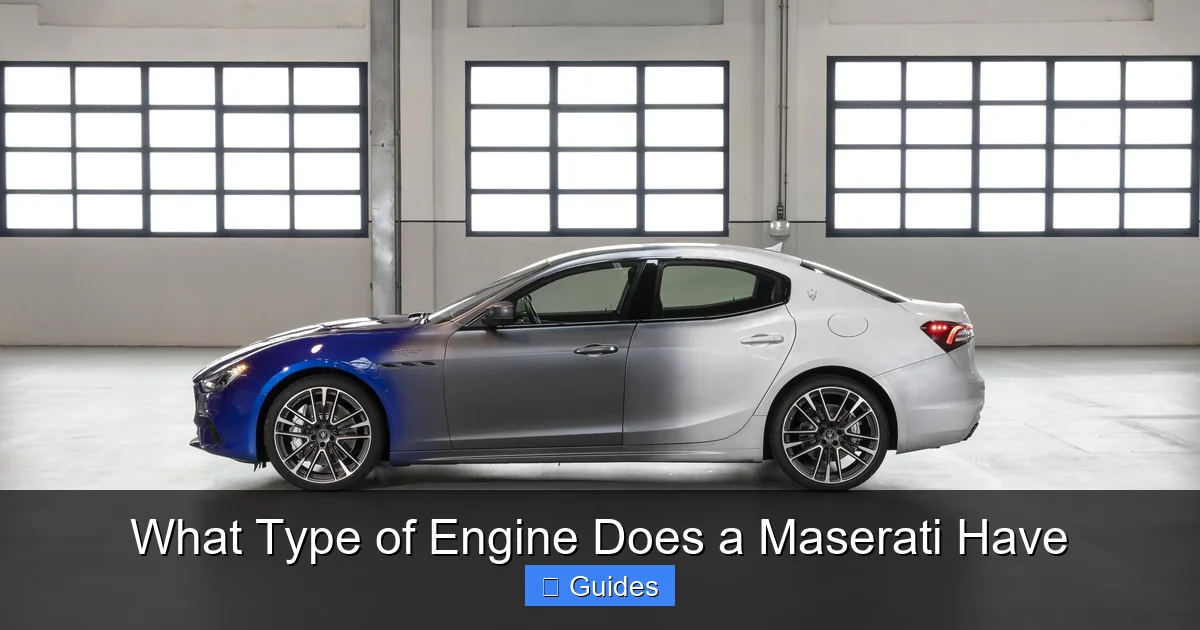
So, what does it feel like to drive a Maserati? The answer lies in the engine’s character. Whether it’s the surge of turbocharged torque or the high-revving scream of a V8, Maserati engines are designed to engage all your senses.
Acceleration and Top Speed
Maserati vehicles are no slouches when it comes to speed. The Ghibli S can reach 60 mph in about 4.5 seconds, while the Quattroporte GTS does it in under 4.0 seconds. The MC20, with its 630-horsepower V6, is even quicker, hitting 60 mph in 2.8 seconds and topping out at over 200 mph.
These numbers aren’t just impressive—they’re accessible. Unlike some supercars that require perfect conditions to unleash their full potential, Maseratis are designed to deliver strong performance in real-world driving.
Sound and Emotion
One of the most defining features of a Maserati engine is its sound. Engineers spend countless hours tuning the exhaust system to create a distinctive roar that builds with the revs. In Sport mode, the valves open, and the engine sings—a deep, guttural growl that turns heads and stirs emotions.
This sound isn’t just for show. It’s part of the driving experience, reminding you that you’re behind the wheel of something special. Whether you’re cruising on the highway or carving through mountain roads, the engine’s voice is a constant companion.
Handling and Feedback
While the engine provides the power, the chassis and suspension translate it into motion. Maseratis are known for their balanced handling, responsive steering, and comfortable ride. Even in sporty models, the suspension is tuned to absorb bumps without sacrificing control.
The MC20 takes this further with adaptive dampers, carbon ceramic brakes, and a lightweight construction that makes it feel like an extension of the driver. It’s a car that rewards skill and confidence, offering feedback that connects you to the road.
Maintenance and Longevity
Owning a Maserati is a privilege, but it comes with responsibilities. High-performance engines require more care than average cars, and neglecting maintenance can lead to costly repairs.
Regular Service Intervals
Maserati recommends service every 12,000 miles or once a year, whichever comes first. This includes oil changes, filter replacements, and inspections of the engine, transmission, and brakes. Using the correct oil—typically a high-quality synthetic—is essential to protect the engine’s internals.
Premium Fuel Requirements
All Maserati engines require premium unleaded fuel (91 octane or higher). Using lower-octane fuel can cause knocking, reduce performance, and damage the engine over time. It’s a small price to pay for the performance and longevity these engines are capable of.
Common Issues and How to Avoid Them
Like any high-performance engine, Maseratis can develop issues if not properly maintained. Common problems include turbocharger wear, carbon buildup on intake valves, and electrical gremlins. Regular cleaning, using fuel additives, and addressing warning lights promptly can prevent major repairs.
It’s also wise to have your Maserati serviced by a certified technician who understands the brand’s engineering. Independent shops may save money, but they may not have the specialized tools or knowledge needed for complex repairs.
The Future of Maserati Engines
Maserati is at a crossroads. While it honors its legacy with powerful V6 and V8 engines, it’s also embracing the future with hybrid and electric technology. The brand’s “Dare Forward 2030” strategy outlines a roadmap toward full electrification, with all new models being electric by 2025 and the entire lineup electric by 2030.
Electrification and the Folgore Line
The GranTurismo Folgore will be Maserati’s first all-electric model, featuring three electric motors and a 92.5 kWh battery. It promises over 1,200 horsepower and a range of around 300 miles. While it won’t have the roar of a V8, Maserati is working on sound engineering to replicate the emotional experience of driving a Maserati.
Sustainability and Performance
Maserati is also investing in sustainable materials and manufacturing processes. The MC20’s carbon fiber body is produced using renewable energy, and the brand is exploring bio-based materials for interiors.
The challenge will be to maintain the soul of Maserati—the passion, the sound, the emotion—while transitioning to electric power. But if the Nettuno engine is any indication, Maserati is up to the task.
Conclusion
So, what type of engine does a Maserati have? The answer is: it depends. From the Ferrari-built V8s of the past to the innovative Nettuno V6 and upcoming electric motors, Maserati engines are as diverse as they are powerful. Each one is designed to deliver not just speed, but an emotional connection between driver and machine.
Whether you’re drawn to the thunderous V8, the cutting-edge V6, or the silent surge of an electric motor, Maserati offers a driving experience that’s hard to match. These engines are more than just mechanical components—they’re the heart and soul of a brand that’s been thrilling drivers for over a century.
As Maserati evolves, one thing remains constant: its commitment to performance, luxury, and Italian passion. The future may be electric, but the spirit of the trident will always roar.
Frequently Asked Questions
What type of engine does a Maserati Ghibli have?
The Maserati Ghibli is powered by a 3.0-liter twin-turbo V6 engine, producing between 350 and 430 horsepower depending on the trim. A hybrid version uses a 2.0-liter turbocharged four-cylinder with a mild-hybrid system.
Does Maserati still use Ferrari engines?
Maserati no longer uses Ferrari-built engines in new models. While older models like the Quattroporte and GranTurismo featured Ferrari V8s, current engines are developed in-house or adapted from shared platforms.
What makes the Maserati Nettuno engine special?
The Nettuno engine features twin combustion technology with pre-chamber ignition, inspired by Formula 1. This allows for more efficient and powerful combustion, delivering 630 horsepower in the MC20.
Are Maserati engines reliable?
Maserati engines can be reliable with proper maintenance. Regular servicing, premium fuel, and timely repairs are essential to avoid common issues like turbo wear or carbon buildup.
Will Maserati go fully electric?
Yes, Maserati plans to make all new models electric by 2025 and have a fully electric lineup by 2030. The GranTurismo Folgore will be the brand’s first all-electric vehicle.
What fuel does a Maserati engine require?
All Maserati engines require premium unleaded fuel with an octane rating of 91 or higher. Using lower-octane fuel can damage the engine and reduce performance.

At CarLegit, we believe information should be clear, factual, and genuinely helpful. That’s why every guide, review, and update on our website is created with care, research, and a strong focus on user experience.