
The Maserati Levante does not use a Ferrari engine. While both brands are under the Stellantis umbrella and share some engineering philosophies, the Levante is powered by Maserati-developed V6 and V8 engines, not Ferrari-built units. However, the connection between Maserati and Ferrari runs deeper than just branding—there’s a rich history of collaboration and shared performance DNA.
[FEATURED_IMAGE_PLACEHODEL]
In This Article
- 1 Key Takeaways
- 2 📑 Table of Contents
- 3 Introduction: The Allure of Italian Performance
- 4 The Maserati Levante: A Performance SUV with Italian Flair
- 5 Ferrari and Maserati: A Shared History, Not Shared Engines
- 6 Engineering the Levante’s Powertrain: Maserati’s In-House Expertise
- 7 The Ferrari Connection: Influence Without Direct Engineering
- 8 Myth vs. Reality: Setting the Record Straight
- 9 The Future: Electrification and Beyond
- 10 Conclusion: A Maserati, Not a Ferrari—And That’s Okay
- 11 Frequently Asked Questions
Key Takeaways
- No Ferrari Engine: The Maserati Levante uses engines developed and manufactured by Maserati, not Ferrari.
- Shared Corporate Heritage: Both Maserati and Ferrari were once part of Fiat Chrysler Automobiles (now Stellantis), fostering technical collaboration.
- V6 and V8 Options: The Levante offers twin-turbocharged 3.0L V6 and 3.8L V8 engines, both designed in-house by Maserati.
- Ferrari’s Influence: While not using Ferrari engines, the Levante benefits from performance tuning philosophies and engineering expertise historically linked to Ferrari.
- Sound and Character: The Levante’s exhaust note and driving dynamics reflect Italian performance traditions, often compared to Ferrari’s signature sound.
- Future Electrification: Maserati is shifting toward hybrid and electric powertrains, moving further from traditional Ferrari-style engines.
- Performance Credibility: Despite the lack of a Ferrari engine, the Levante delivers impressive acceleration, handling, and luxury—hallmarks of Italian automotive excellence.
📑 Table of Contents
- Introduction: The Allure of Italian Performance
- The Maserati Levante: A Performance SUV with Italian Flair
- Ferrari and Maserati: A Shared History, Not Shared Engines
- Engineering the Levante’s Powertrain: Maserati’s In-House Expertise
- The Ferrari Connection: Influence Without Direct Engineering
- Myth vs. Reality: Setting the Record Straight
- The Future: Electrification and Beyond
- Conclusion: A Maserati, Not a Ferrari—And That’s Okay
Introduction: The Allure of Italian Performance
When you think of Italian luxury and performance, two names immediately come to mind: Maserati and Ferrari. Both brands evoke images of roaring engines, sleek designs, and a legacy of racing excellence. So, it’s no surprise that car enthusiasts often wonder: Does the Maserati Levante have a Ferrari engine? After all, the Levante is Maserati’s first SUV, a bold entry into a competitive market dominated by German and British rivals. With its aggressive styling, sporty handling, and that unmistakable exhaust growl, it’s easy to assume there’s a bit of Ferrari magic under the hood.
But the truth is a little more nuanced. While the Levante doesn’t run on a Ferrari-built engine, the connection between these two iconic Italian marques is deeper than many realize. To understand the real story, we need to explore the history, engineering, and corporate relationships that shape the Levante’s powertrain. This article will dive into the facts, dispel myths, and give you a clear picture of what really powers this luxurious performance SUV.
The Maserati Levante: A Performance SUV with Italian Flair
Visual guide about Does the Maserati Levante Have a Ferrari Engine
Image source: cdn.squaremile.com
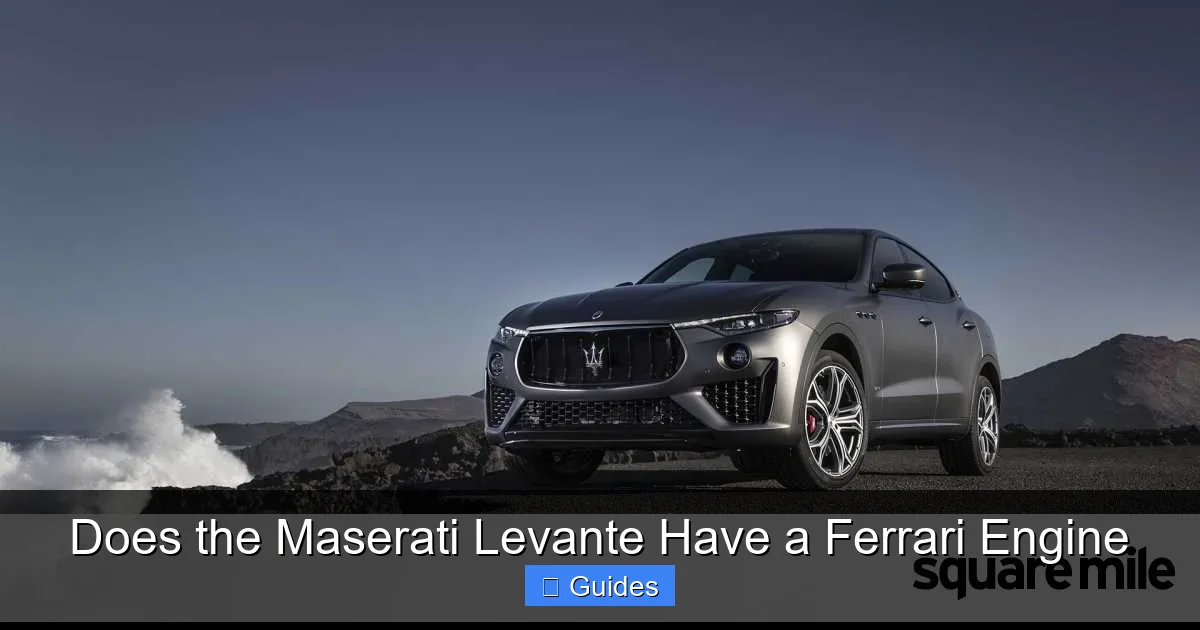
Launched in 2016, the Maserati Levante was a game-changer for the brand. It marked Maserati’s official entry into the luxury SUV segment, a move that surprised some purists but made perfect sense in the evolving automotive landscape. The Levante combines the practicality of an SUV with the soul of a sports car—offering all-wheel drive, a low center of gravity, and a driver-focused cockpit.
Available in multiple trims—including the base Levante, Levante S, Levante GTS, and the top-tier Levante Trofeo—the SUV caters to a wide range of buyers. From daily commuters who want a touch of Italian elegance to performance enthusiasts craving thrilling acceleration, the Levante aims to deliver. But what truly sets it apart is its powertrain. Under the long hood lies a range of twin-turbocharged engines that promise both power and refinement.
Engine Options Across the Levante Lineup
The Levante offers three main engine variants, all developed by Maserati:
- 3.0L Twin-Turbo V6: Found in the base Levante and Levante S, this engine produces between 345 and 424 horsepower, depending on tuning. It’s smooth, responsive, and delivers strong mid-range torque—perfect for both city driving and highway cruising.
- 3.8L Twin-Turbo V8: Available in the Levante GTS and Levante Trofeo, this larger engine pushes out 523 to 580 horsepower. The V8 is where the Levante truly shines, offering supercar-like acceleration and a spine-tingling exhaust note.
- Hybrid Variant: In recent years, Maserati introduced a mild-hybrid version of the 3.0L V6, improving fuel efficiency without sacrificing performance. This reflects the brand’s shift toward electrification.
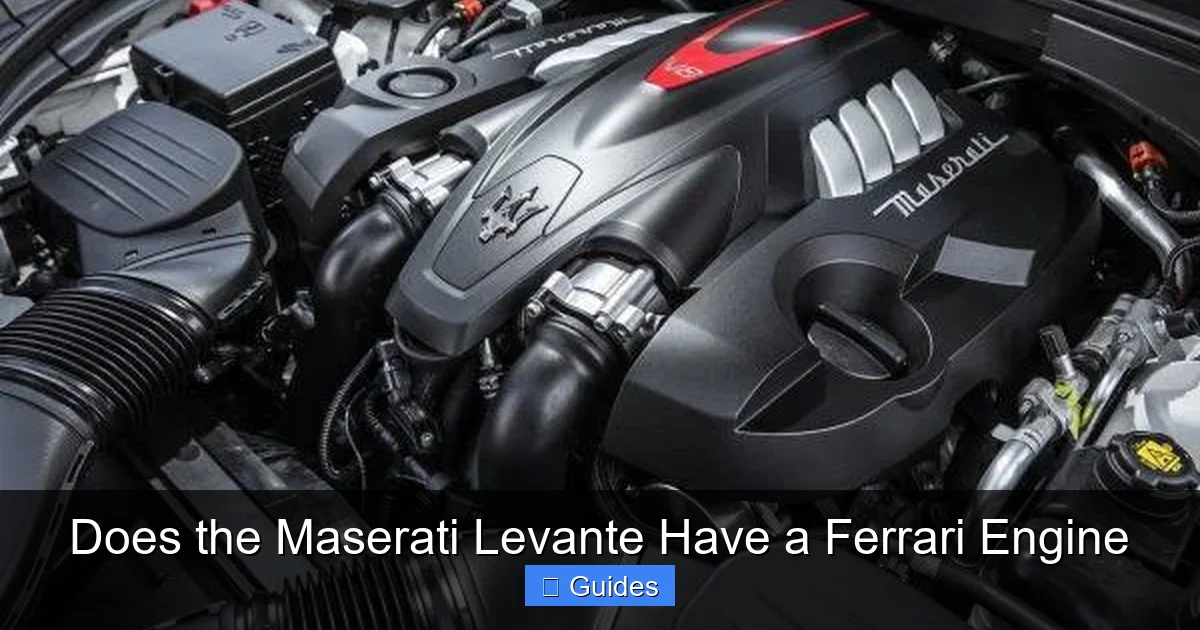
All these engines are built at Maserati’s headquarters in Modena, Italy—the same city that houses Ferrari’s Maranello factory. This geographic proximity has fueled speculation about shared engineering, but the reality is more about cultural and technical synergy than direct component sharing.
Visual guide about Does the Maserati Levante Have a Ferrari Engine
Image source: cdn.shortpixel.ai
To understand why people ask if the Levante has a Ferrari engine, we need to look at the intertwined history of these two brands. Both Maserati and Ferrari were acquired by Fiat in the 1990s, bringing them under the same corporate umbrella. For a time, Ferrari even managed Maserati, with Luca di Montezemolo—then CEO of Ferrari—taking the helm at Maserati in 1999.
During this period, there was significant cross-pollination of ideas, technology, and talent. Ferrari engineers helped modernize Maserati’s production processes, and some early Maserati models, like the 3200 GT, used Ferrari-derived engines. However, this practice ended in the mid-2000s. By the time the Levante was developed, Maserati had established its own engineering division and powertrain development team.
Why the Confusion Exists
So why do so many people believe the Levante has a Ferrari engine? There are a few reasons:
- Sound: The Levante’s exhaust note is deep, throaty, and unmistakably Italian. It’s often compared to Ferrari’s signature roar, especially in the V8 models. This auditory similarity fuels the myth.
- Performance Numbers: The Levante Trofeo can accelerate from 0 to 60 mph in just 3.8 seconds—on par with many Ferraris. Such performance naturally invites comparisons.
- Brand Prestige: Both brands are symbols of Italian luxury and performance. When a Maserati performs like a sports car, it’s easy to assume Ferrari had a hand in it.
- Marketing and Media: Articles, forums, and even some dealerships have occasionally blurred the lines, suggesting a Ferrari connection to boost appeal.
But the truth is clear: the engines in the Levante are 100% Maserati. They’re designed, developed, and built by Maserati engineers, using proprietary technology and tuning.
Engineering the Levante’s Powertrain: Maserati’s In-House Expertise
Visual guide about Does the Maserati Levante Have a Ferrari Engine
Image source: s1.cdn.autoevolution.com
Maserati has made significant investments in its engineering capabilities over the past two decades. The company’s powertrain division, based in Modena, has developed a reputation for creating high-performance engines that balance power, efficiency, and driving pleasure. The Levante’s engines are a testament to this expertise.
The 3.0L V6: A Modern Workhorse
The 3.0L twin-turbo V6 is a marvel of modern engineering. It features direct fuel injection, variable valve timing, and a compact design that maximizes power while minimizing weight. In the Levante S, this engine produces 424 horsepower and 406 lb-ft of torque, enabling a 0-60 mph time of around 5.0 seconds. That’s seriously quick for a 4,800-pound SUV.
What’s impressive is how smoothly it delivers power. Unlike older turbocharged engines that suffered from lag, the Levante’s V6 responds instantly to throttle input. This is thanks to advanced turbocharging technology and precise engine management systems. The result is a driving experience that feels more like a sports sedan than a traditional SUV.
The 3.8L V8: Born for Performance
The 3.8L V8 is where Maserati truly flexes its muscles. Developed specifically for high-performance applications, this engine is used in the Levante GTS and Trofeo models. With 580 horsepower and 538 lb-ft of torque, the Trofeo version is one of the fastest SUVs on the market.
But it’s not just about brute force. The V8 is finely tuned for balance and responsiveness. The exhaust system is engineered to produce a rich, layered sound that changes with engine load—quiet and refined at idle, then erupting into a symphony of noise under acceleration. This attention to acoustic detail is a hallmark of Italian performance cars, and it’s something Maserati has mastered.
Transmission and Drivetrain
All Levante models come with an 8-speed ZF automatic transmission, known for its smoothness and quick shift times. The all-wheel-drive system is biased toward the rear wheels under normal conditions, but can send up to 50% of power to the front when needed. This setup enhances handling and gives the Levante a sporty, rear-wheel-drive feel.
Maserati also offers optional features like adaptive air suspension, active dampers, and torque vectoring, all of which contribute to the Levante’s impressive dynamics. These systems work together to keep the SUV planted during hard cornering and comfortable over rough roads.
The Ferrari Connection: Influence Without Direct Engineering
While the Levante doesn’t use a Ferrari engine, it’s undeniable that Ferrari’s influence is felt in its design and performance philosophy. Both brands share a commitment to driver engagement, emotional appeal, and Italian craftsmanship. This cultural overlap is what makes the Levante feel so special.
The Levante’s exterior design, with its long hood, short overhangs, and muscular fenders, echoes the proportions of a sports car. Inside, the cabin is lined with premium materials—polished wood, soft leather, and aluminum trim—creating an atmosphere of luxury and performance. The steering wheel is thick and grippy, the seats are supportive, and the controls are intuitive. It’s a driver’s car at heart.
Tuning and Sound Engineering
One area where Ferrari’s influence is most apparent is in the Levante’s exhaust note. Maserati’s engineers spent countless hours tuning the sound to be both aggressive and refined. The result is an exhaust that barks on startup, growls under acceleration, and pops on deceleration—just like a Ferrari. This isn’t a coincidence. Maserati’s sound team includes engineers with experience at Ferrari and other high-performance brands.
Performance DNA
Even without a Ferrari engine, the Levante inherits a performance DNA from its Italian roots. The suspension is tuned for agility, the steering is precise, and the brakes are strong. The Trofeo model, in particular, feels like a sports car in SUV clothing. It corners flat, accelerates hard, and stops quickly—all traits associated with Ferrari’s engineering philosophy.
Myth vs. Reality: Setting the Record Straight
Let’s address the big question head-on: Does the Maserati Levante have a Ferrari engine? The answer is a clear and definitive no. The engines are designed, built, and tuned by Maserati. They are not sourced from Ferrari, nor are they based on Ferrari blueprints.
However, this doesn’t diminish the Levante’s performance or appeal. In fact, it highlights Maserati’s ability to create world-class powertrains on its own. The brand has evolved from relying on outside engineering to becoming a leader in high-performance SUV development.
Why It Matters
Understanding the difference between myth and reality is important for several reasons:
- Accurate Expectations: Buyers should know what they’re getting. The Levante is a Maserati through and through, with its own unique character.
- Brand Identity: Maserati deserves credit for its engineering achievements. Attributing its success to Ferrari undermines the brand’s progress.
- Future Development: As Maserati moves toward electrification with models like the Grecale and the upcoming electric Levante, it’s building a new identity—one that’s distinct from Ferrari.
The Future: Electrification and Beyond
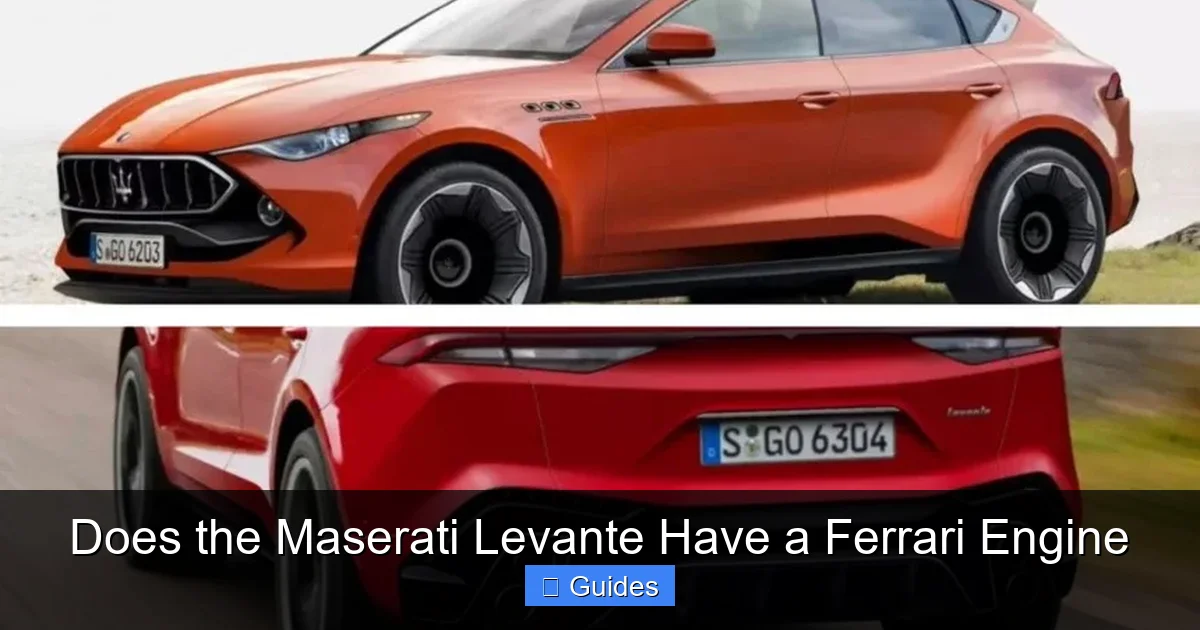
The automotive world is changing, and Maserati is adapting. The brand has announced plans to electrify its entire lineup by 2025. The next-generation Levante is expected to offer hybrid and fully electric variants, marking a shift away from traditional internal combustion engines.
This move reflects broader industry trends and environmental concerns. While purists may mourn the loss of roaring V8s, electrification offers new opportunities for performance. Electric motors deliver instant torque, silent operation, and impressive acceleration—all while reducing emissions.
What This Means for the Ferrari Connection
As Maserati embraces electrification, the historical ties to Ferrari will likely fade further. Future Levante models may share battery technology or software with other Stellantis brands, but the direct engineering links to Ferrari will be minimal. This is a natural evolution for a brand that’s carving out its own path in the luxury performance market.
Conclusion: A Maserati, Not a Ferrari—And That’s Okay
So, does the Maserati Levante have a Ferrari engine? No. But that doesn’t make it any less impressive. The Levante is a testament to Maserati’s engineering prowess, blending luxury, performance, and Italian style into a compelling package. Its engines are powerful, its handling is sharp, and its presence is undeniable.
While the Ferrari connection is more about heritage and inspiration than actual hardware, it’s part of what makes the Levante so captivating. It’s a car that honors its roots while pushing forward into the future. Whether you’re drawn to its sound, its speed, or its sophistication, the Levante stands on its own as a true Italian performance SUV.
In the end, the question isn’t whether it has a Ferrari engine—it’s whether it delivers the thrill, emotion, and craftsmanship that define Italian automotive excellence. And on that front, the Maserati Levante more than delivers.
Frequently Asked Questions
Does the Maserati Levante use a Ferrari engine?
No, the Maserati Levante does not use a Ferrari engine. All engines are designed, developed, and manufactured by Maserati. While both brands share Italian heritage and performance DNA, the Levante’s powertrains are entirely Maserati-built.
What engines are in the Maserati Levante?
The Levante offers a 3.0L twin-turbo V6 (345–424 hp), a 3.8L twin-turbo V8 (523–580 hp), and a mild-hybrid version of the V6. All are Maserati engines produced in Modena, Italy.
Is the Levante’s V8 based on a Ferrari engine?
No, the 3.8L V8 in the Levante is not based on a Ferrari engine. It was developed independently by Maserati, though it shares some design philosophies common to Italian performance engines.
Why does the Levante sound like a Ferrari?
The Levante’s exhaust note is intentionally tuned to mimic the deep, aggressive sound of Italian sports cars. Maserati’s sound engineers, some with Ferrari experience, crafted the acoustics to enhance the driving experience.
Will future Maserati models use Ferrari engines?
Unlikely. Maserati is focusing on its own hybrid and electric powertrains. While Stellantis may share some technology across brands, Maserati is building its own future without relying on Ferrari engines.
How fast is the Maserati Levante Trofeo?
The Levante Trofeo accelerates from 0 to 60 mph in just 3.8 seconds and has a top speed of 186 mph, making it one of the fastest SUVs in its class—despite not using a Ferrari engine.

At CarLegit, we believe information should be clear, factual, and genuinely helpful. That’s why every guide, review, and update on our website is created with care, research, and a strong focus on user experience.