
Owning a Maserati isn’t just about the sticker price—monthly costs include financing, insurance, fuel, and maintenance. Depending on the model and your financial setup, expect to pay anywhere from $1,500 to $4,000+ per month. This guide breaks down all the expenses so you can plan smartly.
So, you’ve been dreaming of slipping behind the wheel of a Maserati—the sleek lines, the throaty roar of the engine, the instant recognition that comes with that trident logo. It’s not just a car; it’s a statement. But before you sign on the dotted line, there’s one big question: How much does a Maserati cost per month?
The short answer? A lot more than you might think.
While the upfront price tag is the first thing that grabs your attention, the real story unfolds in your monthly budget. From loan payments and insurance to fuel and unexpected repairs, owning a Maserati is a long-term financial commitment. And unlike buying a Toyota or Honda, where costs are predictable and manageable, Italian luxury performance comes with Italian-level expenses.
This guide will walk you through every dollar you’ll likely spend each month on a Maserati—whether you’re eyeing a used Ghibli, a brand-new Levante SUV, or the jaw-dropping MC20 supercar. We’ll break down financing options, insurance premiums, fuel economy, maintenance schedules, and even depreciation. By the end, you’ll have a clear picture of what it really takes to keep that Maserati in your driveway—and whether it fits your lifestyle and wallet.
Let’s dive in.
In This Article
- 1 Key Takeaways
- 2 📑 Table of Contents
- 3 Understanding the Base Price of a Maserati
- 4 Monthly Financing and Leasing Options
- 5 Insurance Costs: A Major Monthly Expense
- 6 Fuel and Maintenance: The Hidden Monthly Costs
- 7 Depreciation and Resale Value
- 8 Total Monthly Cost: Putting It All Together
- 9 Final Tips for Managing Your Maserati Monthly Cost
- 10 Frequently Asked Questions
Key Takeaways
- Maserati monthly payments vary widely: From around $1,200 for a used Ghibli to over $3,500 for a new MC20, depending on loan terms and down payment.
- Insurance is significantly higher than average: Premiums can range from $300 to $800+ per month due to the car’s high value, performance, and repair costs.
- Fuel efficiency is low: Most Maseratis get 15–20 MPG combined, meaning fuel costs can easily exceed $200–$400 monthly for regular drivers.
- Maintenance and repairs are costly: Routine service starts at $500 per visit, and major repairs can run into thousands—budget $100–$300/month for upkeep.
- Depreciation hits hard: Maseratis lose value quickly—up to 50% in the first three years—so leasing may be a smarter financial move for some buyers.
- Optional add-ons increase costs: Upgrades like carbon ceramic brakes, premium interiors, or track packages can add $10,000–$30,000+ to the purchase price.
- Total monthly cost often exceeds $2,500: When you combine payment, insurance, fuel, and maintenance, most owners spend well over $2,500 per month.
📑 Table of Contents
Understanding the Base Price of a Maserati
Before we talk monthly costs, let’s start with the foundation: the purchase price. Maserati offers a range of models, each with its own price point, and that directly affects your monthly payment.
The entry-level Maserati Ghibli starts around $78,000 for a new model. That’s already well above the average new car price in the U.S., which hovers around $48,000. Step up to the Levante SUV, and you’re looking at $85,000 to start. The Quattroporte sedan begins near $110,000, and the stunning MC20 supercar? That one starts at a cool $215,000.
Used models can offer some relief. A 2020 Ghibli might be available for $55,000–$65,000, depending on mileage and condition. But even then, you’re still paying a premium compared to other luxury sedans like the BMW 5 Series or Mercedes E-Class.
Now, here’s the kicker: Maseratis depreciate fast. According to industry data, a new Maserati can lose up to 30% of its value in the first year and nearly 50% by year three. That means if you buy a $100,000 Quattroporte, it could be worth just $50,000 after 36 months. This rapid depreciation impacts not only resale value but also lease terms and insurance costs.
So why does this matter for your monthly budget? Because the higher the purchase price, the higher your loan payment—even with a sizable down payment. And if you’re leasing, that depreciation is baked into your monthly fee.
New vs. Used: Which Is More Affordable Monthly?
Let’s compare two scenarios: buying a new Ghibli versus a used one.
For a new 2024 Ghibli ($78,000), with a 20% down payment ($15,600) and a 60-month loan at 6% interest, your monthly payment would be approximately $1,250.
Now, take a used 2020 Ghibli priced at $60,000. With the same 20% down ($12,000) and 6% interest over 60 months, your payment drops to about $920 per month.
That’s a difference of $330 per month—over $3,900 a year. Over five years, you’d save nearly $20,000 by going used.
But there’s a trade-off. Used cars may have higher maintenance costs, especially if they’re out of warranty. A new Maserati comes with a 4-year/50,000-mile basic warranty, which can ease the burden of early repairs. Used models may require immediate attention to things like brakes, suspension, or electronics—all of which can be pricey.
Still, for many buyers, the monthly savings of a used Maserati make it the smarter financial choice—especially if you plan to keep the car for several years.
Optional Features That Drive Up the Price
Here’s where things can get sneaky. The base price of a Maserati is just the beginning. Dealers love to upsell, and Maserati offers a long list of optional packages and features.
Want the premium Bowers & Wilkins sound system? That’s $3,500. How about the carbon fiber interior trim? Another $2,500. Adaptive cruise control, lane-keeping assist, and a 360-degree camera? That tech package adds $4,000.
Then there are performance upgrades. The Ghibli Trofeo, for example, comes with a twin-turbo V8 and all-wheel drive—pushing the price from $78,000 to over $110,000. The MC20 can easily exceed $250,000 with options like the track package, carbon fiber body panels, and custom paint.
These add-ons don’t just increase the purchase price—they also raise your monthly payment, insurance premium, and potential repair costs. A car with more electronics and performance parts is more complex and expensive to fix.
So before you say “yes” to every shiny option, ask yourself: Do I really need this? Or am I paying for prestige I might not use?
Monthly Financing and Leasing Options
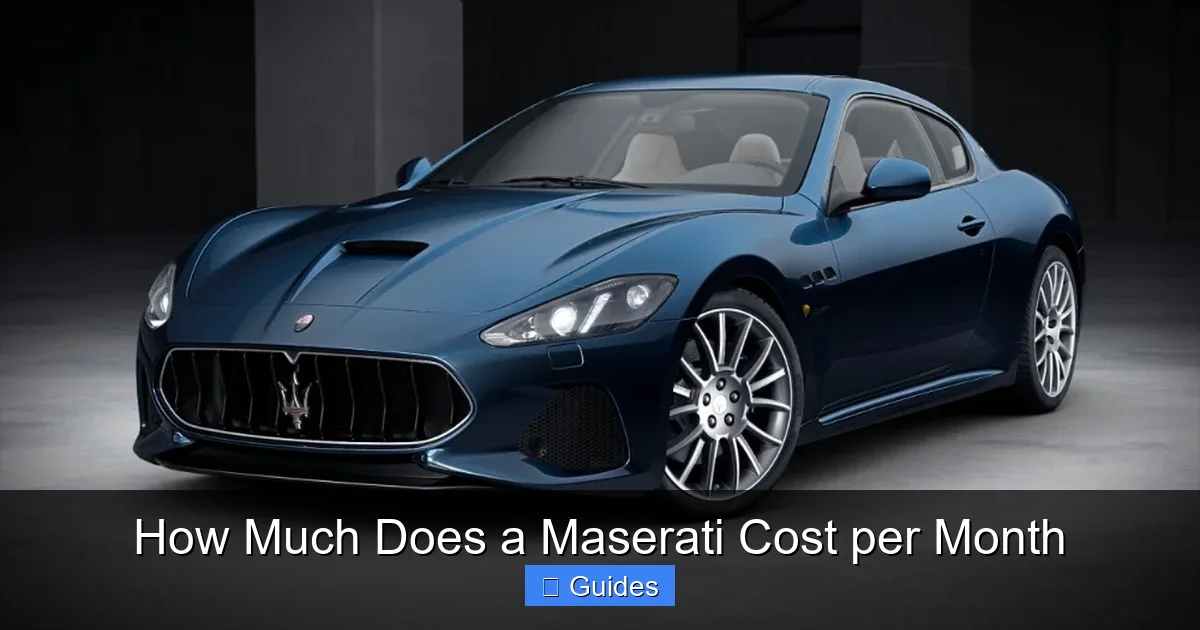
Visual guide about How Much Does a Maserati Cost per Month
Image source: i.pinimg.com
Now that we’ve covered the price, let’s talk about how you’ll pay for it. Most buyers don’t pay cash—they finance or lease. And each option has a big impact on your monthly Maserati cost.
Financing: Owning Your Maserati
Financing means you’re taking out a loan to buy the car, and you’ll own it once the loan is paid off. This is the most common route for buyers who plan to keep the car long-term.
Let’s look at a few examples:
– **New Ghibli ($78,000):** 20% down, 60-month loan at 6% = ~$1,250/month
– **Used Levante ($70,000):** 15% down, 72-month loan at 7% = ~$1,050/month
– **New MC20 ($215,000):** 25% down, 60-month loan at 5.5% = ~$3,200/month
As you can see, even with a decent down payment, monthly payments can easily exceed $1,000—and that’s before taxes, fees, and insurance.
Interest rates also play a big role. If you have excellent credit (720+), you might qualify for rates as low as 4–5%. But if your credit is fair (650–700), expect 7–9%. That difference can add hundreds to your monthly payment over time.
Pro tip: Shop around for financing. Don’t just accept the dealer’s offer. Credit unions and online lenders often have better rates than dealerships.
Leasing: Lower Payments, But No Ownership
Leasing is popular among luxury car buyers because it offers lower monthly payments and the chance to drive a new Maserati every few years.
With a lease, you’re essentially renting the car for 24 to 36 months. You pay for the vehicle’s depreciation during that time, plus fees and interest.
For example, a 36-month lease on a new Ghibli might cost $1,100–$1,400 per month with $5,000 due at signing. That’s lower than financing, but you don’t own the car at the end.
Leases also come with restrictions: mileage limits (usually 10,000–15,000 miles per year), wear-and-tear fees, and no customization. Exceed the mileage? You’ll pay $0.25–$0.50 per extra mile.
But for some, leasing is the best way to enjoy a Maserati without the long-term financial burden. Just remember: you’re always making payments. There’s no equity buildup.
Down Payment Impact on Monthly Cost
The size of your down payment can dramatically affect your monthly payment. A larger down payment reduces the loan amount, which lowers your monthly cost and total interest paid.
Let’s say you’re buying a $80,000 Ghibli with a 60-month loan at 6%.
– 10% down ($8,000): ~$1,400/month
– 20% down ($16,000): ~$1,250/month
– 30% down ($24,000): ~$1,100/month
That’s a $300 difference between 10% and 30% down. Over five years, you’d save over $18,000 in payments and interest.
If you can afford it, putting down 20–30% is ideal. It also helps you avoid being “upside down” on your loan—owing more than the car is worth.
Insurance Costs: A Major Monthly Expense
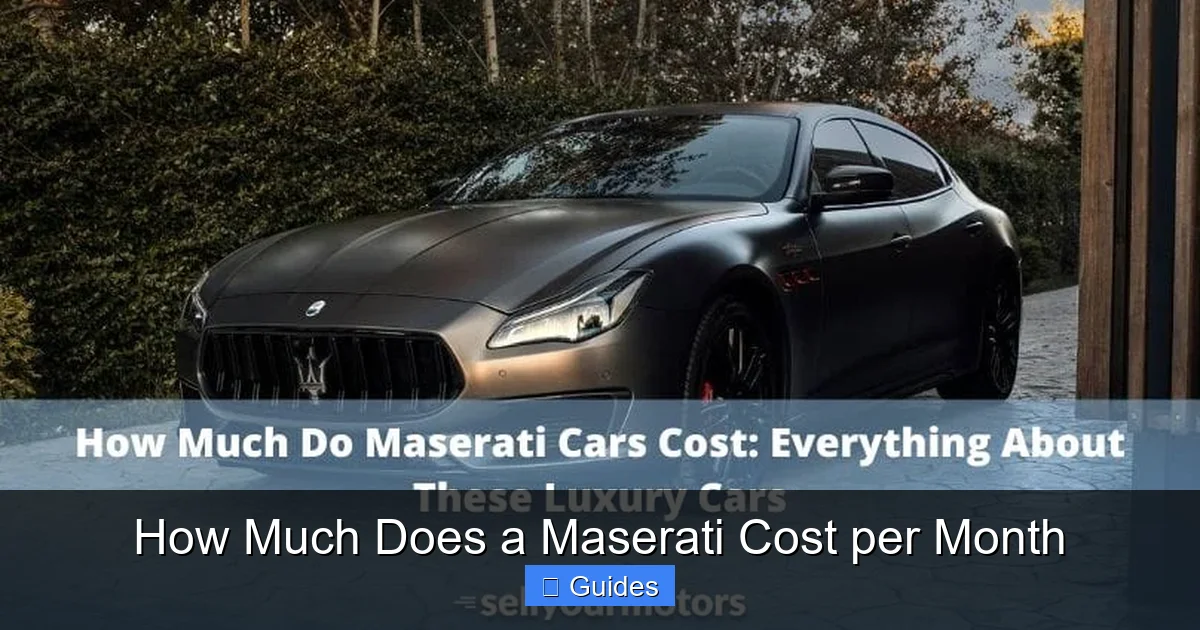
Visual guide about How Much Does a Maserati Cost per Month
Image source: blog.sellyourmotors.com
Here’s a hard truth: insuring a Maserati is expensive. Very expensive.
Because Maseratis are high-performance, high-value vehicles, insurance companies see them as high-risk. Repair costs are steep, theft rates are higher than average, and the likelihood of speeding or aggressive driving increases with the power under the hood.
Average Monthly Insurance Premiums
According to insurance data, the average monthly cost to insure a Maserati ranges from $300 to $800+, depending on the model, driver profile, and location.
Let’s break it down:
– **Ghibli:** $350–$500/month
– **Levante:** $400–$600/month
– **Quattroporte:** $500–$700/month
– **MC20:** $600–$800+/month
These are national averages. In high-risk areas like New York, California, or Florida, premiums can be even higher. Young drivers (under 25) or those with a history of accidents or tickets will pay the most.
Factors That Affect Your Insurance Rate
Several things influence how much you’ll pay:
– **Age and driving record:** Younger, less experienced drivers pay more. A clean record helps, but even safe drivers pay a premium for luxury cars.
– **Location:** Urban areas with high traffic and theft rates cost more to insure.
– **Coverage level:** Full coverage (liability, collision, comprehensive) is required if you’re financing or leasing. Minimum liability only is cheaper but risky.
– **Deductible:** A higher deductible (e.g., $1,000 vs. $500) lowers your premium but increases out-of-pocket costs if you file a claim.
– **Security features:** Cars with alarms, GPS tracking, and immobilizers may qualify for discounts.
Tips to Lower Your Insurance Cost
While you can’t avoid high premiums entirely, there are ways to reduce them:
– **Bundle policies:** Combine auto, home, or renters insurance with the same provider for a discount.
– **Take a defensive driving course:** Some insurers offer 5–10% off for completing an approved course.
– **Increase your deductible:** If you can afford it, raising your deductible from $500 to $1,000 can save $50–$100 per month.
– **Shop around:** Get quotes from at least three insurers. Companies like GEICO, Progressive, and State Farm may offer better rates than luxury-focused insurers.
– **Consider usage-based insurance:** Programs that track your driving habits (speed, braking, mileage) can reward safe drivers with lower rates.
Remember: the cheaper the car to insure, the lower your total monthly Maserati cost. Don’t skip this step in your budgeting.
Fuel and Maintenance: The Hidden Monthly Costs
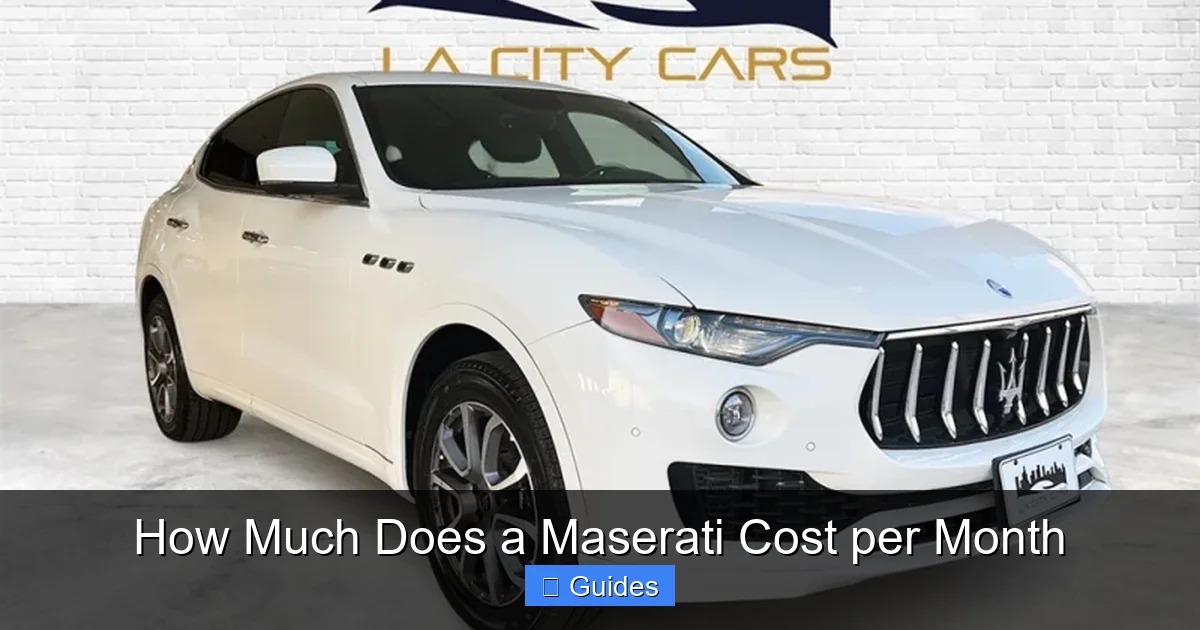
Visual guide about How Much Does a Maserati Cost per Month
Image source: lacitycars.com
You’ve got your payment and insurance covered. But what about the day-to-day costs of driving a Maserati? Fuel and maintenance are often underestimated—but they add up fast.
Fuel Economy: Not Exactly Efficient
Maseratis are built for performance, not fuel efficiency. Most models get between 15 and 20 miles per gallon combined.
Let’s do the math. If you drive 15,000 miles per year (about 1,250 miles per month) and gas costs $3.50 per gallon:
– At 15 MPG: 1,250 miles ÷ 15 = 83.3 gallons × $3.50 = ~$292/month
– At 20 MPG: 1,250 ÷ 20 = 62.5 gallons × $3.50 = ~$219/month
So, fuel alone could cost you $220–$300 per month. That’s more than some people spend on their car payment.
And if you drive more—say, 20,000 miles a year—your fuel cost jumps to $350–$400/month.
Maintenance and Repairs: Expect the Unexpected
Maseratis require specialized care. Parts are expensive, and labor rates at dealerships are high. Even routine maintenance can sting.
Here’s what to expect:
– **Oil change:** $150–$250 (synthetic oil required)
– **Brake pads and rotors:** $800–$1,500 (especially if you have carbon ceramics)
– **Tire replacement:** $300–$600 per tire (high-performance tires wear faster)
– **Annual service:** $500–$1,000+
And that’s just the basics. Electrical issues, transmission problems, or suspension repairs can run $2,000–$5,000 or more.
Warranty and Extended Coverage
A new Maserati comes with a 4-year/50,000-mile basic warranty and 4-year/50,000-mile powertrain coverage. That covers major repairs during the first few years.
But once the warranty expires, you’re on your own—unless you buy an extended warranty.
Extended plans can cost $3,000–$6,000 and cover 3–5 additional years. They’re controversial: some say they’re worth it for peace of mind; others call them a waste of money.
If you plan to keep the car long-term, an extended warranty might be smart. But if you’re leasing or trading in after 3–4 years, you probably don’t need it.
Budgeting for Maintenance
To avoid surprise bills, set aside $100–$300 per month for maintenance and repairs. This “maintenance fund” can cover oil changes, tire rotations, and small fixes before they become big problems.
Some owners join Maserati owner clubs or online forums to find trusted independent mechanics who charge less than dealerships. Just make sure any repair shop has experience with Italian luxury cars.
Depreciation and Resale Value
We mentioned earlier that Maseratis depreciate quickly. But how does that affect your monthly cost?
In short: it affects your net worth.
If you buy a $100,000 Maserati and it’s worth $50,000 after three years, you’ve lost $50,000 in value—even if you’ve only paid $30,000 in loan payments. That’s the hidden cost of ownership.
This is why leasing can be appealing. With a lease, you’re only paying for the depreciation during the lease term, not the entire car. At the end, you walk away—no resale hassle.
But if you buy, you’ll eventually have to sell or trade in. And because Maseratis don’t hold their value like Porsches or BMWs, you may owe more than the car is worth—known as being “upside down.”
For example, if your loan balance is $40,000 but the car is only worth $30,000, you’d need to pay $10,000 out of pocket to sell it.
To minimize this risk:
– Make a large down payment (20–30%)
– Choose a shorter loan term (48–60 months)
– Consider a model with better resale value (like the Ghibli over the MC20)
Total Monthly Cost: Putting It All Together
Now, let’s add it all up. What’s the real monthly cost of owning a Maserati?
Here’s a realistic breakdown for a new Ghibli:
– **Loan payment:** $1,250
– **Insurance:** $450
– **Fuel:** $250
– **Maintenance fund:** $150
– **Total:** ~$2,100/month
For a used Levante:
– **Loan payment:** $1,050
– **Insurance:** $500
– **Fuel:** $280
– **Maintenance fund:** $200
– **Total:** ~$2,030/month
And for a new MC20:
– **Loan payment:** $3,200
– **Insurance:** $700
– **Fuel:** $350
– **Maintenance fund:** $300
– **Total:** ~$4,550/month
As you can see, the total monthly cost of a Maserati often exceeds $2,000—and can easily top $4,000 for high-end models.
Is it worth it? That depends on your priorities. If driving a Maserati brings you joy, status, and performance you can’t get elsewhere, the cost may be justified. But if you’re stretching your budget or sacrificing other financial goals, it might be too much.
Final Tips for Managing Your Maserati Monthly Cost
Before you sign, here are a few final tips to keep your costs under control:
1. **Get pre-approved for financing.** Know your rate before you walk into the dealership.
2. **Negotiate the price.** Maserati dealers often have room to move, especially on older inventory.
3. **Avoid unnecessary add-ons.** Stick to the essentials.
4. **Shop insurance early.** Get quotes before you buy.
5. **Budget for the long haul.** Don’t just plan for the payment—plan for fuel, repairs, and depreciation.
6. **Consider leasing.** If you want lower payments and don’t mind not owning, leasing could be the way to go.
Owning a Maserati is a dream for many. But dreams come with responsibilities. By understanding the full cost—month after month—you can make a smart, informed decision that fits your life and your wallet.
Frequently Asked Questions
How much is a monthly payment on a Maserati?
A monthly payment on a Maserati typically ranges from $1,200 to $3,500, depending on the model, loan terms, down payment, and interest rate. Used models generally have lower payments than new ones.
Is it cheaper to lease or buy a Maserati?
Leasing usually has lower monthly payments than buying, but you don’t own the car at the end. Buying builds equity but comes with higher payments and long-term maintenance costs. The best choice depends on your financial goals and driving habits.
Why is Maserati insurance so expensive?
Maserati insurance is expensive because the cars are high-value, high-performance vehicles with costly repairs and higher theft rates. Insurers also consider the likelihood of aggressive driving, which increases risk.
How often does a Maserati need maintenance?
Maseratis require maintenance every 10,000 miles or once a year, whichever comes first. Routine service includes oil changes, brake inspections, and software updates. Major services may be needed every 30,000–50,000 miles.
Can I lower my Maserati’s monthly cost?
Yes. You can lower costs by choosing a used model, making a larger down payment, shopping for better insurance rates, and setting aside money for maintenance. Leasing is also an option for lower monthly payments.
Do Maseratis break down a lot?
Maseratis are reliable when properly maintained, but they can be prone to electrical and software issues. Regular servicing and using qualified mechanics can help prevent major problems and costly repairs.

At CarLegit, we believe information should be clear, factual, and genuinely helpful. That’s why every guide, review, and update on our website is created with care, research, and a strong focus on user experience.