
Resetting the service suspension system on your Cadillac Escalade is essential for maintaining optimal ride quality and safety. This guide walks you through the process, explains common causes of the warning light, and offers practical tips to keep your suspension running smoothly.
In This Article
- 1 Key Takeaways
- 2 📑 Table of Contents
- 3 Understanding the Cadillac Escalade Suspension System
- 4 When Should You Reset the Service Suspension System?
- 5 Step-by-Step Guide to Resetting the Service Suspension System
- 6 Troubleshooting Common Reset Issues
- 7 Preventive Maintenance Tips
- 8 When to See a Professional
- 9 Conclusion
- 10 Frequently Asked Questions
- 10.1 How do I reset the service suspension system on a 2010 Cadillac Escalade?
- 10.2 Can I reset the suspension system without a scanner?
- 10.3 Why does the service suspension light keep coming back?
- 10.4 Is it safe to drive with the service suspension warning on?
- 10.5 How much does it cost to fix a Cadillac Escalade suspension system?
- 10.6 Can I replace the air springs myself?
Key Takeaways
- Understand the System: The Cadillac Escalade uses an advanced electronic suspension system that monitors ride height, damping, and load distribution.
- Warning Light Meaning: The “Service Suspension System” message indicates a fault that may affect handling, comfort, or safety.
- Reset Procedure Varies by Model Year: Steps differ slightly between older models (pre-2015) and newer ones (2015+), so check your owner’s manual.
- Use OBD2 Scanner for Accuracy: A diagnostic tool helps identify the root cause before attempting a reset.
- Check Air Suspension Components: Leaks, worn air springs, or faulty compressors often trigger the warning.
- Professional Help When Needed: If the light returns after reset, consult a certified technician to avoid further damage.
- Preventive Maintenance Matters: Regular inspections and fluid checks can prevent future suspension issues.
📑 Table of Contents
Understanding the Cadillac Escalade Suspension System
The Cadillac Escalade is known for its luxurious ride, smooth handling, and commanding presence on the road. A big part of that experience comes from its sophisticated suspension system. Unlike traditional coil springs and shock absorbers, many Escalade models—especially those from 2007 onward—come equipped with an advanced electronic air suspension system. This system automatically adjusts ride height and damping based on driving conditions, load, and road surface.
The air suspension uses a network of sensors, air springs (also called airbags), a compressor, and an electronic control module (ECM) to maintain a consistent ride height. Whether you’re towing a trailer, carrying heavy cargo, or cruising down the highway, the system works behind the scenes to keep the vehicle level and comfortable. However, like any complex system, it can develop issues over time. When something goes wrong, the vehicle’s onboard computer triggers a warning light on the dashboard—most commonly, the “Service Suspension System” message.
How the System Works
The electronic suspension system constantly monitors the vehicle’s height using ride height sensors mounted at each corner. These sensors send real-time data to the suspension control module. If the system detects that one corner is lower than the others—perhaps due to a heavy load or a leak—it activates the air compressor to inflate the air springs and restore balance. The compressor draws air, pressurizes it, and sends it through lines to the air springs, which expand to lift the vehicle.
In addition to maintaining ride height, some Escalade models feature adaptive damping. This means the shock absorbers can adjust their firmness on the fly. For example, during aggressive cornering or sudden braking, the system stiffens the shocks to reduce body roll. On rough roads, it softens them for a smoother ride. All of this happens seamlessly, often without the driver even noticing—until a problem arises.
Common Causes of the “Service Suspension System” Warning
When the dashboard displays the “Service Suspension System” message, it’s the vehicle’s way of saying, “Hey, something’s not right.” But what exactly could be causing it? The answer depends on the model year, mileage, and driving conditions. Here are the most common culprits:
- Air Spring Leaks: Over time, the rubber air springs can crack or develop leaks, especially in older vehicles or those frequently driven on rough roads. A small leak may cause the compressor to run constantly, leading to overheating or failure.
- Faulty Compressor: The air compressor is the heart of the system. If it fails, the vehicle can’t maintain proper ride height. Signs include a loud grinding noise, slow inflation, or the compressor not turning on at all.
- Sensor Malfunction: Ride height sensors can become dirty, misaligned, or electrically faulty. Even a small amount of dirt or corrosion can interfere with accurate readings.
- Electrical Issues: Wiring harnesses, connectors, or fuses related to the suspension system can degrade over time. A blown fuse or corroded connector may prevent the system from communicating properly.
- Control Module Failure: In rare cases, the suspension control module itself may fail. This is more common in vehicles with high mileage or those exposed to extreme temperatures.
- Low Battery Voltage: The suspension system requires stable voltage to operate. A weak battery or alternator issues can cause intermittent faults.
Understanding these potential causes is the first step toward diagnosing and fixing the issue. But before you start replacing parts, it’s important to reset the system—especially if the problem has been resolved or was a temporary glitch.
When Should You Reset the Service Suspension System?
Not every “Service Suspension System” warning requires a full repair. Sometimes, the issue is minor or temporary. For example, if you recently had your tires rotated or the vehicle was lifted on a hoist, the system might have registered an anomaly and triggered the warning. In these cases, a simple reset can clear the message and restore normal operation.
Visual guide about How to Reset Service Suspension System Cadillac Escalade
Image source: cdn.cartipsdaily.com
Other times, the warning appears after routine maintenance—like replacing a sensor or topping off the air suspension fluid. Even if the repair was successful, the system may still display the warning until it’s manually reset. Think of it like clearing a check engine light after fixing an oxygen sensor. The problem is gone, but the light stays on until you tell the computer to turn it off.
Signs That a Reset Is Appropriate
Before resetting the system, ask yourself: Has the underlying issue been resolved? If you’ve replaced a leaking air spring, fixed a wiring problem, or cleaned a dirty sensor, then yes—a reset is likely needed. But if the warning appeared out of the blue and you haven’t done any repairs, it’s best to diagnose the problem first.
Here are some scenarios where a reset makes sense:
- You’ve completed a repair related to the suspension system.
- The warning appeared after a software update or battery replacement.
- You’ve inspected the system and found no obvious faults (e.g., no leaks, compressor runs normally).
- The vehicle is riding normally, and there are no unusual noises or handling issues.
On the other hand, if the vehicle is sagging on one side, the compressor is running nonstop, or you hear hissing sounds, don’t just reset the system—address the root cause first. Resetting without fixing the problem is like turning off a fire alarm while the house is still burning.
Step-by-Step Guide to Resetting the Service Suspension System
Now that you understand when and why to reset the system, let’s walk through the actual process. The steps vary slightly depending on your Escalade’s model year and whether it has a traditional air suspension or the newer Magnetic Ride Control system. We’ll cover both scenarios to ensure you get the right instructions.
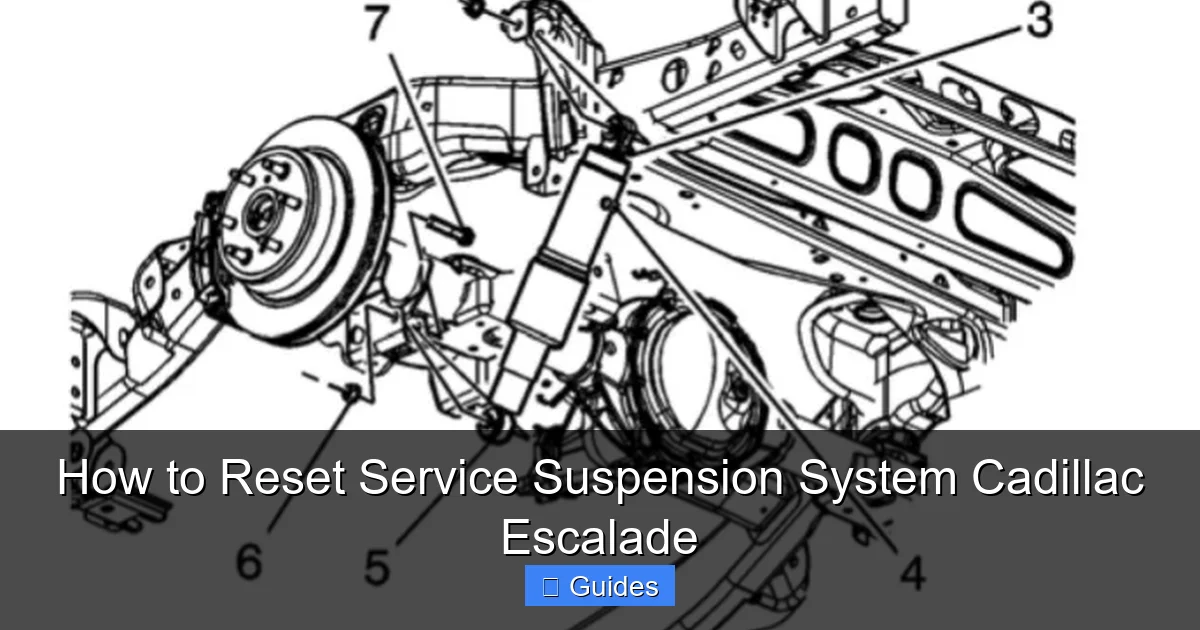
Visual guide about How to Reset Service Suspension System Cadillac Escalade
Image source: 2carpros.com
For 2007–2014 Cadillac Escalade (Traditional Air Suspension)
These models use a conventional air suspension with an air compressor, air springs, and a suspension control module. The reset process involves using the vehicle’s onboard diagnostics and a specific sequence of button presses.
- Turn the Ignition On: Insert the key and turn it to the “ON” position (do not start the engine). The dashboard lights should illuminate.
- Locate the Ride Height Control Switch: This is usually found on the center console, near the gear shifter. It has buttons labeled “UP,” “DOWN,” and sometimes “AUTO.”
- Press and Hold the “DOWN” Button: Hold it for about 10 seconds. You should hear the compressor activate briefly.
- Release and Wait: Let go of the button and wait 30 seconds. The system will recalibrate.
- Turn the Ignition Off: Turn the key back to the “OFF” position and wait another 30 seconds.
- Start the Engine: Turn the key to start the engine. The “Service Suspension System” light should be off. If it remains on, repeat the process or check for faults.
Pro Tip: If the light comes back on after driving a short distance, there may still be an underlying issue. Use an OBD2 scanner to check for trouble codes.
For 2015–2023 Cadillac Escalade (Magnetic Ride Control)
Newer Escalades use Magnetic Ride Control (MRC), which replaces air springs with magnetorheological dampers. These shocks contain fluid that changes viscosity when exposed to a magnetic field, allowing for instant damping adjustments. The reset process for MRC is different and often requires a diagnostic tool.
- Connect an OBD2 Scanner: Plug a compatible scanner into the OBD2 port (usually under the dashboard, near the steering column).
- Access the Suspension Menu: Navigate to the “Body” or “Chassis” section, then select “Suspension System.”
- Clear Fault Codes: Look for any stored trouble codes related to the suspension (e.g., C0569, C0570). Clear them using the scanner’s “Clear Codes” function.
- Perform a System Reset: Some scanners have a “Reset Suspension” or “Relearn Ride Height” option. Follow the on-screen prompts.
- Test Drive: Take the vehicle for a short drive (5–10 minutes) to allow the system to recalibrate. The warning light should disappear.
Note: If you don’t have an OBD2 scanner, you can visit a Cadillac dealership or trusted mechanic. They have the specialized tools needed to reset the MRC system.
Alternative Method: Battery Disconnect (All Models)
If you don’t have access to a scanner or the button method doesn’t work, you can try resetting the system by disconnecting the battery. This forces the vehicle’s computer to reboot, which may clear temporary faults.
- Turn Off the Engine: Make sure the vehicle is completely off and the key is removed.
- Disconnect the Negative Battery Cable: Use a wrench to loosen the nut on the negative (black) terminal and remove the cable.
- Wait 15–30 Minutes: This allows the vehicle’s capacitors to discharge and the system to fully reset.
- Reconnect the Battery: Reattach the negative cable and tighten the nut securely.
- Start the Engine: Turn the key and start the vehicle. The warning light may be off, but monitor it over the next few drives.
Caution: Disconnecting the battery may reset other systems, including radio presets, clock, and adaptive transmission settings. Some vehicles may also require a throttle body relearn procedure.
Troubleshooting Common Reset Issues
Even with the right steps, resetting the service suspension system doesn’t always work the first time. Here are some common problems and how to fix them.
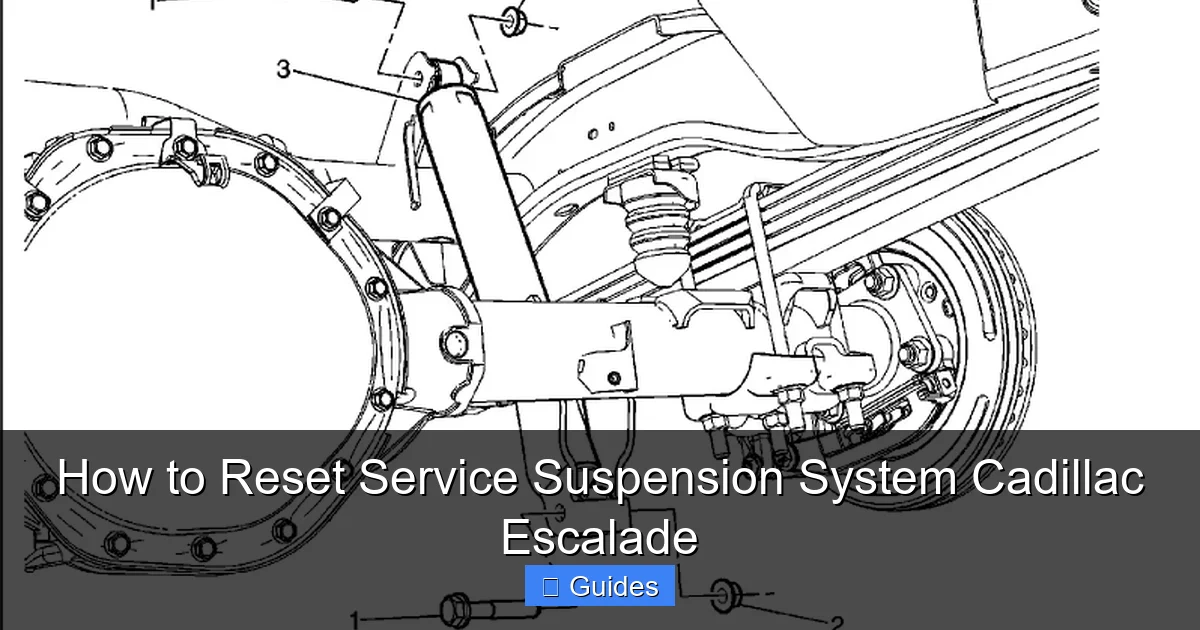
Visual guide about How to Reset Service Suspension System Cadillac Escalade
Image source: 2carpros.com
The Warning Light Won’t Turn Off
If the “Service Suspension System” light remains on after a reset, there’s likely an unresolved fault. Use an OBD2 scanner to read the trouble codes. Common codes include:
- C0569: Suspension system malfunction (general fault).
- C0570: Suspension system performance (ride height issue).
- C0571–C0574: Ride height sensor faults (front left, front right, rear left, rear right).
- C0575: Air compressor circuit malfunction.
Once you identify the code, you can focus your repair efforts. For example, a C0571 code points to a problem with the front left ride height sensor. Cleaning or replacing it may resolve the issue.
The Compressor Runs Constantly
If the air compressor runs nonstop after a reset, it’s usually a sign of a leak. Check the air springs, lines, and fittings for cracks or loose connections. Listen for hissing sounds near the wheels or under the vehicle. A simple soap-and-water test can help locate leaks—apply soapy water to suspected areas and look for bubbles.
The Vehicle Sags on One Side
A sagging corner indicates a failed air spring or a blocked air line. Inspect the air spring for visible damage. If it’s bulging, cracked, or deflated, it needs replacement. Also, check the air line for kinks or obstructions.
The Reset Procedure Doesn’t Work
If the button method or battery disconnect doesn’t clear the warning, the issue may be with the control module or wiring. In this case, professional diagnosis is recommended. A certified technician can perform a voltage test, inspect the harness, and verify module communication.
Preventive Maintenance Tips
The best way to avoid suspension problems is through regular maintenance. Here’s how to keep your Escalade’s suspension system in top shape.
Inspect Air Springs Annually
Check the air springs for cracks, bulges, or leaks. Look for dry rot, especially in older vehicles. Replace any damaged components before they fail completely.
Listen for Unusual Noises
Pay attention to sounds like hissing, grinding, or clunking. These can indicate leaks, compressor issues, or worn suspension parts.
Keep Sensors Clean
Dirt and debris can accumulate on ride height sensors. Clean them gently with a soft cloth and mild cleaner. Avoid using high-pressure water, which can damage electrical components.
Check Fluid Levels (If Applicable)
Some suspension systems use hydraulic fluid. Check the reservoir level and top off if needed. Use only the manufacturer-recommended fluid.
Drive Gently Over Potholes
Aggressive driving over rough terrain can damage suspension components. Slow down when encountering potholes, speed bumps, or uneven roads.
Schedule Regular Inspections
Include suspension checks in your routine maintenance schedule. A professional inspection every 15,000–20,000 miles can catch issues early.
When to See a Professional
While many suspension issues can be diagnosed and reset at home, some problems require expert attention. Here’s when to visit a Cadillac service center or certified mechanic:
- The warning light returns immediately after a reset.
- You hear loud noises from the compressor or suspension.
- The vehicle is severely sagging or uneven.
- You’re unsure how to interpret OBD2 codes.
- The suspension feels unusually stiff or bouncy.
Professional technicians have access to advanced diagnostic tools, genuine parts, and factory training. They can perform a thorough inspection, replace faulty components, and ensure the system is properly calibrated.
Conclusion
Resetting the service suspension system on your Cadillac Escalade is a manageable task—if you know what you’re doing. Whether you drive a classic 2007 model with air springs or a sleek 2023 with Magnetic Ride Control, understanding the system and following the right steps can save you time, money, and frustration.
Remember, the “Service Suspension System” warning is your vehicle’s way of asking for help. Don’t ignore it. Diagnose the issue, fix the root cause, and then reset the system to clear the message. With proper care and attention, your Escalade will continue to deliver the smooth, luxurious ride it’s known for—mile after mile.
Frequently Asked Questions
How do I reset the service suspension system on a 2010 Cadillac Escalade?
For a 2010 Escalade, turn the ignition to “ON,” press and hold the “DOWN” button on the ride height control switch for 10 seconds, wait 30 seconds, then turn the ignition off. Start the engine—the warning light should be off.
Can I reset the suspension system without a scanner?
Yes, older models (pre-2015) can often be reset using the ride height control buttons. Newer models with Magnetic Ride Control usually require an OBD2 scanner to clear codes and recalibrate the system.
Why does the service suspension light keep coming back?
If the light returns after a reset, there’s likely an unresolved fault—such as a leak, faulty sensor, or compressor issue. Use a scanner to read trouble codes and address the root cause.
Is it safe to drive with the service suspension warning on?
It depends. If the vehicle is riding normally and the compressor isn’t running constantly, short-term driving may be okay. However, continued use can lead to compressor failure or handling issues—get it checked soon.
How much does it cost to fix a Cadillac Escalade suspension system?
Costs vary widely. A simple sensor replacement may cost $100–$300, while a new air compressor or control module can run $500–$1,500 or more, including labor.
Can I replace the air springs myself?
Yes, if you’re mechanically inclined. Air spring replacement involves removing the wheel, disconnecting the air line, and unbolting the spring. However, proper alignment and system recalibration are essential—consider professional help if unsure.

At CarLegit, we believe information should be clear, factual, and genuinely helpful. That’s why every guide, review, and update on our website is created with care, research, and a strong focus on user experience.