
The 1967 Cadillac Coupe DeVille measures 224.5 inches (18.7 feet) in total length, making it one of the most spacious and elegant luxury coupes of its era. Known for its bold styling, smooth ride, and premium features, this classic American car continues to turn heads and captivate collectors worldwide.
In This Article
- 1 Key Takeaways
- 2 📑 Table of Contents
- 3 How Long Is a 1967 Cadillac Coupe DeVille? The Full Breakdown
- 4 The Dimensions of a Legend: Understanding the 1967 Cadillac Coupe DeVille
- 5 Design and Proportions: Why Size Mattered in the 1960s
- 6 Performance and Engineering: Powering the Giant
- 7 Cultural Impact: The 1967 Cadillac Coupe DeVille as a Symbol
- 8 Owning and Maintaining a 1967 Cadillac Coupe DeVille Today
- 9 Conclusion: More Than Just a Long Car
- 10 Frequently Asked Questions
- 10.1 How long is a 1967 Cadillac Coupe DeVille in feet?
- 10.2 What is the wheelbase of a 1967 Cadillac Coupe DeVille?
- 10.3 How much does a 1967 Cadillac Coupe DeVille weigh?
- 10.4 Can a 1967 Cadillac Coupe DeVille seat six people?
- 10.5 Is the 1967 Cadillac Coupe DeVille fuel efficient?
- 10.6 How much does a 1967 Cadillac Coupe DeVille cost today?
Key Takeaways
- Total Length: The 1967 Cadillac Coupe DeVille is 224.5 inches (18.7 feet) long, placing it among the longest production coupes of the 1960s.
- Wheelbase: It features a 129.5-inch wheelbase, contributing to its stable and comfortable ride quality.
- Design Legacy: The car’s long hood, sweeping roofline, and tailfins reflect the golden age of American automotive design.
- Interior Space: Its generous dimensions allow for a spacious cabin with seating for up to six passengers.
- Curb Weight: Weighing around 4,600 pounds, the Coupe DeVille combines size with power and luxury.
- Cultural Impact: The ’67 DeVille symbolizes 1960s American prosperity, innovation, and status.
- Collectibility: Today, well-maintained models are highly sought after by classic car enthusiasts and restorers.
📑 Table of Contents
- How Long Is a 1967 Cadillac Coupe DeVille? The Full Breakdown
- The Dimensions of a Legend: Understanding the 1967 Cadillac Coupe DeVille
- Design and Proportions: Why Size Mattered in the 1960s
- Performance and Engineering: Powering the Giant
- Cultural Impact: The 1967 Cadillac Coupe DeVille as a Symbol
- Owning and Maintaining a 1967 Cadillac Coupe DeVille Today
- Conclusion: More Than Just a Long Car
How Long Is a 1967 Cadillac Coupe DeVille? The Full Breakdown
If you’ve ever stood next to a 1967 Cadillac Coupe DeVille, you know it’s not just a car—it’s a statement. From its gleaming chrome accents to its sweeping tailfins, this vehicle exudes confidence and class. But beyond its dazzling appearance, one of the most impressive aspects of the ’67 DeVille is its sheer size. So, how long is a 1967 Cadillac Coupe DeVille exactly?
The answer is **224.5 inches**, or **18.7 feet** from bumper to bumper. That’s longer than many modern SUVs and even some full-size trucks. To put it in perspective, that’s about the length of a small school bus or two standard parking spaces end to end. This massive footprint wasn’t just for show—it was a deliberate design choice that reflected the values of the 1960s: space, comfort, and presence.
But length is just one part of the story. The 1967 Cadillac Coupe DeVille was built to dominate the road, both in size and in style. Its long wheelbase, wide stance, and luxurious interior made it a favorite among executives, celebrities, and anyone who wanted to arrive in grand fashion. Whether cruising down Rodeo Drive or parked outside a downtown hotel, the DeVille commanded attention.
In this guide, we’ll dive deep into the dimensions, design, and legacy of the 1967 Cadillac Coupe DeVille. You’ll learn not only how long it is, but why that length mattered—and why this car still matters today.
The Dimensions of a Legend: Understanding the 1967 Cadillac Coupe DeVille
Visual guide about How Long Is a 1967 Cadillac Coupe Deville
Image source: cdn.dealeraccelerate.com
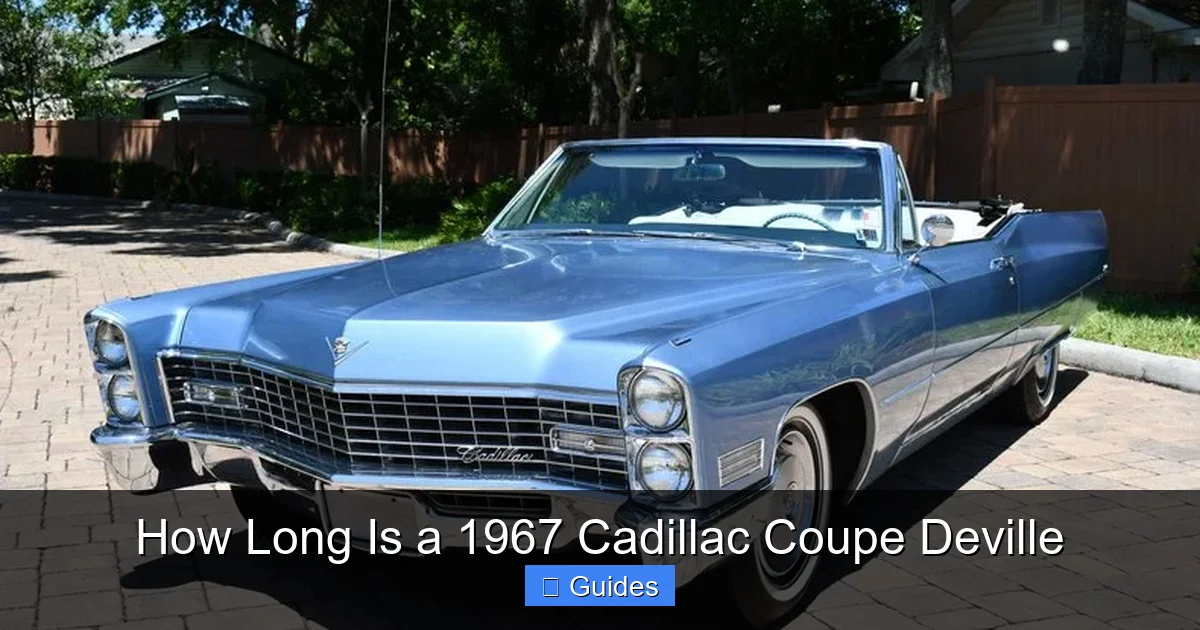
When it comes to classic American cars, few can match the presence of the 1967 Cadillac Coupe DeVille. Its dimensions are a key part of what makes it so unforgettable. Let’s break down the numbers and see what they mean in real-world terms.
Overall Length: 224.5 Inches
As mentioned, the total length of the 1967 Cadillac Coupe DeVille is 224.5 inches. That’s nearly 19 feet of American engineering and style. To visualize this, imagine a standard sedan like a Toyota Camry, which is about 192 inches long. The DeVille is over a foot longer—enough to make a noticeable difference in parking lots, garages, and driveways.
This length wasn’t accidental. Cadillac engineers and designers wanted a car that felt substantial, stable, and luxurious. A longer body allowed for more interior space, a smoother ride, and a more imposing silhouette. It also gave designers room to play with proportions—like the long hood and short deck that became a hallmark of 1960s luxury cars.
Wheelbase: 129.5 Inches
The wheelbase—the distance between the front and rear axles—is 129.5 inches. This is a critical measurement because it directly affects ride comfort and handling. A longer wheelbase generally means a smoother ride, as it reduces the impact of bumps and road imperfections.
For the 1967 Coupe DeVille, the 129.5-inch wheelbase was among the longest in its class. It contributed to the car’s famously smooth and floaty ride, often described as “riding on a cloud.” This was perfect for long highway trips or leisurely drives through the suburbs, where comfort was more important than sharp cornering.
Width and Height: A Commanding Presence
While length gets the most attention, the width and height of the 1967 DeVille are equally impressive. The car is 79.5 inches wide (about 6.6 feet) and 56.5 inches tall (just under 4.7 feet). That makes it wider than many modern luxury sedans and taller than some SUVs.
This generous width allows for a spacious interior with room for six passengers—three across the front and three in the back. The wide stance also improves stability, especially at highway speeds. And the height? It gives the car a regal, upright posture that makes drivers feel elevated—literally and figuratively.
Turning Radius and Maneuverability
With all this size, you might wonder: how easy is it to drive a 1967 Cadillac Coupe DeVille? The turning radius is about 22 feet, which means it needs plenty of space to make tight turns. Parallel parking? Let’s just say it’s not the car’s strong suit.
But in the 1960s, that wasn’t a problem. Wide streets, spacious driveways, and large parking lots were the norm. Drivers expected a car like the DeVille to be a statement piece, not a nimble city cruiser. Today, owners often joke that you need a spotter and a prayer to park it in a tight garage—but that’s part of the charm.
Design and Proportions: Why Size Mattered in the 1960s
Visual guide about How Long Is a 1967 Cadillac Coupe Deville
Image source: cdn.dealeraccelerate.com
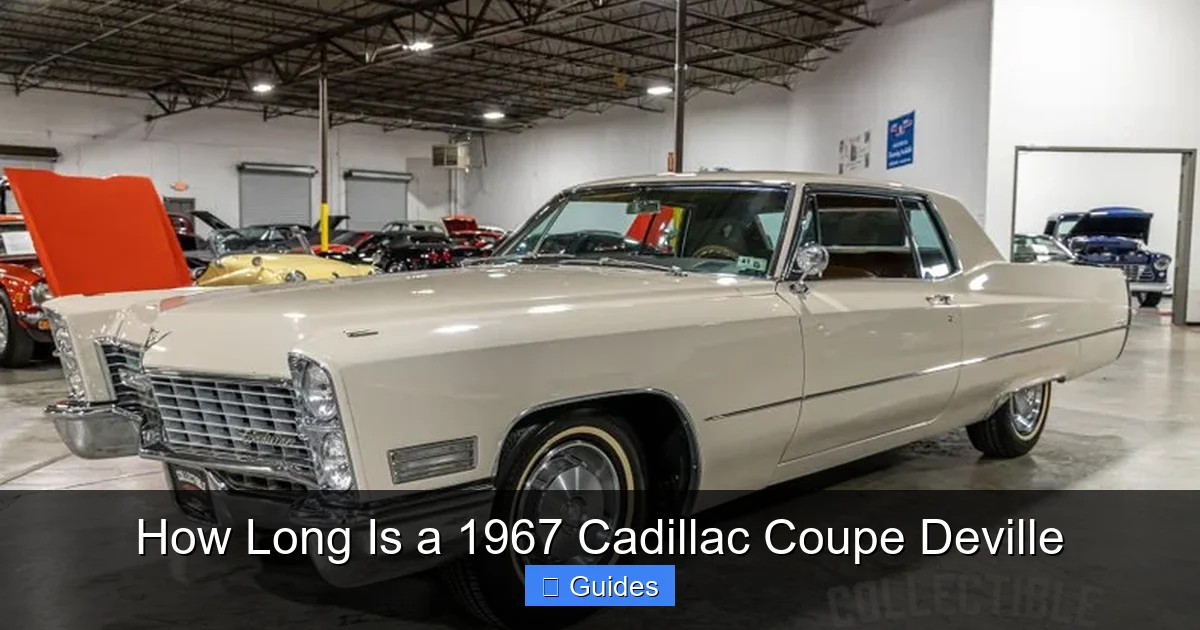
The 1967 Cadillac Coupe DeVille wasn’t just big—it was beautifully proportioned. Every inch of its 224.5-inch frame was designed to convey power, elegance, and innovation. Let’s explore how its size played a role in its iconic design.
The Golden Age of American Automotive Design
The 1960s were a golden age for American cars. Designers had freedom, budgets were generous, and consumers wanted vehicles that reflected their success. Cadillac, as the pinnacle of General Motors’ luxury lineup, was at the forefront of this movement.
The 1967 Coupe DeVille was a masterpiece of this era. Its long hood housed a massive V8 engine, while the short rear deck gave it a sporty, aggressive look. The roofline swept gracefully from the windshield to the trunk, creating a sense of motion even when the car was standing still. And of course, there were the tailfins—subtle compared to earlier models, but still present as a nod to Cadillac’s heritage.
Interior Space: Luxury for Everyone
One of the biggest advantages of the DeVille’s length was interior space. The cabin was designed to feel like a living room on wheels. Plush bench seats, wood trim, and soft-touch materials made every ride feel first-class.
With a wheelbase of nearly 10.8 feet, there was plenty of legroom for front and rear passengers. The front seats could recline, and the rear bench was wide enough for three adults to sit comfortably. Air conditioning, power windows, and a premium sound system were available—luxuries that were rare in cars of the time.
For families, executives, or anyone who valued comfort, the DeVille was the ultimate ride. It wasn’t just a car—it was a mobile sanctuary.
Aerodynamics and Efficiency: A Trade-Off
Of course, all this size came with trade-offs. The 1967 Coupe DeVille was not aerodynamic by modern standards. Its boxy shape and long front end created significant wind resistance, which hurt fuel efficiency.
With a curb weight of around 4,600 pounds and a 7.0-liter V8 engine, the DeVille averaged about 12–14 miles per gallon. That’s not great by today’s standards, but in the 1960s, gas was cheap, and performance was king. Drivers weren’t worried about efficiency—they wanted power, and the DeVille delivered.
Performance and Engineering: Powering the Giant
Visual guide about How Long Is a 1967 Cadillac Coupe Deville
Image source: cadillacs-for-sale.com
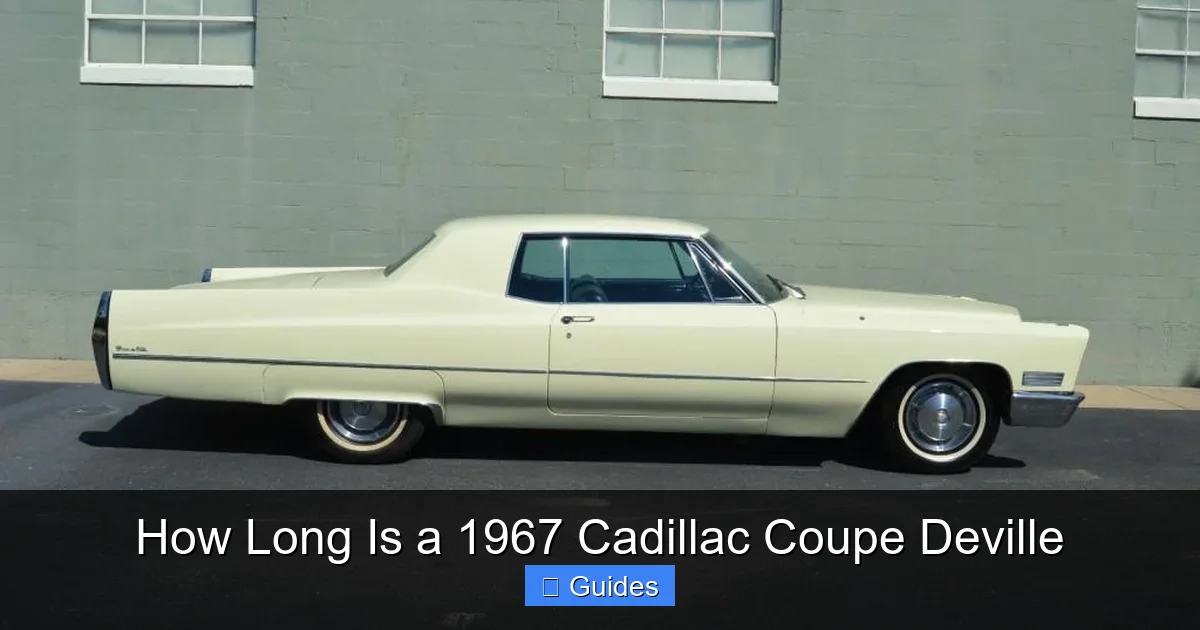
So, how does a car that’s nearly 19 feet long and weighs over two tons actually perform? Surprisingly well, thanks to Cadillac’s engineering prowess.
The 472 Cubic Inch V8 Engine
Under the long hood of the 1967 Coupe DeVille sits a 472 cubic inch (7.7-liter) V8 engine. This powerhouse produced 375 horsepower and 490 lb-ft of torque—numbers that were impressive even by today’s standards.
The engine was paired with a smooth-shifting Turbo Hydra-Matic automatic transmission, which made driving effortless. Whether accelerating from a stop or cruising at highway speeds, the DeVille had plenty of power on tap. It could go from 0 to 60 mph in about 8.5 seconds—fast for a car of its size and era.
Suspension and Ride Quality
Cadillac equipped the 1967 DeVille with a sophisticated suspension system designed for comfort. The front used independent suspension with coil springs, while the rear featured a live axle with leaf springs. This setup absorbed bumps and road imperfections, giving the car its signature “floating” ride.
Power steering and power brakes were standard, making the car surprisingly easy to handle despite its size. Drivers didn’t need to wrestle with the wheel—just a gentle touch was enough to guide the giant down the road.
Braking and Safety
Safety wasn’t a top priority in the 1960s, but the DeVille still had some advanced features for its time. Four-wheel power-assisted drum brakes provided adequate stopping power, though modern disc brakes would be a significant upgrade.
Seat belts were optional in some states, and there were no airbags or crumple zones. But the car’s size and weight did offer some protection in a crash—something that’s still appreciated by collectors today.
Cultural Impact: The 1967 Cadillac Coupe DeVille as a Symbol
The 1967 Cadillac Coupe DeVille wasn’t just a car—it was a cultural icon. It represented the optimism, prosperity, and innovation of 1960s America.
A Car for the Elite
In its day, the DeVille was a status symbol. It was driven by CEOs, politicians, celebrities, and anyone who wanted to show they had “made it.” Its price tag—around $6,000, or about $55,000 in today’s money—put it out of reach for most Americans.
But for those who could afford it, the DeVille was worth every penny. It offered unmatched comfort, style, and prestige. Owning one was like wearing a tailored suit or driving a Rolls-Royce—it said, “I’ve arrived.”
Pop Culture Presence
The 1967 Coupe DeVille appeared in movies, TV shows, and music videos throughout the decades. It’s been featured in films like “The Big Lebowski” and “American Graffiti,” where its sleek design and powerful presence added to the atmosphere.
Musicians like Elvis Presley and Jay-Z have owned or referenced Cadillacs in their work, cementing the brand’s place in popular culture. The DeVille, with its long, low profile and chrome accents, became a symbol of cool, confidence, and American excess.
Legacy and Collectibility
Today, the 1967 Cadillac Coupe DeVille is a highly collectible classic. Well-maintained models can sell for $20,000 to $50,000 or more, depending on condition, originality, and provenance.
Restorers love the DeVille for its straightforward mechanics, abundant parts supply, and timeless design. It’s a car that can be driven daily or displayed at car shows—either way, it turns heads.
Owning and Maintaining a 1967 Cadillac Coupe DeVille Today
If you’re considering buying or restoring a 1967 Cadillac Coupe DeVille, there are a few things to keep in mind.
Finding the Right Car
Start by looking for a model with a solid body and minimal rust. Check the frame, floor pans, and trunk area—common problem spots. Original interiors are a plus, but reupholstery is manageable.
Mechanical Upgrades
While the original engine and transmission are reliable, many owners upgrade to modern components for better performance and efficiency. Consider disc brakes, electronic ignition, and a modern cooling system.
Storage and Parking
Remember, this car is nearly 19 feet long. You’ll need a large garage or driveway. If you live in a city, parking can be a challenge—but that’s part of the adventure.
Community and Resources
Join a Cadillac club or online forum. Owners are passionate and helpful, and there are plenty of resources for parts, manuals, and advice.
Conclusion: More Than Just a Long Car
So, how long is a 1967 Cadillac Coupe DeVille? At 224.5 inches, it’s one of the longest and most luxurious coupes ever made. But its length is just the beginning.
This car represents an era when size meant success, comfort was king, and design was bold. It’s a piece of American history—a rolling sculpture of chrome, steel, and style.
Whether you’re a collector, a restorer, or just a fan of classic cars, the 1967 Cadillac Coupe DeVille deserves your attention. It’s not just long—it’s legendary.
Frequently Asked Questions
How long is a 1967 Cadillac Coupe DeVille in feet?
The 1967 Cadillac Coupe DeVille is 224.5 inches long, which equals 18.7 feet. This makes it one of the longest production coupes of the 1960s.
What is the wheelbase of a 1967 Cadillac Coupe DeVille?
The wheelbase is 129.5 inches, contributing to the car’s smooth and stable ride quality. This long wheelbase also allows for a spacious interior.
How much does a 1967 Cadillac Coupe DeVille weigh?
The curb weight is approximately 4,600 pounds. This heavy weight, combined with its size, gives the car a solid, luxurious feel on the road.
Can a 1967 Cadillac Coupe DeVille seat six people?
Yes, the car features a wide bench seat in both the front and rear, allowing for comfortable seating for up to six passengers.
Is the 1967 Cadillac Coupe DeVille fuel efficient?
No, it averages about 12–14 miles per gallon due to its large V8 engine and heavy weight. Fuel efficiency was not a priority in the 1960s.
How much does a 1967 Cadillac Coupe DeVille cost today?
Prices vary based on condition, but well-maintained models typically sell for $20,000 to $50,000 or more. Rare or fully restored examples can fetch even higher prices.

At CarLegit, we believe information should be clear, factual, and genuinely helpful. That’s why every guide, review, and update on our website is created with care, research, and a strong focus on user experience.