
The Ford F150’s fuel economy varies by engine, drivetrain, and model year, ranging from 18 to 26 mpg combined. With efficient options like the hybrid PowerBoost and EcoBoost engines, the F150 balances power and fuel efficiency better than most full-size trucks.
[FEATURED_IMAGE_PLACEHODELR]
In This Article
- 1 Key Takeaways
- 2 📑 Table of Contents
- 3 How Many Mpg Does a Ford F150 Get? A Complete Guide
- 4 Understanding Ford F150 Fuel Economy Ratings
- 5 Ford F150 Engine Options and Their MPG
- 6 Factors That Affect Ford F150 Fuel Economy
- 7 Tips to Improve Your Ford F150’s MPG
- 8 Comparing the F150 to Other Full-Size Trucks
- 9 Conclusion: Is the Ford F150 Fuel Efficient?
- 10 Frequently Asked Questions
Key Takeaways
- Fuel economy varies by engine: The F150 offers multiple engine options, with the 2.7L and 3.5L EcoBoost V6 and the hybrid PowerBoost delivering the best mpg.
- Hybrid model leads efficiency: The F150 PowerBoost hybrid achieves up to 25 mpg combined, making it the most fuel-efficient F150 available.
- Drivetrain matters: Rear-wheel drive (RWD) typically offers better fuel economy than four-wheel drive (4WD).
- Model year impacts ratings: Newer F150s (2021–2024) are more efficient due to improved aerodynamics, lighter materials, and advanced engine tech.
- Driving habits affect real-world mpg: Aggressive driving, towing, and idling can significantly reduce fuel economy below EPA estimates.
- Aerodynamics and payload play a role: Adding bed covers, reducing cargo weight, and removing roof racks can improve mpg.
- Regular maintenance boosts efficiency: Keeping tires inflated, changing air filters, and using the right oil helps maintain optimal fuel economy.
📑 Table of Contents
- How Many Mpg Does a Ford F150 Get? A Complete Guide
- Understanding Ford F150 Fuel Economy Ratings
- Ford F150 Engine Options and Their MPG
- Factors That Affect Ford F150 Fuel Economy
- Tips to Improve Your Ford F150’s MPG
- Comparing the F150 to Other Full-Size Trucks
- Conclusion: Is the Ford F150 Fuel Efficient?
How Many Mpg Does a Ford F150 Get? A Complete Guide
If you’re in the market for a full-size pickup truck, fuel economy is probably one of your top concerns. After all, trucks are known for their power and capability, but that often comes at the cost of fuel efficiency. The Ford F150, America’s best-selling vehicle for over 40 years, has worked hard to change that perception. With a range of engine options, advanced technology, and smart design, the F150 now offers surprisingly good fuel economy for a vehicle of its size.
But how many mpg does a Ford F150 actually get? The answer isn’t one-size-fits-all. It depends on several factors: the engine you choose, whether you’re driving in the city or on the highway, if you’re towing a trailer, and even how you drive. In this guide, we’ll break down the real-world fuel economy of the Ford F150 across different models, engines, and conditions. Whether you’re a daily commuter, a weekend warrior, or a contractor who needs a reliable workhorse, understanding the F150’s mpg will help you make the best choice.
Understanding Ford F150 Fuel Economy Ratings
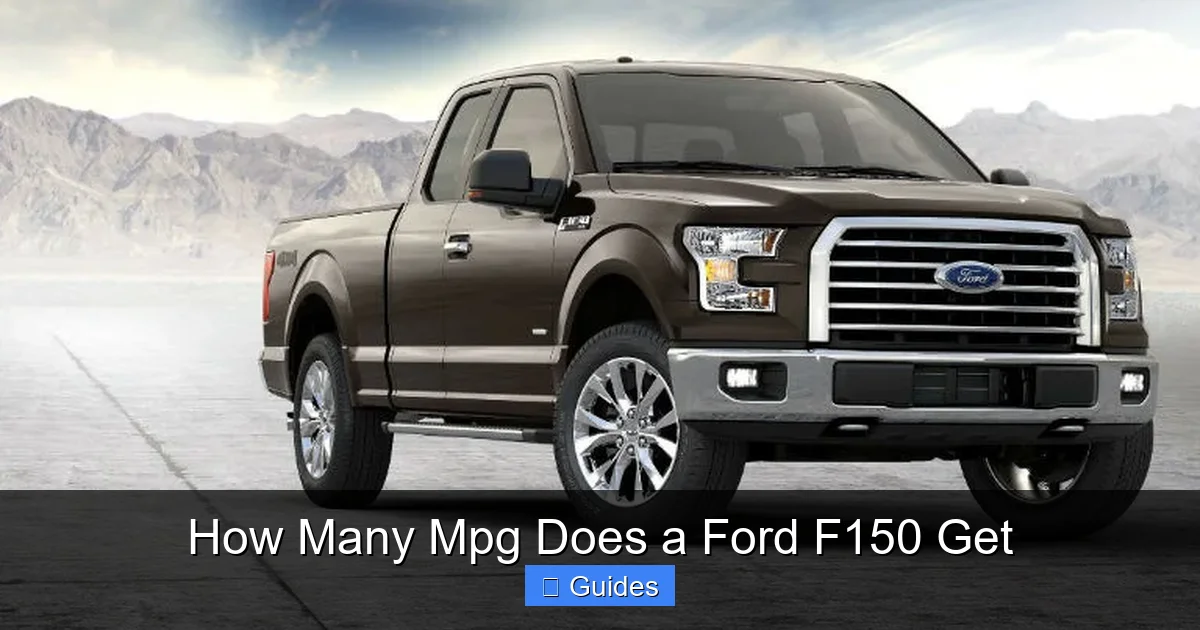
Visual guide about How Many Mpg Does a Ford F150 Get
Image source: trucksauthority.com
When shopping for a truck, it’s easy to get overwhelmed by numbers. The Environmental Protection Agency (EPA) provides fuel economy estimates for every vehicle, but those numbers are based on standardized tests and may not reflect your actual driving experience. Still, they’re a great starting point for comparing models.
The EPA rates vehicles in three categories: city mpg, highway mpg, and combined mpg. Combined mpg is a weighted average of city and highway driving, usually 55% city and 45% highway. For the Ford F150, these ratings vary widely depending on the engine and drivetrain.
For example, a 2023 Ford F150 with the 2.7L EcoBoost V6 engine and rear-wheel drive gets an EPA-estimated 20 mpg city, 26 mpg highway, and 22 mpg combined. That’s impressive for a full-size truck. Meanwhile, the same truck with four-wheel drive drops to 19 mpg city, 24 mpg highway, and 21 mpg combined. The difference may seem small, but over time, it adds up.
The 3.5L EcoBoost V6, often chosen for its towing power, gets slightly lower numbers: 18 mpg city, 24 mpg highway, and 20 mpg combined with RWD. Again, adding 4WD reduces those numbers by about 1 mpg across the board.
Then there’s the hybrid option—the 3.5L PowerBoost Full Hybrid V6. This engine combines a gasoline V6 with an electric motor and a 1.5 kWh battery. It delivers strong performance while achieving up to 25 mpg combined (24 city / 26 highway) with RWD. That makes it the most fuel-efficient F150 currently available.
It’s also worth noting that Ford has made significant improvements in recent years. The 2021 redesign introduced a high-strength, military-grade aluminum alloy body, which reduced weight and improved aerodynamics. This, combined with advanced engine technology, helped boost fuel economy across the lineup.
City vs. Highway MPG: What to Expect
City driving typically results in lower fuel economy due to frequent stops, idling, and slower speeds. The F150’s turbocharged engines, especially the EcoBoost models, are designed to deliver power on demand, which can increase fuel consumption in stop-and-go traffic.
For instance, a 2023 F150 with the 2.7L EcoBoost might get around 18–20 mpg in city driving, depending on traffic conditions. If you’re sitting in heavy congestion or making frequent short trips, that number could drop even lower.
On the highway, however, the F150 shines. With its aerodynamic design and efficient gearing, the same truck can easily achieve 25–27 mpg at steady speeds. The hybrid model performs especially well on the highway, where the electric motor assists during acceleration and the engine operates more efficiently.
If your daily commute involves a mix of city and highway driving, you can expect to see numbers close to the EPA’s combined rating. But if you do mostly highway driving, you might even exceed those estimates.
Real-World MPG vs. EPA Estimates
Many F150 owners report that their real-world fuel economy is close to—or sometimes even better than—the EPA estimates. This is especially true for drivers who adopt fuel-efficient habits.
For example, a 2022 F150 PowerBoost owner driving mostly on highways with light loads might consistently see 26–27 mpg. On the other hand, someone who frequently tows a 7,000-pound trailer or drives aggressively in the city might only get 16–18 mpg, even with the same engine.
Factors like weather, road conditions, and vehicle load all play a role. Cold weather can reduce fuel economy by 10–20%, especially during short trips when the engine doesn’t reach optimal operating temperature. Similarly, driving with a full bed of tools or equipment adds weight and drag, which lowers mpg.
The good news? Ford has built in features to help maximize efficiency. The F150’s 10-speed automatic transmission, for example, keeps the engine in its most efficient RPM range. And the hybrid model can run on electric power alone at low speeds, reducing fuel use in traffic.
Ford F150 Engine Options and Their MPG
Visual guide about How Many Mpg Does a Ford F150 Get
Image source: tailoredtrucks.com
One of the reasons the F150 offers such a range of fuel economy is its diverse engine lineup. Ford gives buyers plenty of choices, from fuel-sipping turbocharged V6s to powerful V8s and even a hybrid option. Let’s take a closer look at each engine and how it impacts mpg.
2.7L EcoBoost V6
The 2.7L EcoBoost V6 is a popular choice for buyers who want a balance of power and efficiency. It produces 325 horsepower and 400 lb-ft of torque, making it capable of towing up to 10,000 pounds when properly equipped.
In terms of fuel economy, this engine is one of the best in the lineup. With RWD, it achieves 20 mpg city, 26 mpg highway, and 22 mpg combined. With 4WD, those numbers drop slightly to 19/24/21.
This engine uses twin turbochargers and direct fuel injection to deliver strong performance without guzzling gas. It’s ideal for daily driving, light towing, and highway cruising. Many owners report real-world averages of 20–23 mpg, especially when driving conservatively.
3.5L EcoBoost V6
The 3.5L EcoBoost V6 is the workhorse of the F150 lineup. It generates 400 horsepower and 500 lb-ft of torque, making it perfect for heavy towing and hauling. It can tow up to 14,000 pounds, which is class-leading.
However, that power comes at a cost. The 3.5L EcoBoost gets 18 mpg city, 24 mpg highway, and 20 mpg combined with RWD. With 4WD, it drops to 17/22/19.
While these numbers are lower than the 2.7L, they’re still competitive for a truck with this much capability. If you need maximum towing power but still want decent fuel economy, this engine is a solid choice. Just be prepared for higher fuel costs, especially if you’re towing frequently.
5.0L Ti-VCT V8
For drivers who prefer the classic rumble of a V8, the 5.0L Ti-VCT V8 is available. It delivers 400 horsepower and 410 lb-ft of torque, with a towing capacity of up to 13,000 pounds.
Fuel economy is lower than the EcoBoost engines: 17 mpg city, 24 mpg highway, and 19 mpg combined with RWD. With 4WD, it’s 16/22/18.
This engine is best suited for those who value sound and traditional performance over fuel efficiency. It’s a great option for off-roading or towing in rugged conditions, but it won’t win any awards for gas mileage.
3.5L PowerBoost Full Hybrid V6
The PowerBoost hybrid is Ford’s answer to the demand for more efficient trucks. It combines the 3.5L EcoBoost V6 with a 33-kW electric motor and a 1.5 kWh lithium-ion battery. The system delivers a combined 430 horsepower and 570 lb-ft of torque—more than any other F150 engine.
Despite its power, the PowerBoost is the most fuel-efficient F150. It achieves 24 mpg city, 26 mpg highway, and 25 mpg combined with RWD. With 4WD, it’s 23/25/24.
The hybrid system allows the truck to run on electric power at low speeds, recapture energy during braking, and shut off the engine when idling. It also includes a built-in generator, which can power tools or appliances—perfect for job sites or camping.
Owners often report real-world averages of 23–26 mpg, especially on mixed driving cycles. If you want the best of both worlds—power and efficiency—the PowerBoost is the way to go.
3.3L Ti-VCT V6 (Base Engine)
The base engine on lower trims is the 3.3L Ti-VCT V6. It produces 290 horsepower and 265 lb-ft of torque, with a towing capacity of up to 8,200 pounds.
Fuel economy is decent: 20 mpg city, 24 mpg highway, and 22 mpg combined with RWD. With 4WD, it’s 19/22/20.
This engine is best for light-duty use, such as commuting or hauling small loads. It’s not as powerful as the EcoBoost or hybrid options, but it offers good fuel economy for a base engine.
Factors That Affect Ford F150 Fuel Economy

Visual guide about How Many Mpg Does a Ford F150 Get
Image source: pictures.dealer.com
Even with the same engine and drivetrain, two F150s can have very different fuel economy. That’s because real-world mpg depends on a variety of factors beyond the manufacturer’s specs. Let’s explore the key elements that influence how many mpg your F150 gets.
Driving Habits
How you drive has a huge impact on fuel economy. Aggressive acceleration, hard braking, and speeding can reduce mpg by 15–30% compared to moderate driving.
For example, accelerating quickly from a stoplight burns more fuel than gradually building speed. Similarly, driving at 75 mph instead of 65 mph can reduce highway fuel economy by 10–15%.
To maximize mpg, try to drive smoothly. Use cruise control on the highway, anticipate stops, and avoid unnecessary idling. The F150’s Eco mode can also help by adjusting throttle response and transmission shifts for better efficiency.
Towing and Payload
Towing a trailer or carrying a heavy load significantly reduces fuel economy. The more weight you add, the harder the engine has to work.
For instance, towing a 5,000-pound trailer might reduce your F150’s mpg by 30–50%. A 2023 F150 with the 3.5L EcoBoost might drop from 20 mpg to 12–14 mpg when towing a large camper.
Even without a trailer, carrying heavy tools or equipment in the bed can lower mpg. Try to remove unnecessary items and distribute weight evenly.
Aerodynamics and Accessories
The F150’s design has improved over the years, but adding accessories can hurt aerodynamics. Roof racks, bed caps, and oversized tires create drag, which reduces fuel economy.
For example, a roof rack can reduce highway mpg by 5–10%, especially at higher speeds. If you don’t need it, take it off.
A tonneau cover or bed cap can actually improve aerodynamics by smoothing airflow over the bed. Many owners report a 1–3 mpg improvement after installing one.
Tire Pressure and Maintenance
Underinflated tires increase rolling resistance, which lowers fuel economy. The F150’s tire pressure monitoring system (TPMS) alerts you when pressure is low, but it’s still a good idea to check monthly.
Keeping up with regular maintenance also helps. A dirty air filter, worn spark plugs, or old engine oil can reduce efficiency. Follow Ford’s recommended service schedule to keep your truck running smoothly.
Weather and Climate
Cold weather reduces fuel economy because engines take longer to warm up and battery efficiency drops. In winter, you might see a 10–20% decrease in mpg, especially on short trips.
Using the heater, defroster, and seat warmers also draws power from the engine, further reducing efficiency. Try to limit use when possible.
Tips to Improve Your Ford F150’s MPG
Want to get the most out of every gallon? Here are some practical tips to boost your F150’s fuel economy.
Drive Smoothly
Avoid rapid acceleration and hard braking. Use gentle throttle inputs and anticipate traffic flow. This not only saves fuel but also reduces wear on your brakes and tires.
Use Cruise Control
On long highway trips, cruise control helps maintain a steady speed, which improves fuel economy. Just make sure to turn it off in hilly terrain, where it may cause unnecessary acceleration.
Reduce Weight
Remove unnecessary items from the cab and bed. Every extra 100 pounds can reduce mpg by 1–2%.
Keep Tires Properly Inflated
Check tire pressure monthly and inflate to the recommended PSI (found on the driver’s door jamb). Properly inflated tires improve handling and efficiency.
Use the Right Oil
Use the oil grade recommended in your owner’s manual. Lower-viscosity oils, like 5W-30, reduce engine friction and improve fuel economy.
Plan Your Trips
Combine errands into one trip to reduce cold starts. A warm engine is more efficient than a cold one.
Avoid Idling
Idling wastes fuel and gets 0 mpg. If you’re stopped for more than a minute (except in traffic), turn off the engine.
Comparing the F150 to Other Full-Size Trucks
How does the F150 stack up against competitors like the Chevrolet Silverado, Ram 1500, and Toyota Tundra?
The 2023 Ram 1500 with the 3.6L V6 eTorque mild hybrid gets 20 mpg city, 25 mpg highway, and 22 mpg combined—similar to the F150’s 2.7L EcoBoost.
The Silverado with the 2.7L Turbo High-Output engine achieves 19/26/22 mpg, also comparable.
The Tundra, with its 3.5L twin-turbo V6, gets 18/24/20 mpg—slightly lower than the F150.
However, the F150 PowerBoost hybrid outperforms all of them with 25 mpg combined. It’s the most fuel-efficient full-size truck on the market.
Conclusion: Is the Ford F150 Fuel Efficient?
So, how many mpg does a Ford F150 get? The answer depends on your needs. If you want maximum efficiency, the PowerBoost hybrid delivers up to 25 mpg combined. For a balance of power and economy, the 2.7L EcoBoost is a great choice. And if you need serious towing power, the 3.5L EcoBoost or 5.0L V8 can handle the job, though with lower mpg.
The F150 has come a long way in terms of fuel economy. Thanks to lightweight materials, advanced engines, and smart technology, it now offers some of the best efficiency in its class. While it may not match a compact car, it’s surprisingly economical for a full-size truck.
By choosing the right engine, maintaining your vehicle, and driving efficiently, you can maximize your F150’s mpg and get the most out of every tank. Whether you’re commuting, towing, or exploring the outdoors, the F150 proves that power and efficiency can go hand in hand.
Frequently Asked Questions
What is the most fuel-efficient Ford F150?
The most fuel-efficient Ford F150 is the 3.5L PowerBoost Full Hybrid V6, which achieves up to 25 mpg combined. It combines a gasoline engine with an electric motor for better efficiency and performance.
Does four-wheel drive reduce fuel economy?
Yes, four-wheel drive typically reduces fuel economy by 1–2 mpg compared to rear-wheel drive. This is because 4WD adds weight and mechanical resistance, making the engine work harder.
Can I improve my F150’s mpg?
Yes, you can improve fuel economy by driving smoothly, keeping tires inflated, reducing weight, using cruise control, and maintaining your vehicle regularly. These habits can boost mpg by 5–15%.
How does towing affect fuel economy?
Towing significantly reduces fuel economy. Depending on the load, mpg can drop by 30–50%. For example, a truck getting 20 mpg unloaded might only get 12–14 mpg when towing a 5,000-pound trailer.
Is the F150 hybrid worth it for fuel savings?
The F150 PowerBoost hybrid is worth it if you want better fuel economy without sacrificing power. It saves money on fuel over time and offers unique features like a built-in generator.
Do newer F150 models get better gas mileage?
Yes, newer F150 models (2021–2024) are more fuel-efficient due to lighter aluminum bodies, improved aerodynamics, and advanced engine technology. They generally outperform older models in mpg.

At CarLegit, we believe information should be clear, factual, and genuinely helpful. That’s why every guide, review, and update on our website is created with care, research, and a strong focus on user experience.