
The fastest Porsche in the world is the 2023 Porsche 911 GT2 RS, with a top speed of 340 km/h (211 mph) and a 0-100 km/h time of just 2.7 seconds. This track-focused supercar combines twin-turbo power, lightweight engineering, and advanced aerodynamics to dominate both road and circuit.
When it comes to high-performance sports cars, few brands command as much respect and admiration as Porsche. Known for their precision engineering, iconic designs, and a rich motorsport legacy, Porsche has spent over seven decades perfecting the art of speed. From the early days of the 356 to the modern marvels of the 911 series, each model reflects a commitment to pushing the boundaries of what’s possible on four wheels. But among all the models that have rolled off the production line, one stands head and shoulders above the rest in terms of raw speed and performance: the Porsche 911 GT2 RS.
So, what is the fastest Porsche in the world? The answer is clear—it’s the 2023 Porsche 911 GT2 RS. This track-focused beast isn’t just fast; it’s a symphony of power, aerodynamics, and engineering excellence. With a top speed of 340 km/h (211 mph) and the ability to sprint from 0 to 100 km/h in just 2.7 seconds, the GT2 RS redefines what a production Porsche can achieve. It’s not just a car—it’s a statement. A declaration that Porsche still knows how to build the ultimate driving machine.
But speed isn’t just about numbers on a spec sheet. It’s about how a car feels when you push it to its limits. It’s about the roar of the engine, the grip of the tires, and the confidence that comes from knowing your car can handle anything you throw at it. The GT2 RS delivers all of that and more. Whether you’re carving through mountain roads or hitting the straight at the Nürburgring, this car is built to dominate. And while it’s undeniably a road-legal vehicle, its heart beats strongest on the track.
In This Article
- 1 Key Takeaways
- 2 📑 Table of Contents
- 3 The Porsche 911 GT2 RS: The Speed King
- 4 Lightweight Design: The Secret to Speed
- 5 Aerodynamics: Staying Grounded at High Speed
- 6 Handling and Braking: Control at the Limit
- 7 The Rarity and Legacy of the GT2 RS
- 8 Conclusion: The Ultimate Porsche
- 9 Frequently Asked Questions
Key Takeaways
- The 911 GT2 RS is the fastest production Porsche ever built: With a top speed of 340 km/h, it holds the crown for speed among all Porsche models.
- Powered by a 3.8-liter twin-turbo flat-six engine: It delivers 700 horsepower and 750 Nm of torque, enabling blistering acceleration.
- Lightweight construction enhances performance: Extensive use of carbon fiber and magnesium reduces weight, improving agility and speed.
- Advanced aerodynamics generate massive downforce: Active spoilers and diffusers keep the car planted at high speeds.
- Track-tuned suspension and braking systems: Features like PASM and ceramic composite brakes ensure control and safety at extreme speeds.
- Only 1,000 units of the GT2 RS Clubsport were made: Its rarity adds to its desirability among collectors and enthusiasts.
- Porsche’s engineering legacy drives innovation: Each model builds on decades of racing heritage and technological refinement.
📑 Table of Contents
The Porsche 911 GT2 RS: The Speed King
At the top of the Porsche performance pyramid sits the 911 GT2 RS—a car so extreme, it makes even the mighty 911 Turbo S look tame by comparison. Introduced in 2017 and refreshed in 2023, the GT2 RS was designed with one goal in mind: to be the fastest, most capable 911 ever made. And it succeeds in spectacular fashion.
Unlike the all-wheel-drive Turbo models, the GT2 RS is rear-wheel drive only. This might seem like a step back to some, but for purists, it’s a return to form. Rear-wheel drive offers a more engaging, driver-focused experience, with sharper handling and a more direct connection between the driver and the road. But don’t let the lack of all-wheel drive fool you—this car is no slouch when it comes to grip. Thanks to its wide rear tires, advanced traction control, and electronically controlled limited-slip differential, the GT2 RS maintains incredible stability even under hard acceleration.
The heart of the GT2 RS is its 3.8-liter twin-turbocharged flat-six engine, derived from the 911 Turbo but tuned for maximum performance. It produces a staggering 700 horsepower and 750 Nm of torque, making it one of the most powerful engines ever fitted to a production 911. That power is sent to the rear wheels via a 7-speed PDK dual-clutch transmission, which shifts faster than any human could manage. The result? A 0-100 km/h time of just 2.7 seconds—faster than many hypercars that cost twice as much.
But speed isn’t just about acceleration. It’s also about top speed, and the GT2 RS delivers in spades. With a verified top speed of 340 km/h (211 mph), it’s the fastest production Porsche ever built. That number isn’t just a marketing claim—it’s been tested and confirmed on closed circuits and high-speed tracks around the world. And while 340 km/h might not sound as impressive as the 400+ km/h figures claimed by some electric hypercars, remember: the GT2 RS achieves this with a traditional internal combustion engine, no batteries required.
Engine and Performance Specs
Let’s dive deeper into what makes the GT2 RS so fast. The 3.8-liter flat-six engine is a masterpiece of engineering. It features twin turbochargers with variable turbine geometry, which means they can adjust their shape to optimize airflow and boost pressure across the entire rev range. This results in minimal turbo lag and instant throttle response—something that’s crucial when you’re trying to shave milliseconds off your lap time.
The engine is mounted in a rear-mid configuration, meaning it sits just behind the rear axle. This layout improves weight distribution and gives the car a more balanced feel, especially during high-speed cornering. Combined with the rear-wheel-drive setup, it creates a driving experience that’s both thrilling and precise.
Power is managed by Porsche’s PDK transmission, which is widely regarded as one of the best gearboxes in the world. It can shift gears in under 100 milliseconds, and it’s capable of handling the massive torque output without breaking a sweat. The PDK also features launch control, which allows the car to achieve its maximum acceleration from a standstill with just the press of a button.
In terms of performance, the numbers speak for themselves:
– 0-100 km/h: 2.7 seconds
– 0-200 km/h: 8.5 seconds
– Top speed: 340 km/h (211 mph)
– Power: 700 hp @ 7,000 rpm
– Torque: 750 Nm @ 2,500–4,500 rpm
These figures place the GT2 RS in the same league as cars like the Lamborghini Huracán Performante and the McLaren 720S—but with the added benefit of being a usable daily driver (if you’re brave enough).
Lightweight Design: The Secret to Speed

Visual guide about What Is the Fastest Porsche in the World
Image source: i0.wp.com
One of the key factors behind the GT2 RS’s incredible performance is its lightweight construction. Porsche has always understood that speed isn’t just about power—it’s also about reducing mass. The lighter a car is, the faster it can accelerate, the quicker it can stop, and the better it can handle corners.
To achieve this, Porsche used a wide range of lightweight materials throughout the GT2 RS. The roof is made from magnesium, which is significantly lighter than steel or aluminum. The front and rear hoods, as well as the fenders, are crafted from carbon fiber reinforced polymer (CFRP). Even the windows are thinner and lighter than those on standard 911 models.
The result is a curb weight of just 1,470 kg (3,241 lbs)—remarkably light for a car with this much power. That gives the GT2 RS a power-to-weight ratio of approximately 476 hp per ton, which is better than many hypercars.
But lightweighting isn’t just about using exotic materials. It’s also about smart design. Porsche removed unnecessary components, such as rear seats, sound insulation, and even the spare tire. The air conditioning system is optional, and the audio system is minimal. Every gram counts when you’re chasing speed.
Carbon Fiber and Magnesium: High-Tech Materials
Carbon fiber is one of the most advanced materials used in automotive manufacturing. It’s incredibly strong yet extremely light—ideal for high-performance applications. In the GT2 RS, carbon fiber is used for the front spoiler, rear wing, side skirts, and even the interior trim. The rear wing alone generates up to 420 kg of downforce at top speed, helping to keep the car glued to the road.
Magnesium is another key material. It’s 30% lighter than aluminum and 75% lighter than steel, making it perfect for components like the roof. The magnesium roof not only reduces weight but also lowers the car’s center of gravity, improving handling and stability.
Porsche also uses aluminum for the chassis and suspension components, further reducing weight without compromising strength. The combination of these materials creates a car that’s both rigid and agile—essential qualities for a track-focused machine.
Aerodynamics: Staying Grounded at High Speed
Visual guide about What Is the Fastest Porsche in the World
Image source: theautoventure.com
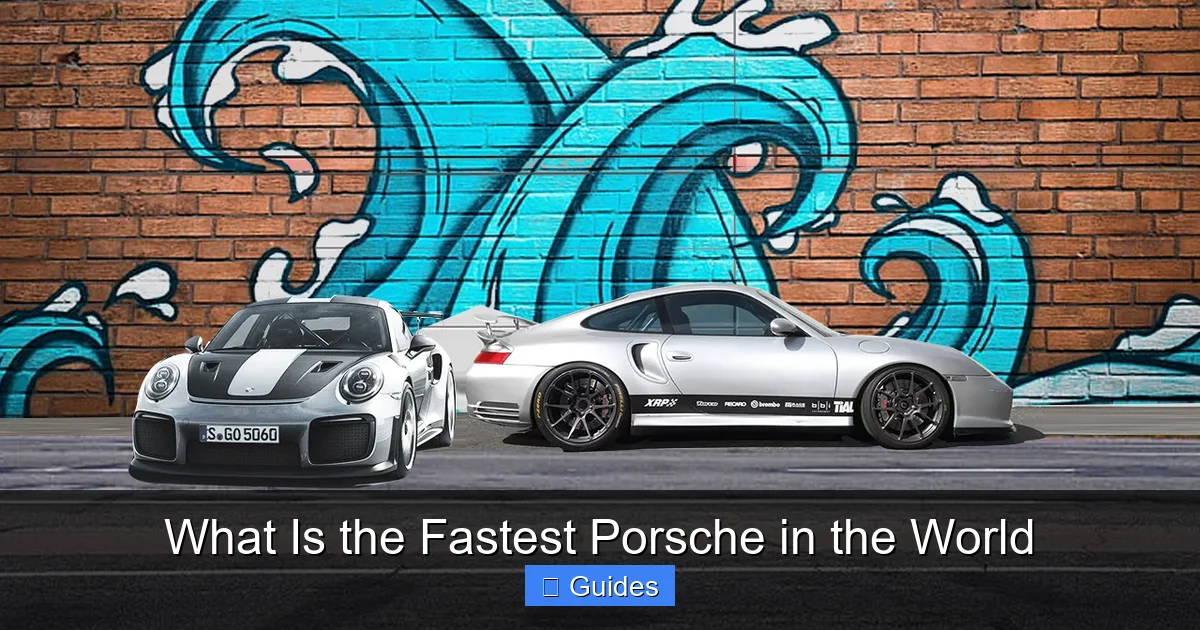
At speeds over 300 km/h, aerodynamics become just as important as engine power. Without proper downforce, a car can become unstable, lift off the ground, or lose grip in corners. That’s why the GT2 RS features one of the most advanced aerodynamic systems ever seen on a production car.
The front end is dominated by a large splitter and active air intakes that adjust based on speed and driving conditions. At low speeds, the intakes close to reduce drag. At high speeds, they open to increase cooling and downforce. The rear features a massive active rear wing that automatically adjusts its angle to optimize downforce and drag.
This system can generate up to 420 kg of downforce at top speed—more than the weight of the car itself. That means the GT2 RS literally sticks to the road, allowing it to corner at speeds that would send lesser cars spinning.
Active Aerodynamics in Action
The active rear wing is one of the most impressive features of the GT2 RS. It can change its angle in milliseconds, responding to inputs from the car’s sensors and driving mode. In “Sport” mode, the wing rises to increase downforce during hard cornering. In “Wet” mode, it lowers to reduce drag and improve stability in slippery conditions.
There’s also a “Drag Reduction System” (DRS) that flattens the wing at high speeds on straights, reducing drag and allowing the car to reach its maximum top speed. This is similar to the system used in Formula 1 cars and is a testament to Porsche’s racing heritage.
Handling and Braking: Control at the Limit
Visual guide about What Is the Fastest Porsche in the World
Image source: news.dupontregistry.com
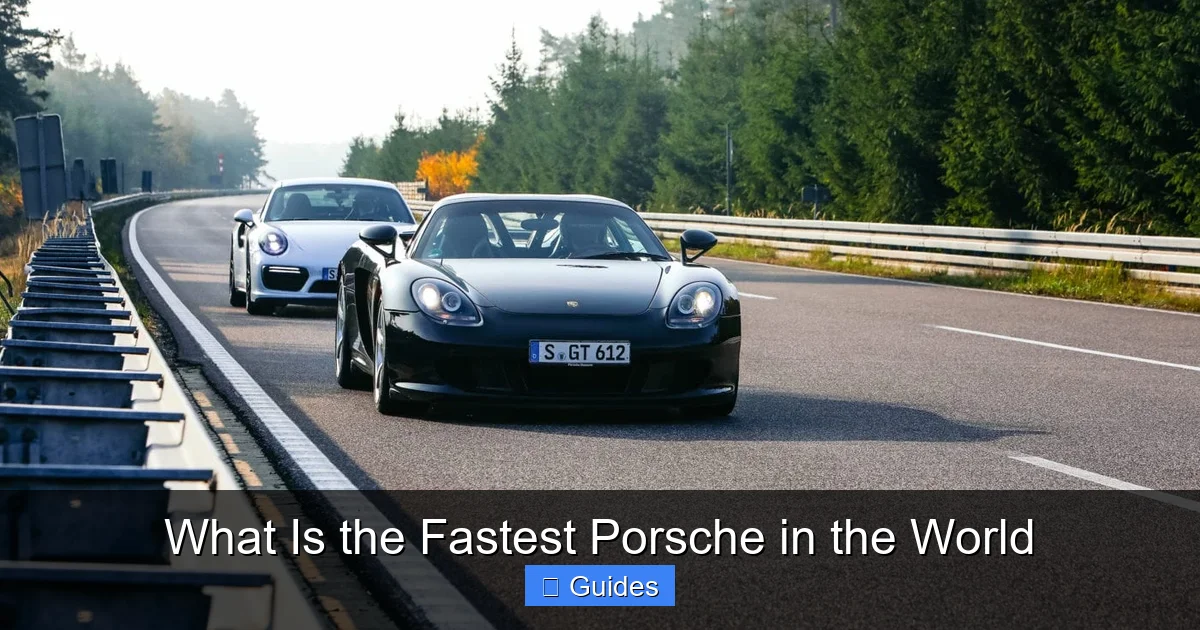
Speed is useless without control, and the GT2 RS delivers both in spades. The suspension system is fully adjustable, with Porsche Active Suspension Management (PASM) that adapts to road conditions and driving style. The car sits 10 mm lower than a standard 911, lowering the center of gravity and improving cornering ability.
The brakes are equally impressive. The GT2 RS comes standard with Porsche Ceramic Composite Brakes (PCCB), which are made from a composite material that’s both lighter and more heat-resistant than traditional steel brakes. They provide incredible stopping power and resist fade even after repeated hard braking—essential for track use.
Porsche Dynamic Chassis Control (PDCC)
Another key feature is Porsche Dynamic Chassis Control (PDCC), which uses hydraulic actuators to reduce body roll during cornering. This keeps the car flat and stable, allowing for higher cornering speeds and better tire contact with the road.
The steering is hydraulic-assisted, providing a direct and communicative feel that’s rare in modern cars. Combined with the rear-wheel steering system (available as an option), the GT2 RS is incredibly agile, able to change direction with precision and confidence.
The Rarity and Legacy of the GT2 RS
Part of what makes the GT2 RS so special is its exclusivity. Porsche has always limited production of its highest-performance models, and the GT2 RS is no exception. Only 1,000 units of the GT2 RS Clubsport were produced, making it a highly sought-after collector’s item.
But the GT2 RS isn’t just rare—it’s a milestone in Porsche’s history. It represents the pinnacle of what the 911 platform can achieve, combining decades of engineering knowledge with cutting-edge technology. It’s a car that honors Porsche’s racing roots while pushing the brand into the future.
Conclusion: The Ultimate Porsche
So, what is the fastest Porsche in the world? The answer is the 2023 Porsche 911 GT2 RS—a car that blends raw power, lightweight design, and advanced aerodynamics into a package that’s both thrilling and usable. It’s not just the fastest Porsche; it’s one of the fastest production cars ever made, period.
Whether you’re a track enthusiast, a collector, or simply someone who appreciates the art of high-performance engineering, the GT2 RS is a masterpiece. It proves that even in an age of electric hypercars and autonomous driving, there’s still a place for a finely tuned internal combustion engine and a driver-focused experience.
And while the GT2 RS may be the current king of speed, one thing is certain: Porsche will continue to push the limits. The future may bring hybrid powertrains, all-electric models, and even faster top speeds—but the GT2 RS will always hold a special place in the hearts of driving purists.
If you ever get the chance to drive one, don’t hesitate. It’s not just a car—it’s a moment you’ll never forget.
Frequently Asked Questions
What is the fastest Porsche in the world?
The fastest Porsche in the world is the 2023 Porsche 911 GT2 RS, with a top speed of 340 km/h (211 mph). It’s the quickest and most powerful production Porsche ever built.
How fast can the Porsche 911 GT2 RS accelerate?
The GT2 RS can accelerate from 0 to 100 km/h in just 2.7 seconds and reach 200 km/h in 8.5 seconds, thanks to its 700-horsepower twin-turbo engine.
Is the Porsche 911 GT2 RS street-legal?
Yes, the GT2 RS is fully street-legal and can be driven on public roads, though it’s primarily designed for track performance and high-speed driving.
What engine does the fastest Porsche use?
The GT2 RS uses a 3.8-liter twin-turbocharged flat-six engine that produces 700 horsepower and 750 Nm of torque, derived from the 911 Turbo but tuned for maximum performance.
How much does the Porsche 911 GT2 RS weigh?
The GT2 RS weighs just 1,470 kg (3,241 lbs), thanks to extensive use of lightweight materials like carbon fiber and magnesium.
How many Porsche 911 GT2 RS models were made?
Porsche produced a limited number of GT2 RS models, with only 1,000 units of the Clubsport version made, making it a rare and collectible vehicle.

At CarLegit, we believe information should be clear, factual, and genuinely helpful. That’s why every guide, review, and update on our website is created with care, research, and a strong focus on user experience.