
Porsche sells over 300,000 vehicles annually worldwide, with consistent growth driven by SUVs like the Cayenne and Macan, strong demand in China and the U.S., and a growing lineup of electric models like the Taycan. The brand balances exclusivity with volume, maintaining its premium image while expanding accessibility through popular crossovers and electrification.
In This Article
- 1 Key Takeaways
- 2 📑 Table of Contents
- 3 Introduction: The Allure of Porsche and Its Global Reach
- 4 Annual Sales Performance: A Decade of Growth and Stability
- 5 Top-Selling Models: What’s Driving the Numbers?
- 6 Global Markets: Where Porsche Sells the Most
- 7 Challenges and Opportunities: The Road Ahead
- 8 Conclusion: The Future of Porsche Sales
- 9 Frequently Asked Questions
- 9.1 How many cars does Porsche sell a year on average?
- 9.2 What is Porsche’s best-selling model?
- 9.3 Does Porsche sell more cars in the U.S. or China?
- 9.4 How many Taycans does Porsche sell each year?
- 9.5 Is Porsche planning to go fully electric?
- 9.6 Why does Porsche sell fewer cars than brands like BMW or Mercedes?
Key Takeaways
- Porsche sold 320,221 vehicles globally in 2023: This marks a steady increase from previous years, showcasing the brand’s resilience and appeal across markets.
- The Cayenne and Macan dominate sales: These SUVs make up over 60% of total deliveries, reflecting global demand for luxury crossovers.
- China and the U.S. are top markets: Together, these two countries account for nearly half of Porsche’s annual sales.
- Electric models are gaining traction: The Taycan, Porsche’s all-electric sports sedan, continues to grow in popularity, especially in Europe and North America.
- Porsche maintains a premium, low-volume strategy: Unlike mass-market brands, Porsche focuses on high margins and brand exclusivity rather than sheer volume.
- Sales fluctuate with economic conditions: Global events, supply chain issues, and consumer confidence directly impact annual delivery numbers.
- Future growth leans on electrification and SUVs: Porsche plans to have 80% of its sales be electric by 2030, with new models like the electric Macan leading the charge.
📑 Table of Contents
Introduction: The Allure of Porsche and Its Global Reach
When you think of Porsche, images of sleek sports cars, roaring engines, and precision engineering likely come to mind. The iconic 911, with its timeless design and thrilling performance, has been a symbol of automotive excellence for over 70 years. But behind the glamour and heritage lies a modern, data-driven company that sells hundreds of thousands of vehicles each year—balancing tradition with innovation, exclusivity with accessibility.
Porsche isn’t just about sports cars anymore. While the 911 remains the heart of the brand, the company has strategically expanded its lineup to include high-performance SUVs, electric vehicles, and even plug-in hybrids. This evolution has allowed Porsche to reach a broader audience without diluting its premium image. In fact, the brand has managed to grow its annual sales steadily over the past decade, even during global economic downturns and supply chain disruptions.
So, how many cars does Porsche sell a year? The answer isn’t just a number—it’s a reflection of the brand’s strategic vision, market adaptability, and deep connection with car enthusiasts worldwide. In 2023, Porsche delivered 320,221 vehicles globally, marking another strong year in its history. This figure places Porsche firmly among the top luxury automakers, though it remains far behind mass-market giants like Toyota or Volkswagen in total volume. But for Porsche, it’s not about selling the most cars—it’s about selling the right cars to the right customers.
Annual Sales Performance: A Decade of Growth and Stability
Visual guide about How Many Cars Does Porsche Sell a Year
Image source: autointell.com
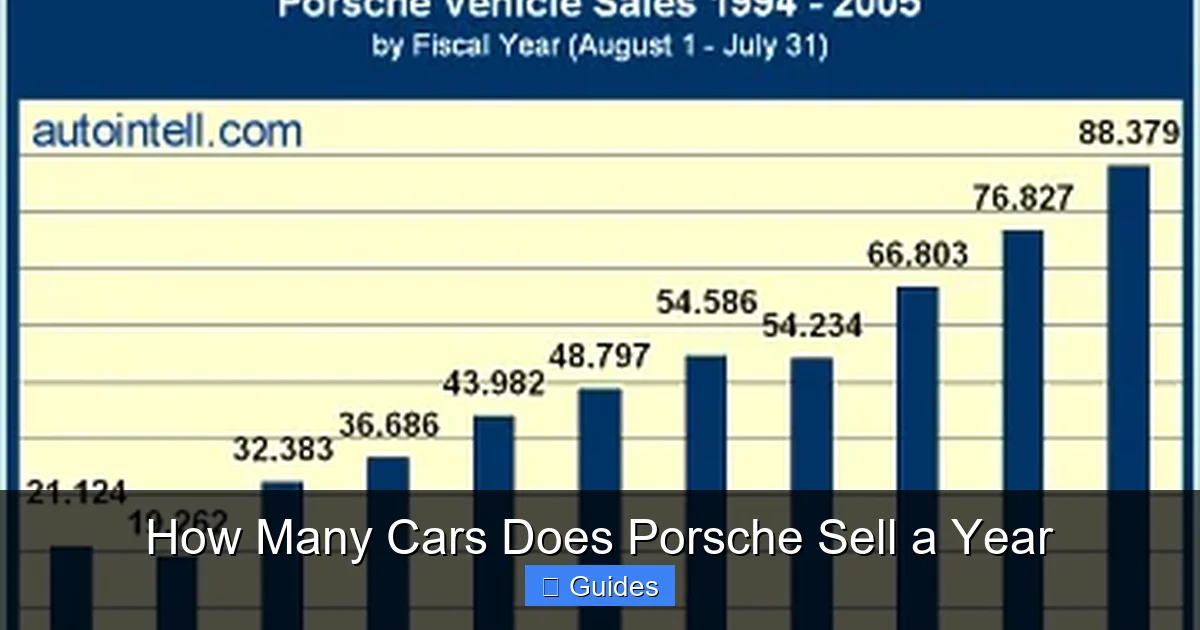
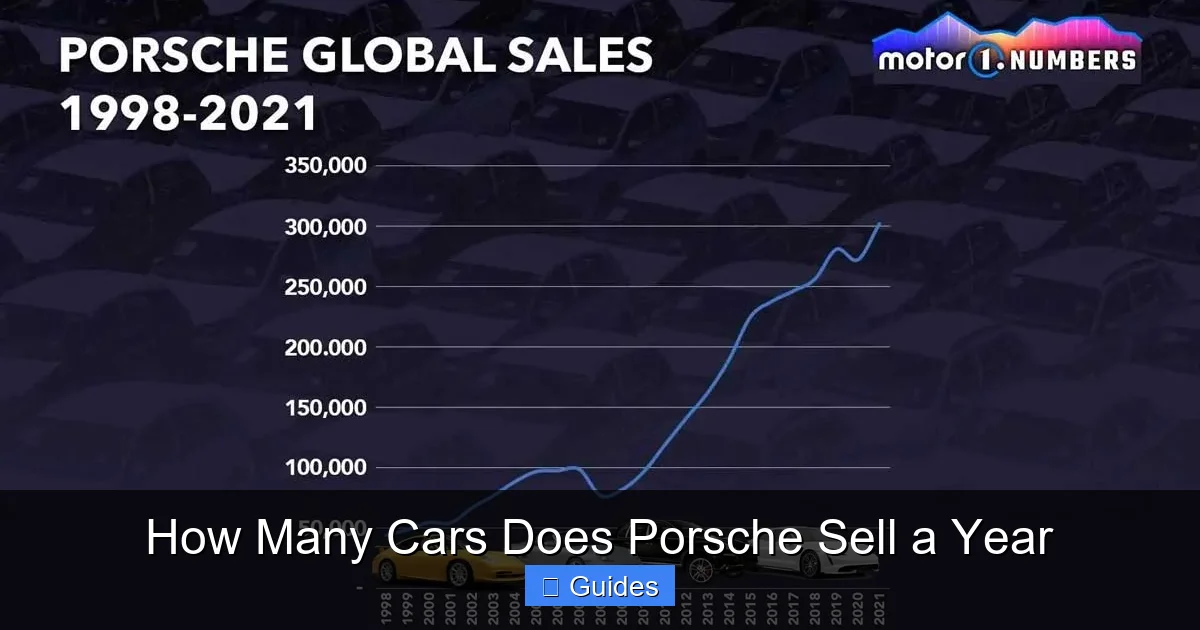
To understand how many cars Porsche sells a year, it’s helpful to look at the brand’s sales trajectory over the past decade. Unlike many automakers that experience wild swings in volume, Porsche has maintained a relatively stable and upward trend, even in challenging times.
In 2014, Porsche sold approximately 189,000 vehicles worldwide. Fast forward to 2023, and that number has grown by nearly 70%, reaching 320,221 units. This consistent growth is impressive, especially considering the global semiconductor shortage in 2021–2022 and the economic uncertainty caused by inflation and geopolitical tensions.
Year-by-Year Sales Breakdown (2019–2023)
Let’s take a closer look at recent performance:
– 2019: 280,800 vehicles delivered
– 2020: 272,200 vehicles (a slight dip due to the pandemic)
– 2021: 301,900 vehicles (strong rebound)
– 2022: 309,800 vehicles (steady growth despite supply constraints)
– 2023: 320,221 vehicles (new record high)
This upward trend highlights Porsche’s resilience and strong brand loyalty. Even when production was limited, customers were willing to wait—sometimes for months—to get their hands on a new Porsche. This demand has allowed the company to maintain high profit margins, which is a key part of its business model.
Factors Behind the Growth
Several factors have contributed to Porsche’s consistent sales growth:
1. Expansion into SUVs: The Cayenne, introduced in 2002, revolutionized Porsche’s lineup. It was the brand’s first SUV and quickly became its best-selling model. The Macan, launched in 2014, further solidified Porsche’s presence in the compact luxury SUV segment. Together, these two models now account for over 60% of total sales.
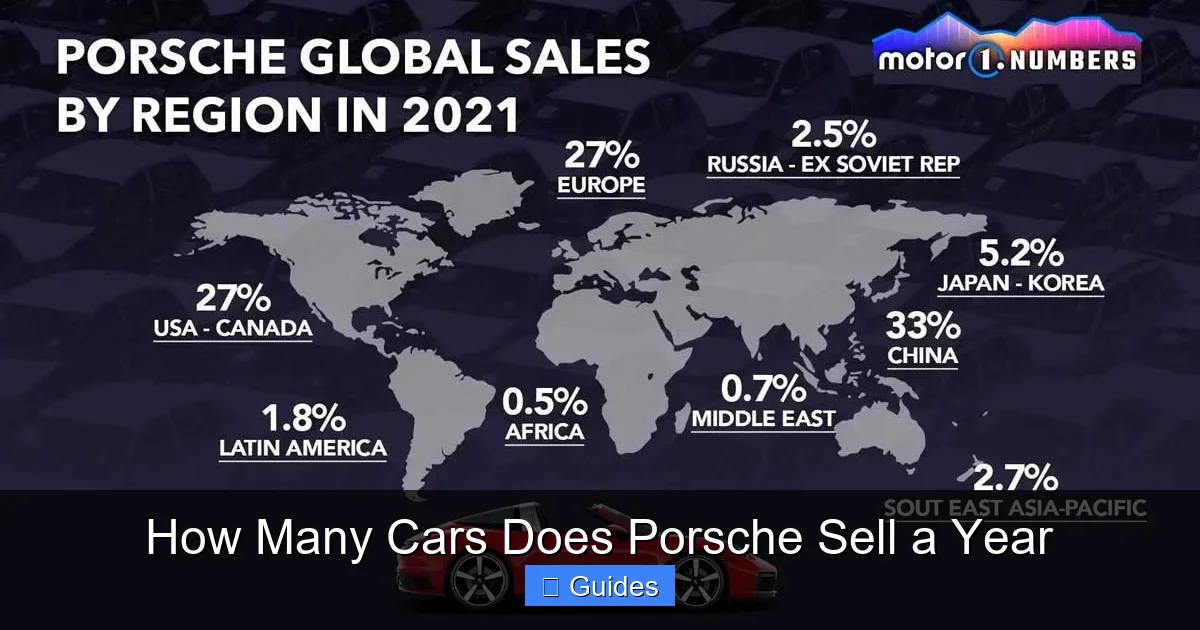
2. Strong performance in key markets: China and the United States remain Porsche’s largest markets. In 2023, China accounted for about 20% of global sales, while the U.S. represented around 25%. These regions have a strong appetite for luxury vehicles, and Porsche’s brand image resonates well with affluent consumers.
3. Electrification strategy: The launch of the Taycan in 2019 marked Porsche’s entry into the electric vehicle (EV) market. While it hasn’t yet surpassed the 911 in sales, the Taycan has been a critical success, especially in Europe and North America. It’s proof that Porsche can innovate without compromising its performance DNA.
4. Brand exclusivity and desirability: Porsche has mastered the art of balancing volume with prestige. By keeping production numbers in check and focusing on high-quality craftsmanship, the brand maintains its elite status. This exclusivity drives demand and allows Porsche to command premium prices.
Top-Selling Models: What’s Driving the Numbers?
Visual guide about How Many Cars Does Porsche Sell a Year
Image source: 911supercars.com
When you ask, “How many cars does Porsche sell a year?” it’s important to understand which models are leading the charge. While the 911 is the soul of the brand, it’s not the top seller. In fact, SUVs dominate Porsche’s sales charts—a trend seen across the luxury automotive industry.
The Cayenne: The Sales Powerhouse
The Porsche Cayenne is the brand’s best-selling model, consistently accounting for around 30–35% of total annual deliveries. In 2023, over 100,000 Cayennes were sold worldwide. This midsize luxury SUV offers a blend of performance, practicality, and prestige that appeals to a wide range of buyers.
What makes the Cayenne so popular? For starters, it’s incredibly versatile. It can handle school runs and grocery shopping just as well as it can tackle mountain roads or track days. The latest generation features advanced driver assistance systems, a luxurious interior, and powerful engine options—including a hybrid variant.
The Cayenne also benefits from Porsche’s reputation for engineering excellence. Buyers know they’re getting a vehicle that’s not just stylish, but also built to last. This reliability, combined with strong resale value, makes the Cayenne a smart investment for many luxury car shoppers.
The Macan: Compact, Agile, and In-Demand
The Macan is Porsche’s compact SUV and the second-best-selling model in the lineup. In 2023, it accounted for roughly 25% of total sales, with over 80,000 units delivered. It’s particularly popular in urban areas where space is limited, but drivers still want the thrill of a Porsche.
The Macan’s success lies in its perfect balance of size and performance. It’s smaller than the Cayenne but still offers a sporty driving experience, thanks to its responsive handling and powerful engines. The interior is well-appointed, with high-quality materials and the latest tech features.
One of the Macan’s biggest selling points is its accessibility. It’s the most affordable new Porsche, with a starting price around $60,000 in the U.S. This makes it an entry point for younger buyers or first-time Porsche owners. As a result, it plays a crucial role in expanding the brand’s customer base.
The 911: The Icon That Defines the Brand
While the 911 doesn’t top the sales charts, it remains the most important model for Porsche’s identity. In 2023, around 40,000 911s were sold globally—about 12–13% of total volume. That might seem low compared to the Cayenne, but the 911’s impact goes far beyond numbers.
The 911 is a cultural icon. It’s been featured in movies, music, and motorsports for decades. Its distinctive silhouette and rear-engine layout are instantly recognizable. For many enthusiasts, owning a 911 is a lifelong dream.
Porsche has kept the 911 fresh with continuous updates, including turbocharged engines, all-wheel drive, and even hybrid technology in development. The 911 also serves as a halo product—it elevates the entire brand and influences perceptions of other models.
The Taycan: Electrifying the Future
The Taycan is Porsche’s first all-electric vehicle and a key part of its future strategy. Launched in 2019, it has steadily gained traction. In 2023, over 35,000 Taycans were sold, making it one of the best-selling luxury EVs in its class.
The Taycan isn’t just an electric car—it’s a performance machine. It can accelerate from 0 to 60 mph in under 3 seconds (in top trims) and offers handling that rivals many sports cars. It also features cutting-edge technology, including an 800-volt architecture for fast charging and a luxurious, driver-focused interior.
While the Taycan hasn’t yet reached the sales levels of the Cayenne or Macan, it’s growing rapidly. Porsche is investing heavily in electrification, with plans to launch an electric version of the Macan (the Macan EV) in 2024. This new model is expected to significantly boost EV sales in the coming years.
Global Markets: Where Porsche Sells the Most
Visual guide about How Many Cars Does Porsche Sell a Year
Image source: 911supercars.com
Porsche’s sales are spread across the globe, but a few key markets drive the majority of volume. Understanding where Porsche sells the most cars helps explain its global strategy and future growth potential.
United States: The Largest Market
The U.S. is Porsche’s biggest market, accounting for about 25% of global sales in 2023. That’s over 80,000 vehicles delivered to American customers. The strong performance in the U.S. is due to several factors:
– A large population of affluent consumers
– A culture that values performance and luxury vehicles
– Strong dealership networks and brand presence
– High demand for SUVs and sports cars
The Cayenne and Macan are especially popular in the U.S., where SUVs dominate the automotive landscape. The Taycan has also gained a strong following, particularly in states like California with high EV adoption rates.
China: The Emerging Powerhouse
China is Porsche’s second-largest market, representing around 20% of global sales. In 2023, over 64,000 Porsches were delivered in China. The country’s growing middle class and increasing wealth have created a huge demand for luxury goods—including cars.
Porsche has adapted its strategy for the Chinese market by offering long-wheelbase versions of certain models (like the Panamera) and emphasizing digital experiences. The brand also has a strong presence in major cities like Beijing, Shanghai, and Shenzhen, where luxury car ownership is a status symbol.
However, the Chinese market is also highly competitive, with domestic EV brands like NIO and XPeng gaining ground. Porsche’s challenge will be to maintain its premium image while competing with innovative, tech-forward local players.
Europe: The Home Market
Europe, particularly Germany, remains a core market for Porsche. In 2023, Europe accounted for about 30% of total sales, with Germany alone making up nearly half of that. The Taycan has been especially successful in Europe, where governments offer incentives for electric vehicles and consumers are more environmentally conscious.
Porsche’s headquarters in Stuttgart, Germany, gives it a home-field advantage. The brand benefits from strong brand loyalty, a skilled workforce, and proximity to suppliers and motorsport events.
Other Key Regions
Other important markets include:
– Canada: Strong demand for SUVs and performance vehicles
– United Kingdom: A traditional market for luxury cars with a growing interest in EVs
– Australia: High per-capita income and a love for performance driving
– Middle East: Affluent consumers with a preference for high-end SUVs and sports cars
Porsche continues to expand its presence in these regions through new dealerships, marketing campaigns, and localized product offerings.
Challenges and Opportunities: The Road Ahead
While Porsche’s sales numbers are impressive, the brand faces several challenges and opportunities as it looks to the future.
Supply Chain and Production Constraints
Like all automakers, Porsche has been affected by global supply chain disruptions. The semiconductor shortage in 2021–2022 forced production delays and limited inventory. While the situation has improved, ongoing geopolitical tensions and material shortages (like lithium for batteries) could impact future output.
Porsche is investing in vertical integration and supplier partnerships to reduce dependency on external factors. The company is also building new production facilities, including a dedicated plant for the electric Macan in Leipzig, Germany.
Electrification and Sustainability
Porsche has committed to making 80% of its sales electric by 2030. This is an ambitious goal, but the brand is well-positioned to achieve it. The Taycan has proven that Porsche can build compelling EVs, and upcoming models like the electric Macan and electric 718 (Boxster/Cayman) will expand the lineup.
Sustainability is also a growing focus. Porsche is working to reduce its carbon footprint across the supply chain, from sourcing materials to manufacturing and recycling. The company aims to be carbon-neutral by 2030.
Competition in the Luxury Segment
The luxury automotive market is more competitive than ever. Traditional rivals like BMW, Mercedes-Benz, and Audi are investing heavily in EVs and SUVs. New entrants like Tesla, Lucid, and Rivian are challenging the status quo with innovative technology and direct-to-consumer sales models.
Porsche’s advantage lies in its heritage, performance credentials, and brand loyalty. But to stay ahead, it must continue to innovate—not just in technology, but in customer experience, digital services, and global reach.
Balancing Volume and Exclusivity
One of Porsche’s biggest challenges is maintaining its premium image while increasing sales. If the brand grows too quickly, it risks losing the exclusivity that makes it desirable. Porsche’s leadership has consistently emphasized quality over quantity, and this philosophy will be crucial as the company expands.
The key is to grow strategically—focusing on high-margin models, premium markets, and long-term customer relationships. By doing so, Porsche can increase volume without sacrificing its soul.
Conclusion: The Future of Porsche Sales
So, how many cars does Porsche sell a year? In 2023, the answer was 320,221—a number that reflects the brand’s strength, adaptability, and enduring appeal. But this figure is more than just a statistic. It’s a testament to Porsche’s ability to evolve while staying true to its core values.
From the Cayenne to the Taycan, Porsche has successfully expanded its lineup to meet changing consumer demands. It has embraced electrification without abandoning performance, and it has grown globally without losing its identity. The brand’s focus on quality, innovation, and customer experience continues to drive demand—even in uncertain times.
Looking ahead, Porsche is poised for further growth. With new electric models on the horizon, a strong presence in key markets, and a clear vision for sustainability, the future looks bright. While the number of cars sold each year may fluctuate, one thing remains constant: Porsche’s commitment to building extraordinary vehicles for passionate drivers.
Whether you’re a lifelong fan or a first-time buyer, there’s never been a better time to experience what makes Porsche special. And as the brand continues to innovate, one thing is certain—Porsche will keep selling cars, year after year, with the same passion and precision that started it all.
Frequently Asked Questions
How many cars does Porsche sell a year on average?
Porsche sells approximately 300,000 to 320,000 vehicles annually. In 2023, the brand delivered 320,221 cars globally, marking a steady increase over the past decade.
What is Porsche’s best-selling model?
The Porsche Cayenne is the brand’s best-selling model, accounting for over 30% of annual sales. The Macan is a close second, together making up more than 60% of total deliveries.
Does Porsche sell more cars in the U.S. or China?
The U.S. is Porsche’s largest market, with about 25% of global sales. China follows closely at around 20%, making these two countries the top contributors to annual volume.
How many Taycans does Porsche sell each year?
Porsche sold over 35,000 Taycans in 2023. While not the top seller, it’s one of the best-performing luxury EVs and a key part of the brand’s electrification strategy.
Is Porsche planning to go fully electric?
Porsche aims for 80% of its sales to be electric by 2030. The brand is launching new EVs like the electric Macan and electric 718, but will likely retain some combustion models for enthusiasts.
Why does Porsche sell fewer cars than brands like BMW or Mercedes?
Porsche focuses on high margins and brand exclusivity rather than volume. It prioritizes quality, performance, and prestige, which allows it to maintain premium pricing and strong resale values.

At CarLegit, we believe information should be clear, factual, and genuinely helpful. That’s why every guide, review, and update on our website is created with care, research, and a strong focus on user experience.